

For many music fans, 2025 will be remembered as the year Oasis returned. Their long-awaited reunion tour dominated the summer, reviving bucket hats, Britpop nostalgia and generating more than £300 million in ticket sales alone.
Yet beneath the headlines and stadium sell-outs, a far less celebratory story is unfolding across the UK’s live music ecosystem. Just 11 of the 34 grassroots venues that hosted Oasis during their first tour in 1994 are still operating today — a stark illustration of how unevenly success is now distributed across the sector.
While the biggest artists fill arenas and stadiums with ease, small venues and emerging acts are being squeezed by a combination of rising costs, changing consumer behaviour and government policy. Industry figures warn that the pipeline for discovering and developing new talent is at risk of collapse.
Julia Rowan, head of policy and public affairs at PRS for Music, says the UK’s position as a global music powerhouse can no longer be taken for granted. She argues that while live music revenues are growing overall, the benefits are increasingly concentrated at the top end of the market, leaving smaller venues exposed.
Streaming has played a central role in reshaping the industry. Platforms such as Spotify have made it easier than ever to release music, but they have also concentrated revenues among a small number of global stars. For many artists, touring has become the primary way to make a living, reversing the traditional model where live shows promoted recorded music.
That shift has helped fuel the rise of the “supertour”. Taylor Swift’s Eras tour, for example, grossed more than $2 billion globally, while legacy acts such as Paul McCartney and Bruce Springsteen continue to draw huge crowds. In the UK alone, live music generated £6.7 billion in spending last year and attracted 23.5 million music tourists.
However, the success of mega-tours is having unintended consequences. High ticket prices — often exceeding £100 or more — are absorbing fans’ disposable income, leaving less money for smaller gigs. Mark Davyd, chief executive of the Music Venue Trust, says there is a natural limit to how much audiences can spend on music in a year.
“If you’re paying £150 or £200 for a stadium ticket, that inevitably eats into the budget you have to see new or emerging artists,” he says.
At the same time, grassroots venues are battling a sharp rise in operating costs. Energy bills, rents, staffing costs and travel expenses have all increased. Labour’s rise in employers’ National Insurance contributions and the higher minimum wage have added further pressure. Even large venues have felt the impact: James Ainscough, chief executive of the Royal Albert Hall, says the NI increase alone has added £375,000 a year to the venue’s costs.
For smaller venues, the situation is more precarious. The Music Venue Trust estimates that average profit margins across grassroots venues are just 0.5 per cent. More than a third of operators are no longer paying themselves at all, with many relying on second jobs to keep venues open.
Davyd describes these venues as the industry’s “research and development labs” — essential spaces where artists learn their craft and audiences discover new music. Without them, he warns, Britain risks losing its ability to nurture future global stars. That concern is already reflected in the data: no British artist appeared in the global top 10 singles or albums in 2024 for the first time in more than 20 years, according to IFPI figures.
There are signs of collective action. A voluntary ticket levy has been introduced, allowing arenas and stadiums to add a small contribution to tickets to support grassroots venues. The Royal Albert Hall was the first major venue to adopt the levy, while the O2 Arena has agreed to share revenues when new artists perform there.
The government has voiced support for the levy and moved to cap ticket resale prices, but critics argue that recent tax and business-rates changes are undermining those efforts. As Ainscough puts it, the sector is facing a “perfect storm” of challenges.
Industry leaders stress that creativity in Britain remains abundant. What is missing, they argue, is a financial and policy environment that allows that creativity to flourish beyond the biggest stages. Without intervention, they warn, the next Oasis may never get the chance to be heard.
Read more:
Rise of the supertour leaves Britain’s grassroots music venues fighting for survival
Month: December 2025
Business is ‘right to be worried’ by Reform UK, warns Labour’s L …

British businesses are right to be concerned about the rise of Reform UK and should demand far tougher scrutiny of the party’s economic plans, according to Liam Byrne, the Labour chairman of the House of Commons business and trade select committee.
In an interview with The Times, Byrne said that if Reform were to become the dominant force on the political right, companies would need to take a much closer look at its policies and credibility. He warned that the business community could not afford complacency when dealing with a party whose economic approach remains unclear.
“If Reform is set to become the predominant party of the right, then businesses absolutely are going to need to understand where they’re coming from,” Byrne said. “Particularly when the economic evidence says that populist, interventionist administrations are pretty catastrophic for the economy. The next year or two are going to be quite important for the business community in really getting their head around the reality of Reform.”
His comments come at a time when Reform UK is polling strongly and stepping up its engagement with corporate Britain, even as both Labour and the Conservatives seek to rebuild trust with investors after years of economic turbulence.
Reform, led by Nigel Farage, has begun courting business leaders more actively, though some executives remain cautious. In November, the party’s head of policy, Zia Yusuf, took part in a high-profile question-and-answer session at the annual conference of the Confederation of British Industry, an appearance widely seen as an attempt to demonstrate openness to scrutiny from corporate leaders.
The party’s deputy leader, Richard Tice, is due to address a City investor event in January hosted by VSA Capital, where he is expected to outline Reform’s thinking on financial policy and the wider economy. The event has been billed as an opportunity for investors, businesses and policymakers to engage at a “crucial time” for the UK economy.
Byrne said many business leaders he speaks to are already uneasy. He described them as “fairly terrified” by the prospect of Reform gaining power, arguing that the global economic environment is already fragile without the added uncertainty of a party whose spending plans remain opaque.
“A new party like Reform has got spending plans which are so unclear,” he said. “There are so many questions about whether this would ultimately be Liz Truss mark two.”
Reform rejected that characterisation. Tice said in a statement that both Labour and the Conservatives had “wrecked the public finances” and left the economy in a far worse state than before the 2024 general election. He argued that Reform’s approach would restore discipline to public spending, lower borrowing costs and strip away what he described as unnecessary regulation.
“Only Reform will get public spending under control so that the nation’s borrowing costs come down,” Tice said. “We will also cut huge swathes of unnecessary regulation that slow growth and increase the cost of living. Then, and only then, will we cut taxes to stimulate growth.”
For Byrne, however, the message to business leaders is clear. With Reform’s influence growing, he believes companies must press the party harder on the detail behind its promises, rather than accepting broad slogans at face value.
Read more:
Business is ‘right to be worried’ by Reform UK, warns Labour’s Liam Byrne
Low and no-alcohol beer breaks records as Britain’s drinking habits …

Brits are on track to drink more than 200 million pints of low and no-alcohol beer this year, marking a record milestone that underlines a profound shift in the nation’s drinking habits.
Consumption of “no and low” beers is forecast to rise almost a fifth from 2024 levels, when around 170 million pints were sold, according to research from the British Beer & Pub Association. The trade body expects around 22 million pints to be poured in December alone, as pubs and drinkers increasingly embrace alcohol-free alternatives during the festive period.
The growth has been dramatic. Volumes in the low and no-alcohol category have risen by more than 750 per cent since 2013, driven by significant investment from brewers and changing consumer attitudes towards health and moderation. Separate figures from Drinkaware show that 45 per cent of adults have consumed no or low-alcohol drinks in the past year, up from just 22 per cent in 2021.
Pub operators say the trend is reshaping the bar. Greene King, one of the UK’s largest pub groups, has reported a 36 per cent rise in alcohol-free drink sales over the past year across its 1,600 managed sites, with packaged zero per cent beer and cider accounting for more than 70 per cent of those sales.
For specialist brewers, the shift is becoming embedded year-round. Luke Boase, founder of Lucky Saint, which is now available on draught in around 1,000 pubs, said demand had reached record levels. “We’re seeing this across every month of the year – it’s becoming ingrained in how people are drinking,” he said.
Emma McClarkin, chief executive of the BBPA, said the surge showed how effectively the industry was responding to changing tastes. “The pub has always been about more than just getting a drink, and it’s inspiring to see so many people choosing to moderate while still celebrating and socialising,” she said.
Despite the growth, brewers argue that regulation is holding the category back. In the UK, beer must be below 0.05 per cent alcohol by volume to be labelled “alcohol-free”, a stricter threshold than in many other countries, where up to 0.5 per cent is permitted. McClarkin said modernising the definition would bring the UK into line with international markets and unlock further investment and innovation.
The shift towards moderation is also creating challenges for established global brewers, as younger, more health-conscious consumers drink less alcohol overall. Low and no-alcohol beers accounted for about 2 per cent of global beer volumes last year, according to IWSR, the drinks analytics firm, which expects that share to rise to 3 per cent by 2027.
Earlier this month, Budweiser Brewing Group, the UK and Ireland arm of Anheuser-Busch InBev, opened its second European de-alcoholisation facility at its brewery in Magor, South Wales. The move means alcohol-free brands such as Corona Cero and Stella Artois 0.0 will, for the first time, be produced in Britain rather than imported from Belgium – a further sign that the no and low-alcohol boom is moving firmly into the mainstream.
Read more:
Low and no-alcohol beer breaks records as Britain’s drinking habits shift
Starmer set to align UK with tougher EU net zero targets under electri …

Sir Keir Starmer is preparing to push Britain into significantly stricter net zero commitments as part of negotiations to rejoin the EU’s internal electricity market, a move that has triggered accusations from critics that the government is surrendering control over UK energy policy.
The Prime Minister and Ed Miliband, the Energy Secretary, are in talks with Brussels over closer alignment with the EU’s electricity trading system, which treats the bloc’s 27 member states and Norway as a single, integrated power market. Britain left the system following Brexit in 2021.
However, EU officials have made clear that re-entry would require the UK to sign up to the bloc’s wider renewable energy and decarbonisation framework. That would mean committing not just to cleaning up electricity generation, but to accelerating decarbonisation across heating, transport and industry.
In effect, Britain would need to double its existing net zero ambition. The EU currently requires 42.5 per cent of total energy consumption to come from renewable sources by 2030, with an aspiration to reach 45 per cent. The UK’s current figure stands at around 22 per cent.
The potential commitment was revealed in a technical document quietly published on the Cabinet Office website, which states that any electricity agreement should include “an indicative global target for the share of renewable energy in the gross final consumption of energy in the United Kingdom”, comparable to that of the EU to ensure a “level playing field”.
Shadow energy secretary Claire Coutinho said the move would amount to handing decision-making power back to Brussels. She warned that UK ministers could be forced to pursue emissions reductions “regardless of what it will do to people’s energy bills or the competitiveness of our businesses”.
The issue comes as Labour continues its broader push to reset relations with the EU, with some MPs urging a return to the customs union, a position Starmer has so far ruled out.
Supporters of closer alignment argue that rejoining the internal electricity market would bring tangible benefits. Britain is already heavily reliant on imported power via subsea interconnectors linking the UK to France, Norway, Belgium, the Netherlands and Denmark. At times, close to a fifth of UK electricity is generated overseas, with even higher reliance in London and the South East.
Outside the EU market, UK energy traders cannot use automated cross-border trading systems and must purchase electricity and interconnector capacity separately, a process the industry estimates adds up to £370 million a year in avoidable costs.
Barnaby Wharton, head of grid policy at Renewable UK, said better integration with European markets would improve efficiency and lower costs for consumers by smoothing supply during periods of low wind or solar generation.
Critics, however, argue that the scale of the EU’s renewable targets makes them unrealistic for the UK within the required timeframe. Electricity accounts for only about 20 per cent of Britain’s total energy use, while heating, transport and industrial processes make up the majority. Oil and gas still supply roughly three-quarters of total UK energy demand.
Energy analyst David Turver said the EU targets were effectively “unachievable” without drastic reductions in overall energy consumption, warning that they could risk higher bills or industrial decline if imposed too aggressively.
A Cabinet Office spokesperson said the published text was part of an ongoing process and would form the basis of further negotiations next year. They stressed that closer cooperation on electricity could cut costs, strengthen energy security and support investment, but declined to comment further while talks continue.
Read more:
Starmer set to align UK with tougher EU net zero targets under electricity market talks
Poundland turns to emergency overdraft after concerns over discount re …
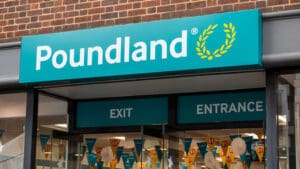
Poundland is preparing to draw on emergency funding after a disappointing Christmas trading period intensified concerns over the discount retailer’s recovery.
The chain is set to tap a £30m overdraft facility provided by its former owner, Pepco, after festive footfall and sales fell short of expectations. The move follows a tough few months for the retailer, which was rescued in the summer by distressed investment specialist Gordon Brothers in a court-approved restructuring deal.
Gordon Brothers acquired Poundland for a nominal £1, a transaction that safeguarded the majority of its 16,000 jobs across 825 UK stores but also paved the way for widespread closures. Under the terms of the deal, Pepco agreed to provide financial support, including an immediate £30m loan and a further £30m credit facility in the form of an overdraft.
Since taking control, Gordon Brothers has closed two warehouses and shut 68 of Poundland’s worst-performing stores, putting more than 2,000 roles at risk, as it attempts to stabilise the business and return it to profitability.
Data from Sensormatic shows that UK high street footfall was down 13 per cent year-on-year on December 23, typically one of the busiest shopping days of the calendar. Retailers are also bracing for a weak start to 2026, with the Confederation of British Industry reporting that sales expectations are now at their lowest level since March 2021.
Against this backdrop, Gordon Brothers informed Pepco in recent weeks that it intended to access the overdraft facility after revenues fell below forecast, creating a short-term liquidity squeeze. Poundland plans to draw down the funding in two stages, with an initial tranche in January and further access later in the year.
Pepco is understood to have initially resisted the request, fuelling fresh questions over Poundland’s longer-term prospects, but agreement was ultimately reached at board level, easing immediate concerns over the retailer’s cash position.
A team of advisers is closely monitoring the turnaround. Gordon Brothers has brought in forensic accountants from AlixPartners to oversee cash flow, while Poundland’s board has appointed FRP Advisory as specialist corporate finance advisers.
Under the restructuring plan, Poundland is expected to close around 130 stores by February next year. Clearance sales are already under way in locations earmarked for closure, with discounts of up to 40 per cent.
Earlier this week, the retailer confirmed it would remain closed on Christmas Day, Boxing Day and New Year’s Day, continuing a policy aimed at prioritising staff wellbeing.
A Poundland spokesperson said the restructuring had provided sufficient financial headroom to implement recovery plans and stressed that the business continued to receive full backing from both Gordon Brothers and Pepco. “While there remains much to do, we are pleased with the progress made in recent months as we work to get the business back on track,” the spokesperson said.
Pepco declined to comment.
Read more:
Poundland turns to emergency overdraft after concerns over discount retailer’s recovery
Dua Lipa and Shania Twain help Glastonbury lift profits and boost char …

Glastonbury Festival has reported a rise in profits after a strong year that featured performances from global stars including Dua Lipa and Shania Twain, enabling millions of pounds to be channelled into charitable causes.
Accounts filed at Companies House show that Glastonbury Festival Events Limited, the operating company behind Glastonbury Festival, increased revenues to £75.2 million in the year to March 31, 2025, up from £68.4 million the previous year. Pre-tax profits climbed to £7.7 million, compared with £5.9 million in 2024.
The results relate to a festival year that saw Dua Lipa, Coldplay and SZA headline the Pyramid Stage, while Shania Twain took the coveted Sunday legends slot. The company also operates two smaller events on Worthy Farm – the Pilton Party and the Glastonbury Abbey Extravaganza.
Despite the uplift in revenue, organisers said they remained committed to keeping ticket prices as accessible as possible. A standard weekend ticket for the 2024 festival cost £355, plus a £5 booking fee, with the business stating that price restraint remains a core principle.
A significant proportion of Glastonbury’s profits continue to be directed towards charitable causes. During the 2025 financial year, the festival made donations of more than £2.7 million, with total payments exceeding £4.2 million distributed to more than 300 organisations by December.
Beneficiaries included long-standing partners Oxfam, Greenpeace and WaterAid, alongside a £100,000 donation to Médecins Sans Frontières to support humanitarian efforts in Sudan and a surgical hospital in Amman serving patients from across the Middle East.
The festival also backed a range of local initiatives, including primary school enrichment programmes, eco-friendly farming projects and biodiversity schemes supported by organisations such as the Somerset Wildlife Trust and Shepton Mallet Community Woodland.
Led by founder Sir Michael Eavis at the age of 90, Glastonbury remains one of the UK’s most successful cultural events, combining blockbuster musical performances with a long-standing commitment to environmental and humanitarian causes.
Read more:
Dua Lipa and Shania Twain help Glastonbury lift profits and boost charity funding
Humanoid robot market tipped to reach $9tn as China leads global adopt …

The global market for humanoid robots could be worth as much as $9 trillion by 2050, with China expected to dominate demand and basic household models potentially entering homes within the next five years, according to new research.
A report by Royal Bank of Canada estimates that humanoid robots could become a core part of everyday life over the coming decades, transforming labour markets and household routines. The household sector alone is forecast to account for roughly $2.9 trillion of the total market, representing around a third of global demand.
Early versions of humanoid robots are likely to be limited in capability, initially serving niche roles such as entertainment devices or personal fitness assistants. More advanced functionality, including complex household tasks and care duties, is expected to take significantly longer to mature, with widespread adoption of fully capable domestic robots unlikely for up to 20 years.
China is expected to emerge as the world’s largest market, accounting for around 60 per cent of total demand by mid-century. Analysts suggest that multiple humanoid robots could become commonplace in Chinese households, driven by demographic pressures and an ageing population.
Tom Narayan, an analyst at RBC Global Markets and co-author of the report, said attitudes towards humanoid robots in Asia differ markedly from those in the West. In many Asian economies, he said, robots are viewed less as science fiction and more as a practical solution to structural challenges such as elderly care and shrinking workforces.
“In Asia, humanoids are seen as a necessity,” Narayan said. “In 25 years, you could see hundreds of millions of these robots in households, helping with everything from caring for the elderly to everyday tasks like ironing clothes or grooming. Once adoption begins at scale, it is likely to accelerate very quickly.”
The rapid growth of the sector has already prompted caution from policymakers in Beijing. China’s National Development and Reform Commission recently warned of a potential bubble forming in the humanoid robotics industry, noting that more than 150 companies are now working on similar technologies. Officials have raised concerns that excessive duplication could dilute investment and slow meaningful innovation.
By 2050, the report suggests humanoid robots could replace up to 40 per cent of labour-intensive roles across sectors such as agriculture, manufacturing and cleaning. Proponents argue this could free workers from repetitive and physically demanding jobs, allowing them to move into higher-value or more fulfilling work.
Investment interest is also accelerating in the United States, particularly in Silicon Valley. Sam Altman, chief executive of OpenAI, has backed robotics start-ups including 1X Technologies and Figure AI. Meanwhile, Elon Musk is developing Tesla’s Optimus humanoid robot at Tesla, with production expected to begin in 2026 and ambitious plans to manufacture up to one million units within five years.
Some experts question whether a human-like form is the most efficient design for robots, arguing that specialised machines may be better suited to many tasks. However, Narayan believes economies of scale could ultimately make humanoid robots the most cost-effective option, particularly if they can perform a wide range of functions in environments designed for humans.
He added that the long-term business model for humanoid robots may resemble that of smartphones, with hardware sold at scale and ongoing revenues generated through software and applications, drawing parallels with Apple’s app-based ecosystem.
If the forecasts prove accurate, humanoid robots could move from novelty to necessity within a generation, reshaping households, labour markets and global technology supply chains.
Read more:
Humanoid robot market tipped to reach $9tn as China leads global adoption
US economy grows at fastest pace in two years as consumer spending sur …

The US economy expanded at its fastest rate in two years during the third quarter of 2025, buoyed by a powerful rebound in consumer spending that more than offset weaker investment growth.
Gross domestic product grew at an annualised rate of 4.3 per cent between July and September, according to revised figures from the US Bureau of Economic Analysis. The updated estimate was lifted from an initial 3.8 per cent reading and came in well above economists’ expectations of around 3.3 per cent growth. It marks the strongest quarterly performance since the third quarter of 2023 and an acceleration from the 3.8 per cent recorded in the previous quarter.
The figures underline the continued resilience of the world’s largest economy, which has significantly outperformed its G7 peers over the past year. By comparison, the UK posted annualised growth of just 0.4 per cent in the same period, while the eurozone expanded by roughly 1.2 per cent.
Household spending was the dominant driver of growth, contributing more than two percentage points to overall GDP expansion. Americans continued to spend robustly on services and discretionary items, helping to offset headwinds elsewhere in the economy. Government spending also provided a boost, while exports contributed positively as imports fell back following the introduction of tariffs earlier in the year.
Investment, however, was a mild drag on growth. While spending on artificial intelligence infrastructure remains elevated, the pace of expansion has slowed compared with earlier quarters, reducing its overall contribution to GDP.
Posting on Truth Social, President Donald Trump hailed the figures as evidence that the economy was thriving, writing that the “Trump Economic Golden Age is FULL steam ahead”.
The strong growth data is likely to complicate the outlook for US monetary policy. The Federal Reserve cut interest rates three times in 2025, but the latest GDP figures may strengthen the case for keeping borrowing costs on hold next year as policymakers weigh persistent inflation against signs of cooling in the labour market.
Inflationary pressures remain a concern. The personal consumption expenditures index, the Fed’s preferred inflation gauge, rose to 2.8 per cent in the third quarter from 2.1 per cent previously. Core inflation, which strips out volatile food and energy prices, climbed to 2.9 per cent, moving further above the central bank’s 2 per cent target.
Financial markets reacted cautiously to the data. US equities opened modestly higher, with major indices rising by less than 1 per cent. Government bond prices slipped, pushing the yield on two-year Treasury notes up slightly as investors trimmed expectations for further rate cuts in 2026.
The dollar weakened against major currencies, falling to a three-month low, while gold continued its rally, hitting a fresh record as investors sought alternatives to US assets.
Economists expect momentum to slow in the final quarter of the year after a prolonged federal government shutdown weighed on activity, with consumer confidence surveys already showing sentiment at its weakest level in five years. Even so, the third-quarter figures confirm that the US economy entered the end of 2025 with considerable underlying strength.
Read more:
US economy grows at fastest pace in two years as consumer spending surges
City financier Alan Howard joins exodus of UK billionaires to Switzerl …

One of the City of London’s most prominent financiers has become the latest billionaire to relocate abroad, adding momentum to the growing exodus of wealthy individuals from the UK.
Alan Howard, the co-founder of hedge fund group Brevan Howard Asset Management, is understood to have taken up residency in Switzerland, according to UK registry filings cited by Bloomberg. Howard, 62, was previously reported to be exploring a move out of the UK and is said to have returned to Geneva, where he lived for seven years until 2017.
Howard is ranked 71st on the latest Sunday Times Rich List with an estimated fortune of £2.5 billion, while the Bloomberg Billionaires Index puts his net worth at around $4.3 billion. He founded Brevan Howard in London in 2002, building it into one of Europe’s most successful hedge fund firms, managing roughly $34 billion in assets across bonds, currencies, commodities and cryptocurrencies.
His relocation follows a series of high-profile departures by wealthy business figures in recent years. Property investors Ian and Richard Livingstone have moved to Monaco, private equity founder Jeremy Coller relocated to Switzerland last year, and Nik Storonsky, the co-founder of Revolut, has shifted his residency to the United Arab Emirates. Steel magnate Lakshmi Mittal is also understood to be dividing his time between Switzerland and Dubai after decades in the UK.
According to analysis by Henley & Partners, Britain is now losing millionaires and billionaires faster than any other country in the world. The consultancy estimates that a net 10,800 millionaires left the UK last year, with that figure expected to rise to 16,500 this year.
Wealth advisers say the trend has been fuelled by growing unease over the UK’s tax environment. Recent reforms to inheritance tax, capital gains tax and the dismantling of the non-domicile regime have all contributed to perceptions that the UK is becoming less attractive for internationally mobile wealth. The introduction of a new mansion tax on properties valued above £2 million has also weighed on sentiment.
Destinations such as Switzerland, Monaco, Milan, Dubai and Abu Dhabi are emerging as beneficiaries, offering lower or zero income and inheritance taxes, alongside regulatory stability and lifestyle advantages.
Business secretary Peter Kyle acknowledged last month that government policy had played a role in some departures, saying that decisions taken since Labour entered office had caused “some people [to] feel the need to leave”. Ministers have defended the approach, arguing that those “with the broadest shoulders” should contribute more to public finances.
Howard remains the majority owner of Brevan Howard, which employs more than 1,000 people across nine jurisdictions. While he stepped back from day-to-day management, he continues to be involved in high-level strategy, with Aron Landy serving as chief executive since 2019.
A long-standing donor to the Conservative Party, Howard has given more than £1.5 million since 2020, according to Electoral Commission data. A spokesperson for Brevan Howard declined to comment on his change of residency.
Read more:
City financier Alan Howard joins exodus of UK billionaires to Switzerland

