
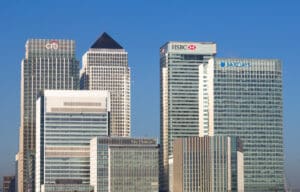
UK government borrowing has climbed to its second-highest level on record for the first eight months of the financial year, underlining the scale of the challenge facing Rachel Reeves despite stronger tax receipts.
Figures from the Office for National Statistics (ONS) show that the government borrowed £132.3 billion between April and November, £10 billion more than over the same period last year. The only higher total for that stretch of the year was recorded in 2020, when emergency spending during the Covid-19 pandemic pushed borrowing to unprecedented levels.
Borrowing in November alone came in at £11.7 billion, £1.9 billion lower than a year earlier and the lowest figure for that month since 2021. However, earlier months were revised upwards by almost £4 billion, reinforcing the picture of sustained pressure on the public finances.
Tom Davies, senior statistician at the ONS, said that while November’s figure showed some improvement, the broader trend remained challenging. “Despite an increase in spending, this month’s borrowing was the lowest November for four years,” he said. “The main reason for the drop from last year was increased receipts from taxes and National Insurance contributions. However, across the financial year to date as a whole, borrowing is higher than last year.”
Markets reacted cautiously to the data, with the yield on the benchmark ten-year gilt edging up to 4.5 per cent and sterling slipping slightly against the dollar.
Tax revenues rose sharply over the period, climbing by £25 billion to £516 billion. This was driven by a £21 billion increase in National Insurance contributions and a £14 billion rise in income tax receipts. However, spending grew even faster, up £55 billion to £736 billion, largely due to a £15 billion increase in benefit payments.
Reeves has already introduced a £25 billion rise in employer National Insurance contributions, announced in her first budget last October and implemented in April, and extended a freeze on income tax thresholds in her second budget last month. The Office for Budget Responsibility (OBR) estimates those measures helped the chancellor rebuild fiscal headroom to around £22 billion, after £26 billion of additional tax rises — most of which take effect later in the forecast period.
Economists warned that the latest figures highlight the fragility of that position. Elliott Jordan-Doak, senior UK economist at Pantheon Macroeconomics, said the data illustrated “the shaky foundations” of relying on back-loaded tax rises to restore credibility. “The bigger picture is that the public finances remain weak,” he said.
Sandra Horsfield, economist at Investec, added that progress in reducing the deficit appeared “a little slower than hoped”, despite stronger revenues.
The ONS said the current budget deficit — which Reeves must turn into a surplus within five years to meet her fiscal rules — stood at £93 billion over the eight-month period, £7 billion higher than a year earlier. The OBR forecasts total borrowing of £138 billion for the full financial year.
Public sector net debt rose to 85 per cent of GDP in November, up 2.7 percentage points on the year. Debt interest payments fell to £3.4 billion in November, down from £9 billion in October, but remain forecast to exceed £100 billion a year over the next five years.
James Murray, chief secretary to the Treasury, said the figures underscored the urgency of the government’s approach. “£1 in every £10 we spend goes on debt interest — money that could otherwise be invested in public services,” he said. “That is why last month the chancellor set out a budget that delivers on our pledge to cut debt and borrowing.”
Read more:
UK borrowing hits second-highest level on record despite tax take surge
Month: December 2025
Apprentice winner Tom Pellereau buys out Lord Sugar to regain full con …
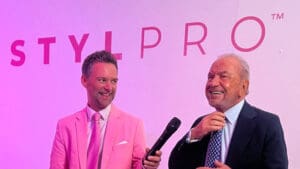
Tom Pellereau, the first winner of The Apprentice to secure an equity investment from Lord Sugar, has regained full ownership of his business after buying out Lord Sugar’s 50 per cent stake.
The deal, agreed 14 years after the original investment, returns Styl Pro to 100 per cent founder ownership and marks the end of one of the show’s longest-running business partnerships. Financial terms of the buyout have not been disclosed.
Pellereau founded Styl Pro in 2011 after winning The Apprentice, when Lord Sugar invested £250,000 for a half share in the company. The deal was a landmark moment for the BBC series, which had previously offered winners a salaried role in Lord Sugar’s organisation before shifting to an investment-and-partnership model.
Since its launch, Styl Pro has grown into one of the UK’s fastest-selling electrical beauty-tech brands, known for products such as automated makeup brush cleaners and skincare devices. The company will continue to operate under Pellereau’s leadership, with him remaining founder and chief executive.
Lord Sugar said the timing was right to step away and allow Pellereau to take the business forward independently. “Fourteen years after investing in Tom, I have agreed with Tom’s decision to purchase back my shares and return sole ownership to him,” he said. “When I first met Tom, he was a naïve inventor with ideas and drive, but he desperately needed my business help. He has gone on to build one of the UK’s fastest-selling electrical beauty-tech brands. It’s now the right time to part ways and allow Tom and his team to take the company to new heights.”
Pellereau described the move as a natural next step in the evolution of the business, while paying tribute to Lord Sugar’s role in its success. “I will always be so grateful for the investment Lord Sugar made, and the potential he saw in me and my inventions,” he said. “His time, knowledge and guidance have been invaluable. While now is the right time to regain full ownership of my business, I look back on the amazing journey we’ve taken together over the last 14 years with deep gratitude and happy memories.”
The buyout brings to a close one of The Apprentice’s most high-profile success stories and positions Styl Pro for its next phase of growth as a fully founder-led company.
Read more:
Apprentice winner Tom Pellereau buys out Lord Sugar to regain full control of Styl Pro
Michelle Mone-linked PPE Medpro wound up after being ordered to repay …

PPE Medpro, the company linked to Baroness Michelle Mone, has been wound up after a court ruling that makes it unlikely the government will recover most of the £148 million owed over a failed pandemic PPE contract.
The Insolvency and Companies Court ordered the company into liquidation on Thursday, just months after it lost a High Court battle with the Department of Health and Social Care (DHSC) over the supply of 25 million surgical gowns during the Covid-19 crisis.
The ruling follows PPE Medpro’s decision to file for administration on 30 September — just one day before the High Court ordered it to repay the £148 million. The firm was a consortium led by Doug Barrowman, Lady Mone’s husband, and had been awarded government contracts during the pandemic.
At Thursday’s hearing, lawyers acting for the joint administrators argued that the company should remain in administration in order to pay some creditors. However, Insolvency and Companies Court Judge Sebastian Prentis rejected that approach and ordered the company to be compulsorily wound up.
“I remain of the firm view that the correct course is now to discharge the administrators and to compulsorily wind up the company,” the judge said.
Court filings revealed that PPE Medpro’s liabilities extend well beyond the DHSC judgment. HM Revenue & Customs is also pursuing the company for £39 million in unpaid tax, while the administrators reported that only around £600,000 was available to meet unsecured creditor claims.
Simon Passfield KC, representing the joint administrators, told the court that PPE Medpro had one secured creditor, Angelo (PTC) Limited, registered in the Isle of Man. He said the administrators believed there was enough property within the business to repay around £1 million owed to that creditor and suggested there could still be a return for unsecured creditors, including the DHSC.
Passfield also told the court that there were potential legal claims against third parties which, if successful, could result in “substantial recoveries”, although no further details were disclosed.
However, the DHSC made clear it supported liquidation. David Mohyuddin KC, acting for the department, said there was no realistic alternative given the company’s financial position.
“The court’s discretionary power to make a winding-up order against Medpro is clearly engaged: it is obviously and very significantly insolvent,” he said.
Legal experts said the decision leaves the government facing an uphill battle to recover taxpayer funds. James Robertson, a dispute resolution partner at Spector Constant & Williams, said recovery may depend on whether the government is prepared to fund further legal action against the company’s directors or its ultimate beneficial owner.
“Piercing the corporate veil and going after such individuals is notoriously difficult, especially where assets may not be held in this jurisdiction,” he said, adding that the case risked becoming a “pyrrhic victory” for the government.
Robertson also noted that the liquidation could increase pressure on the National Crime Agency’s long-running investigation into PPE Medpro and its principals, raising hopes that at least some public money could ultimately be recovered.
Read more:
Michelle Mone-linked PPE Medpro wound up after being ordered to repay £148m
Christmas dinner and festive treats up to 70% more expensive, Which? w …

Shoppers are paying significantly more for Christmas food this year, with festive chocolate treats costing up to 70 per cent more than last Christmas and the price of a turkey rising by as much as £15, according to new research from consumer champion Which?.
The organisation analysed the cost of key ingredients for a traditional Christmas dinner alongside popular seasonal treats such as mince pies, sparkling wine and chocolates. It found that while overall grocery inflation figures appear to have eased, sharp price rises on individual festive items are hitting shoppers hard.
Chocolate products recorded the steepest increases. A Lindt Lindor milk chocolate truffles box at Asda has risen by 72 per cent, from £1.15 last year to £1.98, while Morrisons’ Lindt milk chocolate teddy tree decorations have jumped 71 per cent, from £3.50 in 2024 to £6 this year. Lindt products dominated the list of the biggest proportionate increases, followed by items such as Terry’s dark chocolate orange, Galaxy sharing blocks and Kinder multipacks.
Across the chocolate category as a whole, Which? found prices were up by an average of 14 per cent year on year. Reena Sewraz, retail editor at Which?, said headline inflation figures masked the reality facing shoppers. “Some individual items have shot up by more than 70 per cent compared with last year, which will come as a shock to many households planning their Christmas shop,” she said.
Rising cocoa prices have been a major driver of higher chocolate costs, with poor harvests in key growing regions blamed on extreme weather, including high temperatures and heavy rainfall.
While chocolate has seen the largest percentage increases, turkeys have delivered the biggest cash impact. A Tesco Finest free-range medium bronze turkey crown has increased by £14.95 to £68.77, a rise of nearly 28 per cent. Across all turkey products — including whole birds, crowns and smaller cuts — prices were up by an average of 4.7 per cent year on year.
Which? said turkey prices had been pushed up by a combination of bird flu outbreaks and rising costs faced by farmers. The traditional centrepiece of the Christmas dinner has also been losing popularity, with more shoppers opting for alternatives. This year, Waitrose confirmed it would no longer sell whole frozen turkeys, following a similar move by Marks & Spencer last Christmas.
Looking across the major supermarket chains, Which? found that Waitrose recorded the highest overall price increases in the run-up to Christmas, with prices up 6.2 per cent compared with last year. Asda was found to have kept increases lowest, at around 3 per cent.
Waitrose said some products discounted last Christmas had not been reduced this year, while Sainsbury’s said it was continuing festive promotions, including price-matched mince pies from £1.25 and discounted vegetable trimmings available through Nectar prices in the final days before Christmas.
Which? warned that while shoppers may be reassured by easing inflation headlines, many families will still feel the pinch at the checkout as they prepare for the festive season.
Read more:
Christmas dinner and festive treats up to 70% more expensive, Which? warns
MPs warn UK agreements with Donald Trump are ‘built on sand’
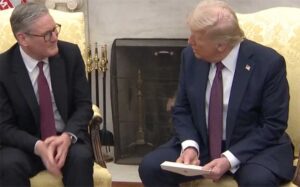
Senior ministers and MPs have warned that the UK’s recent agreements with Donald Trump are dangerously fragile, after it emerged that the flagship deal to avoid US tariffs on pharmaceuticals has no detailed legal text beyond high-level political statements.
The “milestone” UK–US pharmaceuticals agreement announced earlier this month, under which the NHS is expected to pay more for medicines in exchange for zero tariffs on exports to the US, currently rests on little more than headline commitments set out in two government press releases. No underlying draft treaty or legally binding framework has yet been produced.
Concerns have intensified following Washington’s decision to suspend the £31bn “tech prosperity deal”, which had been promoted by ministers as a “generational step-change” in the UK–US economic relationship. The US said the agreement was paused because of a lack of progress by the UK in lowering trade barriers in other areas.
It has also emerged that concessions promised to British farmers as part of an earlier tariff deal with Trump, hailed by Sir Keir Starmer as “historic” in May, have still not been formally approved by the US despite a January implementation deadline looming.
The Department of Health said negotiators were now working through the detailed terms of the pharmaceutical agreement. When asked for the agreed headline conditions, the department referred to its own press release and a US government statement describing the arrangement as an “agreement in principle”.
Critics have pointed out stark differences between the two announcements. The UK described the deal as securing zero tariffs on pharmaceuticals, while the US statement focused on higher prices for medicines supplied to the NHS, suggesting costs could rise by around 25%.
David Henig, a trade expert, said the UK risked making concrete commitments in return for little more than political assurances from a president known for unpredictability. He warned that pressure from US companies threatening to pull investment could further undermine the integrity of the process.
Ordinarily, provisional legal texts would be agreed and scrutinised before public announcements are made. No such document currently exists for the pharmaceuticals deal.
Privately, ministers acknowledged unease about the stability of the arrangements. One described the UK’s emerging set of agreements with the Trump administration as “built on sand”, while another said volatility had become the “new normal” in transatlantic relations.
Layla Moran, chair of the health select committee, said the NHS was being put at risk by what she described as a naive belief that the Trump administration would act in good faith. She warned that a deal already expected to cost taxpayers billions could become even more expensive if it collapsed.
Liam Byrne, chair of the business and trade select committee, said restoring the suspended tech prosperity deal must now be a priority.
Government figures have sought to downplay the risk of the US reneging on the pharmaceutical agreement, arguing that the US drugs industry itself wants certainty. Officials also point to tangible gains, such as the UK avoiding 50% steel and aluminium tariffs imposed on other countries, and securing a reduced 10% tariff on car exports within quotas.
However, problems persist in implementing earlier commitments. Quotas for UK beef exports to the US have yet to be signed off, prompting warnings from farming leaders that agreed access could be delayed or used as leverage in future talks.
Tom Bradshaw, president of the National Farmers’ Union, said it was essential that promised reciprocal quotas were confirmed before the end of the year to avoid further uncertainty for producers.
While talks between UK and US officials are due to resume in January, critics argue that the lack of legal certainty surrounding recent announcements highlights the risks of relying on informal agreements with an administration known for abrupt policy shifts.
Read more:
MPs warn UK agreements with Donald Trump are ‘built on sand’
UK inflation slows more than expected to 3.2%, boosting case for rate …

UK inflation eased more sharply than expected in November, falling to a ten-month low and increasing the likelihood that the Bank of England will deliver a fourth interest rate cut of the year.
Official figures from the Office for National Statistics (ONS) showed the consumer price index (CPI) rose by 3.2 per cent in the year to November, down from 3.6 per cent in October. The reading was below the Bank of England’s forecast of 3.4 per cent and the 3.5 per cent expected by City economists, marking the lowest inflation rate since March.
Core inflation, which strips out volatile energy and food prices and is closely watched by policymakers, also surprised on the downside, easing from 3.4 per cent to 3.2 per cent. On a monthly basis, prices fell by 0.2 per cent between October and November, signalling a renewed bout of disinflation.
Lower food prices were the biggest driver of the slowdown, according to the ONS. Monthly food prices fell by 0.2 per cent at a time of year when they typically rise, while annual food inflation eased from 4.9 per cent to 4.2 per cent. Inflation for alcohol and tobacco also dropped sharply, from 5.9 per cent to 4 per cent.
Clothing prices provided a further drag on inflation, with annual price growth turning negative at minus 0.6 per cent. This, combined with easing pressure across several consumer categories, helped pull overall inflation lower than anticipated.
Grant Fitzner, chief economist at the ONS, said the fall was broad-based.
“Inflation fell notably in November to its lowest annual rate since March,” he said. “Lower food prices, which traditionally rise at this time of the year, were the main driver of the fall, with decreases seen particularly for cakes, biscuits and breakfast cereals.
“Tobacco prices also helped pull the rate down, with prices easing slightly this month after a large rise a year ago. The fall in the price of women’s clothing was another downward driver.”
The data strengthens expectations that the Bank of England’s monetary policy committee will vote to cut the base rate from 4 per cent to 3.75 per cent at its meeting on Thursday. Economists and traders are forecasting a narrow decision in favour of a cut, following a series of recent indicators pointing to a cooling economy.
Earlier this week, official figures showed unemployment rising and the labour market weakening, while wage growth has continued to slow — developments that reduce inflationary pressure and increase the case for looser monetary policy.
Lower interest rates would provide some relief for households and businesses by easing borrowing costs, at a time when economic growth remains fragile and confidence subdued.
Read more:
UK inflation slows more than expected to 3.2%, boosting case for rate cut
Sunak defends Covid bounce back loans amid claims of excessive fraud
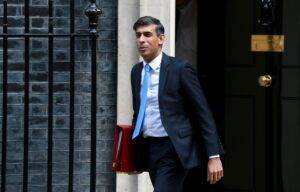
Rishi Sunak has defended the government’s Covid-era Bounce Back Loan (BBL) scheme against claims that it was plagued by excessive fraud, telling the Covid-19 Inquiry that the need to act quickly outweighed the risks.
The former chancellor said he was fully aware of the scheme’s vulnerabilities when it was launched in May 2020, but insisted that delaying it to introduce additional checks would have put hundreds of thousands of small businesses at risk of collapse.
“I keep hearing as if there were no checks done whatsoever, or that we didn’t know what we were getting ourselves into,” Sunak said while giving evidence to the inquiry. “Both of those narratives are completely wrong. Of course we knew the risks we were taking on.”
Bounce Back Loans allowed small businesses to borrow up to £50,000 with a 100 per cent government guarantee, meaning taxpayers would cover losses if companies defaulted. Nearly 1.5 million loans worth around £46 billion were issued, making it the largest of the government’s pandemic support schemes.
A report published last week by the Covid Counter-Fraud Commissioner, Tom Hayhoe, estimated that fraud and error in the scheme could total up to £2.8 billion, with £1.9 billion already flagged as fraudulent by lenders. The Public Sector Fraud Authority believes the final figure could be higher, as some types of fraud are not fully captured by current reporting methods.
Hayhoe’s report found that the scheme was launched in less than two weeks and relied largely on standard banking fraud controls. Although loans were capped at 25 per cent of turnover, lenders had to accept applicants’ declarations without independent verification. There were also no checks on whether businesses had genuinely been affected by the pandemic or how the funds were used.
Sunak acknowledged those weaknesses but said the speed of delivery was critical. He told the inquiry that around 40 per cent of all bounce back loans were issued in the first four weeks and that even a short delay could have caused widespread business failures.
“You could have lowered the ultimate fraud levels by waiting and building some of these checks,” he said. “But you have to then be confident that you were going to accept the loss of business that would result from that.”
He added that, at the time, there was no pressure to slow the scheme down. “Nobody was waving their hands saying, ‘Slow it down, more checks, more form filling,’” he said.
Sunak also argued that a fraud rate of around 4 per cent was broadly in line with other large government programmes, such as universal credit, working tax credit and housing benefit.
Following the scheme’s launch, the government did introduce additional safeguards, including systems to prevent companies from taking out multiple loans through different banks, which was against the rules.
Looking ahead, Sunak said that if a similar emergency scheme were needed again, better data on companies and improved systems would make the trade-off between speed and fraud prevention “less acute”. However, he warned that such trade-offs would never disappear entirely.
“But we shouldn’t ever think there is not going to be that trade-off,” he said. “There is.”
Read more:
Sunak defends Covid bounce back loans amid claims of excessive fraud
Erasmus scheme set to return for UK students from 2027

The UK is set to rejoin the Erasmus programme, restoring access for British students to the EU-funded study, training and volunteering scheme five years after the country ended its participation following Brexit.
Ministers are expected to confirm the move this week, with UK students understood to be able to take part in Erasmus placements from January 2027. The government has declined to comment on the detail of ongoing talks with the European Union.
The decision marks a significant policy shift after the UK withdrew from Erasmus in December 2020 as part of its post-Brexit trade deal. At the time, the then prime minister Boris Johnson described leaving the scheme as a “tough decision”, arguing that participation had become “extremely expensive”. It was replaced in 2021 by the UK’s own Turing scheme, which funds international placements worldwide.
Prime Minister Sir Keir Starmer has previously signalled a desire to reset relations with the EU, suggesting in May that a youth mobility arrangement could form part of a broader agreement.
Student groups have long campaigned for the return of Erasmus. Alex Stanley, vice-president for higher education at the National Union of Students (NUS), said the move would be warmly welcomed.
“It’s fantastic that another generation of students will be able to be part of the Erasmus programme,” he said. “Students have been campaigning to rejoin Erasmus from the day we left. This is a huge win for the student movement.”
Erasmus, named after the Dutch Renaissance scholar Erasmus of Rotterdam, provides funding for participants to study, train or volunteer in another European country for up to a year. It is open not only to university students, but also to those in further education, apprenticeships and vocational training, as well as some school pupils.
In 2020, the final year of UK participation, Erasmus provided €144 million (£126 million) in EU funding to support 55,700 participants overall. That year, around 9,900 UK students and trainees went abroad, while 16,100 European participants came to the UK. Glasgow, Bristol and Edinburgh universities sent the most students, with Spain, France and Germany the most popular destinations.
By contrast, the Turing scheme allocated £105 million in the 2024–25 academic year, funding 43,200 placements worldwide. Of these, 24,000 were in higher education, 12,100 in further education and 7,000 in schools. The majority of participants were from England, with smaller numbers from Scotland, Wales and Northern Ireland.
Ministers who introduced Turing said it was designed to reach more students from disadvantaged backgrounds and to provide greater support for travel costs than Erasmus. It remains unclear what will happen to the Turing scheme once Erasmus is reintroduced for UK students, or whether the two programmes will run alongside each other.
The return of Erasmus has also been welcomed by opposition politicians. Liberal Democrat universities spokesperson Ian Sollom described the move as “a moment of real opportunity and a clear step towards repairing the disastrous Conservative Brexit deal”.
If confirmed, the re-entry into Erasmus would represent one of the most tangible post-Brexit policy reversals to date, reopening pathways for cultural exchange, skills development and European collaboration for UK students.
Read more:
Erasmus scheme set to return for UK students from 2027
Employment Rights Bill clears final parliamentary hurdle and set to be …

Labour’s flagship Employment Rights Bill has cleared its final parliamentary hurdle and is set to become law before Christmas, marking the most significant expansion of workers’ rights in a generation.
The legislation passed its final stage in the House of Lords after Conservative peer Lord Sharpe, the shadow business and trade minister, withdrew a last-minute amendment during parliamentary “ping pong”. The move removed the final obstacle to the bill’s passage.
Prime Minister Sir Keir Starmer hailed the moment as a major milestone for employees across the country.
“This is a major victory for working people in every part of the country,” he said. “We have just introduced the biggest upgrade to workers’ rights in a generation. Today our plans passed through parliament, and will soon become law.”
The bill applies to England, Scotland and Wales, but not Northern Ireland, and is expected to receive royal assent later this week. Most of its measures will require secondary legislation before they come into force.
Under the new law, workers will gain access to statutory sick pay and paternity leave from their first day in a job. The legislation also introduces strengthened protections for pregnant women and new mothers.
Labour had originally pledged to give employees the right to claim unfair dismissal from day one, but backed down in November following concerns from business groups. Instead, enhanced unfair dismissal protections will apply after six months of employment — now the bill’s most significant reform.
Trade unions welcomed the bill’s passage but warned against further dilution. Unite general secretary Sharon Graham said it must now be implemented “without any further dilution or delay”.
“The bill has already been watered down far too much, not least the failure to ban fire and rehire and zero-hours contracts,” she said.
TUC general secretary Paul Nowak described the vote as a “historic day and an early Christmas present for working people across the country”.
“Finally, working people will enjoy more security, better pay and dignity at work thanks to this bill,” he said, urging the government to implement the reforms “at speed”.
The Conservatives, however, criticised the timing of the legislation, arguing it risks damaging employment.
“It is ironic that Labour’s job-destroying unemployment bill passed on the same day official figures confirmed unemployment has risen every month this government has been in office,” a party spokesperson said, referring to data showing unemployment rose to 5.1 per cent in the three months to October.
Shadow business secretary Andrew Griffith warned the bill would “pile costs onto small businesses, freeze hiring, and ultimately leave young people and jobseekers paying the price”.
Business groups including the British Chambers of Commerce and the Federation of Small Businesses said earlier this week that they remained concerned about aspects of the reforms, but accepted that with the six-month qualifying period retained, the bill should now be passed to provide certainty.
Employment lawyers said employers should now shift focus from speculation to implementation.
Florence Brocklesby, founder of Bellevue Law, said: “Regardless of views on the pros and cons of the reforms, employers will welcome certainty and the ability to plan. Implementation should be treated as a major project, with sufficient senior management and HR resource.”
She warned that the new six-month unfair dismissal threshold would require stronger hiring processes and early performance management, while the lifting of the compensation cap would be most significant for employers with large numbers of highly paid staff.
Jo Mackie, employment partner at Michelmores, raised concerns about uncapped unfair dismissal damages, saying they could “encourage claims and strike fear into employers”, potentially discouraging recruitment.
Dave Chaplin, chief executive of ContractorCalculator, said the reforms risked reducing permanent hiring among small businesses.
“For SMEs, a six-month cliff edge dramatically increases the risk of hiring,” he said. “The irony is that while the bill strengthens protections for those already in work, it raises the hurdles for people trying to get a job.”
With royal assent imminent, employers and employees alike are now bracing for one of the biggest shifts in workplace regulation in decades — with the real impact set to unfold as the reforms are phased in.
Read more:
Employment Rights Bill clears final parliamentary hurdle and set to become law

