

The European Union’s planned ban on the sale of new petrol and diesel cars from 2035 is set to be watered down, according to senior figures in the European Parliament, in a move that is likely to trigger fierce opposition from environmental campaigners.
The decision, which is expected to be outlined by the European Commission this week in Strasbourg, would mark a significant retreat from one of the central planks of the EU’s Green Deal. Campaigners have warned that any dilution of the ban would amount to a “gutting” of the bloc’s climate ambitions for transport.
Under existing legislation agreed in 2022, all new cars sold in the EU from 2035 must produce zero CO₂ emissions, effectively banning petrol, diesel and hybrid vehicles. However, Manfred Weber, president of the European People’s Party group, said the outright ban on combustion engines would be softened.
“The technology ban on combustion engines is off the table,” Weber told Germany’s Bild newspaper. “All engines currently manufactured in Germany can therefore continue to be produced and sold.”
His comments come after months of lobbying from national leaders and the automotive industry. Germany’s chancellor, Friedrich Merz, said last week that he supported a rethink, arguing that combustion-engine vehicles would still dominate global roads well beyond 2035.
“The reality is that there will still be millions of combustion engine-based cars around the world in 2035, 2040 and 2050,” Merz said.
Italy’s prime minister, Giorgia Meloni, alongside several major carmakers, has also pushed for changes that would allow hybrid vehicles to remain on sale. Weber suggested that under revised rules, manufacturers would instead be required to cut average fleet emissions by 90 per cent from 2035, rather than meeting a strict zero-emissions target.
This could open the door to a new generation of plug-in hybrid vehicles with extended electric range but a combustion engine as backup for long-distance journeys.
Environmental groups have reacted angrily to reports of a climbdown. Colin Walker, head of transport at the Energy and Climate Intelligence Unit, said weakening the rules would keep European households “stuck driving dirtier and more expensive petrol cars for longer” and slow the transition to electric vehicles.
Some manufacturers, including Volvo and Polestar, have also criticised calls to soften the ban, warning that policy uncertainty could hand an advantage to Chinese electric vehicle makers that are already scaling rapidly.
A spokesperson for the European Commission said the 2035 deadline was still under discussion, adding that commission president Ursula von der Leyen had acknowledged growing calls for “more flexibility” on CO₂ targets.
Alongside any changes to the ban, the commission is expected to propose new incentives to support the production and purchase of small, affordable electric vehicles made in Europe, as part of a broader effort to counter rising imports from China.
The debate highlights deep divisions within the EU over how fast the transition away from fossil-fuelled cars should happen, balancing climate targets against industrial competitiveness, jobs and consumer demand as the bloc charts its automotive future.
Read more:
EU set to soften 2035 petrol and diesel car ban amid political pressure
Month: December 2025
Leon to close sites and cut jobs as fast-food chain enters administrat …

Fast-food chain Leon is set to close a number of restaurants and cut jobs after entering administration, just weeks after being bought back by its co-founder John Vincent in a deal reported to be worth between £30 million and £50 million.
The business has applied for an administration order to enable the formulation of a Company Voluntary Arrangement (CVA), which it said is intended to accelerate a wider restructuring of the group. Leon’s immediate priority will be to reduce the number of loss-making sites as it attempts to stabilise the business and return it to profitability.
Vincent reacquired Leon last month from Asda, which had bought the chain in 2021 as part of the Issa brothers’ EG Group empire. That acquisition valued Leon at about £100 million, significantly higher than the price paid in the recent buyback.
In a statement, Leon said the business has been hit hard by changing work patterns since the pandemic, alongside rising taxes and cost inflation, pressures that have affected much of the hospitality sector. The company added that while Vincent believes Leon drifted from its original values under previous ownership, he recognises the challenges faced by Asda and EG as operators.
John Vincent said that Leon had no longer fitted Asda’s strategic priorities and that the problems facing the chain were shared widely across the industry. He pointed to depressed footfall, hybrid working and what he described as increasingly unsustainable tax burdens as key drivers of losses across casual dining.
Leon will now spend the coming weeks in discussions with landlords, supported by restructuring advisers Quantuma, to agree proposals for the future of the estate. The aim, the company said, is to emerge from administration as a smaller, leaner business that can more easily return to its founding principles.
All Leon restaurants will continue to trade as normal during the process and the group’s grocery arm will not be affected by the CVA. The company has not confirmed how many sites will close or how many roles will be lost.
Where closures do occur, Leon said it would first seek to redeploy staff to other restaurants. Employees who cannot be relocated within a reasonable commuting distance will receive redundancy payments. In addition, the chain has struck an agreement with Pret A Manger that will allow affected staff to apply for roles through a dedicated recruitment channel.
Vincent also used the announcement to call for a review of what he sees as an excessive tax burden on hospitality. He said that for every pound spent by customers, around 36p goes to the government, leaving businesses with little margin to absorb rising costs.
Leon currently operates 71 restaurants, including 44 owned sites and 22 franchised locations. Before its sale by Asda, the chain had already cut hundreds of jobs, reducing headcount by 17 per cent in 2024 as it sought to curb losses. Its most recent accounts showed revenues falling to £62.5 million, alongside losses of £8.4 million, an improvement on the £12.5 million loss reported the previous year.
Founded in 2004 by Vincent, Henry Dimbleby and Allegra McEvedy, Leon is now hoping that a period of restructuring will allow it to rebuild and return to growth once again.
Read more:
Leon to close sites and cut jobs as fast-food chain enters administration
William Hill owner Evoke puts itself up for sale amid mounting tax and …

Evoke, the heavily indebted gambling group that owns William Hill in the UK as well as the 888 brand, has put itself up for sale as it grapples with rising costs and regulatory pressure.
The company said it is undertaking a review of its strategic options, which includes the possibility of selling the business. Investment banks Morgan Stanley and Rothschild have been appointed as joint financial advisers to oversee the process, although Evoke cautioned that there is no certainty any transaction will result or what form a deal might take.
The move comes just weeks after Evoke warned it would close around one in ten of its betting shops next year as part of efforts to stabilise its finances. The group has struggled to reverse declining performance while carrying a significant debt burden.
Pressure on the business has intensified following changes announced in the recent Budget, which sharply increased taxes on online gambling. From April 2026, the rate of remote gaming duty will rise from 21 per cent to 40 per cent, while tax on online sports betting will increase from 15 per cent to 25 per cent.
Evoke has already withdrawn its medium-term financial targets in response, warning that the new tax regime will add between £125 million and £135 million to its annual duty bill once fully implemented. An £80 million hit is expected in the next financial year alone.
The group said the impact of the tax rises, combined with ongoing operational challenges, had prompted the board to reassess the company’s future direction.
Any sale would mark a significant moment for the UK gambling sector, with William Hill remaining one of the most recognisable names on the high street despite years of consolidation and regulatory tightening across the industry.
Read more:
William Hill owner Evoke puts itself up for sale amid mounting tax and debt pressures
Cross-party MPs elect new leadership for APPG on Investment Fraud amid …

A new leadership team has been appointed to the All-Party Parliamentary Group on Investment Fraud and Fairer Financial Services following its Annual General Meeting at Portcullis House, Westminster.
Members from both Houses came together on 10 December to elect officers and agree the group’s priorities for the year ahead — a year they warn will be pivotal for rebuilding trust in the UK’s financial system.
Hayes and Harlington MP John McDonnell was confirmed as the APPG’s new Chair, supported by a cross-party group of Vice Chairs: Sarah Bool MP, Lord Davies of Brixton, and Ben Lake MP. Together, they form one of Westminster’s most politically diverse leadership teams dedicated to financial reform.
Accepting the role, McDonnell said he was honoured to lead the group at a “critical juncture” for financial oversight in the UK, stressing that victims of investment fraud and regulatory failures “deserve justice, not excuses”, adding ‘We will not allow a race to the bottom in regulation’.
He argued that consumer protection must be viewed not as a brake on growth but as “the foundation of a financial system that works in the public interest”, pledging that the APPG would hold regulators and industry to account while working collaboratively with parliamentarians, civil society groups and trade bodies.
“We are keen to work with any entity that wants to help the financial sector flourish by serving society as best it can,” he said, adding that the APPG was already preparing its policy agenda for 2026.
Vice Chair Sarah Bool said that while Conservatives believe in free markets, those markets “must also be fair”, warning that widespread fraud and regulatory gaps have damaged public trust and undermined the UK’s financial reputation.
Lord Davies of Brixton highlighted the severe personal consequences of misconduct, saying financial fraud “destroys real lives, pensions stolen, homes lost, futures wiped out”. He vowed to continue challenging vested interests and advocating for ordinary families.
Ben Lake MP emphasised the devastation felt by communities across Wales and the wider UK, citing small businesses ruined by banking scandals and individuals who tragically took their own lives after losing savings to fraud. “These are not abstract policy issues, they affect people in every constituency,” he said.
The AGM reaffirmed the APPG’s central theme — that strong consumer protections and robust enforcement are not obstacles to economic success, but essential to it.
The group remains deeply concerned about what it calls the UK’s growing “Trust Deficit”, warning that weak oversight and enforcement deter public participation in financial markets, damage the City’s international standing and erode systemic stability.
Its 2025 investigative work, including two major parliamentary summits and a high-profile report scrutinising the Financial Conduct Authority, will inform its approach in 2026.
The APPG confirmed it will continue to serve as a platform for dialogue between victims, regulators, parliamentarians, financial firms and civil society. A programme of hearings, evidence-gathering, and policy engagement is already planned for the year ahead.
The group operates on a strictly non-commercial basis. Its Secretariat is run entirely pro bono through the Transparency Task Force, a certified social enterprise, ensuring that its work remains “free from undue influence and firmly rooted in the public interest”.
The group’s purpose is to advocate for victims of financial misconduct and fraud, and to drive reforms that deliver a fair and trusted financial system. It is governed by the rules of the Office of the Parliamentary Commissioner for Standards and receives no parliamentary funding.
Read more:
Cross-party MPs elect new leadership for APPG on Investment Fraud amid call for stronger consumer protection
Live events sector warns PM of ‘devastating’ impact from Business …

Britain’s live events industry has issued a stark warning to the Prime Minister, urging an immediate review of the government’s new Business Rates system amid fears it will trigger widespread venue closures, job losses and higher ticket prices across the country.
In a strongly worded letter sent to No 10, senior figures from the sector said the changes unveiled at the Budget — including steep revaluations by the Valuations Office Agency (VOA) and a higher Business Rates multiplier for large event venues — would have “devastating, unintended consequences” for the cultural economy.
They warned that the combined effect of unprecedented valuation increases and higher tax charges would “undermine many of the Government’s own priorities”, despite the Budget’s transitional relief measures and lower multipliers for smaller properties.
The letter sets out a bleak picture for music and entertainment spaces at every level. Hundreds of grassroots music venues, the launchpads of artists such as Ed Sheeran — could be forced to shut as rising Business Rates make already fragile finances untenable.
“These venues are where artists like Ed Sheeran began their career,” the signatories wrote. “Their loss would deprive communities of valuable cultural spaces and limit the UK creative sector’s potential.”
The warnings extend to the UK’s major arenas, many of which are facing Business Rates hikes of more than 100%. Operators say these extra costs will almost certainly be passed on to consumers, pushing ticket prices higher at a time when the Government has vowed to tackle the cost-of-living crisis.
“Ticket prices for arena shows will increase,” the letter said. “Dramatic rises in tax costs will likely trickle through to consumers.”
Smaller arenas ‘on the brink’
Mid-sized venues — often the cultural heart of regional towns and cities — are also at risk. The sector fears that dramatic valuation jumps could push many to the edge of closure, triggering thousands of job losses and stripping local communities of vibrant cultural hubs that sustain high-street activity.
“These changes will reduce the visitor spending that supports local hotels, bars, restaurants, shops and taxis,” the letter said. “They will hollow out the cultural spaces that help places thrive.”
Sector says changes conflict with Government’s own growth plans
Industry leaders also accused the government of undermining its Industrial Strategy and Creative Sector Plan, which explicitly commit to reducing barriers to growth for live events. Instead, they argue, the new Business Rates regime risks throttling one of the UK’s most dynamic export industries.
Sector demands 40% rates relief and urgent valuation reform
The letter calls on ministers to take two immediate actions:
• Introduce a 40% Business Rates relief for all live venues.
Film studios have already been granted this level of relief until 2034, and the live events sector argues that venues — similarly classified as “critical creative infrastructure” — deserve the same protection.
• Launch a rapid inquiry into VOA valuation methods for event spaces, which operators say are “disproportionate, inappropriate and unjustified”.
Finally, the industry has requested an urgent roundtable with HM Treasury, the Department for Culture, Media and Sport, and the Department for Business and Trade to develop a plan to “save our venues” before closures begin.
⸻
If you’d like a follow-up commentary, sector analysis, or Business Matters-style opinion column on the wider economic impact of venue closures and rising ticket prices, I can prepare that next.
Read more:
Live events sector warns PM of ‘devastating’ impact from Business Rates overhaul
Falling gilt yields suggest Rachel Reeves has ‘won back market confi …
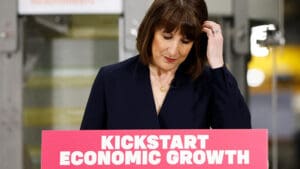
The UK’s long-running “risk premium” in financial markets appears to be unwinding, with economists claiming investors are regaining confidence in Rachel Reeves’ fiscal strategy — and that the shift could save taxpayers billions of pounds over the next five years.
New analysis from the Institute for Public Policy Research (IPPR), a think tank with longstanding ties to Labour, shows gilt yields have fallen faster than those in the US and eurozone since September. The move follows a turbulent year in which UK borrowing costs climbed significantly above other G7 economies, fuelled by persistent inflation, weak growth, and speculation over the new government’s tax plans.
According to the IPPR, yields on UK government bonds have dropped by 0.2 percentage points more than their American and eurozone equivalents over recent months. While modest, the reversal is viewed as a meaningful sign that Reeves’ public embrace of strict fiscal rules, first restated at Labour conference — has reassured money markets jittery since Liz Truss’s mini-Budget in 2022.
Earlier this year, the gap between UK and US 10-year bond yields had blown out to 1.1 percentage points; against eurozone debt, the margin was 0.6 points. On 30-year bonds the divergence was even starker, hitting 1.5 points versus US treasuries. Those differences amounted to a clear “risk premium”, a financial penalty imposed on the UK for political unpredictability and concerns over fiscal credibility.
“The reasons for this premium are not straightforward, especially given that the UK’s fundamentals are stronger than many countries with lower borrowing costs,” the IPPR noted, highlighting Britain’s debt-to-GDP ratio of around 100%, lower than that of the US, Italy or Japan.
Senior Bank of England officials echoed the assessment. Deputy governor Sir Dave Ramsden told MPs on the Treasury committee that gilt market volatility ahead of Reeves’ Budget was noticeably lower than in comparable pre-Budget periods under the previous Conservative government.
“There were no concerns about financial stability,” he said, a marked contrast to the gilt market crisis triggered by Truss’s unfunded tax cuts.
The Bank now expects the Budget to shave up to 0.5 percentage points off inflation next year, thanks largely to Reeves’ decision to remove taxes from household energy bills. Inflation currently sits at 3.6%.
Despite the recent improvement, UK borrowing costs remain elevated by historical standards and are still higher than those faced by the US or eurozone members. The Office for Budget Responsibility forecasts that debt interest payments will exceed £100 billion in every year of this parliament.
However, if the remaining risk premium disappears, the IPPR calculates that taxpayers could save up to £7 billion a year by 2029–30, money that could otherwise be directed to public services or debt reduction.
Carsten Jung, associate director for economic policy at the IPPR, said a “clear, credible” fiscal path could make the UK “a star performer in the G7”, but warned that the Bank of England could undermine progress if it continues its aggressive quantitative tightening programme.
The Bank estimates its bond disposals have pushed up gilt yields by as much as 0.25 percentage points. Jung said the Bank should “pull its weight” and pause sales to avoid unnecessarily driving up borrowing costs at a time when the government is trying to restore stability.
Bond yields have also been kept higher by falling demand from final-salary pension schemes, once major institutional buyers of long-dated gilts.
For now, though, the message from the markets appears clearer than it has been for years: after a volatile 18 months, investors may finally believe that the UK has rediscovered its fiscal discipline.
Read more:
Falling gilt yields suggest Rachel Reeves has ‘won back market confidence’
Goldman Sachs warns UK policy uncertainty is creating a ‘confidence …

Policy uncertainty in Westminster is weighing heavily on Britain’s small business sector, according to one of the City’s most influential bankers.
Kunal Shah, co-head of Goldman Sachs International, warned that a lack of clarity over taxation and employment laws is creating an “overhang” that is discouraging entrepreneurs from investing and hiring.
Speaking ahead of a House of Commons reception marking 15 years of Goldman’s 10,000 Small Businesses programme, Shah said founders were increasingly nervous about the government’s shifting regulatory agenda. “One of the things that comes back often from these companies is the tax burden in the UK,” he said. “The Budget last month was a focal point for everyone to see again how tough the fiscal maths is now. It introduces challenges for any entrepreneurs and the business environment here.”
Although small businesses remain upbeat about their own performance, Shah suggested that Labour’s manifesto commitments — particularly around expanded employment rights — had left many founders uneasy about future costs. “These entrepreneurs are largely optimistic around their own businesses, around things they can control,” he said. “But it is all the uncertainty over the manifesto pledges that can hamper investment confidence. That continues to be an overhang.”
Labour last month abandoned its pledge for “day-one” unfair dismissal rights, striking a compromise with unions to reduce the qualifying period to six months rather than two years. The government insisted the move would still drive a major shift in worker protections, but business groups warned the proposals would require significant adjustments to hiring strategies.
Shah, who joined Goldman in 2004 and became a partner a decade later, said UK firms now had clarity on taxation for the next year but warned that broader economic pressures continued to erode SME confidence. “There is a longer-running productivity problem,” he said, adding that “sticky inflation” and interest rates “at the restrictive end” were feeding into company finances.
Despite these headwinds, Shah pointed to genuine opportunities for growth, including improved trade ties with the US and India. He also praised the Chancellor’s stamp duty holiday for newly listed shares as a pragmatic move to revive the UK’s capital markets. “It shows clear intent,” he said. “These are signs of how they want to support the broader growth agenda.”
More than 2,500 companies have been through Goldman’s free training scheme for founders of small firms, targeted at businesses with revenues above £250,000 and staff numbers between 5 and 50. Research by Professor Mark Hart of the Enterprise Research Centre shows participants increased revenues by 43% within three years, adding an average £665,000 to their top line.
After ten years, these businesses were 14% more productive than comparable firms that did not take part.
The UK government’s own equivalent — the Help to Grow scheme — has enrolled 10,000 leaders since 2021, with funding secured until 2029.
Despite wider market uncertainty, Shah said Goldman expected another strong year for fees from mergers and acquisitions. The bank has already been involved in $1.5 trillion worth of deals in 2025 and is advising on several high-profile transactions across Europe. “The backlog is healthy,” he said. “We see that momentum continuing into next year.”
Goldman recently advised Shawbrook on its £1.9 billion flotation in London — the largest in several years — and is closely watching the dramatic takeover battle for Warner Bros, though it is not advising any of the bidders.
Government engagement improving — but uncertainty remains the drag
Shah welcomed the government’s willingness to engage with the banking sector, following meetings with Rachel Reeves, Anthony Gutman and Goldman Sachs CEO David Solomon earlier this year. But he was unequivocal in his assessment that uncertainty is the biggest factor undermining SME confidence.
As he put it: “Entrepreneurs are optimistic — but optimism only gets you so far when you can’t plan ahead.”
Reeves responded, by saying: “This report shows the huge contribution small businesses make in creating jobs, driving innovation and powering growth across the UK. They aren’t just businesses – they’re the innovators, creators and entrepreneurs that keep our economy thriving. The 10,000 Small Businesses programme shows how larger firms can back the next generation of entrepreneurs, and I congratulate them on this 15-year milestone. In the Budget, we acted to make life easier for businesses by permanently lowering business rates for hundreds of thousands of retail, leisure and hospitality businesses, opening up new funding so SMEs can better invest and hire, and backing entrepreneurs with tax reliefs to help them grow.”
Read more:
Goldman Sachs warns UK policy uncertainty is creating a ‘confidence overhang’ for small businesses
Frasers Group snaps up Swindon Designer Outlet in latest retail proper …

Mike Ashley’s Frasers Group has acquired Swindon’s Designer Outlet, one of the UK’s busiest retail destinations, marking the latest move in the company’s fast-growing property portfolio.
The popular shopping centre — housed within the Grade II-listed former Great Western Railway Works — attracts more than three million visitors a year and has been sold by LaSalle Investment Management, which only purchased the site in 2022.
Michael Murray, CEO of Frasers Group, said the deal underscores the company’s commitment to investing in physical retail as a core part of its “elevation strategy”.
“Physical retail is central to our elevation strategy and investing in Swindon — one of the UK’s top five outlets by footfall — strengthens our position as both retailer and landlord,” Murray said. “This acquisition reinforces our property strategy and unlocks new opportunities for our brands and our partners.”
The outlet, which opened in 1997, was previously operated by McArthurGlen before changing hands to LaSalle. Its acquisition marks another major shopping centre addition for Frasers Group, following last month’s purchase of the Braehead Shopping Centre in Scotland.
The FTSE-listed business, controlled by founder and majority shareholder Mike Ashley, now owns a growing portfolio of retail centres across the UK alongside its chain of Frasers department stores and brands including Sports Direct, Game, Jack Wills and Evans Cycles.
Industry analysts said the move highlights Frasers Group’s continued strategy of combining retail ownership with property investment — a model that gives it significant influence over rents, tenants and prime retail locations during a turbulent period for the high street.
Read more:
Frasers Group snaps up Swindon Designer Outlet in latest retail property expansion
Invest in Women Taskforce hits £635m as Nationwide and British Busine …

The Invest in Women Taskforce has surpassed its fundraising ambitions in a major boost for female entrepreneurship, announcing that it has now convened £635 million in commitments, more than double its original £250 million target set at launch in 2024.
The milestone includes confirmation that Nationwide and the British Business Bank will join Barclays and M&G as anchor partners in the targeted £130 million first close of the groundbreaking Women backing Women Fund of Funds, subject to final terms and approvals.
The fund, managed by Bootstrap4F and believed to be the largest female-led fund of funds in the world, represents the first initiative of its kind in the UK dedicated to deploying capital directly into female-founded companies and gender-balanced VC teams.
The Taskforce’s first Annual Report, published today, reveals that more than £70 million was deployed in 2025 across 15 founders and funds, with a strong pipeline now emerging as momentum accelerates. The funding pool has become the largest coordinated effort globally to reshape the investment landscape for female entrepreneurs.
A sector still facing a deep investment gap
Despite the rapid progress, female founders continue to face stark funding disparities. Research by Beauhurst and the Taskforce shows that fully female-founded businesses receive just 2% of UK equity investment. At the current rate of change, the Taskforce estimates it will take at least a decade to reach funding parity between all-male teams and female or mixed teams.
The House of Commons Women and Equalities Committee recently echoed this call for urgent action, urging the government and industry to invest more decisively in female entrepreneurship.
Government backing and economic case
Speaking ahead of a Downing Street reception to mark the launch of the Annual Report, Chancellor Rachel Reeves said supporting female entrepreneurs was central to the government’s economic agenda.
“Growth is this Government’s number one mission, and I am backing female-powered business not only because it’s critical for our economy but because it is the right thing to do,” she said.
“As the first female Chancellor, I am committed to improving economic outcomes for women, from lifting the two-child cap to breaking down barriers that stop women from starting, scaling and investing in British businesses.”
‘A commercial imperative, not just a moral one’
Hannah Bernard, Barclays executive and Taskforce co-chair, emphasised the economic potential of backing women-led businesses.
“Female-led businesses deliver 35% higher returns than male-led businesses,” she said. “This is not only the right thing to do, it is a commercial imperative. We must urgently rebalance investment committees and capital deployment.”
Debbie Wosskow OBE, entrepreneur and co-chair of the Taskforce, said the fund’s progress should serve as a wake-up call to the wider VC industry.
“Reaching first close will be a huge milestone. We’ve worked tirelessly to build the world’s largest funding pool for women, but about 80% of UK venture capital still goes to all-male teams,” she said. “The evidence is clear: diverse teams deliver stronger returns. So what are we waiting for?”
The Taskforce continues to call on institutional investors, pension funds and corporates to join the initiative and help close the UK’s persistent gender funding gap.
Read more:
Invest in Women Taskforce hits £635m as Nationwide and British Business Bank join first close of landmark ‘Women backing Women’ fund

