

Donald Trump has described it as “very dangerous” for the UK to do business with China, as Prime Minister Keir Starmer arrived in Shanghai on the third day of his official visit to the country.
Trump’s comments followed the announcement of several agreements aimed at boosting trade and investment between the UK and China, reached after Starmer met Chinese president Xi Jinping in Beijing.
Speaking to reporters at the premiere of a documentary about his wife Melania, Trump said: “It’s very dangerous” for the UK to engage economically with China, although he went on to describe Xi as “a friend” and said he knew the Chinese leader “very well”.
Beyond those remarks, the US president did not expand further on the UK’s engagement with China, instead pivoting his criticism towards Canada, which he described as being in an “even more dangerous” position. Trump recently threatened tariffs on Canada following economic discussions between Ottawa and Beijing.
In response, Downing Street indicated that Washington had been aware of Starmer’s visit and its objectives in advance, and noted that Trump himself is expected to visit China in April.
Starmer said the UK–China relationship was in a “good, strong place” following talks with Xi at the Great Hall of the People. Speaking on Friday at a UK–China Business Forum hosted at the Bank of China in Beijing, the prime minister said the meetings had delivered “just the level of engagement that we hoped for”.
“We warmly engaged and made some real progress,” Starmer said. “The UK has a huge amount to offer.”
Among the outcomes of the visit were an agreement to introduce visa-free travel for British visitors to China, a reduction in Chinese tariffs on UK whisky, and a £10.9 billion investment by AstraZeneca to build new manufacturing facilities in China. The two sides also announced further co-operation on issues including organised crime and illegal immigration.
According to the UK Department for Business and Trade, the US was Britain’s largest single-country trading partner in 2025, with China ranking fourth.
Chris Torrens, chair of the British Chamber of Commerce in China, described Starmer’s visit as “successful”, saying it made sense for the UK to engage with one of its major trading partners. He added that several Western leaders had visited Beijing recently or were planning to do so, including Trump.
Opposition MPs have criticised the prime minister’s visit, citing concerns over national security and China’s human rights record. China has faced accusations from the UN of serious human rights violations against Uyghur and other mostly Muslim ethnic groups, and international criticism over the treatment of Hong Kong media tycoon Jimmy Lai.
Shadow home secretary Chris Philp accused the government of “trading national security for economic crumbs”, while ministers have insisted that intelligence agencies are closely involved in assessing and managing any associated risks.
Starmer’s visit to China, the first by a UK prime minister since 2018, concludes in Shanghai before he travels on to Tokyo for talks with Japan’s prime minister, Sanae Takaichi, underscoring the government’s broader push to rebalance economic and diplomatic ties across Asia.
Read more:
Trump warns UK it is ‘very dangerous’ to do business with China as Starmer visits Shanghai
Month: January 2026
Amazon in talks over $50bn investment in OpenAI as AI arms race accele …

Amazon is in early-stage talks to invest as much as $50 billion (£40bn) in OpenAI, in what would be one of the largest private technology investments ever made.
According to reports, discussions remain preliminary and the final size and structure of any deal have yet to be agreed. If completed at the upper end, the investment would make Amazon the single largest backer in OpenAI’s latest fundraising round.
The talks come as OpenAI looks to raise up to $100 billion, which would value the company at around $830 billion, according to people familiar with the matter. The funding drive underlines the extraordinary demand for exposure to frontier AI companies as they pour billions into data centres, chips and computing infrastructure.
Big Tech groups and global investors are scrambling to deepen their ties with OpenAI, betting that closer partnerships with the ChatGPT-maker will deliver a strategic edge in the intensifying AI race.
Japan’s SoftBank Group is also in discussions to invest up to $30 billion in OpenAI, while the company continues to lay the groundwork for a potential stock market flotation that could eventually value it at close to $1 trillion.
The negotiations are being led by Andy Jassy and Sam Altman (pictured), highlighting how central AI has become to Amazon’s long-term strategy, particularly through its cloud computing arm.
Amazon already has significant exposure to the AI sector. It has invested around $8 billion in Anthropic, a fast-growing OpenAI rival whose services have gained strong traction with enterprise customers. Anthropic was recently valued at $183 billion and has forecast that its annualised revenue run rate could nearly triple in 2026 to around $26 billion.
OpenAI, meanwhile, continues to expand its computing partnerships. This month it signed a $10 billion deal with Cerebras, an emerging competitor to Nvidia, whose chips currently power much of OpenAI’s AI infrastructure.
The potential Amazon investment is part of a wider funding scramble. Reports suggest Microsoft, OpenAI’s long-standing strategic partner, and Nvidia are also in talks to participate in the round. Nvidia is said to be considering an investment of up to $30 billion, while Microsoft’s contribution would likely be below $10 billion.
Amazon declined to comment on the reports, and OpenAI did not immediately respond to a request for comment.
If finalised, a $50bn commitment from Amazon would represent a dramatic escalation in the battle between the world’s largest technology companies to secure influence over the future direction of artificial intelligence, and the infrastructure that will underpin it.
Read more:
Amazon in talks over $50bn investment in OpenAI as AI arms race accelerates
New wave of ‘zombie’ companies faces collapse as financial distres …

Tens of thousands of so-called “zombie” businesses could collapse this year as mounting cost pressures and weak demand push companies to breaking point, insolvency specialists have warned.
New research from Begbies Traynor shows a sharp rise in businesses experiencing severe financial strain, with a 44 per cent increase in companies classed as being in “critical financial distress” in the final three months of last year compared with the same period in 2024.
In total, 67,369 companies were identified as facing critical distress, according to Begbies’ latest Red Flag Alert report. The long-running study analyses public filings such as county court judgments and company accounts, alongside Begbies’ own financial stress scoring, to assess sustained deterioration in key financial indicators.
The hospitality sector was among the hardest hit, following a difficult Christmas trading period marked by weaker consumer spending. Hotels saw a 54 per cent increase in businesses showing signs of critical distress over the past year, while bars and restaurants recorded a 39 per cent rise.
Begbies said companies across the economy were continuing to “grapple with a prolonged period of economic uncertainty”, compounded by rising operating costs from higher wages, elevated interest rates, increased tax burdens and subdued consumer demand.
Julie Palmer, partner at Begbies Traynor, said the current environment was creating a growing pool of zombie businesses, firms able to service the interest on their debts but unable to invest, grow or meaningfully reduce what they owe.
“While many of these organisations have struggled along for years, we see a new catalyst in 2026 that could push some over the edge,” Palmer said. “That catalyst is HMRC beginning to call in a portion of the £27 billion in overdue corporation tax, PAYE and VAT that built up during the pandemic.”
She added that unless these businesses could secure fresh investment or be acquired by “more agile companies”, many were likely to fail.
Predictions of a mass clear-out of zombie firms have been made repeatedly since the 2008 financial crisis, yet a dramatic spike in insolvencies has not materialised outside specific categories. In 2025, there were 23,938 registered company insolvencies, broadly in line with 2024 levels.
However, creditors’ voluntary liquidations, where shareholders wind up insolvent companies that can no longer pay their debts, have hit their highest levels since records began in 1960, with the past four years accounting for the four biggest annual totals.
These liquidations are often used by small businesses and have risen as the cost of voluntary liquidation has fallen and pandemic support measures have been withdrawn. Insolvency professionals have raised concerns that the process can be abused as a relatively low-scrutiny route to walk away from debts.
By contrast, company administrations, where an insolvency practitioner takes control in an attempt to rescue the business or achieve a better outcome for creditors, fell by 6 per cent last year compared with 2024. Administrations are often viewed as a better barometer of wider economic conditions.
Although insolvency numbers in 2024 and 2025 were similar to those seen during the 2008-09 recession, the overall corporate insolvency rate remains well below that peak. Analysts note this is largely because the UK now has far more companies on the register than it did during the financial crisis.
Begbies warned, however, that the combination of higher taxes, rising employment costs and the gradual withdrawal of pandemic-era forbearance could still trigger a delayed reckoning for thousands of financially fragile firms over the coming year.
Read more:
New wave of ‘zombie’ companies faces collapse as financial distress surges
Driverless taxis could hit UK roads as early as September, Waymo says

Driverless taxis could begin operating in the UK as soon as September, according to Waymo, the US self-driving car firm owned by Alphabet.
Waymo said it plans to launch a pilot robotaxi service in London in April, with the ambition of carrying paying passengers later in the year once regulations allow. The UK government has said it intends to introduce new rules in the second half of 2026 to permit fully autonomous taxi services, though it has yet to confirm a specific start date.
Local transport minister Lilian Greenwood said the government was actively supporting trials.
“We’re supporting Waymo and other operators through our passenger pilots, and pro-innovation regulations to make self-driving cars a reality on British roads,” she said.
Waymo showcased a fleet of its autonomous vehicles at London’s Transport Museum this week. The cars are currently being driven by safety drivers while mapping London’s streets, but when the service opens to the public there will be no human behind the wheel.
Greenwood said autonomous vehicles had the potential to improve road safety. “Unlike human drivers, automated vehicles don’t get tired, don’t get distracted and don’t drive under the influence,” she said, adding that strict standards would still apply, including safeguards against hacking and cyber threats.
The government estimates the autonomous vehicle sector could add £42bn to the UK economy by 2035 and create close to 40,000 jobs.
Waymo’s robotaxis will be hailed via an app, although the initial service will not include airport drop-offs. The company said pricing would be “competitive but premium”, with fares rising during peak demand.
Waymo vehicles use a combination of lidar, cameras, radar and microphones to build a 360-degree view of their surroundings, with the firm claiming they can detect hazards up to three football fields away, even in poor weather. A high-powered computer processes the data in real time to control the vehicle’s movements.
Waymo’s UK plans come amid growing competition. Uber and Lyft have also signalled they are ready to launch robotaxi services once UK regulations change, both partnering with Chinese technology firm Baidu.
Waymo says its vehicles have driven more than 173 million miles fully autonomously, primarily in the US, where it already operates around 1,000 robotaxis in San Francisco and 700 in Los Angeles. However, isolated reports have emerged of technical glitches, including rare cases where passengers were temporarily unable to exit vehicles.
If approved, a London launch would mark one of the most significant steps yet in bringing large-scale autonomous transport to UK roads.
Read more:
Driverless taxis could hit UK roads as early as September, Waymo says
UK bans Coinbase adverts that suggested crypto could ease cost-of-livi …

The UK’s advertising watchdog has banned a series of adverts by Coinbase, ruling that they implied cryptocurrency could help ease cost-of-living pressures and downplayed the risks associated with crypto investing.
The Advertising Standards Authority (ASA) upheld complaints from members of the public after the adverts ran in August, depicting Britain in various states of decline alongside a satirical slogan and the Coinbase logo.
The campaign included three poster adverts and a video which portrayed families, businesses and communities struggling amid economic hardship. Scenes highlighted by the ASA included a family home “in a state of disrepair”, a high street with shuttered shops “littered with binbags and rats”, and supermarket shelves marked with signs showing rising prices.
These images were paired with a satirical refrain suggesting everything was “just fine”, followed by the slogan “if everything’s fine don’t change anything”, displayed alongside Coinbase’s branding.
In its ruling, published on Wednesday, the ASA said 35 people had complained that the adverts were irresponsible and trivialised the risks of cryptocurrency, which remains largely unregulated in the UK.
“By presenting the country as failing in areas such as the cost of living and home ownership, the ads implied that consumers should make a financial change,” the watchdog said. It added that the combination of the slogan and Coinbase’s logo suggested the crypto exchange “could be part of the solution to the financial problems stated in the ads”.
The ASA concluded that the adverts breached UK advertising rules and ordered that they must not appear again in their current form.
Coinbase said it disagreed with the decision. In a statement, the company said: “While we respect the ASA’s decision, we fundamentally disagree with the characterisation of a campaign that critically reflects widely reported economic conditions as socially irresponsible.
“The advert was intended to provoke discussion about the state of the financial system and the need to consider better futures, not to offer simplistic solutions or minimise risk.”
The ruling follows repeated warnings from the Financial Conduct Authority, which has told people considering cryptocurrency investments that they should be “prepared to lose all their money” if values collapse.
The ASA has previously taken action against crypto advertising that failed to clearly communicate risk. It has stressed that crypto products are “complex” and “volatile”, and that adverts must make clear when products are not regulated by the FCA and that investors may have no protection if things go wrong.
Responding to the ban, Coinbase acknowledged that digital assets were “not a panacea” for economic challenges, but said it believed “responsible adoption can play a constructive role in a more efficient and freer financial system”.
The decision underscores the UK regulator’s increasingly tough stance on crypto marketing, particularly where advertising is seen to exploit economic anxiety or blur the line between social commentary and financial advice.
Read more:
UK bans Coinbase adverts that suggested crypto could ease cost-of-living pressures
Apple posts record iPhone sales as Mac revenues fall

Apple has reported its strongest-ever quarterly iPhone sales, helping to lift overall revenues despite weaker performance in other parts of the business.
In results published on Thursday, the US technology giant said total revenue rose to $144bn (£82.5bn) in the final three months of last year, driven by record sales of the iPhone.
Apple said iPhone demand reached an all-time high during the quarter, supported by improved sales in China, as well as continued strength across Europe, the Americas and Japan.
The strong iPhone performance offset slower growth elsewhere in the business. Revenue from wearables and accessories, including products such as the Apple Watch and wireless earbuds, fell by around 3 per cent year on year.
Sales of Mac computers declined by just over 7 per cent over the same period, reflecting softer demand for personal computers as consumers and businesses continue to delay hardware upgrades.
The mixed performance highlights Apple’s ongoing reliance on the iPhone as its primary growth engine, even as it looks to diversify revenues across services, hardware and emerging technologies.
Read more:
Apple posts record iPhone sales as Mac revenues fall
National Wealth Fund to double investment pace with focus on clean ene …

The National Wealth Fund has set out plans to sharply accelerate investment, committing up to £5 billion a year of public money into clean energy, industrial transformation and strategic infrastructure as part of a more focused growth strategy.
Under the new approach, the fund will prioritise ten sectors, with clean energy at the core. These include energy storage, electricity networks, nuclear power, hydrogen, and carbon capture and storage, alongside ports, green steel manufacturing, transport infrastructure, regional regeneration, battery manufacturing and the electric vehicle supply chain.
Oliver Holbourn, chief executive of the National Wealth Fund, said the strategy was designed to unlock “growth opportunities on the clean energy pathway” and position the UK to be more resilient and self-sufficient in a rapidly changing global economy.
The fund, which was rebranded in 2024 from the UK Infrastructure Bank, has a core capital budget of almost £28 billion. Over the past five years it has invested just over £8 billion, around half of that into clean energy, and helped crowd in £17 billion of private finance.
Holbourn said the NWF now intends to deploy the remainder of its capital over the next five financial years, targeting a ratio of £3 of private investment for every £1 of taxpayer funding. Clean energy will remain “a really core part of our portfolio”, he said.
In total, the fund estimates its activities will create or support around 200,000 jobs and drive more than £100 billion into the UK economy. A spokesperson confirmed that this headline figure includes the “exceptional” loan facility of up to £36.6 billion being provided via the NWF to the Sizewell C nuclear project, alongside its core investment programme.
Beyond its ten priority sectors, the NWF will also consider opportunities across a further 15 areas, including artificial intelligence and critical minerals. Holbourn said strengthening “sovereign and strategic capabilities” was increasingly important, with potential future investments in UK deposits of tungsten, cobalt, manganese and nickel, building on existing backing for lithium and tin projects.
Based in Leeds, the National Wealth Fund is wholly owned by the HM Treasury but operates independently of ministers. Its mandate is to support the government’s growth and clean energy missions, deliver a return for taxpayers, and catalyse private sector investment. Holbourn said the fund would continue to take “significantly more risk than other commercial financial institutions” while aiming to achieve underlying profitability within its planning period.
The fund’s minimum investment size is £25 million for equity or £50 million for debt, but Holbourn said average deal sizes would need to exceed £100 million to deploy capital at the required pace, given the organisation has capacity to complete around 40 investments a year.
To date, the NWF has made around 70 investments. These include major backing for upgrades to the UK’s electricity transmission network, such as an £800 million financial guarantee to support SSE’s grid projects in the north of Scotland, and a £600 million commitment to Scottish Power to reinforce connections between Scotland and England.
It has also invested across the energy storage sector, including lithium-ion battery projects and long-duration storage technologies such as Highview Power’s plans for large-scale liquid air energy storage. Other investments include Cornish Lithium, which aims to produce battery-grade lithium in Cornwall, and Cornish Metals, which is reviving historic tin mining in the region.
Holbourn said the faster deployment strategy reflects both urgency and opportunity. “We want to move quickly, but in a way that is targeted and strategic, helping to build the clean energy systems, industrial capacity and regional growth the UK needs for the long term,” he said.
Read more:
National Wealth Fund to double investment pace with focus on clean energy and green steel
Poundland owner Gordon Brothers buys LK Bennett out of administration
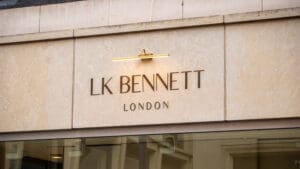
The struggling British fashion brand LK Bennett has been bought out of administration by US restructuring specialist Gordon Brothers, raising the prospect that its remaining nine UK shops could close with the loss of around 380 jobs.
Gordon Brothers, which acquired Poundland for £1 last year, confirmed it has purchased LK Bennett’s global brand and intellectual property assets for an undisclosed sum after the retailer collapsed for the second time in six years.
The Boston-based firm said the womenswear label would move to an “asset-light” model, fuelling speculation that LK Bennett could become an online-only business. The future of its physical estate and workforce remains uncertain.
Tobias Nanda, head of brands at Gordon Brothers, said LK Bennett remained a “beloved heritage brand” with strong international appeal.
“We are excited to add LK Bennett to our portfolio and proud to steward the brand into its next phase of growth, bringing its modern luxury to both long-time followers and new customers around the world,” he said.
Founded in the early 1990s by Linda Bennett with a single store in Wimbledon, LK Bennett became known for its signature shoes, handbags and occasionwear. At its peak, the brand operated more than 200 stores globally, but has since shrunk to just nine standalone UK shops and 13 concessions.
The business has struggled for more than a decade following private equity ownership. Bennett sold a majority stake to Phoenix Equity Partners in 2008 for an estimated £80m to £100m, before later returning as a consultant as profits collapsed. She bought the company back in 2017 after it posted a £48m loss.
In 2019, LK Bennett entered administration for the first time and was acquired by Rebecca Feng, its Chinese franchise partner, leading to the closure of 15 stores. More recent accounts revealed the business had recorded a £3.5m loss in 2024 and carried almost £22m of debt, prompting auditors to warn of “material uncertainty” over its future.
Nimit Shah, managing director for Europe, the Middle East and Africa at Gordon Brothers, said the firm believed LK Bennett was “capable of reinvigoration under a new asset-light model”, suggesting a sharp pivot away from the traditional high street.
The acquisition comes amid sustained pressure on the premium fashion sector, which has struggled with weaker consumer demand and rising costs. While some rivals, such as Reiss and Me+Em, have successfully adapted their offer, LK Bennett has been hampered by what analysts describe as a dated business model and slower response to changing tastes.
The wider UK retail sector has also seen a wave of restructurings. Footwear brand Russell & Bromley was bought out of administration by Next earlier this month, a deal that will result in the closure of most of its stores.
LK Bennett reported revenues of £42.1m in the year to January 2024, down from £48.8m the previous year, swinging from a £2.3m profit in 2023 to a £3.5m post-tax loss. The company employs around 380 people.
Gordon Brothers’ takeover now leaves staff and customers waiting for clarity on whether LK Bennett’s physical presence on the UK high street will survive its latest rescue.
Read more:
Poundland owner Gordon Brothers buys LK Bennett out of administration
Royal Mail delivered Christmas post late to 16 million people, Citizen …

Royal Mail has come under renewed fire after research found it failed to deliver Christmas letters and cards on time to around 16 million people, the worst festive performance in five years outside periods of strike action.
The findings, published by Citizens Advice, suggest the number of people affected by delays over Christmas 2025 was 50 per cent higher than in 2024, highlighting what campaigners describe as a persistent deterioration in postal services.
Anne Pardoe, head of policy at Citizens Advice, said the scale of disruption was “simply unacceptable”, particularly given that many households have no alternative postal provider.
“We’re afraid there’s no light at the end of the tunnel for consumers struggling with Royal Mail’s persistent delivery failures,” she said. “When people have no other postal provider to choose from, the sheer volume of delays is unacceptable.”
The research, based on a survey of almost 2,100 adults conducted by Yonder, found that 5.7 million of those affected missed out on receiving important correspondence, including health appointments, benefit decisions, fines and legal documents.
Pardoe warned that the problem went far beyond late Christmas cards. “This is a worrying trend, and with cuts to delivery days looming, Ofcom must crack down harder on missed targets before things go from bad to worse,” she said.
Ofcom does not apply its standard delivery targets to Royal Mail during the busy festive period, a long-standing exemption that consumer groups have criticised.
Royal Mail rejected claims that its Christmas performance was poor. A spokesperson said: “Independent data shows that more than 99 per cent of items posted by the last recommended dates arrived in time for Christmas. This was during our busiest time of year, when volumes more than double, and we’re grateful to our teams across the country who worked incredibly hard to deliver for customers.”
The disruption came during the first Christmas since the £3.6bn takeover of Royal Mail’s parent company, International Distribution Services, by Czech billionaire Daniel Křetínský.
In July, Ofcom approved plans allowing Royal Mail to end second-class deliveries on Saturdays and move to an alternating weekday service from Monday to Friday, a change that has fuelled concerns about further declines in reliability.
At the same time, the cost of postage has risen sharply. A first-class stamp now costs £1.70 — more than double its 2020 price — while a second-class stamp costs 87p. Citizens Advice said 36 per cent of those surveyed sent fewer Christmas cards this year because stamps were too expensive.
Royal Mail has not met its Ofcom-mandated delivery targets for first-class post since 2017, or for second-class mail since 2020. In October, the regulator fined the company £21m for missing annual targets.
“Any future stamp price increases should be conditional on Royal Mail meeting these targets,” Pardoe said.
The challenges facing the service reflect a long-term shift in usage. A decade ago, Royal Mail delivered around 20 billion letters a year; that figure has fallen to 6.7 billion and could drop to 4 billion within four years. Over the same period, the number of addresses served has increased by around four million.
Royal Mail also faced criticism ahead of Christmas after downgrading a staff perk, replacing books of first-class stamps with second-class stamps for employees.
Citizens Advice said the latest figures underline the need for tougher regulatory intervention, warning that without meaningful improvement, millions of consumers will continue to face delayed or missed deliveries for essential correspondence.
Read more:
Royal Mail delivered Christmas post late to 16 million people, Citizens Advice finds

