

The Transport Committee has called on the Government to seize “once-in-a-generation” opportunities to secure the future skills pipeline for the UK’s transport manufacturing sector, amid mounting shortages and the rapid shift to cleaner technologies.
In a new report published today, MPs warn that manufacturers across aerospace, automotive, rail and maritime industries are struggling to access the skilled workforce they need at a time when the transition to net zero and advanced engineering is fundamentally reshaping job requirements.
The Committee says the UK’s long-standing strength in producing cars, buses, aircraft, trains and ships is at risk unless vocational training, apprenticeships and workforce development are better aligned with modern industry needs.
Evidence to the inquiry highlighted acute skills gaps across multiple subsectors, with witnesses stressing that the move towards electric vehicles, alternative fuels and digital systems has transformed the nature of manufacturing roles. MPs concluded that current training pathways are too slow to adapt and are failing to attract enough young people into what should be “lucrative and fulfilling” careers.
To address this, the report urges the Department for Transport to carry out a comprehensive assessment of how well the UK’s vocational training system is meeting the needs of transport manufacturers. The findings should then be shared across government to inform reforms to skills pathways.
The Committee also calls on Skills England to consult on the introduction of a “competency passport” that would formally recognise transferable skills, making it easier for workers to move between roles and subsectors within transport manufacturing.
While acknowledging the Government’s intention to rebalance funding towards younger workers, MPs expressed concern that the removal of funding for level 7 apprenticeships for people aged 22 and over could undermine the supply of experienced, highly skilled workers. The report supports calls, echoed by the Education Committee, for level 7 funding to be reinstated across the eight growth sectors identified in the Government’s Modern Industrial Strategy.
The report also examines the apprenticeship levy system. Although manufacturers broadly support the principle of the levy, MPs say restrictions on how funds can be spent are limiting employers’ ability to invest effectively in skills. The Committee recommends greater flexibility under the forthcoming Growth and Skills Levy and suggests the Government consider linking access to levy funding to employers’ progress against their own diversity targets.
Addressing gender imbalance, the report highlights the under-representation of women in transport manufacturing and calls for stronger accountability. It recommends that employers receiving levy funding report annually on uptake by people with caring responsibilities or those returning from career breaks, and that the Government review progress towards its target of women making up 35 per cent of the advanced manufacturing workforce by 2035.
Ruth Cadbury, chair of the Transport Committee, said the sector was at a pivotal moment.
“The UK’s track record in transport manufacturing is something to be proud of, but the sector faces an array of challenges,” she said. “We need to harness the talent we already have while making sure the next generation sees this as a sector full of opportunity.”
She added that outdated training routes risk pushing young people away just as demand for skills in electric vehicles and alternative fuels accelerates. “If we don’t act now, other nations will motor ahead while we stand still,” she warned.
The report concludes that without urgent reform to training, funding and workforce mobility, the UK risks missing out on growth opportunities in transport manufacturing, particularly in net zero technologies, at a time when global competition is intensifying.
Read more:
Transport Committee urges action to secure skills pipeline for UK transport manufacturing
Month: January 2026
Lords warn pensions inheritance tax changes risk overwhelming personal …

Peers have warned that the government’s proposed inheritance tax reforms covering pensions could place an unrealistic and potentially unmanageable burden on personal representatives, creating widespread delays, cashflow pressures and legal risk for those administering estates.
In a report published today, the House of Lords Economic Affairs Finance Bill Sub-Committee examined the tax administration and practical implications of measures in the government’s Draft Finance Bill 2025–26. The inquiry focused on changes to the inheritance tax (IHT) treatment of unused pension funds and death benefits, alongside reforms to agricultural and business property reliefs.
One of the committee’s strongest criticisms relates to the decision to bring unused pension funds within the scope of IHT while retaining the existing six-month deadline for payment. Peers concluded that it is “not realistic” to expect personal representatives to meet that deadline, given how long pension scheme administrators typically take to provide valuations and release information.
The report warns that many personal representatives are likely to incur late payment interest through no fault of their own, because pension assets are often inaccessible within the statutory timeframe.
“It cannot be right to impose a timescale for payment of tax if that timescale is, for many, impossible to meet,” the committee said.
Peers also raised concerns that personal representatives could become liable for IHT on pension assets they neither control nor can access, creating significant cashflow strain. The report cautions that this could deter both lay individuals and professionals from acting as personal representatives, increasing costs and delays for bereaved families.
To address these risks, the committee has called on the government to introduce a statutory “safe harbour” protecting personal representatives from late payment interest where they can demonstrate that reasonable steps were taken to meet the deadline but delays were outside their control. It also recommends extending the six-month IHT payment deadline to 12 months for pension assets during a transitional period, allowing pension administrators time to update their processes.
The report also examines the proposed reforms to Agricultural Property Relief (APR) and Business Property Relief (BPR), warning that these changes are likely to increase administrative complexity and exacerbate liquidity problems for estates.
Witnesses told the committee that many farms and family businesses are asset-rich but cash-poor, meaning that even where instalment options exist, the interaction between valuations, probate sequencing and tight payment deadlines could force asset sales to meet tax liabilities. Peers warned this could undermine future business investment and succession planning.
The committee also heard concerns that the reforms risk creating a generational divide. While younger farmers and business owners may have time to adapt, older or more vulnerable owners have limited options, particularly due to anti-forestalling provisions that restrict the use of lifetime gifting.
As a result, the committee recommends extending the IHT payment deadline to 12 months for estates with qualifying APR and BPR assets, and urges the government to monitor the cumulative impact of the reforms over a seven-year period, especially on farmers and family-owned businesses.
Further concerns were raised about how the death of a key individual can affect business valuations for IHT purposes. The committee said the government should review how valuation rules reflect the loss of a key person and consider whether the current framework remains appropriate.
Peers were also critical of the government’s consultation process, saying the repeated late-stage changes to the proposals were the result of narrow and insufficient engagement with stakeholders, causing unnecessary anxiety and cost.
Lord Liddle, chair of the Finance Bill Sub-Committee, said: “Our inquiry focused on how the government plans to implement these inheritance tax changes. While we welcomed some of the adjustments made at Budget 2025, significant work remains to ensure these measures function in practice for personal representatives, businesses and farms.”
He added that the committee was particularly concerned about the impact on personal representatives dealing with estates during periods of grief.
“Bringing pensions into inheritance tax risks creating significant delays and additional costs, and many of those affected may be entirely unaware of how these changes will impact them,” he said. “A recurring theme throughout our inquiry was the lack of proper consultation. We want to ensure this does not happen again.”
The report now places pressure on ministers to rethink the practical implementation of the reforms before the legislation is finalised, amid growing concern that well-intentioned tax changes could create serious unintended consequences for families, businesses and the professionals tasked with administering estates.
Read more:
Lords warn pensions inheritance tax changes risk overwhelming personal representatives
Anti-snoring innovators secure £1.48m NIHR funding to tackle sleep ap …

Zeus Sleep Ltd has been awarded £1.48 million in funding from the National Institute for Health and Care Research (NIHR) to lead one of the UK’s largest multi-centre clinical trials into Obstructive Sleep Apnoea (OSA).
The trial will be led by Guy’s and St Thomas’ NHS Foundation Trust in partnership with King’s College London, and will evaluate a next-generation, non-invasive medical device designed to address sleep apnoea by stimulating the airway at the source.
The funding follows new consumer research from Zeus Sleep, which found that 56% of adults say snoring has either a significant or slight negative impact on their lives. More than a third (36%) report being forced to sleep in a separate room or on the sofa, while 11% say ongoing snoring could cause their relationship to deteriorate.
Zeus Sleep’s first consumer anti-snoring device is already available in the UK, helping individuals and their partners reduce night-time disruption. Building on this success, the company is now preparing to launch a regulated medical device for OSA in early 2026, informed by the NIHR-funded trial and supported by evidence from three earlier clinical studies.
OSA affects an estimated eight million people in the UK and more than one billion globally. The condition is characterised by repeated airway collapse during sleep, leading to fragmented rest, excessive daytime fatigue, increased cardiovascular risk and a higher likelihood of accidents.
While Continuous Positive Airway Pressure (CPAP) therapy remains the NHS gold standard, more than half of patients abandon treatment within a year due to discomfort or inconvenience, often leaving lifestyle advice as the only alternative.
The ZeusOSA device is worn discreetly under the chin at night and delivers gentle electrical stimulation to the hypoglossal nerve, helping maintain airway patency during sleep. Unlike surgically implanted nerve stimulators, the device is non-invasive, designed for home use and significantly more affordable, positioning it as a potentially scalable solution for NHS adoption.
Earlier trials, including an NHS study in Dorset, have shown encouraging outcomes. In these studies, 84% of participants reported improved sleep quality, 78% experienced better daytime functioning and 68% reported reduced daytime sleepiness. Crucially, adherence reached 85%, far exceeding typical CPAP compliance rates.
Professor Joerg Steier, chief investigator of the new trial, said: “Obstructive sleep apnoea is highly prevalent, yet CPAP non-adherence leaves too many patients without effective care. The Zeus device has demonstrated promising results with good tolerance in home use. This NIHR-funded trial will provide the robust evidence needed to support NHS decision-making.”
Beyond physical health, the research highlights broader wellbeing concerns. More than a quarter of respondents (26%) fear constant snoring leaves them permanently tired, while 13% say it causes or worsens anxiety. One in ten said they would pay whatever it takes to stop snoring permanently.
Nigel Clarke, chief executive of Zeus Sleep, said the funding marks a major milestone. “Our consumer device is already improving lives, and with NIHR support and our clinical partners, we can now build the evidence needed to bring a medical version into the NHS,” he said. “Our goal is simple: to help people sleep better, feel better and live better.”
If successful, the trial could pave the way for a new era in sleep medicine, offering millions of patients a practical alternative to CPAP and reducing the long-term burden of untreated sleep apnoea on the NHS.
Read more:
Anti-snoring innovators secure £1.48m NIHR funding to tackle sleep apnoea at its source
BGF posts strong deal flow and landmark exits in 2025, returning £600 …
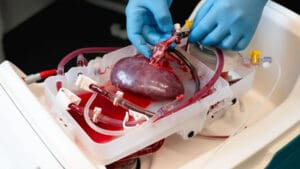
BGF has reported a strong year of investment and exit activity in 2025, underpinned by landmark portfolio realisations, robust trading performance and continued backing for founders across the UK and Ireland.
The growth capital investor returned more than £600 million during the year, delivering a money multiple of over 2x, and paid a £75 million dividend to shareholders. The performance was driven by a series of high-profile exits, led by the sale of OrganOx, which generated BGF’s largest-ever return.
BGF had supported OrganOx (pictured) with six follow-on investments, and the exit valued the business at $1.5 billion, delivering £175 million of proceeds. The transaction is one of the largest medtech exits on record in the UK. Additional exits during the year included green technology specialist Monodraught and uPVC sash window manufacturer Victorian Sliders, both of which delivered substantial returns.
Portfolio performance remained strong throughout the year. Companies within BGF’s Growth portfolio increased revenues by more than 10 per cent on average, while EBITDA growth exceeded 20 per cent, reflecting resilient trading conditions and operational progress despite a challenging macroeconomic backdrop.
Investment activity was also robust. BGF deployed £416 million in 2025, comprising 23 new growth investments, five early-stage investments and 45 follow-on rounds. This equated to £280 million into new growth deals, £25 million into early-stage businesses and £111 million in follow-on capital.
Notable new investments included £15 million into Nottingham-based Cronofy to support product development and international expansion; a £30 million investment in London-based TMT ID to accelerate US growth and enhance its mobile identity and fraud prevention technology; and £15 million backing Scottish housebuilder Cruden to support sustainable housing delivery and regional expansion.
Deal activity in 2025 also coincided with a major strategic milestone for BGF, which announced a £3 billion commitment to invest in UK businesses over the next five years. The pledge represents a step up from the £2.3 billion invested between 2020 and 2024 and includes at least £300 million earmarked for female-powered businesses, reinforcing BGF’s focus on inclusive growth and widening access to capital.
The firm strengthened its leadership and advisory capabilities during the year through a series of senior appointments. Anita Dougall joined the board as a non-executive director, bringing entrepreneurial and data-led growth expertise. Tracy Bownes was appointed head of value creation to deepen operational support for portfolio companies, while Tom Pearson joined as head of data and AI. Indro Mukerjee also joined BGF’s Deep Tech & Climate Advisory Board, adding specialist insight into innovation-led growth.
Andy Gregory, chief executive of BGF, said the results reflected the strength of the firm’s regional model and its long-term approach to growth capital.
“2025 was a strong year for BGF, with landmark exits and continued support for founders across the UK and Ireland,” he said. “Our performance reflects our ability to deploy flexible capital at scale while providing hands-on support to help businesses grow, create jobs and contribute to long-term economic growth.”
Since its launch in 2011, BGF-backed companies have delivered £7.1 billion in revenue growth, £1 billion in export growth and created more than 27,000 jobs, highlighting the impact of patient capital on the real economy.
BGF’s social impact arm also expanded its activity in 2025. The BGF Foundation announced its largest-ever funding commitment, with £820,000 allocated to new multi-year partnerships, follow-on funding and staff grants. The foundation worked with more than 30 UK charities during the year, providing unrestricted funding, strategic advice and pro bono support, while employee-led volunteering time has increased by more than 60 per cent over the past three years.
Looking ahead, 2026 will mark BGF’s 15th anniversary. To coincide with the milestone, the firm plans to launch a “Celebration of Entrepreneurship”, showcasing the achievements of BGF-backed founders and the role long-term growth capital has played in scaling businesses across the UK and Ireland.
Read more:
BGF posts strong deal flow and landmark exits in 2025, returning £600m to investors
One in three graduates on benefits say poor health prevents them from …

One in three graduates who are out of work and claiming benefits say poor health is preventing them from finding employment, as new analysis highlights mounting concern over the value of some university degrees and the UK’s approach to skills training.
Research by the Centre for Social Justice (CSJ) shows that 707,000 graduates are now claiming benefits, a 46 per cent increase since 2019. Of those, around 240,000 cited health problems as the main reason they were unable to work in 2025, up from 117,000 before the pandemic.
The findings come against a backdrop of rising economic inactivity among young people. Government data indicates there are almost 950,000 people not in education, employment or training (Neets), with the CSJ reporting that 80 per cent of benefit-claiming graduates under the age of 30 point to health-related issues.
The picture is particularly stark among 16- to 24-year-olds who are out of work. Only 34 per cent hold qualifications at A level or above, while around 30 per cent have GCSE-level qualifications and 36 per cent have qualifications below GCSE or of unknown level.
The analysis has intensified scrutiny of degrees with low earning potential. According to the CSJ, some performing arts graduates from institutions including the Conservatoire for Dance and Drama and University of Wales Trinity Saint David earned less than £20,000 five years after graduating. Psychology graduates from University of Suffolk and the University of Bolton earned under £21,000 over the same period.
In a report published in December, the CSJ urged ministers to “stop churning out graduates and start training workers”, arguing that vocational routes offer stronger outcomes for many young people.
Its analysis found that higher-level apprenticeships consistently outperform degrees in earnings terms. While the lowest-paid quarter of graduates earned £24,800 five years after finishing university, those completing level 2 apprenticeships earned £24,810, rising to £28,260 for level 3 apprenticeships. Higher-level apprenticeships, including roles such as accounting technicians, child therapists and network engineers, delivered average earnings of £37,300.
Similar conclusions have been reached by the Resolution Foundation, which found that the graduate wage premium has steadily eroded. Two decades ago, graduates earned around 2.5 times the minimum wage; by 2023 that figure had fallen to 1.6 times.
The CSJ also highlighted the UK’s heavy reliance on university routes compared with European peers. For every three young people entering university in Britain, only one pursues vocational training. In the Netherlands the ratio is two-to-one, while in Germany it is one-to-one.
The findings place renewed pressure on Keir Starmer, who said last year that the UK’s benefits system was “broken” and that reform was a “moral imperative”. The government initially aimed to save £5 billion by tightening eligibility for Personal Independence Payment (PIP) and other health-related benefits, but those plans were delayed after opposition from Labour backbenchers.
The number of people claiming PIP continues to rise, with around 3.9 million recipients in October 2024, 200,000 more than at the start of the year. The Department for Work and Pensions forecasts that 8.7 million people will be claiming disability-related benefits by the start of the next decade, up from just under 7 million today.
Former Labour cabinet minister Alan Milburn, who is leading a government-commissioned review into youth inactivity, warned last week of a “lost generation” of almost one million people aged 16 to 24 who are neither working nor studying. He argued that successive governments had prioritised policies benefiting older generations, leaving Britain facing a “moral, social and economic crisis”.
A government spokesperson said ministers were determined to support young people into work, pointing to a new jobs guarantee and £1.5 billion of investment in apprenticeships and training.
“We’re helping young people who are out of work into paid placements, with employers such as E.ON, JD Sports, Tesco and TUI already pledged,” the spokesperson said. “We’ve also commissioned Alan Milburn to get to the root of what’s holding young people back, because this issue demands urgent action.”
The CSJ argues that without a decisive shift away from low-value degrees and towards vocational and technical training, the number of graduates unable to find work, and reliant on benefits, will continue to rise.
Read more:
One in three graduates on benefits say poor health prevents them from working
Synthesia raises $200m at $4bn valuation in Google Ventures-led round

Synthesia has raised $200 million (£146 million) in fresh funding in a round led by Google Ventures, pushing the London-based company’s valuation to $4 billion and cementing its position as one of the UK’s most valuable artificial intelligence businesses.
The investment marks a sharp step up from Synthesia’s previous £146 million Series D round in January 2025, which valued the company at $2.1 billion, highlighting the speed at which the business has scaled amid the global AI boom.
The latest round also attracted backing from Evantic, founded by former Sequoia partner Matt Miller, and Hedosophia, alongside participation from existing investors including NVentures, Accel, Kleiner Perkins, New Enterprise Associates, PSP Growth, Air Street Capital and MMC Ventures.
As part of the transaction, Synthesia will also facilitate an employee secondary share sale in partnership with NASDAQ, priced at the new $4 billion valuation.
The company said the capital will be used to “build a category-defining company that will transform how employees learn”, with a focus on enterprise learning and development, internal knowledge sharing, product marketing and sales enablement, powered by increasingly autonomous AI agents.
Founded in London, Synthesia enables businesses to create studio-quality video content using AI-generated avatars, eliminating the need for cameras, actors or production studios. The platform is now used by more than 90 per cent of Fortune 100 companies to streamline corporate communications, training and marketing.
The business has seen rapid growth through 2025, with annual recurring revenue surpassing $100 million. Co-founder and chief executive Victor Riparbelli recently revealed that the company generated $2 million in ARR in a single day.
Synthesia became a unicorn in 2023 and has since accelerated its international expansion, targeting markets including Japan, Australia, Europe and North America. It now employs more than 500 people across offices in London, New York, Copenhagen, Amsterdam, Zurich and Munich, with a significant proportion of its revenue coming from the United States.
In July, the company opened a new 20,000-square-foot headquarters in London, attended by Sadiq Khan and business secretary Peter Kyle.
Riparbelli said the funding would allow Synthesia to scale its long-term vision. “Synthesia was founded on two core beliefs: that AI will bring the cost of content creation down to zero, and that AI video provides a more engaging way for organisations to communicate and learn,” he said.
“We’re seeing a convergence of two major shifts — more capable AI agents and a market where upskilling and internal knowledge sharing are now board-level priorities. We intend to build the defining company at that intersection.”
The chancellor, Rachel Reeves, hailed the raise as a sign of the UK’s growing strength in AI. “Synthesia is a UK success story, creating new jobs and opportunities,” she said. “By backing innovators to start, scale and stay in Britain, we can turn the promise of AI into better-paid jobs and long-term economic growth.”
The funding underlines strong investor appetite for enterprise-focused AI platforms and places Synthesia at the forefront of the next wave of workplace automation and digital learning.
Read more:
Synthesia raises $200m at $4bn valuation in Google Ventures-led round
Scarlett Johansson and Cate Blanchett back campaign accusing AI firms …

Scarlett Johansson and Cate Blanchett are among hundreds of actors, musicians and writers backing a new campaign accusing artificial intelligence companies of unlawfully exploiting creative work to train their systems.
The campaign, titled “Stealing Isn’t Innovation”, launched on Thursday with the support of around 800 creative professionals, including the band R.E.M. and bestselling author Jodi Picoult.
In a joint statement, the signatories accuse technology companies of using copyrighted material “without authorisation or regard for copyright law” to build commercial AI platforms.
“Artists, writers and creators of all kinds are banding together with a simple message,” the statement said. “Stealing our work is not innovation. It’s not progress. It’s theft — plain and simple.”
The campaign urges AI developers to pursue licensing agreements and partnerships with rights holders rather than scraping creative content from the open web. It also acknowledges firms that have already taken that approach. OpenAI, the developer of ChatGPT, has signed licensing deals with organisations including Disney and The Guardian, while Warner Music Group has reached an agreement with AI music generator Suno.
Despite these deals, copyright remains one of the most contentious issues in the AI boom. Large language models and image generators rely on vast datasets drawn from online text, images and audio to generate responses. Many creators argue this material is protected intellectual property and should not be used without consent or compensation.
AI firms, including OpenAI, have countered that using publicly available data falls under “fair use”, a doctrine in US law that permits limited use of copyrighted material without permission in certain circumstances. The argument is now being tested in courts, with dozens of lawsuits filed in the United States over the past two years.
Johansson has already found herself at the centre of the debate. In 2024, she accused OpenAI of using a voice that closely resembled her own for a ChatGPT assistant, saying she was “shocked, angered and in disbelief”. The company subsequently removed the voice.
Other high-profile supporters of the campaign include actor Joseph Gordon-Levitt, Breaking Bad creator Vince Gilligan and singer Cyndi Lauper. Gilligan previously described generative AI as “the world’s most expensive and energy-intensive plagiarism machine”.
The initiative has been organised by the Human Artistry Campaign, whose backers include the Writers Guild of America, the Recording Industry Association of America and actors’ union SAG-AFTRA, which went on strike in 2023 partly over concerns about AI use.
The debate is also intensifying in the UK. The government has faced criticism over proposals that would allow AI firms to use copyrighted material without prior permission unless creators explicitly opt out. The technology secretary, Liz Kendall, said this month that ministers were seeking a “reset” on the policy, with an official review expected to be published in March.
As AI adoption accelerates across media, entertainment and publishing, the campaign signals a growing push by creators to assert control over how their work is used — and to ensure that the next wave of technological innovation does not come at their expense.
Read more:
Scarlett Johansson and Cate Blanchett back campaign accusing AI firms of ‘theft’
Poundland shuts 149 stores and cuts 2,200 jobs in £1 refocus turnarou …

Poundland has closed 149 stores and cut 2,200 jobs as part of a sweeping turnaround plan aimed at stabilising the business after a period of heavy losses and declining sales.
The discount retailer said the closures mark the final phase of a restructuring programme launched last year, following a collapse into the red that was blamed on weak trading conditions and an unpopular overhaul of its clothing ranges.
Poundland was bought for £1 from Pepco Group in June last year by US restructuring specialist Gordon Brothers, which has since pledged up to £80 million to revive the business.
As part of the reset, Poundland has refocused on its core proposition, with around 60 per cent of its range now priced at £1. The retailer is also relaunching its Pep & Co clothing label after sales were hit by a switch to ranges supplied by its former parent company.
Adult Pep & Co clothing will return to stores by the end of this month, with children’s and baby ranges due to follow in February.
The closures form part of a wider shake-up first announced last June after Poundland posted a £51 million pre-tax loss in 2024. Alongside store closures, the plan included rent reductions, the closure of distribution centres, the end of online sales, the scrapping of its Perks loyalty app and the withdrawal from frozen and most chilled food categories.
Poundland confirmed that its frozen and digital distribution centre in Darton, South Yorkshire, and its national distribution centre at Springvale in Bilston, West Midlands, have now closed. Two other distribution centres, in Wigan and Harlow, remain operational.
Despite the upheaval, the company reported signs of improvement. Underlying profits more than doubled to £17.3 million in the three months to 28 December compared with the same period a year earlier. The number of items sold rose by 2 per cent, although like-for-like sales at established stores fell 2.9 per cent, even after stripping out categories that are no longer sold.
Founded in 1990 with its first store in Burton upon Trent, Poundland has struggled in recent years amid rising business rates, energy and staffing costs, as well as intense competition from rivals including The Range, B&M, Savers and low-cost online platforms such as Temu and Shein.
The discount sector has already seen significant consolidation. Wilko collapsed in 2023, with its brand later acquired by The Range, while Poundstretcher was bought in 2024 by Fortress, owner of Majestic Wine. Poundworld shut its 350 stores in 2018, and Poundland previously acquired rival 99p Stores in 2015.
Barry Williams, managing director of Poundland, said the store closure programme was now complete and that early signs suggested the turnaround was gaining traction.
“We have clear indications from the work we’ve already done that we’re on the right track,” he said. “While there’s been significant progress as we re-focus and re-energise the business with lower prices and a sharper offer, we know we still have much to do.”
Williams said customers wanted a simpler proposition that delivered clear value. “That’s why our focus in 2026 will be on delivering the kind of ranges and price simplicity our customers want across the store — from clothing and homewares to our core grocery aisles,” he added.
Gordon Brothers said its planned £80 million investment would support Poundland’s recovery as it seeks to rebuild profitability in an increasingly competitive discount retail market.
Read more:
Poundland shuts 149 stores and cuts 2,200 jobs in £1 refocus turnaround
Government steps in with £25m investment to keep AI firms listed in L …

The government has made a £25 million investment in Kraken Technologies in a bid to persuade the fast-growing artificial intelligence business to list in London rather than New York.
The investment, made by the British Business Bank, is the state lender’s largest direct commitment to a single company to date and forms part of Kraken’s wider $1 billion funding round ahead of its demerger from Octopus Energy.
Ministers hope the backing will help anchor the $9 billion AI platform in the UK and support a future flotation on the London Stock Exchange, amid growing concern about Britain’s ability to retain high-growth technology firms.
Speaking during a visit to Kraken’s London headquarters, business secretary Peter Kyle said the investment formed part of a broader £125 million package designed to help scale-up companies grow and list domestically.
“I want Kraken to be known as a British success,” Kyle said. “I want the London Stock Exchange to be a beacon for global investors as well as British companies looking to go public.”
Kraken is an AI-powered software platform that manages billing and customer services for energy companies. Originally developed by Octopus Energy, the platform has been licensed to several rival suppliers and now handles billing for around half of all UK households, as well as roughly 55 million households worldwide.
Last month, Kraken secured a $1 billion investment from new and existing shareholders as part of its separation from Octopus Energy, valuing the business at $8.65 billion.
Greg Jackson, founder of Octopus Energy and a government adviser, said he would personally prefer to see Kraken list in London, but acknowledged competition from overseas markets.
“The UK has to win it on its merits,” he said. “Having the British Business Bank at the table means it can influence whether a listing ends up in London or New York.”
Jackson said Kraken could be ready to list as early as 2027, but stressed there was no fixed timetable. “It will be about when the company is ready,” he said.
The move comes amid heightened scrutiny of the UK’s capital markets following a wave of de-listings, aborted IPO plans and companies shifting their primary listings overseas, particularly to the United States. While there have been tentative signs of recovery in London’s IPO market, ministers are under pressure to demonstrate that Britain can support companies through the crucial scale-up phase.
Alongside the Kraken investment, the government announced two £50 million commitments to life sciences and technology funds, including Epidarex Capital and IQ Capital, as part of what Kyle described as “big bets on the industries where Britain can win”.
The government has also pledged £180 million for battery research and development through a £452 million innovation programme under its industrial strategy, and is pressing ahead with plans to reduce regulation, including reviews of health and safety and agricultural technology rules.
The role of the British Business Bank has been expanded following Labour’s spending review and industrial strategy last year. The bank, which is headquartered in Sheffield and was established in 2014 to improve access to finance for UK businesses, received £6.6 billion in new capital in June, taking its total financial capacity to £25.6 billion.
Kyle, who took over as business secretary in September, said the aim was to ensure Britain’s most promising companies grow at home rather than being sold or listing overseas.
“We are the start-up capital of Europe,” he said. “But we are not yet good enough at scaling and keeping businesses here, to build here, grow here and expand here. Too often, companies reach a certain size and then move on.”
Ministers say targeted state-backed investment in sectors such as AI, life sciences and advanced batteries will be critical if the UK is to compete with the deep capital markets of the United States and retain its next generation of global technology champions.
Read more:
Government steps in with £25m investment to keep AI firms listed in London

