

ScottishPower has secured £600 million in financing from the National Wealth Fund to support the development of a major subsea electricity link designed to strengthen the UK’s energy security and accelerate the transition to clean power.
The funding will go towards Eastern Green Link 4 (EGL4), a 2GW high-voltage direct current (HVDC) cable running between Fife in Scotland and Norfolk in England. At approximately 530 kilometres in length, the project will be capable of transmitting enough electricity to power around 1.5 million homes.
EGL4 is part of a new generation of long-distance, bidirectional subsea infrastructure aimed at modernising the UK’s electricity grid. By enabling renewable energy generated in Scotland, particularly wind power, to be transported efficiently to demand centres in England, the link is expected to reduce grid congestion and cut so-called “constraint costs”, where excess energy is wasted or curtailed.
The project is also intended to reduce reliance on imported fossil fuels, which remain vulnerable to global price shocks and geopolitical instability.
Energy Minister Michael Shanks said such grid upgrades are essential to stabilising energy costs and maximising the benefits of domestic clean power generation.
“Grid investment is key to getting Britain off the rollercoaster of fossil fuel prices,” he said, adding that projects like EGL4 will also support job creation and regional economic growth.
The financing builds on a previous £600 million loan provided by the National Wealth Fund in 2025 to support a portfolio of ScottishPower network projects, highlighting an ongoing partnership between government-backed capital and private sector investment.
Chancellor Rachel Reeves said the deal demonstrates the role of the fund in supporting strategic national infrastructure.
“This is exactly why we created the National Wealth Fund, to put the full power of government behind strategic investment that secures Britain’s future,” she said.
Oliver Holbourn, chief executive of the fund, added that backing projects like EGL4 is critical to ensuring the UK’s energy system is “fit for the future”.
The project forms part of a broader expansion of electricity networks required to meet the UK’s clean energy ambitions. According to the National Energy System Operator, around £58 billion of investment will be needed across Great Britain by 2035 to deliver a fully decarbonised power system.
ScottishPower’s parent company, Iberdrola, has committed to investing £12 billion in UK transmission and distribution networks by 2028 as part of its wider electrification strategy.
Keith Anderson, chief executive of ScottishPower, said the new financing would help accelerate delivery of critical infrastructure aligned with the government’s Clean Power 2030 targets.
Beyond energy security, the project is expected to deliver broader economic benefits. ScottishPower has indicated it will expand its workforce, particularly in central and southern Scotland, to support network upgrades and construction activity.
Douglas Alexander said the investment reflects a commitment to “kickstarting economic growth” while strengthening national infrastructure.
The EGL4 project underscores a wider shift in UK energy policy towards large-scale electrification and grid modernisation, recognising that renewable generation alone is insufficient without the infrastructure to distribute it efficiently.
As demand for electricity rises — driven by electrification of transport, heating and industry, the ability to move power across regions will become increasingly critical.
By combining public financing with private sector delivery, the government is aiming to accelerate deployment while ensuring projects of national significance can proceed despite the scale of investment required.
For the UK, projects like EGL4 represent more than infrastructure upgrades, they are foundational to building a more resilient, self-sufficient and low-carbon energy system capable of withstanding future global shocks.
Read more:
ScottishPower secures £600m backing for major UK subsea power link
Month: March 2026
UK inflation holds at 3% ahead of expected post-war price surge

UK inflation remained unchanged at 3% in the year to February, offering a brief period of stability before economists expect a renewed surge in price pressures driven by the Middle East conflict.
Figures from the Office for National Statistics (ONS) show that annual inflation held steady following months of gradual decline, with rising clothing prices offset by lower fuel and alcohol costs.
However, the data was collected before the escalation of the US-Israel conflict with Iran, an event that has already triggered sharp increases in global energy prices and is widely expected to feed through into higher inflation in the months ahead.
The main upward pressure on inflation in February came from clothing and footwear, where prices rose by 0.9% over the year. This marked a reversal from the previous month, when clothing prices had shown no increase.
ONS chief economist Grant Fitzner said the rise reflected typical seasonal pricing dynamics, but also highlighted the underlying volatility within the inflation basket.
“At the same time, falling petrol costs and discounted alcohol helped offset some of these increases,” he added, noting that alcohol and tobacco inflation reached its lowest level since early 2022.
While fuel costs helped keep inflation in check in February, that trend has already begun to reverse.
The ONS reported that petrol prices were at their lowest level since June 2021 during the data collection period, with average prices around 131.6p per litre. Since then, wholesale oil prices have surged, pushing pump prices significantly higher.
The price of crude oil has risen sharply following disruptions to global supply chains and shipping routes, particularly through the Strait of Hormuz — a key artery for global energy markets.
This shift is expected to have a cascading effect across the economy, increasing costs not only for transport but also for manufacturing, food production and leisure services as businesses pass on higher input costs.
For many companies, the impact is already being felt.
James Palmer, who runs a bus company in Essex, said fuel costs have risen dramatically in recent weeks, creating uncertainty and forcing difficult decisions.
“Three weeks ago we were paying around £1.21 per litre, now it’s closer to £1.86,” he said, highlighting the speed of the increase. Combined with rising wage costs, he warned that price rises for customers are becoming unavoidable.
“It’s the unpredictability that’s worrying,” he added. “We don’t want to let people down, but we may have no choice.”
Economists expect inflation to rise significantly over the course of 2026, with some forecasts suggesting it could peak at around 4.6% if energy prices remain elevated.
This would mark a reversal from the recent trend of easing inflation and could complicate monetary policy decisions for the Bank of England, which had previously been expected to begin cutting interest rates.
Instead, markets are now pricing in the possibility of further rate increases to contain inflation, a move that would place additional pressure on households and businesses.
The inflation data also comes as wage growth shows signs of slowing. Earnings excluding bonuses rose by 3.8% annually, still ahead of inflation for now, but vulnerable to being overtaken if price growth accelerates.
A renewed squeeze on real incomes could weigh heavily on consumer spending, further slowing economic growth.
Chancellor Rachel Reeves said the government is taking steps to ease the cost of living, including measures to stabilise food prices and improve long-term energy security.
However, economists warn that global factors, particularly energy markets, may limit the effectiveness of domestic policy interventions.
The February inflation figure represents a moment of calm before what could be another period of turbulence.
With energy prices rising, supply chains under strain and interest rate expectations shifting, the UK economy faces a delicate balancing act, one where inflation, growth and living standards are all tightly interconnected.
For now, inflation may be stable. But the forces shaping its next move are already in motion.
Read more:
UK inflation holds at 3% ahead of expected post-war price surge
Blackrock chief warns $150 oil could trigger global recession

The head of the world’s largest asset manager has warned that a sustained surge in oil prices to $150 a barrel could push the global economy into a sharp recession, as geopolitical tensions continue to destabilise energy markets.
Larry Fink, chief executive of BlackRock, said the trajectory of the Middle East conflict, particularly the role of Iran, will determine whether the world faces a temporary disruption or a prolonged economic shock.
“If oil prices stay elevated and Iran remains a threat, that will have profound implications,” he said, warning that a scenario of sustained high prices could lead to “a probably stark and steep recession”.
Fink outlined two contrasting outcomes for global markets.
In a more optimistic scenario, a resolution to the conflict and a stabilisation of relations could see oil prices fall back below pre-war levels, easing inflationary pressures and supporting growth.
However, in the more pessimistic case, prolonged instability could drive oil prices above $100, and potentially towards $150, for several years. That would significantly increase costs for businesses and consumers, acting as a drag on economic activity worldwide.
Energy prices have already surged in recent weeks, with Brent crude climbing sharply amid disruptions to supply routes and heightened uncertainty over future production.
Fink emphasised that rising energy prices disproportionately affect lower-income households, describing them as a “very regressive tax”.
“Higher energy costs hit the poorest the hardest,” he said, noting that sustained increases would not only dampen consumer spending but also exacerbate inequality.
The warning comes as governments, including the UK, face growing pressure to shield households and businesses from rising costs, even as public finances remain stretched.
The BlackRock chief urged policymakers to adopt a pragmatic approach to energy policy, combining existing fossil fuel resources with accelerated investment in renewables.
“Use what you have, unquestionably, but also aggressively move towards alternative sources,” he said.
He argued that high oil prices could ultimately accelerate the global transition to cleaner energy, as countries seek to reduce dependence on volatile fossil fuel markets. Solar and wind power, in particular, could see rapid expansion if energy costs remain elevated.
However, he warned that progress has been uneven. While China is investing heavily in solar and nuclear capacity, Europe risks falling behind due to slow implementation and regulatory inertia.
Despite market volatility, Fink dismissed comparisons with the 2007–08 financial crisis, insisting that today’s financial system is far more resilient.
“I don’t see any similarities at all, zero,” he said, arguing that while some stress is emerging in areas such as private credit funds, it represents a small portion of the overall market.
Fink also addressed concerns about a potential bubble in artificial intelligence, rejecting the idea that investment in the sector is overinflated.
“I do not believe we have a bubble at all,” he said, although he acknowledged that some companies may fail as the technology evolves.
He argued that AI is part of a broader race for technological dominance, particularly between the US and China, and that continued investment is essential to remain competitive.
At the same time, he highlighted the transformative impact AI is likely to have on the labour market. While some traditional office roles may decline, he expects significant job creation in skilled trades.
“There will be enormous demand for electricians, welders and plumbers,” he said, suggesting that societies will need to rethink their approach to education and career pathways.
With BlackRock overseeing around $14 trillion in assets, Fink’s outlook carries significant weight among policymakers and investors.
His warning underscores the fragile state of the global economy, where energy markets, geopolitical tensions and technological change are converging to reshape growth prospects.
For now, the key variable remains oil. If prices continue to climb towards the $150 threshold, the risk of recession will rise sharply, forcing governments and central banks to navigate an increasingly complex and volatile economic environment.
Read more:
Blackrock chief warns $150 oil could trigger global recession
Mike Lynch estate faces wipeout after $1.24bn HPE damages ruling
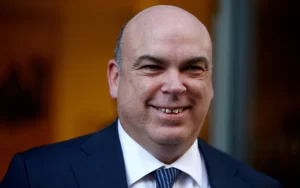
The estate of late tech entrepreneur Mike Lynch is facing the prospect of being effectively wiped out after the High Court ordered it to pay $1.24 billion in damages and interest to Hewlett Packard Enterprise (HPE).
The ruling marks the latest development in one of the UK’s most high-profile corporate fraud cases, stemming from HPE’s $11.7 billion acquisition of Autonomy in 2011.
The court had already awarded HPE approximately £700 million in damages last year. However, the addition of interest, calculated at around $236 million, has pushed the total liability to $1.24 billion.
Mr Justice Hildyard confirmed the additional sum and rejected an application by Lynch’s estate for permission to appeal, although a further appeal could still be sought through the Court of Appeal.
The case dates back more than a decade, with HPE first alleging fraud in 2012. The company argued that Autonomy’s financial position had been misrepresented ahead of the acquisition, a claim upheld by the High Court in 2022.
The judge found that Lynch and his former chief financial officer Sushovan Hussain had misled HPE, although he also concluded that the US firm would likely have proceeded with the deal regardless due to Autonomy’s perceived strategic value.
Hussain, who was convicted in the US and served a prison sentence, reached a separate £77 million settlement with HPE last year.
The scale of the damages raises serious questions about the viability of Lynch’s estate, which is estimated to be worth around £500 million, significantly less than the amount awarded.
However, the ultimate impact may depend on the structure of family assets. Many holdings, including property and investments, are reportedly in the name of his widow, Angela Bacares. These include Loudham Hall in Suffolk and shares in cybersecurity firm Darktrace, which were sold for more than $300 million in 2024.
Legal experts suggest that HPE may seek to pursue those assets if it can demonstrate they were effectively controlled by Lynch, potentially extending the scope of recovery.
The ruling comes in the wake of Lynch’s death in August 2024, when he drowned alongside his daughter and others after a yacht accident off the coast of Sicily. The incident occurred shortly after his acquittal in a US criminal trial related to the same case.
Despite the scale of the damages award, the judge was critical of aspects of HPE’s approach, describing the company’s claimed losses as “exaggerated” and the litigation process as unnecessarily prolonged.
HPE welcomed the decision, stating it brings the company “another step closer to resolution” of the dispute.
For the Lynch estate, however, the focus now shifts to whether an appeal can be mounted, and how much of the remaining assets can be protected.
The case stands as a landmark in UK corporate litigation, not only for the scale of the damages but also for its long-running nature and the complex intersection of civil and criminal proceedings across multiple jurisdictions.
Commenting on the judgement, a spokesperson for the Lynch family has said: “We are disappointed by the Court’s refusal and believe an application to the Court of Appeal should follow in the interests of justice. HP’s $5 billion damages claim has already been shown to be vastly exaggerated. Today’s judgment describes the exaggeration as ‘without foundation’ and the purposes for which it was ‘calibrated, publicised and pursued’ as objectionable, misleading shareholders and extending the litigation unnecessarily. Dr Lynch’s acquittal in the US, where witnesses were properly cross-examined, exposed the truth. The damage to Autonomy was the result of HP’s own actions and failures, not wrongdoing at Autonomy.”
Read more:
Mike Lynch estate faces wipeout after $1.24bn HPE damages ruling
Imminent changes to Statutory Sick Pay: What employers need to know

In a recent Acas survey, employers and employees were asked which three changes in the Employment Rights Act 2025 would have the biggest impact in their workplace.
Surprisingly, the new rights on Statutory Sick Pay (SSP) topped the list for both groups, named by 43% of employers and 36% of employees. The reduction in the unfair dismissal qualifying period from two years to six months was the second most significant change (31% of employers and 30% of employees). Employers ranked the new paternity leave day-one rights as the third-largest reform, whereas employees said it was easier access to flexible working arrangements.
The SSP reforms take effect from 6 April 2026, aiming to improve financial security, particularly for part-time employees and those in low-paid jobs. While more employees will qualify for SSP, employers will face increased costs and compliance requirements, particularly for small and medium-sized enterprises.
Before looking at the reforms and what employers can do to prepare for them, let’s consider the current arrangements.
What is the current SSP framework?
An employee must be an “eligible employee” and earn at least the Lower Earnings Limit (LEL), which is currently £125 per week. Even if employees are eligible, SSP is payable only from the fourth consecutive day of sickness, as the first three days are unpaid waiting days.
It is estimated that around 1.3 million employees receive no SSP at all, and many lose pay for only short periods when unwell. Some face the choice of working while ill or losing income. This can spread illness in the workplace and reduce productivity.
What is changing from 6 April 2026?
Approximately 25% of employees only receive SSP (rather than contractual sick pay), and the SSP changes below will have a significant impact.
Removal of the Lower Earnings Limit, and employees will no longer need to meet the LEL to qualify for SSP.
A new earnings‑linked calculation and SSP will be paid at 80% of normal weekly earnings (NWE) unless the SSP flat rate is lower.
SSP will be payable from day one of sickness absence, as the Employment Rights Act 2025 abolishes the three unpaid waiting days.
SSP will increase from £118.75 to £123.25 a week on 6 April 2026.
It is important to mention atypical workers, such as zero-hours and agency workers, as well as seasonal and irregular-hours staff. Establishing NWE is not always straightforward because of their fluctuating pay and variable working patterns. Employers can determine NWE, for example, by averaging pay over the previous 8-12 weeks or by following the relevant contractual arrangements to ensure SSP reflects actual earning patterns.
What do the SSP changes mean for employers?
The scope of SSP entitlements is significantly widened. As well as administrative adjustments to update policies and payroll processes, the reforms carry a cost implication for organisations of all sizes.
The Government estimates that removing waiting days and abolishing the LEL, combined with introducing the 80% earnings‑linked calculation, will increase employer SSP costs by around £450 million a year. Although a significant sum, it equates to roughly £15 more per employee according to the Government’s impact assessment. Crucially, earlier access to SSP may boost productivity by allowing employees to stay home when unwell without feeling compelled to attend work.
Employer concerns about increased sickness absence could be mitigated through strengthened sickness management. This includes conducting return‑to‑work interviews promptly, even after short periods of illness, which can help to identify underlying issues early and reduce avoidable absences. It can also include structured return-to-work planning, phased returns, and temporary adjustments.
How can employers prepare for the changes?
Update payroll systems for earnings‑linked SSP and day‑one entitlement.
Review and update sickness absence policies, contracts and employee handbooks and communicate these changes to employees.
Budget for increased SSP.
Identify roles or departments most affected by the wider eligibility rules.
Train managers and HR on the new regime.
Strengthen sickness absence management processes.
Establish the number of atypical workers and how their normal weekly earnings are calculated.
Conclusion
The April 2026 SSP reforms represent a major shift in the UK’s approach to sick pay, expanding access and enhancing financial protection for employees. While these changes introduce additional costs and compliance requirements for employers, early preparation will support a compliant and well‑managed transition.
By reviewing systems and policies now, organisations can ensure they are ready for the new SSP regime and are equipped to support staff and manage sickness absence effectively.
Read more:
Imminent changes to Statutory Sick Pay: What employers need to know
Tech trailblazers recognised at Salesforce Everywoman Awards

Exceptional women from across the UK technology sector have been honoured at the annual Salesforce everywoman in Technology Awards, recognising innovation, leadership and impact at every stage of the career ladder.
Held at the Westminster Park Plaza Hotel in London, the awards mark the 16th year of the programme, which aims to spotlight female talent in a sector where representation remains a persistent challenge. Women currently account for just 24.8% of the STEM workforce, down from 29.4% in 2020, underlining the need for continued efforts to attract and retain female talent.
Organisers said this year’s winners reflect the breadth of the industry, from apprentices and early-career professionals to senior executives and entrepreneurs driving global change.
Nicole Goodwin and Sophie Catto, joint managing directors of AllBright everywoman, said the awards highlight not only individual achievement but the wider social impact of women in technology.
“Remarkable women across the technology sector are developing innovations that have the power to transform how we live and work,” they said. “By amplifying their stories, we create visible role models who can inspire the next generation to pursue careers in STEM.”
The prestigious Woman of the Year award was presented to Aji Bawo, Head of Commercial Product at Tesco. Bawo was recognised for her leadership in driving large-scale digital transformation in retail, alongside her work supporting girls’ education and empowering future female leaders globally.
Her work has focused on improving efficiency, scalability and customer experience through technology, while also championing diversity and mentoring emerging talent within and beyond her organisation.
Among the category winners, Nausheen Basha of Imperial College London took the AI Champion award for her work combining AI, simulation and engineering design to accelerate scientific discovery, including applications in renewable energy and vaccine manufacturing.
Rebecca Phelps of BAE Systems was recognised in cybersecurity for her work on secure systems and collaboration with national security bodies, while Nicola Emsley of Barclays was named CTO/CIO of the Year for her leadership in digital transformation and generative AI adoption.
In the entrepreneurship category, Fiona Roach Canning, co-founder and CEO of fintech platform Pollinate, was honoured for scaling a global business that supports banks in serving SMEs through data-driven insights.
Other winners included professionals working in digital transformation, software engineering, climate technology and education, alongside individuals recognised for their contributions to mentoring, inclusion and community engagement.
The awards also place a strong emphasis on early talent. Apprentice winner Kelly Howes was recognised for her transition into software engineering and advocacy for neurodiversity, while Nina Kumar received the One to Watch award for inspiring young women to pursue STEM subjects.
Zahra Bahrololoumi, CEO of Salesforce UK & Ireland, said the need for greater diversity in technology is becoming increasingly urgent as AI takes on a more central role in decision-making.
“As AI increasingly powers high-stakes decisions, it is essential that more women enter and advance in the technology industry to prevent perpetuating societal biases,” she said. “We cannot be what we cannot see.”
The awards come at a time when the technology sector is grappling with both rapid innovation and ongoing diversity challenges. While progress has been made in some areas, declining participation rates highlight the risk of widening gaps if action is not sustained.
By recognising role models across the industry, the Salesforce everywoman awards aim to shift perceptions, broaden access and ensure that the future of technology reflects a wider range of voices and experiences.
As the sector continues to evolve, particularly with the rise of AI, initiatives that promote inclusion and visibility are likely to play a critical role in shaping not only who works in technology, but how it is built and applied.
Read more:
Tech trailblazers recognised at Salesforce Everywoman Awards
Onlyfans owner Leonid Radvinsky dies aged 43

Leonid Radvinsky, the billionaire owner of OnlyFans, has died at the age of 43 after a long battle with cancer, the company has confirmed.
Radvinsky, who was born in Ukraine and raised in Chicago, acquired OnlyFans in 2018 from its UK-based founders and oversaw a period of explosive growth that transformed the platform into one of the most influential businesses in the creator economy.
In a statement, OnlyFans said he had “passed away peacefully” and asked for privacy for his family.
Founded in 2016, OnlyFans allows creators to share content, ranging from fitness and cooking to adult material, directly with subscribers, who pay monthly fees or tips. The platform takes a 20 per cent commission on transactions.
Under Radvinsky’s ownership, the company’s growth accelerated dramatically, particularly during the Covid-19 pandemic, when lockdowns drove a surge in both creators and subscribers. Within three years, he had joined Forbes’ list of billionaires.
By 2024, OnlyFans had generated $1.4 billion in annual revenue from more than $7 billion in transactions, according to its latest filings. The platform hosted around 4.6 million creators and attracted more than 377 million registered users globally.
Radvinsky’s net worth was estimated at $4.7 billion.
The platform’s rapid expansion was accompanied by significant regulatory and political scrutiny, particularly around its association with adult content.
UK regulator Ofcom launched an investigation in 2024 into concerns that underage users may have accessed explicit material. While the probe was later dropped, OnlyFans was fined around £1 million for providing inaccurate information about its age verification systems.
The company has also faced criticism over its handling of illegal content and accusations that some user interactions were managed by third-party operators rather than the creators themselves — claims that have led to legal challenges, though none have been successful to date.
In 2021, OnlyFans briefly announced plans to ban explicit content in response to pressure from payment providers and regulators, before reversing the decision within days following backlash from users and creators.
Beyond OnlyFans, Radvinsky invested in technology ventures through his Florida-based firm Leo.com and supported philanthropic causes, including donations to cancer research institutions such as Memorial Sloan Kettering Cancer Center.
A graduate of Northwestern University with a degree in economics, he had also reportedly explored a potential sale of OnlyFans in recent years as the business matured.
Radvinsky’s tenure at OnlyFans reshaped the economics of online content creation, enabling millions of individuals to monetise their work directly and challenging traditional media and entertainment models.
While the platform remains controversial, its impact on the digital economy is widely acknowledged, particularly in how it redefined the relationship between creators and audiences.
His death marks the end of a pivotal chapter for one of the internet’s most disruptive platforms, with questions now turning to the future direction of the business he helped transform into a global phenomenon.
Read more:
Onlyfans owner Leonid Radvinsky dies aged 43
HS2 speeds could be cut as government seeks to rein in spiralling cost …

The government is considering reducing the operating speed of HS2 trains as part of a wider effort to contain costs and avoid further delays on the troubled high-speed rail project.
Ministers are expected to instruct HS2 Ltd to assess the feasibility of running trains below the originally planned top speed of 360km/h (224mph) on the line between London and Birmingham — a move that could save billions but would dilute one of the scheme’s defining features.
The proposal forms part of a broader review led by Transport Secretary Heidi Alexander, who is examining options to bring the project back under control after years of cost overruns and delays.
HS2’s total cost is now expected to exceed £100 billion in today’s prices, with the completion date for the initial London–Birmingham phase likely to slip beyond the current 2033 target.
A long-awaited “reset” plan, being developed by chief executive Mark Wild, is expected to set out a revised timetable and budget, although its publication has been delayed until after the May elections.
Wild, who previously led the Crossrail project, was brought in to stabilise the programme and restore confidence after the government described the scheme as “an appalling mess”.
HS2 was originally designed as one of the fastest conventional railways in the world, with a maximum operating speed of 360km/h. However, achieving and validating those speeds presents significant technical and financial challenges.
Testing trains at full speed would require either a dedicated test track or a fully completed railway, both options that could add years to the project timeline and further inflate costs. An alternative under consideration is testing trains overseas, potentially in China, where suitable high-speed infrastructure already exists.
By contrast, lowering the initial operating speed could simplify testing requirements, reduce engineering complexity and accelerate delivery, albeit at the expense of headline journey times.
For context, most UK rail services operate at speeds of up to 200km/h (125mph), while high-speed services on HS1, the Channel Tunnel route, reach up to 300km/h.
The potential shift highlights the ongoing tension between performance ambitions and fiscal realities. While HS2 was conceived as a transformative high-speed network connecting London with major cities including Manchester and Leeds, the northern legs of the project have already been scrapped, significantly scaling back its original vision.
Under current plans, trains will continue north from Birmingham to Manchester using existing infrastructure on the West Coast Main Line, operating at lower speeds than on the purpose-built HS2 track.
Critics argue that further compromises risk undermining the project’s value proposition, while supporters say pragmatic adjustments are necessary to ensure completion.
The review comes as major construction milestones, including tunnels, viaducts and earthworks, continue to progress along the route, even as the project remains years from operational readiness.
The government is under increasing pressure to demonstrate that HS2 can be delivered within a realistic budget and timeframe, particularly given wider fiscal constraints and competing infrastructure priorities.
Lowering train speeds, while politically sensitive, is emerging as one of several options being considered to bring the project back on track.
Whether that compromise proves acceptable will depend on how it balances cost savings against the original promise of a world-class high-speed railway, a question that is likely to define the next phase of HS2’s evolution.
Read more:
HS2 speeds could be cut as government seeks to rein in spiralling costs
Danone to acquire Huel in €1bn deal as functional nutrition market h …

French consumer goods giant Danone has agreed to acquire UK-based nutrition brand Huel in a deal valued at around €1 billion (£870 million), marking a major move into the fast-growing functional nutrition market.
The acquisition will deliver a significant windfall for Huel’s founder Julian Hearn, as well as investors including Idris Elba and Jonathan Ross, who backed the company during its rapid growth phase.
Founded in 2015 by Hearn and nutritionist James Collier, Huel, short for “human fuel”, began as a direct-to-consumer brand selling plant-based powdered meals online. It has since expanded into snack bars and ready-to-drink products and is now stocked in more than 25,000 retail locations globally.
Chief executive James McMaster said the deal represents a pivotal moment for the business, positioning it for accelerated international expansion.
“With Danone, we will now have the infrastructure, distribution and R&D capability to go further, into new markets and to more people,” he said, pointing to growing global demand for convenient, nutritionally complete food.
The acquisition reflects Danone’s strategic push into the “functional nutrition” segment, a rapidly expanding category driven by consumer interest in health, wellness and personalised diets.
Products designed to support gut health, weight management and overall wellbeing have seen strong demand in recent years, with Huel benefiting from trends including the rise of time-poor consumers seeking convenient meal alternatives and the increasing use of GLP-1 weight-loss medications.
Danone, which owns brands such as Evian and Activia, is seeking to strengthen its position in this space as competition intensifies among global food and beverage companies.
Huel has demonstrated consistent growth, reporting pre-tax profits of £13.8 million on revenues of £214 million in 2024. The company, headquartered in Tring, Hertfordshire, employs around 300 people and has built a loyal customer base across Europe and North America.
Its rise has been supported by a strong digital marketing strategy and high-profile endorsements. Among its supporters is Steven Bartlett, who previously served as a director before stepping down last month.
For Hearn, the deal marks a second major entrepreneurial success following the sale of his earlier venture, Mash Up Media, to a US buyer in 2011. Despite achieving financial independence at a relatively young age, he chose to pivot into the health and nutrition sector, building Huel into one of the UK’s most recognisable challenger brands.
The acquisition now provides the scale and resources needed to compete globally, particularly in markets where distribution and regulatory complexity can act as barriers to growth.
Shares in Danone edged slightly lower in early trading following the announcement, reflecting investor caution over valuation and integration risks. Analysts have previously noted that Huel’s strong brand and growth potential may justify a premium, particularly given its asset-light, direct-to-consumer origins.
The deal also underscores the increasing value placed on digitally native food brands, which have been able to build direct relationships with consumers and respond quickly to evolving dietary trends.
The transaction highlights a broader wave of consolidation in the global nutrition and wellness market, as established players seek to acquire fast-growing disruptors rather than build new brands from scratch.
For Danone, the acquisition of Huel represents both a defensive and offensive move — strengthening its portfolio while positioning itself to capture a larger share of a market expected to expand significantly over the coming decade.
For Huel, the challenge now will be to scale globally without losing the brand identity and agility that underpinned its success — a balance that will define the next phase of its growth journey.
Read more:
Danone to acquire Huel in €1bn deal as functional nutrition market heats up

