
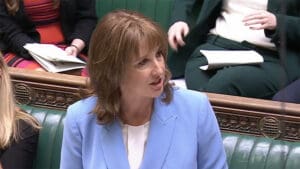
Chancellor Rachel Reeves delivered her Spring Statement to the House of Commons under the shadow of escalating conflict in the Middle East and mounting fears of a renewed inflation shock driven by surging energy prices.
In a speech lasting just over 20 minutes, Reeves stressed the importance of “stability in an increasingly uncertain world”, pointing to falling inflation and previous interest rate cuts as evidence that the cost-of-living squeeze on households is easing. However, beyond presenting updated forecasts from the Office for Budget Responsibility (OBR) and criticising opposition parties, she unveiled no new tax or spending measures.
The Chancellor has pledged to hold only one fiscal event each year, the autumn Budget, meaning the Spring Statement was positioned as a forecast update rather than a policy platform.
Growth downgraded for 2026
The OBR has revised down its forecast for UK economic growth in 2026 to 1.1 per cent, weaker than the 1.4 per cent predicted in November. Reeves insisted that the longer-term outlook remains resilient, with growth forecast to reach 1.6 per cent in both 2027 and 2028, slightly stronger than previously projected, before settling at 1.5 per cent in 2029 and 2030.
The downgrade comes amid soft domestic demand, geopolitical instability and renewed energy market volatility following military escalation in the Gulf region. Rising oil and gas prices threaten to complicate the inflation trajectory, particularly if disruption to global supply chains persists.
Unemployment to rise before falling
Unemployment is forecast to peak at 5.3 per cent later this year as weaker labour demand feeds through the economy. The rate is then expected to decline steadily, ending the parliamentary term at 4.1 per cent, lower than at the start.
The Chancellor framed this as evidence that the labour market remains fundamentally strong despite short-term headwinds. However, youth unemployment and business hiring caution remain key concerns across several sectors.
Borrowing falls and headroom improves
The OBR forecasts that borrowing will be nearly £18 billion lower than anticipated in the autumn. Public sector net borrowing is projected to decline from 4.3 per cent of GDP this year to 1.8 per cent by 2030.
Reeves highlighted that fiscal “headroom” against her self-imposed rules has increased from £21.7 billion in November to £23.6 billion. The buffer is designed to reassure financial markets and protect against unexpected shocks.
She also confirmed plans to meet North Sea energy industry leaders to discuss the implications of Middle East tensions on domestic production and energy security.
Night-time economy: “Stability rhetoric won’t save us”
Despite the Chancellor’s emphasis on stability, business leaders were quick to challenge what they described as a disconnect between Westminster messaging and frontline reality.
Michael Kill, chief executive of the Night Time Industries Association (NTIA), said the statement failed to recognise the acute pressures facing hospitality and leisure businesses.
“Across the UK, major brands and corporates are collapsing at pace. Confidence is fragile. Margins are exhausted,” he said.
Kill warned that escalating energy costs, higher National Insurance contributions and ongoing business rates burdens are placing “compounding pressure” on the sector. He called for a VAT cut for hospitality, arguing that targeted intervention would stimulate demand, protect jobs and restore confidence.
With youth unemployment rising, the NTIA stressed that the night-time economy has traditionally provided entry-level employment for young people, and warned that increased employment costs are making it harder to sustain those roles.
Business confidence remains fragile
Separate research from the Zoho Digital Health Study 2026 underscores the cautious mood across UK businesses. Twenty-one per cent of business leaders cited high inflation, recession risk and rising interest rates as their biggest external challenge.
Half of firms reported rising costs per employee over the past year, ahead of a further 4.1 per cent rise in the National Living Wage due in April 2026.
Sachin Agrawal, managing director at Zoho UK, said leaders are prioritising productivity and automation over expansion.
“Businesses want to grow, but they’re doing so more selectively by investing in technologies that deliver clear efficiency gains,” he said.
AI platform Photoroom also urged the government to match pro-entrepreneur rhetoric with tangible digital support for SMEs, arguing that access to AI tools can significantly reduce overheads and increase productivity.
Thames transport: a missed green opportunity
Uber Boat by Thames Clippers said the Spring Statement missed an opportunity to accelerate London’s transition to greener river transport.
Geoff Symonds, chief operating officer at Uber Boat by Thames Clippers, said regulatory reform and green fuel incentives could be implemented at minimal cost.
“Low-key budgets don’t have to mean low ambition for the environment,” he said, calling for parity in green incentives between river transport and land-based networks.
A cautious tone in uncertain times
The Spring Statement was deliberately restrained. Reeves’ strategy is to project fiscal discipline and market stability while preserving room for manoeuvre ahead of the autumn Budget.
However, with energy prices climbing, geopolitical tensions rising and consumer confidence fragile, the path ahead is far from settled. The coming months will test whether stability alone is sufficient, or whether targeted intervention becomes unavoidable.
For now, the Chancellor’s message is clear: hold the line, protect fiscal credibility and hope that inflation continues to fall despite global turbulence. Whether businesses and households feel that stability in practice remains an open question.
Read more:
Spring Statement 2026: Reeves downgraded growth as business leaders demand urgent action
Month: March 2026
Bank of England rate cuts at risk in 2026 as Middle East conflict spar …
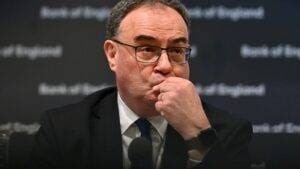
Expectations of further Bank of England base rate cuts this year have been thrown into doubt after escalating conflict in the Middle East triggered sharp rises in energy prices and government bond yields, raising fears of a fresh inflationary shock.
Only a week ago, markets were confident that the Bank of England would cut rates again at its March meeting, with traders pricing in an 86 per cent probability of a 0.25 percentage point reduction. Now, following military escalation involving the US and Iran and renewed instability across the Gulf region, those expectations have collapsed. Markets are currently assigning less than a 5 per cent chance of a rate cut this month and less than a 50 per cent probability of a move in April.
The Bank’s base rate currently stands at 3.75 per cent, having been reduced four times in 2025 as inflation fell to 3 per cent. Governor Andrew Bailey had previously suggested that a return to the 2 per cent target was “baked in”. However, the geopolitical shock has materially altered that outlook.
UK wholesale gas prices have surged by around 40 per cent in recent days, while oil prices have approached $80 per barrel. Two-year gilt yields have risen to their highest levels since December as markets reassess the inflationary impact of higher energy costs.
The risk, analysts say, is that sustained disruption to global energy supplies, particularly through the Strait of Hormuz, could keep inflation elevated for longer, forcing the Bank of England to pause or even reverse its easing cycle.
Tony Redondo, founder of Cosmos Currency Exchange, said the shift in expectations had been dramatic.
“With 2-year gilt yields hitting December highs due to a 40 per cent surge in UK gas prices and oil nearing $80, the Bank of England faces a significant inflationary shock,” he said. “High-street banks are no longer competing on price but are instead protecting margins against rising swap rates. Buyers may see ‘best-buy’ deals pulled with only a few hours’ notice as lenders move to price in the geopolitical risk premium.”
Swap rates, which underpin fixed-rate mortgage pricing, have risen sharply in response to higher gilt yields. Lenders typically price mortgage products several days in advance, meaning further volatility could quickly feed through into the housing market.
Riz Malik, director at R3 Wealth, warned that the situation could resemble the market turmoil seen in 2022 following Russia’s invasion of Ukraine and the UK’s mini-Budget crisis.
“Last week, the outlook was promising for the 1.8 million mortgages up for renewal in 2026,” he said. “Today, we could see major volatility in the mortgage market with the outlook for further cuts disappearing by the second. If you have a mortgage renewal in the next six months, I would strongly suggest you look at your options and don’t hold off.”
Justin Moy, managing director at EHF Mortgages, said the duration of the conflict would be critical.
“In the short term, any talk of base rate cuts will be null and void,” he said. “If the conflict resolves within weeks, this may be temporary. But if it continues beyond Easter, inflation and base rate expectations will be adversely affected, putting the brakes on rate cuts and pushing deals higher.”
Aaron Strutt, product and communications director at Trinity Financial, said uncertainty was the defining feature of the current environment.
“We do not know what is going to happen yet. Rates could go up, the war might stop and rates drop again as previously forecast. Either way, it makes sense to secure a mortgage rate if you are coming up to remortgage soon.”
Some advisers believe the situation, while serious, differs structurally from the disorderly repricing seen in autumn 2022.
Nouran Moustafa, practice principal at Roxton Wealth, said lenders are better prepared than during the Truss-era turmoil.
“Markets have moved quickly, but mortgage pricing reacts to sustained trends, not single sessions,” she said. “Back in 2022, funding costs moved disorderly and fast. Today’s move looks more like volatility driven by inflation expectations.”
She added that the key question is whether elevated yields persist. “If yields stay elevated for several days, we could see short-notice repricing or selective withdrawals. If this retraces, lenders will prioritise stability.”
The Bank of England now faces a delicate balancing act. While inflation had been easing and economic growth remains fragile, an externally driven energy shock risks reintroducing cost pressures just as policymakers were preparing to loosen monetary conditions further.
If wholesale gas prices remain elevated and oil continues to climb, rate-setters may judge it prudent to delay cuts to prevent inflation expectations becoming unanchored. That would prolong pressure on households and businesses already grappling with high borrowing costs.
For now, the direction of travel depends less on domestic economic data and more on developments in the Middle East. Should tensions subside and energy prices retreat, the easing cycle could resume. But if the conflict deepens or spreads, expectations of multiple rate cuts in 2026 may quickly evaporate.
In the meantime, borrowers and investors alike are being reminded that global geopolitical events can reshape monetary policy forecasts in a matter of days.
Read more:
Bank of England rate cuts at risk in 2026 as Middle East conflict sparks inflation fears
BrewDog sold to Tilray in £33m rescue deal as 38 bars close and 484 j …
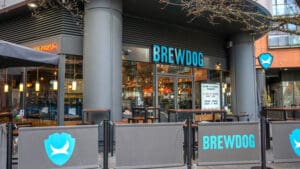
BrewDog has been sold to US cannabis and craft brewing group Tilray in a £33 million rescue deal that will safeguard hundreds of jobs but see 38 bars close with the loss of 484 roles.
The Scottish craft beer brand, founded in 2007 in Aberdeenshire, has been acquired by Tilray Brands, which owns a portfolio of US craft breweries and cannabis operations. Under the agreement, Tilray has purchased BrewDog’s UK brewing business and 11 of its pub venues across the UK and Ireland.
The transaction includes BrewDog’s main brewery in Ellon, Aberdeenshire, and its national distribution centre, The Hop Hub, in Motherwell, Lanarkshire. A total of 733 UK jobs will be preserved, with affected employees transferring to Tilray.
However, administrators confirmed that 38 bars not included in the deal will shut permanently, resulting in 484 job losses. BrewDog’s 18 franchise bars in the UK and overseas will continue trading as normal.
Irwin D Simon, chairman and chief executive of Tilray Brands, described BrewDog as “one of the most iconic, mission-driven craft beer brands in the UK”.
“It helped redefine modern craft beer through bold innovation, fearless creativity and an unwavering commitment to great beer,” he said. “As we begin a new chapter for this great brand, our priority is to refocus BrewDog on the craft beer excellence that made it beloved in the first place and strategically invest to return the operations to profitable growth.”
Simon added that Tilray was committed to ensuring BrewDog continued to “lead and inspire the global craft beer movement”.
The sale follows weeks of uncertainty after BrewDog confirmed it was working with advisers to explore strategic options amid mounting financial pressures. The company temporarily closed all 60 of its UK bars to allow staff to attend internal meetings and to comply with licensing requirements ahead of the anticipated change of ownership.
Chief executive James Taylor told employees that the closures were necessary to ensure staff could be briefed directly on developments and to manage regulatory issues tied to the ownership transition.
The deal comes after a last-minute attempt by BrewDog co-founder James Watt to buy back the company fell through. Watt, who stepped down as chief executive in May 2024 but retains a 22% stake, had been preparing to invest around £10 million of his own money as part of a potential buyout consortium. Sources close to the situation said the proposal did not materialise.
Watt co-founded BrewDog alongside Martin Dickie and built the brand into a global craft beer name through provocative marketing and rapid expansion. In 2017, private equity firm TSG Consumer Partners acquired a 21% stake in a deal that valued the company at more than $1 billion, cementing its “unicorn” status.
In recent years, however, BrewDog has struggled with mounting losses, operational costs and declining bar performance. The company reported a £37 million loss last year on turnover of £357 million, having already closed a number of venues and cut staff.
The business also faces questions from its large base of retail investors. Through its “Equity for Punks” scheme, BrewDog raised approximately £75 million between 2009 and 2021 from more than 200,000 small shareholders, offering them minority stakes and product perks. The long-term implications of the Tilray deal for those investors remain unclear.
Under the transaction, the following UK venues are understood to remain open as part of the Tilray acquisition: Birmingham, Canary Wharf, DogTap Ellon, Dublin, Edinburgh DogHouse, Lothian Road, Manchester, Paddington, Seven Dials, Tower Hill and Waterloo.
The sale marks a significant shift for BrewDog as it moves under American ownership, with Tilray expected to integrate the UK operations into its broader craft and cannabis-focused portfolio while seeking to restore profitability to one of Britain’s best-known beer brands.
Read more:
BrewDog sold to Tilray in £33m rescue deal as 38 bars close and 484 jobs cut
BrewDog closes all bars for a day amid sale talks as advisers oversee …

Scottish craft beer group BrewDog has closed all of its bars for a day as it seeks to finalise the sale of the business, marking a pivotal moment for one of Britain’s most high-profile independent brewers.
The Aberdeenshire-founded company confirmed that none of its sites would open on Monday to allow staff to attend company-wide meetings and to comply with licensing requirements linked to an anticipated change of ownership.
Chief executive James Taylor told employees in an internal email that the temporary shutdown was necessary to ensure colleagues across the global business could be briefed directly on the next phase of the process.
“We appreciate this is an unsettling time for everyone, and we want to ensure that all colleagues have the opportunity to hear directly from us about what happens next,” he wrote.
“To enable everyone to attend, and to comply with licensing issues arising from an anticipated change of ownership, we have taken the decision that none of our bars will open tomorrow.”
Food and beer deliveries were also cancelled, along with customer bookings for the day.
The development follows BrewDog’s announcement earlier this month that consultants AlixPartners had been appointed to oversee a structured and competitive process to evaluate strategic options, including a potential sale. The move came after the company reported sustained losses in recent years, most recently a £37 million loss in 2024.
Founded in 2007 by James Watt and Martin Dickie, BrewDog grew rapidly from a rebellious challenger brand into a global operator with around 60 bars in the UK and a presence in the US, Australia and Germany. At its peak, the group was valued at more than £1 billion and became a symbol of the craft beer revolution.
However, the company has faced mounting financial and reputational challenges. In October last year it announced job cuts across the business. Earlier this year it confirmed the closure of 10 UK bars, including its flagship Aberdeen site, and halted production of its gin and vodka lines at its Ellon distillery to focus on core beer operations.
BrewDog currently employs approximately 1,400 staff worldwide, with the majority based in the UK.
Corporate law specialists say the bar closures signal that the sale process is entering a more advanced and formal phase.
James Howell, managing director at Rubric Law, said the situation reflects a shift from exploratory talks to a tightly managed M&A campaign.
“What’s happening at BrewDog is a clear example of what unfolds when performance hasn’t met expectations,” he said. “After several years of losses and continued cost pressure, the decision to appoint advisers and run a competitive process is about value discovery and deal certainty, not just finding a buyer.”
“In practice, advisers will structure bidder rounds, control information flow and drive comparable offers. That framework matters even more when profitability is under scrutiny, because it protects value and prevents opportunistic pricing from early bidders.”
He added that buyers are likely to focus heavily on margins, lease exposure and operational efficiency rather than simply brand strength.
“Brand alone cannot bridge gaps in fundamentals,” Howell said. “One of the biggest legal risks in a process like this is weak readiness. If issues surface in due diligence — contracts, governance or shareholder rights — they can quickly affect valuation or derail momentum.”
The company’s ownership structure may also complicate proceedings. BrewDog previously raised capital through its “Equity for Punks” crowdfunding scheme, resulting in a broad base of minority shareholders. Alignment and drag-along provisions will be key to executing any transaction smoothly.
BrewDog’s trajectory has also been shaped by leadership changes. James Watt stepped down as chief executive in 2024, moving to the role of “captain and co-founder”, while Martin Dickie exited the business last year for personal reasons. Watt had faced scrutiny following allegations about workplace culture, highlighted in a BBC documentary, though a subsequent complaint to Ofcom was rejected.
The group’s shift from aggressive expansion to retrenchment mirrors broader pressures in hospitality, with rising costs, softer consumer spending and higher borrowing rates squeezing margins across the sector.
For now, BrewDog insists operations will resume as normal following the one-day closure. But the coordinated shutdown of all bars underscores the seriousness of the moment.
Whether the outcome is a full sale, break-up or recapitalisation, the process marks the end of an era for a brand that once defined Britain’s craft beer insurgency, and now finds itself navigating the realities of scale, profitability and investor expectations.
Read more:
BrewDog closes all bars for a day amid sale talks as advisers oversee potential deal
Gold surges above $5,400 after Trump’s Iran strikes, could prices hi …

Gold has surged back above $5,400 an ounce in early trading following US missile strikes on Iran, prompting fresh speculation over whether the precious metal could break through $6,000 in the coming weeks.
The renewed rally comes after a volatile start to the year for bullion. Gold hit a record high of more than $5,550 in late January, before tumbling sharply to around $4,700 by early February. Silver followed a similar path, sliding from above $120 to roughly $82. Both metals are now climbing again, with silver edging back toward $100.
The latest spike follows coordinated US and Israeli strikes on Iran over the weekend, which reportedly killed Supreme Leader Ayatollah Ali Khamenei and triggered retaliatory action by Tehran against US allies in the Gulf. Tensions around the Strait of Hormuz, a critical artery for global oil supplies, have intensified, pushing oil and safe-haven assets higher.
Market analysts describe the situation as a “classic risk-off scenario”, with investors flocking to traditional stores of value amid fears of broader regional escalation, oil supply disruption and renewed inflationary pressures.
Cameron Parry, founder and CEO of TallyMoney, said the moves were entirely consistent with previous geopolitical crises.
“Both the oil and gold price were up Monday morning, as the Strait of Hormuz and safe-haven assets became the point of focus for markets,” he said. “Geopolitical crises like the one unfolding currently will invariably apply upward pressure on the gold price and that’s precisely what is happening this time round.
“We are in a classic risk-off scenario and gold is the classic go-to asset. Gold was already benefiting from strong demand globally, not just from central banks but also retail investors keen to get exposure in an increasingly volatile geopolitical climate.
“That demand could now spike further as nations and individuals alike seek the safety of the world’s ultimate store of value. Few would bet against gold.”
Riz Malik, director at R3 Wealth, said the scale of any further gains would depend heavily on how long the conflict lasts and how Iran responds.
“Monday morning immediately saw a sharp rise in the demand for gold,” he said. “How much it will rise will depend on how prolonged this campaign is and the level of the Iranian retaliation.
“Once again global instability has been pushed to Defcon 4 and that only means one thing for precious metals. Namely, their price is set to go up.”
However, not all analysts believe a rapid surge to $6,000 is imminent.
Tony Redondo, founder at Cosmos Currency Exchange, said that while the $6,000 mark is conceivable in the near term, it would require sustained escalation.
“Even before Saturday’s military operations in Iran, the price of gold had catapulted up to the $5,300 level, but hitting $6,000 by next week would require a 15 per cent surge, a feat usually reserved for total systemic collapse,” he said.
“However, while $6,000 is unlikely within days, it is a high-probability target for March or April, especially if the Strait of Hormuz is compromised on a longer-term basis or the conflict broadens.”
Redondo added that silver’s structural supply deficit could amplify its price reaction. “Silver is closing in on $100 and its supply constraints make $120 a realistic target in the months ahead as a coiled spring reaction to geopolitical fear,” he said, cautioning that sharp rallies often invite profit-taking.
Others argue that while geopolitical shocks can act as catalysts, deeper macroeconomic forces will ultimately determine gold’s trajectory.
Anita Wright, chartered financial planner at Ribble Wealth Management, said structural pressures in the US financial system were equally important.
“This weekend’s missile strikes will undoubtedly affect the gold price, but it is important not to confuse a catalyst with the underlying driver,” she said. “Gold does not move to $6,000 because of a single weekend’s events. It moves there, if it does, because of monetary conditions.
“The US faces trillions in refinancing requirements alongside persistent fiscal deficits. Foreign appetite for US Treasuries shows visible strain, long-dated yields are rising, and equity valuations remain stretched. History tells us that when bond yields rise into an overvalued equity market, instability follows.”
Wright said that while an immediate jump to $6,000 was unlikely, materially higher gold prices over the medium term were plausible if bond market stress intensifies and the Federal Reserve returns to liquidity support.
Nouran Moustafa, practice principal and IFA at Roxton Wealth, urged investors not to chase sharp moves driven by headlines.
“Gold was expected to open higher as investors moved into safe havens after the latest escalation, and so it did,” she said. “However, a jump to $6,000 in days would require something far more severe such as direct energy supply disruption or broader financial market stress.
“Without that, we’re more likely to see sharp volatility than a sustained vertical rally.”
She warned that emotional investing during times of geopolitical stress can be costly. “Gold can act as portfolio insurance, but chasing rapid spikes rarely ends well. Sensible allocation and risk management matter more than reacting emotionally to breaking news.”
With tensions in the Middle East showing little sign of easing and global markets already on edge, gold’s next move will likely hinge on whether the conflict remains contained — or spills into something far more disruptive for energy markets and global growth.
Read more:
Gold surges above $5,400 after Trump’s Iran strikes, could prices hit $6,000 next?

