

HSBC has initiated bankruptcy petitions against Aidan Barclay and Howard Barclay, marking a further escalation in the unravelling of the Barclay family’s business empire following the collapse of their logistics group.
Court filings show the bank lodged the petitions in the High Court in December, after recovering only about £1.1 million of a £143.5 million secured loan from the administration of Logistics Group.
The business, which owned parcel delivery firms Yodel and ArrowXL, fell into administration in March 2024 after HSBC called in its debt and the group was unable to refinance or repay the borrowing.
Administrators later confirmed that HSBC’s recovery equated to just 0.78p in the pound, with any further returns dependent on an earn-out linked to the sale of remaining subsidiaries. “Future recoveries for the secured creditor are uncertain,” administrators from Teneo said in a filing at Companies House.
ArrowXL was sold in June for an initial £2.2 million to Jacky Perrenot Group, a fraction of the £57.5 million valuation previously ascribed to the business by its directors. Yodel was sold earlier in 2024, shortly before the group entered formal insolvency proceedings.
The bankruptcy action adds to a string of high-profile asset losses for the Barclay family. In recent years they have relinquished control of the Telegraph Media Group and online retailer The Very Group, as lenders moved to enforce security over unpaid debts.
Last month International Media Investments, backed by Abu Dhabi, appointed Interpath to sell property assets held through Trenport Property Holdings, another Barclay-linked vehicle, following the failed sale of the Telegraph.
Aidan and Howard Barclay, the eldest sons of the late Sir David Barclay, were listed as directors of Logistics Group at the time it entered administration. Company filings last year recorded Aidan Barclay’s main residence as Monaco.
The family’s difficulties intensified after lenders including Lloyds Banking Group enforced security over long-running debts in 2023. A proposed £500 million sale of the Telegraph to RedBird Capital collapsed last year due to regulatory obstacles, prolonging uncertainty over the future ownership of the titles.
HSBC declined to comment on the bankruptcy petitions. Aidan and Howard Barclay were approached for comment.
Read more:
HSBC launches bankruptcy proceedings against Barclay brothers over logistics collapse
Author: AbellMoney
China’s BYD set to overtake Tesla as world’s top electric vehicle …

China’s electric vehicle champion BYD is on course to overtake Tesla as the world’s biggest seller of battery-electric cars, marking a symbolic shift in the global EV race.
The Shenzhen-based group said annual sales of its battery-powered vehicles jumped by almost 28 per cent last year to more than 2.25 million units. By contrast, Tesla is expected to report full-year sales of around 1.65 million vehicles when it releases its 2025 figures later on Friday, based on analysts’ forecasts published last week.
If confirmed, it would be the first time BYD has overtaken its American rival on an annual basis, underlining the rapid rise of Chinese manufacturers in a market long dominated by Western brands.
The milestone caps a difficult year for Tesla, which has grappled with a lukewarm reception to newer models, intensifying competition from lower-priced Chinese rivals and growing unease among some consumers and investors over the political activities of its chief executive, Elon Musk.
Chinese carmakers including BYD, Geely and MG have steadily eroded Tesla’s market share by offering well-specified electric cars at significantly lower prices. In response, Tesla launched cheaper versions of its two best-selling models in the US in October in a bid to reignite demand.
Sales at Tesla slumped in the first quarter of 2025 after a backlash linked to Musk’s role in President Donald Trump’s administration, prompting concerns that his focus was being stretched across too many ventures. Musk later pledged to “significantly” scale back his government involvement.
Despite fierce competition in its home market, which slowed BYD’s sales growth to the weakest pace in five years, the company continues to expand aggressively overseas. It has gained traction across Latin America, South East Asia and parts of Europe, even as governments impose tariffs on Chinese-made EVs.
In October, BYD said the UK had become its largest market outside China, with sales surging 880 per cent year-on-year to the end of September. Demand has been driven in part by the plug-in hybrid version of its Seal U SUV, which has resonated with British buyers seeking lower-emission vehicles without full range anxiety.
While Tesla remains one of the world’s most valuable carmakers, its lead in the electric vehicle market is narrowing as rivals catch up on technology, scale and pricing. For BYD, overtaking Tesla would cement its status as the world’s leading EV producer — and highlight how decisively China has reshaped the global automotive industry.
The question now is whether Tesla can regain momentum through new products such as its Optimus humanoid robot and self-driving “robotaxi” ambitions, or whether BYD’s cost advantage and manufacturing scale will keep it firmly in the lead.
Read more:
China’s BYD set to overtake Tesla as world’s top electric vehicle seller
Ikea pivots to city centres as ‘big box’ era stalls in the UK
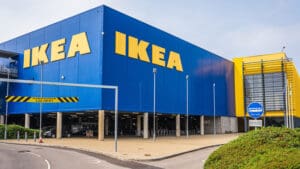
Ikea is accelerating its shift towards smaller city-centre stores in Britain, as rising property taxes and changing shopping habits blunt the appeal of traditional out-of-town megastores.
Peter Jelkeby, the outgoing chief executive of Ikea UK and Ireland, said the Swedish retailer would focus future expansion on compact urban formats after strong trading at its new Oxford Street flagship and central Brighton store.
The strategy represents a clear move away from Ikea’s historic “big box” warehouse model, which dominated retail parks for decades and defined the brand’s British expansion from the late 1980s onwards.
While the group has no immediate plans to close existing large stores, Jelkeby confirmed that Ikea does not intend to open any new megastores in the UK.
“We see more potential in opening more smaller stores like Oxford Street and Hammersmith,” he said. “That’s where customers are, and that’s where growth is.”
Jelkeby acknowledged that the rising cost of business rates has played a role in the strategic rethink. Larger retail units typically attract far higher rateable values, leaving operators exposed to disproportionately large tax bills.
Upcoming reforms will intensify that pressure further, with a new surcharge on commercial properties with a rateable value above £500,000. While intended to support smaller businesses, the changes will increase the burden on supermarkets, department stores and warehouse-style retailers.
“We of course want to have lower business rates,” Jelkeby said, adding that reform needs to “come sooner rather than later so the climate for retail can be positive”.
Alongside its city-centre push, Ikea is also experimenting with mid-sized stores in retail parks that sit between its smallest urban outlets and traditional megastores. New sites in Harlow, Norwich and Chester reflect what Jelkeby described as a more flexible approach to bricks-and-mortar retail.
Ikea believes it now has “enough big box” locations across the UK and Ireland, but will continue investing in those sites by improving fulfilment, click-and-collect and in-store services rather than expanding their footprint.
The retailer closed its Tottenham megastore in north London in 2022 after concluding that central, smaller locations offered greater long-term potential in the capital.
The Oxford Street store, which opened in May, has delivered strong sales across furniture, accessories and food, with demand for its restaurant exceeding forecasts.
“We are learning fast,” Jelkeby said. “We’ve had to increase checkout capacity and scale up food operations to cope with footfall.”
The UK business is owned by the Ingka Group, Ikea’s largest global franchisee. Jelkeby will now move to lead Ikea’s German division, where he plans to explore a similar shift, using the UK as a testing ground.
“Germany is our biggest market and more traditional than the UK,” he said. “Britain has allowed us to trial new ways of meeting customers where they are.”
Read more:
Ikea pivots to city centres as ‘big box’ era stalls in the UK
Beyoncé declared a billionaire by Forbes after record tours and brand …

Beyoncé has officially become a billionaire, according to Forbes, cementing her status as one of the most commercially successful musicians of all time.
The American superstar is now the fifth musician to be recognised by Forbes as having amassed a ten-figure fortune, joining an elite group that includes Taylor Swift, Rihanna, Bruce Springsteen, and her husband Jay-Z, whose net worth Forbes estimates at $2.5bn (£1.85bn).
Earlier this month, Forbes valued Beyoncé at $800m (£593m), but a series of lucrative projects has since pushed her wealth beyond the billion-dollar mark.
A major driver has been her 2023 Renaissance World Tour, which grossed nearly $600m, making it one of the highest-earning tours of the decade. Beyoncé further increased profits by producing and distributing the accompanying concert film herself through a direct deal with AMC Theatres, securing almost half of the film’s $44m (£33m) global box office takings.
Her momentum continued in 2024 with the release of Cowboy Carter, an album celebrating the Black roots of country music. The project received widespread critical acclaim and won Album of the Year at the Grammy Awards, the first time Beyoncé has claimed the top prize, despite four previous nominations.
The accompanying Cowboy Carter tour generated more than $400m in ticket sales, alongside an estimated $50m in merchandise revenue, Forbes said. The tour featured appearances from Jay-Z, two of the couple’s three children, and former Destiny’s Child bandmates.
While the tour broke ticket records at London’s Tottenham Hotspur Stadium and the Stade de France in Paris, it also faced uneven demand, with some promoters cutting prices to fill seats. Even so, Beyoncé commanded the highest top-priced ticket of any UK artist in 2025, with premium seats reaching £950, while entry-level tickets started at £71.
Additional income streams included a high-profile Netflix halftime show on Christmas Day, estimated to have earned $50m, alongside a further $10m from a series of Levi’s advertising campaigns.
Elsewhere, Bloomberg has listed Selena Gomez as a billionaire, citing a net worth of $1.3bn (£962m). Forbes disputes that assessment, instead valuing Gomez at around $700m (£518m).
For Beyoncé, however, the numbers are now beyond dispute, placing her firmly among the world’s wealthiest entertainers and underscoring the growing power of artists who control not just their music, but their tours, films and brands.
Read more:
Beyoncé declared a billionaire by Forbes after record tours and brand deals
Dream of ‘Europe’s Silicon Valley’ at risk as ministers urged to …

The ambition to turn the Oxford–Cambridge corridor into “Europe’s Silicon Valley” is in danger of stalling unless the government accelerates delivery of long-promised infrastructure, business leaders have warned.
A coalition of major companies, universities and investors has written to Rachel Reeves urging faster progress on transport and planning commitments for the so-called OxCam supercluster, amid growing concern that delays to the East West Rail project are undermining investor confidence.
The warning comes in a report from the Oxford-Cambridge Supercluster, backed by 46 organisations including AstraZeneca, GSK, Airbus and the Ellison Institute of Technology Oxford, founded by US tech billionaire Larry Ellison.
The corridor has been championed by the chancellor as a cornerstone of Labour’s growth strategy, with ministers promising to unlock a projected £78bn boost to the UK economy by 2035 through science, technology and life sciences expansion.
However, the report warns that uncertainty over infrastructure delivery — particularly the East West Rail (EWR) line — risks blunting that potential.
The East West Rail scheme, designed to connect Oxford and Cambridge via Milton Keynes and Bedford, is widely seen as critical to turning the region into a single integrated labour and innovation market.
But concerns are mounting that the project is slipping behind schedule. Industry leaders fear the required development consent order may not be submitted until 2027, meaning final approval could fall beyond the current parliament — putting the government’s 2035 operational target at risk.
Andy Williams, chair of the Oxford-Cambridge Supercluster board and a former senior AstraZeneca executive, said the lack of certainty was already harming confidence.
“Without clarity and pace, we risk killing investor confidence,” he said, warning that trains may not run the full route by 2035 unless action is taken quickly.
The corridor has regained political momentum after being deprioritised under Boris Johnson’s government, when regional “levelling up” became the focus. Business leaders have welcomed Labour’s renewed attention, but say ambition must now be matched by execution.
While the government committed £2.5bn in June’s spending review to progress East West Rail, the report argues that funding alone is not enough without a clear, region-wide delivery plan.
The government has taken some steps, including approving the reopening of the Cowley branch line in Oxford and appointing Lord Vallance as the corridor’s growth champion. Ministers have also promised a more detailed plan this year.
But the report calls for stronger governance across the entire region, alongside an overarching spatial strategy setting out where housing, laboratories and commercial space will be prioritised — and how supporting infrastructure will be delivered.
The report, produced with the Centre for Business Research at the University of Cambridge, shows that economic growth is already spreading beyond Oxford and Cambridge into places such as Milton Keynes and Stevenage, home to a major GSK research site.
The corridor now hosts around 3,000 knowledge-intensive firms, employing 152,000 people and generating £45bn in annual revenues. Employment growth has outpaced the UK average over the past decade.
Shaun Grady, chair of AstraZeneca UK, said East West Rail was “vital infrastructure” needed to connect campuses, labs and cities into a single talent market and ensure scientific advances translate into economic growth more quickly.
Nick Pettit, senior partner at property adviser Bidwells, added that the rail link was the “missing piece” and said the government must provide planning certainty and accelerate delivery of housing and workspace along the route.
A Department for Transport spokesperson said East West Rail remained a “catalyst for growth”, adding that officials were examining how recent planning reforms could be used to deliver benefits sooner.
If completed, the line is expected to cut journey times between Oxford and Cambridge from around three hours to just over 90 minutes — a transformation businesses say is essential if the UK is serious about building a globally competitive innovation corridor.
Read more:
Dream of ‘Europe’s Silicon Valley’ at risk as ministers urged to move faster on OxCam rail link
The EUDR: A Challenge and an Opportunity for Small Sustainable Busines …

As a sustainable business owner, I’ve always believed that every choice we make, from the suppliers we trust to the packaging that carries our products, reflects our values.
But the conversation around packaging sustainability is evolving quickly, and 2025 is shaping up to be a defining year for anyone in this space.
The EU Deforestation Regulation (EUDR) will soon change how every business that uses wood or paper packaging operates. Whether you export into the EU or source materials that pass through European supply chains, you’ll soon need to prove exactly where your wood came from, right down to the plot of land where the tree grew.
On paper, this is a hugely positive step. It’s designed to prevent deforestation and ensure that every pallet, crate, box, or sheet of paperboard comes from responsibly managed forests. But for small and medium-sized
sustainable businesses like mine, this new legislation brings both validation and significant Challenges.
For larger corporations, compliance may simply mean hiring dedicated teams or investing in advanced traceability systems. For smaller businesses, the impact is more personal and more complex.
Many packaging suppliers, particularly those sourcing globally, aren’t yet ready to provide the level of GPS traceability that EUDR demands. As buyers, we’re several steps removed from the original forest.
That makes collecting origin data extremely difficult. The reality is that small businesses don’t have the same resources as large corporations.
Gathering, verifying, and documenting the source of every piece of packaging takes time, money, and capacity that many SMEs simply don’t have. Even for companies like mine, built on sustainability from day one, the administrative burden is significant. There’s also a clear imbalance of power.
When small businesses ask large suppliers for detailed traceability information, we’re often met with delays and a lack of data, yet we’re still held to the same legal standards as much larger companies.
The scale of work involved in becoming compliant is immense. Every box, tag, and piece of paper now requires a documented chain of custody which for a packaging company means the majority of our products. For a small business, this isn’t just a quick compliance exercise, it’s an ongoing operational project that touches almost every department.
Teams that were once focused on creative design, marketing, or customer experience now find themselves deep in due diligence, spreadsheets, and certification systems. It’s exhausting work, but it’s necessary if we want to maintain the integrity of our sustainability commitments and continue to trade responsibly in the years ahead.
At Tiny Box Company, we’ve been reviewing what the EUDR will mean for us for months now. We’re working closely with our suppliers to ensure the data we need is being captured at source, and we’re doing our best to gain information that is verifiable.
It’s a huge effort, and at times it feels like we’re trying to rebuild the foundations of something we already thought was sturdy. But we also know that doing this groundwork now will set us up for a stronger, more transparent future.
Despite these challenges, the EUDR represents a powerful opportunity for businesses like ours. It’s a chance to demonstrate what we’ve been advocating for years: that transparency and traceability are not just ideals, but achievable and necessary goals.
For those already committed to sustainability, this regulation provides a platform to prove it. Having verifiable data about our packaging doesn’t just satisfy compliance requirements, it builds trust with our customers, who increasingly care not just about what a product is made from, but where it came from.
The EUDR is also encouraging more meaningful conversations between businesses and suppliers. To meet these requirements, we’ll need closer collaboration and greater openness, which can ultimately strengthen relationships and lead to more resilient supply chains. Over
time, this transparency can help shift the market, rewarding those who operate responsibly and pushing lagging suppliers to catch up.
Another positive outcome is that it’s forcing all of us to reconsider how much packaging we really need. When every gram of wood or paper must be traced to its origin, using less suddenly makes both environmental and financial sense for a lot of businesses.
At Tiny Box Company, we’ve already begun rethinking our designs and processes to reduce complexity, choosing materials that are easier to trace and verify. It’s a continuous process to improve what we’re doing and how we work.
It’s easy to see why some small businesses might feel overwhelmed- the paperwork, the data management, the coordination across global suppliers. But once these systems are in place, the benefits will start to show. We’ll have cleaner data, fewer weak points in our supply chains, and greater confidence in the materials we use.
In time, the hours invested now could translate into reduced risk, smoother audits, and a stronger story for customers who value transparency. The EUDR may feel daunting, particularly for small sustainable businesses that are already trying to do the right thing.
But it’s important to see this as an opportunity to align values with verifiable action. It’s a reminder that sustainability is something that can be measured, proven, and improved upon.
Knowing where our packaging comes from isn’t just about compliance. It’s about integrity and accountability, about running a business that truly understands what it’s selling and where its products come from.
Read more:
The EUDR: A Challenge and an Opportunity for Small Sustainable Businesses
Britain stuck at bottom of G7 for investment as private spending stall …

Britain remains stuck at the bottom of the G7 for overall investment, despite Labour’s pledge to inject billions of pounds into public spending over the next two years, according to international data.
Figures from the Organisation for Economic Co-operation and Development show that total investment, combining both public and private spending, stood at just 18.6 per cent of GDP in the third quarter of the year. That leaves the UK trailing all other G7 nations, including the United States, Germany, France and Japan.
The data underlines a long-running weakness in the British economy. The UK has recorded the lowest investment rate in the G7 in 23 of the past 31 years, a factor widely blamed for poor productivity growth and weak long-term economic performance.
By comparison, Japan recorded the highest investment rate among the G7 at 27 per cent, while Germany, despite being in a two-year recession, invested around 20 per cent of GDP over the same period.
Labour has made boosting investment a central plank of its economic strategy, pledging to increase public capital spending on infrastructure, transport and housebuilding. Economists at PwC estimate that public investment will rise by £13 billion in 2026–27, marking the largest two-year increase since the 2008 financial crisis.
However, there are growing concerns that this surge in government spending will not be matched by the private sector. PwC’s chief economist, Barret Kupelian, warned that private investment is expected to stagnate due to weaker business confidence and slower profit growth.
“There will be a much stronger focus on domestic growth levers from the government, particularly public investment picking up at a record pace,” Kupelian said. “But private investment is unlikely to respond as strongly in the near term.”
The scale of the challenge is stark. EY estimates that up to 1,000 major investment projects are planned to start or complete by 2040, with government-backed capital spending on track to reach £1.1 trillion. Yet even this would leave a significant funding gap.
According to EY-Parthenon, meeting Labour’s wider ambitions, including defence spending rising to 3 per cent of GDP by the end of the decade, would leave an investment shortfall of £583 billion. If defence spending increases to 5 per cent of GDP by 2035, the gap could widen to £817 billion, placing further strain on the public finances.
Mats Persson, global leader of EY-Parthenon, said the UK faces mounting pressure from overlapping investment demands. “The government has made progress in unlocking capital for infrastructure, but the long-term funding requirements across energy, defence, health and transport are rising rapidly,” he said.
Economists have long argued that Britain’s low investment levels are a major drag on productivity. Business investment drives innovation and technology adoption, while public investment provides the housing and transport networks needed to support growth.
Louise Haigh, the former Labour transport secretary, said the problem reflected decades of short-term policymaking. “Underinvestment has plagued the UK economy for half a century,” she said. “Our five-year political cycle doesn’t give businesses the long-term certainty they need to commit capital.”
Reform UK’s deputy leader, Richard Tice, accused the government of creating a hostile climate for investors. He said uncertainty and tax changes had pushed capital elsewhere and claimed his party would prioritise deregulation and incentives for wealth creation.
With private investment faltering and public spending under pressure, economists warn that closing Britain’s investment gap will require more than headline funding commitments — and a sustained effort to restore confidence across the business community.
Read more:
Britain stuck at bottom of G7 for investment as private spending stalls
Men have lost their work ethic, says Trump’s former commerce secreta …

American men have lost their work ethic and increasingly feel entitled to a comfortable life without applying themselves, according to Wilbur Ross, who served throughout Donald Trump’s first term.
Ross, the Wall Street investor once dubbed the “king of bankruptcy”, said younger generations have been “coddled” by growing up in a wealthy society, weakening the drive to work that underpinned previous generations and threatening long-term economic growth.
“It used to be that the mantra for any young person was work hard and you can make progress and do better than your parents did,” Ross said. “It never occurred to anyone to not work, at least not anyone I knew. There’s been a whole change in that.”
He argued that a combination of state benefits and parental prosperity had created a sense of entitlement. “I think all these [benefits] programmes, and also the relative prosperity of the current generation’s parents, have created a feeling that they’re entitled to a nice lifestyle, independently of whether they perform any kind of meaningful work,” he said.
“If you’re an able-bodied person who’s not willing to even seek a job, why should you prosper?”
Overall labour force participation among Americans aged 25 to 54, the so-called prime-age workforce, fell sharply during the pandemic but has since recovered to 83.8 per cent, one of the highest levels in nearly a quarter of a century. However, Ross and other economists say that headline figure masks a profound long-term shift among men.
Prime-age male participation has been in structural decline since the 1960s, even as female participation has surged to record levels. The divergence is especially pronounced among younger workers.
Analysis by the Brookings Institution shows that labour force participation among 25-year-old men has fallen in every successive generation since 1969. For men born in the late 1990s, participation at that age stands at about 84 per cent, down from 93 per cent for those born roughly 45 years earlier.
By contrast, participation among women of the same age has climbed steadily, rising from 66.3 per cent to 76.6 per cent over the same period.
Ross said the trend among men was particularly damaging for economic prospects. “I think there are a lot of men who just don’t want to work that hard,” he said.
Workforce participation, he added, was one of the three critical drivers of economic growth. “One is growth in the population of working-age people — that’s something you have no control over in the near term. The other two are productivity and workforce participation. And of the two, for the moment, workforce participation is probably the more important.”
Economists have pointed to several factors behind the decline in male participation, including the loss of industrial jobs, the rise of service-sector roles traditionally dominated by women, higher incarceration rates leaving many men with criminal records, the expansion of disability benefits, and persistent weaknesses in education and skills training.
Together, they warn, these forces risk leaving a growing cohort of men disengaged from work — with long-term consequences for productivity, public finances and social cohesion.
Read more:
Men have lost their work ethic, says Trump’s former commerce secretary
A third of UK businesses plan AI investment in 2026 as confidence tick …

A third of British businesses are planning to invest in artificial intelligence in 2026 as firms sharpen their focus on productivity, skills and technology in an increasingly competitive market.
Research from Lloyds Bank shows that AI is becoming a central pillar of growth strategies, with companies looking to automate processes, improve efficiency and strengthen long-term competitiveness.
The Lloyds Business Barometer, based on a survey of 1,200 firms, found that productivity improvement is the top priority for businesses heading into the next year. Alongside AI investment, 35 per cent of companies said they plan to invest in team training in 2026, recognising that new technologies require new skills to deliver real value.
Paul Kempster, managing director for commercial banking coverage at Lloyds Business & Commercial Banking, said the findings highlighted a shift towards more strategic, future-focused investment.
“These are priorities that will support businesses’ long-term growth,” he said. “They help firms not only capitalise on opportunities in the year ahead, but also build strong foundations well beyond 2026.”
Earlier research from Lloyds underlines why AI is attracting growing attention. In a study published in June, 82 per cent of businesses using AI said it had boosted productivity, while 76 per cent reported an improvement in profitability. Retailers reported the strongest productivity gains, while manufacturers were most likely to see a positive impact on profits.
Despite the momentum, barriers remain. Businesses cited the cost of AI tools, shortages of specialist skills, data privacy concerns and energy usage as factors slowing adoption. Even so, 56 per cent of firms said they intend to make new AI investments over the next year, while a quarter of those yet to adopt the technology said they plan to do so.
The barometer also points to a modest improvement in sentiment. Overall business confidence rose by five points in December to 47 per cent, up ten points over the course of 2025. Optimism about the wider UK economy climbed to a four-month high, with many firms expecting price pressures to continue easing.
However, caution remains evident on the consumer side. Early indicators suggest weaker high-street performance ahead of Christmas, with in-store footfall on the final Saturday before Christmas down almost 7 per cent year on year.
Taken together, the data paints a picture of businesses looking inward, investing in technology and people to drive efficiency, while remaining alert to fragile consumer demand and ongoing economic uncertainty.
Read more:
A third of UK businesses plan AI investment in 2026 as confidence ticks up

