
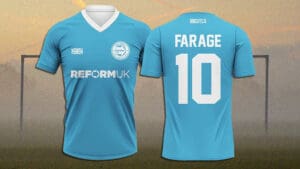
The manufacturing trade body Made in Britain has raised concerns over the alleged unauthorised use of a logo closely resembling its own by Reform UK.
In a statement, Made in Britain said it had become aware that Reform UK was using a logo it believes to be “substantially similar” to its registered mark across marketing materials and merchandise. The organisation stressed that no authorisation, licence or consent had been granted for such use.
Made in Britain said it maintains a strictly neutral political stance and does not endorse, support or affiliate with any political party or movement. It added that the use of its logo, or any similar insignia, by political organisations is expressly prohibited under its rules.
The body, which represents and promotes British manufacturers at home and overseas, said its branding exists solely to support its members and advance British commerce. As a result, it does not permit its brand identity to be associated with political campaigns or messaging.
The statement underlines the growing sensitivity around branding, intellectual property and perceived political alignment as political parties increasingly use merchandise and visual identity as part of their campaigning efforts.
Read more:
‘Made in Britain’ body challenges Reform UK over alleged unauthorised logo use
Author: AbellMoney
Workplace sickness scheme branded ‘teaspoon solution’ as experts w …

A new government scheme aimed at tackling long-term workplace sickness has been dismissed by business leaders and advisers as woefully inadequate, with critics warning it amounts to “emptying the ocean with a teaspoon”.
The initiative, announced this morning by the Department for Work and Pensions, will fund occupational health training for 5,000 line managers working in small and medium-sized enterprises across England. The free training, delivered by the Institution of Occupational Safety and Health, will run between January and March next year and is designed to help managers spot early signs of health-related issues and intervene before employees fall out of work altogether.
Ministers say the scheme will help address what they describe as an inherited crisis, with more than 2.8 million people currently signed off as long-term sick — one of the highest rates in the G7. Government-commissioned analysis has found that around 800,000 more working-age adults are now out of work due to sickness than in 2019.
The financial cost to small businesses is significant. Replacing an employee lost to ill health costs more than £11,000 on average, while each day of sickness absence is estimated to cost firms about £120 in lost profit. The training will focus on equipping line managers to recognise warning signs such as persistent fatigue, changes in behaviour and rising absence levels, and to have more supportive conversations about workplace adjustments.
The Minister for Employment, Dame Diana Johnson, said the scheme would give small businesses tools they often lack. “Too often, small businesses lose skilled staff to health issues without the tools to support them, and that doesn’t help anyone,” she said. “This free training gives line managers the confidence to have the right conversations and make adjustments that could help keep people in work.”
However, experts across data, HR, finance and advisory sectors questioned both the ambition and impact of the programme.
Rohit Parmar-Mistry, founder of Burton-on-Trent-based Pattrn Data, said the numbers simply did not add up. He argued that training 5,000 managers would make little difference to a problem affecting millions. “This feels like outsourcing the problem to already overworked SME managers,” he said, warning that spotting health issues earlier does nothing to fix chronic illness, long NHS waiting lists or wider systemic failures. “A manager can recognise fatigue, but they can’t fix public healthcare or broken work environments.”
Kate Underwood, founder of Kate Underwood HR and Training, said the initiative addressed only part of the problem. While she welcomed efforts to improve managers’ confidence in having difficult conversations, she warned that the real pressure on small firms came from the cost of sickness absence, the complexity of reasonable adjustments and delays in accessing occupational health advice. “Training helps, but it doesn’t remove the financial and legal strain that sinks small teams,” she said.
From a wellbeing perspective, Sarah Gatford, founder of Sarah Gatford Ltd, said the success of the scheme would depend on whether it went beyond compliance. She argued that genuine progress required managers to build trust and psychological safety, not simply follow checklists. “If this helps managers ask ‘How can I help?’ instead of ‘When will you be back?’, it’s a start, but 5,000 managers across the entire SME sector is still a drop in the ocean,” she said.
Others were more blunt. Riz Malik, director of R3 Wealth, described the initiative as disconnected from the real priorities of small businesses. “This probably isn’t on the top 100 list of things SMEs want from government going into 2026,” he said, calling it another example of policymaking divorced from commercial reality.
Scott Gallacher, director at Rowley Turton, said the funding level exposed the gap between political messaging and operational reality. He noted that almost 80% of SMEs provide no occupational health training at all, across an economy with roughly 5.7 million small businesses. “When you break the numbers down, this equates to pennies per person off work,” he said. “That suggests this is more about optics than impact.”
While ministers insist the scheme is a first step towards keeping more people in work, critics argue that without deeper investment in healthcare, workplace flexibility and sustainable job design, the initiative risks becoming another well-intentioned policy that fails to shift the underlying problem.
Read more:
Workplace sickness scheme branded ‘teaspoon solution’ as experts warn government plan lacks scale
Festive filers sleigh their Self Assessment returns as thousands log o …

Thousands of taxpayers chose to spend part of their Christmas break tackling their tax affairs, with more than 4,600 people filing their Self Assessment returns on Christmas Day alone, new figures show.
Data released by HM Revenue and Customs reveals that 37,435 people submitted their returns between Christmas Eve and Boxing Day, suggesting that for a growing number of taxpayers, festive filing is becoming a seasonal habit.
Christmas Eve proved the busiest of the three days, with 22,350 returns filed. The peak hour was between 11am and noon, when 3,159 customers hit submit. On Christmas Day itself, 4,606 people completed their returns, with the busiest hour falling between 1pm and 2pm. Boxing Day saw a further 10,479 returns filed, peaking mid-afternoon.
While many opted to deal with tax rather than turkey, HMRC found attitudes were mixed when it spoke to shoppers at Manchester’s Christmas markets, where most said they would rather focus on festive food than finances.
With just one month to go until the 31 January filing deadline, HMRC is urging those who have yet to complete their return to get started as soon as possible.
Myrtle Lloyd, HMRC’s chief customer officer, said millions of people had already filed and could start the new year with “one less thing to worry about”.
“For anyone yet to file, don’t leave it until the last minute,” she said. “Filing now means you know exactly what you owe and have time to arrange payment.”
Taxpayers who submit their return by 30 December may be able to pay any tax owed through their PAYE tax code, while filing early also gives more time to explore payment plans if needed.
HMRC highlighted the use of its app and online support tools, including step-by-step guidance, webinars and YouTube videos, to help customers complete their returns and pay what they owe. The department also pointed to a new digital PAYE service for the High Income Child Benefit Charge, allowing some claimants to leave Self Assessment altogether and settle the charge through their tax code instead.
HMRC also reminded customers that Winter Fuel Payments received in autumn 2025 do not need to be included on returns for the 2024-25 tax year, as these will be recovered in the following year’s return.
With the deadline fast approaching, the message from HMRC is clear: filing early can reduce stress, provide clarity on liabilities and make the start of 2026 a little easier.
Read more:
Festive filers sleigh their Self Assessment returns as thousands log on over Christmas
I worry for our rural economy – and yes, it’s personal

There’s a particular sound that stays with you once you’ve lived in the English countryside. Not birdsong, that’s too obvious, but the deeper rhythm of things: the tractor coughing into life at dawn, Chameau boots crunching on gravel, the hooves of the horses going out for a hack, the soft murmur of a village pub where everyone knows exactly why you’re there even if they’ve never seen you before.
I had a house in rural Northamptonshire once. Not a fantasy “weekend retreat”, but a place where life actually happened. One evening, over a pint of ‘landlord’ and slightly judgemental, the village gamekeeper offered to teach me how to shoot. “You get good enough,” he said, “and maybe you can join us on a day at the estate.”
A few sessions at the clays with a beautiful Purdey side-by-side and I was hooked, not just on hitting the target – which I am told my hit rate was very impressive – but on the world around it. The quiet discipline. The sense of responsibility. The unspoken understanding that this was not about bloodlust or bravado, but stewardship. About knowing the land, respecting it, and earning your place within it.
Which is why, as 2025 limps to a close, I find myself deeply uneasy about the future of Britain’s rural economy, and the way of life bound up in it.
We’ve been told, repeatedly, that concerns about farming, shooting, gamekeeping and rural business are either nostalgic indulgences or political dog whistles. Watch a few episodes of Clarkson’s Farm and tell me that again with a straight face. Strip away the jokes and celebrity sheen and what you’re left with is a documentary about a sector living permanently on the brink, one failed harvest, one policy tweak, one cost spike away from collapse.
That brinkmanship became painfully clear this year when the government set its sights on agricultural inheritance tax relief. What began as a plan to end long-standing protections for family farms triggered outrage across rural Britain. As reported by the Financial Times, the subsequent retreat, raising thresholds and softening the blow, was presented as a compromise. But uncertainty, once introduced, doesn’t politely leave again. It lingers. It freezes investment. It accelerates exits.
Family farms are not tax shelters. They are capital-intensive, low-margin, generational businesses whose value is tied up in land rather than liquidity. Treating them like dormant wealth piles rather than working enterprises is how you dismantle a sector quietly, without ever admitting you meant to.
And it’s not just farmers feeling the squeeze. Gamekeeping, shooting and countryside management support tens of thousands of jobs and underpin rural tourism, hospitality and supply chains. A stark warning was sounded recently in The Telegraph’s analysis of the decline of gamekeeping, which laid bare how rising costs, regulation and political hostility are pushing skilled rural workers out altogether.
This isn’t culture war fluff. It’s economics.
Add to that the sense, increasingly hard to shake, that rural Britain is culturally misunderstood by those writing policy. Labour’s proposals around animal welfare and trail hunting have reignited fears that legislation is being shaped through an urban moral lens, with The Guardian reporting warnings from countryside groups that rural voices are being marginalised rather than engaged.
Meanwhile, the data tells its own grim story. Farm closures continue to outpace new starts, with thousands of holdings disappearing under the weight of rising costs, labour shortages and unpredictable returns, as highlighted by FarmingUK. When a farm goes, it rarely goes alone. The contractor loses work. The feed supplier closes. The pub shortens its hours. The village hollows out.
What worries me most is that this erosion is happening quietly, politely, without the drama that usually forces political reckoning. There’s no single villain. No obvious cliff edge. Just a steady draining away of viability until one day we look around and wonder where everyone went.
The countryside isn’t a theme park or a television backdrop. It’s an economic ecosystem that feeds us, employs us and anchors communities. Once it’s gone, you don’t rebuild it with grants and slogans.
I learnt to shoot because a gamekeeper trusted me with his craft. That trust, between land and people, tradition and modernity, economy and culture, is what’s really under threat. If policymakers keep treating rural Britain as a sentimental inconvenience rather than a strategic asset, they may wake up one day to find the countryside still looks beautiful… but no longer works. And that, unlike a missed clay, is a mistake you don’t get to take another shot at.
Read more:
I worry for our rural economy – and yes, it’s personal
AI helps hospitals tackle A&E bottlenecks as NHS rolls out demand- …
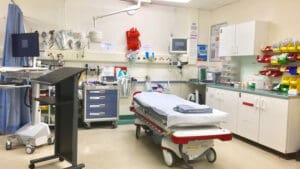
Hospitals across England are increasingly turning to artificial intelligence to ease pressure on accident and emergency departments, as a new AI-powered forecasting tool is deployed to help predict when demand will be at its highest.
The system, now in use across 50 NHS organisations and available to all trusts, is designed to identify likely surges in A&E attendances days and weeks in advance. By analysing a wide range of data, from historical hospital admissions and seasonal illness trends to Met Office temperature forecasts and day-of-week patterns, the tool helps managers plan staffing levels, bed capacity and resources more effectively.
Ministers say the technology will enable patients to be seen and treated more quickly during peak periods, while reducing last-minute pressure on frontline staff. The rollout comes as emergency departments face heightened winter demand, driven by record flu cases, cold weather injuries and seasonal illness. More than 18 million flu vaccines have already been delivered this autumn, with the AI system continuing to learn from evolving seasonal health data.
For NHS staff, the forecasting tool offers clearer long-term planning and earlier warnings of potential bottlenecks, helping trusts put the right people in the right place before pressures escalate. For patients, the aim is shorter waits and smoother journeys through emergency care during the busiest times of year.
The initiative forms part of the Prime Minister’s AI Exemplars programme, which is applying artificial intelligence across public services, including health, education, justice, tax and planning, to modernise systems and improve outcomes.
Technology Secretary Liz Kendall said AI was already transforming healthcare and that demand forecasting marked the next step in that journey. She said the tool would help hospitals predict pressure points, get patients treated faster and support NHS staff during the most challenging months of the year.
Health Innovation Minister Dr Zubir Ahmed said the technology would help hospitals manage winter pressures more effectively, particularly as flu cases rise. He described the rollout as part of a broader ambition to move the NHS from analogue systems to a digital future under the government’s 10-year health plan.
Early feedback from NHS managers has been positive, with local leaders reporting improved decision-making around staffing and capacity. Integrated care boards in areas including Coventry and Warwickshire, and Bedfordshire, Luton and Milton Keynes, are already using the tool to support operational planning.
The forecasting system is one of several AI initiatives being rolled out under the Exemplars programme. Other projects include AI-assisted diagnostics to help clinicians identify conditions such as lung cancer more quickly, automated discharge summaries to speed up patient flow from wards, and the GOV.UK chatbot, which provides instant, plain-English answers to public queries using official government information.
Ministers say the growing use of AI in healthcare is central to building an NHS that is more resilient, efficient and capable of meeting rising demand — particularly during winter — while improving both patient experience and staff wellbeing.
Read more:
AI helps hospitals tackle A&E bottlenecks as NHS rolls out demand-forecasting technology
Tories press Labour over Jeffrey Epstein’s alleged role in RBS commo …

The government is facing renewed political pressure to disclose whether Jeffrey Epstein played any role in discussions surrounding the sale of a taxpayer-backed commodities business during Labour’s last period in office.
Senior Conservatives have tabled a series of parliamentary questions demanding clarity on the $1.7bn (£1.35bn) sale of parts of Royal Bank of Scotland’s Sempra joint venture to JP Morgan in 2010, when Lord Mandelson was business secretary.
The intervention follows disclosures contained in an internal JP Morgan report from 2019, which was later filed in a New York court. The document included emails in which Epstein claimed to have facilitated meetings between Mandelson and Jes Staley, then chief executive of JP Morgan’s investment banking arm, at a time when the bank was exploring the acquisition of RBS’s commodities assets.
The exchanges took place months after Epstein had been released from prison in the United States following a conviction for soliciting a minor, a fact that has intensified scrutiny of his continued access to senior political and financial figures.
In a written parliamentary question, Kevin Hollinrake, the Conservative Party chairman and former business minister, asked what records the Department for Business and Trade held relating to correspondence involving Mandelson, Epstein and the Sempra transaction. Responding on behalf of the department, business minister Kate Dearden said that “any such information is not readily available and could only be obtained at disproportionate cost”.
That response has been challenged by further answers to parliamentary questions tabled by Mike Wood, a shadow Cabinet Office minister, which confirmed that records from the period are held electronically and can be searched by keyword.
Commenting on the discrepancy, Hollinrake said the government needed to “come clean” about Mandelson’s role in the deal. “It is simply not credible to claim it is too costly to retrieve records when the government admits they are electronic and searchable,” he said, adding that the position “only fuels concerns that Labour ministers have something to hide”.
The Treasury, responding separately to questions on the matter, said it had carried out a “proportionate search” of its archives and found no evidence of correspondence or meetings between Epstein and Treasury ministers or officials in relation to the sale. It stressed that oversight of RBS following its bailout was a Treasury responsibility.
A source close to Mandelson dismissed the allegations, describing them as “nonsense” and insisting that there were no meetings involving Epstein and that the business department had no role in the transaction. “It was a Treasury matter and he had absolutely no involvement whatsoever,” the source said.
RBS, which was bailed out by the government during the 2008 financial crisis, was required to divest a number of assets under EU competition rules, including its stake in the Sempra commodities venture.
Mandelson was dismissed as UK ambassador to the United States by Sir Keir Starmer earlier this year following revelations about his association with Epstein. Meanwhile, Jes Staley was banned by the Financial Conduct Authority in July from holding senior roles in UK financial services due to his links to Epstein.
Epstein died in a New York jail in 2019 while awaiting trial on further charges of sex trafficking minors. Recent releases of documents by the US Department of Justice detailing his network of associates have reignited scrutiny of his relationships with politicians and financiers on both sides of the Atlantic.
Read more:
Tories press Labour over Jeffrey Epstein’s alleged role in RBS commodities sale
Rise of the supertour leaves Britain’s grassroots music venues fight …

For many music fans, 2025 will be remembered as the year Oasis returned. Their long-awaited reunion tour dominated the summer, reviving bucket hats, Britpop nostalgia and generating more than £300 million in ticket sales alone.
Yet beneath the headlines and stadium sell-outs, a far less celebratory story is unfolding across the UK’s live music ecosystem. Just 11 of the 34 grassroots venues that hosted Oasis during their first tour in 1994 are still operating today — a stark illustration of how unevenly success is now distributed across the sector.
While the biggest artists fill arenas and stadiums with ease, small venues and emerging acts are being squeezed by a combination of rising costs, changing consumer behaviour and government policy. Industry figures warn that the pipeline for discovering and developing new talent is at risk of collapse.
Julia Rowan, head of policy and public affairs at PRS for Music, says the UK’s position as a global music powerhouse can no longer be taken for granted. She argues that while live music revenues are growing overall, the benefits are increasingly concentrated at the top end of the market, leaving smaller venues exposed.
Streaming has played a central role in reshaping the industry. Platforms such as Spotify have made it easier than ever to release music, but they have also concentrated revenues among a small number of global stars. For many artists, touring has become the primary way to make a living, reversing the traditional model where live shows promoted recorded music.
That shift has helped fuel the rise of the “supertour”. Taylor Swift’s Eras tour, for example, grossed more than $2 billion globally, while legacy acts such as Paul McCartney and Bruce Springsteen continue to draw huge crowds. In the UK alone, live music generated £6.7 billion in spending last year and attracted 23.5 million music tourists.
However, the success of mega-tours is having unintended consequences. High ticket prices — often exceeding £100 or more — are absorbing fans’ disposable income, leaving less money for smaller gigs. Mark Davyd, chief executive of the Music Venue Trust, says there is a natural limit to how much audiences can spend on music in a year.
“If you’re paying £150 or £200 for a stadium ticket, that inevitably eats into the budget you have to see new or emerging artists,” he says.
At the same time, grassroots venues are battling a sharp rise in operating costs. Energy bills, rents, staffing costs and travel expenses have all increased. Labour’s rise in employers’ National Insurance contributions and the higher minimum wage have added further pressure. Even large venues have felt the impact: James Ainscough, chief executive of the Royal Albert Hall, says the NI increase alone has added £375,000 a year to the venue’s costs.
For smaller venues, the situation is more precarious. The Music Venue Trust estimates that average profit margins across grassroots venues are just 0.5 per cent. More than a third of operators are no longer paying themselves at all, with many relying on second jobs to keep venues open.
Davyd describes these venues as the industry’s “research and development labs” — essential spaces where artists learn their craft and audiences discover new music. Without them, he warns, Britain risks losing its ability to nurture future global stars. That concern is already reflected in the data: no British artist appeared in the global top 10 singles or albums in 2024 for the first time in more than 20 years, according to IFPI figures.
There are signs of collective action. A voluntary ticket levy has been introduced, allowing arenas and stadiums to add a small contribution to tickets to support grassroots venues. The Royal Albert Hall was the first major venue to adopt the levy, while the O2 Arena has agreed to share revenues when new artists perform there.
The government has voiced support for the levy and moved to cap ticket resale prices, but critics argue that recent tax and business-rates changes are undermining those efforts. As Ainscough puts it, the sector is facing a “perfect storm” of challenges.
Industry leaders stress that creativity in Britain remains abundant. What is missing, they argue, is a financial and policy environment that allows that creativity to flourish beyond the biggest stages. Without intervention, they warn, the next Oasis may never get the chance to be heard.
Read more:
Rise of the supertour leaves Britain’s grassroots music venues fighting for survival
Business is ‘right to be worried’ by Reform UK, warns Labour’s L …
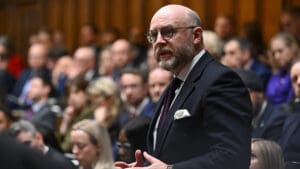
British businesses are right to be concerned about the rise of Reform UK and should demand far tougher scrutiny of the party’s economic plans, according to Liam Byrne, the Labour chairman of the House of Commons business and trade select committee.
In an interview with The Times, Byrne said that if Reform were to become the dominant force on the political right, companies would need to take a much closer look at its policies and credibility. He warned that the business community could not afford complacency when dealing with a party whose economic approach remains unclear.
“If Reform is set to become the predominant party of the right, then businesses absolutely are going to need to understand where they’re coming from,” Byrne said. “Particularly when the economic evidence says that populist, interventionist administrations are pretty catastrophic for the economy. The next year or two are going to be quite important for the business community in really getting their head around the reality of Reform.”
His comments come at a time when Reform UK is polling strongly and stepping up its engagement with corporate Britain, even as both Labour and the Conservatives seek to rebuild trust with investors after years of economic turbulence.
Reform, led by Nigel Farage, has begun courting business leaders more actively, though some executives remain cautious. In November, the party’s head of policy, Zia Yusuf, took part in a high-profile question-and-answer session at the annual conference of the Confederation of British Industry, an appearance widely seen as an attempt to demonstrate openness to scrutiny from corporate leaders.
The party’s deputy leader, Richard Tice, is due to address a City investor event in January hosted by VSA Capital, where he is expected to outline Reform’s thinking on financial policy and the wider economy. The event has been billed as an opportunity for investors, businesses and policymakers to engage at a “crucial time” for the UK economy.
Byrne said many business leaders he speaks to are already uneasy. He described them as “fairly terrified” by the prospect of Reform gaining power, arguing that the global economic environment is already fragile without the added uncertainty of a party whose spending plans remain opaque.
“A new party like Reform has got spending plans which are so unclear,” he said. “There are so many questions about whether this would ultimately be Liz Truss mark two.”
Reform rejected that characterisation. Tice said in a statement that both Labour and the Conservatives had “wrecked the public finances” and left the economy in a far worse state than before the 2024 general election. He argued that Reform’s approach would restore discipline to public spending, lower borrowing costs and strip away what he described as unnecessary regulation.
“Only Reform will get public spending under control so that the nation’s borrowing costs come down,” Tice said. “We will also cut huge swathes of unnecessary regulation that slow growth and increase the cost of living. Then, and only then, will we cut taxes to stimulate growth.”
For Byrne, however, the message to business leaders is clear. With Reform’s influence growing, he believes companies must press the party harder on the detail behind its promises, rather than accepting broad slogans at face value.
Read more:
Business is ‘right to be worried’ by Reform UK, warns Labour’s Liam Byrne
Low and no-alcohol beer breaks records as Britain’s drinking habits …

Brits are on track to drink more than 200 million pints of low and no-alcohol beer this year, marking a record milestone that underlines a profound shift in the nation’s drinking habits.
Consumption of “no and low” beers is forecast to rise almost a fifth from 2024 levels, when around 170 million pints were sold, according to research from the British Beer & Pub Association. The trade body expects around 22 million pints to be poured in December alone, as pubs and drinkers increasingly embrace alcohol-free alternatives during the festive period.
The growth has been dramatic. Volumes in the low and no-alcohol category have risen by more than 750 per cent since 2013, driven by significant investment from brewers and changing consumer attitudes towards health and moderation. Separate figures from Drinkaware show that 45 per cent of adults have consumed no or low-alcohol drinks in the past year, up from just 22 per cent in 2021.
Pub operators say the trend is reshaping the bar. Greene King, one of the UK’s largest pub groups, has reported a 36 per cent rise in alcohol-free drink sales over the past year across its 1,600 managed sites, with packaged zero per cent beer and cider accounting for more than 70 per cent of those sales.
For specialist brewers, the shift is becoming embedded year-round. Luke Boase, founder of Lucky Saint, which is now available on draught in around 1,000 pubs, said demand had reached record levels. “We’re seeing this across every month of the year – it’s becoming ingrained in how people are drinking,” he said.
Emma McClarkin, chief executive of the BBPA, said the surge showed how effectively the industry was responding to changing tastes. “The pub has always been about more than just getting a drink, and it’s inspiring to see so many people choosing to moderate while still celebrating and socialising,” she said.
Despite the growth, brewers argue that regulation is holding the category back. In the UK, beer must be below 0.05 per cent alcohol by volume to be labelled “alcohol-free”, a stricter threshold than in many other countries, where up to 0.5 per cent is permitted. McClarkin said modernising the definition would bring the UK into line with international markets and unlock further investment and innovation.
The shift towards moderation is also creating challenges for established global brewers, as younger, more health-conscious consumers drink less alcohol overall. Low and no-alcohol beers accounted for about 2 per cent of global beer volumes last year, according to IWSR, the drinks analytics firm, which expects that share to rise to 3 per cent by 2027.
Earlier this month, Budweiser Brewing Group, the UK and Ireland arm of Anheuser-Busch InBev, opened its second European de-alcoholisation facility at its brewery in Magor, South Wales. The move means alcohol-free brands such as Corona Cero and Stella Artois 0.0 will, for the first time, be produced in Britain rather than imported from Belgium – a further sign that the no and low-alcohol boom is moving firmly into the mainstream.
Read more:
Low and no-alcohol beer breaks records as Britain’s drinking habits shift

