

Every January, millions of people resolve to get healthier. They join gyms, hire trainers, and put themselves in environments engineered for progress. The formula is obvious: the right expertise, the right structure, and the right people make improvements inevitable.
Yet when it comes to our businesses, the engines that employ people and shape industries, we often operate in isolation. We grind away alone, convinced that needing input is somehow an admission of weakness. And after building multi-million-pound companies, we tell ourselves we should have all the answers by now.
But the founders who scale fastest understand something important. Business health requires continuous investment, expert insight, and a community strong enough to hold you accountable to your ambitions.
Running a scale-up company means facing decisions that are rarely simple and never something you can solve through a quick internet search. Should you expand internationally? How do you keep a key hire who is wavering? What capital structure will get you through the next phase of growth?
Is now the moment to acquire, or the moment to be acquired?
These are not questions you eventually figure out through trial and error. They are questions that grow heavier the longer you hesitate. Meanwhile, competitors who seek support, challenge their thinking, and move with speed advance.
I have watched exceptional founders spend months debating a move that a peer, someone who has already navigated the same crossroads, could have helped them resolve in a single afternoon. That lost time is not hypothetical. It is lost revenue, lost positioning, and lost momentum. And momentum, once gone, is incredibly difficult to regain.
When you consistently engage with other founders who operate at your level, everything shifts. Problems that felt overwhelming shrink down to size. Blind spots become visible. Opportunities you would have missed suddenly come into focus. You begin to recognise patterns because you are learning from the lived experience of others who have already paid the price for those insights.
This is not networking in the traditional sense. It is not swapping business cards over canapés. It is about building a trusted circle of people who carry the same weight, face the same pressures, and understand the stakes in a way no investor, adviser, or team member ever can.
Inside our community at Helm, I have seen founders cut their time to decision on major strategic calls by more than half. Not because they rush, but because they move with clarity. They pressure test assumptions, tap into collective intelligence, and learn in hours what would have taken years to uncover alone.
The gym analogy is more literal than it sounds. Turning up once changes nothing. Showing up consistently changes everything. The founders who get real value treat peer engagement as a discipline. They block time for Forums the same way they block time for investor meetings. They show up prepared. They contribute. They understand that a community only works when every member is committed to the health of the whole.
As you set your priorities for the year ahead, ask yourself a simple question: are you investing in the health of your business with the same intentionality you invest in your own?
If you want to accelerate in 2026, working harder in isolation will not get you there. Surrounding yourself with the right people will. Founders who have overcome the challenges you are facing. Founders who challenge your assumptions and push you to think bigger and execute better.
The businesses that will dominate the next decade will not be led by lone wolves. They will be led by founders who understand that speed comes from shared intelligence, and growth accelerates when you stop solving every problem for the first time.
Your business deserves the same commitment, discipline, and care that you give your body every January. Make 2026 the year you invest in its health properly.
Read more:
Treat Your Business Like Your Body This New Year
Author: AbellMoney
Five Welsh entrepreneurs recognised as start-up accelerator celebrates …

Five Welsh entrepreneurs have been recognised for outstanding progress after completing the Business Wales Start-Up Accelerator, with the latest cohort underlining how intensive, targeted support can turn early-stage ideas into investment-ready businesses.
The award winners completed the ten-week accelerator programme and were recognised across five categories, reflecting both the breadth and quality of entrepreneurial talent emerging across Wales. Collectively, the cohort demonstrated strong momentum in moving from concept to customer, validating propositions and building clear growth strategies.
The 2026 award winners
Proposition Flex Award
For the most flexible approach to developing a launch proposition
Winner: Chris Hughes, Tecwila
Founded in Anglesey, Tecwila is a flavour-led spirits brand working with a Mexican distillery to produce consistent, small-batch spirits for the UK market. During the programme, the business completed initial production and brand development and is now preparing for wider distribution.
Accelerator Award
For the individual who made the most progress during the programme
Winner: Dr Emma Marie Williams, GlitterBrain Psychology
GlitterBrain provides psychology-based self-help and therapy resources for adults, including neurodivergent clients. The platform focuses on practical, accessible mental health and life-management tools designed to create lasting change through small, achievable steps.
Dr Williams said: “Winning the Accelerator Award feels brilliant because it shows how far we’ve come. Ten weeks ago, I had passion and a vision but no clear strategy. The programme helped me test my assumptions and hone my business skills, and now I have a clear growth plan.”
Sales Accelerator Award
For the most ambition shown in building and accelerating a sales funnel
Winner: Silvia Sanchez, Classer Ltd
Classer offers software that helps GoPro and action-camera users organise, store and share video footage, enabling customers to manage large volumes of content and relive their experiences more easily.
Accelerator Champion Award
For commitment and positive mindset throughout the programme
Winner: Sakshi Mahajan, Hashview
Hashview is a next-generation trust engine for SMEs, combining SaaS analytics, AI-driven sentiment analysis and geo-fencing technology to deliver real-time, authentic customer feedback.
Most Collaborative Participant Award
For exceptional support of peers during the programme
Winner: Vignesh Pathmaraj, Elements Technik (Elements Supply AI)
Elements Supply AI provides AI-powered procurement and spare-parts intelligence for manufacturing and industrial businesses, streamlining sourcing and supplier management through automation and data-driven insights.
Accelerator impact: LanoTech’s £470k investment pipeline
The latest cohort’s success comes as applications open for the next Start-Up Accelerator programme, running from 12 May to 17 July 2026. The programme’s longer-term impact is illustrated by Aberystwyth-based LanoTech, which has secured a £470,000 investment pipeline since graduating in July 2025.
LanoTech is pioneering the use of lanolin — the natural grease found in sheep’s wool — as a sustainable alternative to soy and vegetable oils in animal feed. Following the accelerator, the company secured £120,000 through the Welsh Government’s Contracts for Innovation Cymru Programme to fund world-first live poultry feed trials. Founder Clodagh Weingart later secured a further £350,000 from Innovate UK for a project commencing in 2026.
Laboratory testing has shown lanolin to have a higher gross energy content than conventional feed oils, positioning the business to create new value streams for British wool producers while reducing agriculture’s carbon footprint.
“The foundation provided by the Start-Up Accelerator has been instrumental in positioning LanoTech for scale-up,” said Weingart. “The programme gave me the structure to develop a compelling investment case and the confidence to articulate our vision to funders. Moving from concept to securing nearly half a million pounds in funding within months of graduating demonstrates the practical impact of that intensive support.”
Lucy Jones, Operations Manager of the Business Wales Start-Up Accelerator, said the results reflect exactly what the programme is designed to deliver.
“Seeing founders secure investment, land first customers and refine their business models is the core purpose of the Start-Up Accelerator,” she said. “LanoTech’s success shows how structured methodology, expert guidance and a strong peer network combine to create the conditions for growth.”
The Start-Up Accelerator forms part of the Accelerated Growth Programme, a Business Wales service funded by the Welsh Government. Over ten weeks, founders are supported to validate demand, refine their offer and secure early customers through webinars, masterclasses, one-to-one mentoring and access to investors and sector specialists. AI tools are also integrated to support market research, creativity and speed to market.
The programme targets Wales-based entrepreneurs with pre-revenue ideas capable of reaching £1 million in annual turnover, creating at least ten full-time jobs and exporting by 2029. Funding support is available to remove barriers to participation.
Applications for the May 2026 Start-Up Accelerator close on Monday 30 March 2026, with expressions of interest available via Business Wales.
Read more:
Five Welsh entrepreneurs recognised as start-up accelerator celebrates latest award winners
‘Reeves’ Christmas tax’ creates big winners and losers as 2026 b …
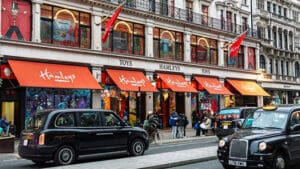
Some of Britain’s most recognisable retailers and visitor attractions are bracing for dramatic swings in their business rates bills from next April, as the 2026 revaluation lands with what has already been dubbed across the sector as “Reeves’ Christmas tax”.
Fresh analysis from global tax firm Ryan reveals a retail landscape increasingly defined by extremes, with destination-led and seasonal attractions facing some of the steepest increases, while several high-profile high street names enjoy substantial reductions.
Among the hardest hit are seasonal and experiential venues that have boomed in popularity since the last valuation date. The land used for Winter Wonderland in Hyde Park will see its rateable value jump from £1.0m to £3.75m — an increase of 275 per cent. Despite transitional relief capping the first-year rise at 30 per cent, the site’s business rates bill is still set to climb by £166,500 next year, from £555,000 to £721,500.
Lapland UK in Ascot faces an even more dramatic shift. Its rateable value has surged from £150,000 to £1.87m, an extraordinary rise of 1,147 per cent, reflecting the explosive growth in demand for immersive Christmas experiences.
London’s major visitor markets are also under pressure. Camden Stables Market will see its rateable value rise from £1.26m to £3.5m, up 178 per cent, pushing its bill up by £209,790 next April, again capped at 30 per cent. Nearby Camden Lock Market faces a similar jump, with its valuation rising from £660,000 to £2.27m, an increase of 244 per cent.
Traditional retailers are not immune. Hamleys’ flagship toy store on Regent Street is facing one of the largest increases among permanent retailers, with its rateable value rising 38 per cent and its business rates bill set to increase by £449,550 next year.
While transitional relief limits first-year increases for large properties, the protection only delays the impact. Because the caps compound annually, retailers facing the biggest valuation jumps could still see their bills more than double by the end of the rating cycle.
At the other end of the spectrum, some of the UK’s best-known retail names are emerging as clear winners. Waterstones’ Piccadilly flagship will see its bill fall by around £828,000 next year, a reduction of 45 per cent, after its rateable value dropped by £1.36m — the largest fall recorded in the analysis. Primark’s Oxford Street store at 499–517 Oxford Street is also set for a significant cut, with its bill falling by £793,000, or 30 per cent.
Alex Probyn, practice leader for Europe and Asia-Pacific property tax at Ryan, said the scale of the changes highlights just how uneven the retail landscape has become.
“Seasonal attractions like Winter Wonderland and Lapland UK have grown significantly in popularity between valuation dates, so upward pressure on their valuations was not unexpected — but the level of increase certainly was,” he said. “The key question is whether the figures properly reflect the short, seasonal nature of these operations or whether broader income assumptions have been applied.”
Probyn added that across the wider sector, the divergence is stark. “Large-format and DIY stores are seeing some of the steepest reductions as rental evidence softens, while luxury outlet retail at destinations like Bicester has surged on the back of exceptional trading.”
Prime luxury locations have been more stable. “Bond Street’s world-record retail rents have remained broadly steady between valuation dates, and that stability is clearly reflected in the draft 2026 valuations for major luxury houses,” he said.
Taken together, the revaluation underlines a retail sector increasingly split between experiential destinations and traditional formats — and sets the stage for a highly uneven impact when the new business rates bills arrive next spring.
Read more:
‘Reeves’ Christmas tax’ creates big winners and losers as 2026 business rates shake-up hits retail
Non-dom tax revenues branded ‘fantasy economics’ by former governm …

Expected tax revenues from the abolition of non-dom status have been dismissed as “fantasy economics” by a former government economist, amid warnings that the Chancellor is relying on deeply flawed assumptions to plug future gaps in the public finances.
Fresh post-Budget analysis published today by economic consultancy ChamberlainWalker suggests that forecasts underpinning the non-dom reforms are increasingly detached from reality. Drawing on the Office for Budget Responsibility’s latest Budget report alongside earlier forecasts, the study concludes that the government is assuming almost £16bn in tax receipts over the next three years will flow from overseas assets being brought into the UK — an outcome the authors say is highly unlikely under current legislation.
At the heart of the government’s projections is the expectation that around £130bn of foreign assets will be repatriated to the UK via the Temporary Repatriation Facility (TRF), part of the reforms introduced following the abolition of non-dom status in 2024. The OBR estimates that this would generate nearly £16bn in tax receipts in the near term and contribute towards a projected £34bn in revenues by 2029-30.
However, ChamberlainWalker’s analysis argues that this optimism rests on three questionable assumptions. First, it says the Treasury is banking on large numbers of non-doms making use of the TRF, despite tax advisers actively discouraging clients from doing so in its current form. While the government expects £360bn in overseas assets to be eligible, the report suggests there is little incentive for individuals to transfer funds without stronger legal certainty.
Second, the analysis challenges the assumption — unchanged in the 2025 Budget — that only one in seven affected non-doms will leave the UK. Recent evidence, the report claims, indicates that departures may already be at least 50 per cent higher than the OBR had anticipated.
Third, it questions the belief that the remaining non-dom population has a similar level of foreign income and gains to those who have already left. ChamberlainWalker says there are strong indications that those exiting the UK include individuals with significantly higher overseas wealth, including several high-profile billionaires, meaning the tax base could erode far faster than expected.
Chris Walker, founding partner of ChamberlainWalker and a former government economist, said the projections risk leaving a sizeable hole in the public finances if they fail to materialise.
“The government’s bet that it will receive almost £34bn of tax receipts by 2029-30 is based on increasingly unreliable assumptions,” he said. “Assuming that non-doms are going to shift £130bn of taxable assets into the UK is fantasy economics under the current legislation. If no tax adviser is willing to recommend the Temporary Repatriation Facility, there is zero chance revenues will come anywhere close to the Chancellor’s Budget figures.”
The report also warns that meaningful data on the true impact of the reforms may not emerge until early 2027, leaving ministers effectively “crossing their fingers” that the revenues arrive later in the parliament. While that may be politically convenient, the authors argue, it is no substitute for robust fiscal planning.
To mitigate the risk, ChamberlainWalker recommends a targeted amendment to the Finance Bill currently passing through Parliament. The proposal would provide explicit reassurance that non-doms using the TRF in good faith will not later be caught by anti-avoidance rules or retrospective tax challenges. According to the report, such a safeguard could help persuade more individuals to remain in the UK and bring foreign assets onshore, improving the credibility of the revenue forecasts.
Without such changes, the analysis concludes, the government risks discovering too late that one of its key post-Budget revenue streams was built on hope rather than hard economics.
Read more:
Non-dom tax revenues branded ‘fantasy economics’ by former government economist
Northern Ireland faces new car shortages as Brexit rules bite under Wi …

Northern Ireland is facing the prospect of new car shortages and higher motoring taxes as post-Brexit provisions under the Windsor Framework come into force at the start of 2026, triggering concern across the automotive sector.
From January 1, all new cars sold and registered in Northern Ireland will have to comply with European Union vehicle standards rather than those applied in Great Britain. Dealers warn that many British-specification models currently sold in Northern Ireland will no longer be eligible, creating the risk of significant gaps in showroom availability and, in some cases, the complete withdrawal of certain models.
EU vehicle rules typically require additional safety features, such as mandatory speed-limit alerts and steering-wheel lane-assist systems, which are not standard across all UK-market cars. Manufacturers have been slow to adapt British models to meet EU requirements, leaving Northern Irish dealers exposed just weeks before the rules take effect.
The changes will also affect company car drivers. Benefit-in-kind tax for vehicles registered in Northern Ireland will be calculated under EU rules, meaning plug-in hybrid company cars will attract higher tax bills than identical vehicles registered elsewhere in the UK. Industry figures say this divergence risks distorting fleet purchasing decisions and making Northern Ireland a less attractive base for employers.
The situation is further complicated by the widening gap between the UK and EU on the transition away from petrol and diesel cars. The UK plans to ban new petrol and diesel sales from 2030, while the EU’s ban was originally set for 2035. That deadline now looks likely to be pushed back to 2040, potentially creating further divergence in vehicle availability and compliance.
The Windsor Framework, agreed to avoid a hard border on the island of Ireland, keeps Northern Ireland aligned with the EU single market for goods. While this was designed to protect the Good Friday Agreement, it has had an especially sharp impact on car dealerships, which have historically sold the same British-specification vehicles available across England, Scotland and Wales.
Senior figures in the automotive industry have held multiple meetings with the Northern Ireland secretary, Hilary Benn, pressing for an indefinite delay to the implementation of EU vehicle standards and for benefit-in-kind tax to be harmonised with the rest of the UK. While ministers are said to be sympathetic, officials have indicated that any changes would need to form part of a broader reset in UK-EU economic relations.
Whitehall sources insist the government remains committed to “full and faithful implementation of the Windsor Framework”, arguing that it safeguards Northern Ireland’s unique position and ensures the smooth flow of trade.
The stakes are high. The automotive sector employs around 17,600 people in Northern Ireland and accounts for roughly 50,000 new vehicle registrations each year, about 2.5 per cent of the UK market. Dealers say sourcing vehicles from the Republic of Ireland is not a viable alternative, as prices are typically higher due to vehicle registration tax and a 23 per cent VAT rate, compared with 20 per cent in the UK.
Despite the framework’s aim of preserving the EU internal market, there is little cross-border trade in new cars. Just 134 vehicles were imported into the Republic of Ireland in the ten months to October 2025, including only six from the UK, highlighting the practical limitations of relying on Irish supply.
Dealers are already feeling the effects. Manufacturers have restricted access to unsold UK stock pipelines, and while new car sales across the UK are up five per cent so far this year, registrations in Northern Ireland are down three per cent.
A government spokesperson said ministers were working to ensure manufacturers face “no barriers to obtaining dual-vehicle approvals”, adding that the aim was to prevent drivers and dealers in Northern Ireland from seeing their choice restricted. However, with the deadline fast approaching, industry leaders warn that without swift action, shortages and higher costs are inevitable.
Read more:
Northern Ireland faces new car shortages as Brexit rules bite under Windsor framework
The Twelve Days of Business

On the first day of Christmas, my mentor taught to me, resilience as a growth strategy…
Christmas is a time for slowing down, relaxing, and resetting for the year ahead. For the SME leaders we work with on our Help to Grow: Management Course, it provides the opportunity to reflect on the year gone by and think about the new strategies and tactics required to ensure the new year is merry and bright. But also, to reflect upon their own role in leading the business.
Here are twelve practical lessons that I’ve learnt from working with small business leaders across many different sectors and our community of expert business school members.
Resilience as a growth strategy
Imagine a business that is not only equipped to withstand economic disruption, but which can also rapidly adapt to changing market conditions and seize new opportunities. The most resilient SMEs that I have worked with do exactly that – facing down uncertainty while maintaining a competitive edge.
This includes setting a strategy for growth and innovation that embeds agility, leading with purpose and bringing the team onboard with you through changes. A key part of the Help to Grow: Management Course is understanding that new challenges are more than just obstacles to overcome, rather opportunities to learn, innovate and build momentum for long-term success.
Imposter syndrome
When clarity starts to emerge, the next big shift is confidence. You can build a brilliant plan but without self-belief, it’s unlikely you’ll move forward. Developing your knowledge and a support network will help you build your confidence as a leader and build your business.
Louise Morgan, founder and director of TMPR and Help to Grow: Management alumni, says: “For me personally, imposter syndrome is a deep-rooted feeling that my company has been built on luck rather than by design. Our growth doesn’t feel earned – it feels accidental. The key for small business leaders is to be able to identify this challenge in themselves and take advantage of support networks to overcome the threat of feeling like a fraud.”
Seek out mentors and people in your shoes
One of the biggest highlights for our alumni is the value of having a mentor and a peer group to share ideas and challenges with. Business leaders who have been there and done it, but also those at a similar stage of their leadership or business evolution. Outside perspective brings business benefits and makes the growth journey more enjoyable.
Richard Sadler, Director, CJC Aggregates and Landscaping Supplies: “My mentor on the Help to Grow: Management Course challenged me in the right ways. Rather than thinking about just drawing in customers, my mentor encouraged me to consider how we get more returning customers who want to spend more with us. During a time of real growth, he made me see we could change our existing business to be more profitable.”
Get your organisational structure right
With a community of more than 10,000 small business leaders, we’re helping SMEs from a huge variety of different sectors but organisational design and employee engagement are important for every industry. Pruden & Smith, bespoke and handmade luxury jeweller, has achieved record revenues a year after its creative director Rebecca Smith completed the 90% government-funded Help to Grow: Management Course at University of Brighton, School of Business and Law. Her main takeaway was how to face into restructuring her team.
Entrepreneur and creative director at Pruden & Smith, Rebecca Smith, said: “I think many small businesses like ours struggle because they aren’t putting the right organisational structures in place to support growth. As an entrepreneur, I’ve never worked in a large organisation so didn’t even really know the names of the roles we would require as we scaled into a bigger business.Restructuring allowed us to provide clarity around existing roles but also outline development paths so individuals could see how they would progress in the future. The process allowed me to identify which areas I should be stepping out of, but it also gave us real clarity on the roles we needed to underpin our growth. We recreated people’s jobs to fit that model.”
Productivity KPIs
A universal lesson from the course is to be crystal clear about what productivity means within the context of your business. Once a business pins down how to measure its productivity, KPIs can be set that align employees and activity around the same goal. This provides confidence that the critical KPIs, and not vanity metrics, are being tracked.
Small adjustments often make a noticeable difference – for example, simplifying systems to reduce wasted effort, or reviewing processes with the team to spot where work slows down. The aim is to use these metrics to support smarter decisions, not to add reporting for the sake of it.
You don’t need to be an accountant
But you do need a firm grip on the financials. A trait I’ve consistently observed from successful business leaders is that they properly understand the what’s what of finance and financial management, when to seek growth funding and how to prepare for key investment raising activities.
Knowing your figures helps you manage risk, pace growth, and spot where margins can be strengthened. It also gives you confidence when talking to lenders, partners, or potential investors.
Know how to use your time wisely
A mother of three young children, alumni Lauren works three days a week on her business Guthrie & Ghani – making strategic focus, prioritisation, and strong management essential for success.
Lauren Guthrie, founder of Guthrie & Ghani and former finalist on the first series of The Great British Sewing Bee, commented “I didn’t have the right frame of mind before the course. Having gone through Help to Grow: Management, I learnt how to think about growth, what to evaluate, and how to structure the business to support it. The course helped me put the right structures in place to maintain my ethos and grow while balancing my family life. Now, I know that the limited time I have is spent on the things that really matter.”
You don’t know what you don’t know
It doesn’t matter how many years of experience we as leaders have, there is always the opportunity to learn more, and to validate or recalibrate that you are leading your organisation on the right path.
Paul Kenny, Managing Director of Yorkshire-based Aquatrust: “My journey wasn’t linear – I didn’t go to university, and my A Level results weren’t what I’d hoped for. But I found opportunities, worked hard, and kept learning. Enrolling on the Help to Grow: Management Course in 2022 was my first real experience of returning to formal education – at the age of 50/51. It came at a crucial time in my career and gave me a real plan and purpose for my business. Help to Grow: Management reignited that learning mindset and gave me the tools to lead Aquatrust into its next chapter.”
Moving from corporate career to SME leadership is a steep learning curve
Leaders making this shift often say they gain a deeper appreciation for how each part of the business contributes to performance. With that comes a greater sense of responsibility, but also the chance to understand the full extent of leading a growing business and make decisions with real pace.
Karsten Smet, CEO of ACI Group and alumni said this about his own experience of switching careers: ‘What happens when you’ve been in a C-level position at large organisations is you don’t know how SMEs work. You don’t necessarily understand how all the different components really fit together or how decisions are made. The Help to Grow: Management Course gave me this understanding and time to clarify my business’s future and make my organisation one that my employees were invested in.”
It’s never too early to look at exporting
Exploring overseas markets encourages firms to refine their offering, strengthen processes, and build resilience through diversification.
Byron Dixon MBE, chair of the Small Business Charter and founder of Micro-Fresh, says: “I can’t overestimate the degree to which exporting can transform a business’ trajectory – it certainly did for mine. It’s also so much easier than it was 20 years ago, and there is so much fantastic support on offer. Yet, too many SME leaders delay exporting much longer than necessary. They wait until they’ve exhausted domestic opportunities, or until growth plateaus. Sometimes they just never see it as an option for them at all. To those in that position, I’d say this: the question shouldn’t be “When should we export?” but rather “Why aren’t we already exporting?”
Work ON the business, not IN it
Taking time away from day-to-day pressures helps leaders think about capacity, future skills, and the investments that will shape the next phase of growth. Critically it also provides the opportunity to think about their own role and how that contributes towards growth.
Rachel Hicken, Pig & Olive co-founder and alumni: “I’m very good at service, my co-founder Simon knows his pizzas – but that’s not enough if you don’t understand the backbone of running a business. Help to Grow: Management really set off my journey of learning about business. It helped me realise I needed to stop just working IN the business and started working ON it. I learnt that growth requires leaders to step back and look at the big picture. It also gave me the confidence to look at figures properly and understand the story they tell and gave me the confidence to make strategic investments.”
Treat succession planning as a growth strategy, not just an exit strategy
In conversations we’ve had with family-owned business leaders over the last five years, we’ve seen that proactive succession planning leads to stability, builds resilience, and unlocks growth for the business. The data backs it up; according to STEP, 74% of family businesses with a succession plan agree that having a plan has made their business stronger and helped them to grow.
Having these conversations early reduces uncertainty for staff and gives future leaders the confidence to step forward. It also creates room to plan investment and allocate responsibilities more thoughtfully.
Jingle all the way into the new year
As the year draws to a close, I hope these bite-size lessons show how practical choices, steady reflection and a willingness to learn can strengthen any growing business. With renewed focus and a bit of breathing space, you as SME leaders can enter the new year with purpose and confidence.
Business leaders can find out more about the Help to Grow: Management Course and sign up for the course in their area by visiting: www.smallbusinesscharter.org/help-to-grow-management
Read more:
The Twelve Days of Business
EU set to soften 2035 petrol and diesel car ban amid political pressur …

The European Union’s planned ban on the sale of new petrol and diesel cars from 2035 is set to be watered down, according to senior figures in the European Parliament, in a move that is likely to trigger fierce opposition from environmental campaigners.
The decision, which is expected to be outlined by the European Commission this week in Strasbourg, would mark a significant retreat from one of the central planks of the EU’s Green Deal. Campaigners have warned that any dilution of the ban would amount to a “gutting” of the bloc’s climate ambitions for transport.
Under existing legislation agreed in 2022, all new cars sold in the EU from 2035 must produce zero CO₂ emissions, effectively banning petrol, diesel and hybrid vehicles. However, Manfred Weber, president of the European People’s Party group, said the outright ban on combustion engines would be softened.
“The technology ban on combustion engines is off the table,” Weber told Germany’s Bild newspaper. “All engines currently manufactured in Germany can therefore continue to be produced and sold.”
His comments come after months of lobbying from national leaders and the automotive industry. Germany’s chancellor, Friedrich Merz, said last week that he supported a rethink, arguing that combustion-engine vehicles would still dominate global roads well beyond 2035.
“The reality is that there will still be millions of combustion engine-based cars around the world in 2035, 2040 and 2050,” Merz said.
Italy’s prime minister, Giorgia Meloni, alongside several major carmakers, has also pushed for changes that would allow hybrid vehicles to remain on sale. Weber suggested that under revised rules, manufacturers would instead be required to cut average fleet emissions by 90 per cent from 2035, rather than meeting a strict zero-emissions target.
This could open the door to a new generation of plug-in hybrid vehicles with extended electric range but a combustion engine as backup for long-distance journeys.
Environmental groups have reacted angrily to reports of a climbdown. Colin Walker, head of transport at the Energy and Climate Intelligence Unit, said weakening the rules would keep European households “stuck driving dirtier and more expensive petrol cars for longer” and slow the transition to electric vehicles.
Some manufacturers, including Volvo and Polestar, have also criticised calls to soften the ban, warning that policy uncertainty could hand an advantage to Chinese electric vehicle makers that are already scaling rapidly.
A spokesperson for the European Commission said the 2035 deadline was still under discussion, adding that commission president Ursula von der Leyen had acknowledged growing calls for “more flexibility” on CO₂ targets.
Alongside any changes to the ban, the commission is expected to propose new incentives to support the production and purchase of small, affordable electric vehicles made in Europe, as part of a broader effort to counter rising imports from China.
The debate highlights deep divisions within the EU over how fast the transition away from fossil-fuelled cars should happen, balancing climate targets against industrial competitiveness, jobs and consumer demand as the bloc charts its automotive future.
Read more:
EU set to soften 2035 petrol and diesel car ban amid political pressure
Leon to close sites and cut jobs as fast-food chain enters administrat …

Fast-food chain Leon is set to close a number of restaurants and cut jobs after entering administration, just weeks after being bought back by its co-founder John Vincent in a deal reported to be worth between £30 million and £50 million.
The business has applied for an administration order to enable the formulation of a Company Voluntary Arrangement (CVA), which it said is intended to accelerate a wider restructuring of the group. Leon’s immediate priority will be to reduce the number of loss-making sites as it attempts to stabilise the business and return it to profitability.
Vincent reacquired Leon last month from Asda, which had bought the chain in 2021 as part of the Issa brothers’ EG Group empire. That acquisition valued Leon at about £100 million, significantly higher than the price paid in the recent buyback.
In a statement, Leon said the business has been hit hard by changing work patterns since the pandemic, alongside rising taxes and cost inflation, pressures that have affected much of the hospitality sector. The company added that while Vincent believes Leon drifted from its original values under previous ownership, he recognises the challenges faced by Asda and EG as operators.
John Vincent said that Leon had no longer fitted Asda’s strategic priorities and that the problems facing the chain were shared widely across the industry. He pointed to depressed footfall, hybrid working and what he described as increasingly unsustainable tax burdens as key drivers of losses across casual dining.
Leon will now spend the coming weeks in discussions with landlords, supported by restructuring advisers Quantuma, to agree proposals for the future of the estate. The aim, the company said, is to emerge from administration as a smaller, leaner business that can more easily return to its founding principles.
All Leon restaurants will continue to trade as normal during the process and the group’s grocery arm will not be affected by the CVA. The company has not confirmed how many sites will close or how many roles will be lost.
Where closures do occur, Leon said it would first seek to redeploy staff to other restaurants. Employees who cannot be relocated within a reasonable commuting distance will receive redundancy payments. In addition, the chain has struck an agreement with Pret A Manger that will allow affected staff to apply for roles through a dedicated recruitment channel.
Vincent also used the announcement to call for a review of what he sees as an excessive tax burden on hospitality. He said that for every pound spent by customers, around 36p goes to the government, leaving businesses with little margin to absorb rising costs.
Leon currently operates 71 restaurants, including 44 owned sites and 22 franchised locations. Before its sale by Asda, the chain had already cut hundreds of jobs, reducing headcount by 17 per cent in 2024 as it sought to curb losses. Its most recent accounts showed revenues falling to £62.5 million, alongside losses of £8.4 million, an improvement on the £12.5 million loss reported the previous year.
Founded in 2004 by Vincent, Henry Dimbleby and Allegra McEvedy, Leon is now hoping that a period of restructuring will allow it to rebuild and return to growth once again.
Read more:
Leon to close sites and cut jobs as fast-food chain enters administration
William Hill owner Evoke puts itself up for sale amid mounting tax and …

Evoke, the heavily indebted gambling group that owns William Hill in the UK as well as the 888 brand, has put itself up for sale as it grapples with rising costs and regulatory pressure.
The company said it is undertaking a review of its strategic options, which includes the possibility of selling the business. Investment banks Morgan Stanley and Rothschild have been appointed as joint financial advisers to oversee the process, although Evoke cautioned that there is no certainty any transaction will result or what form a deal might take.
The move comes just weeks after Evoke warned it would close around one in ten of its betting shops next year as part of efforts to stabilise its finances. The group has struggled to reverse declining performance while carrying a significant debt burden.
Pressure on the business has intensified following changes announced in the recent Budget, which sharply increased taxes on online gambling. From April 2026, the rate of remote gaming duty will rise from 21 per cent to 40 per cent, while tax on online sports betting will increase from 15 per cent to 25 per cent.
Evoke has already withdrawn its medium-term financial targets in response, warning that the new tax regime will add between £125 million and £135 million to its annual duty bill once fully implemented. An £80 million hit is expected in the next financial year alone.
The group said the impact of the tax rises, combined with ongoing operational challenges, had prompted the board to reassess the company’s future direction.
Any sale would mark a significant moment for the UK gambling sector, with William Hill remaining one of the most recognisable names on the high street despite years of consolidation and regulatory tightening across the industry.
Read more:
William Hill owner Evoke puts itself up for sale amid mounting tax and debt pressures

