
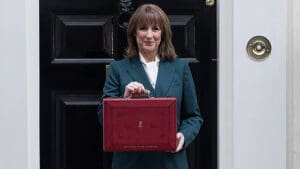
Chancellor Rachel Reeves has delivered a bruising second Budget, confirming more than £30 billion in tax rises and abandoning earlier assurances that “working people” would be shielded from higher taxes.
Instead, she told MPs she was asking “everyone to contribute”, with most households now set to be worse off and middle-income families bearing the brunt.
While welfare payments, pensions and minimum wages will rise, a broad package of tax increases — combined with frozen thresholds — means millions will see their disposable income fall further. Business owners have criticised the plans, with some dubbing it a “Budget for benefits”.
If you want to see how the budget affects you use your Budget calculator produced in partnership with accountants Blick Rothenberg – Click Here
Below, a breakdown of how different groups will be affected.
Who loses out
Workers using salary sacrifice
One of the most significant changes is the cap on National Insurance relief for salary-sacrificed pension contributions. From April 2029, only the first £2,000 of annual contributions will be exempt — a sharp shift from the current unlimited allowance.
For someone earning £50,000 and contributing 5%, this equates to an estimated £75 a year in additional tax; for a £100,000 earner, around £450. Employers, who also lose NI relief, face even greater costs and may respond by lowering their own pension contributions.
Pension specialists warn of long-term consequences. Hargreaves Lansdown calculates that a 22-year-old earning £25,000 could retire with £57,000 less if employer contributions stagnate as a result of the change.
Earners hit by frozen thresholds
Reeves has extended the freeze on income tax thresholds until 2031, pulling more workers into higher tax bands as wages rise. This also drags more estates into inheritance tax and more gains into capital gains tax.
According to analysis, a worker on £50,000 this year will pay £8,165 more in tax between 2020 and 2031 due to the frozen bands.
Owners of high-value property
Homes in England worth over £2 million will face a new surcharge of between £2,500 and £7,500 a year. The charge, uprated annually with inflation, affects around 100,000 homeowners but is expected to have wider effects.
To administer the levy, the Chancellor is ordering a revaluation of Bands F–H, raising concerns that many homes last valued in 1991 will be pushed into higher council tax bands. Property analysts warn it may destabilise a market already under pressure while the government attempts to build 1.5 million new homes.
Drinkers, smokers and gamblers
Alcohol duties will rise in February in line with the RPI measure of inflation — adding 13p to a bottle of wine, 11p to Prosecco and 38p to gin. Tobacco duty will rise above inflation, and a new vape duty remains scheduled.
The gambling sector faces one of the steepest hits. Tax on online gaming profits rises from 21% to 40%, and online betting duty jumps from 15% to 25%, though bingo duty is abolished.
Savers and investors
The cash ISA allowance will be capped at £12,000 for under-65s from April 2027, with £8,000 of the £20,000 allowance ring-fenced for investments. The Chancellor has also raised tax on dividends, savings income and property income by two percentage points, saying it is “not fair” for investment income to attract lower rates than earnings.
Industry leaders called the ISA change a blow to financial confidence at a time when households are trying to build savings buffers.
Motorists — especially EV drivers
Electric vehicle owners will face a new 3p-per-mile road charge from 2028 to replace lost fuel-duty revenue.
Meanwhile, petrol and diesel drivers gain a temporary reprieve: the 5p fuel duty cut is extended until September 2026, before being phased out gradually.
Holidaymakers
Mayors in England will be given powers to introduce a tourist tax on overnight stays. The levy is expected to be around £1 per night, though councils will have flexibility over the final design.
Who gains
Large low-income families
Reeves has scrapped the two-child benefit cap, handing substantial increases to larger low-income families. The OBR estimates 560,000 families will benefit, with around 18,000 households gaining more than £14,000 per year.
Universal Credit, PIP, child benefit and other working-age benefits will rise by 3.8% in April. Free school meals will expand to all households on Universal Credit in 2026, and the Help to Save scheme will become permanent.
Low-paid workers
The National Living Wage rises to £12.72 an hour, delivering an annual boost of around £700 for a full-time employee. The rise forms part of a longer-term plan to introduce a single adult wage rate from age 18.
Train passengers
Regulated rail fares have been frozen for 2025, the first across-the-board freeze since 1996. Labour claims that commuters on certain routes will save more than £300 a year.
State pensioners
The state pension rises by 4.8% under the triple lock, adding £550 a year to the full new state pension. Some retirees under the old scheme will gain £440. However, further increases could push pensioners paying no tax today over the £12,570 personal allowance, creating new tax liabilities.
Households facing high energy bills
Reeves says an average household will save £150 a year after she scrapped a Conservative-era eco levy she claims added £1.7 billion annually to bills.
Read more:
Reeves unveils £30bn tax rise as Budget leaves millions worse off and middle earners hit hardest
Author: AbellMoney
How to Check Your Website Traffic Without Google Analytics

Monitoring website traffic is crucial to knowing the interaction of your audience with the content, spotting the areas where you can grow, and making the necessary improvements.
Google Analytics has been the main tool of choice for website analysis and monitoring for many years, but it is not the only available option. Let’s learn what other ways you can use to track your data.
Why Look Beyond Google Analytics?
Google Analytics provides comprehensive insights, but at the same time can be very intricate and overloaded with data for smaller websites. A few individuals consider the interface as a hard-to-navigate one or feel anxious about the ways that Google collects and deals with visitor data. Besides, the recent switch to GA4 has made quite a few people want to look at more transparent, privacy-oriented, and easy-to-use options for a web traffic analysis tool instead of going through the Google Analytics route.
What are Web Analytics Tools?
Tools to check a site traffic are software that helps website owners monitor, measure, and interpret the visitors to their site. A tool for checking website traffic is a kind of software that allows the people who own a website to keep an eye on, measure, and interpret the visitors of their site. It monitors various metrics like visitor numbers, page views, time spent on the site, sources of referral, and the actions of the users.
By interpreting this information, companies and individuals can traffic check website and find out which pages attract good traffic, the source of the traffic, and the way users are engaging with the content.
Use Your Web Hosting Dashboard
Most hosting providers to check a site traffic, including Bluehost, SiteGround, and Hostinger, include built-in analytics features. These dashboards often display:
The number of daily or monthly visitors
Bandwidth and page views
Referring to sites and countries of origin
Use Social Media and Referral Data
If your audience comes largely from social media your traffic insights might already be available within those platforms without the need of a Google stats for websites tool.
Facebook Page Insights shows link clicks and post reach.
Instagram and TikTok Analytics display impressions, website taps, and audience demographics.
Twitter/X highlights post engagement and referral traffic.
Check Traffic Through SEO Platforms
SEO tools such as: Ahrefs, SEMrush, and SimilarWeb offer ways to check a site traffic. They do so by taking advantage of keyword rankings and public data. While not as precise as direct analytics they help compare performance against competitors and identify potential growth opportunities.
To Wrap It Up
You don’t need Google stats for websites to understand your website’s performance. From privacy-friendly analytics platforms to heatmaps and server log analysers…There are numerous ways to monitor visitor activity effectively.
Some webmasters opt for the alternatives because of privacy issues, complexity or user-friendliness. Luckily, there are numerous trustworthy techniques and tools that can be used to monitor and evaluate the traffic on the website without relying on Google Analytics.
The best option depends on your goals, whether it’s quick traffic summaries, deep SEO insights, or full control over data privacy. The traffic check website doesn’t have to be complicated.
Read more:
How to Check Your Website Traffic Without Google Analytics
Is the government intent on killing London’s hospitality sector with …

There was a time – not so long ago, though it already feels sepia-tinted – when London was the sort of place that tourists arrived in with stars in their eyes and left with shopping bags cutting off circulation at the fingers.
Harrods bags, Selfridges bags, Mulberry bags, the bright yellow of Fortnum’s peeking out of a suitcase being sat on in a hotel lobby. Europe’s favourite grown-up playground; Manhattan’s chic transatlantic sibling; Tokyo’s idea of European swagger with better tailoring and more chaotic restaurants.
And somehow, somewhere between the end of the pandemic and the beginning of whatever this new national habit of self-sabotage is, we decided that this was all terribly inconvenient.
Because now, instead of rolling out the red carpet to high-spending visitors who fund vast swathes of our hospitality and retail industries, we appear determined to trip them up with a series of policy banana skins. A kind of bureaucratic Mario Kart, except instead of cartoon plumbers skidding off Rainbow Road, it’s Andrea Baldo at Mulberry watching millions evaporate from his London tills.
First came the abolition of tax-free shopping, what the press politely calls the “tourist tax”, but business leaders now refer to in much the same tone one reserves for a wasp nest in the loft. It was, in the gentle phrasing of one retail boss, a “massive global disadvantage”. He’s not wrong. France woos Chinese visitors with instant VAT refunds at Charles de Gaulle, Italy practically hands tourists a Prosecco as they process theirs. Meanwhile, we greet them with the fiscal equivalent of a traffic warden in a foul mood.
Retail chiefs have been patient – or at least, as patient as you can be when pointing out, month after month, that the maths simply does not work. Tourists want the thrill of a VAT-free splurge. If we don’t offer it, they simply go elsewhere. Hence the growing chorus from the likes of Mulberry’s Baldo, who has watched London sales tank while Paris boutiques hum along nicely. It doesn’t take a PwC report to see what’s happening: shoppers follow value, and value has emigrated.
You might think the lesson here is obvious. If you want tourists, the big-spending sort who treat a long weekend as an Olympic sport, then don’t whack them with a levy the moment they land. You’d imagine, perhaps naively, that the next step would be to reverse the damage, or at least stop adding new obstacles.
But no. This is London. And in London, when there’s an opportunity to make a bad idea worse, we seize it with both hands and a press release.
Step forward Sadiq Khan, announcing with great flourish the potential introduction of a second tourist tax – a nightly levy on hotel stays that would, we are told, “supercharge London’s economy”. Which is an interesting definition of “supercharge”, unless we’ve started using the word to mean “ask people for more money so they spend less of it elsewhere”.
This proposed hotel levy, trumpeted as bringing the capital in line with other global cities, is the second punch in a one-two assault that the hospitality sector absolutely did not ask for. Because let’s be clear: London is not Barcelona, drowning in stag dos stripping in fountains. Nor is it Amsterdam, declaring war on the Hen Party Industrial Complex. London’s issue is not too many tourists — it’s that we are making ourselves unattractive to the ones we need.
Which is why the hospitality sector is looking a bit like a boxer in the 11th round, wobbling slightly, blood in the eye, muttering “Really? Another one?”
Hotels have only just crawled out of the Covid crater. Staffing costs up. Energy bills up. Supply chain madness. Then a visitor economy still recovering from the years when the only people checking into hotels were essential workers and couples pretending they were “working from home”. Revenues are fragile. Margins are thin. And now a city-hall-branded surcharge?
The timing is astonishing. Just as business travellers, the holy grail of midweek occupancy, begin to return… just as American tourists rediscover the joys of London theatre and pubs with carpets… just as Asia resumes sending coachloads of shoppers armed with Amex and enthusiasm… we decide to hand them a bill for having turned up at all.
What message does this send? The same as the VAT-refund fiasco: London is becoming the most expensive city in Europe to visit, and the least rewarding.
It is fundamentally a failure of imagination. Instead of asking “How do we compete?”, policymakers seem content to ask, “How much can we get away with before someone books Berlin instead?”
The answer, increasingly, is: not much.
Because tourists talk. They compare. They calculate. And when your long-haul holiday already costs thousands, and the pound is weak, and hotels are pricier than ever, that extra nightly charge isn’t symbolic – it’s irritating. Add in the lack of VAT refunds and suddenly a weekend that once felt like a treat becomes an exercise in fiscal masochism.
All this might be palatable if the revenue raised were earmarked for something dazzling — a transport revolution, a cultural renaissance, a hospitality uplift so extraordinary that visitors would queue to pay. But the rhetoric is vague, the benefits theoretical, and the impact on the ground immediate.
The truth is brutally simple: London thrives when it is welcoming, frictionless, rewarding and – crucially – competitive. What we have instead is a creeping perception that our leaders view tourists not as valued guests, but as walking wallets from which to extract just a bit more because, well, they can.
The hospitality and retail sectors don’t need another tax. They need policymakers who understand that the visitor economy is not a tap that can be turned on and off at whim. It is delicate, reactive, easily diverted.
Right now, we are steering it away.
London doesn’t need a second tourist tax. It needs a second thought.
Read more:
Is the government intent on killing London’s hospitality sector with a double-whammy tourist tax?
Sir Richard Branson announces death of his wife Joan after 50 years of …

Sir Richard Branson has announced the death of his wife, Joan Branson, sharing a heartfelt tribute on Instagram confirming she has passed away after their 50 years together.
The Virgin founder described Joan as his “best friend” and “guiding light”, paying tribute to her role at the centre of the Branson family.
“Heartbroken to share that Joan, my wife and partner for 50 years, has passed away,” he wrote. “She was the most wonderful mum and grandmum our kids and grandkids could have ever wished for. She was my best friend, my rock, my guiding light, my world. Love you forever, Joan x.”
Joan Branson, née Templeman, married Sir Richard in 1989 after meeting in the 1970s, and the couple went on to build a family life intertwined with the global growth of the Virgin brand. They shared two children and several grandchildren.
Messages of condolence from across the business and philanthropic world have begun to pour in, recognising Joan’s quiet but influential presence alongside one of Britain’s most high-profile entrepreneurs.
Virgin Group has not yet released a further statement, and the Branson family has asked for privacy.
Read more:
Sir Richard Branson announces death of his wife Joan after 50 years of marriage
‘Covid boom’ ends as graduate job prospects fall back to pre-pande …

Graduate employment has slipped back to pre-Covid levels as a weakening economy depresses hiring and unwinds the temporary post-pandemic surge in opportunities, according to new research from Prospects at Jisc.
The annual What do graduates do? report, published on 25 November, shows a sharp deterioration in outcomes for the 2023 graduating cohort, who entered the labour market during a period of slowing demand and were surveyed in autumn 2024 as conditions worsened further.
Just 56.4% of graduates were in full-time work 15 months after leaving university — down 2.6 percentage points on the previous year and the lowest rate since the cohort that graduated immediately before the Covid recovery boom in 2020. The decline has continued through 2025.
Charlie Ball, head of labour market intelligence at Jisc, said post-pandemic hiring conditions had created “unrealistic expectations”.
“Many assumed the strong post-Covid jobs market was normal, but it really wasn’t,” he said. “We’ve now returned to normal labour market cycles after a few years of post-Covid exuberance. Vacancies are falling, businesses are unconfident and, with the AI bubble set to burst, recession looks more imminent.”
Graduate unemployment also ticked upward, rising from 5.6% to 6.2%, though this remains significantly lower than the broader youth unemployment rate of 15.3%.
One of the most notable shifts is a fall in graduates entering IT roles. Just 5.1% of the cohort moved into tech jobs — down from 6.7% — reflecting a sharp drop in IT vacancies as the sector corrects from post-pandemic over-recruitment.
Graduates entering administrative “non-graduate” roles fell markedly, with retail once again the largest destination for non-graduate employment — a return to long-term pre-Covid patterns.
Self-employment has rebounded strongly, rising to 11.4%, up from 8.8% last year, after a prolonged slump during Covid.
Despite the softening jobs market, sustained skills shortages continue to buoy demand in key sectors. Engineering, IT, health and social care remain in high demand, with the top graduate roles occupied by nurses, coders, doctors, teachers and marketing professionals.
Ball urged graduates not to be discouraged, stressing that those with higher education still fare significantly better in recessionary labour markets.
“Most graduates get good jobs quite quickly, and that will continue,” he said. “But the process will be tougher and more competitive. Students will need strong support from careers services — and they shouldn’t get lost in the AI hype. At this point there is little evidence of widespread job loss due to AI, and industry still needs people who can use these tools with human judgement.”
Read more:
‘Covid boom’ ends as graduate job prospects fall back to pre-pandemic levels
Government risks further harm if it fails to act on viral misinformati …

The government is facing renewed pressure to strengthen online safety laws after rejecting key recommendations designed to curb the viral spread of misinformation, despite agreeing with most of MPs’ findings on the scale of the problem.
The Science, Innovation and Technology Committee today published the government and Ofcom’s responses to its July report, which concluded that the Online Safety Act (OSA) does not tackle the algorithmic amplification of false content and leaves users exposed to rapidly spreading misinformation — much of it supercharged by generative AI.
Both the government and Ofcom accepted the committee’s assessment that misinformation poses significant risks, yet ministers declined to adopt several major recommendations, including calls to extend online safety legislation to explicitly cover generative AI platforms. The committee argued such platforms are capable of spreading large volumes of false content and should be regulated in line with other high-risk online services.
The government rejected that proposal, insisting AI-generated content is already covered under the OSA — a position that contradicts Ofcom’s earlier testimony to the committee, in which the regulator said the legal status of generative AI was “not entirely clear” and suggested more work was needed.
MPs also warned that misinformation cannot be meaningfully addressed without confronting the digital advertising business models that incentivise social media companies to promote harmful content. The government acknowledged the link between advertising and amplification but refused to commit to reform, instead saying the issue would be kept “under review”.
Committee chair Dame Chi Onwurah MP criticised the government’s reluctance to take action. “If the government and Ofcom agree with our conclusions, why stop short of adopting our recommendations?” she said. “The committee is not convinced by the argument that the OSA already covers generative AI. The technology is evolving far faster than the legislation, and more will clearly need to be done.”
She added that failure to tackle the monetisation of harmful content leaves a major loophole: “Without addressing the advertising-based models that incentivise platforms to algorithmically amplify misinformation, how can we stop it?”
Onwurah warned that complacency poses real risks to public safety. “It is only a matter of time until the misinformation-fuelled 2024 summer riots are repeated,” she said. “The government urgently needs to plug the gaps in the Online Safety Act before further harm occurs.”
Read more:
Government risks further harm if it fails to act on viral misinformation, MPs warn
Disposable income falls for fourth consecutive month as one in five Br …

Disposable income has fallen for the fourth month in a row, with new data revealing that one in five UK households can no longer afford to cover their weekly essential bills — piling pressure on Chancellor Rachel Reeves just days before her tax-raising Budget.
The latest Asda Income Tracker, compiled by the Centre for Economics and Business Research (Cebr), shows that low- and middle-income families — who make up 60% of all UK households — continue to face shrinking spending power as wage growth fails to keep pace with rising taxes and essential costs.
Households in the lowest income quintile, earning an average of £11,000 a year, ended October with a £74 weekly shortfall, 7% worse than last year. Those in the second-lowest bracket had just £10 left after essentials, a deterioration of 17% year on year. Middle-income families (£41,000 average) were left with £90 — a marginal fall of 1%.
By contrast, the wealthiest 20% of households ended the week with £909 of discretionary income, up 2% on last year, illustrating the widening divide in household resilience as inflation and tax pressures mount.
The tracker shows essential costs rose 4.6% year on year, driven by food, housing and utilities — categories that account for a disproportionately large share of expenditure among lower-income families. Younger households face the greatest squeeze: those under 30 spend 69% of gross income on essential items, largely due to soaring rental costs.
The warning comes as unemployment hits 5%, labour market conditions weaken and Reeves prepares to unveil a Budget expected to include further fiscal tightening to address a £20 billion shortfall.
Sam Miley, head of forecasting at Cebr, said the outlook remained fragile despite easing inflation.
“Worse-than-expected labour market figures for September show weakened demand and rising employment costs,” he said. “Prospects for the UK economy are not helped by the high likelihood of fiscal contraction in the November Budget.”
Monthly disposable income dipped again in October, falling by £1.01 from September, with average household purchasing power now standing at £253 per week — the same level recorded last December.
Gross household income grew by 3.6%, slightly slower than the previous month. Those aged 30–49 recorded the highest average income at £1,384 per week, followed by those 50–64 at £1,264.
Economists warn that lower earners face further pain over the Christmas period as living costs remain elevated, while any tax rises in Wednesday’s Budget risk intensifying pressures on already vulnerable households.
Read more:
Disposable income falls for fourth consecutive month as one in five Brits can’t cover essential bills ahead of Reeves’ Budget
From today, women in the EU symbolically work for free as gender pay g …

Women across the EU symbolically begin “working for free” from today, as the bloc marks the point in the calendar when pay inequality means women, on average, stop earning relative to men.
With the EU gender pay gap standing at 12%, 22 November represents the date after which women’s work is, in effect, unpaid compared with their male colleagues.
The European Commission used the occasion to warn that progress on closing the gap remains painfully slow and could take decades at the current pace. Leaders said the issue is not only a matter of fairness but one that undermines economic growth, entrenches poverty and limits the EU’s talent pipeline.
Despite legal protections and growing public awareness, the Commission said women continue to face a complex mix of structural, social and discriminatory barriers that depress wages and limit career opportunities. These include job segregation, motherhood penalties, pay discrimination, cultural expectations and unequal responsibility for unpaid care work.
Officials pointed to persistent gender stereotyping that begins in childhood — with girls more often praised for appearance than ability, and encouraged toward caring professions that are undervalued and lower paid. Around 24% of the gender pay gap is estimated to stem from this occupational segregation.
A fictional case study, widely shared by the Commission, illustrates how two equally qualified graduates can quickly diverge in pay and seniority. While “Alex” negotiates confidently, ascends quickly and benefits from workplace mentorship, “Maria” accepts a lower starting salary, takes maternity leave, shifts to part-time hours and shoulders unpaid domestic care — setbacks that compound across a lifetime.
Commission leaders warned this story reflects the lived experience of millions of women across the EU’s labour market.
Executive Vice-President Mînzatu and Commissioner Lahbib reaffirmed the EU’s commitment to building a “Union of Equality”, arguing that economic resilience requires unlocking women’s full potential. They highlighted recent legislation on equal pay, work–life balance, gender balance on corporate boards and pay transparency, designed to dismantle barriers and expose unjustified pay disparities.
The Commission said closing the pay gap would deliver widespread benefits, including higher GDP, greater tax revenues, reduced poverty, a larger skilled workforce and more competitive companies. It also warned that younger generations may one day look back with disbelief that inequality was allowed to persist long after its causes were well understood.
Read more:
From today, women in the EU symbolically work for free as gender pay gap persists
UK launches Critical Minerals Strategy to reduce import reliance and p …

The Government has unveiled a sweeping new Critical Minerals Strategy designed to end the UK’s overreliance on foreign suppliers of vital materials used in smartphones, electric vehicles, wind turbines and household electronics.
The plan aims to produce 10% of the UK’s critical mineral needs domestically and recover 20% through recycling by 2035, backed by up to £50 million in new funding and deeper alignment with the Government’s national security and industrial goals.
Announcing the strategy, ministers said the UK must secure reliable supplies of minerals such as lithium, copper, nickel, rare earths and tungsten—materials essential to everything from EV batteries and defence equipment to data centres and renewable power infrastructure. Demand for lithium alone is forecast to rise 1,100% by 2035, while copper demand is expected to nearly double.
To meet this challenge, the strategy sets the ambition to produce at least 50,000 tonnes of lithium by 2035 — more than the weight of the Titanic — drawing on the UK’s unique geological strengths. These include Europe’s largest lithium deposit in Cornwall, major tungsten reserves, one of the world’s largest nickel refineries in Swansea, and the only Western producer of rare earth alloys essential for high-performance magnets.
The UK will also limit reliance on any single country for more than 60% of its supply of any critical mineral by the mid-2030s, addressing vulnerabilities highlighted by China’s dominance in global mining and refining, where it controls up to 90% of processing capacity.
Prime Minister Keir Starmer said the strategy was vital for both national security and economic growth.
“Critical minerals are the backbone of modern life — powering everything from smartphones and fighter jets to electric vehicles and wind turbines. Britain has been dependent on a handful of overseas suppliers for too long,” he said. “We are taking decisive action to boost domestic production, ramp up recycling and back British businesses so we can compete globally and drive down costs at home.”
Industry Minister Chris McDonald said building secure supply chains was essential to “shoring up national security” and supporting high-growth sectors in the Government’s Plan for Change.
The strategy includes up to £50 million in funding for UK businesses to scale mineral extraction, refining, processing and recycling. This sits alongside the government’s wider public finance tools, including the National Wealth Fund and UK Export Finance, which have already backed critical mineral firms with over £165 million. This includes a £31 million investment in Cornish Lithium to advance two major extraction projects.
Electricity costs for mineral producers will be cut through the upcoming British Industrial Competitiveness Scheme (BICS), with a consultation on eligibility to be launched shortly. The strategy also commits to fast-tracking environmental permitting for innovative mining and recycling projects.
To boost resilience, the Government is considering stockpiling critical minerals for defence applications. The UK is participating in NATO’s Critical Mineral Stockpiling Project, which is assessing options for securing stocks of magnets, battery materials and other components essential to military systems.
The plan also strengthens international partnerships with resource-rich countries to diversify supply chains, while leveraging the UK’s leadership in finance, academia, mining engineering and clean tech innovation.
Jamie Airnes, CEO of Cornish Lithium, said it provided “a clear strategic framework” to build large-scale domestic production.
Jeff Townsend, of the Critical Minerals Association, said it recognised that modern industries “are only as strong as the minerals and materials on which they depend”.
Tom McCulley, CEO at Anglo American Crop Nutrients, said the UK now had “an opportunity to drive investment and growth through a modern mining industry”.
Critical minerals currently contribute £1.79 billion to the UK economy and support more than 50,000 jobs. More than 50 UK projects are already underway to extract and refine these materials, with hotspots in the North East, Teesside, Devon, Cornwall, Wales and Northern Ireland — the latter home to pioneering magnet recycling technologies developed at Queen’s University Belfast and Ionic Technologies.
Ministers said the new strategy would be integrated into the Government’s Modern Industrial Strategy, ensuring that industries from advanced manufacturing to clean energy have the secure material foundation needed for long-term competitiveness.
Read more:
UK launches Critical Minerals Strategy to reduce import reliance and power next-generation industries

