

Airlines are facing a sharp rise in operating costs after jet fuel prices surged to their highest level in more than three years amid escalating conflict in the Middle East, raising fears of prolonged disruption to global energy supplies.
The price of aviation kerosene in European markets has climbed to levels not seen since the shortages triggered during the Covid-19 pandemic, placing immediate pressure on airline margins and sending aviation stocks lower.
The spike has been particularly severe because jet fuel prices have moved far beyond the rise in crude oil prices. Brent crude has climbed by more than 10 per cent this week to around $78.60 per barrel and is roughly 20 per cent higher than it was a fortnight ago. However, the cost of jet fuel delivered to airlines has risen significantly faster, creating an unprecedented gap between aviation fuel and crude oil benchmarks.
According to commodity pricing specialists Argus Media, the cost of jet fuel physically supplied to airlines has increased by about 23 per cent over the past week alone. The price is now 48 per cent higher than last Friday and has surged by 68 per cent over the past month.
Market participants have described trading conditions as highly unstable. Analysts said the jet fuel market had entered a period of extreme volatility as traders struggled to price in the risks created by military tensions in the Gulf.
Amaar Khan, an analyst at Argus Media, said the current market dynamics were extraordinary. Even though supply risks linked to the conflict are real, he said traders believed the current price spike had become detached from normal supply-and-demand fundamentals. One trader described the situation as “absolute chaos”, noting that “no fundamentals can explain these prices”.
The aviation sector’s exposure to the Middle East has amplified the shock. European airlines depend heavily on jet fuel imports from the Gulf region, with a significant share of those shipments passing through the Strait of Hormuz, one of the world’s most critical maritime energy corridors.
Industry data suggests that at least 40 per cent of Europe’s jet fuel imports last year originated from the Middle East Gulf region and travelled through the strait. Kuwait alone accounted for a substantial portion of these supplies and remains Europe’s largest single supplier of aviation fuel.
The Strait of Hormuz has effectively become a flashpoint for global energy markets after Iran imposed a blockade in response to military attacks carried out by the United States and Israel. The narrow waterway, which sits between Iran and the United Arab Emirates, serves as the primary export route for oil and gas shipments from the Persian Gulf.
Any sustained disruption to traffic through the strait could severely restrict global fuel supplies, particularly for jet fuel, which is already in tight supply across Europe.
Analysts warned that while European refineries could increase their production of jet fuel to offset some of the disruption, they would struggle to replace Gulf imports entirely if the conflict continued.
Argus noted that Europe’s aviation fuel market had already become structurally tighter in recent years due to rising travel demand following the pandemic recovery. With refiners operating near capacity, there is limited scope to increase output quickly enough to compensate for any prolonged interruption to Gulf shipments.
At the same time, the cost of transporting fuel from alternative regions has also risen sharply. Freight rates for tanker shipments have surged as insurers raise premiums on vessels travelling through conflict-affected waters, making imports from other regions significantly more expensive.
The result has been a dramatic increase in jet fuel prices relative to crude oil. Aviation fuel is now trading at almost double the price of Brent crude, a differential that analysts say has never previously been recorded.
For airlines, the timing of the price spike is particularly challenging because fuel typically represents between 25 and 35 per cent of operating costs. Even short-term volatility can therefore have a significant impact on profitability.
Shares of European airline groups have already reacted to the rising costs and growing uncertainty surrounding Middle Eastern airspace.
International Airlines Group has seen its share price fall about 16 per cent from the record high it reached last week when it reported strong annual results. The airline group, which owns carriers including British Airways, Iberia and Aer Lingus, faces both higher fuel costs and operational disruptions on long-haul routes through the region.
Budget airline easyJet has also seen its shares fall around 6 per cent this week. The carrier does not operate routes directly in the Middle East but remains vulnerable to rising fuel costs across the industry. Its stock had already been under pressure, declining roughly 15 per cent since the start of the year.
Meanwhile Wizz Air warned that the conflict could cut €50 million from its annual profits due to cancelled regional flights and adverse movements in fuel and currency costs. The airline has said the combined impact could push it into a full-year loss, with its shares dropping about 20 per cent over the past week.
Airlines have sought to protect themselves from fuel volatility through hedging strategies that lock in fuel purchases months or even years in advance. These hedges can soften the immediate impact of price spikes but cannot fully shield carriers if elevated costs persist for a prolonged period.
Europe’s largest airline by passenger numbers, Ryanair, recently confirmed that it has forward-purchased approximately 80 per cent of its jet fuel requirements at an average price of $67 per barrel through to March 2027.
International Airlines Group has also hedged a large portion of its future fuel consumption, locking in prices for around 62 per cent of its fuel needs for 2026.
Similarly, easyJet said it has hedged about 62 per cent of its fuel requirements for the upcoming summer season at an average price of $68.80 per barrel.
While these measures provide some protection against sudden spikes, analysts warn that sustained price increases would still filter through into airline costs over time as hedges expire and new contracts are negotiated.
Industry observers say the key factor determining how severe the crisis becomes will be the duration of the disruption to Gulf energy flows and whether shipping through the Strait of Hormuz can resume safely.
If the blockade persists or the conflict spreads further across the region, aviation fuel prices could remain elevated for months, forcing airlines to absorb higher costs or pass them on to passengers through higher ticket prices.
For now, airlines and investors alike are watching energy markets closely as geopolitical tensions continue to ripple through the global aviation industry.
Read more:
Airlines hit by jet fuel surge as Iran conflict disrupts supply
Author: AbellMoney
US likely to introduce 15% global tariff as Trump administration reviv …

The United States is expected to raise its global tariff rate to 15 per cent in the coming days as the Trump administration moves to restore its controversial trade policies following a Supreme Court ruling that struck down last year’s sweeping import duties.
US Treasury Secretary Scott Bessent said the higher tariff level was “likely” to be implemented this week, suggesting the White House intends to push ahead with a tougher global trade regime despite the legal challenges that forced officials to rethink their approach.
The new tariff would replace the blanket import duties announced by Donald Trump last year, which had imposed levies on goods from dozens of countries. Those measures were struck down by the Supreme Court of the United States after judges ruled that the administration had exceeded its authority by using emergency powers to justify the tariffs.
The decision triggered a rapid response from the White House, which introduced a new global levy of 10 per cent using a different legal mechanism. However, confusion quickly followed after Trump stated on social media that the rate would instead be set at 15 per cent.
In practice, the tariff came into force at the lower level, leaving businesses and governments around the world uncertain about the direction of US trade policy.
Bessent’s latest comments suggest the administration now intends to align policy with Trump’s earlier statements by raising the tariff to the maximum level allowed under the temporary legal authority being used.
Speaking to CNBC, Bessent said he believed tariffs would ultimately return to their previous levels within a matter of months. He argued that the court ruling would not undermine the administration’s broader trade strategy or the revenue the US expects to collect from import duties.
“It’s my strong belief that the tariff rates will be back to their old rate within five months,” he said.
The White House has repeatedly dismissed the significance of the court decision, insisting it has several alternative legal tools available to maintain the tariff regime.
Officials say the policy is central to the administration’s economic strategy, which aims to reduce the US trade deficit, encourage domestic manufacturing and generate revenue to help tackle the country’s growing national debt.
To implement the current tariff, the administration invoked Section 122 of the US Trade Act, a rarely used provision that allows the president to impose tariffs of up to 15 per cent for a period of up to 150 days without approval from Congress.
The authority is designed to address sudden balance-of-payments crises or major trade imbalances. Because it has rarely been used in modern trade disputes, many legal experts consider the White House’s interpretation of the law to be largely untested.
Section 122 provides the administration with a temporary mechanism to maintain tariffs while it develops a longer-term legal framework for its trade policies.
The White House has indicated that once the 150-day window expires, it intends to rely on other statutes to introduce more permanent tariffs.
These include Section 301 of the Trade Act, which allows the US government to impose duties on countries accused of unfair trade practices, and Section 232 of the Trade Expansion Act, which permits tariffs on imports deemed to threaten national security.
Both provisions have been used by Trump previously. During his first term in office, the administration imposed tariffs on steel and aluminium imports under Section 232 and used Section 301 to introduce duties on hundreds of billions of dollars’ worth of goods from China.
Officials have also explored applying these powers to a wider range of sectors, including digital services taxes, pharmaceutical imports and automotive manufacturing.
Unlike the emergency powers struck down by the Supreme Court, these legal tools require the government to follow formal procedures before imposing tariffs.
This typically includes conducting investigations into the industries concerned, presenting evidence to justify the duties and providing businesses with a consultation period to submit feedback before new levies are introduced.
Many businesses say this more structured process would be preferable to the abrupt policy shifts that have characterised recent trade decisions.
Companies involved in international supply chains have repeatedly called for greater clarity and predictability, arguing that sudden tariff announcements make it difficult to plan investments, adjust pricing strategies or secure long-term contracts.
The legal battle over tariffs has also created significant financial uncertainty for the US government.
Companies that paid the original tariffs before they were struck down have begun filing claims seeking reimbursement. Analysts estimate the administration could face refund claims worth as much as $130 billion.
A study by the Cato Institute calculated that the government could also incur substantial interest costs if those refunds are delayed.
According to the institute’s estimates, US taxpayers could be liable for roughly $23 million in interest for every day refunds remain unpaid, potentially reaching around $700 million per month.
The dispute stems from the tariff regime introduced during what Trump described as “Liberation Day” in April last year.
At that time, the administration imposed tariffs ranging from 10 per cent to as high as 50 per cent on imports from dozens of countries. The move sparked a wave of diplomatic negotiations as governments attempted to secure exemptions or reduced tariff rates by offering investment commitments and other concessions.
The sweeping nature of the tariffs triggered a legal challenge that eventually reached the Supreme Court, which ruled that the president’s use of emergency powers to justify the duties was unconstitutional during peacetime.
That judgment forced the administration to redesign its trade policy using alternative legal authorities.
The shift to a universal tariff of 10 per cent temporarily placed imports from all countries on equal footing, removing the advantages some trading partners had negotiated after the original “Liberation Day” tariffs were announced.
Countries such as the United Kingdom had previously secured lower tariff rates as part of bilateral negotiations, and the introduction of a flat global tariff effectively erased those concessions.
The potential increase to 15 per cent would mark another escalation in the administration’s trade policy, potentially affecting thousands of exporters and supply chains worldwide.
Economists say the move could have wide-ranging consequences for global trade flows, particularly if the tariffs are extended or made permanent under other legal authorities.
For now, businesses and foreign governments are watching closely as Washington prepares its next steps in reshaping the US tariff regime and redefining its approach to international trade.
Read more:
US likely to introduce 15% global tariff as Trump administration revives trade strategy
Morgan Stanley to axe 2,500 jobs despite record revenues
Morgan Stanley is set to cut around 2,500 jobs globally despite reporting record revenues last year, highlighting growing tension between strong financial performance and ongoing cost-cutting across the banking sector.
The Wall Street giant plans to reduce its workforce by roughly 3 per cent across several divisions, including investment banking and trading, wealth management and investment management. The reductions, first reported by The Wall Street Journal, were understood to have begun earlier this week.
The cuts come despite the bank posting one of the strongest financial performances in its history. Morgan Stanley reported annual revenues of $70.65 billion for the year, representing a 14 per cent increase compared with the previous year. Net income rose even more sharply, climbing 26 per cent to $16.9 billion.
Sources familiar with the restructuring said the layoffs were linked to shifting business priorities, location adjustments and performance reviews rather than a single strategic overhaul.
Unlike some previous rounds of restructuring in the financial sector, the bank’s wealth management financial advisers are understood not to have been affected by the job cuts. Instead, reductions are concentrated in support roles and operational teams across several departments.
The bank has not publicly linked the job cuts to artificial intelligence, although speculation has intensified across the financial industry about whether new technologies are beginning to reshape white-collar employment.
Morgan Stanley’s chief executive, Ted Pick, has previously spoken about the transformative potential of artificial intelligence across the firm’s operations.
Speaking to investors last year, Pick said AI could save financial advisers between 10 and 15 hours each week by automating administrative tasks such as transcribing client meetings and logging key details into internal databases.
“This is potentially really game-changing,” he said at the time.
The bank has been developing tools that automatically capture information from client conversations, generate summaries and suggest tailored investment strategies based on a client’s profile and portfolio history.
Executives believe such systems could improve productivity significantly, enabling advisers to spend more time with clients while reducing administrative overheads.
Morgan Stanley’s job cuts come amid a broader wave of corporate restructuring across the global technology and financial sectors as companies invest more heavily in artificial intelligence.
Several major companies have already linked workforce reductions directly to AI adoption.
At Amazon, the company recently announced plans to cut around 14,000 corporate roles. Senior vice-president of people experience and technology Beth Galetti said generative AI would fundamentally reshape how the company operates.
“We’re convinced that we need to be organised more leanly, with fewer layers and more ownership,” Galetti wrote in a company blog post announcing the layoffs.
Similarly, Marc Benioff revealed last year that his company had eliminated roughly 4,000 customer-support roles after deploying AI systems capable of handling many service enquiries automatically.
More recently, technology entrepreneur Jack Dorsey said his payments company Block would cut nearly half of its workforce, amounting to around 4,000 jobs.
Dorsey said the decision was part of a broader transformation driven by what he described as “intelligence tools” that enable companies to operate with smaller, flatter teams.
“We’re going to build this company with intelligence at the core of everything we do,” he said in an internal memo.
Many argue that several large corporations expanded rapidly during the pandemic and are now adjusting staffing levels after years of aggressive hiring.
Some Wall Street analysts have suggested that banks and technology companies may be using AI as a convenient explanation for workforce reductions that are primarily driven by cost management or changing market conditions.
In Morgan Stanley’s case, the job cuts come after several years of strong hiring across wealth management and investment banking operations.
The bank has significantly expanded its wealth management arm since acquiring brokerage firm E*TRADE in 2020 and asset manager Eaton Vance later that year, moves that transformed the company’s business model and boosted its client base.
The decision to reduce headcount despite record revenues reflects a broader trend among global banks seeking to balance profitability with operational efficiency.
Investment banks have faced volatile deal-making conditions in recent years, with mergers and acquisitions activity fluctuating as interest rates rose sharply in 2023 and 2024.
Although markets have stabilised more recently, many financial institutions remain cautious about long-term staffing levels as economic conditions remain uncertain.
For Morgan Stanley, the latest restructuring appears aimed at ensuring the bank remains competitive while continuing to invest heavily in digital infrastructure and AI tools.
As financial institutions increasingly integrate automation into core operation, from trading systems to client management platform, the industry is likely to see continued debate about whether artificial intelligence will ultimately augment human roles or gradually replace them.
For now, Morgan Stanley’s latest move underscores a reality that is becoming more common across global finance: strong revenues do not necessarily translate into job security as companies restructure to adapt to technological change and evolving market dynamics.
Read more:
Morgan Stanley to axe 2,500 jobs despite record revenues
UK Supreme Court rules Spain cannot avoid €120m renewable energy deb …

The UK Supreme Court has ruled that the Spain cannot rely on state immunity to avoid paying a €120 million arbitration award owed to renewable energy investors, marking a significant legal victory for international investors seeking to enforce unpaid awards against sovereign states.
In a unanimous judgment delivered by Lord Lloyd-Jones and Lady Simler, the court concluded that Spain had effectively waived its immunity from enforcement proceedings by signing up to the ICSID Convention, which obliges member states to recognise and enforce arbitration awards issued under the framework.
The ruling follows a nearly five-year legal dispute brought by Luxembourg-based investors Infrastructure Services Luxembourg and Energia Termosolar, who were awarded damages in 2018 after Spain withdrew renewable energy subsidies that had originally encouraged large-scale solar investments.
The dispute dates back to policy changes introduced by Spain in 2012, when the government removed incentives that had previously supported investment in renewable energy infrastructure. The investors argued that the move breached Spain’s obligations under the Energy Charter Treaty, which protects cross-border investments in the energy sector.
Following arbitration proceedings administered by the International Centre for Settlement of Investment Disputes, the tribunal ruled in favour of the investors in 2018, awarding compensation of approximately €120 million plus interest.
However, Spain refused to pay the award, prompting the investors to register the ruling in the High Court of Justice (England and Wales) in 2021 in order to pursue enforcement against Spanish assets located in England.
Spain challenged that move, arguing that sovereign immunity protected it from enforcement proceedings in British courts.
The Supreme Court rejected Spain’s claim, ruling that by signing the ICSID Convention the country had already accepted the jurisdiction of national courts for enforcement purposes.
In its decision, the court stated that Spain had “submitted to the jurisdiction by virtue of Article 54 of the Convention and consequently may not oppose the registration of ICSID awards against it on the grounds of state immunity.”
Article 54 of the ICSID Convention requires signatory states to treat arbitration awards issued under the system as if they were final judgments of their own courts, ensuring enforceability across jurisdictions.
Legal representatives for the investors said the ruling reinforces the principle that arbitration awards issued under the ICSID framework must be honoured by participating states.
Richard Clarke, barrister at Kobre & Kim, which represented the investors before the Supreme Court, said the decision strengthens the international enforcement regime for investment arbitration.
“The judgment confirms that where states agree by treaty to waive their adjudicative immunity, as in Article 54 of the ICSID Convention, they cannot later invoke state immunity to resist enforcement,” Clarke said.
He added that the decision aligns with the broader objective of the ICSID system, which was designed to produce binding awards backed by a global enforcement framework.
The ruling now allows the investors to continue enforcement proceedings against Spanish assets in the UK.
In 2023 the High Court had already granted an interim charging order over Spanish-owned freehold property in Notting Hill, London, as part of attempts to recover the debt.
A final hearing later this year will determine whether those assets can ultimately be seized to satisfy the arbitration award if Spain continues to refuse payment.
The case forms part of a much broader series of disputes stemming from Spain’s 2012 overhaul of renewable energy incentives.
According to legal estimates cited in the proceedings, Spain currently owes around $1.6 billion to investors across 22 binding arbitration awards linked to similar claims.
Courts in other jurisdictions have already reached similar conclusions about Spain’s inability to rely on sovereign immunity in such cases. Decisions in both Australia and the United States in 2024 and 2025 also rejected Spain’s immunity arguments.
The case has also attracted political attention within the European Union.
The European Commission intervened in the UK proceedings in support of Spain’s position and has separately argued that payments arising from the arbitration awards could constitute unlawful state aid under EU law.
In a 2024 decision, the Commission concluded that compensation awarded to renewable investors under the Energy Charter Treaty amounted to state aid, a finding that is now being challenged in the General Court of the European Union.
Critics argue the EU’s stance risks undermining investor confidence in the region’s renewable energy market, particularly at a time when energy security and green investment are high on the political agenda.
Legal experts say the UK ruling adds to a growing body of international jurisprudence reinforcing the enforceability of arbitration awards against sovereign states.
By confirming that treaty commitments override immunity defences in this context, the decision may strengthen the position of investors seeking to recover damages awarded in international investment disputes.
For Spain, the ruling increases the pressure to settle outstanding claims or risk further legal actions targeting state-owned assets in multiple jurisdictions.
With enforcement proceedings now able to move forward in England, the dispute could enter a new phase later this year as courts determine whether Spanish property holdings can be used to satisfy the long-standing debt.
Read more:
UK Supreme Court rules Spain cannot avoid €120m renewable energy debt by claiming state immunity
Channel 4 Sales relaunches B Corp competition offering £600,000 in TV …

Channel 4’s commercial division, Channel 4 Sales, has announced the return of its B Corp competition for a second year, offering purpose-driven UK businesses the chance to win a share of £600,000 worth of national TV advertising airtime.
The initiative, delivered in partnership with B Lab UK, the non-profit behind the UK’s growing B Corp movement, is designed to help sustainable businesses dramatically expand their visibility by reaching millions of viewers across Channel 4’s broadcast and streaming platforms.
The competition is open to certified UK B Corporations, companies that meet internationally recognised standards for social and environmental performance, transparency and accountability. Five winners will be selected to receive advertising packages designed to showcase their businesses and promote the wider B Corp movement.
Channel 4 said the competition reflects its commitment to using advertising as a force for positive change while helping smaller businesses compete with larger brands in the national marketplace.
Tom Patterson, Sustainability Lead at Channel 4 Sales, said television advertising still plays a powerful role in helping emerging brands scale their visibility and credibility.
“We’re so excited to bring our B Corp competition back for a second year and build on the brilliant momentum from year one,” Patterson said.
“TV has a unique superpower: helping small and medium-sized businesses punch above their weight and reach audiences they’d never normally get in front of.
“B Corps have authentic stories worth shouting about, and Channel 4 loves nothing more than telling stories that spark change. There are incredible purpose-driven brands nationwide, and this opens the door for more of them to grow bigger.”
The competition forms part of Channel 4’s broader Business for Good initiative, which includes programmes such as Black in Business and the Diversity in Advertising Award, both aimed at supporting underrepresented founders and purpose-led enterprises.
The inaugural competition demonstrated the impact television advertising can have on emerging sustainable brands.
Winning campaigns from 2025 were launched through a high-profile ad-break takeover during the hit Channel 4 programme Taskmaster, before being rolled out across tailored placements on Channel 4’s streaming platform.
Research conducted by B Corp marketing agency Sonder found the campaign generated significant brand awareness and commercial benefits for participating businesses.
Among viewers exposed to the advertising 88% reported an improved opinion of B Corp brands and 85% said they were more likely to purchase from a B Corp company.
Sustainable cleaning brand Seep recorded a 112% increase in branded search impressions, alongside 70% year-on-year revenue growth and a 75% increase in new customers following the campaign.
Another winner, ticketing platform Ticket Tailor, saw direct website traffic rise by 38% year-on-year, with search traffic increasing by 43% during and after the advertising campaign.
The UK B Corp community has expanded rapidly in recent years as more companies seek to demonstrate stronger commitments to social impact, environmental responsibility and ethical governance.
According to B Lab UK, the country is now home to more than 2,700 certified B Corporations, spanning sectors from consumer goods and technology to professional services and manufacturing.
Rosalind Holley, Director of Communications and Marketing at B Lab UK, said the competition has become an important platform for showcasing purpose-led businesses to mainstream audiences.
“Last year’s competition marked a significant milestone for the UK B Corp community, empowering businesses to reach new audiences and drive awareness of a new generation of companies across the country,” Holley said.
“We’re pleased to partner with Channel 4 once again to build on this success during B Corp Month, celebrating a UK movement of thousands of businesses proving that purpose and profit can go hand in hand.”
Channel 4 Sales said it will again measure the carbon emissions associated with the advertising campaigns delivered through the competition.
Using its emissions measurement framework across both linear television and streaming channels, the broadcaster aims to ensure the initiative aligns with its wider sustainability strategy while promoting environmentally responsible businesses.
Entries for the 2026 competition are now officially open, with certified B Corporations across the UK encouraged to apply for the opportunity to access national advertising exposure that would normally be far beyond the reach of most small and medium-sized enterprises.
Channel 4 said the programme aims to highlight a new generation of companies proving that commercial success and positive social impact can coexist, while helping them grow faster through the power of television advertising.
Full eligibility details and application requirements are available through Channel 4 Sales’ Business for Good initiative.
Read more:
Channel 4 Sales relaunches B Corp competition offering £600,000 in TV advertising for sustainable businesses
Government launches gender pay gap and menopause action plans ahead of …

The Government has unveiled new gender pay gap and menopause action plans designed to help women thrive in the workplace, as ministers seek to shift the focus from transparency to tangible change ahead of International Women’s Day 2026.
From April, employers with more than 250 staff will be encouraged to publish detailed action plans outlining how they intend to reduce their gender pay gap and support employees experiencing menopause. The initiative forms part of a broader strategy to improve women’s economic participation, boost productivity and address the financial pressures that disproportionately affect women and families.
The measures were formally launched by Bridget Phillipson, Secretary of State for Education and Minister for Women and Equalities, who said the plans marked a renewed commitment to ensuring women can progress and prosper at work.
“This International Women’s Day, we are celebrating all that women bring to our proud nation, as well as committing to giving back to them,” Phillipson said. “Too many women are still not paid fairly, held back at work due to inconsistencies in support, or find common sense adjustments for their health needs overlooked or dismissed.”
The new action plans are voluntary at this stage, with ministers pledging to work collaboratively with businesses to share best practice and encourage widespread adoption before any compulsory framework is introduced. The Government has positioned the initiative as part of its wider economic agenda, arguing that improving workplace equality is essential to unlocking growth.
Alongside the action plans, ministers have highlighted other measures aimed at easing cost-of-living pressures, including a £117 reduction in average energy bills from April, expansion of free childcare provision, a rail fare freeze and a continued cap on prescription charges below £10.
The Women’s Business Council, which is working closely with the Government on the scheme, said the plans could help break down persistent structural barriers. Mary Macleod, chair of the council, described the initiative as an opportunity to boost both equality and economic performance.
“These measures have the power not only to increase the number of women in the workforce, but to drive productivity and innovation,” she said. “Equality isn’t just the right thing to do – it is a vital driver for economic growth.”
A central element of the programme is a renewed focus on menopause support. Government figures indicate that one in ten women who worked during the menopause have left a job because of their symptoms. Ministers argue that clearer workplace policies and practical adjustments could help retain experienced employees and reduce economic losses linked to workforce exits.
Mariella Frostrup, the Government’s Menopause Employment Ambassador, said employers must recognise the scale of the issue. “Menopause affects millions of women at the height of their careers,” she said. “When employers take meaningful steps to support women through menopause, they are protecting their workforce and strengthening their business.”
Campaigners have cautiously welcomed the announcement, while calling for stronger enforcement in the future. Penny East, chief executive of the Fawcett Society, said the action plans should represent a move from reporting disparities to addressing them.
“Large employers must not simply publish data; they must now take action to improve workplace cultures and practices,” she said. “This is a rare opportunity to strengthen women’s participation in the workforce, and the plans must therefore be ambitious, measurable and enforceable.”
The action plans sit within the framework of the Employment Rights Act 2025, which includes new protections against workplace sexual harassment and enhanced rights for pregnant workers and women returning from maternity leave.
The Government has signalled that over the coming year it will consult on how to move from voluntary measures to a more structured, mandatory regime. In the meantime, ministers will work with expert groups, including the Women’s Business Council and the Invest in Women Taskforce, to encourage employers to adopt comprehensive and accountable policies.
With the gender pay gap in the UK still standing at 12.8 per cent overall, according to recent figures, the success of the initiative will be judged on whether it delivers measurable improvements in pay equity, retention and career progression for women across sectors.
Read more:
Government launches gender pay gap and menopause action plans ahead of International Women’s Day 2026
RIT Capital Partners’ SpaceX stake tops £100m as Elon Musk valuatio …

A bold bet on SpaceX has paid off handsomely for RIT Capital Partners, after the value of its stake in Elon Musk’s rocket and satellite business soared past £100 million by the end of last year.
The Rothschild-backed investment trust revealed that its holding in the US aerospace group had risen to £102.3 million, making it the eighth-largest position in its portfolio. Just six months earlier, the stake had been valued at £31.4 million, highlighting the dramatic uplift driven by both additional investment and a rapid re-rating of SpaceX itself.
SpaceX’s valuation has accelerated at a pace rarely seen even in the technology sector. A secondary share sale in December placed the company’s worth at around $800 billion, double the $400 billion valuation recorded in July. Since then, the figure has climbed again to an estimated $1.25 trillion after SpaceX acquired Musk’s artificial intelligence venture xAI in a landmark deal.
The surge has made SpaceX the world’s most valuable private company and intensified speculation over a potential initial public offering. Market watchers believe an IPO could value the business at as much as $1.5 trillion, a level that would further cement Musk’s status as the world’s richest individual and potentially the first trillionaire.
SpaceX operates the Falcon launch programme, transports astronauts to and from the International Space Station, and runs the fast-growing Starlink satellite internet service, which now serves millions of customers globally.
RIT Capital Partners first invested directly in SpaceX in 2024, marking a deliberate tilt towards high-growth private technology companies. The trust is managed by J Rothschild Capital Management, led by Maggie Fanari, who described SpaceX as “the most innovative company of our time”.
The investment reflects a broader strategy to increase exposure to unlisted growth assets alongside quoted equities. RIT has also invested in Anthropic, the artificial intelligence developer backed by major US tech players. Its Anthropic stake was valued at £7.4 million at the end of December.
Founded in 1961 by the late Lord Rothschild and listed on the London Stock Exchange since 1988, RIT manages approximately £4 billion in net assets across global equities, private investments, credit and alternative strategies. The Rothschild family remains its largest shareholder.
The SpaceX uplift helped RIT deliver a 13.5 per cent net asset value return for the year, compared with 9.4 per cent the previous year. Total shareholder return reached 16.9 per cent.
The trust noted that it has been reducing its exposure to North America amid investor concerns over US trade policy and geopolitical risk. Its quoted equities allocation has shifted towards Europe and Asia in recent months.
Despite the improved performance, RIT shares continue to trade at a wide discount to net asset value of roughly 27 per cent, reflecting the broader malaise affecting London-listed investment trusts. Shares slipped 1.6 per cent to £21.45 in late trading following the results.
An eventual public listing of SpaceX remains one of the most anticipated events in global capital markets. While Musk has historically resisted floating the core rocket business, speculation has intensified as valuations climb and investor appetite for AI-linked infrastructure assets grows.
For RIT Capital Partners, the bet underscores the appeal, and volatility, of backing private technology champions before they reach public markets. If SpaceX proceeds with a flotation at or above current valuations, the windfall for early investors could grow even further.
For now, the trust’s SpaceX holding has become a meaningful driver of returns, and a reminder that in today’s markets, a well-timed private market allocation can move the dial dramatically.
Read more:
RIT Capital Partners’ SpaceX stake tops £100m as Elon Musk valuation soars
Spring Statement 2026: Reeves downgraded growth as business leaders de …
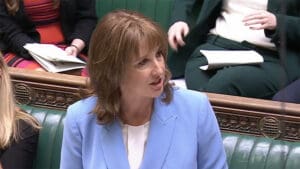
Chancellor Rachel Reeves delivered her Spring Statement to the House of Commons under the shadow of escalating conflict in the Middle East and mounting fears of a renewed inflation shock driven by surging energy prices.
In a speech lasting just over 20 minutes, Reeves stressed the importance of “stability in an increasingly uncertain world”, pointing to falling inflation and previous interest rate cuts as evidence that the cost-of-living squeeze on households is easing. However, beyond presenting updated forecasts from the Office for Budget Responsibility (OBR) and criticising opposition parties, she unveiled no new tax or spending measures.
The Chancellor has pledged to hold only one fiscal event each year, the autumn Budget, meaning the Spring Statement was positioned as a forecast update rather than a policy platform.
Growth downgraded for 2026
The OBR has revised down its forecast for UK economic growth in 2026 to 1.1 per cent, weaker than the 1.4 per cent predicted in November. Reeves insisted that the longer-term outlook remains resilient, with growth forecast to reach 1.6 per cent in both 2027 and 2028, slightly stronger than previously projected, before settling at 1.5 per cent in 2029 and 2030.
The downgrade comes amid soft domestic demand, geopolitical instability and renewed energy market volatility following military escalation in the Gulf region. Rising oil and gas prices threaten to complicate the inflation trajectory, particularly if disruption to global supply chains persists.
Unemployment to rise before falling
Unemployment is forecast to peak at 5.3 per cent later this year as weaker labour demand feeds through the economy. The rate is then expected to decline steadily, ending the parliamentary term at 4.1 per cent, lower than at the start.
The Chancellor framed this as evidence that the labour market remains fundamentally strong despite short-term headwinds. However, youth unemployment and business hiring caution remain key concerns across several sectors.
Borrowing falls and headroom improves
The OBR forecasts that borrowing will be nearly £18 billion lower than anticipated in the autumn. Public sector net borrowing is projected to decline from 4.3 per cent of GDP this year to 1.8 per cent by 2030.
Reeves highlighted that fiscal “headroom” against her self-imposed rules has increased from £21.7 billion in November to £23.6 billion. The buffer is designed to reassure financial markets and protect against unexpected shocks.
She also confirmed plans to meet North Sea energy industry leaders to discuss the implications of Middle East tensions on domestic production and energy security.
Night-time economy: “Stability rhetoric won’t save us”
Despite the Chancellor’s emphasis on stability, business leaders were quick to challenge what they described as a disconnect between Westminster messaging and frontline reality.
Michael Kill, chief executive of the Night Time Industries Association (NTIA), said the statement failed to recognise the acute pressures facing hospitality and leisure businesses.
“Across the UK, major brands and corporates are collapsing at pace. Confidence is fragile. Margins are exhausted,” he said.
Kill warned that escalating energy costs, higher National Insurance contributions and ongoing business rates burdens are placing “compounding pressure” on the sector. He called for a VAT cut for hospitality, arguing that targeted intervention would stimulate demand, protect jobs and restore confidence.
With youth unemployment rising, the NTIA stressed that the night-time economy has traditionally provided entry-level employment for young people, and warned that increased employment costs are making it harder to sustain those roles.
Business confidence remains fragile
Separate research from the Zoho Digital Health Study 2026 underscores the cautious mood across UK businesses. Twenty-one per cent of business leaders cited high inflation, recession risk and rising interest rates as their biggest external challenge.
Half of firms reported rising costs per employee over the past year, ahead of a further 4.1 per cent rise in the National Living Wage due in April 2026.
Sachin Agrawal, managing director at Zoho UK, said leaders are prioritising productivity and automation over expansion.
“Businesses want to grow, but they’re doing so more selectively by investing in technologies that deliver clear efficiency gains,” he said.
AI platform Photoroom also urged the government to match pro-entrepreneur rhetoric with tangible digital support for SMEs, arguing that access to AI tools can significantly reduce overheads and increase productivity.
Thames transport: a missed green opportunity
Uber Boat by Thames Clippers said the Spring Statement missed an opportunity to accelerate London’s transition to greener river transport.
Geoff Symonds, chief operating officer at Uber Boat by Thames Clippers, said regulatory reform and green fuel incentives could be implemented at minimal cost.
“Low-key budgets don’t have to mean low ambition for the environment,” he said, calling for parity in green incentives between river transport and land-based networks.
A cautious tone in uncertain times
The Spring Statement was deliberately restrained. Reeves’ strategy is to project fiscal discipline and market stability while preserving room for manoeuvre ahead of the autumn Budget.
However, with energy prices climbing, geopolitical tensions rising and consumer confidence fragile, the path ahead is far from settled. The coming months will test whether stability alone is sufficient, or whether targeted intervention becomes unavoidable.
For now, the Chancellor’s message is clear: hold the line, protect fiscal credibility and hope that inflation continues to fall despite global turbulence. Whether businesses and households feel that stability in practice remains an open question.
Read more:
Spring Statement 2026: Reeves downgraded growth as business leaders demand urgent action
Bank of England rate cuts at risk in 2026 as Middle East conflict spar …
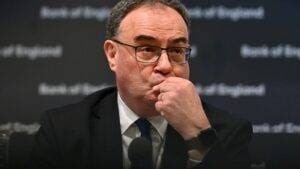
Expectations of further Bank of England base rate cuts this year have been thrown into doubt after escalating conflict in the Middle East triggered sharp rises in energy prices and government bond yields, raising fears of a fresh inflationary shock.
Only a week ago, markets were confident that the Bank of England would cut rates again at its March meeting, with traders pricing in an 86 per cent probability of a 0.25 percentage point reduction. Now, following military escalation involving the US and Iran and renewed instability across the Gulf region, those expectations have collapsed. Markets are currently assigning less than a 5 per cent chance of a rate cut this month and less than a 50 per cent probability of a move in April.
The Bank’s base rate currently stands at 3.75 per cent, having been reduced four times in 2025 as inflation fell to 3 per cent. Governor Andrew Bailey had previously suggested that a return to the 2 per cent target was “baked in”. However, the geopolitical shock has materially altered that outlook.
UK wholesale gas prices have surged by around 40 per cent in recent days, while oil prices have approached $80 per barrel. Two-year gilt yields have risen to their highest levels since December as markets reassess the inflationary impact of higher energy costs.
The risk, analysts say, is that sustained disruption to global energy supplies, particularly through the Strait of Hormuz, could keep inflation elevated for longer, forcing the Bank of England to pause or even reverse its easing cycle.
Tony Redondo, founder of Cosmos Currency Exchange, said the shift in expectations had been dramatic.
“With 2-year gilt yields hitting December highs due to a 40 per cent surge in UK gas prices and oil nearing $80, the Bank of England faces a significant inflationary shock,” he said. “High-street banks are no longer competing on price but are instead protecting margins against rising swap rates. Buyers may see ‘best-buy’ deals pulled with only a few hours’ notice as lenders move to price in the geopolitical risk premium.”
Swap rates, which underpin fixed-rate mortgage pricing, have risen sharply in response to higher gilt yields. Lenders typically price mortgage products several days in advance, meaning further volatility could quickly feed through into the housing market.
Riz Malik, director at R3 Wealth, warned that the situation could resemble the market turmoil seen in 2022 following Russia’s invasion of Ukraine and the UK’s mini-Budget crisis.
“Last week, the outlook was promising for the 1.8 million mortgages up for renewal in 2026,” he said. “Today, we could see major volatility in the mortgage market with the outlook for further cuts disappearing by the second. If you have a mortgage renewal in the next six months, I would strongly suggest you look at your options and don’t hold off.”
Justin Moy, managing director at EHF Mortgages, said the duration of the conflict would be critical.
“In the short term, any talk of base rate cuts will be null and void,” he said. “If the conflict resolves within weeks, this may be temporary. But if it continues beyond Easter, inflation and base rate expectations will be adversely affected, putting the brakes on rate cuts and pushing deals higher.”
Aaron Strutt, product and communications director at Trinity Financial, said uncertainty was the defining feature of the current environment.
“We do not know what is going to happen yet. Rates could go up, the war might stop and rates drop again as previously forecast. Either way, it makes sense to secure a mortgage rate if you are coming up to remortgage soon.”
Some advisers believe the situation, while serious, differs structurally from the disorderly repricing seen in autumn 2022.
Nouran Moustafa, practice principal at Roxton Wealth, said lenders are better prepared than during the Truss-era turmoil.
“Markets have moved quickly, but mortgage pricing reacts to sustained trends, not single sessions,” she said. “Back in 2022, funding costs moved disorderly and fast. Today’s move looks more like volatility driven by inflation expectations.”
She added that the key question is whether elevated yields persist. “If yields stay elevated for several days, we could see short-notice repricing or selective withdrawals. If this retraces, lenders will prioritise stability.”
The Bank of England now faces a delicate balancing act. While inflation had been easing and economic growth remains fragile, an externally driven energy shock risks reintroducing cost pressures just as policymakers were preparing to loosen monetary conditions further.
If wholesale gas prices remain elevated and oil continues to climb, rate-setters may judge it prudent to delay cuts to prevent inflation expectations becoming unanchored. That would prolong pressure on households and businesses already grappling with high borrowing costs.
For now, the direction of travel depends less on domestic economic data and more on developments in the Middle East. Should tensions subside and energy prices retreat, the easing cycle could resume. But if the conflict deepens or spreads, expectations of multiple rate cuts in 2026 may quickly evaporate.
In the meantime, borrowers and investors alike are being reminded that global geopolitical events can reshape monetary policy forecasts in a matter of days.
Read more:
Bank of England rate cuts at risk in 2026 as Middle East conflict sparks inflation fears

