

Millions of people across the UK are at risk of penalties after HM Revenue & Customs (HMRC) revealed that 5.4 million taxpayers have yet to submit their self-assessment tax return.
With the 31 January deadline fast approaching, HMRC has urged anyone who has not yet filed to do so immediately to avoid hefty fines.
Tax insurance firm Qdos reacted to the announcement, warning that failing to file and pay on time incurs an automatic £100 penalty. Additional charges mount rapidly the longer the delay persists, with daily penalties and further levies imposed after three months, six months and 12 months. Seb Maley, chief executive of Qdos, said: “Fail to file your tax return and pay it by midnight on 31 January and you’ll be hit with a £100 fine immediately. These fines start to rack up, with interest added to the amount you owe. Needless to say, acting sooner rather than later will make a big difference.
“What’s more, unfiled, late or incorrect tax returns can increase the likelihood of being investigated by HMRC. Doing everything you can to meet this month’s deadline and submit an accurate tax return is vital.”
For taxpayers concerned about meeting their liabilities, HMRC’s Time to Pay facility can spread the cost of any outstanding bill into manageable monthly instalments. In its press release, HMRC reminded those who have not filed that even if there is no tax due or if the tax is paid on time, a £100 fixed penalty still applies if the return is late.
Read more:
5.4 million yet to file self-assessment tax returns, warns HMRC
Category: Uncategorized
Why forcing a return to the office is a step backwards for business

It wasn’t so long ago that having the option to work from your lounge in your slippers felt like a futuristic dream bordering on utopia.
Yet here we are, practically on the doorstep of the full remote revolution, and I’m watching a queue of business leaders feverishly backpedal towards outdated notions of “bums on seats.” Or, as I like to call it: “The Return of the Status Quo.” Pardon me while I stifle a yawn. Because if there’s one thing I’ve learned from a decade-plus of banging the proverbial drum about the virtues of working from home, it’s that the naysayers are usually being led by something that’s more about control (and a touch of distrust) than genuine business sense.
Let’s be perfectly clear: I’ve been peddling the work-from-anywhere mantra since 2011, if not earlier—my piece in Business Matters a five years ago, “Working at Home Can Lift Positivity, Productivity, and Profitability,” should have been etched onto the hearts of every forward-thinking employer. Back then, I remember the world patting me on the head and saying, “Yes, dear, lovely idea,” while proceeding to double-check no one was playing solitaire in the back corner of the office. It was like telling a Victorian mother you planned to feed her precious son vegetarian sausages. The horror. The uncertainty. The mild panic that everything we knew about corporate life was about to disintegrate into chaos.
Fast-forward a few years—well, more than a few—and we’ve all seen precisely how viable working from anywhere can be. There are even fewer excuses for archaic attitudes now. Technology has made it simple, cheap, and ridiculously flexible to replicate all the necessary functions of a physical workplace without actually dragging your bleary-eyed body onto a crowded commuter train. Of course, that’s not to say the standard HQ has no purpose. Some people genuinely love the camaraderie and structure of a shared space. But to insist that it’s the only way? That’s a bit like refusing to let your kids have a smartphone because you think carrier pigeons were doing just fine all those years ago.
One of the earliest arguments I recall making, in another Business Matters piece titled “Bodies & Bums Cost Money, Can Go Virtual,” was that paying for an army of chairs to be occupied from nine until five is both expensive and, frankly, pointless in the modern age. You’re shelling out for the real estate, the electricity, the toilet paper—and for what? A chance to watch Sandra from accounting type away in real time? A daily chat over the coffee machine about last night’s telly? I’ve nothing against Sandra’s enthralling conversation, but let’s be honest: a good Zoom or Teams meeting can deliver the same interplay, minus the leaky commute. If you want to foster human interaction, schedule weekly get-togethers or one good off-site a month. But making it mandatory every single day feels as antiquated as a carbon copy receipt.
And yet, that’s precisely what many companies are doing, pressing the big red “Reverse” button on progress by dictating that everyone scuttle back under the fluorescent lighting, tethered to desks once more. We hear the same, tired rationale: “productivity is slipping,” or “team spirit is lost,” or (my personal favourite) “people can’t be trusted to do their work from home.” Let’s unpick those, shall we?
First, productivity. It is breathtaking how often remote staff end up working longer hours simply because they don’t have to endure the pains of a commute. Factor in that people can set their own schedules, do their best work when they’re actually feeling awake, and take breaks that don’t revolve around obligatory small talk in the kitchen. That’s not laziness; it’s quite the opposite. People who aren’t pigeonholed into a 9-to-5 routine often discover a sweet spot for output that suits their natural rhythms. And guess what? That usually means more deliverables, not fewer.
Second, the team spirit myth. As if the only thing binding a workforce together is the ability to physically see each other in an open-plan environment. Team spirit comes from shared goals, supportive leadership, and clear communication—not the faint smell of microwaved curry and the pitter-patter of frantic typing. Anyone who’s spent more than a week in a Zoom-based collaboration will know there’s a genuine camaraderie that sprouts when you’re working collectively towards the same objectives, even if you’re in different postcodes. And if you ever miss hugging your colleagues in person, you can meet up once a fortnight or month for that big, warm embrace—no harm done.
Lastly, the trust issue is perhaps the most bewildering of all. Why hire people you don’t trust, and then fixate on babysitting them from nine to five in an office? If your business model depends on eagle-eyed managers hawkishly scanning for slouching employees, there’s something rotten in the process. Good workers get the job done. Exceptional ones will do it better when given the freedom to shape how they work. Micro-managing, by contrast, breeds resentment and stifles creativity. We have a word for that, and it begins with “toxic.”
At the end of the day, businesses pushing a rigid return-to-office directive are not just ignoring the past decade of evidence that remote work is beneficial; they’re flipping a V-sign to the future. People have proven they can be even more productive, balanced, and, crucially, content working from spaces that suit them—be that a home office, a beach hut in Cornwall, or a Wi-Fi café in the mountains. I’m not saying offices should be eradicated entirely. I’m suggesting they ought to be an option, not an obligation. A tool, not a trap.
So, yes, I consider the “bring back the offices” brigade to be as misguided as dial-up internet evangelists—clinging to the comfortable drudgery of the old ways rather than forging ahead with the new. We can do better than that. In fact, we already have. The argument against remote work made some sense back in the ‘80s, but in the 21st century, it’s about as relevant as a Filofax. And if you ask me, long may that irrelevance continue.
So let’s collectively knock this regressive idea on the head. A flexible approach allows businesses to hire the best, keep the best, and get the best from them. Insisting on the old model of “bodies in the building” is short-sighted, blinkered, and will inevitably lead to a mass exodus of talented folks who know they can be just as effective—or more so—at home. After over a decade of championing this cause, I’ll say it louder for those in the back: real, thriving businesses in this century will value outcomes, not face time. And the rest? They’ll be left standing with their creaky roller chairs, wondering where it all went wrong.
Read more:
Why forcing a return to the office is a step backwards for business
Tide gears up for new share sale as it eyes global growth

Tide, the fast-growing SME-focused banking services platform, is lining up a fresh share sale valued at more than £50m as it expands its presence in the UK and abroad.
The company is understood to be in discussions with investment banks, including Morgan Stanley, about overseeing the primary fundraising in the coming months.
Sources say the latest round may involve issuing new stock as well as giving existing shareholders the opportunity to sell part of their stake. It remains unclear at what valuation the new capital will be raised.
Founded in 2015 by George Bevis and Errol Damelin, Tide began trading two years later. The company currently provides business current accounts and a suite of connected services – ranging from invoicing to accounting – to 650,000 small- and medium-sized enterprise (SME) “members” in the UK, giving it an estimated 11% market share.
Tide, which employs roughly 2,000 people, has also been growing internationally. It now serves 400,000 SMEs in India, while May 2024 saw its launch in Germany. Its backers include Apax Partners, Augmentum Fintech and LocalGlobe, and it is chaired by City grandee Sir Donald Brydon.
A spokesperson for Tide declined to comment.
Read more:
Tide gears up for new share sale as it eyes global growth
HMRC calls on businesses to come clean about accidental R&D tax ov …
HM Revenue & Customs (HMRC) has rolled out a new disclosure service for companies that have inadvertently overclaimed research and development (R&D) tax relief and failed to amend their returns.
The move underscores the government’s intensified crackdown on misuse of the scheme, which reportedly cost the exchequer over £1 billion in missing revenues.
The initiative targets firms that may have overstated their R&D expenditure in good faith, rather than those deliberately committing fraud. It follows a surge in HMRC investigations into questionable R&D claims, with the tax under review reaching £641 million this year, according to the department’s annual report.
Generous by design, R&D tax credits encourage companies to invest in innovative projects. However, this same generosity has also attracted fraudulent activity and organised criminal efforts to exploit it, costing the Treasury an estimated £1 in every £4 of the relief in 2020-21.
Dawn Register, a tax dispute resolution partner at BDO, said: “There are also other disclosure routes available to companies looking to bring their tax affairs up to date. We’ve seen many unscrupulous ‘claims’ agents in the R&D market in recent years. If a company now realises its past claims were ‘speculative’, a voluntary disclosure is definitely the best course of action.”
Read more:
HMRC calls on businesses to come clean about accidental R&D tax overclaims
Three quarters of ousted Tory MPs eyeing a return to Westminster

Three quarters of former Conservative MPs who lost their seats at the last election are poised to attempt a comeback, new research suggests.
According to a survey by the Conservatives Together group — a network headed by Grant Shapps, the former defence secretary — only 10 of 88 ex-Tory MPs polled ruled out standing again. A further 38 said they would “definitely” run, while 25 indicated they were “leaning towards” a renewed campaign for office.
Among those considering a return are prominent former MPs Penny Mordaunt, who remains on the party’s candidate list, and Sir Jacob Rees-Mogg, who said he was “thinking very strongly” about re-entering parliament. Sir Nick Gibb, Sir Ranil Jayawardena and Sir Marcus Jones — all of whom lost their seats — each received knighthoods in the new year’s honours list.
Shapps, who lost the constituency of Welwyn Hatfield and is now leading Conservatives Together, said he had not ruled out a comeback. “It’s hard to sit on the sidelines and not feel that pull,” he noted, adding that any decision would ultimately “depend on the voters”.
Conservatives Together is modelled on Labour Together, a group previously run by Morgan McSweeney, now the prime minister’s chief of staff. It combines training for would-be Conservative MPs with local polling analysis to feed into party strategy. Early research suggests Labour remains the Tories’ main challenger, with Reform UK acting more as a “vote splitter” than a serious rival.
A recent report from Conservatives Together criticised the party’s use of social media during the previous campaign, accusing it of “stupidity” for neglecting TikTok and failing to appeal to younger voters. Shapps said the decision to call the election on 4 July last year was taken “without understanding, consultation, warning or sufficient preparation,” adding that the resulting vacuum allowed Reform to outperform the Tories on key digital platforms.
Lord Kempsell, who co-leads the group with Shapps, warned that Conservative support now skews significantly older, with the average likely Tory voter aged 63, compared with a much younger profile in 2019. To help rebuild, he believes the party must “master social media, not just dabble in it,” if it hopes to connect with a broader swathe of the electorate.
Read more:
Three quarters of ousted Tory MPs eyeing a return to Westminster
Ex-Tory MP defects to Reform UK as poll predicts 120-seat breakthrough
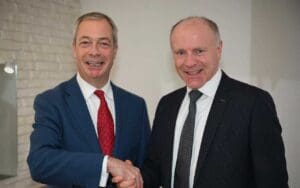
Marco Longhi, the former Conservative MP for Dudley North, has joined Nigel Farage’s Reform UK after accusing his old party of having been “captured by a left-wing influence masquerading as conservatism”.
He is the third ex-Tory MP to defect to Reform UK since last year’s general election, following Aidan Burley and Dame Andrea Jenkyns.
Longhi, who lost his seat in July, claimed the Conservative Party he once identified with had become “unrecognisable” and said he could no longer stand by the “uniparty drift” towards a “left-wing agenda”. He pledged that, if re-elected, he would remain loyal to “the people,” rather than the party leadership.
His defection coincides with a new “mega-poll” by Stonehaven, based on 17,000 voters, suggesting that Reform UK would capture up to 120 seats if a general election were held today. It also indicates Labour would fall from its current 411 MPs to 278, while the Tories would rise to 157 seats from 121. Although Reform UK has only five MPs at present, the poll suggests its strongest gains could come in East Anglia, Essex and much of northern England’s so-called red wall.
Other former Conservative figures have gravitated towards Farage’s party, including Nick Candy, who serves as Reform UK’s billionaire treasurer, and Tim Montgomerie, founder of the ConservativeHome website. Rael Braverman, husband of ex-home secretary Suella Braverman, also recently defected, though she dismissed any suggestion that she might follow.
Read more:
Ex-Tory MP defects to Reform UK as poll predicts 120-seat breakthrough
Apple agrees to £77M settlement over alleged Siri eavesdropping

Apple has pledged to pay $95 million (£77 million) to settle a US class-action lawsuit alleging that Siri, its virtual assistant, recorded private conversations without users’ consent.
The proposed settlement, filed in a federal court in Oakland, California, comes after a five-year legal dispute and covers tens of millions of Apple device owners.
Although Apple denies any wrongdoing, it has agreed to the payout, which allows individuals who owned Siri-enabled devices — including iPhones and Apple Watches — to claim up to $20 per device. The case focuses on allegations that Siri was unintentionally triggered without the use of the “Hey, Siri” wake word, resulting in private conversations being recorded and shared with third parties such as advertisers.
Plaintiffs reported incidents where private discussions about products or services — from Air Jordan sneakers to specific medical treatments — apparently led to targeted adverts for those same items. They allege that Apple captured and shared these conversations without user permission.
The proposed settlement could damage Apple’s privacy-focused image, with chief executive Tim Cook previously positioning the company as an industry leader in safeguarding customer data. However, the $95 million settlement represents just a fraction of the profits Apple has generated since 2014 (an estimated $705 billion).
The settlement still requires court approval, with a hearing proposed for 14 February in Oakland. If approved, eligible US customers who owned Siri-enabled devices between 17 September 2014 and the end of last year will be able to submit claims. Lawyers for the plaintiffs may seek legal fees and expenses from the settlement fund, potentially up to $29.6 million in total.
Read more:
Apple agrees to £77M settlement over alleged Siri eavesdropping
Shops and restaurants brace for record employment tax surge after Reev …

Retailers and hospitality firms are staring at an unprecedented rise in staff tax bills this year, triggered by Chancellor Rachel Reeves’s decision to increase employer National Insurance contributions alongside an above-inflation hike to the minimum wage.
New figures compiled by the Centre for Policy Studies (CPS) show that the annual cost of employing one full-time minimum wage worker will jump by £2,367 to more than £24,800, of which over £5,000 will go directly to the Treasury. More than a fifth of the amount businesses spend on those staff — 21.3 per cent — will now be swallowed up in taxes, up from 17.5 per cent last year.
This represents the largest year-on-year increase in the so-called “tax wedge” since the minimum wage was introduced in 1999. The wedge — which includes levies paid by employers and by workers themselves — had never exceeded 20 per cent until now. By comparison, in 2015 it was just 11 per cent for a minimum wage role, when a rise in the personal allowance led to lower taxes overall.
Robert Colvile, director of the CPS, criticised Labour’s approach, warning that heavier taxation on jobs would harm Britain’s growth prospects. “Labour claims to understand the importance of growth and to have made it a priority. But it was clear from the moment of the Budget that taxing jobs and work would damage the economy,” he said.
The sectors most affected will be retail and hospitality, which together rely heavily on lower-paid, often part-time staff. Kate Nicholls, chief executive of UKHospitality, urged the Government to reconsider: “We’re calling for a delay to its introduction in April to give the Chancellor time to consult with businesses on measures that can protect businesses and team members.”
Meanwhile, the British Retail Consortium estimated that the new Budget measures will cost the sector an additional £7 billion. This heavier burden arrives at a time of declining footfall, which dropped for the second year in a row to 2.2 per cent below 2023 levels.
Helen Dickinson, the BRC’s chief executive, called December’s footfall data “drab”, adding that it “capped a disappointing year for UK retail footfall”.
Business confidence remains fragile, with 71 per cent of leaders surveyed by the Institute of Directors feeling pessimistic about Britain’s economic outlook for 2025. Anna Leach, the IoD’s chief economist, pointed to “profit uncertainty” as a major constraint on investment, noting that nearly a quarter of business leaders plan to make no investments at all this year.
The increase in employer National Insurance contributions is also having a disproportionate impact on lower earners, whose taxable pay is pushed above new thresholds more quickly than those on average salaries. CPS analysis shows that the typical employer’s National Insurance bill for a full-time minimum wage employee will jump from £1,617 to £2,583 this year — a 60 per cent rise.
On top of that, the National Living Wage is increasing by 6.7 per cent, compounding the overall cost of employing staff. Daniel Herring of the CPS said: “By making it more expensive to employ people, the hikes in employer’s National Insurance disproportionately affect the lowest paid.”
The Treasury defended the Budget measures, emphasising the need to restore economic stability. A spokesman pointed to the independent Office for Budget Responsibility’s conclusion that it will lead to “lower unemployment and higher wages over the coming years”, while noting that “more than half of employers will either see a cut or no change in their National Insurance bills.” The spokesman added that the government’s Plan For Change aims to “get Britain building, unlock investment, and support business so we can make all parts of the country better off.”
Read more:
Shops and restaurants brace for record employment tax surge after Reeves’s budget raid
Five months of travel chaos loom as Avanti staff vow Sunday walkouts
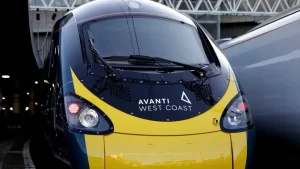
Train travellers face up to five months of disruption on the West Coast Main Line, as the Rail, Maritime and Transport (RMT) union launches a series of Sunday strikes from 12 January to 25 May.
The action follows the rejection of Avanti West Coast’s latest pay offer, with more than four-fifths of train managers voting against it in a recent referendum.
Avanti West Coast, which operates high-speed services between London, the North West and Scotland, has warned that the strikes will cause “significant disruption” for customers, after stating it was disappointed by the outcome of the vote. The company claims it made a “very reasonable revised offer” to resolve the long-running dispute over rest day working and a so-called “new technology payment” for scanning electronic tickets.
The RMT, led by Mick Lynch, previously suspended pre-Christmas walkouts after Avanti tabled a revised proposal. However, union leaders have decided to resume and extend industrial action, blaming what they call the company’s failure to deliver a fair deal. The dispute centres on persuading guards to work on rostered rest days, including Sundays, to cover staff shortages and avoid timetable disruptions.
Avanti, which has endured criticism for poor punctuality in recent months, was the worst-performing train operator between July and September: just 41 per cent of its services arrived on time, compared to a national average of 67 per cent. The franchise escaped an early threat of nationalisation after reporting improvements, but continues to face scrutiny from the government, which ultimately controls its spending.
Industry observers suggest that the RMT may be playing “hardball” in seeking a more generous package from the Treasury, given Avanti’s reliance on public funding. The union’s decision to escalate the dispute with five months of planned strikes underscores the continued volatility in Britain’s rail sector, raising concerns for businesses and commuters alike.
Read more:
Five months of travel chaos loom as Avanti staff vow Sunday walkouts

