

The Post Office is pushing for a significant increase in the fees that banks pay to allow their customers to use its national branch network, hoping to secure between £350 million and £400 million a year from the next banking framework — up from the current £250 million.
Under the proposal, around 30 banks and building societies are being asked to pay the higher sum to maintain essential services for millions of customers who still depend on physical access to deposit and withdraw cash. A final agreement is expected in the autumn, providing additional funding that will be channelled into higher pay for sub-postmasters, following a pledge made by Post Office chairman Nigel Railton last November.
The rising cost for the banks reflects the continuing importance of the Post Office’s 11,500-strong network, particularly as traditional high street lenders have closed more than 6,000 branches over the past decade. Figures from 2023 show that more than £10 billion was withdrawn and £29 billion was deposited at Post Office counters.
Although the Post Office continues to rely on public subsidies, the organisation’s leadership hopes to use this new deal to underpin its long-term commercial sustainability. The push to secure extra income comes in the wake of the Horizon IT scandal, which saw hundreds of sub-postmasters wrongly convicted due to flawed software. The Post Office has acknowledged that re-establishing trust and financial support for these branch operators remains crucial.
A spokeswoman for the Post Office declined to comment on ongoing negotiations, but confirmed the importance of maintaining access to cash for communities across the UK, describing the service as especially vital for vulnerable or less digitally connected customers.
Read more:
Post Office eyes extra £100m from new bank deal to boost postmasters’ pay
Category: Uncategorized
Bank of England poised for four or more rate cuts in 2025, say economi …
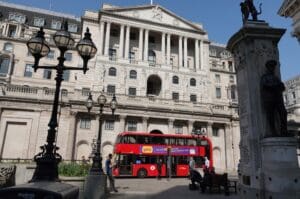
The Bank of England is expected to cut interest rates at least four times this year, according to a new survey of 51 economists.
The recent poll suggests the base rate could fall from its current 4.75 per cent to 3.75 per cent or lower in 2025, with a majority of respondents forecasting four quarter-point reductions to support the UK’s slowing economic growth.
The findings go beyond the two rate cuts currently priced in by financial markets for 2025, after traders scaled back expectations for monetary easing on the back of robust wage data and higher-than-expected services inflation at the end of last year. Indeed, 15 per cent of those surveyed believe rates will drop to 3.5 per cent, while three economists predict cuts to 3.25 per cent.
Economists warn that policymakers will be under pressure to balance concerns about sluggish growth — which most respondents believe will hover at 1-2 per cent this year — with inflationary risks posed by continued wage growth and the impact of the recent national insurance rise. Although only two economists anticipate inflation dipping below the 2 per cent target in 2025, most project it to remain between 2.5 and 3.5 per cent.
A significant 37 per cent of participants cite wage increases as the single biggest factor driving inflation. Andrew Sentance, a former member of the Bank’s monetary policy committee, noted that “pay rises of 3-4 per cent still mean labour costs rising by about 6 per cent once the NI rise is added in”. The Bank’s latest vote indicated a split committee, with three members favouring a rate cut to 4.5 per cent, while the remaining six supported holding at 4.75 per cent.
On the continent, over half the economists surveyed expect the European Central Bank to move more aggressively with cuts, bringing rates down from 3 per cent to 2 per cent or lower in 2025. Across the Atlantic, participants were divided over the Federal Reserve’s trajectory: a fifth predicted two rate cuts, another fifth expected three, and 35 per cent forecast four or more reductions in US rates this year.
Read more:
Bank of England poised for four or more rate cuts in 2025, say economists
High Street closures set to surge in 2025 as business rates burden gro …

A record number of shops are expected to close their doors this year, with rising business rates cited as the final blow for many retailers.
According to fresh figures from the Centre for Retail Research, store closures could hit 17,349 in 2025, surpassing the 17,145 recorded in 2022 when pandemic support measures were scaled back.
Last year saw 13,479 shops cease trading — a 28 per cent jump on 2023 — with well-known names among the casualties. Carpetright, once operating 273 stores, went under, although rival Tapi Carpets & Floors took on 54 of its sites. The Body Shop went into administration in February, closing 82 high street outlets, while Homebase’s demise in November shuttered half of its 130 branches, the other half saved by the owners of The Range.
On average, 37 shops closed every day in 2024, creating what the Centre for Retail Research called “another brutal year for the retail sector”. Many executives fear that 2025 will be even tougher due to an imminent rise in business rates, which takes effect in April.
Chancellor Rachel Reeves has announced a reduction in business rates relief from 75 per cent to 40 per cent for retailers, leisure firms and hospitality operators. According to Altus Group, this will see the typical shop’s rates bill more than double, jumping from £3,589 to £8,613 in the next tax year.
Alex Probyn, president of property tax at Altus, warns that slashing support “after a tough year for many retailers, especially independents, is foolhardy” and highlights the increase as contrary to Labour’s manifesto pledge to reduce the overall rates burden.
Smaller businesses continue to bear the brunt of the crisis, accounting for eight in ten of last year’s closures. The Centre for Retail Research anticipates that 14,660 of the projected 17,349 closures in 2025 will come from independents.
It is not all bad news, however. The Co-op intends to buck the downward trend by opening 75 new convenience stores in 2025. Yet the most recent figures from Sensormatic suggest that footfall in British shops fell by 11.4 per cent in the final full week before Christmas, compared with the same period in 2023. Diane Wehrle, founder of retail analytics group Rendle Intelligence, attributes the sluggish festive footfall to consumers’ “lack of confidence around the economy” and stormy weather deterring people from venturing out.
Read more:
High Street closures set to surge in 2025 as business rates burden grows
Lidl celebrates record festive sales with 7% Christmas boost
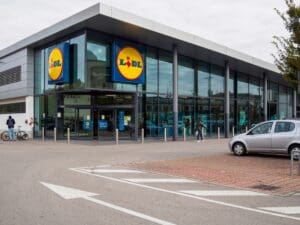
Lidl has reported its strongest UK Christmas trading period, with sales rising by 7 per cent year-on-year in the four weeks to 24 December, surpassing the £1 billion milestone for the first time.
Two million more shoppers visited its stores during the festive season, lured by cut-price champagne and an “affordable” party food range, which saw sales jump by almost a third.
The German-owned grocer revealed a 25 per cent rise in champagne sales, the equivalent of 11 million glasses poured, while British turkeys remained a favourite, selling at a rate of one every second. Customers also snapped up 16 million pigs in blankets, 8 million stuffing balls and 2 million litres of gravy.
Ryan McDonnell, Lidl GB’s chief executive, said the retailer’s blend of “unbeatable quality and value” had drawn more shoppers than ever, adding that the company would “build on our momentum” through continued store openings and competitive pricing.
Lidl’s market share has continued to climb as rising living costs push consumers to seek value. Industry analysts at Kantar recently named Lidl as the country’s fastest-growing bricks-and-mortar grocer, edging closer to Morrisons’ position as the UK’s fifth largest supermarket.
Although it represents slower growth than the 12 per cent increase recorded over the same period a year ago — when inflation on food and drink was more pronounced — Lidl’s performance stands out as many shoppers have reined in supermarket spending to focus on smaller indulgences such as beauty and entertainment products.
The supermarket sector will face further scrutiny in the coming week, as Sainsbury’s and Marks & Spencer unveil their festive figures. Meanwhile, the British Retail Consortium has warned of a potential “spending squeeze” in January, with consumer confidence taking a hit towards the end of the year.
Read more:
Lidl celebrates record festive sales with 7% Christmas boost
David Beckham lands $36m payday as Netflix documentary boosts brand em …

David Beckham’s business empire has delivered a bumper payoff worth almost $36 million, thanks to surging profits at DRJB Holdings, the company behind his global licensing deals.
Newly released financial statements reveal that the former England footballer received a $12.8 million dividend for 2023, followed by a further $23 million this year, underscoring the enduring appeal of the Beckham brand a decade after he hung up his boots.
In the year to December 2023, DRJB more than doubled its pre-tax profits, rising from $16.2 million to $36.2 million. The company, whose name derives from Beckham’s full name, David Robert Joseph Beckham, earns income from a wide array of endorsements and licensing agreements that feature Beckham’s name and image on everything from clothing to consumer goods. The brand’s reach has grown even further thanks to a hit Netflix series documenting the life of David and his wife, Victoria—the fashion entrepreneur and former Spice Girl—first aired in October 2023.
The four-part show was produced by The Studio 99 group, owned by DRJB, and proved an immediate success, charting in Netflix’s top ten across all 90 countries where it tracks viewership. In its newly published accounts, DRJB credits the documentary for boosting earnings, in tandem with a steady stream of brand partnerships. As well as recent deals with Boss, Tempur, Coty fragrances, EA Sports, Nespresso, and Uber Eats, Beckham has found new endorsement wins, including collaborations with Chinese online retailer AliExpress and SharkNinja, known for air fryers and home appliances.
Beckham, now 49, transferred majority control of DRJB to the US-based Authentic Brands Group last year, in exchange for $269 million in shares and cash. Though ABG acquired a 55 per cent stake in DRJB, Beckham retains a 45 per cent holding and benefits from the ongoing growth of his name and image rights. ABG itself owns licensing rights for a suite of global icons, including the basketball star Shaquille O’Neal and golf’s Greg Norman, plus the intellectual property of Marilyn Monroe and Muhammad Ali.
Despite the windfall from his brand business, Beckham’s wife Victoria has contended with more modest financial fortunes through her own fashion and beauty ventures, which recorded losses in 2023. Nevertheless, the couple’s total wealth stands at an estimated £455 million, thanks in part to David’s continuing success off the pitch. Alongside a stake in Major League Soccer’s Inter Miami—secured as part of his playing contract with LA Galaxy—Beckham’s social media following now tops 163 million across Instagram, Facebook, and major Chinese platforms.
While critics have occasionally warned of overexposure, DRJB’s filings suggest the Beckham brand’s popularity remains robust. Administrative costs at the firm have been significantly reduced under ABG’s stewardship, enabling it to fund large shareholder payouts and strengthen its push into new product categories.
Read more:
David Beckham lands $36m payday as Netflix documentary boosts brand empire
Bank of England casts doubt on ‘Britcoin’ launch amid privacy and …

Plans for a UK “digital pound” have hit a snag as Bank of England officials grow increasingly sceptical about the project, raising doubts that any form of “Britcoin” will be introduced before the end of the decade.
The Bank and the government had been set to decide in 2025 whether to press ahead with formal development of a UK central bank digital currency (CBDC), with the original goal of an official launch by 2030. However, insider concerns over privacy, potential high costs, and persistent conspiracy theories have cast fresh uncertainty over the project’s future.
A “digital pound” would theoretically provide consumers with a secure electronic form of money, with transactions managed via smartphone apps and underpinned by the safety net of central bank backing. Yet some politicians and conspiracy theorists claim a CBDC could enable governments to restrict or monitor how people spend their money. Nigel Farage, leader of the Reform Party, has gone so far as to warn that a digital pound “will give the state total control over our lives.”
These anxieties—combined with practical concerns about the expense and complexity of creating a national digital currency—are weighing heavily on policymakers at the Bank. According to sources close to the process, officials are split on whether the benefits outweigh the potential pitfalls. Ultimately, a final decision to move forward will rest with Bank governor Andrew Bailey and Chancellor Rachel Reeves.
International developments also complicate matters. In the US, lawmakers passed an “anti-surveillance” act in the House of Representatives, aiming to block any attempt to launch a digital dollar unless Congress explicitly authorises it. Meanwhile, the European Central Bank will decide at the end of 2025 whether it will forge ahead with a digital euro, despite resistance from Germany’s conservative Christian Democrats over user privacy.
These moves reflect a broader hesitance over CBDCs, particularly those intended for everyday use by retail customers. While authorities in the UK and Europe once viewed these digital currencies as a necessary response to private “stablecoins” such as Facebook’s now-defunct Libra, enthusiasm has faded in the face of technical and political obstacles.
Despite this growing coolness toward retail currencies, the push for a “wholesale” CBDC—used among commercial banks and financial institutions—remains strong. Policymakers believe a wholesale version could help streamline large interbank transactions and reduce systemic risk, without triggering many of the privacy concerns associated with consumer-facing digital money.
A Bank of England spokesperson confirmed that work on the digital pound remains “ongoing,” with no formal decision yet made on whether to proceed. They emphasised that any eventual introduction of Britcoin would be accompanied by primary legislation ensuring user privacy and control of their funds, in a bid to quell mounting public anxieties.
Read more:
Bank of England casts doubt on ‘Britcoin’ launch amid privacy and cost concerns
Women who work from home risk career setbacks, warns Nationwide CEO

Debbie Crosbie, chief executive of the Nationwide Building Society, has cautioned that women who regularly work from home could miss out on promotion opportunities due to lower in-person visibility.
Speaking on BBC Radio 4’s Today programme, Crosbie said that more women than men had opted for flexible working in the post-pandemic era—often because of childcare responsibilities—and that this reduced office presence could impede professional growth.
Crosbie explained that “development-watching”—the chance to observe and learn from senior leaders up-close—was integral to her own rise through the ranks. “Men are more likely to come into the office than women, and we need to be really careful that we don’t prevent women from accessing that vital learning,” she said. Nationwide introduced a “work from anywhere” policy for non-branch staff during the pandemic but has since tightened the requirement to at least two days a week in the office.
Recollecting her early career under Lynne Peacock at Clydesdale Bank, Crosbie noted how seeing an “inspiring female chief executive” tackle challenges helped her develop. She also credited her decision to have a child at 32 for granting her flexibility at pivotal moments in her career. “Many women are now having children later—in their late 30s—precisely when they’re often in line for more senior posts,” she added.
Recent data from the Office for National Statistics shows that 28% of the UK workforce is now hybrid-working (splitting their time between home and the workplace), and 13% remain fully remote. Among working parents, that figure rises to 35%, with more fathers than mothers favouring a hybrid pattern. Meanwhile, 44% of UK workers still commute to the same workplace five days a week.
Read more:
Women who work from home risk career setbacks, warns Nationwide CEO
Pub closures top 400 in England and Wales as total dips below 39,000

More than 400 pubs in England and Wales have either shut down or been repurposed over the past year, taking the total number below 39,000 for the first time.
Commercial real estate firm Altus Group says 412 public houses were demolished or converted for alternative use in 2024, leaving only 38,989 in operation.
The UK’s brewing and hospitality sectors have long warned of mounting costs, including changes to the alcohol duty system and higher energy bills. Businesses also face further challenges in 2025, when employer national insurance contributions will rise, the National Living Wage is set to increase, and the discount on business rates will be reduced from 75% to 40%.
Alex Probyn, UK president of property tax at Altus Group, says: “Many publicans I speak to are extremely worried that this could be their last Christmas. Costs for employers are going up just as rates relief is being scaled back, so maintaining profitability is increasingly difficult.”
The leisure industry suffered a heavy blow during the Covid-19 pandemic, highlighted by a rapid decline in nightclubs, which fell from 1,700 a decade ago to just 787 by June 2024.
Read more:
Pub closures top 400 in England and Wales as total dips below 39,000
UK businesses expect revenue surge and ramped-up hiring in 2025

British companies are gearing up for a stronger start to 2025, with fresh data suggesting that the majority expect higher turnover and increased hiring in the new year—welcome news for Labour’s pledge to revive the country’s sluggish economic growth.
Surveys from Lloyds and KPMG indicate that 70 per cent of firms anticipate revenue growth in the first quarter of 2025, marking a rise on sentiment levels from the same period a year ago. Lloyds polled 1,200 companies and found nearly three quarters projected higher profits over the coming 12 months. One in five respondents forecasts revenues climbing by more than 10 per cent, while a quarter expects turnover to increase by between 6 and 10 per cent.
The City’s financial services sector is also showing confidence in Labour’s plans to boost competitiveness and attract more foreign investment. Two thirds of the 160 financial services leaders surveyed by KPMG say they are optimistic about the government’s new financial services strategy, despite looming pressures such as an increase to employers’ national insurance contributions from April.
“Financial services is the backbone of the UK economy,” said Karim Haji, global and UK head of financial services at KPMG, noting that half of the surveyed firms intend to recruit more staff in 2025. Nevertheless, challenges remain. A quarter of respondents cited higher NI costs as a potential drag on hiring, while a third warned that finding skilled candidates could still hinder expansion.
Official data revealed Britain’s economy was flat in the third quarter after a strong start to 2024, amid concerns over higher interest rates and global uncertainties. Even so, many economists predict the UK will avoid recession thanks to anticipated interest rate cuts next year and a government spending boost in healthcare and local government. According to traders, four cuts to the Bank of England’s base rate could reduce it to 3.75 per cent, easing borrowing costs for businesses.
Contradicting the KPMG and Lloyds surveys, the CBI reported that its members’ growth expectations for early 2025 remain at their lowest since November 2022, citing persistent uncertainty. Regardless, a fifth of the firms surveyed by Lloyds say they plan to hire new staff and invest in AI or other digital tools, while a quarter aim to raise wages and upskill current employees.
“The sector will want more details on the government’s competitiveness strategy in the first half of 2025,” said Haji. “That clarity will help financial services firms plan more effectively for attracting foreign capital and strengthening the UK’s global standing.”
Read more:
UK businesses expect revenue surge and ramped-up hiring in 2025

