

Businesses failing to support employees undergoing fertility treatment risk high staff turnover and rising sick leave, according to the Chartered Management Institute (CMI).
One in seven couples now experience fertility challenges, NHS figures show, prompting calls for formal workplace policies that include flexible working hours, paid time off for treatment, and compassionate leave where necessary.
Ann Francke, CMI chief executive, warned: “The significant stresses of fertility treatment can lead to employees quitting or reducing their responsibilities if they feel their workplace offers no other choice. Without skilled management support, employers risk losing good people.”
A new survey of more than 1,000 managers revealed that just 19% of organisations have a formal fertility policy, despite nearly two-thirds of respondents considering such policies vital. Separate research indicates a lack of support for fertility treatment can prompt as many as one in five employees to resign.
Sharon Martin, interim chief executive at Fertility Network UK, which advises on employer policy, said: “A policy ensures immediate clarity on what help is available, even if employees choose not to disclose treatment details. It can outline specific leave allowances, flexible hours and direct staff to appropriate support charities.”
With the Workplace Fertility Campaign Group now pushing for legislative reform to grant paid time off for IVF appointments, many employers are seeking expert advice on drafting fertility policies. A Department for Business and Trade spokesperson said plans to make flexible working a “genuine default” aim to help staff navigate challenges such as fertility treatment more easily.
Read more:
UK employers urged to adopt fertility policies or risk losing talented staff
Category: Uncategorized
Labour says middle classes back 20% vat on private school fees

Middle-class parents have welcomed the government’s move to introduce a 20 per cent VAT charge on private school fees, according to education secretary Bridget Phillipson.
Speaking ahead of the policy’s launch this Wednesday, Phillipson says that many families are “priced out” of independent education by rising costs, and now want a stronger state system instead.
With some boarding schools charging more than £50,000 a year, and the average private school fee now standing at £18,000, Phillipson argues that “pushy middle-class parents” can no longer meet the expense. This, she claims, supports Labour’s position that ending tax breaks for private schools will generate an estimated £460 million in 2024–25—rising to £1.7 billion by 2029–30—funding 6,500 new state teachers and additional mental health support for pupils.
Despite concerns from private schools, whose fees have risen by 75 per cent in real terms since 2000, officials at the Department for Education (DfE) forecast that the VAT uplift will reduce private school enrolment by just 6 per cent, with most of those pupils transferring to state education. Phillipson dismisses warnings of widespread closures as “scaremongering”, noting that state schools recently accommodated significant numbers of pupils from Ukraine and Hong Kong “with no adverse outcomes”.
Private institutions are responding in different ways. Some, including Eton and Westminster School, are passing on the full 20 per cent charge to parents, while others, such as Queen Ethelburga’s near York, are limiting fee rises to 3 per cent. Schools are technically able to reclaim VAT on items such as capital projects and educational supplies, leaving their net VAT liability at around 15 per cent. Phillipson says many have “no good reason” to impose the full hike on parents.
The Independent Schools Council argues that the levy, alongside increased employer national insurance and the loss of charitable business rate relief, leaves schools in an “extremely challenging position”. Carrdus School in Oxfordshire, for example, will close next July, citing these compounding financial pressures. Yet Phillipson insists the new funding stream is key to strengthening the UK’s state schools—representing, she says, a “badge of honour” if it raises standards for children across the country.
Read more:
Labour says middle classes back 20% vat on private school fees
Public sector suppliers shift NI and wage hikes onto the taxpayer

Major government contractors are pushing the costs of rising national insurance (NI) and higher wage bills back onto the Treasury, prompting concerns over the ultimate burden on taxpayers.
Cleaning and facilities management groups such as Churchill Group and Mitie, together with construction giant Mace, are among those negotiating with Whitehall to pass on the financial impact of April’s employment-related tax increases.
From next spring, employers’ NI contributions climb from 13.8% to 15% and the national living wage rises from £11.44 to £12.21 an hour. While private-sector providers with commercial clients face trimming their workforce or making other cost savings, leading outsourcers serving the public sector are securing higher contract rates instead. Many already have contract clauses allowing price reviews if “legislative increases” in labour costs occur, while others are renegotiating to protect narrow margins.
Churchill Group, which cleans railway carriages for train companies under Department for Transport oversight, has confirmed it is raising rates to offset wage and NI rises. Mitie expects to recoup 60% of its additional NIC bill—about £35 million—through similar pass-through clauses. Mace will open discussions with government departments to recover costs for building and infrastructure projects, including hospitals.
Government sources say they have little choice but to pay up rather than cut back on public services. Some fear a wave of cost increases across outsourced contracts next year, especially as the Treasury’s own analysis suggests the NI changes will also swell operating costs for major retailers such as Tesco and Amazon by billions of pounds.
Business lobbying groups, including the British Retail Consortium, have warned that the “sheer scale” of extra labour costs may force private-sector employers to shed jobs. Yet Paul Nowak, general secretary of the Trades Union Congress, says companies’ criticisms “should be taken with a pinch of salt.” The Treasury insists its budget will deliver economic stability, extending targeted business rate relief for hospitality, retail and leisure, and introducing a lower permanent rate from 2026.
Read more:
Public sector suppliers shift NI and wage hikes onto the taxpayer
Labour backs £15m rescue fund to tackle food waste and feed those in …

Labour ministers have thrown their support behind a £15m government scheme to rescue surplus food from UK farms—often thrown away or fed to animals—and distribute it to homeless shelters, food banks and charities, particularly over the festive period.
The fund, originally promised by Michael Gove in 2018 and again by Rishi Sunak in 2024, never got off the ground despite persistent calls from charities. Following renewed pressure this autumn, including an open letter from chef Tom Kerridge and hundreds of non-profits, the Labour government has confirmed that grants starting at £20,000 will be made available to not-for-profit food redistribution groups in England.
Under the scheme, these organisations can invest in equipment to collect and process bulky produce, develop tech solutions linking farms with charities and provide essential IT training. About 330,000 tonnes of perfectly edible food is currently discarded or fed to animals each year. With festive staples like brussels sprouts and potatoes in high demand over Christmas, charities say the new funding could make a timely impact.
Mary Creagh, minister for the circular economy, said: “With families gathering to celebrate Christmas and the new year, it’s important to remember those who may be going hungry this festive period. Nobody wants to see good food go to waste—especially farmers, who work hard to put food on family tables.”
Charlotte Hill, chief executive of the Felix Project, and Kris Gibbon-Walsh, head of FareShare, jointly welcomed the announcement: “We are thrilled to see this fund come to fruition. We are pleased that the government has recognised that too much food goes to waste on our farms, and that it should be redistributed to feed people who need it.”
Harriet Lamb, chief executive of the global environmental NGO Wrap, added that the move “gives a flying start to the new year” and helps both food charities and the farming sector develop immediate and long-term solutions. More details about the fund and eligibility criteria will be released early next year, while the newly formed “circular economy taskforce” is set to publish a broader strategy aimed at halving food waste by 2030.
Read more:
Labour backs £15m rescue fund to tackle food waste and feed those in need
Could Nigel Farage really be the UK’s next Prime Minister, I mean re …

Could Nigel Farage really be the next UK Prime Minister? It’s a question that, a mere five years ago, would have sounded rather like asking if we’d ever see Piers Morgan run the Ministry of Manners.
And yet here we are, with Farage’s Reform UK party reportedly garnering a surge in new members—apparently outrunning the Conservatives in the membership stakes, and boasting a younger, more dynamic support base by a margin of at least 15 years. The Tory old guard, presumably, is drinking yet another cup of lukewarm tea in some draughty community hall, while the new kids on the block queue up for kombucha shots at a Reform UK rally. “The times,” as Bob Dylan assured us decades ago, “they are a-changin’.”
Of course, if we’re to believe the rumours, Reform UK also has potential financial backing from the world’s richest man himself, Elon Musk. Yes, that Elon Musk: the rocket-launching, Twitter-purchasing, multi-billionaire entrepreneur who chucks Teslas and satellites into space for sport. The same man who started off revolutionising the electric car industry and wound up with a curious hankering to buy up social media platforms for fun. Musk, mind you, is not exactly known for his shy and retiring approach to politics—or anything else. The notion that Musk might see in Farage a kindred spirit for disruptive politicking and a global platform for their shared brand of contrarian mischief is not entirely outlandish. After all, you could argue they’re both showmen of sorts, each boasting that brash, unstoppable self-confidence that could whip up a global storm in a teacup faster than you can say “Brexit 2.0.”
The truly staggering thing in this scenario, though, is that ordinary Britons—battle-scarred after years of Brexit sagas, pandemic bungles, and fractious leadership contests—might actually be prepared to back Farage as he once again sets out his stall. Remember, this is the man who promised to “get Brexit done” before it was even Johnson’s catchphrase, and whose dogged efforts have, arguably, shaped the entire political trajectory of the UK in the last decade. Love him or loathe him, there’s no doubt that Farage has altered the national conversation—and the national identity. He’s the unstoppable political cameo who marches in and out of the limelight, brandishing a pint and a seemingly endless array of soundbites that enrage one half of the population and endear him to the other half.
But this notion of him returning, phoenix-like, from the ashes of UKIP and Brexit Party stints, and taking on the top job at Number 10? It’s a fantasy that might have some Tory MPs waking in a cold sweat. Picture the scene: you’ve slogged your way through years of Conservative membership, handing out leaflets in the rain, only to have Nigel Farage waft in, grinning ear to ear, flanked by Elon Musk’s retinue of robotic dog prototypes, Twitter flame wars, and rocket tattoos. The possibility that the Conservatives—traditional stalwarts of British politics—could be overtaken by a party that’s not only younger but possibly richer (once Musk opens his digital chequebook) is enough to send a shiver up even the sternest suiting of the Westminster corridors.
Critics, of course, will rightly query whether Farage is even electable in the mainstream sense. Sure, he’s a household name. But is he a household name in the manner that conjures confidence and trust, or is he just that bloke who reminds you of last orders at the local pub? And how far can a brash, anti-establishment figure go in actually leading a government, rather than merely pointing fingers from the outside? We must remember that part of Farage’s whole schtick is his ability to lob grenades from the sidelines, stirring the pot and gleefully undermining whichever politician gets in his crosshairs. It’s a world away from navigating the unglamorous labyrinths of public policy, health crises, and foreign diplomacy.
Then again, one might have said the same about Donald Trump before 2016—and look how that turned out. The populist wave that swept through the Western world in the mid-2010s has quietened somewhat, but it hasn’t vanished. There are plenty of people—especially younger voters—feeling deeply disillusioned with the status quo. The Conservatives, it seems, are left trying to convince potential new supporters that “fiscally prudent” doesn’t have to mean “grey and dull.” Meanwhile, Labour does its best to claim the progressive mantle, but the ghost of Corbyn still rattles around for some, while the shadow of Blair’s New Labour is hardly the trendiest look for Gen Z. If Farage and Reform UK manage to capture a blend of rebellious energy, economic promise, and a dash of Musk’s futuristic bravado, we might be in for quite the ride.
What’s truly fascinating is how Brexit has, in many ways, reshaped British politics to allow for a figure like Farage to keep bouncing back. It used to be that once a politician declared themselves done, that was it: the diaries were published, the after-dinner circuit was booked, and the shadow of retirement loomed. Farage, on the other hand, seems blessed with an indefatigable thirst for the spotlight, always returning with a new banner, a new set of pledges, and a new reason to exclaim how dreadfully incompetent everyone else is. A cynic might say we’ve been here before, and it’s just another of Nigel’s vanity projects. But if the rumours of that Musk money are true, well, that’s the sort of budget that can shift the electoral dial in ways rarely seen in our green and pleasant land.
Could Nigel Farage really be the next UK Prime Minister? Stranger things have happened, though probably not many of them in the staid, centuries-old tapestry of British politics. For now, we can do nothing but watch with horrified fascination as the Reform UK membership balloons (if their claims are to be believed), sipping on that proverbial pint alongside Nigel—though presumably, in Musk’s presence, it might be a zero-G pint served aboard a SpaceX capsule. Meanwhile, the Conservatives look like they’re stuck in a game of musical chairs, with half their seats wobbling precariously, uncertain who’ll be left standing when the music stops.
So yes, it could happen—just don’t place your entire life savings on it yet. We Brits have learned not to discount anything in politics, especially where Mr Farage is concerned. If he does somehow assume the mantle at Number 10, one can only imagine the flamboyant cabinet picks and the possible prime ministerial statements via tweet (or X, or whatever Elon calls it by then). It might be outlandish, it might be catastrophic, but no one can deny it would be entertaining. And, if nothing else, it would confirm what many have long suspected: that in modern British politics, absolutely anything goes.
Read more:
Could Nigel Farage really be the UK’s next Prime Minister, I mean really?
Steel industry urges government to choose British in offshore wind exp …
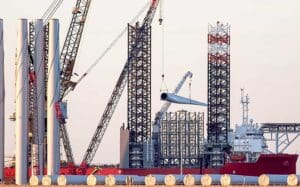
The UK steel industry is urging the government to commit to buying British steel as part of the country’s planned offshore wind power boom.
Wind energy now accounts for almost a third of the UK’s electricity generation, yet less than 2% of the steel used in offshore wind projects during the past five years has come from domestic mills, according to consultant Lumen Energy & Environment.
A new government steel strategy is expected this spring from business secretary Jonathan Reynolds, who aims to expand UK steel manufacturing capacity and capability against a backdrop of costly decarbonisation pressures. Gareth Stace, chief executive of industry body UK Steel, argues that prioritising British-produced steel for the UK’s rapidly growing offshore wind sector would strengthen domestic supply chains and deliver wider economic benefits.
Demand for UK windfarm steel is forecast to top 1m tonnes per year on average from 2026 to 2050, peaking at more than 2m tonnes—a marked leap from the 300,000 tonnes currently used annually. Most future demand, however, will be for plate steel, which is not produced at scale in Britain. Industry leaders say investment in new facilities hinges on government policies that favour local manufacturing over imports.
Stace contends that this approach would help reverse the sector’s decline and encourage steelmakers to invest, while also recognising the value of keeping such large-scale spending within the UK. He has called on ministers to regard British steel “by default” in public procurement decisions.
Government efforts to bolster domestic steel include a £2.5bn support package, some of which has been earmarked for projects such as replacing traditional blast furnaces with electric arc furnaces at plants in Port Talbot and Scunthorpe. Nevertheless, factories assembling turbine components in Newcastle and building monopiles in Teesside still rely on imported steel plate, highlighting the importance of a cohesive industrial strategy that boosts UK capacity.
Read more:
Steel industry urges government to choose British in offshore wind expansion
What I’ve learnt this year – My 7 Top Tips – Sharing my mistakes …

2024 has been a year of navigating for a lot of businesses in the UK.
Navigating an election year with the subsequent budget announcement, a later Black Friday and Christmas than usual, a recession, a cost-of-living crisis, and a multitude of internal issues that require consideration from a business owner. Navigation brings failure, but it also brings learning.
So, what have I learned in this year of navigation? My first top tip: Keep the fun! For the first three quarters of this year I was absolutely miserable. By the end of Q3 I was ready to quit, because of continual staffing issues, huge rising costs without room for price increases and the general turbulence of the economy and having to constantly try to stay ahead of it. But then I realised that life is too short. We need to lighten up and try to bring the fun element back in. These thigs are going to be happening around you either way. You can choose to face them with a terrible attitude or grin and bear it.
Second, learn the difference between being kind and being nice. I’ve been guilty so many times in the past of feeling sorry for an individual and putting their individual needs before those of their colleagues and the company. It never pays. If people aren’t pulled up on their bad behaviour, you are giving them implicit consent to continue that behaviour, and the problem always gets worse.
My third learning is making sure that everything is measurable. You have a photographer, for example. What is their output requirement? For every project, for every month, for every person in the company, you need specific targets that are quantitative.
Four – go after low hanging fruit. When times are good, it’s easy to pad the team out with ‘nice to haves’. When we’re headed into a year of increased wage costs and a huge increase in employer’s NI, do we really need these roles? Is the salary at least adding that money back to the bottom line, either directly or indirectly? If not, do we need that role or could it be incorporated into another role? We know individuals can fill their day or become acquainted with a certain workload, so it doesn’t mean people aren’t working hard, but the question must be asked. Are these jobs a ‘nice to have’ or necessary for the functioning of the business?
My fifth learning is what Tony Robbins always says – you must take time out to work on the business and not in the business. You can become so entangled in the day to day weeds that it becomes difficult to stop, pull back and look at the higher level work that demands its own focus. I’m spending the quiet time between christmas and new year to really strategise on how we can reach new markets.
Sixth: the most difficult (for me, at least.) Procedures, procedures, procedures. Most entrepreneurs (including myself) hate procedures, but without them, you leave the company vulnerable to risk after risk. If any member of staff is taken out of the business, are there enough procedures for someone to step seamlessly into the role? Does their role have clear, step by step guides and expectations set? This is something that needs to be set up for every job role. This will also support tip four. When you know what goes into a role, you can measure how necessary each task is.
And finally, my seventh top tip. Either trust your staff or let them go! There is no point in hiring staff to do a job and then micro managing them. If you surround yourself with good people, they should know more than you in their chosen field. Let them get on with the job.
It’s been a really tough year, but the reason for stagnation in growth this year is due to me, as the leader. Yes, the market is tough, I mean really tough, but it’s down to me as the leader to navigate that. Half of the work of a leader is being able to hold the mirror up and recognise your failings, and then rather than beat yourself up over them, look to the team around you to compensate for some of those shortcomings.
Read more:
What I’ve learnt this year – My 7 Top Tips – Sharing my mistakes so you don’t have to make them
Boxing Day splurge forecast at £4.6bn despite cost-of-living concerns

Britons are expected to shell out a total of £4.6 billion in the Boxing Day sales this year, with the average shopper forecast to spend £236, new research from Barclays shows.
Although that figure is marginally lower than in 2023, when £4.7 billion was spent, it still points to a robust appetite for deals despite ongoing cost-of-living concerns.
The projected outlay per person has slipped by £18 compared with last year, yet shoppers are set to part with £50 more than they did in 2019, before the pandemic. Researchers note that while some of the increase is attributable to inflation, it also reflects a continuing desire among consumers to seek value for money during the post-Christmas period.
Spending patterns appear to favour men, who are set to outspend women by £53. Karen Johnson, head of retail at Barclays Bank, said it was “encouraging to hear that consumers will be actively participating in the post-Christmas sales”, despite mounting financial pressures.
“We’re likely to see a shift towards practicality and sustainability this year,” she said. “Many shoppers will be on the lookout for bargains on kitchen appliances and second-hand goods.”
Indeed, air fryers and similar kitchen gadgets have surged in popularity, with year-on-year sales up by 7 per cent. Barclays attributes this to a focus on “functional finds” and efforts to save on big-ticket items that would ordinarily be out of reach for many shoppers.
The research also suggests a cautious mood: nearly a quarter of consumers will only buy what they deem essential in the sales. Yet some shoppers are still keen to make the most of the in-store experience. More than a quarter of the public plan to hit the shops in person — up from 15 per cent in 2023 — driven by a desire for social interaction, the ability to touch and feel products before buying, and the traditional thrill of high-street shopping.
“Boxing Day feels extra special this year,” said shopper Gabrielle Kirkham, who will be returning to the high street for the first time since the pandemic. “I’m planning to pick up discounted clothing and skincare. It’s much easier to try on clothes in person, which can be more challenging online.”
Although some bricks-and-mortar retailers are choosing to remain closed on Boxing Day, those that open will likely see a boost. A quarter of people planning to shop in the sales say they will spend most of their money in physical stores. Many cited the ability to see items first-hand and the enjoyment of socialising while shopping as key reasons.
High streets and shopping centres remain top destinations, with around a third of British consumers planning to visit them. Supporting local businesses is also a factor, with 17 per cent aiming to back their local high street and 15 per cent intending to shop with independent retailers.
Online channels, however, are set to capture the lion’s share of post-Christmas spending. Barclays forecasts that 65 per cent of Boxing Day purchases will be made online, slightly up on last year’s 64 per cent. Nonetheless, retailers hoping to coax more people onto the high street might consider in-store-only offers: around a third of shoppers say they would be swayed by discount codes that can only be redeemed in person, while 27 per cent would be enticed by a free gift with in-store purchases.
Read more:
Boxing Day splurge forecast at £4.6bn despite cost-of-living concerns
Home charger maker Myenergi slips into the red as EV demand stalls

Myenergi, a British startup that produces home chargers for electric vehicles and energy-saving devices, has swung from a £8.8 million profit to a pre-tax loss of £25 million in the year to May.
The company, whose high-profile backers include former Tesco chief Sir Terry Leahy, blamed the downturn on weaker demand, intensifying competition, and a write-down of £10 million on unsold stock.
Founded in 2016 by Lee Sutton and Jordan Brompton, Myenergi sells the popular Zappi home charger and technology that helps homeowners optimise power usage, particularly when generating their own electricity. However, in its latest results the company reported an 18 per cent drop in sales to £55.7 million, largely due to what it called “a challenging trading year” and rival chargers being bundled with car sales and finance deals.
In a bid to shore up its balance sheet, Myenergi raised £28.6 million in new investment from New York-based Energy Impact Partners in October at an undisclosed valuation, spending £5.6 million on related fees. As part of broader cost-cutting measures, it also reduced its Grimsby-based workforce from 445 to 339.
Chairman Peter Richardson, previously an executive at Dyson, hopes this will give Myenergi the firepower to compete. The company insists it remains in a strong financial position, with “good prospects for growth,” supported by more than a quarter of its revenue coming from overseas—primarily Europe.
Myenergi has reset its ambitions around a possible sale or stock market listing. Share options issued in 2022 were to vest if the business reached a valuation of at least £400 million, but these have since been cancelled. New options introduced this year will be triggered whenever existing shareholders exit the company.
The company’s struggles come as the Society of Motor Manufacturers and Traders reported a 45.5 per cent year-on-year drop in UK output of electric or hybrid vehicles in November. Market analysts, including Euromonitor International, say the growth rate of pure EV sales is slowing, with buyers increasingly attracted to hybrids that combine both engine and battery power.
Read more:
Home charger maker Myenergi slips into the red as EV demand stalls

