

Sir Keir Starmer is set to appoint Lord Mandelson as the UK’s next ambassador to the United States, marking the first political appointment to the role in nearly half a century.
The Prime Minister believes that Mandelson’s background in trade and extensive network of contacts will bolster Britain’s position in what promises to be a delicate period for UK-US relations.
Donald Trump, the incoming US President, has threatened to impose blanket tariffs on foreign imports, raising concerns about potential challenges for Britain. His allies have warned that the UK may have to choose between a deal with the US and one with the “socialist” European Union. Sir Keir, however, has dismissed the notion that a binary choice must be made.
Lord Mandelson, a seasoned Labour figure and close ally of Morgan McSweeney, Starmer’s chief of staff, has been backed by David Lammy, the Foreign Secretary. Mandelson was seen at the Foreign Office last week. His appointment represents an extraordinary political comeback, as he last held government office 14 years ago during Gordon Brown’s premiership. He was previously Business Secretary and effectively acted as deputy prime minister, and also served as the EU’s Trade Commissioner under Tony Blair—a role that played a key part in securing this new Washington post.
One source described the decision as evidence of how seriously Starmer takes relations with the US, and noted that Mandelson is a “significant figure in his own right.”
Dame Karen Pierce, the current ambassador, will remain in her post until the end of January, when President-elect Trump is inaugurated. Dame Karen, who has built extensive Republican contacts, helped secure a dinner meeting between Trump, Starmer, and Lammy in November.
Mandelson’s selection follows intense speculation about who would take the role. David Miliband, Baroness Amos, and Baroness Ashton of Upholland were all considered strong contenders.
Sir Keir is keen to strengthen ties with the Trump administration. Earlier this month, McSweeney met with Susie Wiles, a key strategist behind Trump’s re-election campaign, in the US. Although Trump and Starmer differ politically, the US president-elect has praised the UK leader as a “very nice guy” who was “very popular” ahead of the election.
Despite such cordial words, tensions remain. During the campaign, Trump accused Labour of election interference after the party’s head of operations revealed that 100 current and former staffers were helping Kamala Harris, then the Democratic nominee, on LinkedIn.
Mandelson has previously stressed the importance of steering a careful path between the EU and the US if Trump follows through on his threat to impose blanket tariffs on imported goods. “We must find a way to have our cake and eat it,” he told The Times’s How to Win an Election podcast, emphasising that Britain must avoid being forced into an either/or choice between the two trading blocs.
Trump has suggested tariffs of up to 20 per cent on all imports, with even steeper levies of 60 per cent on goods from China. The National Institute of Economic and Social Research has calculated that such measures would halve UK GDP growth, creating a £21.5 billion hole in Rachel Reeves’s tax and spending plans, and push inflation up by 3 to 4 percentage points.
Mandelson maintains that Britain cannot abandon its transatlantic ties, nor can it walk away from the EU’s enormous market. However, he cautioned against reverting to outdated notions of free trade agreements, arguing that future deals must focus on modern aspects of commerce: “We’ve got to look forwards to a more 21st-century set of trading arrangements, which are more to do with clicks and portals than goods and mortar,” he said.
In the event Trump presses ahead with tariffs, the EU is expected to respond with its own retaliatory measures on US exports such as bourbon whiskey, Levi’s jeans, and Harley-Davidson motorcycles. Though UK officials have contingency plans, ministers are wary of a protectionist stance that might provoke a more severe US response. They also suspect the new president may water down his tariff threats to avoid stoking inflation at home, likely targeting only specific sectors—such as steel, aluminium, technology, and automotive—rather than applying broad-based tariffs.
It is notable that two thirds of the UK’s £188 billion of annual exports to the US are in services rather than goods, giving Britain a degree of resilience against potential trade turbulence.
By entrusting the ambassadorship to Mandelson, Starmer is sending a clear signal that the UK aims to navigate these uncertain waters with diplomatic skill, informed expertise, and the hope of balancing the country’s global interests.
Read more:
Mandelson chosen by Starmer as UK ambassador to US
Category: Uncategorized
No Wagering Casinos: What UK Players Need to Know

The world of online gambling has evolved by offering players more transparent and rewarding experiences.
One of the most appealing innovations in this space are no wagering casinos.
Essentially, these casinos eliminate the most common and often frustrating barrier you might face when trying to withdraw bonus winnings: wagering requirements. This singular difference sets them apart, making them particularly appealing to those who value transparency and straightforward gaming.
Types of No Wagering Bonuses: A Closer Look
When you are exploring the world of no wagering casinos, you will come across several intriguing bonus options. These bonuses are originated so you are able to enjoy the gaming experience without any typical restrictions, such as high wagering requirements. Here are some types of no wagering bonuses available in the UK market:
Welcome bonuses are amongst the most attractive offers you’ll find. These bonuses provide new players the opportunity to start playing with an increase to their original deposit in an effort to attract them. In contrast to regular welcome bonuses, such bonuses give you the freedom to withdraw your winnings without any wagering limitations. Hence, for newbies who are keen to explore, this freedom makes them particularly alluring.
No Wagering Free Spins are another popular form of bonus. Often these spins are available upon signing up or depositing funds to the account, where generally they can be used on a specific selection of slots. Any winnings from these free spins are paid out as real cash, making them one of the most transparent and play-friendly bonuses available.
In the UK market you might also find No Deposit No Wagering Bonuses. Imagine being able to keep all of your winnings and receiving a bonus without having to make a deposit. Despite it might be rare, they are always worth snapping up when available.
When selecting a casino, being aware of these kinds of bonuses may significantly improve your decision making process. Every bonus type has its own set of conditions, but it’s comforting to know that there aren’t any wagering requirements. While exploring the world of no wagering casinos, keep a look out for these treasures.
How No Wagering Bonuses Work
As it was already mentioned, when you engage with these bonuses, you are not required to wager your money before claiming your winnings. This means you can immediately enjoy what you win without needing to jump through hoops typically associated with standard bonuses.
Here is a closer look to how it typically works.
Upon a successful deposit, or sometimes simply by signing up, your casino account is credited with a bonus amount. This could be in the form of free spins, bonus cash or a combination. Once the bonus is claimed you can start playing on the eligible games specified by the casino. Lastly, if you get lucky, withdraw your winnings.
Although there are no wagering requirements, sometimes these bonuses come with other stipulations such as a cap on the maximum amount you can withdraw from winnings. Therefore, understanding these terms is crucial for making the most of your no wagering experience.
Exploring the Benefits of No Wagering Bonuses
One of the primary attractions of no wagering bonuses lies in their ability to offer players immediate access to their winnings without the usual strings attached. In contrast to the traditional bonuses that could impose onerous wagering requirements on you, no wagering bonuses permit you to take out your winnings immediately. Since there are no extra requirements, the gaming experience is more transparent and easier to understand. In fact, terms and conditions associated with these bonuses are typically easy to understand, allowing you to know exactly what you are dealing with from the beginning.
Due to the straightforward nature, no wagering bonuses often foster a greater sense of financial empowerment. You are able to make judgments according to your own terms and have more control over your gambling budget. As no wagering bonuses can offer fun and rewarding experiences, it’s crucial to practice responsible gambling, to ensure online gaming remains enjoyable and safe. Additionally, since there are no wagering conditions, you are able to cash out the winnings instantly, reducing the waiting time. Therefore, this allows you to use the winnings instantly on other games.
The Drawbacks of No Wagering Casinos: What to Watch Out for
In the alluring world of online casinos, no wagering casinos might seem like a golden opportunity. Yet, it’s crucial to tread carefully. While they offer undeniable benefits, there are several pitfalls to be mindful of.
A common complaint associated with no wagering casinos are withdrawal limits. Even if you get lucky and win big, you might not be able to cash out the entire sum right away. Therefore, it is essential to comprehend these restrictions.
Another restriction might be that these casinos may offer a narrower range of games in comparison to their traditional counterparts. This means that you might find your favorite games unavailable when using the bonus.
As no wagering casinos are gaining popularity, competition is increasing. This might translate to lesser known casinos offering such bonuses to stay relevant. Therefore, you might find yourself on an arduous quest trying to locate these casinos to benefit from these perks. When choosing the casino, make sure it is reliable and trustworthy. To find out more about UK casino’s licensing information visit the Gambling Commission page.
Final Thoughts
No wagering casinos have revolutionized the online gaming experience by offering transparent, hassle-free bonuses. However, while the simplicity and instant payouts are attractive, you should remain cautious.
It’s essential to choose licensed, trustworthy casinos with clear bonus terms. By doing so, you can enjoy a fair, secure and rewarding gaming experience. Enjoy the thrill of the game, stay informed and always gamble responsibly.
Read more:
No Wagering Casinos: What UK Players Need to Know
The Trends Impacting UK Businesses in 2025

Recent years have been characterised by unique events, constant change, and challenging economic conditions. While businesses have become accustomed to operating in an ever-evolving landscape, the start of a new year offers a chance to reflect and look forward.
Meanwhile, technology continues to dominate headlines. AI is changing how we interact with the world while commanding greater attention and investment. According to Capterra, over three-quarters of UK businesses plan to increase their software budgets in 2025, including a focus on AI.
As we enter the new year, businesses will also look to allocate resources to enhance efficiency and support compliance – such as with new environmental, social, and governance (ESG) reporting requirements – all while adapting to a new era of technological advancements.
Nicky Tozer, SVP EMEA, Oracle NetSuite looks at the trends influencing the UK business landscape in 2025.
The barriers to AI adoption are softening
AI might still be considered an emerging technology by some, but it’s no longer in its infancy. Data from the Federation of Small Business (FSB) in March 2024 suggested that only 20 percent of UK small businesses were leveraging AI, yet 55 percent believed it could provide benefits – indicating that businesses were either experiencing barriers to AI adoption or just not sure where to start their AI journey. But as we look ahead to 2025, according to Capterra data, AI adoption is emerging as a priority, along with IT security, as a fear of missing out drives action and adoption.
What is changing? The understanding of ‘garbage in, garbage out’ has become mainstream and businesses now have a greater understanding of how to maximise the value of data and AI. Similarly, according to Forrester, while 2024 was characterised by AI experimentation, in 2025, business leaders will pivot to focus on bottom-line gains and return on investment. As the AI market matures, decision makers will look to connect and standardise data across lines of business to ensure it enhances the performance and relevance of AI.
There is also a growing awareness of where to deploy AI. Forrester identifies Enterprise Resource Planning (ERP) solutions as an optimal destination for leveraging generative AI, while leading ERP vendors have rolled out new AI features embedded in existing workflows to help businesses utilise the technology and accelerate adoption.
Effectively adopting new technology is critical for productivity
With increased adoption of AI, business leaders must ensure that employees across all departments are brought along on the journey to truly reap the rewards. Certain business functions and departments are more likely to leverage AI than others, while benefits may vary based on job role, personal interest, and enthusiasm to new technologies.
Notably, according to Capterra, 57 percent of UK companies that implemented software solutions in the past year also introduced a learning management system (LMS) to support employee onboarding, suggesting that business leaders are increasingly aware of the need to bring employees along on the journey to adopt new technologies. Organisations will adopt AI and software solutions that prioritise this user-first approach, valuing intuitive design and adaptability.
Moving forward, we can also expect Natural Language Processing (NLP) to enable more intuitive interactions with AI systems, allowing employees at all levels to leverage AI capabilities without specialised training. Transparency and adaptability are also crucial. AI systems are only useful if we understand their decisions, so organisations will increasingly adopt software solutions that offer explainable outputs to ensure trust and usability in the results.
The need to meet impending ESG requirements
Incoming ESG regulations are set to reshape business practices as the EU’s Corporate Sustainability Reporting Directive (CSRD) requires some companies to provide reporting on their environmental and social impact starting in 2025. And beyond regulatory mandates, stakeholders – including investors, customers, and employees – are increasingly seeking greater transparency and accountability in the businesses they engage with.
Technology will play a pivotal role in meeting ESG requirements. Data from Deloitte in July 2024 found that 74 percent of public companies plan to invest in reporting tools over the next year to streamline the collection, analysis, and reporting of ESG data. For many businesses, this responsibility will fall across multiple departments, including finance, legal, and operations.
More robust regulations increase the need for greater tools and measures to support compliance. Systems that go beyond basic financial and managerial reporting to include specific and non-financial metrics such as capturing carbon emissions and plastic usage, will be especially pertinent from 2025 onwards.
The major priority areas for businesses in 2025 reflect a convergence of technological innovation, economic opportunity, and regulatory responsibility. As business leaders look to enhance the efficiency of their organisations with AI, they will be especially conscious of how their employees are able to adapt to interact with technology. This drive for efficiency will enable decision makers to allocate resources strategically, addressing both current operational demands and the increasingly demanding challenges of regulatory compliance. By embracing and responding to these priorities, businesses will position themselves to thrive in a competitive and evolving landscape.
Read more:
The Trends Impacting UK Businesses in 2025
Shoe Zone highlights recent budget pressures as it prepares to close m …

Shoe Zone, the beleaguered UK footwear retailer, has pinned the blame for a fresh wave of store closures on cost pressures stemming from October’s budget measures.
The Leicester-headquartered chain, which currently employs around 2,250 staff across 297 stores, said new financial burdens—especially higher national insurance contributions and an increased minimum wage—had pushed some outlets beyond the point of viability.
In a statement underscoring “very challenging trading conditions”, the company highlighted strained consumer confidence following the Chancellor’s latest budget, weaker-than-expected spending by shoppers, and poor weather affecting footfall. Together, these factors forced Shoe Zone to downgrade its profit expectations for the year to 27th September 2025 to “not less than £5 million”—roughly half its previous target of £10 million.
“This year’s budget, announced by Rachel Reeves in October 2024, has intensified cost pressures and impacted consumer sentiment. As a result, certain stores can no longer be maintained,” Shoe Zone said. The retailer confirmed it would not pay a final dividend for 2024.
Investors reacted sharply, sending shares down by 38.5 per cent to 85p. This further decline caps a challenging year, with the stock having fallen by two thirds over the past twelve months.
Shoe Zone, founded in 1980, is well-known for its budget-friendly footwear—an average price point of about £13.30 per pair—and operates from a mixture of high street, retail park, and online sites. Although the company has been gradually closing loss-making stores to streamline its portfolio (26 net closures in the last financial year), management had been hoping to stabilise or improve financial performance through incremental measures such as store refurbishments and larger-format outlets.
However, the surprise escalation in wage and tax costs appears to have accelerated the closure programme. While no specific number of further closures was disclosed, the business is clearly adopting a more defensive posture in the face of economic headwinds.
Analysts were divided over the chain’s justification for pinning closures on the budget. Some questioned the logic, noting that shoes are typically considered non-discretionary purchases. Yet, others pointed to Shoe Zone’s history of prudent cost management and store transformation efforts, suggesting the retailer is simply taking a disciplined approach to store economics, refusing to subsidise loss-making branches in such uncertain times.
Zeus Capital, for one, acknowledged the group’s resilience, citing strong underlying fundamentals: zero financial debt and a track record of restoring dividends once trading conditions allow. While investors may find little comfort in near-term turbulence, Shoe Zone’s swift and decisive response to shifting economic pressures may ultimately serve its longer-term interests.
Read more:
Shoe Zone highlights recent budget pressures as it prepares to close more stores
Barclays faces blow over car finance mis-selling as court upholds ombu …

Barclays has lost a pivotal legal challenge that strengthens the position of car finance customers seeking compensation for mis-sold loans.
In a ruling with far-reaching implications for UK lenders, the High Court rejected the bank’s judicial review of a Financial Ombudsman Service (FOS) decision, potentially opening the floodgates to billions of pounds in claims.
At the heart of the case was a £1,327 compensation order issued to Barclays in January, stemming from a complaint by Jenna Lewis. In 2018, Lewis purchased a second-hand Audi for £19,133, financed partly by a £13,333 Barclays loan arranged through car dealer Arnold Clark. Lewis later argued that she had not been properly informed of the commission arrangement: the dealer had unfairly increased the interest rate to boost its own commission—an arrangement she alleged was never clearly disclosed.
The ombudsman’s finding, mirrored in a similar case against Lloyds, contributed to the Financial Conduct Authority (FCA) launching a broader investigation into historical mis-selling across the sector. Discretionary commission models, under which dealers benefited by charging customers higher rates, were banned at the end of 2020. Before the ban, 14.6 million car loans were written under such agreements, involving £8.1 billion in bank-paid commissions.
Barclays, although not seeking to overturn Lewis’s individual compensation, pursued a judicial review to clarify legal interpretations of the underlying consumer credit rules. Mr Justice Kerr dismissed the bank’s challenge “on all grounds,” a verdict that rattled share prices across the industry. Barclays shares fell 1.3%, while Lloyds Banking Group and Close Brothers—also implicated in the broader mis-selling scandal—saw similar declines.
A Barclays spokesman expressed disappointment and confirmed plans to appeal the decision. The FCA’s ongoing investigation will be critical to determining just how extensively lenders might be exposed. RBC Capital Markets estimates that resulting compensation could run as high as £6 billion.
Market observers say much hinges on legal battles still to come. In October, the Court of Appeal ruled that any undisclosed commission, not just discretionary arrangements, could be unfair to consumers. If the UK Supreme Court upholds that ruling next year, the liability for banks could soar beyond even today’s daunting projections.
For now, the Barclays loss provides clarity on one point: as regulators and courts continue to scrutinise car finance agreements, major lenders face a mounting challenge in containing the financial and reputational costs of past sales practices.
Read more:
Barclays faces blow over car finance mis-selling as court upholds ombudsman ruling
Titanic shipbuilder Harland & Wolff set for £70m rescue deal from …
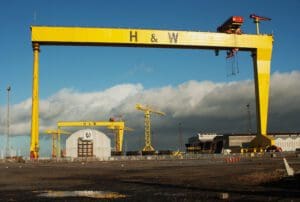
Harland & Wolff, the historic UK shipbuilder famed for constructing the Titanic, is on the brink of a £70 million rescue deal with Spanish state-owned shipbuilder Navantia.
The agreement, supported by the British government, is expected to preserve more than 1,000 jobs across the company’s four UK sites: Belfast, Methil, Arnish, and Appledore.
The board of Navantia is set to approve the takeover in the coming days, following several months of negotiations. Under the proposed deal, Navantia will assume control of all four Harland & Wolff facilities and commit to retaining the current workforce for a set period, safeguarding both skilled positions and the shipyards’ future.
Alongside the acquisition, Navantia is also poised to secure improved terms on a key contract to build three support ships for the Royal Navy, bolstering the UK’s maritime capabilities and providing a much-needed boost to the nation’s shipbuilding sector.
This intervention comes after a period of prolonged uncertainty for Harland & Wolff. The company entered administration in September following mounting financial challenges and an inability to secure long-term funding. Harland & Wolff’s attempts to steady its finances included multiple loans from American lender Riverstone totalling around $200 million, yet the shipbuilder continued to struggle under debt and fierce global competition.
In 2019, the Belfast-based firm was previously rescued from administration by London-based energy company Infrastrata. Despite winning the Royal Navy contract in partnership with Navantia in 2022, the company found itself unable to keep pace with larger rivals and faced increasing debt repayments.
The government’s decision to reject a requested £200 million loan guarantee earlier this year left Harland & Wolff in a precarious position. Business Secretary Jonathan Reynolds stressed that “the market is best placed to resolve the commercial matters,” prompting the shipbuilder to pursue private sector solutions rather than rely on public funds.
Founded in 1861, Harland & Wolff’s legacy includes the iconic RMS Titanic and other renowned vessels built for White Star Line. The latest deal, if finalised, will ensure that this historic name survives the current upheaval in global shipbuilding, forging a new future under the ownership of Navantia—a company that employs nearly 4,000 staff in its home country and maintains strong government backing.
Both the UK Department for Business and Trade and Navantia declined to comment ahead of the official conclusion of the deal. As Britain’s shipbuilding sector faces changing demands and stiff international competition, this high-profile rescue agreement could mark a turning point, ensuring Harland & Wolff’s heritage continues to shape the future of UK maritime engineering.
Read more:
Titanic shipbuilder Harland & Wolff set for £70m rescue deal from Spanish rival
Honda and Nissan explore merger amid EV market pressures

Honda and Nissan, two of Japan’s largest carmakers, are reportedly set to begin discussions on a potential merger as they grapple with fierce competition in the fast-evolving electric vehicle (EV) landscape
Both companies released near-identical statements confirming that they are exploring ways to deepen collaboration and would update stakeholders in due course. While neither announced merger talks directly, the reports from Japanese media outlet Nikkei suggest a significant strategic shift could be on the horizon.
Facing growing pressure from Chinese EV manufacturers and strained profit margins in their own electrification efforts, Honda and Nissan have been forging closer ties in recent months. In March this year, the companies agreed to cooperate on electric vehicle development, and by August they had extended their partnership to cover EV batteries, e-axles, and other critical technologies.
Insiders indicate that the two automakers are considering placing themselves under a single holding company, streamlining operations and potentially integrating Mitsubishi Motors—of which Nissan is the largest shareholder with a 24% stake—into the new entity. This development could reshape the global automotive landscape and stand as the sector’s biggest merger since Fiat Chrysler joined forces with PSA in 2021 to create Stellantis.
A combined Honda-Nissan operation would respond to the mounting challenges traditional carmakers face. Together, Honda and Nissan sold 7.4 million vehicles worldwide last year, yet both have seen their influence wane in China’s booming EV market. China accounted for almost 70% of global EV sales last November, where homegrown brands like BYD have soared ahead, putting established players under pressure to consolidate and pool resources for R&D, manufacturing, and supply chains.
Nissan’s recent commitments signal that the company remains determined to meet zero-emission targets in Europe and the UK, despite the market’s volatility. Plans to retool its Sunderland plant into a hub for EV production and build a third gigafactory underscore Nissan’s ambition, while Honda also has substantial interests in accelerating its own electrification strategy.
Should Honda and Nissan finalize a merger, it would mark one of the most significant industry realignments since Stellantis was formed two years ago. Stellantis’s own consolidation was partly driven by similar market pressures and cost-saving imperatives. Amid these shifting dynamics, global players including General Motors and Ford have scaled back EV investments due to weak charging infrastructure, high borrowing costs, and uncertain consumer uptake.
As the auto industry continues to change at breakneck speed, the potential Honda-Nissan merger illustrates how legacy carmakers are striving to adapt, unify forces, and stay competitive in a market that increasingly rewards scale, innovation, and rapid responsiveness to new consumer demands.
Read more:
Honda and Nissan explore merger amid EV market pressures
Welsh start-up accelerator announces award-winning entrepreneurs ready …

A leading Welsh start-up accelerator programme has honoured six entrepreneurs for their breakthrough innovations, marking the end of an intensive 12-week initiative designed to supercharge business ideas into market-ready ventures.
The Business Wales Start-Up Accelerator Programme, funded by the Welsh Government, assembled 21 aspiring entrepreneurs, equipping them with expert mentorship, hands-on support, and unparalleled networking opportunities. After three months of rigorous development, the top participants were recognised for their achievements across six award categories:
Sales Accelerator Award: Trystan Lloyd, LYFT Club
LYFT Club bridges the gap between health and fitness practitioners and new clients through its storytelling-led marketing platform. This model enhances customer trust and simplifies the search for reputable wellness services.
Proposition Flex Award: Paul Tomotas, AVA Steel Ltd
AVA Steel Ltd converts steel industry waste into sustainable raw materials, such as iron briquettes and zinc concentrates. Its innovative methods address environmental challenges while offering cost-effective, green steel production solutions.
Accelerator Champion Award: Andrea Jones, VisVira Ltd
VisVira Ltd streamlines business productivity with autonomous AI agents that handle repetitive tasks. By easing the operational load, companies can devote more resources to expansion, innovation, and strategic initiatives.
Fastest Sales Award: Dan Newman, BALDILOCKS
BALDILOCKS helps those experiencing hair loss regain confidence through curated well-being experiences. Supported by customers shopping in the “Baldiverse,” the venture fosters a community-centric approach to self-esteem and resilience.
Most Collaborative Participant Award: Osian Evans, GoIawn
GoIawn’s platform, Antur Amser, promotes Welsh-language literacy through immersive, story-driven educational technology. This platform enables schools to deliver interactive learning experiences that engage students with their language and culture.
Accelerator Award: Gareth Thomas, Solitaire
Solitaire.io is an indie gaming platform combining solitaire gameplay with collectible playing cards, forging a loyal user base and leveraging crowdfunding to fuel its expansion. This fusion of traditional gaming and branding innovation has quickly captured players’ imaginations.
Richard Morris, Programme Director for the Business Wales Accelerated Growth Programme, praised the cohort: “We are immensely proud of this year’s participants. Their creativity, perseverance, and entrepreneurial drive have been extraordinary. These awards celebrate their journey and highlight the transformative potential they hold for their industries.”
Andrea Jones, Accelerator Champion Award winner, emphasised the programme’s impact: “The Start-Up Accelerator Programme took my idea from concept to full market readiness. VisVira’s AI agent assistants and ‘AI employees’ are now poised to enter a rapidly evolving landscape with confidence and clarity.”
With the programme wrapped up and the awards distributed, these entrepreneurs stand primed to invigorate Wales’s business landscape. Their growth and future success are set to reinforce the region’s reputation as a vibrant, forward-looking hub for innovation and enterprise.
Read more:
Welsh start-up accelerator announces award-winning entrepreneurs ready to reshape their sectors
London’s leading electric taxi firm secures £1.6m asset refinance t …

A pioneering London-based electric taxi firm has secured a £1.6 million asset refinance deal, strengthening its position in the capital’s rapidly evolving green transport sector and setting the stage for major growth.
Sherbet Electric Taxi Company, which has fully decarbonised its fleet of London black cabs, will use the funding to pursue strategic mergers and acquisitions, boosting its fleet and overall market presence.
The asset finance facility, delivered by Reward Funding and brokered by Ethos Asset Finance, will help Sherbet maximise the commercial potential of its new flagship headquarters in Camden. Beyond serving as a business nerve centre, the site will feature a 24/7 café and community hub launching in January. Designed to support licensed taxi drivers and offer a welcoming space for vulnerable individuals or those needing a safe haven, this initiative underlines the company’s commitment to social as well as environmental responsibility.
Asher Moses, founder and owner of Sherbet, has spent more than two decades innovating within the iconic London taxi trade—introducing credit and debit card payments in the early 1990s and championing taxi advertising. Now, his focus is firmly on sustainable mobility: Sherbet has replaced 250 diesel vehicles with an all-electric fleet, aligning its ambitions with Transport for London’s vision to eliminate emissions and improve the city’s air quality.
“Corporate demand for greener transport solutions is surging, and as we invest further in our fleet and infrastructure, we knew we needed a flexible finance solution,” Moses said. “Reward’s support allows us to seize the current market opportunity, expand swiftly, and stay true to our values. With the asset refinance deal secured, we’re looking to treble in size through carefully considered mergers and acquisitions, all while championing a more sustainable future for London transport.”
For Reward Funding, the deal exemplifies how innovative finance options can unlock growth for businesses with strong social and environmental agendas. Robert Still, managing director of Reward Asset Finance, noted: “We are proud to support Sherbet’s vision, not only as a lender but as an advocate for cleaner, greener mobility. By utilising the equity in their assets, we’ve enabled Sherbet to scale more rapidly than would be possible with conventional bank lending.”
With fresh capital in hand and a clear strategy for scaling up sustainably, Sherbet Electric Taxi Company’s success story looks set to continue, setting a benchmark for how traditional services can adapt to a zero-emission future.
Read more:
London’s leading electric taxi firm secures £1.6m asset refinance to drive ambitious expansion

