

British farmers will stage a “national strike” next week, withholding meat and crops from supermarkets to protest Labour’s new inheritance tax policies.
Beginning Sunday, thousands of farmers plan to participate in the week-long strike, which includes a march in London on November 19, where over 10,000 farmers are expected to rally against the tax changes introduced by Chancellor Rachel Reeves.
The policy imposes a 20% inheritance tax on previously exempt farms valued at over £1 million, sparking concerns that it will force many farmers to sell parts of their operations, risking traditional family farm continuity. The Enough Is Enough protest group, representing striking farmers, warned of severe impacts on the industry, stating, “British farmers have simply had enough. We cannot afford to provide food to the public under these conditions.”
The strike will withhold non-perishable items, such as meat and certain crops, from supermarkets, potentially impacting food supplies. UK farms supply approximately 80% of the nation’s beef, 90% of fresh poultry, and large portions of lamb, pork, and wheat. Dairy farmers, however, are exempt from the strike due to the perishability of milk and eggs.
Tim Taylor, a strike organiser and animal feed business owner, noted the strike’s goal is to “disrupt but not decimate supermarket shelves,” aiming for public support.
Industry Concerns and Mental Health Impacts
The tax changes have raised significant concerns across the farming community, with some farmers fearing they may be the last in their family to maintain the business. Welsh farmer Gareth Wyn Jones expressed his decision to join the strike, citing a need to protect the future of his family’s 375-year-old farming legacy.
Mental health support lines for farmers have reported a surge in calls since the policy’s announcement, and the family of South Yorkshire farmer John Charlesworth, 78, revealed he took his own life shortly before the Budget to prevent his children from facing inheritance taxes.
The strike coincides with a “mass lobbying event” organized by the National Farmers’ Union, where nearly 2,000 farmers are expected to meet MPs. Additionally, farmers plan to protest at the Welsh Labour conference in Llandudno on Friday and may halt sewage slurry collection from water companies as an added measure.
The government argues the inheritance tax changes aim to protect family farms while addressing public service needs, stating the adjustments will not impact “the vast majority of farmers.” However, many farmers believe the measures jeopardise the future of UK farming, with some groups suggesting the action could lead to more French-style protests if their concerns are not addressed.
Read more:
Farmers to hold ‘national strike’ against inheritance tax changes, disrupting supermarket meat and crop supplies
Category: Uncategorized
Fleek secures $20.4M to bring global wholesale second-hand fashion mar …

Fleek, the innovative wholesale marketplace for second-hand fashion, has raised $20.4 million to bring the fragmented, offline second-hand clothing industry online.
The Series A funding round was led by HV Capital, with participation from Andreesen Horowitz (a16z) and Y Combinator. Founders and operators from prominent technology companies like Shopify’s President (Harley Finkelstein), Depop’s ex-CEO (Maria Raga), and Postmates’ CTO (Sean Plaice) have also invested. The previous seed round was led by a16z.
Founded in 2021 by Abhi Arora and Sanket Agarwal, Fleek addresses one of the second-hand fashion industry’s biggest challenges: sourcing inventory from a highly fragmented, offline market. The second-hand fashion industry, valued at $200 billion, is expected to grow three times faster than the overall apparel market, reaching $350 billion by 2028.
Fleek’s platform connects over 1,000 suppliers with more than 10,000 resellers across 70 countries. By offering a seamless online marketplace, Fleek enables access to desirable second-hand inventory with competitive pricing, buyer protection, and global logistics support. The platform’s interactive social features, such as chat and live video shopping, foster direct connections between buyers and suppliers, creating a dynamic shopping experience.
Abhi Arora, co-founder and CEO of Fleek, said, “Our mission is clear: to make second-hand the first choice. With this funding, we aim to empower more businesses to embrace sustainable fashion.”
Fleek also leverages AI and predictive analytics to help suppliers understand market trends, enabling buyers to source trending categories like vintage streetwear and upcycled clothing in bulk. This data-driven approach positions Fleek to play a key role in promoting sustainable fashion, offering a viable alternative to fast fashion’s environmental impact.
Felix Klühr, General Partner at HV Capital, commented, “Fleek is redefining the second-hand fashion landscape and setting the stage for a more sustainable future in fashion. We’re excited to support their growth.”
With offices in the UK, Pakistan, and India, Fleek is poised to further transform the wholesale fashion market by providing a streamlined, accessible solution for businesses worldwide looking to enter or expand in the second-hand apparel market.
Read more:
Fleek secures $20.4M to bring global wholesale second-hand fashion market online
Budget tax rise puts two in five UK hair salons at risk of closure, wa …

The UK hair salon industry faces an uncertain future, with two in five salons at risk of closure due to rising employment costs outlined in last month’s budget.
Industry leaders, including Carla Whelan, CEO of the Regis and Supercuts salon group, have voiced concerns over the “devastating” impact of increased employer national insurance contributions, which could push many longstanding salons into unsustainable losses.
The budget’s tax measures, which include a 1.2 percentage point increase in employer national insurance contributions to 15% and a reduction in the earnings threshold for employers from £9,100 to £5,000, are expected to raise £25 billion. However, the British Hair Consortium survey revealed that 40% of salon owners are now contemplating closure in the next year, with most citing unaffordable employment costs.
“The cost of employment has created an impossible profit and loss scenario for individual hair salons, where labour accounts for about 50% of costs,” said Whelan. Toby Dicker, owner of five salons, noted that these changes would cost his business an additional £122,000, pushing some salon owners toward a self-employed model as a last-ditch effort to cut expenses.
Andrew Collinge, chairman of Collinge & Co and a fourth-generation hairdresser, has written to Business Secretary Jonathan Reynolds to outline the impact of these changes. “We believe in contributing through paying taxes, but this budget appears to unfairly target employment,” he stated, echoing a sentiment felt across the industry.
Beyond hair salons, other sectors are facing similar challenges. Supermarkets like Tesco and Sainsbury’s have warned that they may raise prices to offset tax burdens, while the Night Time Industries Association reported that four in ten late-night venues are at risk of closing. UK Hospitality, representing the hospitality sector, warned that these measures could lead to widespread closures and job losses, particularly for small businesses.
Company insolvencies have already surged, with 1,022 UK businesses filing to shut down in the week ending November 8—a 64% increase from the previous year. As more industries grapple with the rising cost of employment, calls for government intervention are growing louder, with many urging the Chancellor to reconsider policies that could impact Britain’s small businesses and employment rates.
Read more:
Budget tax rise puts two in five UK hair salons at risk of closure, warn industry leaders
Labour’s VAT on private school fees triggers surge in state school a …

Labour’s 20% VAT on private school fees, set to begin in January, is already prompting a shift from the independent to state sector, with over 3,000 privately educated students applying to state schools between June and September.
The policy, announced by Chancellor Rachel Reeves in the Budget, will add an estimated £2,000 per pupil to annual school fees. Critics have labelled it a “tax on aspiration” and warn it could overwhelm the state sector.
New figures reveal that 124 councils across England, Scotland, and Wales received 3,011 applications from private school pupils to transfer to state schools, with an additional 2,500 expected to leave by January, according to the Independent Schools Council (ISC).
ISC Chief Executive Julie Robinson accused Labour of underestimating the impact, pointing out that the Treasury had initially predicted around 3,000 private-to-state transfers over the entire 2024-25 academic year. Robinson voiced concerns over the strain on the state sector, stating, “The government has underestimated how many families will be affected.”
The policy’s impact has already led some private schools to consider closure. Carrdus School in Oxfordshire, owned by Tudor Hall, announced it would close in the spring if a buyer is not found. In a letter to parents, Chair of Governors Alison Darling cited the VAT on fees and increased employer National Insurance contributions as factors making the school financially unsustainable.
The ISC, representing over 550,000 independent school students in the UK, has launched legal action against the government, claiming the policy is discriminatory. The organisation, represented by prominent barrister Lord Pannick KC, argues that the policy violates the European Convention on Human Rights, particularly affecting students with special educational needs and disabilities.
Robinson emphasised that the ISC’s legal challenge is intended to defend families who may be unable to find suitable state school alternatives. “We continue to ask the government to work with us to mitigate the risks of this policy on specialist arts education, low-fee faith schools, small girls’ schools, and children with SEND,” she said.
The Office for Budget Responsibility estimates that the policy could drive 35,000 students from private to state education, raising concerns that the already-stretched state sector may struggle to accommodate them. The ISC’s legal claim will focus on the “right to education” and argue that the policy unfairly targets independent school families, potentially forcing them out of their educational choices.
With the start date fast approaching, pressure is building on the government to reconsider or delay the policy’s implementation to assess its full impact on both private and state schools.
Read more:
Labour’s VAT on private school fees triggers surge in state school applications
AI could displace up to 3 million UK jobs, Tony Blair Institute predic …

AI-driven disruption could displace between 1 and 3 million private sector jobs in the UK over the next two decades, according to a new report from the Tony Blair Institute (TBI).
However, the thinktank also suggests that the rise in unemployment will be relatively contained, with long-term losses predicted to remain in the “low hundreds of thousands” as AI spurs the creation of new roles.
TBI’s Impact of AI on the Labour Market report estimates that 60,000 to 275,000 jobs could be displaced annually, a “relatively modest” impact when compared to typical job losses of around 450,000 per year in the UK. AI’s net impact, the report predicts, will ultimately drive greater dynamism in the labour market, creating new roles as workers transition to jobs that require uniquely human skills, such as creative problem-solving and interpersonal interactions.
The TBI forecasts suggest that while AI will initially contribute to a rise in unemployment—up to 180,000 by 2030—the technology could also boost GDP by as much as 6% by 2035, creating demand for skilled workers in emerging sectors.
Jobs involving routine cognitive tasks, including administrative, secretarial, and customer service roles, are predicted to be the most impacted as AI optimises time-intensive processes. Sectors generating vast amounts of data, such as banking and finance, are also likely to see significant displacement due to the availability of AI models capable of handling complex information at scale. Conversely, roles that rely on complex manual labour, such as construction, may be less affected by the rise of AI.
Simon Kearsley, CEO of bluQube, a cloud-based accountancy software provider, responded to TBI’s findings, pointing to AI’s potential to enhance productivity by reducing routine, repetitive tasks: “Yes, AI is changing the ways we work, but this transformation is simultaneously removing monotonous processes that hold employees back from reaching their full potential,” he said.
Kearsley explained that within finance, where data processing is critical, AI can allow teams to focus on more strategic, value-adding activities. “While AI is brilliant for streamlining routine processes that don’t require logical reasoning, it can’t step into a meeting about strategy or understand emotional intelligence,” he noted, highlighting that human input remains essential.
Kearsley added that senior directors recognise AI’s benefits, with 65% trusting AI for finance tasks and 44% planning to implement the technology. However, nearly one in four directors still prefer human interaction in areas like payroll and tax, and 79% are more inclined to purchase software with human-staffed support teams.
The TBI report suggests that, despite job displacement, AI is likely to improve labour market efficiency by prompting workers to transition into roles that leverage uniquely human skills. However, TBI emphasised the need for a robust “upgrade” in the UK’s labour market infrastructure, potentially including early warning systems to help workers anticipate and adapt to AI-driven changes in their industries.
With AI poised to play an ever-growing role across sectors, the report reinforces the importance of both government policy and business strategies in ensuring that the adoption of AI supports both economic growth and workforce resilience. As Kearsley concluded, “Our jobs will continue to evolve alongside AI, but human input can never be displaced.”
Read more:
AI could displace up to 3 million UK jobs, Tony Blair Institute predicts, but growth in new roles expected
The Entertainer halts new store plans due to budget’s national insur …
The Entertainer, one of the UK’s largest toy retailers, has abandoned plans to open two new stores following the government’s decision to raise employer National Insurance (NI) contributions.
Chief Executive Andrew Murphy explained that the increased costs have also led to a hiring freeze at the company’s head office.
The decision underscores mounting business concerns over the Budget’s changes, which increase the NI rate for employers from 13.8% to 15% from next April, with the tax threshold reduced from £9,100 to £5,000. The policy is expected to raise around £25 billion annually to stabilise public finances, following revenue cuts under the previous government.
Speaking to BBC Radio 4’s *Today* programme, Murphy said, “There’s no argument with the government’s ultimate goals… simply the balance with which they pursued them.” He highlighted that The Entertainer had completed viability assessments for two new locations, but the NI rise shifted the financial outlook, leading to the store closures.
Other major companies, including Sainsbury’s and Marks & Spencer, have hinted that increased NI rates may lead to higher prices as businesses seek to manage rising costs. Sainsbury’s CEO Simon Roberts estimated that the supermarket chain faces £140 million in additional costs, warning, “It is going to feed through into higher inflation.”
Labour has defended the tax hike as a means to “restore desperately needed economic stability.” Chancellor Rachel Reeves responded to the criticism, stating, “We’ve got to raise the money to put our public finances on a firm footing.”
Some businesses are contemplating expanding operations outside the UK in response to rising employer costs. Arnab Basu, CEO of Kromek, noted that planned cuts to US corporation tax under President-elect Donald Trump, coupled with lower energy costs, make the US an increasingly attractive environment for investment.
Similarly, Associated British Foods, the parent company of Primark, has suggested that tax increases may prompt it to prioritise growth beyond the UK. CEO George Weston commented, “We’re an international business as well, we have choices about where we will invest.”
The Treasury defended the NI changes as essential for economic recovery. “This government is committed to delivering economic growth by boosting investment and rebuilding Britain,” a spokesperson said.
The Entertainer’s decision highlights a broader trend of UK businesses reassessing domestic investments as they navigate the evolving tax landscape and rising operational costs.
Read more:
The Entertainer halts new store plans due to budget’s national insurance hike
Sainsbury’s sees food sales rise, but Argos drags on first-half perf …
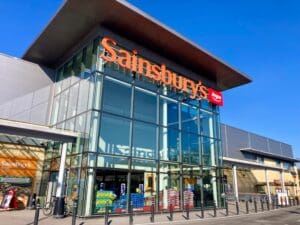
Sainsbury’s, the UK’s second-largest supermarket chain, has reported a 5% rise in food sales for the first half of the year, reflecting growing market share and increased demand for its premium range, Taste the Difference.
This growth has positioned Sainsbury’s as a top performer in the British grocery market, with a market share reaching 15.2%, just behind Tesco.
CEO Simon Roberts attributed the strong food sales to shifting consumer habits, with more customers opting to eat at home and treat themselves. “We’re making the biggest market share gains in the industry, with continued strong volume growth,” Roberts said, noting that shoppers were spending more on high-quality products as the cost of eating out rises.
The company has focused heavily on food, investing in its Aldi price-match scheme, launching 600 new products in its convenience stores, and driving loyalty through Nectar prices. Roberts estimated that 25% of Sainsbury’s weekly shoppers are new customers, indicating that these initiatives are paying off.
Despite strong performance in groceries, the group faced headwinds from its struggling Argos division. Argos sales fell by 5% in the six months to September 14, with unseasonable summer weather, consumer caution around big-ticket purchases, and challenges in online traffic impacting its sales. Sainsbury’s responded with promotional activity and discounting, helping to improve Argos’s performance in the latter part of the half-year period.
Total retail sales, excluding fuel, rose to £16.3 billion, up 3.1% from £15.8 billion last year. Headline pre-tax profits grew by 4.7% to £356 million, while statutory pre-tax profit, excluding discontinued operations, fell 52% to £131 million due to a planned £27 million investment across the business.
To address fluctuating demand, Sainsbury’s has also invested in AI and automation with Blue Yonder, a platform that forecasts product requirements for each store, helping reduce food waste and ensure better stock availability.
Roberts called for government attention to the concerns of British farmers, who could face challenges due to recent changes in inheritance tax on agricultural assets. He urged collaboration to maintain a productive food system, ensuring British farmers’ resilience in an evolving landscape.
Looking ahead to the festive season, Sainsbury’s is optimistic, with early sales in its Christmas range and robust food orders setting a positive tone. The company projects an underlying operating profit of between £1.01 billion and £1.06 billion for the full year, anticipating growth of 5-10%.
Clive Black, an analyst at Shore Capital, praised Sainsbury’s progress, stating, “Sainsbury’s has materially improved its core value credentials, and that is starting to be reflected in customer satisfaction.”
Sainsbury’s shares closed down 4.1% at 256¾p, as weaker revenues at Argos weighed on the company’s overall first-half performance. Despite the early challenges, Sainsbury’s expects a stronger performance for Argos in the second half, driven by festive shopping and Black Friday promotions.
Read more:
Sainsbury’s sees food sales rise, but Argos drags on first-half performance
Bank of England cuts rates to 4.75% as inflation cools and economic pr …
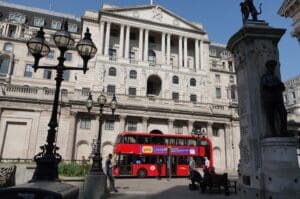
The Bank of England has cut interest rates by 25 basis points to 4.75%, marking its second reduction this year as inflationary pressures begin to ease and economic data signals a cooling in wage growth.
The nine-member Monetary Policy Committee (MPC) voted in favour of the reduction, following a steady trend in economic forecasts that suggest a potential downturn in inflationary pressures.
The rate cut comes despite new fiscal policies introduced in Chancellor Rachel Reeves’s recent budget, which are expected to increase costs for UK businesses, including a 1.2% rise in employers’ National Insurance contributions from April. Stuart Douglas, Director of Capital Markets at Centrus, noted, “Though the interest rate cut was expected, concerns linger about inflationary pressures stemming from both fiscal policy changes and the impact of Donald Trump’s US election victory on global trade.”
Trump’s proposed tariffs on imports have sparked fears of a trade war that could lead to higher costs for UK businesses and consumers, impacting both inflation and growth. Economists at the National Institute of Economic and Social Research warned that these factors might prompt the Bank of England to ease policy more cautiously.
At the Bank’s last meeting in September, MPC members took a cautious stance, keeping rates unchanged as some members, including Chief Economist Huw Pill, voiced concerns over high services inflation and wage growth. With regular wage growth at its weakest in two years, now down to 4.9%, and headline inflation dropping from 2.2% in August to 1.7% in September, the Bank’s decision to lower rates reflects shifting economic conditions.
Catherine Mann, an external MPC member known for favouring restrictive monetary policy, maintained her caution, arguing that tight policy remains necessary to curb inflationary behaviours. However, Bank of England Governor Andrew Bailey suggested the possibility of a “more aggressive” loosening cycle, balancing the need for caution with the benefits of rate cuts in a slowing economy.
Market data has reflected some of the budget’s pressures, as yields on UK government bonds rose by 25 basis points after the budget announcement—a significant increase excluding the aftermath of the 2022 mini-budget. Meanwhile, analysts at Nomura observed that easing inflation and slower wage growth allow the Bank more scope for rate cuts, projecting further reductions in the coming year.
Goldman Sachs forecasts that UK interest rates could fall to 3% by September 2025, though uncertainties remain. The rate cut has been met with cautious optimism among UK businesses. Mike Randall, CEO of Simply Asset Finance, commented that while the cut offers some relief, further support is essential to meet growth targets outlined in the Chancellor’s Autumn Statement.
“SMEs need greater certainty and more incentives to invest in long-term growth,” Randall said. “With this, the Government’s goal of rebuilding Britain can be realised.”
The latest cut aims to support a UK economy facing complex pressures from both domestic fiscal policies and international trade uncertainties, setting the stage for further potential adjustments as the Bank monitors the evolving economic landscape.
Read more:
Bank of England cuts rates to 4.75% as inflation cools and economic pressures ease
Berry Bros & Rudd families warn inheritance tax changes threaten l …
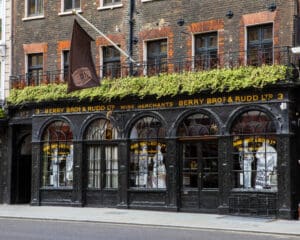
The Berry and Rudd families, owners of the esteemed London wine merchant Berry Bros & Rudd, have raised concerns over recent inheritance tax reforms that could threaten the future of their 376-year-old business.
The Labour government’s proposed 50% reduction in business property relief—which allows family-owned businesses to pass down assets tax-free—has left the families grappling with the prospect of significant new costs.
Emma Fox, CEO of Berry Bros & Rudd, described the policy change as a “body blow” to the family-run institution. The company’s property holdings, valued at around £90 million, include its historic headquarters on Pall Mall, a vast fine wine storage facility in Kent, and a 50% share in the Hambledon Vineyard in Hampshire.
Emily Rae, CFO of the business, highlighted the importance of the relief, saying, “It’s something the families have relied upon to keep the business within the family.” The shift has prompted the families to reconsider their long-term investment strategies, with potential changes to their balance sheet and future asset allocation.
Fox, a former executive at Asda and Bass, warned that the inheritance tax changes might hinder the company’s ability to make long-term investments, impacting its “patient capital” approach focused on generational growth rather than short-term returns. “This budget forces us to operate differently,” she added.
Berry Bros & Rudd’s concerns mirror those of other UK family businesses, with industry figures like Sir James Dyson denouncing the policy as a “family death tax” that could stymie both established businesses and aspiring entrepreneurs.
The warnings from Berry Bros & Rudd coincide with the release of its financial results for the year ending in March. The company reported a 50% drop in earnings before interest, taxes, depreciation, and amortisation (EBITDA), down to £10.1 million, and a pre-tax loss of £2.2 million. These declines reflect a challenging market landscape and substantial investments, including a £27 million commitment to expand its operations.
The investments included a joint venture with port house Symington to acquire Hambledon Vineyard and a stake in the Cotswolds Distillery. However, the business has faced headwinds in its US operations. Hotaling, its San Francisco-based spirits importer, which contributes about 30% of the company’s revenue, experienced a significant downturn as post-pandemic spirit sales dropped across the US market.
Despite these challenges, Fox noted improvements in Hotaling’s performance over the past six months and expressed confidence in outpacing competitors as the US market rebounds.
The wine merchant’s core business of fine wine retail and storage remains robust, with single-digit growth in retail and a 25% increase in storage revenues, driven by collectors paying premiums for temperature-controlled wine storage. Berry Bros & Rudd recently completed its first fine wine auction as part of an effort to diversify its offerings, while its events and entertainment division grew by 16%.
Lizzy Rudd, chair of Berry Bros & Rudd, underscored the board’s commitment to the business’s sustainability, approving a dividend of £13.10 per share—up from 794p last year—reflecting the “sustainable underlying growth in the business” despite challenging conditions.
Read more:
Berry Bros & Rudd families warn inheritance tax changes threaten legacy of historic wine business

