

In a major shift affecting family-owned businesses, the Chancellor has announced that Business Property Relief (BPR) will be reduced to 50% from April 2026, exposing thousands of family firms to inheritance tax for the first time in decades.
While previously exempt, business assets will now incur an effective 20% tax when passed to the next generation, jeopardising the financial stability of many firms.
The policy change, aimed at generating £500 million annually by 2027, will end full inheritance tax relief for businesses valued over £1 million, with exceptions for smaller firms. The government’s spending watchdog, the Office for Budget Responsibility, anticipates the changes could spur active tax planning among affected families, potentially resulting in lost tax revenue of £200 million to £300 million each year.
Family business advocates have criticised the move, with Neil Davy, CEO of Family Business UK, calling it a “betrayal of Britain’s hard-working family business owners.” He argues that BPR was essential in helping family businesses compete with corporate models like private equity, which are not subject to the same tax burdens.
Steve Rigby, co-CEO of Rigby Group, described the tax shift as “poorly conceived,” warning that family members may be forced to sell their businesses to cover tax liabilities, especially if they need to raise cash through dividends, which face an effective tax rate of 38%.
The inheritance tax relief reduction extends to investors in private companies, who will also see their relief capped at 50%. Rachel Nutt, a partner at MHA, warns that families holding private company shares must rethink their estate planning, as they could face significant tax bills. “For a £30 million business, this could mean a £5.8 million inheritance tax hit,” she explained, underscoring the potential financial strain on family-owned firms.
Chancellor Rachel Reeves defended the move, noting that only 0.3% of estates would be impacted. However, the changes raise questions for family business owners, who may now need to re-evaluate their succession and tax strategies to preserve business continuity across generations.
Read more:
Family businesses face new inheritance tax burden as relief cut to 50%
Category: Uncategorized
UK shoplifting offences reach record high as over 1.2m cases logged si …

Shoplifting in the UK has reached unprecedented levels, with over 1.2 million cases recorded by police forces since April 2019, according to data obtained by Personal Injury Claims UK.
The surge is particularly pronounced in 2023, with 344,709 offences logged—a 30% rise over the previous year—marking a new 20-year high in England and Wales.
The cost-of-living crisis is cited as a significant factor driving the increase, as economic pressures lead to higher theft rates across the country. Retailers like the Co-op and John Lewis have reported record incidents of theft, often accompanied by abuse and violence toward staff. These crimes have taken a financial toll, with losses from theft doubling to £1.8 billion this year and £1.2 billion spent on security measures, up from £950 million last year.
Despite the rise in offences, prosecution rates remain low. Retail leaders have accused the government of treating shoplifting as a low-priority crime, with a large gap between reported incidents and legal consequences. The Times found that in many cases, police have ceased pursuing charges, further emboldening offenders. The Metropolitan Police Service recorded the most cases of shoplifting among UK forces, with over 215,000 offences since 2019.
The surge in retail crime has put pressure on staff, who face a growing risk of injury during confrontations with shoplifters.
As retailers invest heavily in anti-theft measures, questions remain about whether the government and law enforcement agencies will address the underlying issues contributing to this rise in shoplifting.
Read more:
UK shoplifting offences reach record high as over 1.2m cases logged since 2019
Could motor finance become the next PPI scandal?

The UK’s motor finance industry could be heading for a financial storm reminiscent of the Payment Protection Insurance (PPI) scandal.
A recent Court of Appeal ruling found car dealerships and lenders liable for failing to disclose commissions to customers, a precedent that could unleash billions in compensation claims.
For decades, PPI haunted UK banks, ultimately costing them around £50 billion in fines and compensation. Now, analysts fear motor finance could follow a similar trajectory. The Financial Conduct Authority (FCA) began investigating potential misselling of motor finance commissions in January, with banks like Lloyds, Close Brothers, and Barclays setting aside provisions in anticipation of compensation claims. This judgment has since raised the stakes, with the potential industry-wide cost now estimated at £6 billion to £16 billion, according to Shore Capital.
Banks and car dealerships are now required to disclose commissions to customers and obtain explicit consent, which has led to operational disruptions, manual processing of finance offers, and temporary suspension of lending by some banks. The Finance and Leasing Association (FLA) warns that claims management companies could seize on this legal uncertainty, mirroring the surge in PPI claims.
Lenders are already bracing for potential losses. RBC Capital Markets has increased its estimated compensation for Lloyds from £2.5 billion to £3.2 billion, while Santander UK’s costs are expected to climb from £1.1 billion to £1.4 billion. Shares in Lloyds have dropped by over 10%, erasing about £3 billion from its value, while Close Brothers has seen its stock plunge nearly 70% this year.
This latest challenge could extend beyond motor finance, applying to other financial products with undisclosed commissions. Claims for compensation could continue to mount if the Supreme Court upholds the ruling, placing further pressure on UK banks and sparking a new wave of claims and regulatory scrutiny.
Read more:
Could motor finance become the next PPI scandal?
Brookfield buys £1.75bn stake in Orsted’s UK offshore wind farms

Brookfield, chaired by former Bank of England governor Mark Carney, has acquired a 12.45% stake in four UK offshore wind farms owned by Orsted for £1.75 billion ($2.3 billion).
This significant deal includes the world’s largest single offshore wind farm, Hornsea 2, located 55 miles off the Yorkshire coast with a capacity of 1.32 gigawatts—enough to power approximately 1.4 million homes.
This acquisition represents about 20% of the £8.75 billion disposal target set by Orsted for 2026, a strategy to reduce costs and reinforce its balance sheet amid rising interest rates and supply chain challenges affecting the sector’s profitability. Orsted operates over 5GW of offshore wind capacity, with an additional 5GW under construction, including Hornsea 3 and 4. The latter projects recently secured contracts in the UK’s clean power auction, for which the government boosted the budget to £1.5 billion to drive renewable investments.
Connor Teskey, CEO of Brookfield Renewables, stated that UK offshore wind assets are “a critical part of the energy mix,” echoing Chancellor Rachel Reeves’s assertion that this deal is a “huge vote of confidence in the UK’s clean energy sector.” Since Labour’s July election win, the government has prioritised net zero targets by 2050, increasing support for renewables and launching Great British Energy with £8.3 billion in taxpayer backing.
For Brookfield, this acquisition builds on its recent foray into the UK wind market following its purchase of Banks Renewables, rebranded as OnPath, which operates 11 onshore wind farms across the UK. This marks Brookfield’s first UK offshore wind venture, adding to its 11.1GW global wind capacity, more than half of which is in North America.
Read more:
Brookfield buys £1.75bn stake in Orsted’s UK offshore wind farms
Aston Martin bleeding £1m a day as supply chain issues and China dema …

Aston Martin Lagonda, Britain’s only carmaker listed on the London Stock Exchange, is grappling with substantial financial setbacks, missing all 2024 targets as production cuts, supply chain issues, and a steep drop in Chinese demand impact performance.
The luxury automaker, led by new CEO Adrian Hallmark, is burning through cash at over £1 million a day, with net debt climbing to £1.21 billion—nearly 50% higher than a year ago.
The company, controlled by executive chairman Lawrence Stroll alongside Saudi Arabia’s PIF and Chinese carmaker Geely, has faced ongoing challenges. After a disappointing third quarter, in which Aston Martin reported a £12 million loss despite an 8% revenue rise to £391 million, it revised its outlook. Hallmark, formerly with Bentley, cut production targets by 14% to 6,000 vehicles annually and has recalibrated growth expectations.
One of the biggest blows to Aston Martin has been the plummet in demand for the DBX 4×4, particularly in China—the world’s largest auto market—where sales of the model have dropped by 54%. Previously Aston’s best-seller, the DBX now accounts for only 30% of sales. The company’s overall volumes remain down 17% this year, with revenues slipping 4% to £994 million.
In response to these setbacks, Aston Martin has abandoned its goal of achieving cashflow break-even by the end of 2024. Hallmark remains optimistic about the company’s “diverse, dynamic, and desirable portfolio,” asserting that a steady supply chain and stabilised markets could restore momentum. “We are on track to meet our revised full-year guidance,” he said, underscoring a renewed focus on adjusting production volumes to align with market conditions and supply limitations.
Aston Martin’s stock rose slightly following the announcement, closing at 111p, but shares remain far from the £4.3 billion valuation the company boasted when it floated six years ago. As the carmaker faces increasing competition in the luxury electric segment, all eyes will be on its ability to stabilise operations and capture market share amid mounting challenges.
Read more:
Aston Martin bleeding £1m a day as supply chain issues and China demand slump hit targets
Land Rover and Range Rover hybrid sales surge as EV uncertainty shifts …

Amid ongoing uncertainty around electric vehicle (EV) adoption timelines, demand for Land Rover and Range Rover plug-in hybrids (PHEVs) has surged.
Jaguar Land Rover (JLR), the West Midlands-based, Indian-owned automotive group, has reported a 29% increase in global sales of its PHEV models for the first half of its financial year, ending in September.
This shift towards hybrids reflects changing consumer priorities, with many buyers opting for PHEVs as a transition step towards full EVs. JLR sees PHEVs as a “stepping stone” technology, enabling customers to familiarise themselves with electric driving while alleviating “range anxiety” through a hybrid petrol engine. For longer journeys, the hybrid system switches seamlessly from electric to fuel, providing flexibility for those uncertain about fully committing to an EV.
PHEVs are becoming a popular choice in the UK market, where hybrid sales have risen by 26% this year, surpassing diesel’s share. JLR’s Defender and Range Rover models have seen particularly strong demand, with global PHEV sales up 47% for Range Rover and 23% for Defender, building on a 59% increase in global PHEV sales in the year to March. In the UK alone, JLR’s PHEV sales reached 20,800 units, a 55% rise from last year.
Mark Camilleri, JLR’s electric vehicle programme director, highlighted that PHEVs provide an introductory ownership experience that includes both home and public charging before buyers consider transitioning to fully electric vehicles. Currently, JLR’s Range Rover PHEVs offer an electric-only range of 70 miles—well above the UK driver’s average daily mileage of 20 miles—allowing for zero-emission daily commutes in urban settings.
Looking ahead, JLR has committed to introducing fully electric models of the Range Rover, Defender, and Discovery by the end of the decade. Jaguar, JLR’s sister brand, will go fully electric next year, signalling the group’s dedication to electrification while balancing consumer needs for hybrid solutions in the meantime.
Read more:
Land Rover and Range Rover hybrid sales surge as EV uncertainty shifts buyer focus
Entrepreneurs set to leave the UK as it is no longer the country for b …

The UK’s latest Budget has cast uncertainty over its reputation as a hub for entrepreneurship, with business leaders warning of a potential exodus of talent and investment.
Shalini Khemka CBE, CEO of the entrepreneurial community E2E, expressed disappointment in the Budget’s new tax measures, which she believes will deter entrepreneurs and business owners. “Today’s budget shows that the current government is not the government for business,” she said. “The changes announced by Chancellor Rachel Reeves will target the very people who help grow the economy.”
The Budget includes several tax adjustments that impact both small and large businesses, including a rise in Capital Gains Tax, an increase in employers’ National Insurance contributions to 15%, and a cap on Business Property Relief at £1 million with a 50% discount on the remainder. Business Asset Disposal Relief (previously Entrepreneurs’ Relief) and inheritance tax (IHT) on AIM-listed shares will also be subject to new limitations. AIM shares, now subject to a 20% IHT rate, will see a cut from the prior 40% relief, a move Khemka warns could reduce liquidity and investment options for SMEs.
In addition, the abolishment of Non-Dom status, an increase in stamp duty, and the introduction of VAT on private schools add further barriers for international entrepreneurs considering the UK as a base for their ventures. Khemka argues these measures create an environment unfavourable to overseas talent: “This sends a clear message that we are not welcoming to entrepreneurs from overseas who wish to start their businesses in the UK,” she said.
The response from the business community has been swift. According to Khemka, many entrepreneurs in her network now see relocating abroad as an increasingly attractive option. “For many, this budget has solidified any confusion around whether to move abroad, and they will seek to relocate as quickly as possible,” she noted, predicting a potential downturn in growth as the UK becomes less competitive.
With rising taxes and reduced reliefs, the UK’s reputation as a pro-business destination faces significant challenges. Experts warn that without a more supportive approach, the UK may struggle to retain the talent and innovation essential for economic growth.
Read more:
Entrepreneurs set to leave the UK as it is no longer the country for business
Budget 2024: £40bn tax hike through NIC and Capital Gains Tax leaves …

In her debut Budget, Chancellor Rachel Reeves has introduced £40bn in tax hikes, largely focused on increasing employer National Insurance Contributions (NICs) and implementing a temporary repatriation facility for non-domiciled individuals.
According to Nimesh Shah, CEO of Blick Rothenberg, while pre-Budget rumours had suggested sweeping tax changes, the actual announcements were more focused, though still significant in impact.
The primary tax increase is a £25bn rise from NIC changes. Starting April 2025, employer NICs will jump by 1.2 percentage points to 15%, with a lower NIC threshold of £5,000. For businesses, this means an additional cost of £615 per employee, creating substantial expense for SMEs. A business with five employees earning £50,000 each will see their NIC bill increase by over £5,500.
Capital Gains Tax (CGT) also saw adjustments, with rates rising to 18% for basic-rate taxpayers and 24% for higher-rate taxpayers. Although CGT changes were less severe than anticipated, entrepreneurs will feel the impact, as the Business Asset Disposal Relief’s tax-saving potential falls to £60,000 by 2026. The carried interest regime for private equity also faces a hike, effectively increasing CGT on carried interest to 32% from April 2025, and further bringing it within the income tax and NIC scope from 2026.
The Budget introduced a temporary repatriation facility for non-domiciled individuals, allowing them to remit overseas funds at a reduced 12% tax rate for two years. This initiative is expected to generate £12.7bn in revenue. However, the move has left many non-doms considering their options, especially with the looming inheritance tax implications of previously announced reforms.
Family businesses face new challenges with a £1 million cap on Business Property Relief and a 50% discount thereafter. Although these changes take effect in 2026, Shah advises early planning, noting that anti-forestalling measures on lifetime transfers could complicate efforts.
Shah’s overall take on the Budget is mixed; while it avoided the more severe changes that many feared, it leaves room for more tax hikes in the coming Spring Budget. Businesses and investors will need to monitor developments closely as they navigate the evolving fiscal landscape.
Read more:
Budget 2024: £40bn tax hike through NIC and Capital Gains Tax leaves businesses on edge
Budget 2024: Record £40bn tax hike set to slow UK economic growth, wa …
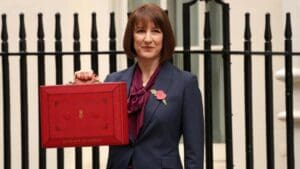
Chancellor Rachel Reeves has introduced a record-breaking £40bn tax rise in her first Budget, which the Office for Budget Responsibility (OBR) warns could stifle long-term economic growth.
According to the OBR, Britain’s economy will expand by just over 1% this year, peaking at 2% in 2025, but remaining below its potential growth rate of 1.66% thereafter.
The biggest change comes from a 1.2 percentage point hike in National Insurance contributions (NICs) for employers, bringing the rate to 15% from April and expected to raise £25bn. This move has been met with concern from business leaders and analysts who fear it will add to the financial strain on companies.
“This is a tough Budget for business,” said Rain Newton-Smith, CBI Chief Executive. “While the Corporation Tax Roadmap offers stability, the NICs increase and other cost hikes will hurt businesses, making it more costly to hire or raise wages.” Newton-Smith emphasised that private sector investment is essential to achieving the UK’s growth targets and urged the government to work closely with businesses to unlock potential investments, particularly in infrastructure and green energy.
The Budget also includes an increase in Capital Gains Tax (CGT), with the lower rate rising from 10% to 18% and the higher rate from 20% to 24%, while rates on residential property remain the same. Muj Choudhury, CEO of RocketPhone, expressed concern over the CGT changes, particularly their impact on Britain’s tech and AI sectors, which depend on high-risk capital for early-stage growth. “This reform sends the wrong message as we try to establish the UK as a global AI hub. Increasing CGT creates barriers for tech entrepreneurs, who are already hesitant given rising taxes and costs,” he said.
For small businesses, the rise in NICs is likely to present significant challenges. Todd Davison, MD of Purbeck Personal Guarantee Insurance, warned that the tax hike could be “a fatal blow” for small enterprises still recovering from the pandemic. “This increase will make it more costly to run a business and could limit hiring, raise prices, or even force some owners to close down,” he added, noting that businesses in labour-intensive sectors like hospitality, retail, and leisure may struggle most.
Meanwhile, the Budget includes positive news for small businesses, with the Employment Allowance increase easing the NIC burden for companies with smaller payrolls. Michelle Ovens CBE, founder of Small Business Britain, noted that while small businesses may feel the impact of the NIC and minimum wage hikes, many will benefit from business rates relief and reduced tax pressure on high street companies. “There’s reason for optimism,” she said. “The government is clearly recognising the contribution of small, local businesses.”
The freeze on inheritance tax thresholds has also been extended until 2030, drawing mixed reactions. Ms Reeves defended the tax hikes, claiming they were necessary to address “black holes” in public finances and to fund long-overdue compensation for victims of the Post Office Horizon and infected blood scandals.
While Reeves’s Budget aims to shore up public finances and fund critical sectors like healthcare—with an extra £22.6bn for the NHS—many business leaders worry the measures could hamper the UK’s growth ambitions. Stephen Phipson, Chief Executive of Make UK, acknowledged that while the Budget presents challenges, especially for SMEs, the inclusion of an Industrial Strategy and continued support for programmes like Made Smarter offers a clear path for growth in manufacturing.
As businesses across the UK absorb the effects of the Budget, the long-term impact on investment, hiring, and overall economic stability remains uncertain. The £40bn tax increase underscores the government’s commitment to balancing the books, but critics argue it risks undermining Britain’s competitive edge and discouraging the private sector investment needed to drive sustained growth.
Read more:
Budget 2024: Record £40bn tax hike set to slow UK economic growth, warns OBR

