

The UK tech industry is on edge as speculation mounts over potential changes to Capital Gains Tax (CGT) in the upcoming Autumn Budget.
Leading audit and advisory firm Blick Rothenberg has expressed concerns that such changes could have a detrimental impact on the fintech ecosystem, a key driver of the UK’s global tech reputation.
Simon Gleeson, a partner at the firm, commented: “This week has been turbulent for the UK tech sector. Keir Starmer’s ambiguous stance on potential tax rises, as hinted by Rachel Reeves at the International Investment Summit 2024 in London, has only heightened uncertainty.”
A letter signed by 66 fintech leaders, warning of a potential exodus if CGT increases, has added to the growing anxiety. Gleeson noted that some employees at Monzo are reportedly looking to cash out before the budget, fearing higher tax rates.
He added: “Start-ups and founders, known for their resilience and vision, may face what feels like punitive measures if taxed more heavily for long-term rewards. Such changes risk sending negative signals to international investors, undermining the UK’s appeal as a hub for talent and innovation.”
Despite the uncertainty, the government announced a positive note at the summit, highlighting £63 billion in new investment and 38,000 job creations. However, the upcoming Budget remains a significant source of apprehension.
Read more:
Capital Gains Tax concerns loom over UK tech sector ahead of Autumn Budget
Category: Uncategorized
UK retail sales rise unexpectedly in September despite economic uncert …

UK retail sales rose unexpectedly in September, defying analyst predictions of a contraction, as consumers increased spending on technology despite impending tax rises and economic uncertainties.
According to the Office for National Statistics (ONS), retail transactions grew by 0.3% in September, building on a strong 1% increase in August. Analysts had forecast a 0.4% decline for the month.
While technology equipment saw strong sales, supermarket spending faltered, with consumers cutting back on luxury food items amidst concerns about rising costs. Retail sales are still 0.2% lower than pre-pandemic levels, highlighting the ongoing challenges faced by the sector.
Over the three months to September, sales increased by 1.9%, the joint largest quarterly rise since July 2021. Hannah Finselbach, a senior statistician at the ONS, noted: “Tech stores reported a notable rise in sales, which offset weaker performance in supermarkets due to bad weather and cautious consumer spending on luxury items.”
Consumer Confidence and Spending Patterns
Erin Brookes, European retail and consumer lead at Alvarez & Marsal, attributed the growth to factors such as record rainfall and early winter chills, which boosted demand for warm clothing. “While consumers remain cost-conscious, budgets are somewhat less strained than they were a year ago,” Brookes noted, though she warned that uncertainty ahead of the autumn budget could impact consumer confidence.
Oliver Vernon-Harcourt, head of retail at Deloitte, pointed out a “back-to-school boost” in September, with strong sales of computers, clothing, and footwear. However, he cautioned that consumers were still holding back on big-ticket purchases, while sales of smaller non-essential items helped to prop up sales values.
Looking Ahead to the Autumn Budget
The rise in retail spending comes in the lead-up to Chancellor Rachel Reeves’s first budget on October 30, where tax increases and spending cuts amounting to £40 billion are expected. Reeves and Labour leader Sir Keir Starmer have defended the need for “tough decisions” to counter higher-than-anticipated in-year spending inherited from the previous Conservative government. Their remarks have sparked concerns among consumers and businesses about the potential economic impact.
Consumer confidence has already shown signs of fragility. The GfK consumer confidence index dropped to minus 20 in September, down from minus 13 the previous month, reflecting growing concerns about the cost-of-living crisis and the anticipated measures in the upcoming budget.
Potential for Future Growth
Despite current concerns, the economic outlook could improve further in the coming months, which may support retail growth. The Bank of England is expected to cut interest rates by 25 basis points in both November and December, bringing the base rate down to 4.5%. This follows a drop in inflation to a three-year low of 1.7% in September, which has helped ease pressure on household budgets.
With wage growth remaining robust at over 4%, surpassing inflation, households’ living standards are gradually improving. However, many consumers have increased their savings in the post-pandemic period, potentially limiting demand for discretionary spending. How this balance between cautious saving and improving wages will play out for retailers remains to be seen as the year draws to a close.
Read more:
UK retail sales rise unexpectedly in September despite economic uncertainties
Elon Musk branded ‘promoter of evil’ by top EU official in clash o …
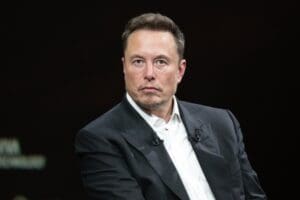
In a sharp escalation of tensions between Brussels and Elon Musk, one of the European Union’s top officials, Věra Jourová, has branded the billionaire tech entrepreneur a “promoter of evil” over his handling of X, formerly known as Twitter.
Jourová, who oversees the EU’s efforts against online misinformation and hate speech, accused Musk of enabling the spread of harmful content, including antisemitism, on the social media platform.
Ms Jourová, who has served as the EU’s vice president for values and transparency, made her comments as she prepares to leave Brussels after a five-year term. Speaking to Politico, she stated, “We started to relativise evil, and he’s helping it proactively. He’s the promoter of evil.”
The EU official’s remarks come amid ongoing criticism of X for its content moderation policies since Musk took over the platform in 2022. Under Musk’s ownership, X has rolled back certain moderation rules, prompting the EU to accuse the company of violating social media regulations.
Ms Jourová specifically targeted X for becoming “the main hub for spreading antisemitism,” echoing concerns about the platform’s failure to curb hate speech. She has been a vocal critic of Musk’s policies, particularly the introduction of paid blue-tick verification, which the EU argues has enabled the spread of misinformation.
The European Commission has threatened to fine X for violating the EU’s Digital Services Act (DSA), which regulates online platforms. Musk, however, claims that Brussels offered him a “secret deal” to avoid fines, a claim the EU denies.
This dispute is part of a broader clash between the EU and Musk’s platform. X has faced accusations of non-compliance with advertising transparency rules and allowing content that promotes Hamas, though no formal charges have been brought regarding this issue.
As X’s tensions with Brussels continue to grow, Musk is reportedly considering blocking access to X within the EU. This move would be a significant escalation in the dispute and could have major implications for how online platforms operate in Europe under the bloc’s strict regulations.
With more EU regulations on the horizon, the war of words between Musk and Brussels is unlikely to die down anytime soon.
Read more:
Elon Musk branded ‘promoter of evil’ by top EU official in clash over online moderation
HMRC imposes £13.7 million in penalties following National Minimum Wa …
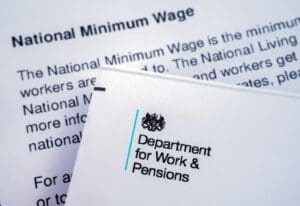
HMRC has ramped up its enforcement of National Minimum Wage (NMW) compliance, resulting in £13.7 million in penalties levied against employers during the 2022/23 tax year.
This enforcement push follows the government’s increasing focus on NMW violations, supported by a doubling of HMRC’s enforcement budget to £27.8 million compared to 2015/16.
A recent report by the Department for Business and Trade (DBT) highlights the impact of this enforcement, revealing that more than 108,000 workers were paid NMW arrears after investigations into non-compliance. HMRC closed nearly 3,200 cases, with 900 of them uncovering unpaid wages. The report underscores HMRC’s growing use of the Geographical Compliance Approach (GCA), a targeted three-tiered enforcement method designed to bring employers in specific regions into compliance with NMW regulations.
Under the GCA, employers are encouraged to address NMW arrears voluntarily, but if issues persist, HMRC can impose penalties of up to 200% of the arrears owed. During 2024, three more regions—Liverpool, East Midlands, and another to be announced—will be added to the GCA, following the addition of locations like Belfast, Cornwall, and Watford.
Kyle Newton, Head of National Minimum Wage at Azets, commented on the report: “The sheer scale of HMRC enforcement highlights how widespread NMW non-compliance is. Businesses must review their payroll records and ensure they are adhering to the rules before they face unexpected penalties and reputational damage.”
The government remains clear on its stance, with the DBT stating: “The enforcement of the minimum wage is essential, and we are committed to cracking down on employers who break the law across all sectors.”
The penalties and arrears identified by HMRC in the past year reflect the heightened awareness among workers about their rights, partly driven by campaigns like “Check Your Pay” and direct communication from HMRC to millions of workers.
Businesses across the UK are being urged to take proactive steps to ensure NMW compliance, particularly in light of expected increases to the minimum wage rate, which is predicted to exceed £12 per hour in April 2025. Employers who fail to address discrepancies in pay or working time practices could face further penalties, including public naming by HMRC.
As HMRC’s enforcement activity continues to grow, businesses should review their payroll controls and seek professional advice to mitigate financial and legal risks.
Read more:
HMRC imposes £13.7 million in penalties following National Minimum Wage enforcement action
Tesco and Shell to power stores and EV stations with output from UK’ …

Tesco and Shell have struck a deal to purchase the entire output from the Cleve Hill solar farm, the UK’s largest solar project, which was initially planned to power 100,000 homes.
The agreement sees 65% of the farm’s electricity going to Tesco’s supermarkets, while Shell will manage the remaining 35% for its growing network of electric vehicle (EV) charging stations. The solar farm is expected to go online in early 2025.
The Cleve Hill project, situated on 860 acres of the Kent coast near Faversham, has been a source of controversy since its approval, with local opposition focused on its impact on the Graveney Marshes, a site renowned for its wildlife. Despite protests, the project was greenlit in 2020 by then energy secretary Alok Sharma. The farm, once pitched as a solution to power local homes, is now being used to meet the demands of corporate giants.
Vicky Ellis of CPRE (Campaign to Protect Rural England) Kent voiced frustration, stating: “This project was approved on the premise that it would power homes, not petrol stations and supermarkets. The irony of a major supermarket and an oil giant benefitting from a project labelled as a green energy initiative is not lost on us.”
The project, financed by US-based Quinbrook Infrastructure Partners, will include 560,000 solar panels, generating 373 megawatts (MW) of power—equivalent to half the output of a small gas-fired power station. Some of the solar panels will be mounted on steel frames almost as tall as a double-decker bus due to flood risks in the area.
Tesco’s power purchase agreement with Cleve Hill will account for up to 10% of its UK electricity demand, helping the supermarket meet its sustainability targets. “Cleve Hill solar park, with its ability to generate up to 10% of our UK electricity demand, joins a number of other Power Purchase Agreements we’ve announced over the last five years,” said Tesco CEO Ken Murphy.
Meanwhile, Shell’s portion of the output will support its EV charging network across the UK. With a 10-year agreement in place, Shell’s involvement underlines its ambitions in the renewable energy market, despite ongoing criticism of its core oil business. Shell Energy Europe’s head of power trading, Rupen Tanna, emphasised that renewable energy deals like Cleve Hill are essential to achieving the UK’s net-zero targets.
The Cleve Hill solar farm is expected to be eclipsed by even larger projects approved by the UK government, including the 600MW Cottam solar farm in Lincolnshire. Solar Energy UK’s CEO Chris Hewett noted that the industry aims to triple solar capacity by 2030, stating, “We can expect to see more deals like these in the coming years, as the industry scales up to reach 50 gigawatts of generation capacity.”
Despite its environmental benefits, Cleve Hill continues to spark debate. Ms Ellis and other critics argue that the transformation of the marshlands into a commercial energy hub compromises its natural beauty and wildlife, undermining the original promise of green energy for local homes. As the UK races to expand renewable energy infrastructure, the tension between corporate interests, environmental sustainability, and local communities remains an ongoing issue.
Read more:
Tesco and Shell to power stores and EV stations with output from UK’s largest solar farm, originally meant for homes
Hollywood director accuses Elon Musk of copying designs for Tesla Robo …

Hollywood director Alex Proyas, known for his work on the 2004 sci-fi film I, Robot, has accused Elon Musk of copying design elements from the movie for Tesla’s latest products.
In a post on X (formerly Twitter), Proyas shared side-by-side images of his film’s robots and futuristic vehicles next to Musk’s Tesla Optimus robot and the newly revealed Cybercab.
Proyas captioned the post, “Hey Elon, can I have my designs back please?” referencing Tesla’s recently announced $30,000 two-seater Cybercab, which features butterfly-wing doors and lacks a steering wheel—bearing a striking resemblance to the self-driving cars in I, Robot, which was based on Isaac Asimov’s 1950 book of the same name.
Musk also showcased an updated version of Tesla’s Optimus robot, a bipedal humanoid robot, which Proyas suggested mirrors the “NS-5” robots in his film that eventually turn against their human creators. Tesla’s Cybercab is expected to enter mass production by 2026, and the Optimus robot remains under development as part of the company’s growing focus on AI and robotics.
However, some fans of the film were quick to point out that the car driven by Will Smith’s character in I, Robot was based on an Audi concept car included in the film as part of a product placement deal, making the accusation of imitation less straightforward.
Set in 2035, I, Robot follows Smith’s character, a detective wary of robots created to serve humanity, as he uncovers an AI-driven conspiracy to control mankind. The film’s themes of technology, AI, and potential human subjugation resonate with Musk’s own warnings about the risks posed by unchecked artificial intelligence.
Musk, a known admirer of Asimov’s work, titled Tesla’s unveiling event “We, Robot,” in homage to the author. Musk has previously credited Asimov’s writings with inspiring the creation of SpaceX, his space exploration company, and described the books as “really great.”
While Proyas’ comments were made in a light-hearted tone, the similarities between Tesla’s new products and the futuristic designs in I, Robot have sparked online debate. Whether these resemblances are intentional or coincidental, they highlight the ongoing influence of science fiction on real-world technological innovation.
Proyas, who also directed the cult hit The Crow, is no stranger to sci-fi storytelling, but the question remains: are Tesla’s designs a nod to his film, or is it simply a case of life imitating art?
Read more:
Hollywood director accuses Elon Musk of copying designs for Tesla Robots and Cybercab
IMF urges Rachel Reeves to raise taxes and rein in spending to stabili …

The International Monetary Fund (IMF) has called on Chancellor Rachel Reeves to introduce tax increases and tighten government spending in the upcoming budget, warning that delaying such measures could exacerbate the UK’s public finance problems.
In a pre-released section of its *Fiscal Monitor* report, the Washington-based organisation highlighted the UK and the United States as countries where borrowing rates have surged beyond pre-pandemic levels, raising concerns about the sustainability of their national debts.
“With debt risks elevated in most countries and debt growing at a faster pace than in the pre-pandemic years in large countries (United Kingdom, United States), postponing adjustments would only make the required correction larger,” the IMF warned.
Reeves is expected to announce a series of tax hikes during her first budget on 30 October, with potential changes such as subjecting employers’ pension contributions to national insurance and raising capital gains tax rates. Both she and Labour leader Sir Keir Starmer have emphasised the need for “tough decisions” to bring the public finances under control, although they have also committed to increasing public sector investment to drive economic growth.
Labour claims to have inherited a £22 billion shortfall in public finances from the previous Conservative administration, a figure compounded by existing fiscal plans set by former chancellor Jeremy Hunt. These plans include £20 billion in real-terms budget cuts for unprotected government departments.
According to estimates from the Institute for Fiscal Studies (IFS), taxes need to rise by £25 billion annually to avoid a return to austerity, which Labour has pledged to prevent.
The IMF estimates that global debt is set to exceed $100 trillion (93% of global GDP) this year, criticising governments for failing to take control of their public finances. It highlighted that fiscal policies have increasingly leaned towards higher government spending, contributing to greater fiscal policy uncertainty and more entrenched political resistance to tax increases.
Labour, in its election manifesto, ruled out raising key revenue-generating taxes like income tax, national insurance, and VAT, which together account for 75% of public income. However, the IMF pointed to rising spending pressures from the green transition, an ageing population, and security needs as growing challenges for governments worldwide.
This call from the IMF comes as developed nations, including the US and France, grapple with ballooning deficits. The US is projected to run a $1.8 trillion deficit this year, partly due to subsidies from the Inflation Reduction Act. France, which faces a deficit of around 6% of GDP, recently introduced a budget featuring £60 billion in tax hikes and spending cuts to tackle its debt.
The IMF stressed that there is a strong case for fiscal policies to focus on debt sustainability and rebuilding fiscal buffers “now rather than later.”
In response to the IMF’s warning, a Treasury spokesperson said: “The government has been honest about the scale of the challenge we have inherited from the previous administration, including a £22 billion black hole in the public finances. The budget will be built on the rock of economic stability, including robust fiscal rules that were set out in the manifesto. This includes moving the current budget into balance, so that day-to-day costs are met by revenues, and debt falling as a share of the economy by the fifth year.”
With Reeves’ budget looming, it is clear that the balancing act between addressing the fiscal challenges and stimulating growth will shape the direction of the UK’s economic policy in the months and years ahead.
Read more:
IMF urges Rachel Reeves to raise taxes and rein in spending to stabilise UK public finances
Former Asda boss Mohsin Issa invests £10m in sports supplement firm a …

Billionaire retail mogul Mohsin Issa, former CEO and co-owner of Asda, has made his first major investment since stepping down from the supermarket giant, putting £10 million into Liverpool-based sports supplements company, Applied Nutrition. The company is preparing to go public on the London Stock Exchange.
Issa’s investment in Applied Nutrition comes through his investment vehicle, Boulder Investco Limited, and marks his initial foray into new ventures following his departure from Asda’s leadership in September. His exit followed a dip in sales that was publicly criticised by Asda’s chairman, Lord Rose. Despite stepping down as CEO, Issa remains a co-owner of Asda with a 22.5% stake and holds a seat on the board.
This investment also signals a shift in Mohsin Issa’s business trajectory as he and his brother, Zuber Issa, untangle their joint business interests. The brothers, who are worth an estimated £5 billion, have built a vast empire, including petrol station operator Euro Garages, which became a launchpad for their £6.8 billion takeover of Asda in 2021 alongside private equity firm TDR Capital.
In recent months, the Issa brothers have divided their interests, with Zuber selling his 22.5% stake in Asda to TDR Capital in June. Zuber also stepped down as co-CEO of their forecourt business, EG Group, after acquiring the UK operations for £228 million, which he now runs independently. Despite the split, Mohsin has downplayed any rumours of a rift, maintaining that the brothers “get on exceptionally well.”
Applied Nutrition, which produces protein supplements and other sports nutrition products, is chaired by Andy Bell, founder of investment platform AJ Bell. The company has set the price range for its initial public offering (IPO) at between 136p and 160p per share, giving it an estimated valuation of between £340 million and £400 million.
Mohsin Issa joins a group of four prominent North West entrepreneurs backing the IPO, including Home Bargains founder Tom Morris and Liverpool property developer George Downing. Together, the investors are expected to hold up to 7% of the company following the IPO.
Applied Nutrition’s growth and upcoming stock market listing are further bolstered by a significant 32% stake from JD Sports, the Bury-based retail giant. Existing shareholders plan to sell approximately 137 million shares, valued at between £186 million and £220 million.
This investment marks another step in Issa’s post-Asda ventures, as he continues to focus on backing successful entrepreneurs and UK businesses. In a joint statement with his brother, Mohsin Issa said: “Our passion is backing great entrepreneurs and helping them to build strong UK businesses that drive growth and create jobs.”
Applied Nutrition did not comment directly on Issa’s involvement but is expected to benefit from his significant retail and entrepreneurial experience as it moves closer to its public listing.
Read more:
Former Asda boss Mohsin Issa invests £10m in sports supplement firm ahead of London IPO
Starmer hints at employer national insurance rise but pledges to keep …

Sir Keir Starmer has left the door open for an increase in employers’ national insurance contributions, despite Labour’s election pledge not to raise taxes on working people.
The prime minister confirmed that “tough” decisions would need to be made in the upcoming budget, but stressed Labour’s commitment to its manifesto promises.
During the election campaign, Labour vowed not to increase national insurance. However, while Starmer and Chancellor Rachel Reeves have reiterated that this pledge covers taxes on workers, they have stopped short of ruling out an increase in the portion paid by employers.
Reeves warned businesses that taxes would need to rise to ensure economic and fiscal stability. She argued that businesses are more concerned about political stability than tax levels, and promised a “business tax roadmap” to provide certainty for investors in the years ahead.
She said that employers’ contributions were “not in the manifesto”, arguing: “We were really clear in our manifesto that we weren’t going to increase the key taxes paid by working people.”
Labour’s manifesto stated: “Labour will not increase taxes on working people, which is why we will not increase national insurance, the basic, higher, or additional rates of income tax, or VAT.”
Laura Trott, the shadow chief secretary to the Treasury, said: “Regardless of what they say, it’s obvious to all that hiking employer national insurance is a clear breach of Labour’s manifesto.”
However, Labour sources pointed out that Trott had criticised Reeves during the campaign for “conspicuously” refusing to rule out increasing employer contributions.
The potential rise in employer national insurance contributions has drawn criticism from some business leaders, who argue that taxing employers risks stifling jobs and enterprise. The Federation of Small Businesses cautioned that such a move could place undue pressure on small employers.
Read more:
Starmer hints at employer national insurance rise but pledges to keep tax promises for workers

