

The UK is set to create nearly 38,000 jobs and attract £63 billion in investment following the International Investment Summit, which focused on infrastructure, technology, and net zero initiatives.
This year’s record-breaking total more than doubles the £29.5 billion secured at last year’s Global Investment Summit.
The government attributed the surge in investment to planning reforms, expansion of AI and data centre infrastructure, and increased funding for renewable energy projects.
Among the major announcements, Blackstone committed £10 billion to build one of Europe’s largest data centres in Blyth, Northumberland, creating 4,000 jobs. Meanwhile, Octopus Energy pledged £2 billion to build four new solar farms and a battery in Cheshire, supporting green energy generation for 80,000 homes.
Imperial College London revealed a £150 million investment to develop a new research campus as part of its DeepTech ecosystem in West London. Additionally, CCUS giants Eni, BP, and Equinor secured £8 billion in private investment to launch carbon capture projects, supporting 50,000 jobs in the long term.
CyrusOne, CloudHQ, and CoreWeave announced significant data centre investments, collectively amounting to billions, while SeAH Wind expanded its Teesside operations with £225 million for wind manufacturing, creating 750 jobs.
In the healthcare and life sciences sectors, Eli Lilly announced a £279 million partnership with the government to address obesity and launch its innovation accelerator for early-stage life sciences companies in Europe.
Holtec, a US-based nuclear engineering firm, will invest £325 million in a South Yorkshire factory to support the civil and defence sectors, creating 1,200 engineering jobs over two decades.
Business and Trade Secretary Jonathan Reynolds called the investment a “major vote of confidence in the UK,” highlighting the forthcoming Industrial Strategy as a framework for sustained growth. Chancellor Rachel Reeves echoed this optimism, stating that the investments secured at the summit reflect confidence in the UK economy and will drive job creation across industries.
Read more:
International Investment Summit delivers £63bn boost and 38,000 jobs for the UK
Category: Uncategorized
Majority of Britons back increased tax on online gambling as calls for …

New polling suggests that over half of Britons (52%) support increasing taxes on online gambling, with many prioritising a hike in gambling duties over other taxes such as income tax, VAT, and fuel duties.
This comes as the Social Market Foundation (SMF) releases a report advocating for a significant increase in Remote Gaming Duty from 21% to 42%, which could generate up to £900 million for the Treasury.
Online gambling, particularly casino gaming, has been linked to higher rates of harm, with fiscal costs estimated at over £1 billion. The SMF report, authored by Dr James Noyes and Dr Aveek Bhattacharya, argues that the sector is currently undertaxed and highlights that UK operators are paying higher taxes in other countries.
With the UK facing a £22 billion fiscal shortfall, the report urges the government to capitalise on this opportunity, restructuring the outdated tax system and addressing the social costs associated with gambling.
Read more:
Majority of Britons back increased tax on online gambling as calls for reform grow ahead of Autumn Budget
Britain relies on just 1M top earners for £124bn in income tax

New data reveals that the UK is increasingly reliant on a small number of top-rate taxpayers to generate a significant portion of its income tax revenue.
According to HM Revenue and Customs (HMRC), the 1.13 million individuals paying the 45p rate are expected to contribute £124 billion this year, which represents more than 40% of all income tax collected by the Treasury.
This figure surpasses the total revenue generated by corporation tax, fuel duties, council tax, and business rates combined. By comparison, the 29.5 million basic-rate taxpayers will contribute £82.8 billion, or 28% of income tax revenues, while 6.3 million higher-rate taxpayers will pay £93.7 billion, or 31%.
Labour’s Rachel Reeves is facing pressure to reassess her planned tax increases on non-doms and higher earners after Treasury officials warned that targeting a small group of top earners could yield less revenue than anticipated. Carl Emmerson, deputy director of the Institute for Fiscal Studies (IFS), cautioned that heavily taxing a small group of individuals could prompt changes in their behaviour, making it a “riskier strategy.”
With income tax generating £300 billion for the government this year, Sir Keir Starmer has emphasised that those with the “broadest shoulders” must bear the heaviest burden as Labour prepares for a “painful” budget on October 30.
Read more:
Britain relies on just 1M top earners for £124bn in income tax
A guide to the new Employment Rights Bill: What businesses need to kno …

Following the general election, the new Government committed to publishing its proposals for employment law reform within 100 days. With a few days to spare, the highly anticipated Employment Rights Bill was published on 10 October 2024.
It is described as the biggest upgrade to rights at work for a generation, and here is an overview of the key proposals.
Unfair dismissal
The proposal to confer day-one unfair dismissal rights has been controversial. Currently, two years of service is required.
There will be a new statutory probation period. This will give employers time to assess someone’s suitability properly. During that period, employers will be able to adopt a “lighter-touch and less onerous approach” when dismissing someone who is not right for the job.
The Government prefers a nine-month statutory probation period and will consult on this during 2025. However, the reform of unfair dismissal will not be before autumn 2026.
In certain circumstances, there is already extensive protection from unfair dismissal from day one, such as dismissals relating to whistleblowing or for health and safety reasons.
Zero-hours workers
It is reported that 84% of zero-hours workers would rather have guaranteed hours. If someone works regular hours over a defined period, they will have a right to a guaranteed-hours contract, but workers can remain on zero-hours contracts if they prefer. They will also have the right to reasonable notice of a shift and the right to payment for cancelling a shift or changing it at short notice.
Fire and re-hire
The Government has said that “ending unscrupulous employment practices is a priority”. This includes ending firing and rehiring on new terms and conditions, often less favourable. It will be automatically unfair to dismiss someone who refuses to agree to a variation of their contract except in certain circumstances. For instance, if the variation ensures the business can continue as a going concern where there is “genuinely no alternative”. This could be difficult to evidence in many cases.
Supporting working families
Flexible working will be the default for all workers unless the employer can show it was reasonable to reject a request on specified business grounds. Currently, there is a right to parental bereavement leave, and there will be a new general right to bereavement leave. There will also be improved protection for pregnant women and new mothers returning to work. Finally, parental leave and paternity leave will become a day-one right. Currently, one year’s service and 26 weeks’ service, respectively, are needed.
Statutory sick pay
The lower earnings limit and current waiting period of three days before SSP is paid will be removed so that SSP is available from the first day of sickness absence.
Protection from harassment
We have written about the new duty that comes into force on 26 October 2024, which requires employers to take reasonable steps to prevent sexual harassment of their workers.
The Bill extends this so that employers will be obliged to take all reasonable steps. Future legislation may also specify what constitutes reasonable steps, such as publishing plans or policies.
Protection from third-party harassment, which was removed from the Equality Act 2010 in 2013, will be reinstated.
Finally, sexual harassment disclosures will count as “qualifying disclosures” for whistleblowing purposes.
Collective redundancy
The obligation to collectively consult arises when 20 or more employees are dismissed “at one establishment.” The Bill makes it clear that the obligation will apply when the threshold is reached across the whole organisation, not at a particular establishment.
Equality at work
Large employers (over 250 employees) will be required to produce action plans on how to address their gender pay gaps and how they will support employees going through the menopause.
Industrial relations
The Bill contains numerous provisions, including an obligation on employers to provide workers with a written statement about their right to join a trade union. The Government will also repeal the previous Government’s trade union legislation, including the controversial (and never used) provisions relating to minimum service levels.
Enforcement
Currently, multiple enforcement bodies report to different Government departments, but a new Fair Work Agency will combine these.
What happens next?
The Bill did not refer to topics such as the right to “switch off” or ethnicity and disability pay gap reporting. These were mentioned in a separate document published on the same day that outlines the government’s longer-term plans.
The Bill’s second reading takes place on 21 October 2024. Various consultation exercises will take place throughout 2025, and we can expect a great deal of scrutiny of the Bill in the months ahead.
Read more:
A guide to the new Employment Rights Bill: What businesses need to know
Lobby group urges Rachel Reeves to rethink non-dom tax hike to prevent …
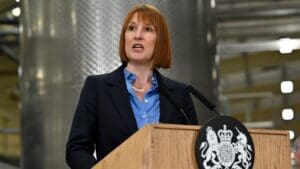
Chancellor Rachel Reeves is facing pressure from lobbyists representing the UK’s 74,000 non-domiciled residents (non-doms) to scale back her planned tax changes, ahead of her upcoming budget.
The newly formed group, Foreign Investors for Britain, is set to meet with government officials this week to urge a reconsideration of Reeves’s proposed overhaul of the non-dom tax regime, which could include levying inheritance tax on foreign assets.
Non-doms, who are UK residents but are considered domiciled overseas for tax purposes, are currently exempt from paying UK taxes on their overseas income. However, Reeves’s proposed changes have sparked fears that wealthy non-doms will leave the UK, potentially causing a net loss in tax revenues rather than boosting the Exchequer. In 2022-23, non-doms contributed £8.9 billion to UK tax revenues.
The lobby group, which formed in June and has already met with Treasury officials, is proposing an alternative tiered tax system. This would see non-doms paying a fixed annual sum, scaled to their wealth, for a period of 15 years. Under the plan, someone with up to £100 million in personal wealth would pay an annual charge of £200,000, with those worth more than £500 million contributing £2 million annually. Currently, non-doms pay up to £60,000 a year.
Leslie MacLeod-Miller, a spokesperson for Foreign Investors for Britain, said: “We’re pleased the government is listening because this is a real issue. Britain is turning into a departure lounge, and without changes, we risk losing valuable investment and tax revenue.”
The government has so far defended the proposed changes. A Treasury spokesman said: “We are addressing unfairness in the tax system to raise revenue for rebuilding public services. The outdated non-dom tax regime will be replaced with a new residence-based regime focused on attracting the best talent and investment to the UK.”
The non-dom debate comes amid broader concerns about Reeves’s first budget, which is expected to include significant tax reforms as Labour seeks to rebuild the nation’s finances.
Read more:
Lobby group urges Rachel Reeves to rethink non-dom tax hike to prevent exodus of wealthy residents
London City Airport Secures £130m Lifeline Amid Business Travel Decli …

London City Airport’s owners have injected £130 million in new equity to stabilise the airport’s finances amid a prolonged downturn in business travel.
The move comes as the airport struggles to recover from the pandemic, with passenger numbers still trailing pre-Covid levels.
The fresh capital has been provided by a consortium of Canadian pension funds — AIMCo, OMERS, and Ontario Teachers’ Pension Plan — and Kuwait’s Wren House. The funds are being used to cut debt, pay interest, and strengthen cash reserves, giving the airport breathing space as it prepares for refinancing talks on over £700 million of loans due in March 2026.
London City, which relies heavily on corporate travel, has lagged behind larger airports like Heathrow in its recovery. In 2023, London City welcomed 3.4 million passengers, down from 5.1 million in 2019. Despite an expected rise to 4 million passengers in 2024, this is still 20% below pre-pandemic levels.
The airport’s efforts to increase passenger numbers were also hampered by the government’s decision to block the expansion of weekend services, despite raising the annual passenger cap from 6.5 million to 9 million. Reaching this new limit is expected to be challenging without additional weekend flights.
A London City spokesperson said: “Since the pandemic, we have seen year-on-year passenger growth, with leisure travel now representing closer to 60% of the passengers through our airport. London City is a profitable company with supportive, long-term shareholders.”
This injection of funds marks another chapter in the airport’s ownership, which has included a sale by Irish property tycoon Dermot Desmond and a subsequent £2 billion acquisition by a Canadian-led consortium in 2016.
Read more:
London City Airport Secures £130m Lifeline Amid Business Travel Decline
Thousands of UK Boeing jobs at risk as manufacturer plans global cuts

More than 4,000 Boeing employees in the UK are facing uncertainty as the American aerospace giant prepares to cut 17,000 jobs globally, roughly 10% of its workforce.
Boeing’s UK operations, including its only European manufacturing facility in Sheffield, may be impacted by the sweeping job cuts, as the company grapples with financial challenges.
Boeing’s UK workforce is spread across 30 locations, with approximately half working on defence contracts, delivering helicopters such as the AH-64E Apache and planes like the C-17 Globemaster. The company’s Sheffield site employs 125 people who produce wing components for Boeing’s 737 aircraft, while Boeing Global Services operates maintenance facilities at Gatwick airport.
Boeing’s chief executive, Kelly Ortberg, announced the job cuts on Friday, citing ongoing financial difficulties exacerbated by production delays and worker strikes. Regulators have also slowed down Boeing’s manufacturing after a door panel incident on a 737 Max jet earlier this year. The crisis deepened after 33,000 workers went on strike in Seattle over pay disputes, causing further production halts.
Ortberg stated, “Restoring our company requires tough decisions, and we will have to make structural changes to ensure we can stay competitive.” Alongside the job cuts, Boeing has delayed the launch of its 777X jet until 2026 and will halt production of its 767 cargo planes by 2027.
While the specific impact on UK jobs remains unclear, sources suggest that job losses may be skewed toward the US. Hypothetically, if Boeing applies the cuts proportionally, approximately 400 UK workers could be affected. However, Boeing has yet to formally inform its UK employees about how they will be impacted.
The financial strain on Boeing has led to mounting pressure from airline customers, including Ryanair, which had to downgrade its passenger forecasts due to delayed aircraft deliveries. Credit ratings agency S&P has placed Boeing on “negative” watch, raising the possibility of its debt being downgraded to junk status.
Read more:
Thousands of UK Boeing jobs at risk as manufacturer plans global cuts
Business owners speed up plans to sell amid fears of tax rises in upco …
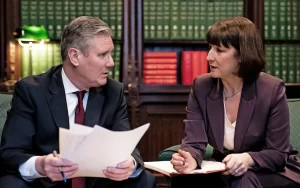
Growing concerns about tax increases have led nearly 30% of business owners in the UK to accelerate plans to sell their companies, according to new analysis from wealth management firm Evelyn Partners.
The survey, conducted among 500 business owners with turnovers of at least £5 million, found that 29% of respondents had sped up their plans to exit their businesses over the past year, with 23% citing fears of higher capital gains tax as a primary factor.
The findings come as the government continues to hint at tax hikes ahead of the budget on October 30. Labour leader Sir Keir Starmer has also suggested that wealthier individuals and businesses may face a heavier tax burden to help manage the UK’s challenging financial situation.
Laura Hayward, tax partner at Evelyn Partners, said that business owners are increasingly “on edge” due to concerns over potential changes to capital gains tax and inheritance tax. She noted that many entrepreneurs are looking to secure the value of their businesses before any unfavourable tax changes come into effect.
“The business environment for many owners has already been tough enough in recent years as they’ve worked to rebuild after the pandemic amidst cost-of-living pressures and high inflation,” Hayward said. “Now, with the potential for unfavourable tax changes in the upcoming budget, it’s understandable that some are looking to realise the gains of their hard work sooner rather than later.”
The analysis also coincides with a decline in both business and consumer confidence. The Institute of Directors’ economic confidence index fell sharply from -12 in August to -38 in September as business leaders expressed concerns about the tax burden. Additionally, the GfK consumer confidence index dropped from -13 in August to -20 in September, with more people reporting a less optimistic outlook on their personal finances and the economy overall.
As the budget date approaches, businesses are bracing for potential changes, hoping for clarity on how any new tax measures might affect their plans for growth, investment, or selling their businesses.
Read more:
Business owners speed up plans to sell amid fears of tax rises in upcoming budget
UK inflation expected to dip below 2% for first time in over three yea …

Annual inflation in the UK is expected to fall below 2% for the first time since April 2021, according to data anticipated to be released next Wednesday.
Official figures are predicted to show a decline in consumer price inflation (CPI) from 2.2% in August to between 1.8% and 1.9% in September, marking the first time inflation has dipped below the Bank of England’s 2% target in more than three years.
The expected drop in inflation comes as a result of falling global energy prices, the resolution of supply chain issues following the pandemic, and the impact of aggressive interest rate hikes. Annual inflation has been steadily declining since peaking at 11.1% in October 2022.
Economists suggest the September inflation figure may be even lower than the Bank of England’s forecast of 2.1%, driven by a sharp reduction in energy and oil prices last month. Analysts at Barclays suggest inflation could fall to 1.7%, while Deutsche Bank points to broader energy price deflation and dips in food, tobacco, and services costs pushing inflation down to 1.8%.
Sanjay Raja, chief UK economist at Deutsche Bank, said, “After headline CPI moved sideways in August, we expect inflation to drop to a new cyclical low in September.”
This anticipated decline in inflation will increase pressure on the Bank of England’s monetary policy committee (MPC) to consider further interest rate cuts. Andrew Bailey, the Bank’s governor, recently warned that ratesetters may need to be “a bit more aggressive” with interest rate reductions if inflation continues to weaken and the economy shows signs of slowing.
The UK economy has seen a marked slowdown in growth in recent months, with GDP stagnant in June and July, and growing only by 0.2% in August, compared to 0.7% quarterly growth at the start of the year.
Konstantinos Venetis of TS Lombard said, “Inflation is settling lower, leaving the economy struggling to maintain momentum. Evidence of a soft patch taking shape is becoming clearer, pointing to the need for a shot in the arm from looser monetary policy.”
Traders now expect the Bank to cut interest rates twice before the end of the year, potentially bringing the base rate down to 4.5%.
However, inflation is likely to rise again in the coming months, with household energy prices increasing by 10% in October and oil prices climbing due to tensions in the Middle East. Additionally, measures from Rachel Reeves’ upcoming budget on October 30, such as introducing VAT on private school fees and potential duties on alcohol and tobacco, could also push inflation back up.
Read more:
UK inflation expected to dip below 2% for first time in over three years

