

Iberdrola, the Spanish energy group and owner of Scottish Power, has announced a £24 billion investment to upgrade the UK’s energy infrastructure over the next five years.
This marks a doubling of its commitment to Britain and makes the UK the largest destination for Iberdrola’s global investments.
The investment will focus on enhancing the UK’s high-voltage cables, increasing the capacity of electricity transmission and distribution networks, and building new wind farms. The upgrades aim to meet the growing demand for clean energy, which is expected to rise by 50% by 2035 as the UK transitions to electric vehicles and heat pumps.
Ignacio Galán, executive chairman of Iberdrola, described the move as a “vote of confidence” in the UK, citing greater regulatory stability and clear policy direction as key factors. Keith Anderson, CEO of Scottish Power, noted that the UK’s ambitious targets to decarbonise its electricity system by 2030, combined with plans to overhaul the planning system, have provided the clarity needed for large-scale investments.
Of the £24bn, about two-thirds will be spent on enhancing the UK’s electricity grid, particularly in Scotland where renewable energy is concentrated. This will include a new subsea superhighway, the Eastern Green Link 1, connecting Torness in Scotland to Hawthorn Pit in England. The remaining £4bn will fund the construction of two new wind farms off the coast of East Anglia, set to power around one million homes.
This announcement comes ahead of the UK’s first International Investment Summit in London, where international business leaders will meet to explore new opportunities in the country. Ministers hope the summit will secure deals worth tens of billions of pounds for the UK economy.
With global concerns about missing out on investment due to competition from the US, following President Biden’s $369 billion Inflation Reduction Act, Anderson stressed that the UK’s strengths lie in offering regulatory stability, transparency, and a clear market framework for green energy projects.
Read more:
Scottish Power owner Iberdrola commits £24bn to upgrade UK’s green energy infrastructure
Category: Uncategorized
UK economy returns to 0.2% growth in August after months of stagnation

The UK economy returned to growth in August, expanding by 0.2% after two months of stagnation, according to official figures from the Office for National Statistics (ONS). This growth was in line with economists’ expectations, following 0% growth recorded in June and July.
The ONS data showed that the economy also grew by 0.2% over a rolling three-month period to August and expanded by 0.8% over the past year. Growth was driven by a 0.5% increase in manufacturing production and a 0.4% rise in the construction sector, both of which had declined in July. The services sector, which constitutes three-quarters of the UK economy, recorded a 0.1% increase in August, matching its growth in July.
Notably, half of the 14 subsectors of the services economy, including scientific, technical, and professional services, experienced growth in August.
After a strong rebound at the start of the year, with 0.7% and 0.5% growth in the first and second quarters respectively, growth has cooled in recent months. Economists predict GDP expansion of 0.3% to 0.4% for the last two quarters of the year, bringing the annual growth rate to between 1.2% and 1.3%, below the government’s G7 growth target. The US is expected to outpace the UK with an estimated 2.6% growth in 2024.
“All main sectors of the economy grew in August, but the broader picture is one of slowing growth in recent months, compared to the first half of the year,” said Liz McKeown, director of economic statistics at the ONS.
August’s return to growth followed the first interest rate cut in four years, with another rate reduction expected in the coming months. Consumers have benefited from a decline in borrowing costs, mortgage rates, and inflation, which dropped to 2.2% in August and is projected to fall further to 1.9% in September, boosting real income growth for households.
Read more:
UK economy returns to 0.2% growth in August after months of stagnation
Barclays calls for downsizers tax break to free up 3.8m homes

Barclays, one of Britain’s largest mortgage lenders, has called on the government to introduce tax breaks and financial incentives for downsizers to encourage them to move into smaller homes, potentially freeing up 3.8 million properties for families.
The bank suggests allowing downsizers to offset moving costs against their stamp duty bill when purchasing a new home.
In a report released on Thursday, Barclays emphasised that reducing the financial burden of moving house could encourage “under-occupiers” to relocate, helping to ease the housing crisis. Alongside financial incentives, the bank called for measures to simplify the moving process and build more retirement housing.
Barclays estimates that this could significantly increase housing market liquidity, benefiting growing families in need of larger homes. “A stronger, more holistic strategy is needed to tackle the immense issues faced by the housing market,” said Mark Arnold, head of mortgages and savings at Barclays.
The call for downsizers’ support follows a report by Savills showing that over-60s account for 44% of homeowners, yet downsizers make up less than 10% of market activity. Lucian Cook, director of residential research at Savills, said reducing the stamp duty burden on downsizers could encourage more people to move, making better use of existing housing stock.
However, critics argue that such tax breaks would disproportionately benefit wealthier homeowners rather than first-time buyers or hard-pressed families. Mortgage broker Martin Stewart questioned the fairness of the plan, asking, “Why incentivise the generation that have been the biggest beneficiaries of house price inflation over the past few generations?”
Aneisha Beveridge, head of research at Hamptons, echoed these concerns, suggesting that subsidies may be better targeted elsewhere, particularly as downsizers are often mortgage-free and have benefited the most from house price growth in recent decades.
Read more:
Barclays calls for downsizers tax break to free up 3.8m homes
Rayner’s employment rights overhaul to grant 9m workers the right to …

Angela Rayner, Deputy Prime Minister, is set to grant an additional 9 million UK workers the right to sue their employers for unfair dismissal from the first day of their employment, as part of a sweeping overhaul of workers’ rights.
Currently, employees must be with a company for two years before they qualify for these powers.
Business leaders have criticised the reform package, calling it “chaotic” and warning that it risks damaging companies’ willingness to hire new recruits. The Federation of Small Businesses and the Recruitment and Employment Confederation have expressed concerns about potential economic inactivity and reduced business confidence.
The reforms, described as the “biggest upgrade” to workers’ rights in a generation, include measures such as banning fire and rehire practices and ending exploitative zero-hours contracts. However, elements of the package have been watered down, including extending the recommended probationary period for new hires.
Labour’s new measures aim to drive productivity by modernising workplaces, with Rayner stating: “We’re replacing a race to the bottom with a race to the top.” However, critics argue that the changes will empower unions to hold businesses to ransom and stifle investment, with shadow business secretary Kevin Hollinrake warning that Labour’s policies may negatively impact business confidence.
The new Employment Rights Bill is expected to be introduced this week, with further reforms, such as access to flexible working and improved parental leave, also on the agenda.
Read more:
Rayner’s employment rights overhaul to grant 9m workers the right to sue employers
Rachel Reeves faces £25bn tax hike to avoid austerity, says IFS
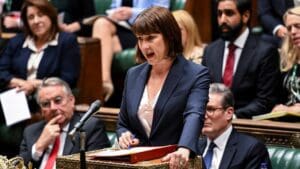
Rachel Reeves, the Chancellor, is expected to introduce a £25 billion tax increase in this month’s budget to avoid plunging Britain back into austerity, according to the Institute for Fiscal Studies (IFS).
The IFS has warned that the tax rises will need to be twice as large as those introduced by George Osborne in 2010 to ensure public spending can rise as promised, even with looser fiscal rules.
Reeves is said to be exploring an increase in employer national insurance contributions as a key option, after Sir Keir Starmer declined to rule out the move. Labour’s manifesto pledge to avoid raising taxes on “working people” does not cover employer contributions, and a 1% increase could generate an estimated £8.9 billion. Labour is also considering measures such as adding VAT to private school fees and imposing a tougher levy on oil and gas companies, but the IFS cautions that these measures alone will not raise enough to protect public services from further cuts.
The IFS estimates that even if Labour’s proposed tax reforms generate £9 billion, an additional £16 billion in tax rises would be required to ensure departmental budgets grow in line with national income, making a total tax increase of £25 billion necessary. This would exceed the tax hikes imposed by both Gordon Brown in 1997 and Osborne in 2010.
Paul Johnson, director of the IFS, said, “The first budget of this new administration could be the most consequential since at least 2010. The new chancellor is committed to increasing investment spending, and to funding public services. To do so, she will need to increase taxes, or borrowing, or both.”
Reeves is also reportedly exploring changes to pensions, such as reducing the tax-free lump sum people can take out at retirement from £268,275 to £100,000, and adjusting rules around pension pots passed on after death.
The IFS predicts that even with optimistic economic forecasts, significant tax increases are needed to balance the books, especially as welfare costs rise due to an ageing population and growing debt interest payments. A Treasury spokesperson said the government is focused on making the UK’s economy more pro-growth despite the challenges.
Read more:
Rachel Reeves faces £25bn tax hike to avoid austerity, says IFS
Private Christian Schools to sue government over VAT plans

Three private Christian schools and a group of parents are preparing to launch a legal challenge against the government’s plan to impose VAT on school fees.
Emmanuel School in Derby, the Branch Christian School in Yorkshire, and the King’s School in Hampshire, alongside parents, claim that the tax will unlawfully discriminate against faith-based schools and families by making Christian education unaffordable, potentially forcing many schools to close.
In a letter to the government, the claimants argue that the tax breaches human rights laws and fails to meet legal requirements. They claim the imposition of VAT on education — historically exempt from such taxes in the UK — is unprecedented and unjust. According to their legal team, the policy disproportionately affects Christian schools, many of which have smaller budgets and lower fees compared to larger independent institutions.
The schools and parents behind the legal challenge allege that the VAT policy violates anti-discrimination rights enshrined in the European Convention on Human Rights, which is incorporated into UK law via the Human Rights Act 1998.
Caroline Santer, headteacher at the King’s School, called the government’s plan “ill thought out,” stressing that families choosing faith-based education often sacrifice other luxuries, such as holidays and extracurricular activities, to cover fees. Parents like Stephen White argue that the policy leaves them no choice but to homeschool their children, as they are unwilling to send them to secular state schools.
Andrea Williams, chief executive of the Christian Legal Centre, which is supporting the legal action, warned that the VAT charge would make independent faith-based schooling unaffordable for many families and might force smaller faith schools to close.
This legal challenge comes amid broader criticism of the VAT policy from education unions and private school groups, who have urged Chancellor Rachel Reeves to delay the January implementation. Despite these appeals, the government has reaffirmed its commitment to the tax, which it claims will raise £1.5 billion to fund state education and the hiring of 6,500 new teachers.
The Christian schools’ legal challenge underscores the deep concerns over how the VAT on school fees will impact faith-based and smaller independent schools. The Treasury has been approached for comment but has yet to respond.
Read more:
Private Christian Schools to sue government over VAT plans
China retaliates against EU tariffs with brandy tax

China has hit back at the European Union with new taxes on European brandy imports, a move seen as retaliation for the EU’s recent imposition of steep tariffs on Chinese-made electric vehicles.
The Chinese commerce ministry has described the tax as an “anti-dumping” measure designed to protect domestic producers from significant harm caused by European imports.
The European Commission has vowed to challenge the new taxes at the World Trade Organization (WTO), calling the move an “abuse” of trade defence measures. French Trade Minister Sophie Primas characterised the brandy tax as retaliatory, calling it “unacceptable” and a breach of international trade rules.
The new tariffs will have a particularly harsh impact on France, which accounts for 99% of brandy exported to China. Major French brands like Hennessy and Remy Martin are expected to be hit hard by the move, with industry experts warning of “catastrophic” consequences. The French cognac lobby group BNIC urged French authorities and the EU to intervene, stating that brandy producers are caught in the middle of a dispute unrelated to their industry.
Shares of luxury brands involved in the production of brandy tumbled after the announcement. LVMH, which produces Hennessy, saw a drop of over 3%, while Remy Cointreau, the company behind Remy Martin, fell more than 8%. Analysts have warned that the tariffs could result in a 20% price increase for Chinese consumers, leading to a potential 20% decline in sales volumes and revenue for suppliers.
The dispute escalates tensions between the EU and China, following the EU’s decision to impose tariffs of up to 35% on Chinese electric vehicles. In response, China has signaled it is considering further tariffs on other European products, including cars, pork, and dairy. Shares in German carmakers, including Volkswagen, Porsche, Mercedes-Benz, and BMW, also fell amid concerns that they may be targeted next.
Read more:
China retaliates against EU tariffs with brandy tax
eBay to ban private e-bike sales over fire safety concerns

eBay is set to ban the sale of e-bikes and their batteries by private individuals in the UK from 31 October, citing rising concerns over battery fires.
From this date, only “eligible business sellers” will be permitted to list these items, though the company has not yet clarified the specific criteria for eligibility.
E-bikes, which use battery-powered pedals, have become increasingly popular, but the surge in usage has coincided with a sharp rise in incidents involving battery fires. The London Fire Brigade recorded 155 e-bike fires in 2023, a 78% increase from the previous year. This rise has led to warnings from safety authorities, with e-bike battery packs being officially classed as “dangerous” products by UK regulators.
In June, a coroner called for government action after a fatal fire caused by an overheating e-bike battery pack. These incidents have intensified scrutiny of e-bike safety standards.
“Consumer safety is a top priority for eBay,” a spokesperson for the platform said. Earlier this year, eBay announced plans to audit sellers to ensure their products carry the necessary CE safety documentation.
The change has been welcomed by safety advocates. Electrical Safety First, a UK charity, praised eBay’s decision but called for more robust legal frameworks to ensure that all products sold online meet safety standards. “Whilst this voluntary move is welcome, we continue to call for online marketplaces to be legally obligated to take reasonable steps to ensure products sold via their sites are safe,” said a spokesperson.
The UK’s Product Regulation and Metrology Bill, which is progressing through Parliament, could establish such legal obligations in the future, providing a further safeguard against the risks posed by unsafe e-bike batteries.
Read more:
eBay to ban private e-bike sales over fire safety concerns
10,000 fewer children in private schools ahead of Labour’s VAT polic …

The number of children in private education has dropped by 10,000 over the past year as parents anticipate the introduction of VAT on school fees in January, according to the Independent Schools Council (ISC).
The organisation estimates the move could cost the government an additional £93 million to educate these pupils in state schools.
A survey conducted by the ISC across nearly 1,200 fee-charging schools revealed a 1.7% decline in enrolment, with the steepest drop—4.6%—occurring in year seven, the first year of secondary education. This data compares pupil numbers from September 2022 to September 2023.
The government’s decision to add 20% VAT to private school fees is set to take effect in January 2025, a move Labour claims will generate £1.5 billion in additional funding for state education and teachers. While ministers have suggested schools do not have to pass the full VAT cost onto parents, few schools have committed to absorbing the charges.
Wales has been hardest hit, with a 5.2% drop in private school enrolment, followed by Yorkshire at 2.6%, and southwest England at 2.4%. The ISC noted that the decline is particularly affecting smaller schools and those with lower fees.
Smaller schools with fewer than 300 students have seen pupil numbers fall by 3.2%, triple the rate experienced by larger institutions. Additionally, schools with fees more than 10% below the average have experienced an average reduction of 7.5 pupils per school, compared to 5 pupils in higher-fee institutions.
The ISC has raised concerns about the impact of the VAT policy on small schools, faith schools, and pupils with special educational needs and disabilities (SEND). Julie Robinson, the ISC’s general secretary, said: “Parents are already removing their children from independent schools as a result of the government’s plans to charge VAT. This is just the tip of the iceberg, with many small schools already at risk of closure.”
The ISC is considering a High Court challenge to delay the implementation of the VAT on school fees. A separate legal challenge is also being pursued by the law firm Sinclairs on behalf of a mother of a child with special needs.
The government has pledged that pupils with an Education Health and Care Plan (EHCP) will not have to pay VAT on school fees. However, many children with special needs who do not have an EHCP will be subject to the additional charge. This year’s ISC census revealed that 20% of children in private schools have a special need or disability.
As the population bulge in secondary-aged children is expected to peak in 2029, the VAT policy may further strain both private and state schools. A government spokesperson said: “Ending tax breaks on private schools will help to raise the revenue needed to fund our education priorities.”
The government’s full analysis of the VAT policy and its expected impacts, based on Office for Budget Responsibility (OBR) costings, is expected to be published in the upcoming budget.
Read more:
10,000 fewer children in private schools ahead of Labour’s VAT policy, warns sector

