

Euston railway station has switched off its giant advertising billboard after an outcry from commuters who criticised the replacement of vital passenger information screens.
The decision comes after mass cancellations on Avanti West Coast trains left thousands of passengers frustrated and confused on the station’s overcrowded concourse.
Transport Secretary Louise Haigh intervened, directing Network Rail to disable the 200ft screen, which had been displaying advertisements for Canadian holidays, ITVX, and the Transformers film, rather than crucial travel updates. Haigh acknowledged that Euston station has “simply not been good enough for passengers” and demanded immediate action to improve conditions.
The screen had replaced one of the largest passenger information boards in the UK, and the decision to swap it out was widely criticised by commuters as a “terrible decision,” especially during periods of significant disruption. With cancellations affecting routes to Birmingham, Manchester, Liverpool, Glasgow, Edinburgh, and other destinations, passengers were left without access to key travel information, sparking widespread frustration.
In response to the backlash, Network Rail confirmed that the billboard had been switched off and that a review would be conducted to assess the screen’s impact on congestion at the station. “The question is whether the screen is contributing to congestion or not making a difference, or indeed if it’s actually having a positive impact,” a spokesman said. The station will use heat modelling to monitor how the screen shutdown affects passenger movement.
Network Rail insisted that the new configuration of passenger information boards improves circulation at the station, with a spokesperson noting, “We will never be going back to a bulkhead departure board. However popular it was, the facts prove that it was a hindrance to moving around the station.”
The shutdown of the advertising screen is part of a broader five-point plan designed to enhance the experience for passengers at Euston. Additional measures include creating more concourse space, improving how the station operates during disruptions, and enhancing the reliability of train services on the West Coast Main Line.
Gary Walsh, route director for West Coast South, admitted that the recent passenger experience at Euston had fallen short, saying, “We need to do better.” He expressed confidence that the five-point plan would make a meaningful difference in the short term by easing congestion and providing clearer passenger information.
Euston station is also in discussions with advertising company JCDecaux, which owns the billboard, to explore the possibility of displaying passenger information on the screen during times of severe disruption on the West Coast Main Line. Known as the Euston Motion+, the screen first went live in January as part of a campaign devised by Saatchi & Saatchi for energy company Ovo.
Read more:
Euston turns off giant billboard after commuter backlash over missing passenger information
Category: Uncategorized
A guide to the new legal duty on employers to prevent workplace sexual …

A new duty on employers to take reasonable steps to prevent sexual harassment is imminent. What do businesses need to do to prepare?
From 26 October 2024, employers will be under a new duty to take reasonable steps to prevent sexual harassment of their workers. This new preventative duty is contained in the Worker Protection (Amendment of Equality Act 2010) Act 2023.
The preventative duty relates only to sexual harassment and not other “protected characteristics” included in the Equality Act 2010. It is in addition to the current protection from discrimination, harassment and victimisation contained in that Act.
On 26 September 2024, the Equality and Human Rights Commission (EHRC) published comprehensive updated Technical Guidance for employers and an Employer 8-step guide: Preventing sexual harassment at work which are well-worth looking at.
What is sexual harassment?
The Equality Act 2010 defines this as unwanted conduct of a sexual nature which has the purpose or effect of either violating an individual’s dignity or creating an intimidating, hostile, degrading, humiliating or offensive environment for them.
Examples include unwelcome physical contact, sexual jokes or comments, sexual advances, sending sexually explicit emails/texts and displaying sexually graphic images.
What is the preventative duty?
The Guidance describes it as “a positive and proactive duty designed to transform workplace cultures”.
Employers should anticipate scenarios when their workers may be subject to sexual harassment in the course of their employment and take action to prevent it.
If sexual harassment has taken place, employers should take action to stop it from happening again.
The preventative duty applies to third-party harassment (unlike the Equality Act 2010) from, for example, clients, customers, service users, or members of the public.
An individual cannot bring a standalone claim for breach of the preventative duty itself, but where there has been a breach, this can impact the amount of compensation, which is considered below.
Reasonable steps
The Guidance makes it clear that there is no prescribed minimum. What is reasonable will vary depending on the employer, and relevant factors include:
Employer’s size, resources and sector
Risks in that workplace
Contact with third parties
The likely effect of taking a particular step and whether an alternative step could be more effective
Time, cost and potential disruption of a particular step weighed against the benefit
Factors to consider in a risk assessment
Significantly, the Guidance states that employers are unlikely to be able to meet the preventative duty if they do not carry out a risk assessment.
It is not a static duty, and employers must review their preventative steps regularly.
The Guidance refers to various risk factors that may increase the risk of sexual harassment in the workplace, and these include:
A male-dominated workforce
A workplace culture that permits crude/sexist “banter”
Gendered-power imbalances
Lone or isolated working
Workplaces that permit alcohol consumption
A casual workforce
There are no policies or procedures to deal with sexual harassment
Consequences for breach of the new duty
If a worker successfully claims sexual harassment and compensation is awarded by the Employment Tribunal, the Tribunal must consider whether the employer has breached the preventative duty. If they have, the Tribunal can order a compensation uplift of up to 25%. Compensation for sexual harassment is unlimited and includes past and future loss of earnings and injury to feelings; consequently, the compensation uplift could be considerable. Note that the EHRC can also take enforcement action against the employer.
With only a few weeks before the preventative duty takes effect, what can employers do to prepare?
Carry out a risk assessment
Consider the risks of sexual harassment, the steps that would mitigate those risks and which steps are reasonable to implement.
Educate workers about sexual harassment and what actions amount to such conduct.
Refer to the Equality Act 2010 definition and provide examples of what would constitute unwanted sexual conduct.
Foster an inclusive culture in the workplace
Implement a zero-tolerance approach to sexual harassment, which will help instil a respectful and inclusive environment. Management and senior leaders have a critical role to play.
Implement a clear anti-harassment policy
Encourage staff to report sexual harassment and establish an effective complaints procedure. Make it clear that harassment can lead to disciplinary action. Publicise the policy and ensure that it is easily accessible and reviewed regularly. Provide support for complainants.
Provide training to workers and managers
Tailor this for the specific workplace and target audience. Where third-party harassment is a risk, the training should address this. Keep records of who has received training, and crucially, refresh it regularly.
Detect sexual harassment
Be proactive and look for warning signs in the workplace, such as sickness, absence, a dip in performance, behavioural change or resignations.
Read more:
A guide to the new legal duty on employers to prevent workplace sexual harassment
Motor Industry calls for VAT cut on electric cars and charging points …

The motor industry is calling on the UK government to cut VAT on new electric vehicles (EVs) and public charging points in an effort to counter a slowdown in the EV market.
The Society of Motor Manufacturers and Traders (SMMT) has written an open letter to the Chancellor, urging for a VAT reduction on electric cars and charging infrastructure for the next three years.
The letter comes as manufacturers struggle to meet the government’s stringent zero-emission vehicle sales targets, which mandate that 22% of all new car sales and 10% of van sales must be electric this year. Despite a record 56,362 battery electric vehicle (BEV) registrations in September, BEVs account for just 17.8% of the market this year, a figure expected to rise to 18.5% by the year’s end—still shy of the government’s target.
The SMMT noted that private demand for electric vehicles is down 6.3% year-to-date, even as manufacturers have offered unprecedented discounts to drive sales. These price cuts are expected to cost the industry over £2 billion by the end of 2023. Although petrol and diesel vehicle sales continue to decline, they still represent the choice of 56.4% of buyers in September.
To stimulate EV uptake, the SMMT has called for a 50% VAT reduction on new electric vehicle purchases, a measure it estimates could cost the Treasury £7.7 billion by the end of 2026. Additionally, the industry body is advocating for VAT on public charging points to be lowered to 5%, in line with the rate applied to home charging. They have also requested that the government introduce mandatory infrastructure targets for charging points to support the growing fleet of electric vehicles on UK roads.
The SMMT has also recommended delaying the introduction of road tax for EVs, currently set to begin next year, and extending the subsidy for commercial electric vans beyond its planned end in March.
This push for VAT reductions and extended subsidies comes as the global EV market faces challenges. Manufacturers like Volvo, Ford, and Toyota have scaled back their EV ambitions, with Toyota announcing delays to US EV production and Tesla missing its quarterly delivery targets. Governments across Europe are also scaling back their support for the sector, with France cutting EV subsidies for higher-income buyers by 20%, and Germany ending its subsidy programme altogether.
While the UK has ended most grants for electric vehicle purchases, business buyers can still benefit from tax incentives for EVs used as company cars. However, industry leaders are warning that without further government intervention, the market may struggle to meet its ambitious targets for zero-emission vehicles.
Read more:
Motor Industry calls for VAT cut on electric cars and charging points to boost EV market
Starling Bank fined £29m for ‘shockingly lax’ financial crime con …

Starling Bank has been fined £29 million by the Financial Conduct Authority (FCA) for “shockingly lax” financial crime controls that left the UK’s financial system exposed to criminals and sanctioned individuals.
The FCA’s investigation revealed that the digital bank failed to design and implement adequate systems to mitigate financial crime risks, particularly as it rapidly grew from its first account in 2016 to 3.6 million customers by 2023.
The FCA raised serious concerns about Starling’s anti-money laundering (AML) and financial sanctions controls as early as 2021 during a review of fast-growing challenger banks. In response, Starling agreed to halt opening new accounts for high-risk customers until its systems were improved. However, the bank breached this agreement, opening more than 54,000 accounts for nearly 50,000 high-risk customers, a direct violation of FCA requirements.
A further failure in Starling’s automated screening system between 2017 and 2023 meant that only a fraction of customers subject to financial sanctions were properly screened. This oversight exposed the bank to a “material risk” that individuals under sanctions may have opened or continued to hold accounts with Starling.
The regulator’s findings raise serious questions about Starling’s leadership under its founder, Anne Boden, who stepped down as CEO in June 2023 and left the board the following year. The bank had hired a consultancy firm to investigate its compliance issues, which reported in September 2023 that Starling’s senior management lacked the necessary experience to enforce compliance with the FCA’s agreement.
Therese Chambers, the FCA’s joint executive director of enforcement and market oversight, criticised the bank’s failings, stating: “Starling’s financial sanction screening controls were shockingly lax. It left the financial system wide open to criminals and those subject to sanctions.”
Starling has since apologised for its failings, with chairman David Sproul stating that the bank has “invested heavily to put things right, including strengthening our board governance and capabilities.” Despite these efforts, the fine raises concerns about Starling’s planned pursuit of a London stock market listing.
The scandal has also led to rival banks considering legal action against Starling for fraud reimbursement costs related to fraudulent payments made to Starling customers. In June, The Times reported that the FCA had opened a separate investigation into Starling’s compliance with the UK’s anti-money laundering rules.
Starling has expressed regret for the failures that occurred between 2019 and 2023, but the fine represents a significant blow to the reputation of the once highly regarded digital bank, casting doubt on its future leadership and regulatory compliance.
Read more:
Starling Bank fined £29m for ‘shockingly lax’ financial crime controls
Bank of England may cut rates more aggressively as inflation eases, wa …

Andrew Bailey, Governor of the Bank of England, has indicated that the Bank may take a more aggressive stance on cutting interest rates if inflation continues to decline.
However, he cautioned that escalating tensions in the Middle East could lead to a sharp rise in oil prices, which would complicate the Bank’s policy outlook.
Speaking to The Guardian, Bailey suggested that the Monetary Policy Committee (MPC) could quicken the pace of policy loosening should inflationary pressures continue to ease. “There’s a possibility we could be a bit more aggressive in lowering rates if inflation keeps dissipating,” he said. This has already put downward pressure on the pound, which fell by 1.05 per cent to $1.31, although part of this drop was attributed to traders seeking safer assets amidst the intensifying conflict between Israel and Iran.
Bailey, who has been at the helm of the Bank since 2020, voiced concerns about the situation in the Middle East, warning of the potential for a 1970s-style oil crisis if tensions escalate further. “The conversations I’ve had with counterparts in the region suggest there’s currently a strong commitment to keep the market stable,” Bailey said, but he added that control over oil markets could deteriorate if the conflict worsens. He pointed to past experiences where oil price surges significantly impacted monetary policy, noting the role that oil played in driving inflation during the 1970s.
The UK has experienced a sharp drop in inflation, which peaked at 11.1 per cent in October 2022 but has since fallen to 2.2 per cent. Despite this progress, oil prices have surged in recent days, driven by the latest developments in the Middle East. Brent Crude and WTI, the global benchmarks, both climbed to over $70 a barrel following Israel’s incursion into southern Lebanon and Iran’s retaliatory missile strikes.
These rising prices come after a year of declining demand from China and speculation that Saudi Arabia could increase supply, trends that had been pushing prices down earlier in 2023. The current uncertainty has prompted the MPC to adopt a cautious approach. The Committee voted 8-1 to hold the UK base rate at 5 per cent during its last meeting, and although they implemented a 25-basis-point cut in August—the first reduction since March 2020—traders are expecting another cut next month.
Bailey also responded to criticism from former Prime Minister Liz Truss, who accused him of being part of a left-wing economic cabal that undermined her brief premiership. Referring to the pension crisis triggered by Truss’s mini-budget, Bailey remarked, “We came in and used our intervention tools to deal with the financial stability issue. It’s ironic that someone critical of regulators then says the problem was that the Bank of England wasn’t regulating enough.”
The pension crisis followed Truss’s controversial £45 billion package of unfunded tax cuts, which caused a sharp rise in interest rates and forced down bond prices, creating liquidity issues for pension funds. The Bank of England was compelled to step in with a limited bond-buying programme to restore market stability.
Looking ahead, Bailey praised Chancellor Rachel Reeves for her focus on encouraging capital investment to address climate change and stagnant productivity growth. He also acknowledged the challenges posed by Labour’s handling of the economy since taking office in July, as the government prepares for its first Budget on 30th October. While taxes are expected to rise, the Chancellor plans to mitigate the impact through greater public investment in key sectors.
Read more:
Bank of England may cut rates more aggressively as inflation eases, warns Andrew Bailey
Labour’s economic pessimism halts UK equity market recovery, trigger …

The UK’s equity markets have taken a hit as the Labour government’s pessimistic portrayal of the country’s economic outlook reverses a brief recovery in investor interest.
New figures from Calastone, a global fund network, show that UK-focused funds suffered net withdrawals of £666 million in September, while other geographically focused fund sectors recorded inflows.
Overall, global investors pulled a net £564 million from fund holdings, marking the end of a ten-month streak of near-record inflows. Equity income funds, which have significant exposure to UK equities, lost £416 million in capital. According to Calastone, UK-focused equity funds have not seen positive net inflows since 2021.
The decline in investor sentiment comes amid criticism of Labour’s portrayal of the UK economy since taking office in July. Chancellor Rachel Reeves and Prime Minister Sir Keir Starmer have faced backlash from the City for painting what some consider an overly negative picture of the public finances. Reeves has stated that the government inherited the worst economic conditions since World War II, citing a £22 billion “black hole” in public finances left by the previous Conservative administration.
Edward Glyn, head of global markets at Calastone, remarked that the government’s “rather pessimistic commentary” has dampened the nascent revival of interest in UK equities observed in July. “UK-focused funds seem to be off the menu for investors for the time being,” Glyn said.
This bearish shift in sentiment is reinforced by other recent data. A long-standing consumer confidence index plunged to its lowest level since January, while optimism among manufacturers has declined at the fastest rate since the pandemic began.
Adding to the financial turbulence, Calastone also reported the “biggest outflows from fixed income funds on its ten-year record” since the start of August, driven by expectations of interest rate cuts by central banks. The combined net outflows of £1.3 billion have largely been reallocated to safer assets.
The global trend towards loosening monetary policy has played a role in this shift. Last month, the US Federal Reserve lowered borrowing costs by 50 basis points, and it is expected to continue easing policy, along with the European Central Bank. The Bank of England is also forecast to cut its base rate by another 25 basis points in November, as inflation eases.
With the budget approaching on 30th October, Rachel Reeves is expected to raise taxes, but the fiscal tightening will be partly offset by increased public investment spending. The government’s strategy will be closely watched by investors who remain cautious about UK equities amidst the gloomy economic narrative.
Read more:
Labour’s economic pessimism halts UK equity market recovery, triggering significant outflows
Why Hiring People with ADHD is a Smart Business Move

Earlier this year John Higginson was diagnosed with adult ADHD. Getting a diagnosis for a neurodivergence was a big step for him. It required a lengthy process and input from family members looking all the way back to his childhood.
But on telling people his ‘big news’ the most common reaction was people telling him they were surprised that he didn’t know.
It has got to the point now that he has stopped telling people.
As Higginson says : “it’s a reminder that it is often easier to see others than oneself.”
Higginson added: “The jobs I have sought out in life have been perfect for me. Being a journalist under the stress of a daily deadline and now a small business owner plays to my high-risk tolerance and low boredom threshold.
But ADHD is not just an advantage to me as an entrepreneur. I can also see the advantages it brings to the workforce.
Public Relations is all about finding new and interesting ways of saying things that are not always obvious.
For me that means hiring individuals with ADHD is not just about inclusion; it’s a strategic decision that can provide significant benefits to our purpose-led clients.”
Here are six compelling reasons why you should consider hiring individuals with ADHD:
Creative Problem-Solving
Individuals with ADHD often possess a unique way of thinking that can lead to innovative solutions. Their brains are wired to make connections that others might overlook, which can result in out-of-the-box ideas. In my experience, employees with ADHD often approach problems from angles that are refreshing and unexpected. This creativity can drive projects and lead to results that we wouldn’t otherwise have had.
High Energy and Enthusiasm
ADHD is often associated with high energy levels. This trait can be infectious in the workplace. When employees are passionate and enthusiastic, it can create a vibrant atmosphere that motivates the entire team. People with ADHD often channel their energy into their work, leading to increased productivity and a lively work environment. This enthusiasm can be especially beneficial in roles that require sales, customer service, or any position that relies on interpersonal interactions – such as getting journalists to run stories.
Resilience and Adaptability
Many individuals with ADHD have learned to navigate challenges from an early age, making them resilient problem-solvers. This ability to adapt to changing circumstances can be a significant asset in the business world, where flexibility is often necessary. They tend to bounce back from setbacks quickly and can pivot their strategies as needed, which is invaluable in a landscape that’s constantly evolving. Their resilience often translates into a strong work ethic and a commitment to achieving results.
Multitasking Skills
While multitasking can be a double-edged sword, many individuals with ADHD excel in juggling multiple tasks at once. Their brains can process several streams of information, allowing them to handle diverse responsibilities effectively. In my business, employees with ADHD have often managed various projects simultaneously, ensuring that deadlines are met without compromising quality. This skill can be particularly beneficial in fast-paced environments where priorities can shift rapidly.
Hyperfocus Abilities
Contrary to the common perception that ADHD leads to distraction, many individuals with the condition can experience periods of intense focus on tasks that interest them. This phenomenon, known as hyperfocus, allows them to dive deep into their work, producing exceptional results. I’ve witnessed employees with ADHD deliver impressive outputs during these focused periods, often exceeding expectations. Harnessing this ability can lead to breakthroughs and outstanding work quality, especially in creative and technical fields.
Diversity of Thought
Diversity is not just about race, gender, or age; it encompasses a variety of cognitive styles and experiences. Hiring individuals with ADHD adds to the diversity of thought within a team. This variety fosters an environment where different perspectives are valued, leading to more thorough discussions and better decision-making. As a business owner, I’ve found that teams with diverse cognitive approaches are more innovative and effective in problem-solving. By including individuals with ADHD, you enhance your team’s ability to tackle challenges from multiple angles.
Incorporating individuals with ADHD into your workforce can bring a wealth of advantages. From their creative problem-solving abilities to their resilience and adaptability, these employees can become invaluable assets to your business. As we strive for innovation and excellence, it’s essential to embrace the unique talents that people with ADHD offer. By fostering an inclusive environment that values diverse perspectives, we not only empower these individuals but also create a stronger, more dynamic organisation.
Read more:
Why Hiring People with ADHD is a Smart Business Move
Tetley tea owner takes legal action against striking workers over tres …
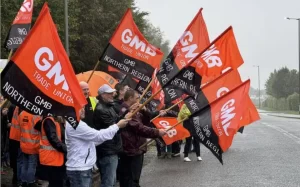
Tata Consumer Products, the owner of Tetley Tea, has initiated legal action against striking factory workers, accusing them of trespassing during an ongoing pay dispute.
The company has applied for a trespass injunction after workers allegedly entered Tetley’s Teesside production site in County Durham, violating picketing rules and engaging in “intimidating” behaviour towards managers.
The Teesside facility, Tetley’s largest production site globally, is responsible for producing 30% of the tea consumed in the UK. The legal dispute arose after nearly 150 GMB Union members went on strike last month, protesting real-term pay cuts over several years. The GMB warned that the strikes could result in tea shortages, with further industrial action planned for later this week.
Tata Consumer Products insists that strike action must be peaceful and follow agreed guidelines, which include preventing strikers from accessing the factory’s premises. A company spokesperson stated that the rules were clearly communicated to the employees, and any breach is considered trespassing. The matter is set to be heard in court on Wednesday.
Paul Clark, a GMB organiser, has accused Tetley’s management of trying to intimidate workers instead of addressing their concerns over pay, claiming that bosses are spending money on “trumped-up” legal claims rather than resolving the pay dispute.
Despite previous negotiations, Tata remains firm on its stance, stating that it has tabled two pay offers and implemented contingency plans to minimise disruption to supply. The company emphasised its commitment to maintaining UK operations but warned that it must remain competitive to support the factory’s future growth.
Read more:
Tetley tea owner takes legal action against striking workers over trespass claims
Birmingham Makes History with Its First-Ever Legal Whiskey: Spirit of …

Birmingham has reached a historic milestone with the launch of its first-ever legal whiskey, crafted by siblings Anthony Dillon and Joanie Doyle.
After years of dedication and overcoming challenges, their distillery, Spirit of Birmingham, has officially brought the city into the global whiskey spotlight.
Founded during the early days of the COVID-19 pandemic, Spirit of Birmingham is rooted in the siblings’ passion for crafting exceptional spirits and their love for the city where they grew up. Over the past three and a half years, they have meticulously honed their craft, using English-grown, heritage varieties of barley to create a whiskey that reflects their commitment to quality and tradition.
This week, the distillery reached a significant milestone, with their first casks surpassing the required three-year maturation mark for whiskey. This achievement makes Spirit of Birmingham the city’s first legal whiskey distillery, an accomplishment that is not only monumental for the business but also for Birmingham as a whole.
Anthony Dillon expressed his pride in the project, saying: “We wanted to create something truly special, not just for ourselves, but for the city we love
Anthony Dillon expressed his pride in the project, saying: “We wanted to create something truly special, not just for ourselves, but for the city we love. It’s incredible to see our whiskey finally come of age. This has been a labour of love, and we couldn’t be prouder to bring Birmingham its first legal whiskey.”
Despite the regulatory complexities of the spirits industry, which is often dominated by large corporations, Anthony and Joanie successfully navigated the licensing process. Their perseverance has paid off, with Spirit of Birmingham already winning four prestigious awards, establishing itself as a rising star in the English whiskey scene.
Read more:
Birmingham Makes History with Its First-Ever Legal Whiskey: Spirit of Birmingham

