

In a landscape where technology is evolving at breakneck speed, Alan Stephenson-Brown, CEO of Evolve Business Group combines innovative IT solutions with a commitment to simplicity and security.
Since 2005, Evolve has been on a mission to transform the connectivity of multi-site businesses across various sectors, offering bespoke end-to-end IT and managed network solutions that are as reliable as they are user-friendly.
Under Stephenson-Brown’s leadership, Evolve continues to set the standard for enterprise-grade IT services, empowering businesses to stay compliant, connected, and ahead of the curve in an increasingly digital world.
They are known for leveraging cutting-edge technology to provide enterprise-grade solutions that are reliable, secure, and user-friendly, with a strong focus on security. Their PCI DSS compliant solution is Level 1 certified, and they are part of the Cyber Essentials Scheme. Additionally, they hold ISO 9001 and ISO 27001 certifications.
In November 2022, they acquired the Preston-based IT firm GB3 from EG Group, creating an IT services powerhouse in Lancashire. GB3, now rebranded as EvolveIT, has a team of over 60 talented professionals working across the organisation. This acquisition was followed in January 2023 by the formal acquisition and incorporation of the Sheffield-based mobile telecoms provider, 4G Voice and Data (4G VD), which specialises in offering the latest 4G and 5G mobile SIM cards and devices to meet the growing demand for faster and more reliable mobile connectivity.
By offering a comprehensive range of end-to-end services, they simplify the operations of their customers’ businesses, saving them money by providing a seamless experience and a single bill, alleviating the complexities of connectivity. In essence, they keep the networks of retail, hospitality, fast food, and petroleum franchises compliant, protected, and connected.
What is the main problem you solve for your customers?
Evolve was created to serve multi-site brands who were being neglected by incumbent technologies. We’ve branched out over the years and found that all sectors have certain problems in common.
For example, data management and protection from evolving cybersecurity threats, and network and infrastructure issues. These include interruptions to internet service, ensuring IT infrastructure can scale with the business, and keeping physical IT infrastructure up-to-date and functional.
We also solve integration problems; integrating legacy systems, ensuring different software solutions work seamlessly together, and migrating to and managing cloud services.
Additionally, many of our customers struggle with compliance. Achieving and maintaining PCI DSS compliance can involve enormous operational and technical investments, especially for businesses that don’t have payment infrastructures as part of their core operations. For a business operating in multiple sites, like Fuel Forecourts or Retailers, it can be a logistical nightmare to assess every POS terminal or gateway and the processes that accept card payments.
We help in two ways. Firstly, because Mako’s SD-WAN technology is PCI DSS Level 1-certified PCI-compliant SD-WAN, and we are a Mako platinum partner, Evolve can provide customised SD-WAN solutions with PCI Level 1 certification for payment security.
Secondly, instead of slogging through the 240-question assessment document, for every location, IP address and terminal to get PCI-certified, Evolve’s team can answer them for our customers. Of those 240 questions, 210 of them – or 90% – are answered by Evolve’s PCI compliance capabilities. The team can also guide businesses on the journey to achieving complete PCI audit compliance – something no other provider can offer.
What made you start your business – did you want to rock the status quo, or was it a gap in the marketplace that you could fill?
It was both really. Initially we identified a gap in the market in how legacy infrastructure was failing multi-site brands. Evolve Business Group was formed with the aim of providing these customers with a comprehensive, fully managed network solution under one roof. We recognised that businesses often struggle to find a single provider who can manage all aspects of their network, from design and implementation to maintenance and support.
But in developing our own suite of innovative solutions, I think we’ve also managed to rock the status quo. For example, our latest deployment, Evolve Vision, is a ground-breaking product that gives businesses complete visibility of all their third-party suppliers in a single, easy-to-use portal, so connection problems can be detected before they impact business operations.
The dashboard, which has been designed with usability in mind, allows customers to view the status of on or off-site suppliers, such as payment solutions, gift cards and ePOS system. This means all connections to data centres and every connected device can be monitored 24/7/365. In fact, Vision is updated every 30 seconds so issues can be spotted, reported and resolved, often before the customer, supplier or end user are even aware of it. This level of visibility is unrivalled in the industry.
What are your brand values?
At Evolve, our foundation is built on three core values: Curiosity, Pace, and Dedication.
We believe in the power of curiosity to fuel innovation, and our team is constantly exploring new ideas and seeking out fresh perspectives to stay ahead in a dynamic world.
But in today’s fast-paced environment, agility is also key. We therefore thrive on maintaining a swift pace, ensuring we do more than keep up, we lead the way in our industry while maintaining quality and doing things right the first time.
Finally, our commitment to our mission is unwavering. We’re dedicated to delivering exceptional results and providing unparalleled value to our clients and partners.
These principles guide everything we do and constantly drive us towards excellence.
Do your values define your decision-making process?
Absolutely. Company values are more than a box-ticking exercise. They provide a common framework that align decisions across all levels of the organisation, ensuring consistency in actions and strategies. I also firmly believe that teams are more motivated and engaged when they feel their work is underpinned by strong company’s values. When we make decisions that align with core values, they tend to be more sustainable, balancing short-term gains with long-term goals, and therefore play a significant role in my decision-making process.
Is team culture integral to your business?
Yes, and I think this goes back to having strong company values that everyone can get behind. Team culture is a fundamental component of any successful business, impacting everything from productivity and innovation and customer satisfaction. It’s always been important to me to create a positive and inclusive team culture; I believe it’s the best way to achieve greater cohesiveness, resilience, and long-term success.
What do you do to go the extra mile to show your team you appreciate them?
We have an Employee of the Month initiative to recognise team members who excel themselves, but I think showing appreciation means consistently making people feel seen and heard. As such, I make sure the senior leadership team, myself included, is always visible and available, and together we have nurtured a culture where everyone knows their voices are heard. I believe if a company gives, its people give back; give people something to aspire to and a bit of autonomy and they’ll rise to it.
In terms of your messaging do you think you talk directly to your consumers in a clear fashion?
In terms of tone-of-voice, we aim to balance no-nonsense with professional; relatable, but confident enough in our expertise to be straight-talking. We know not all our customers are tech experts – but don’t want to talk down to them either. It’s a fine line, but I think we do a good job of walking it in all our communications, from the website to our 24/7/265, multi-lingual customer service team.
What’s your take on inflation and interest rates – are you going to pass that on to your customers or let your margins take a hit and reward customer loyalty in these tougher times?
Unfortunately, rising inflation and interest rates are hitting businesses hard across all sectors, and it’s inevitable that some of the increased cost to business will sometimes be felt by the customer. At Evolve we have always strived to offer exceptional value for money, and will continue to do so by only increasing prices when absolutely necessary as a result of increased supplier costs.
How often do you assess the data you pull in and address your KPIs and why?
We assess on a quarterly basis, when the data is analysed during our board meetings.
Is tech playing a much larger part in your day-to-day running of your company?
Tech is at the heart of Evolve, so it’s always played an integral part of day-to-day business.
But as customer needs change, we have had to look at how to leverage that tech to best meet their expectations. To that end, we’ve developed and built several of our solutions – including the latest; Evolve Vision – entirely in-house. By dedicating 240hrs+ per week to development time, we can build tech to solve the problems we know face our customers every day, and create solutions that really do take the pain out of connectivity. It also allows it to observe the progress of the project, introduce changes to projects faster, and speed up implementation.
What is your attitude to your competitors?
I think it’s important to use competition as motivation to continuously improve and innovate, so I keep an eye on what other MSPs are doing, but I think Evolve has such a unique offering that it’s not really my focus. The team’s focus is on innovation, customer satisfaction, and maintaining our position as industry leaders. It’s vital to prioritise understanding and meeting customer needs over trying to outdo competitors; delivering exceptional value should be the goal.
Do you have any advice for anyone starting out in business?
I can’t overstate the importance of doing your research. Starting out in any business without adequate research increases the chances of encountering obstacles that could derail your plans. Investing time and effort into doing your homework is the best way to lay a strong foundation for making informed decisions and achieving business success. Once you get off the ground, my advice would be to trust your instincts and go with what feels right occasionally.
It can be a lonely and pressured place to be as the lead decision maker of the business. What do you do to relax, recharge and hone your focus?
In another life I think I would have been a chef – I’ve always really enjoyed cooking and it’s still something I do to unwind. I also think the skills you use in cooking translate to other areas of life and work; it requires attention to detail, balancing different tasks and managing time effectively.
Do you believe in the 12 week work method or do you make much longer planning strategies?
So, this is a system that approaches goals as short-term sprints, the theory being that it forces you to act with urgency and focus on what matters most to avoid the pitfalls that come with more ‘annualised thinking’.
I believe this is an effective method, and at Evolve our planning strategies are reviewed very frequently. We have development sprints every two weeks, referencing the businesses KPI’s, which then feed into traditional yearly business goals, with quarterly interventions to ensure we can adjust strategies as needed.
What is your company’s eco strategy?
At Evolve, we recognise that our operations impact the environment. As such, we’re committed to the improvement of the environment and recognise our responsibility to manage and minimise the environmental impacts of our activities, products and services. We strive to lead the industry with new levels of environmental awareness, and have collectively pledged a commitment to continual improvement.
As well as identifying the environmental impacts of our activities and complying with relevant legislation, regulation and other requirements, we have developed objectives, targets and management programmes, and applied appropriate operational procedures, to minimise our environmental impacts. We also ensure all employees understand the environmental impacts associated with their responsibilities by providing training, guidance and up-to-date information.
What three things do you hope to have in place within the next 12 months?
It’s been a really exciting few months for Evolve. We’ve made several high-profile hires to the executive team as part of our growth strategy, which will bear fruit over the coming year. Our aim is to be the leading managed network provider, and we will continue to work towards this goal by delivering the innovative solutions, exceptional customer service, and robust network security we’re known for.
Read more:
Unlocking success with Alan Stephenson-Brown: the driving force behind Evolve Business Group
Category: Uncategorized
Made In Britain urges cross-party MP support ahead of Labour party con …

As the Labour Party Conference kicks off this weekend, Made in Britain, a trade association that unites domestic manufacturers through the official Made in Britain Trademark, has issued a cross-party call for MPs to actively support local manufacturers.
The organisation is urging politicians from all political parties to discover, collaborate with, and promote manufacturers in their constituencies, while also advocating for policies that bolster the British manufacturing sector.
Made in Britain’s senior management team, including newly-elected Chairman Camilla Hadcock, will be attending the Labour, Conservative, and Liberal Democrat Party Conferences to spotlight the Made in Britain Trademark and its community of 2,100 manufacturers spread across the UK. Their presence aims to encourage MPs to take action through a focused three-point Call to Action:
Discover Your Local Manufacturers:
MPs are encouraged to identify and engage with manufacturers within their constituencies, recognising the significant role these companies play in driving local innovation, economic growth, and job creation. Made in Britain will assist MPs by providing a contact list of local manufacturers within a 20-mile radius of their constituency head offices, facilitating direct engagement and collaboration.
Champion Economic and Social Value (ESV):
MPs are called upon to advocate for policies that prioritise supply chain resilience, sustainability, and social responsibility within the manufacturing sector. Made in Britain emphasises the importance of British manufacturers in fostering a greener and more equitable economy, highlighting efforts to close the ‘circularity gap’ by encouraging the use of recycled and reusable materials and reducing reliance on virgin raw materials.
Support British Manufacturing in Parliament:
MPs can support the growth of the manufacturing sector by promoting a legislative environment that enables manufacturers to thrive domestically and in export markets. This includes advocating for improved infrastructure, access to support services, and policies that favour manufacturing growth and sustainability.
MPs attending the upcoming conferences will also be introduced to the Made in Britain Autumn British Manufacturing Barometer, which underscores the sector’s contributions to sustainability and social responsibility. This initiative provides MPs with valuable insights into the origins of British goods and the critical role of domestic manufacturers.
John Pearce, CEO of Made in Britain, stressed the importance of MP engagement: “Manufacturers are the backbone of our economy, driving UK innovation and providing vital jobs across the country. Now, more than ever, it’s crucial that MPs take an active role in championing these businesses and ensuring they have the support they need to compete on the global stage. By engaging with local manufacturers and advocating for policies that foster supply chain localisation, improved access and green growth, every single MP can contribute to unlocking the full potential of UK manufacturing – building a more sustainable and prosperous future for all of us.”
As the UK faces economic challenges, Made in Britain’s call to action serves as a timely reminder of the importance of supporting domestic manufacturing. By fostering stronger ties between MPs and local manufacturers, the organisation hopes to drive meaningful change that will bolster the sector’s resilience, competitiveness, and contribution to a sustainable UK economy.
Read more:
Made In Britain urges cross-party MP support ahead of Labour party conference
Labour’s expat exit tax could drive foreign investment away from the …

Labour’s proposed expat exit tax has come under fire from leading audit, tax, and business advisory firm Blick Rothenberg, which warns that the policy could drive Foreign Direct Investment (FDI) away from the UK to more tax-friendly countries like France.
Vanesha Kistoo, Head of Blick Rothenberg’s French Desk, described the proposed tax as “deeply flawed” and fiscally counterproductive, suggesting it would encourage wealthy expats to leave the UK or avoid moving there in the first place.
Kistoo highlighted that while the proposed exit tax aims to fill the financial “black hole” identified by Labour, it may have the opposite effect. “Wealthy expats will likely try to leave the UK before they have to pay the exit tax or simply not come to the country to begin with, meaning the exit tax take will diminish over time,” she said. Given that wealthy expats make up only 1% of the UK population, the expected tax revenue from this policy would likely be minimal and insufficient to address the nation’s financial challenges.
The proposed exit tax comes in the context of the UK’s new Foreign Income and Gains (FIG) regime, where tax relief is limited to four years. Kistoo noted that in comparison, France’s expat tax regime offers a more attractive option, with benefits extending for five years and exemptions on income tax for employment income and wealth tax on assets located outside France. Additionally, France’s exit tax only applies to those who have been residents for six of the last ten years, a condition that Kistoo hopes the UK will consider if it proceeds with the exit tax plan.
Kistoo stressed the need for the UK Government to focus on long-term growth by attracting and retaining wealthy expats, rather than implementing short-term tax measures that could drive them away. “If the UK Government wants long-term growth, not just a short-term tax take, they need to start to announce measures to continue to attract FDI into the UK. This means attracting wealthy expats rather than giving them more and more reasons to go elsewhere,” she added.
Labour’s proposed exit tax raises broader concerns about the UK’s competitiveness in the global market for investment and talent. The potential impact on FDI could have significant implications for the UK economy, as wealthy expats and investors seek out more favourable tax environments. As Labour continues to shape its fiscal policies, industry experts like Kistoo urge a careful reassessment of measures that could inadvertently undermine the UK’s appeal as a destination for foreign investors.
Read more:
Labour’s expat exit tax could drive foreign investment away from the UK, experts warn
Bank of England faces pressure to cut rates as job vacancies and facto …

The Bank of England is under increasing pressure to cut interest rates this week as job vacancies and factory output show signs of a slowing economy.
According to the Recruitment and Employment Confederation (REC), job vacancies fell by 3.2% in August, with nearly 720,000 new adverts, reflecting a sluggish job market as Britain’s factory output contracted for the first time since late 2020.
Separate data from Make UK, the manufacturing industry body, revealed that manufacturers are holding back on hiring amid declining industrial output, highlighting broader economic concerns. This contraction marks the first decline in factory output in four years, adding weight to calls for a further reduction in interest rates.
The Bank of England’s monetary policy committee (MPC) is set to meet this Thursday to discuss interest rates. Last month, the MPC reduced the base rate from 5.25% to 5%, the first cut in four years, as part of efforts to support economic growth. However, Bank of England Governor Andrew Bailey has urged caution, warning that rates should not be cut too quickly or significantly, to ensure continued progress in reducing inflation.
Despite the economic slowdown, investors currently expect the Bank of England to hold rates steady this week. Andrew Bailey’s cautionary stance reflects a balancing act between supporting growth and maintaining control over inflation.
Neil Carberry, Chief Executive of REC, noted the broader impact on the jobs market, stating, “There is no doubt that the jobs market remains slow by comparison to previous years, with summer holidays also affecting the pace of hiring.”
As the UK economy navigates this period of uncertainty, all eyes will be on the Bank of England’s decision and the potential implications for businesses, consumers, and the broader economic landscape. The pressure to ease monetary policy is tempered by the need to sustain progress on inflation, making this week’s rate decision a critical moment for the UK’s economic outlook.
Read more:
Bank of England faces pressure to cut rates as job vacancies and factory output decline
Rayner clashes with business secretary over reforms to workers’ righ …

Deputy Prime Minister Angela Rayner is at odds with Business Secretary Jonathan Reynolds over plans to grant workers full employment rights from day one of a job, as concerns grow among businesses about the impact of the proposed reforms.
The disagreement centres on how probation periods should function under the new system, which is part of Labour’s broader push to overhaul workers’ rights within the first 100 days of government.
Rayner is pushing for staff to receive full employment rights, including the ability to bring unfair dismissal claims to employment tribunals, after a short probation period. Currently, employees must work for at least two years to qualify for such protections. In contrast, Reynolds favours a longer probation period of up to nine months, arguing it provides a reasonable balance between employee rights and business needs.
A Whitehall source described the debate as “intense,” noting that reaching an agreement within the next fortnight remains uncertain. “Angela is less keen on a longer probation period, Reynolds thinks nine months is reasonable. It’s unclear if an agreement will be reached,” the source said.
The discussions are taking place against a backdrop of mounting discontent among business leaders, who argue that removing or drastically shortening probation periods could deter hiring and stifle growth. Businesses view probation as essential for assessing new hires, and there are fears that the changes could lead to a surge in costly and time-consuming unfair dismissal claims.
The proposed reforms, spearheaded by Rayner, are part of Labour’s manifesto commitment to strengthen workers’ rights, including ending zero-hour contracts, banning “fire and rehire” practices, raising the minimum wage, and enhancing the right to request flexible working and a four-day week. Labour’s pledge aims to “make work pay” and provide basic individual rights from day one, ending the current system that leaves workers waiting up to two years for protections against unfair dismissal, parental leave, and sick pay.
While Rayner and Reynolds have held joint meetings with CEOs, unions, and lobby groups to explain the proposed reforms, business leaders have voiced significant concerns. A survey by the Confederation of British Industry (CBI) found that 62% of members, including major companies like AstraZeneca, Drax, and PwC, believe the UK is becoming a less attractive place to do business and invest, with impending job market reforms cited as the primary concern.
The Institute of Directors’ economic confidence index, sometimes referred to as the “bosses’ union,” fell sharply from +7 in July to -12 in August, with recent news about employment rights cited as a key factor in the decline.
The disagreement between Rayner and Reynolds follows other internal divisions within Labour’s cabinet, including discontent over the decision to scrap the winter fuel allowance. Health Secretary Wes Streeting recently expressed his dissatisfaction with the policy, underscoring broader tensions within the party as it balances reform ambitions with economic concerns.
This week is expected to be crucial for resolving the dispute as the government prepares to unveil its employment rights bill next month. Ministers have pledged to introduce the bill within the first 100 days of taking office, but sources say it remains “unclear” if an agreement on day one rights will be reached in time. “Getting [Chancellor] Rachel Reeves, Jonathan [Reynolds], and Angela [Rayner] in the same place will be the point at which we can close it off,” a Whitehall source noted.
A government spokesman emphasised that the priority remains economic growth and wealth creation, adding, “Our plan for better workers’ rights is designed to help people into secure work and lead to a more productive workforce. This is why we are working in close partnership with business and civil society to find the balance between improving workers’ rights while supporting the brilliant businesses that pay people’s wages.”
As Labour navigates these complex negotiations, the outcome will be closely watched by both employees and employers, with significant implications for the UK’s labour market and economic outlook.
Read more:
Rayner clashes with business secretary over reforms to workers’ rights
Fears grow as Harland & Wolff nears administration, risking royal …
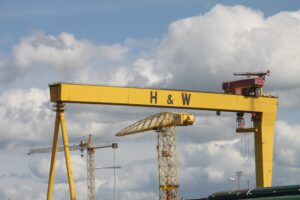
Harland & Wolff, the historic Belfast shipyard known for building the Titanic, is on the brink of administration, putting a £1.6 billion contract to build three Royal Navy warships at risk.
The troubled shipyard, which is expected to file for administration as early as Monday, faces a cash shortfall by the end of this month, raising fears that the Fleet Solid Support (FSS) ships may end up being built abroad—a first for Royal Navy warships.
The administration crisis threatens to invalidate Harland & Wolff’s contract to assemble the vessels, which are critical for supporting Britain’s aircraft carriers on global deployments. Although company bosses claim that placing Harland & Wolff Holdings Plc into administration will not impact the operation of its yards, there are concerns that the contract may have to go back out to tender.
Industry experts warn that the situation could force the Ministry of Defence (MoD) to rely on Navantia, the Madrid-based primary contractor that partnered with Harland & Wolff, to complete the work in Spain. This would mark a significant departure from the UK’s tradition of building its warships domestically.
Harland & Wolff had planned to share the fabrication of the ship hulls with Navantia, with final assembly in Belfast. However, insiders say that administration could result in Navantia acquiring Harland & Wolff’s Belfast yard, possibly cutting loose its other sites in Appledore, Devon, and Arnish and Methil in Scotland—a move that unions fear could lead to substantial job losses.
The GMB union has urged the government not to allow prospective buyers to “cherry pick” Harland & Wolff’s assets, arguing that all four sites play vital roles in the UK’s defence and renewable energy sectors. Matt Roberts, GMB’s national officer, warned that losing the contract would represent “one of the greatest betrayals in Northern Ireland’s industrial history.”
Russell Downs, the restructuring expert recently appointed as executive chairman at Harland & Wolff, insists that all four sites remain viable and that the company is still capable of fulfilling its share of the Navy contract. However, the uncertainty has prompted calls for alternative arrangements, such as a deal involving other UK shipyard operators like BAE Systems and Babcock, who were previously in the running for the contract.
Francis Tusa, an independent defence consultant, criticised the MoD’s decision to award the contract to Harland & Wolff and Navantia in 2022, pointing out that Harland & Wolff had not built a full-sized ship for about 20 years. He expressed doubt over the yard’s ability to handle such a significant project, describing the decision as overly optimistic.
Labour peer Lord Beamish has urged ministers to devise a rescue plan for the FSS programme, emphasising the importance of adhering to the national shipbuilding strategy and ensuring that the ships are built in the UK to support the regeneration of domestic shipbuilding. He highlighted the critical role of the support ships for the Royal Navy, calling them “vitally important.”
Harland & Wolff’s financial troubles deepened after Business Secretary Jonathan Reynolds declined to support a £200 million refinancing request in July, citing the high risk of losing taxpayer funds. Further complicating the situation, the company recently revealed it is investigating a potential “misapplication” of £25 million of corporate funds under previous management. Former CEO John Wood, who was ousted in July, dismissed the allegation as “ridiculous.”
The government has stated that it is working extensively with all parties to find a solution that preserves UK shipbuilding and protects jobs. However, it maintains that the market is best positioned to resolve the crisis and that public funding would pose a significant risk of financial loss. A government spokesman encouraged all parties to engage with trade unions before making further decisions, acknowledging the concerns of workers amid the ongoing uncertainty.
As Harland & Wolff’s future hangs in the balance, the potential fallout extends beyond job losses, with significant implications for the UK’s defence capabilities and industrial strategy. The crisis underscores the challenges of maintaining domestic shipbuilding in a competitive global market, and the need for a coordinated response to safeguard the industry’s legacy and future.
Read more:
Fears grow as Harland & Wolff nears administration, risking royal navy ship contract
OpenAI unveils new AI model with human-like reasoning capabilities

OpenAI has launched its latest artificial intelligence model, the o1 series, which the company claims possesses human-like reasoning capabilities.
In a recent blog post, the maker of ChatGPT explained that the new model spends more time thinking before responding to queries, enabling it to tackle complex tasks and solve harder problems in areas like science, coding, and mathematics.
The o1 series is designed to simulate a more deliberate thinking process, refining its strategies and recognising mistakes much like a human would. Mira Murati, OpenAI’s Chief Technology Officer, described the new model as a significant leap in AI capabilities, predicting it will fundamentally change how people interact with these systems. “We’ll see a deeper form of collaboration with technology, akin to a back-and-forth conversation that assists reasoning,” Murati said.
While existing AI models are known for fast, intuitive responses, the o1 series introduces a slower, more thoughtful approach to reasoning, resembling human cognitive processes. Murati expects the model to drive advancements in fields such as science, healthcare, and education, where it can assist in exploring complex ethical and philosophical dilemmas, as well as abstract reasoning.
Mark Chen, Vice-President of Research at OpenAI, noted that early tests by coders, economists, hospital researchers, and quantum physicists demonstrated that the o1 series performs better at problem-solving than previous AI models. According to Chen, an economics professor remarked that the model could solve a PhD-level exam question “probably better than any of the students.”
However, the new model does have limitations: its knowledge base only extends up to October 2023, and it currently lacks the ability to browse the web or upload files and images.
The launch comes amid reports that OpenAI is in talks to raise $6.5 billion at a staggering $150 billion valuation, with potential backing from major players like Apple, Nvidia, and Microsoft, according to Bloomberg News. This valuation would place OpenAI well ahead of its competitors, including Anthropic, recently valued at $18 billion, and Elon Musk’s xAI at $24 billion.
The rapid development of advanced generative AI has raised safety concerns among governments and technologists regarding the broader societal implications. OpenAI itself has faced internal criticism for prioritising commercial interests over its original mission to develop AI for the benefit of humanity. Last year, CEO Sam Altman was temporarily ousted by the board over concerns that the company was drifting away from its founding goals, an event internally referred to as “the blip.”
Furthermore, several safety executives, including Jan Leike, have left the company, citing a shift in focus from safety to commercialisation. Leike warned that “building smarter-than-human machines is an inherently dangerous endeavour,” and expressed concern that safety culture at OpenAI had been sidelined.
In response to these criticisms, OpenAI announced a new safety training approach for the o1 series, leveraging its enhanced reasoning capabilities to ensure adherence to safety and alignment guidelines. The company has also formalised agreements with AI safety institutes in the US and UK, granting them early access to research versions of the model to bolster collaborative efforts in safeguarding AI development.
As OpenAI pushes forward with its latest innovations, the company aims to balance the pursuit of technological advancement with a renewed commitment to safety and ethical considerations in AI deployment.
Read more:
OpenAI unveils new AI model with human-like reasoning capabilities
Grangemouth oil refinery to close in 2024, risking 400 jobs and increa …

Scotland’s last remaining oil refinery at Grangemouth will close between April and June next year, resulting in the loss of 400 jobs and leaving the UK with only a handful of refineries.
The closure, announced by Petroineos—a joint venture between Sir Jim Ratcliffe’s Ineos and PetroChina—comes as domestic demand for motor fuels declines, exacerbated by the forthcoming ban on new petrol and diesel cars.
Frank Demay, Chief Executive at Petroineos Refining, stated that the demand for key fuels produced at Grangemouth has already started to decline. “With a ban on new petrol and diesel cars due to come into force within the next decade, we foresee that the market for those fuels will shrink,” Demay said. The company cited the costs of maintaining a refinery built nearly a century ago as a significant factor in the decision.
The announcement has sparked criticism from political leaders and unions. UK Energy Secretary Ed Miliband expressed deep disappointment, while his Scottish counterpart, Gillian Martin, and union leaders condemned the decision as “industrial vandalism.” Grangemouth currently accounts for about 14% of the UK’s overall refining capacity, supplying motor fuels and other products across Scotland and northern England. Although the UK remains a net exporter of petrol, it relies on imports for diesel and jet fuel.
To mitigate the impact of the closure, Petroineos plans to establish an import and export fuel terminal at the site, ensuring continued supply to forecourts and other customers. The refinery has faced ongoing financial challenges, with accumulated losses of $775 million since 2011 despite a $1.2 billion investment. Its ageing infrastructure, originally opened in 1924, is less efficient than that of overseas competitors and requires an additional £40 million to remain operational beyond next spring.
Approximately 75 workers will stay on to operate the new terminal, while up to 280 jobs will be lost in the three months following the closure. Another 100 employees will remain for up to a year to begin decommissioning, with a small number staying on for longer to oversee further decommissioning and demolition efforts.
The UK and Scottish governments have commissioned studies to explore potential future uses for the refinery, with options including hydrogen, biofuels, and sustainable aviation fuel. However, these alternatives are unlikely to be implemented before the refinery shuts down. In response, the governments have announced a joint investment plan, adding £20 million to the previously announced £80 million Falkirk and Grangemouth Growth Deal, aimed at funding new growth projects in the area. The UK government also plans to explore using its National Wealth Fund to support alternative uses for the refinery site.
The closure is expected to have significant ripple effects on the wider economy, impacting numerous small businesses reliant on the refinery. Hisashi Kuboyama from the Federation of Small Businesses in Scotland highlighted the broader consequences, warning that “the knock-on effect on the supply chain will have an impact on numerous small businesses across the length and breadth of the country, putting many more jobs than the 400 on site at risk.”
Sharon Graham, General Secretary of the Unite union, criticised both Petroineos and politicians for failing to safeguard the workforce until alternative employment opportunities are secured. “This dedicated workforce has been let down by Petroineos and by the politicians in Westminster and Holyrood who have failed to guarantee production until alternative jobs are in place,” Graham said. She called on the Labour government to demonstrate its commitment to workers and communities, adding, “The road to net zero cannot be paid for with workers’ jobs.”
The decision to close the refinery does not directly impact other petrochemical operations at the Grangemouth complex, which will continue to operate. However, the closure represents a significant shift in the UK’s energy landscape, further increasing the nation’s reliance on imported fuels and raising questions about the future of the site and the community that depends on it.
Read more:
Grangemouth oil refinery to close in 2024, risking 400 jobs and increasing UK fuel imports
72% of UK firms face skills gaps, turn to AI and upskilling amid £275 …

The skills gap in the UK continues to widen, with 72% of companies reporting shortages in critical areas such as AI, data analytics, and cybersecurity—up from 69% in 2023, according to DocuSign’s Digital Maturity Report 2024.
As a result, businesses are increasingly turning to ‘quiet hiring,’ upskilling their current employees, and deploying AI tools like ChatGPT to bridge the gaps without increasing headcount. The number of firms using AI to address skills shortages has surged by 42% this year.
Despite substantial investments in digital transformation, UK firms are still grappling with productivity challenges. Employees are reportedly spending an average of two days a week on manual, low-value tasks, costing businesses over £275 million annually in lost productivity. This inefficiency is also contributing to employee dissatisfaction, with 41% considering leaving their jobs due to outdated processes.
While 35% of companies plan to ramp up their investment in AI over the next year, only 43% feel fully equipped to implement these technologies, citing concerns around security and data protection as major obstacles. Nevertheless, enhancing efficiency through AI and digital tools remains a top priority, as firms strive to align their technology investments with improved productivity outcomes.
Sheila Flavell, COO of FDM Group, highlighted the urgency for businesses to support their AI investments with robust skills training. “With AI advancing rapidly, businesses are investing more to stay competitive. However, it’s crucial for companies to provide high-impact skills training to help their staff keep pace with evolving technology. Upskilling in AI, data analytics, and security ensures they have the talent needed to drive digital transformation.”
Flavell emphasised the importance of experiential learning in upskilling efforts, enabling employees to gain hands-on experience with new technologies. “This approach not only boosts productivity but also reduces the reliance on ‘quiet hiring’ and helps retain top talent by offering real opportunities for growth,” she added.
As businesses navigate the challenges of a rapidly evolving digital landscape, the focus on upskilling and integrating AI solutions is set to play a pivotal role in closing the skills gap and enhancing productivity. However, for these initiatives to succeed, companies must also address security concerns and ensure their workforce is adequately prepared to leverage new technologies effectively.
Read more:
72% of UK firms face skills gaps, turn to AI and upskilling amid £275m productivity loss

