
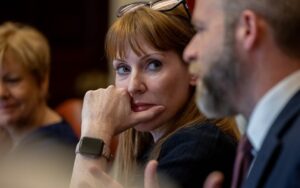
Angela Rayner has hinted that some elements of her highly anticipated overhaul of workers’ rights may be delayed, in a setback for union leaders.
In a significant meeting held at the Cabinet Office on Whitehall, the Deputy Prime Minister informed union representatives and business lobbyists that “not everything” initially proposed will be included in the forthcoming Employment Bill.
The government remains on track to enhance workers’ rights by 12 October, fulfilling its promise to deliver within the first 100 days of taking office. However, uncertainty lingers over which aspects will be legislated in the coming months.
The ambitious set of proposals includes protections against unfair dismissal from day one, the abolition of zero-hour contracts, a ban on “fire and rehire” tactics, and an increase in the minimum wage.
A Labour insider remarked, “The Bill is just one piece of the puzzle, and the Deputy Prime Minister was clear that we need to get this right—some of the policies are quite complex.”
It has been suggested that the reforms could roll out in as many as four phases, as civil servants navigate through what has been described as the most extensive transformation of workers’ rights in a generation.
A source close to Ms Rayner confirmed that she is committed to ensuring the reforms are both effective and workable, acknowledging that “with only 100 days until the Employment Bill is introduced, not everything can be included.”
Paul Nowak, General Secretary of the Trades Union Congress (TUC), who was present at the meeting, confirmed that ministers reiterated their plan to consult businesses and introduce the Employment Bill within the 100-day timeframe. He dismissed concerns that the agenda is being watered down, stating, “Some would prefer this agenda just went away. It’s not going to go away—that was made very clear today.”
Another participant at the meeting suggested that “more knotty issues could be delayed” due to concerns about the economic impact, with much of the legislation still in “draft mode.” They highlighted the significant complexity involved in certain areas, such as employment status, which requires extensive work.
Labour has assured anxious business leaders that the more controversial changes will undergo consultation before becoming law. However, these commitments do not preclude their inclusion in the Bill.
Ms Rayner commented that “this first-of-its-kind meeting has kicked off a new era of partnership that will benefit everyone across the country striving to build a better life.”
Justin Madders, the Employment Rights Minister, added, “We are moving quickly on the Bill, it will be delivered in the first 100 days, and it’s fantastic to come together to share insights that will help us ensure it achieves what we intend.”
A government spokesperson declined to specify which measures will be included in the Bill but confirmed that it would deliver on policies requiring primary legislation.
Read more:
Rayner signals potential delays to key employment reforms
Category: Uncategorized
Disney claims widower cannot sue over wife’s death at theme park res …
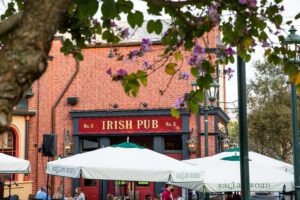
Disney has come under fire for arguing that a widower whose wife tragically died after suffering a severe allergic reaction at a Walt Disney World restaurant cannot pursue legal action against the company because he had previously signed up for a free trial of Disney’s streaming service, Disney+.
Kanokporn Tangsuan, a 42-year-old medical doctor, died after consuming food at Raglan Road Irish Pub and Restaurant in Disney Springs, Florida, despite her family’s repeated assurances from their server that the meal would be allergen-free. Following her death in October last year, her husband, Jeffrey Piccolo, filed a wrongful death lawsuit against Walt Disney Parks and Resorts, accusing the company of negligence in failing to properly train staff on handling food allergies.
However, Disney has sought to dismiss the case, citing the arbitration clause within the Disney+ Subscriber Agreement, which Piccolo agreed to when he signed up for the service in November 2019. The company claims that this clause applies to “all disputes,” including those involving its affiliates, which include Walt Disney Parks and Resorts.
Piccolo’s legal team has slammed Disney’s defence as “preposterous” and “surreal,” arguing that agreeing to a streaming service’s terms should not waive his right to a jury trial in a wrongful death case. The case has sparked a debate over the enforceability of arbitration clauses in consumer contracts, especially when applied to unrelated matters such as personal injury or wrongful death.
While Disney maintains that it is simply defending itself against an attempt to involve the company in a lawsuit related to a restaurant it does not directly own, the case raises broader questions about the reach of arbitration agreements and the rights of consumers. Legal experts have suggested that a judge may find it unreasonable to extend the arbitration clause from a streaming service contract to a wrongful death claim, particularly in a case involving such serious allegations.
The case continues to unfold as Piccolo seeks over $50,000 in damages for mental pain and suffering, funeral and medical expenses, and loss of income. Disney’s position has sparked widespread criticism and raised concerns about the ethical implications of using such contractual clauses to shield against legal liability in severe cases.
Read more:
Disney claims widower cannot sue over wife’s death at theme park restaurant due to Disney+ subscription agreement
Thousands of rail fare prosecutions to be overturned following landmar …

As many as 74,000 prosecutions for alleged rail fare evasion in England and Wales are set to be quashed following a landmark ruling that found the legal process used by UK train companies was improper.
The UK’s chief magistrate, Judge Paul Goldspring, ruled on Thursday that the single justice procedure (SJP), which allows magistrates’ hearings to be conducted behind closed doors, should never have been applied to these cases.
The ruling came after six test cases were declared void, prompting a review of all similar prosecutions. Authorities, including the Department for Transport (DfT) and various rail operators, must now compile a list of those affected by the end of September, with the intention of contacting them to resolve the cases.
The SJP, typically used for minor offences such as non-payment of TV licences, was inappropriately used by train companies to fast-track fare evasion cases. This procedure, introduced under the Criminal Justice and Courts Act 2015, bypasses public hearings and has been criticised for lacking transparency and fairness.
In response to the ruling, Northern Trains and Greater Anglia, both involved in the improper prosecutions, issued apologies. Northern Trains welcomed the judgment, emphasising their commitment to treating all passengers fairly.
Christian Waters, a passenger who faced a similar legal battle over a £3.50 fare, expressed satisfaction with the ruling, describing it as “complete vindication.” His case, like thousands of others, highlighted the flaws in the SJP process.
The process of refunding fines and quashing convictions is expected to take months, as courts and train companies work to identify and contact those affected. Despite the ruling, legal experts have stressed that this does not give people a free pass to evade train fares, as train companies can still prosecute fare evasion through other legal channels.
The ruling has prompted calls for reform of the SJP, with the Magistrates’ Association acknowledging the need for improvements to protect vulnerable individuals from potential harm caused by the current system.
Read more:
Thousands of rail fare prosecutions to be overturned following landmark ruling on legal process
Pret A Manger leads high street coffee price hikes with 51% increase o …

Pret A Manger has been revealed as the high street coffee chain with the steepest price increases over the past five years, with the cost of their most popular drinks rising by an average of 51%.
According to research conducted by Stocklytics, Pret’s americano has seen the most significant hike, jumping by £1.41 since January 2019.
The study compared the prices of seven popular drinks across five major UK coffee chains—Pret A Manger, Costa Coffee, Caffe Nero, Starbucks, and Greggs—looking at the cost of a regular cup of tea, americano, cappuccino, flat white, latte, single espresso, and hot chocolate.
While Pret has notably reduced the price of its filter coffee to 99p, most of its menu has seen substantial increases, with drinks now pushing the £4 mark. Caffe Nero follows closely behind Pret in terms of price hikes, with an average increase of £0.94 per drink, representing a 39% rise. Costa Coffee is not far off, with an average increase of £0.91, also around 38%.
Surprisingly, Starbucks comes out as the second most affordable option for basic drinks, with an average price increase of 25% (£0.57) over the same period. This positions Starbucks as a more cost-effective choice than expected in comparison to its rivals.
Greggs, meanwhile, stands out as the most budget-friendly coffee spot on the high street. Despite some minor price increases on food items, including a 5p to 10p rise on its iconic sausage rolls, Greggs has only raised its coffee prices by 7% in the last five years, making it the cheapest place to grab a coffee to go.
The research also highlighted that hot chocolate remains the most expensive drink across all chains, with an average price of £3.38 as of July 2024. As the cost of coffee continues to climb, consumers might increasingly turn to Greggs for a more affordable caffeine fix.
A Pret spokesperson said: “This research is misleading as it fails to take into account the significant savings available to customers through our Club Pret subscription since 2020. The cost of the subscription works out cheaper than buying two lattes every week with customers saving over £60 a month on average, so subscribers are often paying significantly less than the menu price. The data also doesn’t include our Filter Coffee price, which costs just 99p.”
Read more:
Pret A Manger leads high street coffee price hikes with 51% increase over five years, Greggs remains most affordable
Directors increasingly involved in operations as trust in executive te …

The once clear-cut boundary between non-executive directors and senior management is becoming increasingly blurred, with a significant number of business leaders indicating a lack of full trust in their executive teams to effectively manage operations.
According to an annual report by Heidrick & Struggles, the global headhunting firm, more than a fifth of directors surveyed, including those from FTSE 350 companies, expressed concerns about their executive teams’ ability to “get things done.”
The report, which surveyed over 3,000 CEOs and directors worldwide, highlights a growing trend of non-executive board members becoming more operationally involved. This shift is particularly pronounced in the UK, where nearly three-quarters of respondents acknowledged increased board involvement in day-to-day operations, with 22% reporting frequent involvement and 49% noting occasional participation.
This increased engagement is attributed to several factors, including a desire for board members to have a deeper understanding of company operations (cited by 43% of UK respondents) and the need to support CEOs who are overwhelmed by the demands of their role (21%). However, the most concerning finding is that 22% of respondents believe this involvement stems from a lack of trust in the executive team’s ability to manage operations effectively.
Kit Bingham, partner and head of UK board practice at Heidrick & Struggles, noted that the pressures on boards have intensified, driven by investor expectations, regulatory demands, and the complexities of modern business challenges such as artificial intelligence, cybersecurity, and environmental, social, and governance (ESG) issues. “The challenges and expectations on boards are ultimately greater than ever,” Bingham said.
Alice Breeden, a regional practice managing partner at Heidrick & Struggles, pointed out the resulting tensions within the boardroom. “Boards are potentially spending more time in operations than they should, just to reassure themselves that they know what’s going on and that the executives have got it,” she explained.
The degree of operational involvement by boards varies across countries and sectors, with the financial services industry reporting the least involvement globally. However, the trend is reshaping the role of boards across the business landscape.
Mark Cutifani, former CEO of Anglo American and current chairman of Vale Base Metals, who contributed to the report, observed that the role of the board is “changing quite significantly, far more significantly than we probably appreciate.” He emphasised that boards must take a more active role in various aspects of the business, as the complexities of today’s corporate environment demand more than what a CEO alone can manage. “You’ll need some of it from the board,” Cutifani concluded.
This shift in board dynamics underscores the evolving challenges faced by businesses today and the critical need for a collaborative approach to leadership and governance.
Read more:
Directors increasingly involved in operations as trust in executive teams wanes
Taylor Swift ticket prices plummet by 90% in last-minute resale market …

The second-hand ticket market for Taylor Swift’s highly anticipated Wembley concert has witnessed dramatic price drops, with some tickets falling by over 90% from their initial resale prices.
Fans who have held their nerve and waited until the last minute have found themselves in a prime position to secure cheaper tickets.
According to data tracked by HotUKDeals.com, ticket prices on resale platforms have seen sharp declines as the concert date approaches. For example, a ticket that was initially listed at an exorbitant £10,000—a staggering 10,500% increase from the original face value of £95—dropped to just under £1,000 with a few days to go. The price then fell further to £856 just one day before the event, representing a 90% reduction from the initial resale price.
Other tickets followed a similar pattern. Tickets initially priced at £1,368 dropped by 32% to £929 two days before the concert, and then to £798, a further 14% reduction, just one day out. Out of the four tickets tracked, only two remained available at the time of reporting.
Some tickets were sold before prices could drop further. One such ticket, originally listed at £1,740, was sold or removed from the market at £1,304, still a 25% reduction from the original listing but an 88% markup from the face value. Another ticket, listed at £2,924, sold for £1,856—a 36% reduction—yet remained 1,200% higher than its original sale price.
Vix Leyton, Consumer Money Expert at HotUKDeals.com, noted that despite the high demand and initial price inflation, last-minute buyers who stick to their budget are finding much better deals. “These gigs have become a cultural event, and while touts have tried to cash in with sky-high prices, our investigation shows the actual sale prices are significantly lower. It’s crucial for fans to hold their nerve, stick to their budget, and avoid getting caught up in the frenzy.”
Read more:
Taylor Swift ticket prices plummet by 90% in last-minute resale market, patience proves key
Asda’s grocery market share slips as Chairman Lord Rose voices conce …

Asda has experienced a notable decline in its grocery market share, just days after its chairman, Lord Rose of Monewden, publicly expressed his dissatisfaction with the supermarket’s performance.
According to recent data from Kantar, Asda’s sales fell by 6% in the 12 weeks leading up to 4 August, reducing its market share from 13.7% to 12.6%.
This downturn comes at a challenging time for the private equity-backed supermarket group, which has been losing ground to its major competitors, including Tesco, Sainsbury’s, and Morrisons. Lord Rose did not hide his disappointment, telling The Telegraph, “I’ve been in this industry for a long time and I am slightly embarrassed. I won’t deny that. I don’t like being second, third or fourth.”
Asda is majority-owned by TDR Capital, holding 67.5% of the company, while Mohsin Issa retains a 22.5% stake. His brother, Zuber Issa, sold his share to TDR earlier this year. In light of the recent challenges, Lord Rose has urged Mohsin Issa to step back from the day-to-day management of the chain, suggesting that the business now requires a different type of leadership. “He is a disrupter, an entrepreneur, he is an agitator,” Lord Rose said, acknowledging the significant changes under Issa’s leadership but implying that a new approach is necessary for the current market conditions.
In contrast, Tesco has continued to strengthen its position, with its market share rising from 27% to 27.6% in the same period. The supermarket has implemented an Aldi price-match scheme to retain customers amid the ongoing cost of living crisis, contributing to its steady growth in market share since August last year. Lidl has also gained ground, increasing its market share from 7.7% to 8.1%, while Aldi’s share slightly dipped from 10.2% to 10%.
Morrisons, despite a 1.4% increase in sales, saw its market share drop marginally from 8.7% to 8.6%, whereas Sainsbury’s sales growth of 5.2% boosted its market share from 14.8% to 15.3%.
This period of flux in the grocery sector highlights the pressures facing Asda as it navigates a competitive and changing market landscape, with leadership decisions likely to play a crucial role in its future trajectory.
Read more:
Asda’s grocery market share slips as Chairman Lord Rose voices concerns over performance
Exploring the Vision Behind FreeOfficeFinder: A Conversation with CEO …

FreeOfficeFinder, established in 2002, is an innovative and comprehensive service that helps businesses find and rent their ideal office spaces at no cost.
As one of the pioneers in the private, flexible office space market, the company has grown alongside the industry, which is projected to reach USD 2.84 billion by 2029 in the UK alone. FreeOfficeFinder has been at the forefront of this growth, meeting the demand for adaptable, managed, and serviced office spaces across London and the UK.
The company’s mission is to provide businesses with a vast array of office options without the burden of hefty relocation fees, a common practice among other agents. What began with a modest database of just two buildings has expanded into a portfolio of over 2,700 properties managed by more than 1,000 landlords. This growth reflects FreeOfficeFinder’s unwavering commitment to offering a wide variety of office solutions that cater to diverse client needs, from small startups to large corporations.
To date, FreeOfficeFinder has assisted over 50,000 organisations in securing their perfect flexible office spaces, a testament to the trust and confidence businesses place in their services. The company’s dedication to quality and industry standards is further highlighted by its membership in The Flexible Space Association since 2009.
Operating under a hybrid work setup, the FreeOfficeFinder team splits their time between a serviced office in Farringdon, London, and remote work. This experience underscores the importance of having a collaborative office environment—a perspective they bring to the clients they serve.
Here, CEO Nick Riesel, of FreeOfficeFinder shares insights into the inspiration behind the company, the lessons learned over the years, and the principles that define their approach to business.
What was the inspiration behind FreeOfficeFinder?
Ultimately, I saw a gap in the market and went for it. I was working in the residential property sector, and I saw an opportunity to fix a problem that so many people were facing. When I spoke to people it became clear that traditional methods of finding office space were overcomplicated and outdated, often involving high costs in the form of agency fees and a lack of transparency.
The vision was to create a service that not only connected clients with suitable office spaces but also offered a seamless, one-stop-shop process. Thus, FreeOfficeFinder was born.
By leveraging the model where landlords pay us for successful introductions, we could keep the service entirely free for clients, meaning businesses can focus on what they do best without the added financial burden and complexity of office hunting. The term FreeOfficeFinder reflected our offering in 2002, and still does to this day.
Who do you admire?
Jeff Bezos stands out for me. His journey with Amazon, transforming it from an online bookstore to a global marketplace that sells virtually everything, quickly and easily, is a remarkable story of strategic pivoting. His ability to foresee the potential of the internet and adapt his business model to that has not only revolutionised e-commerce but also made him one of the wealthiest people in the world. By staying innovative and customer-focused he’s shown incredible entrepreneurial versatility.
I also admire Richard Branson for his amazing ability to create a brand that has stretched across so many different markets and industries for over 50 years. His knack for making his brand a success in so many sectors is remarkable.
Looking back, is there anything you would have done differently?
Honestly? Too much to count! I’ve learned so much that would have been invaluable in the early days of the business. But I think most of all, having a mentor back at the beginning would have really helped.
Having access to someone with similar entrepreneurial experiences could have really accelerated our growth and improved our decision-making processes. Over the past two decades, the learning curve has been steep, with new insights gained every week. A mentor could have provided guidance and wisdom that would have resulted in achieving milestones much faster and probably with fewer obstacles too. There were so many questions I wish I could have asked. I hope that further down the line I could offer others the kind of mentorship which I now know have been so beneficial to me.
What defines your way of doing business?
The way FreeOfficeFinder conducts business is grounded in principles that might seem clichéd but are fundamentally sound: delivering good service and being fair to everyone involved—staff, customers, and suppliers.
We’re all about fostering a positive working environment and building long-term relationships. When people want to work with you, and enjoy their work, it minimises the time and resources spent on replacing staff or negotiating with dissatisfied clients. Instead, you can better invest your time in growing the business and making the service offerings better and better.
What advice would you give to someone starting out?
I think an important piece of advice is to try and value criticism over praise. Tough as it might sound, understanding the weaknesses in your service or product is crucial. Constructive criticism means you have actionable insights that, when addressed correctly, can significantly improve the quality and appeal of what you’re offering. Embracing feedback with a growth mindset really can honestly transform challenges into opportunities.
And, of course, as I mentioned before, get a mentor if you can. Having a mentor means you get to learn from someone who’s been through the ups and downs and can share their wisdom to help you avoid mistakes and make smart choices. Mentors help you build confidence, sharpen your game plan, and introduce you to important people. Value an idea being successful over whose idea it was.
Read more:
Exploring the Vision Behind FreeOfficeFinder: A Conversation with CEO Nick Riesel
UK Government injects £800M to enhance broadband for 300,000 rural ho …

The UK Government has announced a substantial investment of up to £800 million to upgrade broadband infrastructure for 312,000 rural homes and businesses across England, Scotland, and Wales.
This initiative is part of a broader strategy to achieve full gigabit broadband coverage across the UK by 2030, targeting regions that have been left behind in the digital revolution.
This investment seeks to address the digital inequality that has long plagued rural areas, where outdated infrastructure has limited access to high-speed internet. The upgrades will enable residents and businesses in these remote regions to enjoy faster and more reliable broadband, essential for tasks such as streaming, video conferencing, and large file downloads.
The improved connectivity is expected to have a transformative impact on local economies, enabling businesses to operate more efficiently, supporting remote work, and attracting new enterprises to these areas. This project not only aims to enhance internet speeds but also to drive economic growth and create new opportunities in rural communities.
For the first time, Wales will benefit from such a large-scale broadband upgrade, with regions like the South Wales Valleys, Exmoor National Park, and the Forest of Bowland set to see significant improvements. These areas, historically underserved, will now be brought up to par with more urbanised regions.
Elizabeth Anderson, CEO of the Digital Poverty Alliance, praised the government’s efforts, stating, “Millions across the country still struggle to access basic online services due to poor connectivity, especially in rural regions, so it’s excellent to see the government’s renewed push to roll out improved broadband.” She also emphasised the importance of making high-speed connections affordable amidst the ongoing cost of living crisis.
Sachin Agrawal, UK Managing Director at Zoho Corporation, highlighted the broader economic benefits, noting, “Improving connectivity in rural areas affords businesses more options when choosing office locations, providing the option to move away from crowded urban centres and reduce overheads.” He added that reliable connectivity, paired with modern technology tools, is key to enhancing productivity and flexibility for employees, whether they work from home or in the office.
This government initiative underscores the critical role of broadband as an essential utility in the digital age, integral to education, healthcare, and the overall economic vitality of the UK.
Read more:
UK Government injects £800M to enhance broadband for 300,000 rural homes

