

Uber, the ride-hailing and food-delivery giant, is gearing up for a significant tax dispute with HM Revenue & Customs (HMRC) over £1 billion in VAT payments.
Since March 2022, Uber has been required to pay 20 per cent VAT on its fares and delivery sales, resulting in a total charge of £951 million by HMRC. Uber, however, contends that VAT should be applied only to its profits, not its revenues.
In its recent accounts filed at Companies House, Uber disclosed that it had paid £631 million in VAT to HMRC in 2023, listing this as a debt it anticipates recovering. Additionally, the company paid £150 million in January and received a further £170 million bill more recently.
“The payments do not represent our acceptance of the assessments,” Uber stated in its UK annual report. “We believe that we will be successful in our appeal, upon which the full amount of our payments will be returned to us with interest.”
Historically, Uber did not charge VAT to customers, arguing it was merely an intermediary between customers and drivers, who would be VAT-exempt unless earning over £85,000 annually. This stance shifted after the Supreme Court ruled in 2021 that Uber’s drivers were “workers” rather than self-employed, leading to a £615 million settlement with HMRC over historic unpaid VAT and acceptance of future VAT liabilities.
Uber argues that the 20 per cent VAT should only apply to its profit on sales, invoking the Tour Operators’ Margin Scheme (TOMS). Last December, a tax tribunal supported rival Bolt’s claim to be eligible for TOMS, boosting Uber’s position. HMRC is appealing this ruling, and the Treasury is currently consulting on potential changes to VAT rules for private-hire vehicles.
Uber’s UK accounts reveal a profit of £29 million on £5.3 billion in revenues last year, with a corporation tax payment of £4.5 million. The company’s revenues increased by 56 per cent, partly due to a business restructuring in 2022.
Read more:
Uber Faces £1 Billion VAT Showdown with HMRC
Category: Uncategorized
Formula 1’s Selective Morality: The Flavio Briatore Paradox

When Flavio Briatore was ousted from Formula 1 in 2009 for his role in the infamous “Crashgate” scandal, it seemed a clear message was sent: the sport would not tolerate actions that compromised the safety and integrity of its competitions.
Briatore’s orchestration of Nelson Piquet Jr.’s deliberate crash during the 2008 Singapore Grand Prix put lives at risk and manipulated race outcomes, leading to his indefinite ban by the FIA. Yet, here we are in 2024, with Briatore not only back in the paddock but also formally reinstated as an executive adviser to Alpine.
This decision to bring Briatore back into the fold of Formula 1 raises significant ethical questions about the sport’s values and its commitment to integrity. The initial ban, although later overturned by a French court, left an indelible mark on Briatore’s reputation. Despite his continuous presence around the paddock and ongoing involvement in driver management, his formal re-entry into an official role signals a troubling inconsistency in the sport’s moral standards.
Contrast this with the treatment of Christian Horner, the Red Bull team principal, who faced severe backlash over accusations of controlling behaviour towards a female employee. Despite being cleared by an independent investigation, Horner’s reputation took a hit, and his peers called for transparency and adherence to positive values. The discrepancy in responses to these two figures is striking.
When Briatore’s return was announced, Alpine’s team principal, Bruno Famin, was quick to dismiss concerns about Briatore’s past. “I don’t really mind about the past,” he stated, emphasising the potential benefits of Briatore’s experience and connections. Famin’s perspective, echoed by other team principals, suggests a disturbing willingness to overlook serious past misconduct in favour of perceived immediate gains.
Toto Wolff of Mercedes, Fred Vasseur of Ferrari, and Alessandro Alunni Bravi of Stake all underscored Briatore’s talents and contributions to the sport, seemingly brushing aside the gravity of his previous actions. This collective endorsement starkly contrasts with their earlier demands for accountability in Horner’s case, highlighting a selective approach to moral scrutiny.
Formula 1’s ethical landscape appears increasingly influenced by commercial interests. Since Liberty Media acquired the sport’s commercial rights, the focus has been on expansion and profitability. The Netflix series “Drive to Survive” has significantly boosted F1’s popularity, attracting a diverse and global audience. This surge in viewership has translated into increased sponsorship, investment, and overall value for the teams and the sport.
It raises the question: Is Liberty Media’s apparent indifference towards Briatore’s past a reflection of a broader strategy where value addition trumps moral considerations? The willingness to turn a blind eye to Briatore’s indiscretions might indicate that, as long as it adds value, the sport’s moral compass can be conveniently adjusted.
What does this tell us about Formula 1’s ethical landscape? The sport appears to have a malleable moral compass, one that is influenced by friendships, financial interests, and the allure of strategic advantages. When it comes to figures like Briatore, whose connections and expertise are seen as valuable, past indiscretions are conveniently forgotten. Meanwhile, others, like Horner, face intense scrutiny for issues that, while serious, were investigated and cleared through proper channels.
Formula 1 has made strides in presenting itself as a sport committed to diversity and positive values, but the reappointment of Briatore undermines these efforts. It sends a conflicting message to fans and stakeholders about what the sport truly stands for. If the safety of drivers and the integrity of competitions can be compromised without lasting consequences, where do we draw the line?
In welcoming Briatore back, Formula 1 risks eroding trust and credibility. The sport must reconcile its actions with its proclaimed values, ensuring that its commitment to integrity is not swayed by convenience or the prospect of short-term gains. Only then can it genuinely uphold the standards it professes to champion.
Read more:
Formula 1’s Selective Morality: The Flavio Briatore Paradox
Tata Steel Workers to Strike for First Time in 40 Years Over Job Cuts

In a historic move, approximately 1,500 Tata Steel workers will commence an indefinite strike next month in response to the company’s plans to cut thousands of jobs.
This will be the first strike action by UK steel workers in over 40 years, according to the trade union Unite.
The strike, set to begin on 8 July, will affect Tata Steel’s operations at the Port Talbot and Llanwern sites in Wales. This action follows Tata Steel’s announcement that it will close both blast furnaces in Port Talbot by the end of September, resulting in the loss of about 2,800 jobs.
Company and Union Responses
Tata Steel has warned that if the strike jeopardises the safety or stability of its operations, it may be forced to expedite the closure plans. The company is currently operating at a loss of £1 million per day due to the operational instability of its steelmaking apparatus.
Sharon Graham, Unite’s general secretary, stated that the workers are fighting not just for their jobs but for the future of their communities and the steel industry in Wales. She emphasised that the strikes will persist until Tata halts its “disastrous plans.”
In contrast, two other trade unions, Community and GMB, have decided to delay any industrial action until after the upcoming general election. Alun Davies, national officer for steel at Community, noted that any decision to strike would be made by their members, who represent the majority of workers affected by Tata’s plans.
Tata Steel’s Position
Tata Steel has urged Unite to suspend the strike action and return to negotiations alongside other unions. The company has also warned that it may retract the enhanced redundancy packages offered if the strike proceeds. Rajesh Nair, Tata Steel’s chief executive, stated that the “most favourable financial package” the company has ever offered would not be available if workers participated in industrial action.
The company plans to invest £1.25 billion in building an electric arc furnace, a more environmentally friendly steel production method that requires fewer workers. The UK government is contributing £500 million towards this project. Tata Steel believes this move will secure the future of steelmaking at the site.
The planned strike represents a significant moment for the UK steel industry, highlighting the ongoing tensions between workforce preservation and technological advancement in manufacturing. The outcome of this industrial action will likely have lasting implications for both Tata Steel’s operations and the broader steel community in Wales.
Read more:
Tata Steel Workers to Strike for First Time in 40 Years Over Job Cuts
Business Travel Resurges with a New Focus on ‘Bleisure’

The pandemic brought business travel to a halt, shifting meetings to virtual platforms like Teams. However, today’s business travel has not only rebounded but surpassed pre-pandemic levels, transforming the industry in unexpected ways.
The MICE (Meetings, Incentives, Conferences, and Exhibitions) sector is seeing a significant revival, presenting new opportunities as corporate travel evolves.
Hyatt’s European portfolio reported a 20% increase in MICE enquiries from 2022 to 2023, with Spain experiencing a nearly 50% rise. The UK and German markets saw interest in MICE increase by 25% and 31%, respectively. Clearly, the business trip is back in full swing.
Paul Dalgleish, Vice President of Sales, Revenue, and Business Development in EMEA at Hyatt, acknowledges the shift in corporate travel needs. “Fast Wi-Fi and sleek meeting rooms are no longer sufficient,” says Dalgleish. “Over 80% of corporate travellers now participate in ‘bleisure’, blending business trips with leisure activities and experiences.”
The Grand Hyatt Barcelona exemplifies this trend, offering unique MICE facilities alongside stunning views of Barcelona’s iconic sights. Data indicates that a third of business travellers want to involve their families, prompting companies to extend trips and choose hotels with comprehensive amenities.
Dalgleish emphasizes Hyatt’s commitment to this new demand. “Our hotels and brands in EMEA provide unique MICE offerings catering to a wide range of events, from team building and staff incentive trips to traditional corporate travel.”
Hyatt boasts over 200 hotels and 45,000 rooms across Europe, Africa, and the Middle East, with 70 new openings planned in the coming years. Dalgleish is confident in the continued success of Hyatt’s MICE offerings. “Our philosophy, Together by Hyatt, addresses evolving preferences by offering bespoke event experience guides, sustainability fact sheets, and advanced technology tools to streamline event planning.”
With the rise of remote working and the digital nomad trend, the line between business and leisure continues to blur. In today’s world, where travel is no longer taken for granted, combining work with leisure activities has become the norm.
Hyatt’s Unique Venues platform highlights singular MICE spaces in Europe, the Middle East, and Africa. For instance, Andaz London Liverpool Street offers not only a convenient gateway into the City but also a historic 111-year-old Masonic Temple. Similarly, Hyatt Regency Barcelona Tower provides easy access to the city’s financial districts and features a glass dome with 360-degree city views.
As business travel gains momentum across Europe, corporate travellers are seeking more diverse and enriching experiences, making trips more exciting. “Who needs a Teams background when you can have the real thing?” Dalgleish concludes, underscoring the newfound vibrancy in corporate travel.
Read more:
Business Travel Resurges with a New Focus on ‘Bleisure’
Lord Sugar Invests in The Apprentice Winner’s Business

Lord Alan Sugar has officially invested in R Nation, the company run by Rachel Woolford, the latest winner of BBC One’s The Apprentice. Woolford secured the £250,000 investment after defeating Phil Turner in the show’s final, which aired in April.
According to documents filed with Companies House, Lord Sugar’s investment firm, Amsvest Limited, has acquired up to a 50% stake in R Nation. Additionally, Lord Sugar (pictured with his with Lady Ann Sugar) joined the business as a director on June 17.
R Nation, established in 2019 and based in Loughton, operates a gym in Leeds. However, the company has yet to turn a profit. In 2023, it reported a loss of £336,346, following a similar financial performance in 2022 when it owed £288,409. The filings indicate that most of the expenses were attributed to equipment costs.
Despite the financial challenges, Lord Sugar’s investment and direct involvement could provide the necessary support to steer the company towards profitability.
Earlier this year, The Sunday Times Rich List estimated Lord Alan Sugar’s net worth at £1.082 billion, ranking him 159th, up from 165th the previous year. Known for founding Amstrad, a British consumer electronics company, Sugar made his fortune primarily through property investments.
While The Apprentice experienced a drop of 1.2 million viewers during its February launch this year, the show remains a significant platform for aspiring entrepreneurs. The series, which has been a staple on BBC since 2005, once attracted peak viewership of 6.8 million.
Lord Sugar’s latest investment in R Nation underscores his continued commitment to supporting emerging business talent and fostering entrepreneurial growth through The Apprentice.
Read more:
Lord Sugar Invests in The Apprentice Winner’s Business
Concerns Arise Over Tax on State Pensions Despite Conservative Pledges

A recent report suggests that some pensioners are already paying income tax on their state pensions, contradicting the Conservative Party’s pledge to keep these pensions tax-free.
The standard new state pension is currently below the £12,570 income tax threshold, but future increases could push it above this limit.
The Conservative manifesto includes the “triple lock plus,” a commitment to raise the tax-free threshold to prevent the new state pension from being taxed. However, pensions consultancy LCP has highlighted that due to variations in the amounts received, some individuals are already subject to tax on their state pensions.
Many individuals have expressed confusion over pensions policies, with some noting that a portion of their pension income is already taxed. Alan from West Sussex questioned whether the tax-free promise on pensions is guaranteed, reflecting broader public concern.
Variability in Pension Payments
The report by LCP reveals that the current system’s complexities mean that approximately 2.5 million people are already taxed on their state pensions. This is partly due to the old state pension system, which includes additional state pension money for those who reached pension age before 2016. Even under the new state pension system, some pensioners receive more than the standard rate due to transitional measures preserving their entitlements.
Sir Steve Webb, LCP partner and former Liberal Democrat pensions minister, stated, “The reality is that the amounts which pensioners receive vary hugely, from a few pounds a week to hundreds of pounds a week. We estimate that around 2.5 million pensioners, or more than one in five of all pensioners, have state pensions in excess of the income tax threshold. These pensioners would overwhelmingly continue to be taxpayers even if future policy linked the income tax allowance to increases in the headline rate of state pension.”
Political Reactions
A Conservative Party spokesman reiterated the party’s commitment: “Under the triple lock plus, the tax-free allowance for pensioners will rise in line with the fastest of prices, earnings, or 2.5%—just like the state pension.” The spokesman criticised Labour, suggesting their plans would result in higher taxes for millions of pensioners. Labour, however, has dismissed the Conservative plan as not credible.
Impact of Frozen Tax Thresholds
Rosie from Scotland highlighted a common misconception: “There is an impression pensioners do not pay tax, but state pensions are taxable income and many with tiny work pensions are taxed due to the freezing of tax thresholds.” With income tax thresholds frozen for the next three years under the plans of all major parties, more pensioners are likely to be drawn into paying tax as their incomes rise.
This includes pensioners receiving income from workplace or private pensions in addition to their state pensions, further complicating their tax liabilities. The ongoing freeze on tax thresholds means that the issue of pension taxation is set to persist, affecting a significant number of retirees across the country.
Read more:
Concerns Arise Over Tax on State Pensions Despite Conservative Pledges
Sir Jim Ratcliffe Criticises Labour’s Energy Plans Despite Backing S …
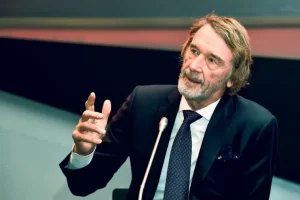
Sir Jim Ratcliffe, the chief executive of Ineos and co-owner of Manchester United, has criticised Labour’s green energy plans, claiming they could tax North Sea oil and gas production “out of existence”.
This comes just days after he publicly supported Labour leader Sir Keir Starmer.
Ratcliffe warned that Labour’s proposals to raise taxes on oil and gas producers and reduce North Sea tax allowances would threaten Britain’s energy security and lead to increased dependence on imported energy. “If we shut down the North Sea, what is that accomplishing? Because we’ll just have to import our energy,” he said.
Despite his recent endorsement of Sir Keir, Ratcliffe remains sceptical of Labour’s net zero policies. At The Times CEO summit in London, he called Labour’s plan to decarbonise the UK’s electricity system by 2030 “absurd,” questioning the feasibility of such a goal. “Where’s it all [electricity] going to come from?” he asked, highlighting the critical role of gas in maintaining electricity supply when renewable sources like wind fall short.
Ratcliffe emphasised the risks associated with Labour’s 2030 deadline, noting that most of the UK’s nuclear power stations are scheduled to close around that time. With key nuclear plants like Hartlepool and Heysham 1 set to shut down by 2026, and Heysham 2 and Torness by 2028, the UK would rely solely on Sizewell B until the much-delayed Hinkley Point C becomes operational, which is not expected before 2031.
“We’re not doing terribly well on building new nuclear power stations,” Ratcliffe said, criticising the lengthy construction timelines for new plants. He argued that without gas and nuclear power, and with the inconsistent output of wind energy, the UK could face significant power shortages.
Labour has responded by asserting that they plan to retain gas-fired power stations as a backup to ensure a reliable electricity supply. These stations, along with interconnector-supplied power from other countries, would be available when renewable sources fall short due to weather conditions or increased demand.
Ratcliffe, who has a net worth of £11.9bn, was a vocal supporter of Brexit but has been critical of the Conservative government’s handling of the UK’s departure from the EU and their economic management. “The Government is spending [over] a trillion pounds a year, a colossal amount of money, and it’s patently obvious that it’s not being spent well,” he stated.
His criticisms of Labour’s energy policy underscore the ongoing debate about the future of the UK’s energy sector and the balance between achieving net zero targets and maintaining energy security.
Read more:
Sir Jim Ratcliffe Criticises Labour’s Energy Plans Despite Backing Starmer
Building a management team – why people are the key to success

“A company is people.” That statement is one of many made by Richard Branson during his career that has placed employees front and centre.
He, like many serial entrepreneurs, believes that people are the greatest asset of any business and, in order to scale and execute an ambitious growth strategy, you need to create a strong and loyal workforce that buys into that vision.
Given the success he has had in amassing a multi-billion-pound fortune, it’s hard to argue with his approach. The truth is people are hugely important when it comes to achieving business success. What’s more, with a war on talent being played out across a multitude of sectors, finding the right people to navigate that growth journey is an increasingly important task.
At the helm of any fast-growth business is a management team. Their job is not only to realise the company’s growth ambitions, but to instil confidence and drive in each and every employee.
Building a strong management team, both for the present and the future, is vital to the success of any aspiring business, particularly if you want to ensure “a company is people”. But how do you go about creating a high performing management team?
Identify the key qualities needed in your team
It’s important to understand each element of growth and identify the key qualities needed to achieve success. Look around the management team and assess who can bring their skills and experiences to each element, be that international expansion, identifying, making and integrating acquisitions, or targeting larger customers and order values.
It’s extremely common to have gaps in skill sets and experiences. As such, a diverse group, with a wide range of skills that can all come together to deliver the plan, makes for a strong management team.
Get the recruitment process right
Before commencing any interview process, summarise what is great about working in your company. What is your employee value proposition? Why should anyone join your company? High calibre candidates who could have the most impact in your business are likely to have a number of options available to them, so you’ll need to convey an appealing proposition to secure their services. This is particularly so for smaller, emerging brands that may not be able to offer some of the benefits of more established companies. However, while they may have less scale, what they can offer is the chance to have a wider involvement and impact across the business, the potential for increased responsibility and flexibility, and the chance to work in a dynamic company with the potential for real growth.
Keep an eye on the future
The biggest mistake businesses make is recruiting for today, rather than recruiting for the future. When looking for senior leaders, consider what the business is going to look like in two to three years’ time. There is little point in recruiting someone who is perfect for the business as it is today, but will not be able to deliver a similar impact when the business has grown, is larger, offers extended product ranges, or sells to different customers.
Recruiting someone who has done the scale up journey, and who can contribute both now and through the next few years will be a real advantage. Yes, it will be slightly more expensive, but you won’t have the cost and time implications of re-recruiting in 12 months or less, and you’ll have a valuable senior colleague throughout the next phase of growth.
Move with the times
Leadership continues to evolve – driven by the demands and desires of a changing workforce, new technologies, and economic and political change. Leaders must then have the ability to lead through those challenges and uncertainty, while drawing on the skills, knowledge and abilities in their team, by creating an environment of innovation and collaboration.
Increasingly, employees are also looking for workplaces and leaders who are mission-based and purpose-driven. A successful management team must have the skills to flex and react to the changing demands of employees and be true to the vision and values set out by the business.
As people are the bedrock of success for just about every company, a strong management team (without exception) must have strong people skills and an ability to inspire and lead. Investing time and commitment is therefore invaluable to ensure everyone’s leadership and coaching skills are fit for purpose and that there is a consistent understanding and appreciation of what behaviours are expected and what high performance looks like.
Read more:
Building a management team – why people are the key to success
Peterborough Crowned Best British City for SME Jobs

Peterborough has emerged as the top city in Britain for small business employment, according to new research from iwoca, one of Europe’s largest small business lenders.
The study, titled ‘Top 25 Towns & Cities for SME Jobs,’ uses data from the Office for National Statistics (ONS) to rank areas based on factors such as average wage, commute time, job density, house prices, and the growth of small businesses.
Peterborough secured the first place due to its short commute times and significant growth in small businesses. Residents of Peterborough typically spend 17 minutes commuting, a stark contrast to the 40-minute average for Greater London. The city also boasts the second-highest rate of SME growth in the UK, with a 19% increase in small businesses from 2018 to 2023. This impressive growth has propelled Peterborough from 19th place to the top of the list this year.
Located less than an hour from the tech hub of Cambridge, Peterborough benefits from an innovative business environment while maintaining affordable house prices, averaging £232,500 compared to Cambridge’s £490,250. The recent opening of a new Anglia Ruskin University campus in Peterborough, offering courses tailored to local employers’ needs, has further bolstered the city’s appeal for jobseekers.
Preston and Newcastle Climb the Ranks
Preston has risen from ninth to second place on the list, driven by a strong job market and increasing wages. The city’s job density ratio, which measures the number of jobs available per worker, is the ninth highest in the country at 1.11. Additionally, hourly pay in Preston has increased by almost £1 over the past year, now averaging £18.41.
Newcastle has also seen a rise, moving from seventh to third place. This improvement is attributed to an increase in hourly pay, from £18.11 to £19.41, and affordable housing, with median house prices at £175,000. By comparison, St Albans is the most expensive British city for home ownership, with average house prices at £625,000.
London Absent from Top 25 for SME Jobs
Despite its status as a key destination for jobseekers, Greater London did not make the top 25 list for SME jobs for the third consecutive year. The capital ranks 83rd, largely due to its high median house prices (£530,000) and long commute times (40 minutes), despite offering high average hourly pay (£26.31).
The bottom three cities in the ranking, all located in the South East, are Epping Forest, Tonbridge and Malling, and Lewes. These areas suffer from lengthy commutes and slow small business growth.
Seema Desai, COO at iwoca, highlighted the importance of SMEs: “SMEs are not only huge assets to our high streets – but they provide millions of opportunities for jobseekers of all levels and generations. Beyond the much-talked-about large corporations, SMEs give workers the fulfilling and diverse careers they strive for, and it’s fantastic to see these opportunities being spread across the country.”
Read more:
Peterborough Crowned Best British City for SME Jobs

