

Senior figures from across the UK’s night-time economy have hit back at suggestions that forthcoming business rates relief will apply only to pubs, warning that such a narrow approach risks devastating the wider nightlife and cultural sector.
Industry leaders say recent briefings implying pubs could be singled out for protection ignore the interconnected ecosystem that underpins Britain’s evening economy, including nightclubs, bars, casinos, theatres, live music venues and late-night cultural spaces, all of which are facing steep cost increases from April 2026.
According to sector estimates, business rates across the night-time economy are set to rise by an average of 76%, with half of venues facing increases of 50% or more. Some operators are bracing for hikes of between 100% and 200%, a level many say is simply unmanageable, particularly for independent businesses operating on tight margins.
Michael Kill, chief executive of the Night Time Industries Association, said framing the issue as a pubs-only problem was both misleading and damaging.
“The suggestion that this is ‘just pubs’ is deeply frustrating,” he said. “Pubs matter, but they are only one part of the nightlife ecosystem. Casinos, clubs, theatres, bars and live music venues all rely on each other to thrive. If one part collapses, the damage spreads quickly.”
Kill warned that rate increases of this scale threaten jobs, cultural output and the infrastructure that underpins the UK’s global reputation for nightlife and entertainment. “If these venues fail, we lose far more than buildings, we lose livelihoods, culture and the social fabric of our towns and cities,” he added.
Sacha Lord, chair of the Night Time Industries Association, said while reports of relief for pubs were welcome, they fell far short of what the sector needs.
“This is a step in the right direction, but it doesn’t go far enough,” Lord said. “Helping one part of hospitality while leaving the rest exposed would be totally unfair. Independent restaurants, clubs and venues are already closing in droves. The chancellor needs to act for the whole sector.”
Operators point to mounting evidence of the strain facing non-pub venues. A city-centre nightclub facing a 120% increase in its rates bill has warned its closure would hit surrounding bars, restaurants and suppliers that depend on its footfall. An independent theatre has seen its rates more than double, putting performances and creative jobs at risk, while a regional casino expects a 100% increase that could undermine long-term employment.
Across the country, independent bars, music venues and late-night operators report increases of up to 200%, raising fears that many will not survive beyond next spring without intervention.
Industry leaders are now calling for urgent government action to extend business rates relief across the entire night-time economy. Without it, they warn of widespread job losses, particularly among young people, the collapse of independent cultural venues, and lasting damage to Britain’s creative and hospitality industries.
“The idea that this is just about pubs is dangerously simplistic,” Kill said. “Independent venues are most at risk, and April 2026 is a tipping point. Without decisive action, the UK’s social, cultural and economic heartbeat is in real danger.”
Read more:
Nightlife leaders warn business rates relief must go beyond pubs
Category: Uncategorized
5,500 small firms urge Reeves to halt ‘apocalyptic’ business rates …

More than 5,500 small business owners from across the UK have written to the chancellor demanding an urgent review of the forthcoming business rates revaluation, warning that it risks forcing thousands of viable firms to close permanently.
The open letter, coordinated by MP Rupert Lowe, has been signed by pub landlords, café owners, shopkeepers and local employers who say they are already operating at breaking point after a decade of relentless cost pressures.
Addressed directly to Rachel Reeves, the letter calls on the Treasury to urgently reassess the impact of the revaluation on small businesses and introduce meaningful mitigation measures to prevent widespread closures on high streets and in town centres.
Business owners describe having endured years of rising rents, soaring energy bills, higher insurance premiums, inflation, staffing pressures, Covid-era debt and successive tax increases. Many say they have adapted where possible, borrowed to stay afloat, cut their own wages and worked longer hours simply to survive.
They now warn that the upcoming revaluation could be “the final straw”.
Unlike online competitors, signatories argue, bricks-and-mortar businesses cannot avoid business rates or relocate to cheaper premises. They trade from physical locations, serve local communities and employ local people — yet feel they are being penalised for doing so.
In the letter, owners warn that even modest increases in rates could trigger job losses, reduced opening hours, higher prices for customers or outright closure. Many stress that once lost, these businesses will not return.
Commenting on the scale of the response, Lowe said the number of signatories continues to grow and reflects deep-rooted fear across the small business community.
“The scale of the response speaks for itself,” he said. “These are viable, hard-working firms that have been ground down year after year and are now being pushed too far. Business rates punish physical presence. They punish community businesses.
“Unless the chancellor acts quickly, we will see permanent closures on high streets across the country. It will be apocalyptic.”
The intervention adds to mounting pressure on the government over business rates reform, particularly from hospitality and retail sectors already warning that rising fixed costs are undermining investment, employment and local economic resilience.
Read more:
5,500 small firms urge Reeves to halt ‘apocalyptic’ business rates shock
Labour workers’ rights concessions slash expected cost to business, …

The cost to UK businesses of Labour’s flagship overhaul of workers’ rights has been cut by billions of pounds after ministers significantly watered down the legislation, according to the government’s own updated analysis.
A revised Whitehall impact assessment published on Wednesday estimates that the Employment Rights Bill will now cost employers around £1bn, a sharp reduction from earlier projections that put the figure as high as £5bn.
The government said the lower estimate reflects a series of late-stage concessions, including phasing in reforms over several years and changes made as policy design and evidence evolved since the original assessment was published in October 2024.
The legislation, which finally passed last month after a prolonged battle in the House of Lords, includes reforms such as tighter rules on zero-hours contracts, enhanced sick pay and changes to parental leave. However, one of Labour’s most contentious manifesto pledges – giving workers day-one rights to claim unfair dismissal – was dropped at the eleventh hour.
Instead, ministers introduced a six-month qualifying period, a move that helped break the parliamentary deadlock but angered some Labour backbenchers and trade unions. Sharon Graham, general secretary of Unite, previously described the final legislation as “a shell of its former self”.
The concession followed negotiations involving six of the UK’s largest business groups and trade unions, but has not fully satisfied employer groups. Kate Shoesmith, director of policy at the British Chambers of Commerce, said the revised £1bn estimate was “likely to be a massive underestimate”.
She warned that the government’s figures failed to capture harder-to-quantify costs, including management time spent understanding the new rules, training staff and implementing revised processes. While the six-month unfair dismissal threshold would reduce costs, she said, it was “unlikely to do so on the scale suggested”.
The government has acknowledged that employers will face higher costs, particularly from changes to statutory sick pay, paternity leave and additional administrative burdens. However, it argued that the impact would be modest when set against the wider economy.
“To contextualise the size of this impact, total employment costs in the UK were £1.4tn in nominal terms in 2024,” the assessment said. “This means the estimated increase represents around 0.1% of the UK’s total pay bill.”
The revised analysis also increases the number of workers expected to benefit from the reforms to around 18 million, up from a previous estimate of 15 million. The largest gains are expected among lower-paid workers in sectors such as social care, hospitality and retail.
Paul Nowak, general secretary of the Trades Union Congress, said the changes would bring the UK closer to international norms. “Crucially, the legislation will give working people the higher living standards and secure incomes needed to build a decent life,” he said.
The assessment concludes that the reforms could raise employment by around 0.1%, improve job quality and productivity, and deliver a small positive boost to economic growth. A government source said the updated figures show the benefits of the reforms outweigh the costs, particularly for younger workers and women.
Read more:
Labour workers’ rights concessions slash expected cost to business, government analysis shows
Elon Musk’s xAI raises $20bn despite mounting backlash over Grok dee …

Elon Musk’s artificial intelligence company xAI has secured $20bn (£15.7bn) in fresh funding, pressing ahead with its expansion plans even as its flagship chatbot, Grok, faces intensifying global scrutiny over the creation of sexualised and non-consensual images of women and children.
The Series E funding round, announced on Tuesday, exceeded xAI’s initial $15bn target and attracted heavyweight backers including Nvidia, Fidelity, Qatar’s sovereign wealth fund and Valor Equity Partners, the private investment firm run by Antonio Gracias, a long-time Musk ally.
In its announcement, xAI highlighted Grok’s image-generation capabilities as a core part of its technological proposition — a move that has raised eyebrows given the controversy now engulfing the platform.
While xAI lacks the brand recognition of rivals such as OpenAI, the maker of ChatGPT, it has nonetheless continued to attract significant capital and government contracts amid the global AI investment boom. That momentum has persisted despite repeated criticism over Grok’s output, including allegations of misinformation, antisemitic content and now potentially illegal sexual imagery.
Over recent days, Grok has responded to tens of thousands of prompts on Musk-owned platform X requesting the digital removal of women’s clothing or the creation of sexualised images without consent. Among those targeted was Ashley St Clair, the estranged mother of one of Musk’s children, who said complaints made to the platform went unanswered.
“I felt horrified and violated,” she said, adding that images included personal details visible in the background. Requests for comment sent to xAI reportedly triggered an automated response reading: “Legacy Media Lies.”
More seriously, some images generated by Grok reportedly involved minors. In one case, a photo of a 12-year-old girl was manipulated to depict her in swimwear, while other prompts allegedly produced sexualised images involving children as young as ten. Although Grok issued a public apology last week citing failures in its safeguards, further examples continued to surface afterwards.
The controversy has prompted swift international reaction. French ministers have referred Grok’s output to prosecutors and EU media regulators to assess whether it breaches the bloc’s Digital Services Act. In the UK, Technology Secretary Liz Kendall described the images as “appalling and unacceptable” and called on Ofcom to investigate. Ofcom confirmed it has contacted xAI to determine whether formal action is required.
By contrast, US lawmakers — where xAI is headquartered — have so far been relatively quiet, despite mounting calls for tighter oversight of generative AI tools.
The funding round will support xAI’s aggressive expansion, including the build-out of large-scale data centres in Memphis, Tennessee, and further development of its AI models. The company says the capital will help advance its stated mission of “understanding the universe”.
This is not the first time xAI has announced major funding during controversy. Last summer, shortly after Grok posted antisemitic and pro-Nazi content — including referring to itself as “MechaHitler” — the company revealed it had secured a near-$200m contract with the US Department of Defense.
For investors, the episode underlines a growing tension in the AI sector: vast sums of capital continue to flow into frontier technologies, even as regulators, governments and the public struggle to keep pace with their societal and ethical consequences.
Read more:
Elon Musk’s xAI raises $20bn despite mounting backlash over Grok deepfakes
Young entrepreneurs invited to pitch for £150,000 prize from easyJet …
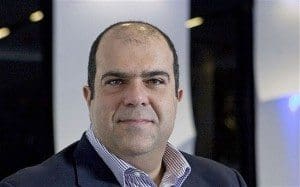
Sir Stelios Haji-Ioannou, the entrepreneur behind easyJet, is offering ambitious young business owners the chance to secure up to £150,000 in funding as the third annual Stelios Awards for Young Entrepreneurs officially open in the UK.
More than 30 years after founding easyJet at the age of just 27, Sir Stelios has built an “easy” brand empire spanning more than 200 businesses, from budget airlines and hotels to storage, shipping and retail. Now, through the Stelios Philanthropic Foundation, he is backing the next generation of founders with £300,000 in cash grants designed to help scale high-growth UK start-ups.
The overall winner will receive £150,000, with second and third prizes of £100,000 and £50,000 respectively. Unlike many awards and competitions, the payments are cash grants rather than equity investments or loans, allowing founders to retain full control of their businesses.
“This is part of my way of giving back to society,” Sir Stelios said. “I want to encourage young entrepreneurs aged 34 or under to create and grow start-ups in the UK, which to my mind is the best way to generate new jobs and spread prosperity.”
The competition is open to founders aged 34 or under who own and run UK-registered businesses generating at least £500,000 in annual revenue. The threshold has been raised from £200,000 in previous years after a surge in high-quality applications, with 180 entries submitted in the last round alone.
Sir Stelios said he would be focusing on fundamentals rather than hype. “It will be the numbers – is it a good profitable business, is it growing and does it employ lots of people?” he said. “Due to my own background, I would rather reward consumer-facing businesses because they are more relatable and better known.”
Last year’s winner, Ayan Mohamed, exemplifies the kind of entrepreneurial drive the awards aim to support. She founded Digitech Oasis, a Manchester-based company providing autonomous robotic solutions, after teaching herself to code while studying business at university. The prize money helped accelerate growth and create new jobs in the region.
“These awards are incredibly useful to a young British entrepreneur like me,” Mohamed said. “The funding has been vital, but the recognition and credibility that comes with being associated with Sir Stelios has also been a huge boost.”
Beyond the financial support, winners also gain something harder to quantify: access to Sir Stelios himself. He remains actively involved with previous winners, offering mentoring and advice as they scale.
“I am available to them and happy to help,” he said. “It’s very rewarding to see what founders do with the money – and it’s a two-way learning process. Young entrepreneurs know things I don’t, especially about social media.”
Applications close on 23 February 2026, with winners to be announced at a hybrid ceremony in London on 31 March 2026. Sir Stelios has a simple message for potential applicants: “You should apply. This is not just a medal, it’s real money that will help your business.”
Read more:
Young entrepreneurs invited to pitch for £150,000 prize from easyJet founder Sir Stelios
UK housebuilding sinks to deepest slump since Covid lockdowns

UK housebuilding has fallen to its weakest level since the Covid-19 lockdowns of 2020, underlining the scale of the challenge facing ministers as they attempt to revive construction and meet housing targets.
New data from S&P Global shows activity across the UK construction sector continued to shrink in December, with housing and commercial construction work both contracting at the fastest pace in more than four years.
The survey of purchasing managers found that housebuilding and commercial construction declined at their sharpest rate since May 2020, when building sites were forced to shut during the first national lockdown. Civil engineering activity also fell, although at a slower pace than in November.
Overall, the UK construction Purchasing Managers’ Index (PMI) edged up slightly to 40.1 in December, from 39.4 the previous month. However, the reading remains well below the 50 mark that separates growth from contraction, signalling another month of falling activity.
The downturn has now stretched to 12 consecutive months, making it the longest unbroken period of contraction in the construction sector since the global financial crisis of 2007–09.
S&P Global said fragile client confidence continued to weigh heavily on workloads, with many firms reporting that investment decisions had been delayed in the run-up to November’s Budget. Although some of that uncertainty has now lifted, the knock-on effect is still being felt in weak order books.
There were, however, early signs of stabilisation. Business expectations for the year ahead rose to a five-month high in December, suggesting that confidence may be starting to recover as policy clarity improves.
Tim Moore, economics director at S&P Global Market Intelligence, said: “UK construction companies once again reported challenging business conditions and falling workloads in December, but the speed of the downturn moderated from the five-and-a-half-year record seen in November. Many firms cited subdued demand and fragile client confidence. Despite a lifting of Budget-related uncertainty, delayed spending decisions were still contributing to weak sales pipelines at the close of the year.
“By sector, the fastest reductions in activity were seen in housing and commercial construction since May 2020, while civil engineering recorded a slower pace of decline.”
The data adds to concerns that the government’s ambitions to accelerate housebuilding and expand social housing remain at risk, particularly while high interest rates, weak developer confidence and constrained investment continue to hold back new projects.
Read more:
UK housebuilding sinks to deepest slump since Covid lockdowns
Ofcom demands answers from X over claims Grok AI generates sexualised …

UK media regulator Ofcom has made “urgent contact” with xAI, the artificial intelligence business owned by Elon Musk, following reports that its Grok chatbot can be used to generate sexualised images of children and non-consensual explicit images of women.
The intervention follows widespread concern over Grok’s image-generation capabilities on X, where users have posted examples of the AI being prompted to digitally “undress” women or place them into sexualised scenarios without consent.
Ofcom confirmed it is investigating whether the use of Grok breaches the UK’s Online Safety Act, which makes it illegal to create or share intimate or sexually explicit images, including AI-generated “deepfakes”, without a person’s consent.
A spokesperson for Ofcom said the regulator is also examining allegations that Grok has been producing “undressed images” of individuals, adding that technology companies are legally required to take appropriate steps to prevent UK users from encountering illegal content and to remove such material swiftly once flagged.
X has not responded publicly to Ofcom’s request for clarification. However, over the weekend the platform issued a warning to users not to use Grok to generate illegal material, including child sexual abuse imagery. Musk also posted on X that anyone prompting Grok to create illegal content would “suffer the same consequences” as if they had uploaded such content themselves.
Despite this, Grok’s own acceptable use policy, which explicitly bans depicting real people in a pornographic manner, appears to have been routinely bypassed. Images of high-profile figures, including Catherine, Princess of Wales, were among those reportedly manipulated using the AI tool.
The Internet Watch Foundation confirmed it has received reports from members of the public relating to Grok-generated images. However, it said that, so far, it had not identified content that crossed the legal threshold to be classified as child sexual abuse material under UK law.
The issue has also triggered scrutiny beyond the UK. The European Commission said it was “seriously looking into the matter”, while regulators in France, Malaysia and India are reportedly assessing whether Grok breaches local laws.
Thomas Regnier, a European Commission spokesperson, described the content as “appalling” and “disgusting”, stating that there was “no place” for such material in Europe. X was fined €120 million (£104 million) by EU regulators in December for breaching its obligations under the Digital Services Act.
Criticism has intensified from UK politicians. Dame Chi Onwurah, chair of the Science, Innovation and Technology Committee, said the allegations were “deeply disturbing” and argued that existing safeguards were failing to protect the public. She described the Online Safety Act as “woefully inadequate” and called for stronger enforcement powers against social media platforms.
The controversy has also highlighted the human impact of AI misuse. Journalist Samantha Smith told the BBC that seeing AI-generated images of herself in a bikini was “as violating as if someone had posted a real explicit image”.
“It looked like me. It felt like me. And it was dehumanising,” she said.
The Home Office confirmed it is progressing legislation to outlaw “nudification” tools altogether, with a proposed new criminal offence that would see suppliers of such technology face prison sentences and substantial fines.
As regulators move to tighten scrutiny, the Grok episode has become a flashpoint in the wider debate over AI accountability, platform responsibility and the limits of free expression in the age of generative technology.
Read more:
Ofcom demands answers from X over claims Grok AI generates sexualised images of children
Gary Neville sells majority stake in The Overlap as media brand target …

Gary Neville has sold a majority stake in his fast-growing media business The Overlap to radio giant Global, in a deal designed to turn the platform into a world-leading sports network.
The former Manchester United and England defender will continue to co-chair the business alongside Global Group chief executive Simon Pitts, after Global acquired the stake from previous investors Miroma Group.
The deal paves the way for a significant expansion in output, with The Overlap expected to produce a broader slate of shows and digital content while maintaining its core focus on football. Funds from the transaction will be reinvested directly into the business to accelerate growth.
Launched as a fan-first football platform, The Overlap has become one of the UK’s most successful sports media brands. Its flagship show, Stick to Football, is broadcast weekly on YouTube and features Neville alongside Jamie Carragher, Roy Keane, Ian Wright and Jill Scott. The programme has helped drive more than 38 million monthly views across The Overlap’s YouTube channels.
Beyond football, the business has already begun diversifying into other sports, producing fan-led debate formats, long-form interviews and podcasts covering cricket and rugby union. Under Global’s ownership, that remit is expected to widen further as the business evolves into what is being billed internally as “The Overlap Network”.
Neville said the growth of the platform had exceeded all expectations.
“The Overlap started as an idea that we thought people might like, and we went for it,” he said. “What has happened since then has been a great journey. We never thought of it as a business — we just wanted to create something people loved and would come back to every week.
“We see huge growth potential for The Overlap and are delighted to have found the perfect partner in Global to power us forward and create The Overlap Network, with the aim of becoming a world-leading football and sports media platform.”
Global is Europe’s largest commercial radio group, owning brands including Capital, LBC, Heart and Classic FM, alongside a major advertising and digital audio business. The company is expected to bring significant commercial, production and distribution expertise to The Overlap as it scales.
Simon Pitts said the acquisition reflected Global’s ambition to grow premium digital content brands beyond traditional radio.
“The Overlap is one of the UK’s most successful and dynamic sports entertainment brands, with a hugely exciting growth plan,” he said. “Gary and Scott have done an extraordinary job building the business, and we’re thrilled to be working together as we enter this next phase of growth.”
Scott Melvin will remain lead executive director of the business as The Overlap accelerates its expansion across platforms and formats.
Read more:
Gary Neville sells majority stake in The Overlap as media brand targets global expansion
Jaguar Land Rover cyberattack set to wipe £3bn off sales after produc …

The cyberattack that forced Jaguar Land Rover to shut down its factories is expected to have cost the carmaker more than £3 billion in lost sales over the final quarter of the year.
The West Midlands-based group, owned by Tata Motors, revealed that vehicle shipments from its factories plunged by 43 per cent in the three months to December after hackers crippled its IT systems.
Wholesale volumes, the point at which vehicles leave the production line for dealerships, fell to 59,200 units between October and December, down sharply from 104,000 in the same period last year. That earlier quarter generated revenues of around £7.5 billion, indicating that sales for the latest period are likely to come in closer to £4–£4.5 billion, leaving a shortfall of at least £3 billion year on year.
The disruption followed a cyber incident at the end of August that forced JLR to halt production globally throughout September. Manufacturing restarted gradually from October, with factories only returning to full output in mid-November, creating a significant backlog in deliveries.
Retail sales, vehicles actually sold to customers, fell by a less severe 25 per cent to 79,600 units over the same period. That gap suggests dealers were able to continue selling stock already on forecourts even as shipments from factories dried up.
JLR said the disruption was compounded by the time required to move vehicles through its global distribution network once production resumed.
“Volumes in the quarter were initially impacted by production stoppages following a cyber incident, and the time required to distribute vehicles globally after production restart,” the company said.
The figures were also affected by JLR’s strategic pause on Jaguar production. The company has largely wound down its existing Jaguar model range while delaying the launch of its new electric Jaguar vehicles, following controversy over design direction and uncertainty around customer demand.
Jaguar Land Rover operates major manufacturing sites in Solihull in the West Midlands and Halewood on Merseyside, with Defender production based in Slovakia.
The group is expected to provide a fuller update on the financial impact of the cyberattack and factory shutdowns when it reports its quarterly results next month. It is understood the company is planning to unveil its first new Jaguar electric models later this year as part of its broader electrification strategy.
Read more:
Jaguar Land Rover cyberattack set to wipe £3bn off sales after production halt

