

Code First Girls, the largest provider of free coding education for women in the UK, has announced a significant milestone: teaching over 200,000 women to code.
In the past year alone, the organisation provided over 80,000 learning opportunities, a stark contrast to the 18,000 women who enrolled in Computer Science undergraduate degrees across the UK.
The UK tech sector faces a looming skills gap, with an estimated 3 million more professionals needed by 2025. Code First Girls addresses this challenge by tapping into a largely untapped talent pool, with 49% of its community comprising career switchers.
Partnership and Placement
Code First Girls collaborates with over 130 partners, including prominent companies like Sainsbury’s, GCHQ, Nike, and Activision Blizzard, to place women into various tech roles. These partnerships help build global talent pipelines, offering entry-level, mid-level, and upskilling programmes. The organisation supports partners in international markets, including Poland, Germany, the USA, Singapore, and India.
Women trained by Code First Girls are placed in roles such as AI Engineers, Cyber Security specialists, DevOps professionals, Software or Data Engineers, and Data Scientists. Recruiting women from non-technical backgrounds brings benefits such as creative problem-solving, performance improvements, and innovation across sectors.
Progress in Representation
The representation of women in the tech industry has seen a gradual increase: from 15% in 2020 to 19% in 2023. However, according to BCS, The Chartered Institute for IT, it could take another 283 years for the percentage of women in the UK tech sector to match the 48% of women in the wider workforce if current trends continue.
Statements from Leaders
Anna Brailsford, CEO of Code First Girls, highlighted the organisation’s impact: “With women making up just a fifth of the tech industry, it’s clear the traditional model of coding education is failing to support women and people from more diverse backgrounds into tech. Code First Girls is helping to rectify this by partnering with businesses, government, and universities to provide employment through free education.”
Lorraine Barnes, Consulting Partner at Deloitte, emphasised the importance of diversity: “An inclusive culture attracts top talent, enables innovation, and provides high-quality service for our clients. Finding, inspiring, and developing top female talent is hugely important. Collaborating with organisations like Code First Girls has helped us unlock opportunities for women to support our clients and thrive in their careers at Deloitte.”
Chris Williamson, Domain Owner of Mobile & Payments at TUI, noted the challenge and potential of gender diversity: “Gender diversity in technology is still a real challenge. Diverse teams perform better, deliver greater innovation, and bring differing viewpoints to address challenges. I’m very excited about what we can achieve through our partnership with Code First Girls to bring more females into travel technology.”
George Parry, Director of CTOO Talent Acquisition at Credit Suisse, praised the partnership: “Code First Girls provides women from non-technical backgrounds the skills, confidence, and inspiration to become software or data engineers and future tech leaders. Partnering with Code First Girls allows us to create our own talent pipeline, bringing in new perspectives and innovative thinking into our technology department.”
Read more:
Code First Girls Teaches Tech Skills to Over 200,000 Women for Free
Category: Uncategorized
Biffa Sues Scottish Ministers for £200m Over Failed Bottle Deposit Sc …
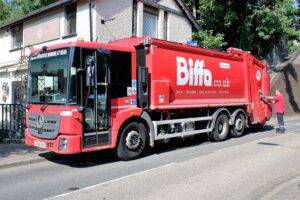
Biffa Waste Services Ltd has launched a legal case to reclaim approximately £200 million from Scottish ministers, citing significant losses from investing in the government’s aborted bottle recycling scheme.
The company’s legal team has filed a case at the Court of Session, Scotland’s highest civil court, seeking to recover a £150 million loss incurred due to the collapse of the SNP and Greens’ flagship deposit return scheme, along with subsequent lost profits. Biffa will be represented by Roddy Dunlop KC, dean of the faculty of advocates.
Biffa contends that the Scottish government misrepresented the viability of the scheme, providing personal assurances from Green Party co-leader Lorna Slater, which led to Biffa investing £55 million in vehicles and equipment in preparation for the scheme. Slater, who was the minister for green skills, circular economy, and biodiversity from 2021 until this year, later scrapped the scheme in June last year.
The scheme’s cancellation followed the UK government’s refusal to grant full exclusion from the Internal Market Act, which prevented Scotland from including glass in its operations. Biffa reportedly invested over £65 million in preparation for the scheme.
A source revealed to the Sunday Mail newspaper that Biffa agreed to the contract based on “written assurances from Lorna Slater about the scheme’s deliverability and the Scottish government’s commitment to it.” The source added that Biffa believes the Scottish government “negligently misrepresented the assurance it gave” and failed to mention the need for UK Internal Market Act approval.
A spokesman for Biffa stated: “Biffa was selected by Circularity Scotland Limited as the logistics partner for the delivery of the Scottish deposit return scheme and invested significant sums to support its timely and successful implementation. This was done in good faith and on the expectation and understanding that the delivery of the scheme had been mandated by the Scottish government.
“Having carefully reviewed our position with our advisers, we can confirm that we are taking legal action to seek appropriate compensation for the losses Biffa has incurred.”
A Scottish government spokesman responded: “The Scottish government cannot comment on ongoing litigation.”
The deposit return scheme aimed to boost recycling by imposing a 20p deposit on every drinks container, refundable upon return of the container. Biffa was appointed to collect all recycled containers across Scotland under a ten-year contract, anticipating profits exceeding £100 million.
Read more:
Biffa Sues Scottish Ministers for £200m Over Failed Bottle Deposit Scheme
Rail Season Ticket Usage Hits Record Low Amid Shift to Hybrid Working

The use of rail season tickets in Great Britain has plummeted to the lowest level on record, driven by a significant increase in working from home since the Covid-19 pandemic.
According to figures from the Office for Rail and Road (ORR), the industry regulator, the number of rail journeys made by people using season tickets fell to 13% in the year to 31 March, down from 15% in the previous year. This marks the lowest figure since records began in 1986-87. Before the pandemic, in the year to March 2020, more than one-third (34%) of journeys were made using season tickets.
Season ticket income is a crucial component of railway revenue. During the pandemic, lockdowns forced office workers to adopt remote working, leaving city centres deserted. Since then, many employers have embraced hybrid working models, allowing employees to split their time between home and the office.
While some companies, particularly in the banking sector, now require employees to spend most of their time in the office, a recent study highlighted that hybrid working enhances employee well-being and productivity. Three-quarters of those working flexibly reported feeling less burned out compared to when they were in the office full-time.
The ORR reported that 1.6 billion rail journeys were made in Britain last year, marking a 16% increase from the 1.4 billion journeys in the previous year. Passengers travelled a total of 60 billion kilometres, up by 13% year-on-year. In the three months to March, passengers made 405 million journeys, a 13% increase compared to the same quarter last year.
Total passenger revenue rose to £10.3 billion, a 13% increase from £9.1 billion in the previous year, when adjusted for inflation.
In response to the rise in hybrid working, the rail industry introduced flexible season tickets, allowing travel on any eight days within a 28-day period. However, analysis by MoneySavingExpert found that part-time season tickets only offered savings for those travelling two days a week, with cheaper options often available.
Govia Thameslink Railway was the largest operator by passenger journeys in the year to March. The Elizabeth line recorded the second-highest number of journeys and the greatest year-on-year increase, up by 54%. This surge is attributed to the increase in services following the opening of the central section of the line in May 2022, with a full service commencing in May 2023.
The notable year-on-year increase in the number of journeys for several operators was also influenced by reduced timetables in the previous year. This includes ScotRail, Avanti West Coast, and TransPennine Express, all of which operated reduced timetables at some point between April 2022 and March 2023.
Read more:
Rail Season Ticket Usage Hits Record Low Amid Shift to Hybrid Working
Britons Curb Spending Despite Drop in Grocery Inflation, Reports Kanta …

Britons have curtailed their supermarket shopping and traditional summer purchases due to recent poor weather, despite a further decline in grocery price inflation, according to a report by Kantar.
In the four weeks to 9 June, supermarket prices were 2.1% higher than a year ago, down from May’s 2.4% inflation rate. This marks the 16th consecutive month of slowing price rises. Kantar noted that costs are falling in nearly a third of the categories it monitors, including toilet tissue, butter, and milk—an improvement from last year when only 1% of categories showed price declines.
The monthly report precedes the release of official UK inflation figures for May, expected to show headline inflation falling from 2.3% in April to the government-set target of 2%.
Fraser McKevitt, head of retail and consumer insight at Kantar, highlighted that despite the reduction in grocery inflation, “the cost of living crisis isn’t over—far from it.” He noted that 22% of households reported struggling to cover expenses or just making ends meet.
McKevitt added: “However, there are positive signs that many of us no longer feel the need to restrict our spending quite so much, with lower inflation helping to ease the pressure on people’s pockets.”
Despite 36% of households describing their financial position as comfortable—the highest proportion since November 2021—sales rose by just 1% in June, the slowest increase since June 2022, according to Kantar. Footfall also dipped.
The wet weather resulted in nearly 25% fewer sun care items and 11% fewer prepared salads being bought compared to last year. Conversely, sales of fresh soup jumped by almost 24%.
McKevitt remarked: “The sixth wettest spring on record hasn’t just dampened our spirits leading into summer; it’s impacted the grocery sector too, with Britons seemingly deterred from frequenting the shops. We’re not yet reaching for typical summertime products and are making some unexpected purchases for June.”
Supermarkets and pubs are banking on strong performances from England and Scotland in the Euro 2024 tournament to boost spending, with beer and lager promotions jumping to over 40% in the last four weeks.
“Retailers will be competing with fans heading out of the house to watch the football as well as with each other,” said McKevitt. “Pubs especially could benefit from a boost—whether or not football comes home. During the last tournament in 2021, sales of food and non-alcoholic drinks in pubs soared by 60% compared with the average month that year.”
Tesco solidified its position as Britain’s largest supermarket, with a market share of 27.7% following a 4.6% rise in sales in the three months to 9 June compared with a year earlier. Sales increased at all major supermarkets over the period, except for Asda, which saw a 4% decline, and Co-op, down by 2.3%.
Ocado emerged as the fastest-growing grocer for the fourth consecutive month, with a 10.7% increase in sales over the 12 weeks to 9 June. Almost a quarter of British households (23%) did their grocery shopping online in the last three months, with more than 4% opting for Ocado.
Discounter Aldi, the fourth-largest retailer by consumer spend, boosted sales by 0.8%, now holding a market share of 10%.
Read more:
Britons Curb Spending Despite Drop in Grocery Inflation, Reports Kantar
Low Investment Blocking UK Growth, Says Think Tank

Investment levels in the UK remain among the lowest of the world’s richest nations, posing a significant challenge to economic growth, according to the Institute for Public Policy Research (IPPR).
The centre-left think tank highlighted that the UK’s total investment is “significantly” behind the nearest competitor in the G7 group of wealthy nations.
Despite the importance of investment for economic growth, both the Conservative and Labour parties plan to reduce government investment in the next parliamentary term. The IPPR urges the next government to commit to a comprehensive industrial strategy and end the frequent changes in policy to encourage private company investments.
Dr George Dibb, associate director for economic policy at the IPPR, emphasised the crucial role of investment in driving productivity and economic output. “If the economy is an engine, then investment is its fuel,” he said.
Investment Challenges and Solutions
The IPPR’s analysis, supported by data from the Organisation for Economic Co-operation and Development (OECD), shows the UK has had the lowest level of total investment in the G7 for 24 of the past 30 years. Currently, the UK’s investment stands at 18.3% of national income, significantly lower than the next worst performer, the US, at 21.2%.
Dr Dibb pointed out that the UK’s poor productivity performance since the 2008 financial crisis is a major factor behind low living standards. “Without resources flowing into new investment, it’s hard to see how UK economic performance can improve,” he added.
Paddy Fletcher, co-founder of the Port of Leith distillery, highlighted the difficulties faced by businesses in securing large-scale investments. While current government tax breaks help attract small investors, there is a “terrible gap” when it comes to attracting larger institutional funding.
The IPPR proposes several measures to increase investment across the economy, including:
– Committing to a comprehensive industrial strategy to remove growth barriers and provide business certainty.
– Ending frequent policy changes, noting that since 2010, there have been 11 industrial strategies or plans for growth.
– Reviewing fiscal rules to enable increased government investment.
Political Responses and Proposals
Political parties have different approaches to addressing the investment issue:
Labour: Hosting infrastructure meetings and proposing a £7.3bn National Wealth Fund for investments in steel, ports, and electric cars.
Conservatives: Offering tax breaks for company investments and reallocating £36bn from the altered HS2 high-speed rail line to local infrastructure.
Liberal Democrats: Promising a new industrial strategy for business predictability and confidence.
Reform: Proposing the abolition of business rates on non-domestic properties, funded by a tax on large online retailers, and scrapping net zero pledges to boost oil and gas investment.
Scottish National Party (SNP): Yet to publish its manifesto but promises a route back to prosperity in the European Union.
Emma Pinchbeck, chief executive of Energy UK, and Zack Simons, a planning barrister, emphasised the need for planning reform to unlock investment in renewable energy and other growth sectors. Current bureaucratic hurdles, especially in greenbelt areas, impede the development of essential infrastructure such as onshore wind farms, which are crucial for sustainable energy production.
In summary, addressing the UK’s investment shortfall requires a stable industrial strategy, policy consistency, and targeted reforms to attract both public and private investments, ultimately driving economic growth and improving living standards.
Read more:
Low Investment Blocking UK Growth, Says Think Tank
Nato’s $1bn Fund Backs British Start-Up to Build Space Factories

Cardiff-based start-up Space Forge, aiming to launch robotic factories into space, has secured funding from Nato’s $1.1bn (£870m) investment fund.
Space Forge plans to utilise low-gravity conditions in space to manufacture crystals for advanced microchips, new medicines, and super-alloys.
These satellites, designed to be the world’s first reusable orbiting factories, will return to Earth using a unique “Mary Poppins-style” umbrella. This initiative is part of Nato’s strategy to foster “dual-use” technologies to stay ahead of Russia and China.
In the vacuum and low-gravity environment of space, Space Forge can grow highly pure “seed” crystals. These crystals will produce sophisticated microchips that are faster and more energy-efficient, potentially leading to a 50% improvement in radar range and smaller satellites by 30-50%.
Space Forge has partnered with American defence giant Northrop Grumman to develop these advanced microchips for more powerful radar systems. Josh Western, Space Forge’s CEO, stated, “The next industrial revolution is not going to be here on Earth, it is going to be in space. It’s a really fundamental chemistry breakthrough.”
The company plans to conduct a test within the next 12 months to prove the viability of its landing technology, likely using a SpaceX rocket from Cape Canaveral, Florida. This will be followed by a mission to demonstrate the safe return of space-made crystals to Earth.
The funding from the Nato Innovation Fund is crucial for constructing the Forgestar 2 platform, which will be used in the second test. Despite a setback last year when a satellite was lost in Virgin Orbit’s failed “Start Me Up” mission, Space Forge is moving forward with its ambitious plans.
This announcement coincides with the Nato Innovation Fund’s first round of investments, which include three British start-ups. Besides Space Forge, these are Bristol-based carbon fibre specialist iCOMAT, London-based chip designer Fractile, and Germany-based ARX Robotics, which makes unmanned ground vehicles.
Andrea Traversone, the fund’s managing partner, emphasised the importance of backing disruptive technologies that support defence, security, and resilience within the alliance. He noted, “Our mandate is to back disruptive technologies to support defence, security and resilience in the alliance and these four companies are all good examples of that.”
The Nato Innovation Fund, established in 2022 following Russia’s attack on Ukraine, aims to nurture nascent technologies with transformative potential for security. The fund operates on a 15-year horizon and, while the size of individual investments is not disclosed, it is engaged in discussions with numerous other start-ups for potential future investments.
Read more:
Nato’s $1bn Fund Backs British Start-Up to Build Space Factories
Electric Car Battery Breakthrough Could Ease Range Anxiety

A significant technological breakthrough in electric car batteries could ease the range anxiety that has hindered the wider adoption of electric vehicles (EVs).
TDK, a company historically known for its cassette tapes, has developed a solid-state battery with an energy density 100 times that of its previous models.
Initially, TDK plans to produce these batteries for smaller devices such as earphones, hearing aids, and smartwatches. However, the potential for scaling up this technology to power electric vehicles is considerable. The new solid-state batteries promise higher output, significantly extending the driving range before needing a recharge.
Current lithium-ion batteries in most EVs offer a range of up to 500km (approximately 310 miles). In contrast, TDK’s new solid-state batteries could offer a range of up to 1,500km (930 miles), a substantial improvement that could alleviate one of the primary concerns for potential EV buyers—range anxiety.
This breakthrough was achieved using a proprietary ceramic material, giving the battery an energy density of 1,000 watt-hours per litre (wh/l), compared to the 700 wh/l of the best-performing lithium-ion batteries. Solid-state batteries also offer increased safety due to the absence of liquid electrolyte and shorter charging times.
Contribution to Energy Transformation
Noboru Saito, TDK’s CEO, stated, “We believe that our newly developed material for solid-state batteries can make a significant contribution to the energy transformation of society.” The batteries use oxide-based solid ceramic electrolyte and lithium alloy anodes. However, technical challenges remain, such as maintaining contact between the components and ensuring the battery functions under pressure.
Japanese carmakers have shown particular interest in solid-state batteries, with Toyota aiming to commercialise the technology by 2027, although this is later than initially estimated due to scaling challenges.
Market Penetration and Challenges
Semi-solid-state batteries have emerged as an interim solution, with Chinese carmaker Nio offering them in its ET7 saloon, boasting an advertised range of 1,000km. However, consultancy firm Rho Motion suggests it could take until 2035 for solid-state batteries to penetrate the mass market, primarily due to their high production costs compared to lithium-ion batteries.
A typical EV battery currently represents about a third of the vehicle’s cost, but for the Nio, this figure rises to 50%. For a pure solid-state model, the cost would be even higher. Iola Hughes of Rho Motion commented, “The solid-state arena has been an important one in the battery industry for some time, but there has been a consistent theme of delays and missed targets. What we are starting to see now are incremental changes. But cost and scaling are the big obstacles.”
Additionally, solid electrolyte’s brittleness and poor performance in low temperatures pose further challenges. Nonetheless, solid-state batteries might become a popular solution for electric-powered heavy trucks, which currently struggle with lithium-ion technology.
This breakthrough represents a significant step forward in battery technology, potentially revolutionising the electric vehicle market and contributing to broader energy transformation efforts.
Read more:
Electric Car Battery Breakthrough Could Ease Range Anxiety
Summer Job Cuts as Minimum Wage Increase Bites

The recent increase in the minimum wage is exerting significant pressure on employers, leading to a sharp reduction in summer job hiring.
New figures indicate that employers are cutting back on seasonal hires amid broader concerns about labour shortages in crucial sectors of the economy.
Data from the Recruitment and Employment Confederation (REC) reveals a substantial decline in job postings for temporary summer positions in the hotel, restaurant, tourism, and construction sectors during April and May, compared to the same months last year. This trend follows the recent rise in the minimum wage.
Separate data from Make UK, a lobby group representing manufacturing companies, highlights ongoing skills shortages that are limiting expansion potential. The latest quarterly index from Make UK shows that recruitment intentions in the manufacturing sector have grown from 8% to 26%, reflecting a recovery in the industry. However, the struggle to hire skilled workers continues to be a significant challenge.
Labour shortages in certain parts of the economy are contributing to sustained wage growth, complicating efforts by the Bank of England to reduce interest rates. The Bank’s monetary policy committee is expected to maintain the base rate at 5.25% this week, citing concerns that rising earnings are hindering efforts to bring inflation down to the 2% target.
Overall job listings across the economy fell by 0.7% last month, totalling 1.7 million, while new job listings dropped by 1.1% between April and May, according to the REC. This indicates a cooling labour market.
Neil Carberry, CEO of the REC, explained that the need for employers to fill seasonal vacancies is being outweighed by the 9.8% increase in the minimum wage from April 1, raising it to £11.44 per hour. Companies are attempting to manage rising wage bills by reducing employee hours.
“A second big increase in the national minimum wage has affected hiring levels in key sectors,” Carberry said. “We can see some evidence of that drag in the lower summer seasonal hiring demand. Reducing hours or roles while opening for shorter periods are all decisions that firms may feel forced to make in tough times.”
The data shows job postings in the hotel and accommodation sector dropped by 45% in April and May compared to the same period in 2023. Similarly, restaurant and catering roles fell by 38%, and positions for chefs and cooks declined by 33%. Tourism and event roles also saw reductions across most regions.
The increase in the minimum wage has contributed to overall wage growth in the economy, reaching 6% in the three months to April, according to official figures released last week. The pace of earnings growth is a critical factor influencing monetary policy, with the Bank of England’s monetary policy committee indicating that signs of an earnings slowdown are necessary to justify significant rate cuts this year.
Despite the challenges, there are signs of recovery in some sectors, such as manufacturing, which experienced a near-two-year recession. Output in the manufacturing sector increased from a balance of 5% to 9% in the second quarter, with projections for a 30% rise in the three months to September, driven by falling inflation, energy prices, and interest rates, according to Make UK.
Read more:
Summer Job Cuts as Minimum Wage Increase Bites
Why British Bosses Are Rethinking the Pub Social

Traditionally, the go-to venue for work get-togethers has been the local pub. However, this staple of British work culture is now under threat as employers adapt to the changing attitudes of a new generation of workers.
“Younger employees with healthier lifestyles don’t see it as a rite of passage to go out and get absolutely wasted,” says Emma Morris, director of Embrace HR. This shift in perspective is forcing companies to rethink their approach to workplace social events.
As Generation Z professionals increasingly turn away from alcohol, businesses are under pressure to find alternative venues for work events. A recent report from Rare, a UK graduate recruitment company specialising in diversity, suggested law firms should consider activities like cooking, painting, and pottery classes to avoid excluding Muslim lawyers and other staff who don’t drink alcohol.
Beyond concerns about inclusivity, HR departments are also wary of the potential for bad behaviour associated with drinking. Morris explains, “If you arrange something that ends up with trouble, through drinking or drug-taking, employers can be held liable.”
Paul Pavli, a hospitality consultant and former managing director of Punch Taverns, notes that behaviour once considered acceptable is now scrutinised more closely. “If you’re on a work social now, everybody’s on duty,” he says.
Data supports the trend away from alcohol: around a fifth of people aged 18 to 24 now abstain completely, according to Drinkaware. This indicates that a significant portion of the future workforce will not drink, prompting pubs and other venues to adapt.
Simon Emeny, CEO of Fuller’s, mentions that over half of their pubs now offer draft no-alcohol products. “You can come to our pubs for work events and you don’t have to drink alcohol,” he says.
Entrepreneurs have seized this opportunity, launching venues that offer engaging activities like mini-golf, axe-throwing, ping pong, and virtual clay pigeon shooting. Clive Watson, co-founder of City Pub Company, remarks, “[Employers are] definitely looking for more of an experience – it gets the crowd going and isn’t just about drinking.”
Richard Harpham, who runs the Boom Battle Bar chain, notes that companies want activities appealing to a diverse workforce. “Employers now are trying to find something that’s going to appeal as much to the lady in accounts as the guy in the legal team.”
These activities are also more likely to entice remote workers back to the office. Saxon Moseley, head of leisure and hospitality at RSM, states, “Going for an experience is more likely to entice people to come in than simply to go for a drink.”
However, there are concerns about inclusivity for older workers. Some venues and activities may cater more to younger employees, raising questions about their appeal to all age groups.
Despite this, companies are embracing these new venues. Tom Snellock, founder of Clays, which offers virtual reality clay pigeon shooting, reports significant corporate bookings, with 70% of revenue coming from such events. He highlights the inclusive nature of their offerings, with menus accommodating various dietary preferences.
Traditional pub companies are also adapting. Stonegate, the UK’s largest pub company, recently announced plans to launch an immersive karaoke chain called Careless Whisper.
Tim Martin, founder and chairman of JD Wetherspoon, believes that while formal work events might change, informal socials among colleagues will continue. “Formal work events orchestrated by management are difficult with modern employment laws and bore the pants off many participants anyway,” he says, predicting that casual after-work drinks will remain popular.
In summary, as work culture evolves, British bosses are exploring new, engaging ways to foster team bonding beyond the traditional pub social. Whether this trend will permanently shift the landscape of work socials or coexist with traditional pub outings remains to be seen.
Read more:
Why British Bosses Are Rethinking the Pub Social

