

Every business grapples with a diverse range of financial challenges and no company is fully protected from cash flow issues, late invoice payments, and unexpected costs.
Understanding these challenges is the first step in navigating them successfully and achieving business success.
As James Robson, CEO, FundOnion explains, we know that adopting effective cash flow management strategies, leveraging technology, and ensuring timely invoicing and negotiation with suppliers are vital for SME financial stability. As are key practices such as creating and managing a realistic budget, and establishing an emergency fund.
Effective cash flow management
Monitoring the money entering and leaving your business is the essence of cash flow management. Maintaining a positive cash flow is key to the survival and expansion of your business, while avoiding negative cash flow is crucial. Understanding your operating cash flow can provide valuable insight into your business’s day-to-day operations.
Effective techniques like consistent financial analysis and forecasting, efficient invoicing and payment collection processes, and striking beneficial payment deals with suppliers can help you achieve successful cash flow management and avoid cash flow issues. By focusing on financing cash flow, you can ensure the stability of your business’s financial health.
Maintaining your business’s financial health requires consistent financial analysis and forecasting. This helps you gain a deeper understanding of your business and foresee future issues, enabling you to manage your cash flow effectively.
A significant part of managing cash flow is ensuring that you collect payments from your customers on time. By streamlining your invoicing and payment collection processes, you can improve your cash flow and reduce the risk of late payments. Negotiate favourable payment terms with your suppliers to help you manage your cash outflows more effectively.
Budgeting strategies for SMEs
Budgeting plays an integral role in financial management and holds paramount importance for SMEs. It’s about making informed decisions so that every pound you spend helps your business grow. A detailed and realistic budget can guide your business and provide a convenient way to compare performance from one year to the next. But you must regularly review and update your budget accordingly.
A detailed and realistic budget can help you plan for future expenses and allocate resources effectively. By keeping track of your income and business costs, you can make informed decisions about your business’s financial future. Your budget should evolve with your business. By regularly reviewing and updating your budget, you can ensure that it accurately reflects your business’s current financial situation.
While you can’t predict all your business expenses, you can certainly prepare for them. An emergency fund can provide a financial cushion to cover unexpected costs and protect your business during times of financial strain.
The importance of diversifying revenue streams
By finding new ways to generate revenue, you can enhance your business’s stability and mitigate risks.
Expanding your product or service offerings can open up new opportunities for your business. Whether it’s adding a new product line or offering a new service, diversification can help you reach new customers and increase your revenue.
Exploring new markets and channels can help you achieve business growth by reaching a wider audience and diversifying your revenue sources. Whether it’s expanding into a new geographic region or tapping into a new customer demographic, there are many opportunities to grow your business.
Regardless of whether you’re a start-up or aiming to scale up your business, professional advice and support can prove to be of immense value. Numerous resources, ranging from consulting a financial advisor to government grants and resources, can assist you in overcoming the financial hurdles associated with running a small business.
Consulting a financial advisor can provide you with expert guidance on a wide range of financial matters, from budgeting and cash flow management to investment strategies. A financial advisor can help you make informed decisions and navigate financial challenges more effectively.
Government grants and resources can provide additional funding and support to help you overcome financial challenges and grow your business. From grants for start-ups and established businesses to resources for energy efficiency projects, there’s a wealth of support available for SMEs.
Whether you’re just starting your small business journey or looking to take your SME to the next level, mastering cash flow management is key. By understanding the financial challenges you may face, implementing effective cash flow management techniques, creating a detailed and realistic budget, diversifying your revenue streams, leveraging technology, and seeking professional advice and support, you can navigate these obstacles and drive your business towards financial success.
Read more:
How SMEs can navigate the most common financial challenges
Category: Uncategorized
Octopus Energy Group Secures New Global Investors to Boost Expansion i …

Octopus Energy Group has strengthened its global presence with the addition of world-class investors Galvanize Climate Solutions and Lightrock.
This follows a significant investment boost from Generation Investment Management and Canada Pension Plan Investment Board (CPP Investments) last month, reaffirming Octopus’ valuation at $9bn (£7.2bn), a 15% increase since December 2023.
Galvanize Climate Solutions, a San Francisco-based climate-focused investment firm, and Lightrock, a London-headquartered investment platform dedicated to sustainability, join the roster of prominent investors supporting Octopus Energy. These strategic investments aim to fuel Octopus Energy’s rapid expansion across North America and Europe.
Galvanize, chaired by Katie Hall and Tom Steyer, is injecting capital through its $1bn Innovation + Expansion Fund, one of the largest climate funds ever raised, to accelerate Octopus Energy’s growth in North America. Lightrock will leverage its robust stakeholder relationships in Europe and its presence in Asia and Latin America to support Octopus’ global ambitions.
Greg Jackson, Founder of Octopus Energy Group, expressed his enthusiasm, stating, “I’m thrilled to welcome Galvanize and Lightrock – backed by some of the world’s most successful investors with incredible track records. Their climate-focused investment is a powerful catalyst for our global expansion and will allow us to keep up the momentum to further drive our growth across North America, Europe and into emerging markets.”
Veery Maxwell, Co-Head of Innovation + Expansion at Galvanize, commented, “In order to decarbonise, increased system optimisation and flexibility services for the power sector are critical, particularly as the industry grapples with escalating load growth and distributed generation. We believe Octopus’ capabilities are distinctly suited to support power market participants across the energy value chain and are looking forward to working with its leadership to accelerate growth across North America and beyond.”
Nigel McCleave, Partner at Lightrock, praised Octopus Energy’s rapid rise, saying, “It is remarkable that in less than a decade since founding, Octopus has become the UK’s largest provider of home electricity – a testament to its fair treatment of customers, pioneering technology, and transformation of the consumer energy experience. However, this feels like just the beginning; Octopus has the potential to transform so much more of the energy value chain for the better.”
Octopus Energy is committed to driving the affordable, green energy system of the future through its retail brand, investments in renewables, and its proprietary technology platform, Kraken. Kraken has become the fastest-growing energy software globally, recently signing a multi-year contract with Canadian Saint John Energy to license its demand flexibility solution and customer service platform.
The Kraken platform significantly reduces costs for suppliers and enhances customer service. It is now contracted to serve over 54 million energy accounts worldwide and manage over 38 GW across 180,000 green energy assets in 12 countries.
In the UK, Octopus Energy has been “Which? Recommended” for an unprecedented seven consecutive years, continues to top TrustPilot ratings for energy suppliers, and has been recognised by TIME Magazine as one of the ‘100 Most Influential Companies’.
Read more:
Octopus Energy Group Secures New Global Investors to Boost Expansion in North America and Europe
Fuuse closes £8.7m Series A round to power growth in electric vehicle …
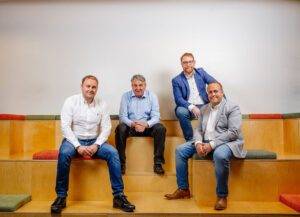
Fuuse, the UK’s leading electric vehicle charge point management platform, has secured substantial funding to propel its next phase of growth in the UK and Ireland.
Investment has come from lead investor YFM Equity Partners, and existing investors Par Equity and an angel syndicate.
Based in Lancaster and employing over 60 staff, Fuuse has grown by 400% in the last 12 months and now serves over 750 clients and over 70,000 active users. It also processes enough electricity each year to power the whole of the UK for an hour, as well as processing millions in charging payments. Investment will be focused on scaling its enterprise product offer that delivers a trusted and reliable charging experience for charge point operators, destinations, fleets and workplace charging, as well as providing additional products and services for its network of solutions partners. Clients include SSE, Scottish Power, British Airways, Siemens, United Utilities and Arnold Clark.
The company also continues to innovate. Working with companies such as Veolia and EDF, Fuuse is a partner in several grant-funded projects to optimise energy consumption and reduce costs through bi-directional charging or vehicle-to-grid (V2G). This builds on an existing energy management system, which includes whole site energy monitoring, and a range of grid optimisation tools. Additionally, Fuuse is working with partners on wireless induction charging and extending charging to buses, HGVs and boats to further decarbonise transport.
Commenting on the investment, Michael Gibson, Fuuse CEO said: “YFM’s experience of working with innovation-led businesses has proved invaluable. The team immediately understood our vision and recognised our potential. With the backing of YFM, Par and our angel investors, we can continue to curate the future of EV infrastructure and help more customers to deliver an optimised, reliable and trusted EV charging experience.”
Andy Thomas, YFM Partner, added: “We are thrilled to have joined Fuuse on the next stage of their journey. The company’s software is designed to constantly evolve, helping to futureproof EV charging infrastructure. It’s a comprehensive product that can serve the differing needs of a range of customers, which places it in an advantageous position going forward. Led by a strong management team, with a clear vision and sophisticated strategic approach – which will be crucial to its future success and will enable responsiveness in a fast-growing market. We are confident that, with our support, Fuuse can take full advantage of emerging opportunities.”
Alastair Moore, Senior Investment Manager at Par Equity, said “Since we first partnered with Fuuse in 2022, the company has seen dramatic growth, establishing itself as a market leader in the UK providing a robust, reliable software solution across the UK and Irish EV infrastructure and building a fantastic platform for international expansion. The majority of Par’s investment was provided through our new Scale-Up Fund, which is designed to support some of the most exciting B2B technologies emerging from the North of the UK and it’s very encouraging to see Fuuse join this cohort of rising stars.”
Read more:
Fuuse closes £8.7m Series A round to power growth in electric vehicle charging
Ex-England Footballer Emile Heskey Ordered to Pay £200k in Unpaid Tax …

Former footballer Emile Heskey has been ordered to pay costs to HM Revenue and Customs (HMRC) following a legal dispute over an unpaid £1.637 million tax bill.
Specialist costs judge Mark Whalan ruled that Heskey must pay £194,794.42 in legal fees, describing the amount as “reasonable and proportionate” given the complexity of the case.
HMRC initiated legal action against the former England striker in 2017, targeting unpaid taxes linked to 15 penalty notices issued from 2005. A trial was scheduled to take place at the High Court in November 2019, but it was avoided when Heskey, 46, admitted liability for the debt.
At a recent hearing in London, barrister Daniel Laking, representing HMRC, outlined the history of the case. Heskey, who enjoyed a successful club career with teams such as Leicester City, Liverpool, Birmingham City, and Aston Villa, did not attend the hearing and was not represented.
The £194,794.42 sum that Heskey must now pay does not include interest, suggesting that the final amount he owes may exceed the court-ordered figure.
Francis Kendall, Director and costs lawyer at costs firm Kain Knight: “Given the amount of tax at stake, it is no surprise that the fees were deemed ‘proportionate’.
“In my experience, the fees incurred by HMRC are near impossible to dispute. The department has an army of in-house lawyers, who charge hourly rates that are well below market rate, or the guideline figures usually allowed on assessment. Counsel also tend to work on reduced fees for HMRC.
“It is therefore likely that the legal spend, if in the open market, could have been significantly higher than the sum recovered. Mr Heskey’s own costs would undoubtedly be an interesting comparator.”
Read more:
Ex-England Footballer Emile Heskey Ordered to Pay £200k in Unpaid Tax Battle
Surrey Village Pub Suffers Amid Water Contamination Crisis

A pub landlord in Bramley, a village near Guildford in Surrey, claims his business is suffering due to a water contamination issue that has prompted a ‘do not drink’ notice.
Hundreds of residents have been advised against using their tap water following concerns linked to a historical fuel leak from the village petrol station.
Thames Water issued the precautionary ‘do not drink’ notice to 616 homes on Thursday, after detecting elevated levels of hydrocarbons during water sampling. Chris Hardstone, landlord of the Jolly Farmer, has been vocal about the issue, which he claims has been ongoing since 2021.
Hardstone, who runs the pub with his brother Steve, stated, “Back in 2021, our cellar just stank of fumes – and this petrol smell was wafting up into the bar.” Despite raising concerns, it took a long time for the issue to be addressed properly. Initially misattributed to mould, the true cause was eventually identified as a fuel leak from the local petrol station.
The contamination has forced the Jolly Farmer to close its accommodation section, leading to significant business losses. “These issues meant we had to close our accommodation section down – so we lost business there,” Hardstone explained.
Thames Water is responding by delivering letters and bottled water to affected properties and setting up bottled water stations. Tess Fayers, operations director for the Thames Valley and Home Counties, reassured residents that the ‘do not drink’ notice is a precautionary measure and that they are working to mitigate risks by replacing sections of pipes on Horsham Road.
Waverley Borough Council is collaborating with Thames Water and other agencies to support residents.
An Asda spokesperson said: “We are continuing to work closely with Thames Water and other partners to address the issues we inherited after acquiring the Bramley PFS site. We recognise the impact this has had on the residents of Bramley and share their frustrations.”
“We are committed to working with all parties to resolve this situation as quickly as possible.”
The areas MP, Chancellor Jeremy Hunt has called the situation ‘unacceptable’ and has written to Chris Walker, MD of Asda Express voicing his concerns and asking the supermarket chain to support the small independent high street shops and pubs which are suffering extensive damage to their day-to-day trade.
Read more:
Surrey Village Pub Suffers Amid Water Contamination Crisis
Nigel Farage to Stand as MP in Clacton, Leading Reform UK into Electio …

Nigel Farage has announced his return to frontline politics, declaring his candidacy for MP in Clacton, Essex, and his leadership of the Reform UK party. Farage’s re-entry comes as the election campaign heats up, with major parties unveiling their key pledges.
In his announcement, Farage promised to lead a political revolt, criticising the current state of the country and the impact of immigration on housing and living standards. “I intend to lead a political revolt. Nothing in this country works anymore. We are in decline. This will only be turned around with boldness,” he stated. He positioned Reform UK as the “voice of opposition,” echoing his pivotal role in the Brexit referendum.
Farage’s move adds a new dynamic to the election, with his participation in the first seven-way debate of the campaign, hosted by the BBC. The debate will feature key figures including Penny Mordaunt, Angela Rayner, and representatives from other major parties. The debate, moderated by Mishal Husain, is scheduled to start at 7.30pm and will last 90 minutes.
Farage explained his decision to stand for election was influenced by conversations with disillusioned voters who urged him to run. He expressed guilt over not standing up for these individuals, stating, “I couldn’t help feeling I was letting them down.”
Launching his campaign at midday tomorrow, Farage aims to revitalise political discourse and address the concerns of those who feel neglected by the current political class.
Economic Reactions and Expert Opinions
John Choong, Senior Equity Research Analyst at Investing Insiders commented: “While the FTSE has yet to react to the news, gilt yields did fall a little on the back of the announcement. Nonetheless, while markets do like a hung parliament because policies are more difficult to pass, thereby giving investors and traders more certainty, current polling suggests this is unlikely to happen, as Labour are set for a landslide victory in a month’s time. That said, a lot can change within a month, and there’s always the possibility that polling data can be wrong. If a Reform and Conservative coalition does indeed come to fruition, there’s a possibility that markets may react more favourably to that outcome than a Labour majority. After all, the previous coalition government between Cameron and Clegg generated a return of 7.6% p.a, higher than any Tory prime minister in the 2000s bar Sunak. Moreover, Labour’s record since 1986 has been dismal, producing a negative return of -0.2% p.a while they were in government between 1997 to 2010.”
Daniel Wiltshire, Actuary & IFA at Wiltshire Wealth added: “This news won’t budge the markets. A Labour victory is already priced-in and it simply adds to the argument that the Tories are toast.”
Farage’s return marks a significant moment in UK politics, with potential implications for the election outcome and future government policies. As the campaign progresses, his influence and the response from voters and markets will be closely watched.
Read more:
Nigel Farage to Stand as MP in Clacton, Leading Reform UK into Election
Six ways to make your workplace more fun – and the serious reasons f …

Humans are social creatures. Our DNA is genetically hardwired to spend time in communities, working with others to solve problems, to be creative and to learn.
It’s what has enabled us to dominate the world as the most successful organism to have ever existed. Our ability to socialise is our superpower.
The working population spends some 70% of their days ‘on the job’, so our working environment and relationships we have there are incredibly important to our wellbeing. Strong social connections in the workplace make people happier and physically healthier, which translates into work performance. Play is an essential psychological need for us to achieve this.
Play fosters a sense of community and transforms the workplace into a safe space where employees feel included, otherwise known as a prosocial environment. To learn more, I’ve attended several INNOPLAY sessions at The Playful University. Founded by Maarten Koeners, senior lecturer at the University of Exeter’s College of Medicine and Health, and Adam Lusby, its Faculty Director of Entrepreneurship and Innovation Education. Both Maarten and Adam are big believers that play and the creation of environments that encourage social interactions can positively and palpably change the energy in a room, and I couldn’t agree more. So, how can we do this? Here are my top six recommendations.
Be prosocial
To learn, human beings need to play. In fact, it isn’t just to learn – we’re so hard wired to play that if we don’t, we can become ill. So fundamental it is to our productivity, our health, and our ability to grow, we must make the environment in which we work prosocial, providing the opportunity to socialise and play with colleagues in a way that supports us and the work that we want to achieve. The acceptance of, and the surrender to, non-social practices can be less obvious than antisocial, and can be a silent killer when it comes to workplace connections, wellbeing, and creativity.
Following a socially limited three years, we’ve developed some very non-social practices that are having serious impacts across society. They’re especially acute at work, where they’re becoming a productivity killer.
If you are in a workplace right now, how social is it? Are you sat in rows of desks behind screens? Are you in a meeting room or office shut off from colleagues? How much social interaction do you enjoy, or is it discouraged because it takes you away from a task or task that requires your utmost concentration?
If you work in an office, it’s likely that you’re in a very antisocial working environment dominated by online meetings, home working, and management practices that encourage you to be silent and concentrate. It’s the type of environment that we enter, age four years, when we start school, and it conditions us from then on. You’re told to sit still at rows of desks with little communication, the older you get the less interaction is built in or even encouraged.
Embrace playfulness – even if it feels uncomfortable
Play is recognised as both a fundamental part of the human experience and basic biological need at every stage in life.And whilst play and work may appear contradictory, there are many synergies. Children are encouraged to learn through play – it’s proven to expand physical and mental ability – and business leaders should be placing a similar focus on supporting their employees to discover new ideas and learning experiences, even if it does feel uncomfortable.
We know that humour, playfulness, laughter, and joy are essential to using our brains entirely. The success of playfulness at work comes down to psychological safety and the shared belief that it’s okay to take interpersonal risks as a group – whether that’s sharing creative ideas or speaking up when there’s an issue.
As with all workplace initiatives, playfulness needs to start at the top with senior buy-in. As a leader you should be leading from the front, even if you feel uncomfortable too. But such discomfort should be embraced. Society is averse to the uncomfortable but creating new – and maintaining existing – connections always requires a certain level of discomfort at some points. By lowering the stakes, play provides an environment where we can practice how we deal with it and a space where it can be shared and celebrated.
According to pioneer play researcher Brian Sutton-Smith, the opposite of play is depression, and it was Dr Stuart Brown, founder of the National Institute for Play, whose studies confirmed that depression and anxiety can be caused by ‘play deficit,’ in adults as much as in children. Just as sleep deprivation leads to ill health, so play deficiency can lead to mental illness. Play deficit is a serious problem, so let’s make sure our employees aren’t at risk and provide plenty of opportunity for it.
Don’t force playfulness – but a kind nudge is fine!
Forcing playfulness is a killer. Don’t make it happen, but feel free to give it a kind nudge, if required, as it builds on embracing the uncomfortable – disrupting the status quo or reminding us that we are, in fact, prosocial and playful apes.
A nudge towards playfulness can be making resources available, or through intentional and kind social pressure – a good reason for those who’d prefer to remain mostly remote to re-join their colleagues. The smartest business leaders are those working to identify the types of ‘fun’ their employees enjoy – the things they’ll show up for because they want to, not because their arms are being twisted.
And whilst there are many definitions of play, it should always be activities that are enjoyable, that push boundaries, that are chosen freely and that encourage our imaginations to be drawn upon with social interaction. It can be meetings, parties, activities, and games that rest your focus, make you feel refreshed, at ease and connected. Use music to get in a positive or reinvigorated state, create rituals, and a more comfortable atmosphere; use different type of “prototyping” materials to test ideas.
It can be planned and unplanned, formal, and informal. But crucially, fun cannot be forced. It’s got to be no guilt; no obligation and the option must be given to opt out. It’s this kind of get-together has the most positive impact.
Make workspaces flexible
Put desks on wheels – in fact, put everything on wheels so it can be moved around to suit our exact changing needs. This allows the office to be created by employees each day – facilitating greater collaboration and an emphasis on teamwork that’s often required to deliver short-term projects in temporary settings.
Using flexible furniture to switch energy, create focus or change communication is just one technique. Also consider how we can intentionally create spaces and environments that encourage desired and prosocial behaviours of working. Use the floor for embracing informality and creating natural relaxation and go outdoors to energise and create different perspective.
Also consider resources and how new and more effective ways of working can be enjoyed through engaging multi-sensory materials and media, which strengthen connections and belonging.
Get people into the office some of the time
Lots of employees remain reluctant to return to the office and several reports have recently been published, highlighting the damaging consequences of its mandate. So, I believe it’s important that business leaders ask themselves what the office is now for. It remains an important aspect of working life, but today its function is fundamentally different to just a few years ago.
To entice staff back to the office, business leaders need to consider how they can make onsite working better than remote working. It’s difficult to socialise properly online and is much more enjoyable and healthier in person. Everyone needs human connection, so make the office a social and enjoyable place to bring colleagues together.
Build purpose and connections
The most successful workplaces are where colleagues aren’t just co-workers, but rather collaborators, united by a shared vision. It’s these organisations that are more likely to achieve higher levels of employee engagement and satisfaction, leading to increased productivity and creativity. It’s another reason why a company’s culture is so important, and why we should hire with culture fit and add in mind. This means that you not only attract like-minded colleagues to your business – you also retain them by providing a purpose that goes far beyond the pay slip.
By collaborating with those who share your passion and purpose, you’re also able to forge stronger and more genuine bonds that enrich the work experience and open doors to new opportunities. When we work alongside others who share our values and purpose, work becomes more than just a job – it becomes a source of joy and fulfilment. And it’s proven that those employees who feel this sense of purpose are more likely to stay with their company long-term and are more engaged in their roles.
To quote Simon Sinek, the leadership expert and author of multiple best-sellers,” the goal is not to work hard, play hard, but to make work and play indistinguishable.” I think that’s an ambition for us all to aim for.
Tyler Grange employees over 100 people across its seven-strong UK office network. It’s a member of the Better Business Network and supports the Better Business Act – both of which promote a cleaner, greener, fairer future for all.
Read more:
Six ways to make your workplace more fun – and the serious reasons for having a laugh on the job
Why is nobody already selling my idea?

Starting a business often begins with a spark of inspiration. There are some of us who naturally find new opportunities in everything we see, we think, “What if there was a solution to this problem?” or “How could this be easier for people?” This curiosity then leads us to innovative ideas and potential business ventures.
A lot of the time when we have new ideas, our natural first step is jumping on Google to see whether there’s already a business out there providing the consumers with the product or service. We want to see whether it’s worth further investment before taking any steps forward. The initial Google search then leads to questions like what to do if there is a business out there, or if there isn’t, what your next step should be. What if someone had previously failed at it? Does that mean you give it up too?
When you’re trying something new it’s quite common to have intrusive thoughts and I think we all know what that feels like. They can distract you and hugely impact the decisions you make, it’s important not to let them prevent you from moving forward.
So, what if your idea is something that isn’t already a product and never has been?
If you find yourself with a brand-new idea it can be both exciting and daunting. You could ask questions like, “Why is nobody selling my idea already? Is there a reason? Will anyone understand it?”
If the product isn’t already on the market, it could simply be that no one had the idea for it, or more likely it could be that someone did and they saw the same problem that you’re seeing, but they didn’t do anything about it. Some people have the idea but never act on it and leave the opportunity out there for someone else.
Your first step is going to be conducting thorough market research. Even if you can’t find a direct competitor, there may be indirect competitors or similar products on the market. You want to look at what solution they are providing their customers with. Market research is going to help you understand the potential demand and gaps in the market that your idea can fill.
Sharing your ideas can be daunting, especially when thinking about whether anyone is going to understand what you’re talking about. You want to share with people who support you, but know that they might not tell you if they think the idea is going to fail.
Something you do need to remember is that you don’t want to give your idea away if it’s not been protected, either by a non-disclosure agreement being signed, trademarking, patenting or copyrighting your idea, designs and names. If initially, these things haven’t been done, try and give a rough outline of the idea but nothing too detailed.
You’ll need to research and find a similar product to yours so you can find an estimated price point to determine whether people would pay that amount for this product. You’d also want to know what a similar product is selling for in another country if you wanted to take your idea global.
No matter what the idea is, bringing a non-existent product to market is a challenging but rewarding journey and you should persevere with it.
But what if your idea has already existed and previously failed, what do you do next?
If someone already tried your idea and it failed, it doesn’t necessarily mean your idea is doomed from the start. If you find out your idea had previously failed, you need to do your research and find out what caused the idea to fail.
Conducting market research is going to be the starting point for you. You want to be thorough with this to find out why the idea failed, what the market was like when they launched the idea, what their marketing strategies were, and whether the product simply didn’t get the momentum it needed to launch. Once you’ve got this research you can use it to see how you could avoid the same mistakes and improve your approach.
Whether the idea is new or not you need to perform your own market research to validate the demand for your product or service, making sure the idea is useful and fulfils a purpose. An easy way of getting market research is going to be for you to engage directly with your potential customers through surveys, interviews, or focus groups.
Focus groups can be particularly useful for gathering detailed feedback and suggestions as these groups will be filled with strangers, asking family or friends for their opinions sounds like a good idea although, they usually won’t be completely honest with you which is what you need.
You need to use your research to define demographics, preferences, and buying behaviours to tailor your product and marketing strategies effectively. Once you know who you’re selling to you need to make sure your idea is clear and easily understandable, ensure your idea addresses a specific pain point or problem that potential customers are facing. The more pressing the problem, the higher the demand will be for your solution.
By validating your idea, protecting it, developing a solid business plan, and staying focused and resilient, you can turn your innovative concept into a successful business venture. Richard Branson said, “There is no greater thing you can with your life and your work than follow your passions.” If you have passion for what you’re doing, it will help drive you and your ideas.
Read more:
Why is nobody already selling my idea?
Recruiting and retaining multigenerational talent: what i’ve learnt …

The working population is growing as people live longer and choose to retire later, and the current employment workforce is now made up of five generations.
We are seeing baby boomers working alongside Gen Z, both generations apart with differing needs and priorities, and with this generational diversity comes the need for versatile leadership approaches.
I have found it incredibly important to embrace different generations within the workplace, as each bring different perspectives, skills, and experiences, however it cannot be a one size fits all approach to ensuring job satisfaction. It is important to consider how you can attract different generations, but also retain talent and support growth.
In recent years flexible working has been at the forefront of conversations, and this is hugely important for supporting different generational needs. While the younger generations have known nothing else, they may expect a level of hybrid working to support work life balance, and this can be vital for attracting talent to your business.
For other generations, there may be other factors encouraging the need for flexible working; whether it is supporting elderly parents, raising families, or moving home. As a business leader, I have found it hugely important to regularly communicate with employees to understand their needs outside of work, which in turn can lead to talent retention. Having structures in place which support flexibility, whether it is compressed work weeks, temporary, part-time or hybrid working are all important to support employees.
I still see value in face-to-face interactions within the workplace however, and communication is a further factor to consider when working with a multigenerational workforce. How we communicate at work has changed over the years, and through different generations. For Gen Z and Millennials for the most part, they’ve been brought up in a digital world, and may have preferences for quick communication online. This can differ from those who have experienced years of in person meetings and phone calls.
To ensure effective communication across a team, leaders should adapt their approach and understand preferences. For those companies who purely use online messaging platforms, consider the need for additional training across generations both in usage, but also in language used. This can help alleviate confusion and ensure efficient and effective communication methods.
A further factor to consider when leading a multigenerational workforce is how you promote and encourage wellbeing. On an individual basis, wellbeing can look very different, and there should be importance placed on fostering a culture that supports employees. This should be a holistic approach which considers both mental and physical health and these considerations should be personalised to not only the business, but the generations within it, and the perks and benefits which will resonate with them.
I think its hugely important to listen to your team, open channels of communication where they can provide suggestions which will further support their workplace wellbeing. This could be within one-to-ones, but also through anonymous suggestions.
Through my own journey in the working world, I have found mentoring to be personally rewarding, and this could provide a huge support to different generations. Younger employees entering the workforce can speak to someone experienced in their field and gain insights, and advice, which could be hugely valuable to their career and overall wellbeing.
For senior, more experienced employees, ‘Reverse Mentoring,’ whereby junior members of the workforce impart their knowledge, skills and perspectives on senior employees, can help encourage learning and integration between generations. The constructive collaboration of different generations through mentoring can address skills gaps across generations and build a culture of communication and learning.
A final consideration when leading a multigenerational workforce is loyalty. Research for a recent PushFar whitepaper, ‘The State of Mentoring and Coaching’*, has shown 3 in 4 Gen Z employees are likely to switch career paths entirely to find a job which suits their values, and offers upskilling. This is a huge proportion of the next generation of employees who put their needs over loyalty – and why shouldn’t they!
Job retention of 10 years plus for ages 55 and over is 60% which drops to 40% for those aged 45-54 and down to 20% to those aged 35-44. ** This pattern of retention is clear across generations as the way we view work has changed over time.
This should be at the forefront of business leaders’ minds; how are they supporting the next generation in the workplace to encourage their loyalty? Ultimately, job hopping occurs when employees do not feel valued, are not paid fairly, or are not progressing and learning in a role. It is hugely important to consider each generation, along with each individual and how as a leader, you can support their job satisfaction and encourage longevity.
While there are challenges in leading a multigenerational workforce, with the right training, support, and consideration, you will have a thriving and diverse team who offer valuable insights to grow and build your business.
Read more:
Recruiting and retaining multigenerational talent: what i’ve learnt as a business owner

