
Mark Dixon, the founder and chief executive of IWG, has sold a substantial stake in the serviced offices company, amounting to £68.5 million, to repay a bank loan. Despite the sale, Dixon, 64, still retains a 25.2% share in the company.
Dixon disposed of 35 million shares at just under 196p each through Estorn Limited, his wholly-owned investment vehicle. The shares were pledged as collateral for a loan from Deutsche Bank taken in December, the specifics of which were not disclosed.
The sale, executed by IWG’s largest shareholder, caused a stir among investors, leading to a significant drop in IWG’s share price. Shares fell by 14¼p, or 6.9%, to 192¾p during afternoon trading, marking their worst performance since March of the previous year.
Leveraging shares as collateral is a common practice among wealthy entrepreneurs. High-profile examples include Elon Musk, who has used Tesla shares for personal loans, Larry Ellison of Oracle, and Adam Neumann, co-founder of WeWork, a rival of IWG. Previously, Dixon had pledged shares in Regus, IWG’s predecessor, for a £7.7 million loan from Merrill Lynch, repaid in June 2009.
Dixon founded IWG in 1989, starting with an office in Brussels to cater to executives needing temporary office space. The company has since expanded to manage 3,500 offices across 120 countries. Post-pandemic, Dixon has shifted IWG towards a “capital-light” model, forming partnerships with landlords to manage office spaces rather than owning or leasing them directly. This approach mirrors the strategy of Marriott, which manages rather than owns hotels.
Over the years, Dixon has sold hundreds of millions of pounds’ worth of IWG shares, including a £27.5 million sale in 2005 to settle a divorce. After the latest sale, Dixon’s remaining stake in IWG is valued at approximately £490 million. The most recent Sunday Times Rich List estimated Dixon’s wealth at £923 million, ranking him as the 177th richest person in Britain.
Read more:
IWG Founder Sells £68.5m in Shares to Repay Bank Loan
Category: Uncategorized
Surelock Homes Unlocks Victory as Best Small Business Name Champion 20 …

Surelock Homes, a locksmith business based in Hastings, has been crowned Britain’s Best Small Business Name for 2024. The winning name was selected by the UK public, earning the business a prestigious title and a £2,500 cash prize.
Simply Business, a leading provider of small business insurance, launched the competition to celebrate the creativity, originality, and humour of small business owners across the UK. Their research highlighted the significant impact a witty or funny business name can have on success, with over half (51%) of consumers more likely to shop at a business with a humorous name.
The competition, which saw over 2,500 public votes, was judged in collaboration with comedian and pun aficionado Darren Walsh. Surelock Homes emerged as the favourite, surpassing other finalists such as Tikka Chance On Me and Prints Charming.
Surelock Homes is known for its reliable and superior locksmith services throughout East Sussex. The business prides itself on professional technicians who deliver exceptional work, fostering long-term relationships with loyal customers.
This year’s competition was part of Simply Business’s “You name it. We insure it” TV campaign, which features cleverly named UK businesses like Pane in the Glass, Get Stuffed, Curl Up and Dye, and Rough Around The Hedges.
Matt Triboulliard, owner of Surelock Homes, expressed his delight: “I was thrilled to be nominated for Simply Business’s competition. Winning from such an incredible list of names is an honour. Our unique name has brought significant attention and business, with many people commenting or taking photos of our vehicle.”
Bea Montoya, COO at Simply Business, praised the creativity and innovation of SME owners: “This competition highlights the wonderful spirit and humour that small businesses bring to their work daily. We are thrilled to award Matt from Surelock Homes the £2,500 prize to support their business journey.”
Comedian Darren Walsh added: “The public has shown they not only have a knack for picking the best small business names but can also appreciate a clever pun. Surelock Homes is a deserving winner. Let’s give a round of applause for our key workers and their brilliant business names!”
Read more:
Surelock Homes Unlocks Victory as Best Small Business Name Champion 2024
NatWest Tells Customers to Visit Branches as Outage Hits Online Bankin …
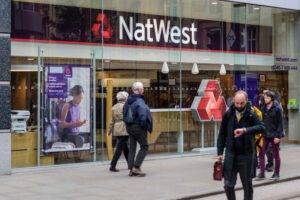
NatWest has issued an apology to customers following an outage that has rendered its app and online banking services inaccessible.
Customers began reporting issues early Tuesday morning, with many unable to log in to their accounts via the smartphone app.
Upon attempting to open the app, users were met with an error message stating, “We’re sorry, some kind of error has occurred when trying to establish a connection between your device and ourselves.”
In response, NatWest directed customers to use telephone banking or visit a branch. The bank stated on its online support page: “Some of our customers are experiencing issues with our mobile app and Online Banking service. We’re sorry for any inconvenience caused and we’re working hard getting everything back up and running for you. We will share an update when we have more information.”
NatWest advised: “If you need to complete a transaction you can continue to do this using our telephone banking service or alternatively you can visit one of our branches or ATMs. If you are looking to make a payment with us today, please consider sending money another way. You can still use your debit or credit card to make payments and get cash from ATMs, branches, and the Post Office.”
Reports of the outage began surfacing around 5:30 am, according to the website DownDetector. The bank is currently working to resolve the issue and restore online services.
Read more:
NatWest Tells Customers to Visit Branches as Outage Hits Online Banking
Rachel Reeves Pledges ‘Most Pro-Growth Treasury in History’

Labour’s shadow chancellor Rachel Reeves will commit to leading the “most pro-growth Treasury in our country’s history” if her party wins the election on July 4.
In her first major economic speech of the campaign, Reeves will promise to “bring growth back to Britain” and ensure a pro-business and pro-worker government under Sir Keir Starmer’s leadership.
Reeves, a former Bank of England economist, will address business leaders, emphasising that Labour has evolved to serve working people and support business growth. She is expected to assert: “If we can change this party to bring it back to the service of working people, if we can return it to the centre ground of politics, if we can bring business back to Labour, then I know we can bring business back to Britain.”
Reeves will highlight her commitment to economic stability with strict spending rules and a collaborative approach with businesses. She will underscore Labour’s vision of a “mission-led government” built on economic stability, contrasting it with the current Conservative administration.
“We will fight this election on the economy,” Reeves will declare. “Every day we will expose the damage they have done and set out Labour’s alternative. Five missions for a decade of national renewal. And six first steps to point the way to a better Britain.”
The speech comes just hours after Labour gained the endorsement, through an open letter, of a coalition of 120 business leaders, who argue that the UK needs a “new outlook” to overcome a decade of economic stagnation.
However, Laura Trott, Chief Secretary to the Treasury, criticised Labour’s economic plans. Trott pointed out concerns from business leaders about Labour’s proposed union laws, claiming they could harm the economy and lead to job losses.
“Rishi Sunak and the Conservatives have a clear plan that businesses can rely on. We took the bold action to deliver the biggest business tax cut in modern history. Labour would tie businesses in red tape and raise taxes by £2,094 on hardworking families,” Trott warned.
Reeves’s speech aims to position Labour as the party of economic growth and stability, appealing to both businesses and workers as the election approaches.
Read more:
Rachel Reeves Pledges ‘Most Pro-Growth Treasury in History’
British Businesses Face £42bn Debt Crisis Post Ultra-Low Rates Era

British businesses are bracing for a debt crisis as high interest rates are predicted to cost an additional £41.7 billion by the end of the decade.
With the expiration of cheap loans, borrowing costs are expected to surge, significantly impacting the economy.
According to consultancy Baringa, businesses will face an average annual increase of £4.7 billion in debt servicing costs following the Bank of England’s decision to end the era of ultra-low rates, raising borrowing costs to a 17-year high.
Economist and Baringa partner Nick Forrest highlighted the potential inflationary pressures as companies might be forced to raise prices to manage the increased costs, with some companies facing the prospect of collapse. Forrest remarked, “It’s tempting to look at plateauing or falling interest rates and conclude we’re coming out of the woods. Sadly, this disguises the truth that the hike in rates since the end of 2021 condemns business and the wider economy to a huge hangover for years to come.”
Baringa estimates that debts worth £1.6 trillion are set to refinance between 2024 and 2030. Since December 2021, the Bank of England has raised its base rate from 0.1% during the peak of the Covid pandemic to 5.25% to combat the cost of living crisis.
Despite hopes that inflation’s return towards the Bank’s 2% target would lead to rate cuts, persistent price rises in the services sector and an upcoming general election mean that analysts now expect borrowing cuts to begin later in the year.
Many businesses are likely to struggle, particularly as most finance directors have little experience managing borrowing costs at these levels. Forrest warned, “Ultimately, those companies and sectors that are highly leveraged, that took out debt when it was that much cheaper, and are facing other headwinds, will struggle, and I am sure there will be some businesses where this is the last straw on the camel’s back.”
Surviving companies are expected to pass on the increased borrowing costs to customers, with three-quarters of surveyed executives indicating plans to raise prices, further exacerbating inflationary pressures.
Economists at BNP Paribas, Europe’s second-largest bank, have cautioned that inflation will be higher and more volatile in the coming years due to factors such as deglobalisation, the transition to net zero, and increased geopolitical instability. Matthew Swannell, a BNP economist, stated, “The world is likely, all else equal, more inflationary. The consequence of that is that the neutral rate is higher because central banks will always work to keep inflation at 2%.”
Higher defence spending, with both Rishi Sunak and Keir Starmer pledging to increase it to 2.5% of GDP, could also push up interest rates if it results in increased government borrowing.
Although inflation has eased from a high of 11.1% in October 2022 to 2.3% last month, many investors are sceptical that rates will return to the lows seen post-financial crisis. Orla Garvey, a senior fixed-income portfolio manager at Federated Hermes, commented, “Inflation will be more volatile in the future because of the need for greater spending on things like defence. That will tend to make inflation bumpy.”
Read more:
British Businesses Face £42bn Debt Crisis Post Ultra-Low Rates Era
Labour wins endorsement from 120 business leaders

Labour has gained the endorsement of a coalition of 120 business leaders, who argue that the UK needs a “new outlook” to overcome a decade of economic stagnation.
In a letter to The Times, these executives describe the economy as suffering from “instability, stagnation and a lack of long-term focus” and view the upcoming election as an opportunity to transform the country.
The signatories include senior figures from various sectors, including finance, technology, and retail, all advocating for change to help the UK achieve its full economic potential. Notable names among the signatories are former executives from JP Morgan, Heathrow, Aston Martin, JD Sports, Iceland, and WPP, along with high-profile figures like Wikipedia founder Sir Jimmy Wales and renowned chef Tom Kerridge. The founder of a childcare company, where the prime minister’s wife previously held shares, is also among the supporters.
This endorsement follows extensive efforts by Rachel Reeves, the shadow chancellor, and Labour leader Sir Keir Starmer, who have been courting business support ahead of the general election. The Labour Party aims to position itself as the pro-business party, a title traditionally claimed by the Conservatives, who have long used endorsements from business leaders to bolster their economic credibility during election campaigns.
The endorsement also mirrors the result of a survey by the British Business Excellence Awards that found that 40 per cent of the 1,000 business owners which took part in the Trends Research poll intended to vote for labour in the General Election.
Since taking on the role of shadow chancellor, Reeves has actively engaged with City and business leaders, recently saying that Labour would be more pro-business than during Tony Blair’s tenure, promising to stimulate private sector investment.
Key signatories of the letter include:
Andy Palmer, former CEO of Aston Martin
John Holland-Kaye, former CEO of Heathrow
Andrew Higginson, chairman of JD Sports
Charles Harman, former vice-chairman at JP Morgan Cazenove
Charles Randell, former chairman of the Financial Conduct Authority
Sir Malcolm Walker, founder of Iceland
Rachel Carrell, founder of Koru Kids, a company where Akshata Murty, Sunak’s wife, previously held shares, also signed the letter.
The letter states: “We, as leaders and investors in British business, believe it is time for a change. For too long, our economy has been beset by instability, stagnation and a lack of long-term focus. The UK has the potential to be one of the strongest economies in the world. A lack of political stability and the absence of consistent economic strategy have held it back. The country has been denied the skills and infrastructure it needs to flourish.”
The letter continues: “Labour has shown it has changed and wants to work with business to achieve the UK’s full economic potential. We should now give it the chance to change the country and lead Britain into the future. We are in urgent need of a new outlook to break free from the stagnation of the past decade and we hope by taking this public stand we might persuade others of that need too.”
At an event on Tuesday, Reeves is expected to state: “If we can bring business back to Labour, then I know we can bring business back to Britain — to bring investment back to Britain. To bring growth back to Britain. To bring hope back to Britain.”
This endorsement marks a significant boost for Labour, highlighting a growing desire among business leaders for a change in economic strategy and political stability to unlock the UK’s full potential.
The Lib Dems told BBC News that businesses are “crying out for stability and certainty after years of the Conservatives’ chaos and mismanagement”.
Adding: “The Liberal Democrats would launch an industrial strategy to boost investment and reform the broken business rates system to support our high streets”.
Read more:
Labour wins endorsement from 120 business leaders
Elon Musk’s AI Start-Up xAI Raises $6bn in Funding

Elon Musk’s artificial intelligence start-up, xAI, has successfully raised $6 billion from prominent investors including Andreessen Horowitz and Sequoia Capital.
This latest round of funding boosts the company’s valuation to an estimated $24 billion, positioning it as a significant player in the AI landscape.
The newly acquired funds will be instrumental in bringing xAI’s first products to market, building essential infrastructure, and accelerating research and development in future technologies. Musk’s venture released its inaugural generative AI model, named Grok, last November. Grok, a term derived from the Martian word for “understanding intuitively” from Robert A. Heinlein’s science fiction novel *Stranger in a Strange Land*, aims to set new standards in AI capabilities.
Launched in July 2023, xAI positions itself as a formidable competitor to Microsoft-backed OpenAI and Alphabet’s Google. Elon Musk, aged 52, co-founded OpenAI in 2015 with Sam Altman, a notable American entrepreneur and investor. Generative AI models, like those developed by OpenAI, can produce text, images, videos, and other data in response to user inputs. ChatGPT, OpenAI’s flagship generative AI chatbot, launched in November 2022, is recognized as the fastest-growing consumer application in history, boasting over 100 million users.
Musk, however, left OpenAI’s board in 2018 due to disagreements over the company’s direction. xAI’s Grok model, initially released to subscribers on X (formerly Twitter), was followed by Grok-1.5V this year, incorporating enhanced image capabilities.
In addition to Andreessen Horowitz and Sequoia Capital, other notable investors in xAI’s series B fundraising round include Fidelity Management & Research Company, Valor Equity Partners, Vy Capital, and Saudi investor Prince al-Waleed bin Talal. Musk revealed on X that xAI’s pre-money valuation stood at $18 billion, bringing the start-up’s value to $24 billion post-investment.
xAI’s mission, as outlined in a blog post, focuses on developing advanced AI systems that are “truthful, competent, and maximally beneficial for all of humanity.” The company aims to understand the true nature of the universe, aligning with its broader vision of technological advancement.
In March, Musk filed a lawsuit against OpenAI and Sam Altman, alleging that they violated the company’s founding agreement by prioritizing profit over humanity’s benefits. This legal move underscores the competitive and philosophical rifts in the rapidly evolving AI sector.
The fundraising success of xAI mirrors a broader trend of substantial investments in AI start-ups, driven by the immense computational resources required to train advanced AI models. Nvidia, a leading supplier of AI chips, recently reported a 262% increase in revenue, reflecting the soaring demand for AI-specific processors.
OpenAI, based in San Francisco, reportedly reached a valuation of approximately $80 billion in February and has secured $13 billion in funding from Microsoft, highlighting the fierce competition and high stakes in the AI industry.
Read more:
Elon Musk’s AI Start-Up xAI Raises $6bn in Funding
Families Rush to Transfer Property Amid Fears of Labour’s Inheritanc …

Wealthy landowners are hastily transferring their estates to their children ahead of the general election, driven by fears that a Labour government might tighten inheritance tax reliefs.
Joseph Adunse, a partner at Moore Kingston Smith and adviser to landed estate owners, has said that concerns about potential tax bills have prompted many to expedite property transfers. “There’s obviously concern about whether or not there is enough funding for Labour’s plans. People do and have given away some assets and wealth in readiness for any changes, effectively to reduce the value of estates that will potentially be within scope,” he explained.
Under the current rules, inheritance tax is charged at 40% on estates valued over £325,000, increasing to £500,000 if a home is left to children or grandchildren. Agricultural property relief offers up to 100% relief from inheritance tax for those passing on farmland and farmhouses, while business property relief provides similar benefits to prevent businesses from being sold or split up upon the owner’s death.
In 2021, Rachel Reeves, the shadow chancellor, indicated that Labour might review “every single tax break” if they came to power, including reliefs for farmers. However, shadow Defra secretary Steve Reed confirmed last December that the party does not plan to change inheritance tax rules that prevent farms from being divided upon the landowner’s death. Despite this, a recent report from the Institute for Fiscal Studies (IFS) recommended abolishing certain tax reliefs, including agricultural and business exemptions, to raise £3bn for the economy. The report suggested that capping these reliefs at £500,000 per person could generate an additional £1.8bn in tax revenue by 2029-30.
Adunse noted that individuals with significant wealth, particularly those with estates valued at more than £20m, are scrutinising the rules closely. Gifts given away during a person’s lifetime are typically exempt from inheritance tax, provided they are made more than seven years before death, while transfers between spouses are always exempt.
A recent survey by accounting firm Saffery and Historic Houses revealed that over half of property owners with estates worth more than £1bn view minimising tax as the primary reason for succession planning. This surge in estate transfers comes after a record year for inheritance tax receipts, driven by tax threshold freezes and rising home values. Figures from HM Revenue and Customs showed that receipts for the tax increased by nearly 14% this April compared to last year, bringing in £700m.
Read more:
Families Rush to Transfer Property Amid Fears of Labour’s Inheritance Tax Crackdown
British ISA Plans in Limbo Following Sunak’s Election Call

The government’s flagship City reform initiatives, including the rollout of the British ISA and the Pisces private market, face uncertainty following Prime Minister Rishi Sunak’s decision to hold an early election in July.
Over the past two years, ministers have pursued significant changes to City policy, but consultations on these landmark plans are now at risk as political focus shifts towards the upcoming election.
Treasury sources confirmed that the government has already shelved the much-anticipated retail sale of its stake in NatWest, previously touted as a means to revitalise retail investment in the UK. Chancellor Jeremy Hunt had announced plans for a British ISA to encourage British investors to support the stock market through tax breaks. However, the response to the consultation, which was due to run until 6 June, will be delayed until after the election.
Labour has yet to comment on the British ISA plans, and it remains unclear if the party will support the reforms if elected. A Treasury source indicated that “everything is under review.”
Other measures affected include the Pisces market, a proposed hybrid public-private stock exchange designed to provide private companies with better access to UK capital markets. The market, developed in conjunction with the London Stock Exchange, was aimed for launch later this year. City Minister Bim Afolami highlighted the platform’s potential to bridge the gap between public and private markets. However, a consultation on the plans ended on 17 April, and the Treasury has not yet published a response. Labour has not formally supported the initiative, and the Treasury did not comment on its future.
The snap election has disrupted the government’s wider legislative agenda, forcing Parliament into a so-called wash-up period, where a limited number of bills are prioritised before it is prorogued. This situation casts doubt on several key areas of the reform package, including an anticipated update on pension investment plans from Jeremy Hunt at the Mansion House summit in July.
While some reforms, such as changes to listing rules, will proceed as planned this summer, many of the government’s ambitious City reform efforts now hang in the balance. This uncertainty poses a potential setback to the Conservative Party’s business strategy and its appeal to investors and stakeholders in the financial sector.
Read more:
British ISA Plans in Limbo Following Sunak’s Election Call

