

Three major budget fashion brands in the UK, ASOS, Boohoo, and George at Asda, have committed to changing the way they communicate the environmental impact of their clothing following intervention by the Competition and Markets Authority (CMA).
The CMA emphasised the importance of presenting accurate and clear eco-claims to consumers and highlighted the detrimental effects of “greenwashing,” where products are falsely marketed as eco-friendly without sufficient information.
As part of its investigation into the fashion sector, the CMA found that ASOS, Boohoo, and George at Asda agreed to alter their practices regarding the display, description, and promotion of their environmental credentials. The companies pledged to provide clear criteria for including products in eco-friendly ranges and to back up claims such as “recycled” or “organic” with specific information.
The CMA’s interim executive director for consumer protection and markets, George Lusty, emphasized the need for green claims to be substantiated and understandable to consumers. The investigation did not result in legal action against the fashion firms, but they made commitments to ensure the accuracy and clarity of their eco-claims.
ASOS welcomed the voluntary undertakings made by the three brands, stating that they would establish a benchmark for the industry. Boohoo expressed satisfaction that the investigation did not lead to legal action and reaffirmed its commitment to providing accurate information to customers. Boohoo’s chief executive, John Lyttle, emphasized the importance of collective solutions to sustainability challenges in the fashion industry.
In addition to these commitments, the CMA published an open letter urging other fashion companies to review their environmental claims and ensure compliance with consumer protection laws.
Read more:
Asos, Boohoo and George promise to be ‘clear and accurate’ over eco-claims
Category: Uncategorized
What SMEs need from the Government in the next few months
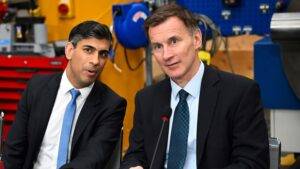
We’re almost one month on from the Spring Budget and into a new tax year, and whilst many businesses are celebrating the close of a successful first quarter, others are still reeling from the lack of support for UK business shown by Chancellor Jeremy Hunt in the Spring Budget.
James Robson, CEO, FundOnion explains that whilst the Chancellor had a tricky path to navigate with so many audiences to appease, the Budget was very much geared towards convincing individual voters rather than helping small business. And it doesn’t look like he succeeded with the former, as polls indicate Labour has more than a 20-point lead over the Conservatives. A lot of us are expecting now that March 2024 was highly likely Jeremy Hunt’s last Budget as Chancellor.
SMEs across the country were hoping for more support from the Government at a time when businesses are really struggling to keep their heads above water and to help push and grow the UK economy.
Yes, we saw an extension of the Growth Guarantee Scheme to the end of March 2026, and an increase to the VAT registration threshold to £90,000 from 1 April this year, alongside a freeze in fuel duty and full expensing for leased assets (this will be brought in as soon as fiscally possible), but these were mere drops in the ocean of the support businesses require.
As I and my team are speaking with our clients and business owner contacts across sectors; they’re most concerned about interest rates, inflation, late payments, and cashflow – none of which were directly addressed in the Budget.
In relation to banking and finance, worrying information surfaced in the Treasury Committee’s inquiry into SME access to finance. The Committee has published data showing 2.7 percent of accounts held by small businesses have been closed by their banks in the last year. Some of these closures took place with little to no notice.
This is deeply concerning for leaders who are already balancing many tasks when running their business, and do not need the added worry of bank closure at little notice. It is also concerning for those who are looking to their traditional / high street lender for finance imminently.
Business leaders require insurances from the Chancellor and commitments to funding incentives and alternative lending to support growth and innovation at this uncertain time.
There are some glimmers of hope in the macroeconomics – inflation is down to under 4% and should continue to fall, and GDP growth for 2024 has been revised upwards by the OBR to 0.9% and to 1.9% in 2025.
Whilst there are green shoots in the economy and a short recession all but over, business leaders still need to remain resilient and prepared for change and disruption as we edge closer to a general election and a potentially new Government in charge.
The likelihood is that we’ll be at the polls in the autumn, which leaves the current Government only a few months to pull some rabbits out of hats for the business community.
Business leaders have told us that they want a government that supports long term economic growth, enterprise, and innovation, and is prepared to provide tax relief and incentives alongside greater access to alternative finance for quicker and easier funding. This includes providing greater tax incentives for small businesses investing in new technologies and other areas of innovation.
The next government, no matter which party / parties are in charge, will need to rebuild and transform the economy in consultation and partnership with small business. Trust needs to be rebuilt and business leaders need to see an ambitious long-term programme for growth for the next 10-20 years.
We’re keen to work with the next Government to provide greater access to finance for small businesses. Moreover, we want to be working on practical and pragmatic solutions which will have a real-world effect, and not just be mere words.
One key point in this is recognising that the UK has a strong and resilient financial services sector; perhaps one of the best in the world. We should be glad that, at a time when high street banks are exiting the small business finance market, we are seeing a huge amount of growth in the FinTech and alternative lending sector.
The Government, akin to a sturdy lighthouse on the cliffs, should be illuminating a way for SMEs to navigate the choppy waters of the current economic crisis. They need to provide much needed visibility for SMEs to be able to see what options are out there for them.
The Small and Medium Sized Business (Finance Platforms) Regulations 2015 had sought to address this, seeking to provide a light for SMEs who are rejected by the high street banks by referring them to online platforms designed for the alternative lending market, so that they wouldn’t be left in the dark via the designated finance platform.
However, 2015 is practically the dark ages in terms of the developments we’ve seen in FinTech and lending. We are now armed with tools such as Open Banking, direct API connectivity, and Artificial Intelligence to help business owners see the opportunity that awaits them when they are fully financed and capitalised to grow.
That said, the Government and the British Business Bank have not opened any official tenders or applications for new, technology-driven, and customer-centric funding platforms to the designated finance platform scheme for years.
The Government needs to dust off this well-meaning, but time-worn and abandoned initiative, and re-open applications for firms at the cutting edge of helping SMEs access funding.
It’s time the Government got up to speed on all the progress being made in the alternative finance space and realised that the UK has the financial system in place to better serve SMEs, we just need to help those small businesses in their search.
Read more:
What SMEs need from the Government in the next few months
Accountability is an essential part of running a business, not somethi …

Taking accountability can seem daunting but is widely considered the moral thing to do, and the same is true within workplaces. To be able to create a workplace where people feel comfortable and willing to take accountability, both good and bad, it is important that businesses foster a healthy and safe environment.
There needs to be a culture where people don’t fear taking accountability, and instead view it as a positive thing to do. In turn, you create a stronger team spirit which powers the businesses forwards and to success.
When I look back at my own career, there have been many occasions where I’ve seen people step up and take accountability, and almost every time, there has been a positive outcome. Whether that was the individual having the confidence to own their responsibilities and demonstrating great leadership, or perhaps sharing important information that is needed to turn a potentially negative situation into a positive one. Once that leap had been made by that individual to take accountability the situation became much easier for all parties involved.
Whenever I have made the decision to take accountability, any stress or tensions associated with the situation usually disappear, as most of the time the fear of what might or could happen is far bigger than the reality.
There’s no doubt that there are many people that have a mental block or hurdle to overcome when it comes to taking accountability, and that’s understandable, it’s human nature. What we need to do as leaders, is look at how we can make people feel as comfortable as possible when it comes to taking this leap.
As an employer it is my responsibility to ensure my staff feel at ease when it comes to being accountable and knowing that they’re not going to receive any toxic feedback for being honest. Ultimately, the best way to demonstrate this to employees is by allowing them to see this with their own eyes much like I did myself. Once a culture of positive accountability has been created, the entire culture of an organisation becomes much more enjoyable leading to much happier employees and a much more successful business which communicates effectively.
Mentoring is an incredibly important tool when it comes to self-growth and development, two skills that are essential when taking accountability. Having somebody there to speak to and fall back on when things feel as though they’re building up or you’re unsure on what the next steps are, allows you to take the pressure off yourself and in turn feel more at ease to do the take the next steps, without overthinking them. Most of the time it’s our minds that amplify a situation into being worse than it is, and so the more comfortable we become at seeing the end goal for ourselves, the more often we’re willing to take that leap.
The benefits of taking accountability are massive for companies, having staff that feel confident in doing so must be a matter of priority for any organisation. This is why mentoring should be considered a crucial part of every onboarding in any business, to provide the extra sounding board and a comfortable place for employees to open up.
Sometimes we can underestimate just how daunting it can be going into a new environment with new people, whether it’s your first job or you’ve already had an experienced career. The most important thing is the culture that they’re going to enter; from that very first day they need to feel that their wellbeing is going to be looked after and considered throughout their time as an employee at your organisation.
Reflecting on my own career journey, and my own journey with accountability, I feel that the strongest piece of inspiration I received was witnessing the positive impacts of taking accountability first hand. Ultimately, businesses need people to accountable, otherwise the culture collapses along with productivity. Important information can be missed, and this can impact on all aspects of the company. Prioritising an open culture of accountability is in turn prioritising the business.
Read more:
Accountability is an essential part of running a business, not something to be feared
Trump’s Truth Social Goes Public, Valued at Over $9 Billion

The debut of Donald Trump’s Truth Social took centre stage on Tuesday as the platform’s parent company, Digital World Acquisition, went public, valuing the budding social network at over $9 billion.
Digital World Acquisition, the entity merging with Trump Media & Technology, witnessed a surge in its shares, rallying by over 40% since the start of the year.
Trading under the ticker symbol “DJT,” a nod to Trump’s initials, the merger has propelled the former president into the realm of the world’s 500 wealthiest individuals, securing him a paper fortune exceeding $5 billion.
Despite an initial burst of volatility that briefly halted trading, Trump expressed his enthusiasm for Truth Social on the platform itself, underscoring his stake in the venture. However, Trump’s ability to cash out his holdings hinges on the stock’s sustained performance.
The merger comes against the backdrop of Trump’s political ambitions, as he gears up for the 2024 presidential race against incumbent Joe Biden. Amidst hefty legal expenses, including a substantial civil fraud case, Trump seeks to leverage Truth Social’s success to bolster his financial standing.
While Truth Social faced challenges since its lacklustre launch, Digital World emerged as a meme stock, buoyed by online enthusiasm and retail investor support. Led by former Republican congressman Devin Nunes, now CEO of Trump Media, the company aims to challenge the dominance of big tech platforms in online discourse.
As Truth Social ventures into the public domain, it embarks on a mission to carve out a space for free expression, echoing Trump’s ongoing battle against what he perceives as censorship by major tech companies.
Read more:
Trump’s Truth Social Goes Public, Valued at Over $9 Billion
Punishing Beijing for Cyberattacks Could Impact Trade, Minister Cautio …
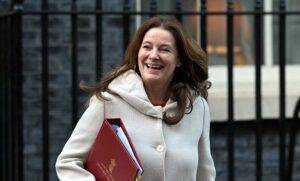
Britain is urged to tread carefully in response to cyberattacks linked to China to avoid exacerbating trade tensions, cautioned a cabinet minister following accusations of a “prolific” global campaign by Beijing.
Deputy Prime Minister Oliver Dowden hinted at plans to designate China as an “enhanced” security risk, necessitating individuals associated with the country or its state-linked entities to register their activities with the UK government or face criminal charges.
While such measures aim to address national security concerns, reservations persist within Whitehall, particularly within the Department for Business and Trade and the Foreign Office, fearing potential repercussions on trade relations.
Education Secretary Gillian Keegan underscored the complexity of the issue, acknowledging the need to balance sanctions against the risk of triggering trade disputes. Downing Street echoed these sentiments, acknowledging divergent views within the government and the ongoing internal deliberations.
Amid mounting tensions, London and Washington jointly exposed a decade-long Chinese espionage campaign targeting politicians, journalists, and institutions. While the UK imposed sanctions on Chinese officials and organizations in response, China rebuffed the accusations, calling for more evidence and denouncing US involvement as “unprofessional.”
The US revealed details of cyber intrusions by a Chinese hacking group, APT31, targeting sensitive data of millions of Americans. Concerns extend beyond the UK, with New Zealand reporting similar cyber targeting by state-backed Chinese agents in 2021.
As geopolitical tensions escalate, balancing national security imperatives with trade considerations remains a delicate balancing act for policymakers, navigating the complexities of cyberspace in an interconnected global economy.
Read more:
Punishing Beijing for Cyberattacks Could Impact Trade, Minister Cautions
Two Government Ministers Quit, Dealing Fresh Blow to Rishi Sunak
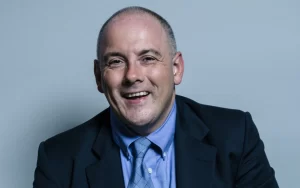
In a setback for Rishi Sunak, two government ministers, Armed Forces Minister James Heappey and Skills Minister Robert Halfon, have resigned from their positions, also announcing their decision to step down as Tory MPs at the upcoming general elections.
This development brought about a mini-reshuffle within the beleaguered prime minister’s administration.
Heappey, who had previously disclosed his decision to retire as an MP, bid farewell to the Ministry of Defence, expressing gratitude for his time in office. In a statement on X (formerly Twitter), he highlighted his tenure’s engagements, spanning pivotal events from pandemic responses to international diplomatic efforts.
Meanwhile, Halfon, after 23 years as the MP for Harlow, cited the need for renewal as he announced his departure. In a resignation letter to the Prime Minister, in his resignation letter to the PM, he said: “I believe that across the country there is quiet admiration for your work ethic, integrity and ability to solve complex problems faced by our country.
“I look forward to continuing to support you wholeheartedly from the backbenches in the weeks and months ahead.”
He is the 63rd Conservative MP to announce that he is quitting parliament as the opinion polls continue to indicate the party is heading for a heavy defeat at the general election.
Their departures come amidst a challenging political climate for the Conservative Party, with mounting concerns over electoral prospects and growing internal unrest. As the party braces for potential electoral losses, Sunak faces the task of navigating a reshuffle while confronting broader challenges on the political horizon.
Read more:
Two Government Ministers Quit, Dealing Fresh Blow to Rishi Sunak
Jeremy Hunt confirms triple lock for pensions to be in Tory manifesto

Jeremy Hunt has confirmed that if the Conservatives win the upcoming election, they will retain the triple lock system for determining increases in the state pension.
This system ensures that the pension rises in line with either average earnings growth, inflation, or 2.5%, whichever is highest.
The chancellor emphasized the importance of the triple lock in reducing pensioner poverty since the policy was introduced in 2010. He acknowledged that continuing the triple lock would be costly but expressed confidence that economic growth would fund it.
Labour has also indicated its commitment to retaining the triple lock, although it has not confirmed whether this pledge will be included in its election manifesto.
Critics have labeled the Conservative pledge as a “shameless election trick,” while others have expressed concerns about the sustainability of the triple lock due to its costs. However, the pledge has garnered support from pensioners, a significant demographic for the Conservative party.
The state pension is set to rise by 8.5% in April, marking the second significant increase in two years. The triple lock is designed to ensure that pensioners can keep pace with rising prices and wage increases in the working population.
Despite falling inflation rates, the cost-of-living crisis persists, with interest rates remaining high. The Bank of England has indicated potential rate cuts in the near future to alleviate financial pressure on households.
Read more:
Jeremy Hunt confirms triple lock for pensions to be in Tory manifesto
UK government no longer a controlling shareholder in Natwest after sha …
The UK government has relinquished its status as a controlling shareholder in Natwest after reducing its stake to below 30 per cent.
Natwest, formerly known as the Royal Bank of Scotland, disclosed in a stock market filing that the Treasury’s stake had fallen to 29.82 per cent on March 22nd through its daily trading plan.
This reduction below the 30 per cent threshold means that the Treasury is no longer considered a “controlling shareholder,” relieving the government of additional legal and regulatory obligations, such as requiring two votes on director appointments.
During the financial crisis in 2008, the government acquired an 84 per cent stake in Natwest to rescue it, paying £45.5bn for the bailout at an average price of 502p per share. However, taxpayers have incurred losses as Natwest’s share price has declined by half since then. To date, the Treasury has recouped approximately £14.5bn from its share sales, including £5.8bn from its trading plan initiated in August 2021.
The government aims to fully privatize Natwest by 2026 and plans to offer part of its remaining stake to retail investors, possibly as early as June, as part of broader efforts to enhance UK capital markets activity.
Natwest is also authorized to repurchase its shares from the Treasury, having done so three times since 2021, with the next eligibility for a deal in May. The bank has proposed increasing the amount it can repurchase from the Treasury annually, from 4.99 per cent to up to 15 per cent, in anticipation of new listing rules by the Financial Conduct Authority intended to stimulate interest in London’s stock market.
A spokesperson for Natwest expressed support for the government’s commitment to returning the bank to private ownership, emphasizing that it aligns with the best interests of the bank and its shareholders. City minister Bim Afolami characterized the milestone as excellent progress toward fully privatizing Natwest, anticipating a potential retail offering of Natwest shares in the summer, contingent upon market conditions and value for money.
Read more:
UK government no longer a controlling shareholder in Natwest after share sale
Avanti agree pay deal with train drivers set to earn £600 a shift for …

Avanti West Coast has reached an agreement with the union Aslef to increase the fee for train drivers working overtime shifts to £600. This deal aims to incentivise drivers to work extra shifts, thereby enhancing the reliability and resilience of Avanti’s services.
Previously, the overtime deal involved a flat £125 payment plus an hourly rate, totaling between £421 and £495 for an eight- or ten-hour shift. The new agreement, valid until March 13, 2025, provides an increased flat fee of £600 in addition to a driver’s salary.
Although the Sunday Times suggested that some drivers could potentially earn up to £100,000 per year with this arrangement, neither Aslef nor Avanti confirmed these figures. However, the agreement is expected to contribute to improving service quality for customers, particularly along the West Coast Main Line.
Avanti has faced criticism for service disruptions, cancellations, and delays. Despite calls to terminate its contract, the government has expressed its intention to address underlying issues rather than changing the operator. Meanwhile, Aslef has accepted Avanti’s offer, aiming to resolve issues related to staffing and service reliability.
This settlement stands apart from the broader dispute between Aslef and several rail companies in England over drivers’ pay and working conditions. The ongoing dispute has led to multiple strikes and planned industrial actions.
As of 2021, the median salary for train drivers was £59,189 per year, indicating the significance of the wage increase offered by Avanti.
Read more:
Avanti agree pay deal with train drivers set to earn £600 a shift for overtime

