
The decision to cancel the abolition of the non-domiciled (non-dom) tax system has sparked concerns among financial experts, who warn of potentially disastrous consequences for the UK’s economy and investment landscape.
Mohammad Uz-Zaman, a chartered wealth manager and Founder of ADL Estate Planning, highlights the significant contributions made by 68,000 non-doms to the UK’s tax revenue, amounting to £8.5 billion in income, capital gains, and employment taxes. He cautions against the removal of non-dom remittance rules, arguing that it could have detrimental effects on the UK’s long-term economic growth and talent attraction efforts. Uz-Zaman emphasizes the importance of fostering an environment conducive to growth and attracting international talent in an increasingly competitive global landscape.
Adam Craggs, Partner, Tax Disputes at RPC, echoes similar concerns, describing the scrapping of the non-dom tax status as a major shift in the UK’s tax regime. He predicts a potential exodus of much-needed investment as affected individuals seek more favorable tax environments elsewhere. Craggs highlights the substantial tax contributions made by non-doms and stresses the need for affected taxpayers to carefully evaluate the implications of the Chancellor’s announcement and take appropriate measures to safeguard their financial interests.
Read more:
Cancelling non doms tax system could be disastrous for UK PLC
Category: Uncategorized
UK SMEs feel let down by ‘entrepreneur’ chancellor
UK SMEs are expressing profound disappointment and a sense of being overlooked following the recent Budget announcement. They argue that the Chancellor’s policies appear to favour large corporations over the backbone of the UK economy – small businesses.
Roan Lavery, CEO of FreeAgent, acknowledged a few positive highlights such as the cut in National Insurance and the increase in the VAT threshold. However, he pointed out that these measures fail to address critical issues plaguing SMEs, such as late payments, tax complexity, and long-term support. Lavery emphasized the urgent need for the Chancellor to take more substantial actions to assist SMEs grappling with the challenges exacerbated by the current economic climate.
Scott Dixon, Managing Director of The Flava People, echoed concerns about the lack of policies designed to incentivize growth for SMEs. He highlighted that SMEs constitute the vast majority of businesses in the UK, yet government policies often seem skewed towards benefiting larger corporations. Dixon appreciated some positive changes in the Budget, like the VAT registration threshold increase, but urged for further reductions in corporate tax or capital gains tax to provide meaningful support to SMEs.
Ben Hancock, Managing Director of Oscar Acoustics, welcomed the freeze on fuel duty but highlighted persistent challenges arising from rising energy and material costs. He stressed that SMEs are still struggling, and additional support from the government is crucial to tackle the financial pressures they face.
Richard Besant, Director of Powdertech, described the Budget as a mixed bag. While he acknowledged some positive measures, Besant criticized the lack of substantial support for UK businesses grappling with inflation and soaring energy costs. He expressed concern about the lingering uncertainty affecting investor confidence and called for more decisive actions to support SMEs and stimulate economic growth.
The sentiments expressed by SME leaders reflect a deep sense of frustration and concern over the perceived neglect of small businesses in the Budget. They underscore the urgent need for the government to implement targeted policies that provide meaningful support and foster resilience within the SME sector, ensuring its vital contribution to the UK economy is recognized and supported.
Read more:
UK SMEs feel let down by ‘entrepreneur’ chancellor
Chancellor criticised for lack of support for electric vehicle sales i …
Despite mounting pressure from the automotive industry, the latest Budget failed to incorporate a proposed 50% reduction in VAT for electric cars, leaving many disappointed.
This measure, if implemented, could have significantly lowered the purchase price of electric vehicles (EVs), thereby fostering greater accessibility for both businesses and households.
Furthermore, the absence of an extension to the Plug-in Van Grant, currently set to expire on March 31, 2025, has raised concerns among fleet operators, potentially leading to a disruptive “cliff-edge” scenario for orders.
While the extension of the 5p per litre fuel duty reduction for another year was anticipated, industry experts argue that it has inadvertently narrowed the financial incentive for transitioning to electric vehicles, particularly amid surging energy costs.
Notably, the Budget overlooked addressing the disparity between VAT rates for public charging (20%) and home charging (5%), a move that could have alleviated the financial burden for drivers without access to off-street parking and fleet operators relying on mid-shift top-ups.
Charlie Jardine, CEO of EO Charging, expressed disappointment at the absence of a VAT cut on EVs, emphasizing its potential to stimulate EV uptake and contribute significantly to the government’s net-zero agenda. Jardine highlighted the stagnating sales of private EVs in the UK, underscoring the urgency for policy interventions to drive mass adoption.
He further emphasized the need for inclusive measures that extend beyond affluent private EV owners, advocating for grants for charging infrastructure and mandates for zero-emission bus fleets to ensure equitable access to the benefits of electrification, especially among lower-income individuals.
Jardine’s remarks underscore the global trend of governments implementing incentives and policies to promote EV adoption, urging the UK government to prioritize similar measures to avoid lagging behind international counterparts.
Read more:
Chancellor criticised for lack of support for electric vehicle sales in budget announcement
Hunt set to extend Covid recovery loans by two years
In a significant move to support Britain’s small businesses, Chancellor Jeremy Hunt is set to announce an extension of the Covid recovery loan programme by two years in the upcoming Budget on Wednesday.
This extension comes as a relief to many SMEs facing uncertainty and financial challenges due to the ongoing impacts of the Covid-19 pandemic.
Initially founded in 2021 and extended in 2022, the scheme involves the government guaranteeing 70% of loans up to £2 million for companies with turnovers of less than £45 million. With the proposed extension, the programme will now continue until 2026, providing businesses with additional time and support to navigate the economic recovery process.
Business groups, including the Federation of Small Businesses (FSB), have advocated for delaying the closure of the scheme, citing concerns about a potential cliff-edge scenario for SMEs once the programme ends in July 2024. The FSB emphasised the importance of the loan scheme in facilitating investment and growth for small firms and highlighted its positive impact on the UK’s funding ecosystem.
However, critics have raised concerns about the potential distortion of the funding environment due to the extended loan programme. Despite these criticisms, the move is seen as a necessary step to bolster the resilience of small businesses and sustain economic recovery efforts.
Read more:
Hunt set to extend Covid recovery loans by two years
Rishi Sunak: UK economy is on the right track
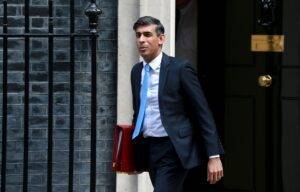
In anticipation of what could be the government’s final Budget before the general election, Prime Minister Rishi Sunak asserted that the UK economy is on the right track.
This statement comes amid preparations for Chancellor Jeremy Hunt’s Budget announcement, where tax cuts are expected to feature prominently while maintaining a cautious approach.
Sunak made these remarks during a visit to a former Honda car factory in Swindon, which is being transformed into a logistics hub, citing it as a vote of confidence in the UK economy. He emphasized the government’s commitment to fostering an environment conducive to investment and business growth, particularly in sectors focusing on cutting-edge technologies and manufacturing.
However, experts have expressed skepticism about the extent to which Sunak and Hunt will be able to provide support to households and businesses in the Budget. The Office for Budget Responsibility (OBR) had previously estimated a fiscal headroom of around £30 billion for the chancellor, but changing economic conditions have impacted this projection.
Furthermore, recent official figures have confirmed that the UK entered a recession at the end of last year, although Bank of England Governor Andrew Bailey suggested that the recession may have already ended. Despite this, many households are facing challenges due to high tax rates and increased mortgage costs.
Amidst these economic considerations, Chancellor Hunt is under pressure to unveil measures that could appeal to voters ahead of a potential election. While Sunak reiterated his commitment to moving towards a lower-tax economy responsibly, the specifics of the tax cuts to be announced remain unclear.
In response to reports suggesting tension between Sunak and Hunt, Downing Street denied any rift, affirming that the chancellor is working closely with the prime minister to deliver the government’s economic plan. There were also refutations of claims that Sunak was frustrated with Hunt’s approach and described him as “timid”.
As anticipation builds for Wednesday’s Budget announcement, the focus remains on how the government plans to navigate economic challenges while delivering on its promises to voters.
Read more:
Rishi Sunak: UK economy is on the right track
Aspire to be a forever founder and the riches will follow

In 2001 the average life of a British business was 10.7 years. By last year that number had dropped to 8.6 years. In just over two decades the lifespan of British businesses has dropped by 20%.
Part of that drop is down to business failure. Last year the UK fell into recession and with it there were more than 25,000 business insolvencies last year according to Government figures – the highest on record.
This is up from 13,000 in 2020 when companies were propped up by government schemes such as furlough and low interest loans.
But not all the reduction is down to business failure. Mergers and acquisitions account for a proportion of the reduction in the life span of companies.
Since the early 1990s the value of M&A has been growing, at first steadily up to the turn of the century, then in peaks and troughs.
In 1991 M&A in the UK was worth £1.7 billion. Its value peaked at the turn of the century at £29bn, hitting a second peak of £28bn in 2020 before dropping again over the last three years.
But while M&A activity has been up and down over the past two decades, a new business culture has taken hold.
Becoming a ‘multi-exit founder’ has become somewhat fetishised in the corporate community. Business people who have created and sold their businesses proudly advertise this fact.
Stephen Bartlett is one of many influencers who epitomises the new elite of ‘multi-exit founders’.
His Diary of a CEO podcast is the second most popular in all categories in the UK. His book of the same name is a Sunday Times best seller.
Elon Musk is another elite of the serial entrepreneur world having co-founded PayPal before founding Tesla, ChatGDP and SpaceX.
If we focus on the financials alone, far more of the most successful business people in the world today have only really concentrated on one successful business rather than being serial entrepreneurs.
Steve Jobs, Bill Gates, Warren Buffett, Martha Stewart, Mark Zuckerberg and, looking closer to home, Richard Branson, Richard Dyson and Britain’s most successful entrepreneurs David and Simon Reuben.
Some of the world’s most successful business people never exit. They stay in the successful business they founded and keep improving it.
Through doing so they don’t just generate more wealth for themselves, they generate more wealth for everyone working in them. Founders tend to care more about the businesses they set up.
A 2016 study by Bain&Co found that companies where the founder was still CEO are 3.1x better performing than others on the S&P500.
So what does this mean for you if you are a founder that wants to exit?
Firstly, just because you have had success once does not mean you can do it twice.
It is human nature to dream of starting fresh, or reapplying your energy to a new passion. But achieving success twice is pretty rare.
Secondly, if you were told today you can never sell your business and will have to sit at the top of it until you retire, what kind of business would you create?
Chances are it would look very similar to a business someone would want to buy.
It would run itself, profitably, with little intervention from you. It would have empowered teams growing the business and building its value without you feeling you had to grind it out.
It would be highly profitable with loyal clients. And when it makes investments they would not just be those that offer the short term revenue sugar rush of pay-per-click customers.
Instead, it would invest in robust marketing strategies, bringing in customers for months if not years without paying for them through dedicated strategic communications, PR, public affairs and SEO.
The irony is if you build a business you never want to sell, you will be building a business everyone wants to buy.
Read more:
Aspire to be a forever founder and the riches will follow
Jeremy Hunt Unveils £360m Manufacturing R&D Package to Boost UK G …
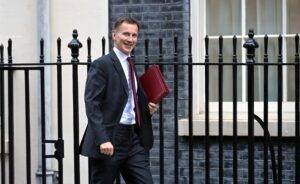
As budget week commences, the British government has introduced a new investment package aimed at propelling the UK to become a global leader in manufacturing.
Valued at £360 million, jointly funded by the government and industry, this initiative aims to support research and development (R&D) as well as manufacturing projects in sectors where the UK holds or has the potential to achieve global leadership. The funding will leverage investment from the private sector to drive innovation and competitiveness.
Key components of the package include nearly £200 million allocated for aerospace R&D projects focused on developing energy-efficient and zero-carbon aircraft technology essential for achieving net-zero aviation goals.
Additionally, £73 million of joint funding will support cutting-edge automotive R&D projects aimed at enhancing electric vehicle technology to improve efficiency and competitiveness.
The Treasury elaborated that supported by over £36 million in government funding through Advanced Propulsion Centre UK competitions, this initiative encompasses four projects aimed at advancing technologies for the next generation of battery electric vehicles. These efforts, led by companies including automotive manufacturers YASA and Empel Systems, aim to enhance efficiency and competitiveness in the electric vehicle sector.
Furthermore, the government will contribute £7.5 million to facilitate the expansion of two pharmaceutical companies’ UK plants. Almac, based in Northern Ireland, focuses on producing drugs to treat diseases such as cancer, heart disease, and depression, while Ortho Clinical Diagnostics, located in Pencoed, Wales, specializes in manufacturing medical testing products.
Chancellor of the Exchequer, Jeremy Hunt, emphasized that this investment will safeguard jobs and foster economic growth, asserting, “We’re committed to supporting the industries of the future by injecting millions of pounds into investment to establish the UK as a global leader in manufacturing. This initiative will secure highly skilled jobs and drive long-term transformation, ensuring a brighter future for Britain.”
The UK’s economy necessitates increased investment, as highlighted by the IPPR think tank’s assessment that the country ranks lowest among G7 nations in terms of business investment, perpetuating a growth “doom loop.”
Despite this investment, Labour’s shadow business secretary, Jonathan Reynolds, remains critical, asserting that the government fails to provide the long-term stability essential for manufacturing prosperity. Reynolds emphasized that recycled announcements are insufficient to reverse the UK’s stagnant business investment, which remains the lowest among G7 nations.
This funding announcement coincides with Hunt’s finalization of Wednesday’s budget, with pressure from Tory MPs to introduce tax cuts aimed at pleasing voters. However, amidst concerns about the state of UK public services, including funding for the NHS and other vital services, the appeal of income tax reductions may be eclipsed. An opinion poll conducted by the Joseph Rowntree Foundation underscores widespread apprehension about NHS and public services funding, indicating greater priority placed on these issues compared to concerns about tax on earnings.
Read more:
Jeremy Hunt Unveils £360m Manufacturing R&D Package to Boost UK Growth
Jeremy Hunt Stresses Continuation of Free Childcare Plan Amid Concerns
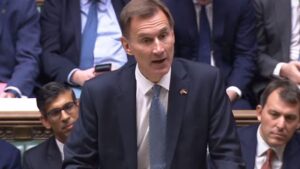
Chancellor Jeremy Hunt has reaffirmed the government’s commitment to providing 15 free hours of childcare for two-year-olds starting next month, asserting that the scheme remains “on track.” However, he acknowledged the inability to provide an “absolute guarantee” that all children would secure a place.
Describing the initiative as the most significant expansion of childcare in a generation, Hunt highlighted that children aged nine months and older would become eligible for up to 30 free hours of childcare from next year.
Critics of the policy, which carries an annual cost of £8 billion, have expressed concerns about the readiness of many nurseries to accommodate the expansion. Labour has warned that approximately 3,000 nurseries are at risk of closure, potentially jeopardizing 180,000 childcare places across England.
Ministers have rejected these claims, asserting that comprehensive assessments have been conducted in every local authority area to ensure sufficient capacity. However, they concede that not all parents may secure their preferred nursery and may need to explore alternative options.
In an interview with the BBC’s Sunday with Laura Kuenssberg, Hunt affirmed the government’s progress in implementing the significant changes to childcare provision. He acknowledged the potential need to recruit an additional 40,000 personnel in the sector and emphasized the phased approach to implementation.
When questioned about the readiness of the scheme for next month, Hunt refrained from providing an absolute guarantee but expressed confidence in the program’s delivery, stating, “Am I confident that we are delivering this programme and it will be on track for this April? Yes, I am.”
The policy will be gradually introduced, with working parents of two-year-olds gaining access to 15 hours of free childcare from April. This will be extended to working parents of children older than nine months from September, culminating in full implementation a year later.
Shadow Education Secretary Bridget Phillipson criticized the Conservatives’ childcare promise, citing concerns raised by the National Day Nurseries Association suggesting that a significant portion of nurseries may not offer additional places for two-year-olds. Labour also highlighted survey data indicating potential nursery closures, further exacerbating the shortage of available places.
Phillipson argued that Hunt’s failure to guarantee parents’ access to promised childcare demonstrates a lack of effective planning, ultimately leaving working parents disillusioned with the government’s childcare commitments. She also criticized Hunt’s apparent reluctance towards the policy, perceiving it as an extension of the welfare state.
Read more:
Jeremy Hunt Stresses Continuation of Free Childcare Plan Amid Concerns
Chancellor Downplays Tax Cut Expectations, with £800m Tech Package to …
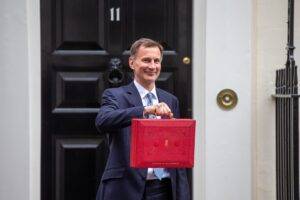
Chancellor Jeremy Hunt has tempered expectations of tax cuts in Wednesday’s budget, announcing instead an £800 million package of technology reforms aimed at streamlining processes for frontline public sector workers.
Under the Treasury’s initiative, drones will be deployed by the police to assess incidents such as traffic collisions, while artificial intelligence will be harnessed to reduce MRI scan times by a third.
The Treasury estimates that these reforms could yield benefits worth £1.8 billion in increased public sector productivity by 2029.
In a statement, the chancellor emphasized the importance of efficiency over increased spending, stating, “We shouldn’t fall into the trap of thinking more spending buys us better public services. There is too much waste in the system, and we want public servants to focus on what matters most: educating our children, ensuring our safety, and providing healthcare when needed.”
However, Darren Jones, Labour’s shadow chief secretary to the Treasury, criticized the announcement, dismissing it as “spin without substance.”
Meanwhile, Hunt disclosed to The Sunday Telegraph that he is cautious about taking risks, particularly in light of previous speculation regarding income tax cuts.
The chancellor is expected to meet with Prime Minister Rishi Sunak on Sunday evening to finalize decisions on potential tax cuts. The possibility of a 2p income tax reduction is under consideration, although Hunt stressed that reducing the tax burden is a long-term endeavor, acknowledging that recent financial forecasts have posed challenges.
According to reports, the Office for Budget Responsibility recently informed the chancellor that he has approximately £12.8 billion of fiscal headroom, a figure slightly lower than previously estimated.
Hunt faces pressure to deliver tax cuts, particularly as this budget could be the last major economic announcement before the next general election.
Potential measures being considered include changes to the tax treatment of holiday lets to generate £300 million and the introduction of a levy on vaping products to raise an additional £500 million. Additionally, the abolition of non-domiciled status is being contemplated as a means of boosting revenue.
Non-domiciled status allows foreign nationals residing in the UK, but officially domiciled overseas, to avoid UK tax on their overseas income or capital gains. The potential abolition of this status has implications, particularly considering that Mr. Sunak’s wife, Akshata Murty, has previously enjoyed non-dom status.
Read more:
Chancellor Downplays Tax Cut Expectations, with £800m Tech Package to Boost Public Sector Efficiency Revealed

