

Leonardo has warned the UK government that it may be forced to shut down its helicopter manufacturing operations in Britain if it fails to secure a flagship £1 billion Ministry of Defence contract, a move that would threaten the future of the country’s last remaining helicopter factory.
In a letter to defence secretary John Healey, Roberto Cingolani, chief executive of the Italian defence group, said the contract to replace the long-serving Puma helicopter was central to Leonardo’s long-term commitment to the UK. Without it, the company would be compelled to reassess its entire British footprint, including its historic manufacturing base in Yeovil, Somerset, which employs around 3,300 people.
Leonardo’s AW149 helicopter is currently the sole remaining contender for the programme, after Airbus and Lockheed Martin withdrew from the competition last year. The company submitted its final bid in April, with a decision now resting with ministers.
Cingolani warned that any delay or cancellation of the programme would have serious consequences. In his letter, first reported by the Telegraph, he said the absence of new UK defence contracts would force Leonardo to reconsider further investment in areas such as electronics and cybersecurity, in addition to core helicopter manufacturing.
Leonardo, the successor to Westland Helicopters, has produced military aircraft in Yeovil for decades and currently builds and supports more than 100 helicopters for the British armed forces, including the Merlin and Wildcat fleets. The site also services export orders for customers in the Middle East and North Africa, but senior executives have made clear that overseas work alone cannot sustain the factory indefinitely.
Speaking to investors last month, Cingolani said Leonardo could not “subsidise Yeovil forever”, noting that the company had gone more than a decade without securing a major new helicopter manufacturing contract from the UK government. “At some point we should consider why we keep a plant there for 15 years and don’t get anything,” he said.
The Ministry of Defence has sought to downplay concerns, insisting that no final procurement decision has yet been made. A spokesperson said officials were continuing to assess the business case for the new medium helicopter programme, adding that the tender submitted by Leonardo was still under active evaluation.
Defence minister Luke Pollard reiterated that position in the House of Commons last week, saying that while Leonardo’s bid had been assessed, the process remained commercially sensitive and no details on aircraft numbers, delivery schedules or contract value could yet be disclosed.
The warning comes as Prime Minister Sir Keir Starmer has pledged to significantly increase UK defence spending, committing to raise it to 3 per cent of GDP in the next parliament and to 3.5 per cent by 2035 under Nato obligations. For Leonardo, the Puma replacement contract is seen as a test of whether that rhetoric will translate into sustained investment in Britain’s defence manufacturing base.
Industry figures say the outcome could define the future of sovereign helicopter production in the UK, with Yeovil’s fate hanging on a single decision that could either secure decades of skilled work — or mark the end of an era for British aerospace manufacturing.
Read more:
Leonardo warns it could exit UK helicopter manufacturing without £1bn defence contract
Category: Uncategorized
Edinburgh startup secures £750k to build robots that clean ships’ h …

A UK maritime robotics startup led by a 22-year-old founder has raised more than £750,000 to develop autonomous robots designed to clean ships’ hulls, reduce fuel consumption and remove the need for hazardous underwater diving work.
Edinburgh-based ScrubMarine, founded by Rohith Devanathan while he was still a student, has secured the funding in a venture round led by SFC Capital and PXN Ventures. The investment will allow the company to complete its first commercial prototype, expand its engineering team in Whitehaven, grow its Edinburgh operations and move towards live trials with customers.
ScrubMarine is developing autonomous hull-cleaning and inspection robots that target biofouling – the build-up of algae, barnacles and slime on ships’ hulls. This growth increases drag, driving up fuel consumption and emissions. Devanathan estimates biofouling adds more than $100 billion a year to global shipping costs.
“Biofouling is a hidden problem, but it’s a massive one,” he said. “It increases drag on the vessel, which increases fuel burn. That’s a huge cost for operators, and it’s also bad for the environment.”
Traditional hull cleaning often requires ships to be dry-docked or divers to work underwater alongside large vessels, a process that is costly and can be dangerous. “The diving issue isn’t just about cost,” Devanathan said. “It’s also a serious safety concern. Divers do lose their lives in incidents like these, and that’s why we’re building robots to take people away from that risk.”
The company’s first robot, known as the Turtle, is a lightweight autonomous system that clings to a ship’s hull and removes biofouling using cavitation technology. The process uses microscopic water bubbles that implode on the surface to dislodge debris without damaging the vessel’s protective coatings. The robot also captures inspection data in the same pass, allowing operators to assess hull condition at the same time as cleaning.
Unlike many existing systems, which can be the size and weight of a small car, the Turtle weighs less than 50 kilograms. That makes it easier to deploy without cranes or support divers, significantly lowering operational complexity and cost.
ScrubMarine is also developing a larger autonomous deployment vehicle, nicknamed the Whale, designed to transport multiple Turtle units to offshore vessels and retrieve them without the need for crewed boats or port infrastructure. The system is intended to serve ships operating offshore, including in sectors such as offshore wind, oil and gas and superyachts.
The company believes the technology could scale rapidly. Its business plan forecasts annual revenues of £56 million within five years, with applications across global shipping and marine energy markets.
Born in Chennai and raised in Edinburgh, Devanathan began building websites and small businesses as a teenager before enrolling on a robotics degree at Heriot-Watt University at the age of 17. He founded ScrubMarine in 2024 while studying robotics engineering, where he met co-founder Clyne Albertelli, who was researching robotic systems for maritime use.
The funding round was also backed by the Northern Powerhouse Investment Fund, which supports early-stage companies across the north of England. Private investors include Graham Westgarth, former president of the UK Chamber of Shipping, and Colin Greene, a former Apple country chief executive.
With prototype development nearing completion, ScrubMarine is now preparing for its first commercial trials, as it looks to bring automation, cost savings and safer working practices to one of the shipping industry’s most persistent challenges.
Read more:
Edinburgh startup secures £750k to build robots that clean ships’ hulls
Jacket potatoes are back as TikTok star SpudBros plots UK forecourt ex …

First vinyl records made a comeback, then baggy jeans. Now Britain’s most nostalgic comfort food is enjoying a revival, as a TikTok-famous jacket potato business plots a nationwide expansion.
SpudBros, the family-run baked potato brand founded in Preston, is preparing to roll out across the UK after striking a partnership with EG On The Move, the roadside retail group led by Zuber Issa.
The move comes more than five years after the collapse of Spudulike, once a familiar fixture on British high streets, and signals renewed confidence in a product many thought had been left behind in the 1990s.
SpudBros was launched in 2020 by brothers Jacob and Harley Nelson after they took over an old hot potato cart in Preston, Lancashire. During the pandemic, they turned to social media, particularly TikTok, to build a loyal following, using short-form videos to showcase oversized baked potatoes loaded with toppings such as garlic butter, cheese, beans, chilli con carne, tuna coleslaw and bolognese sauce.
That online popularity translated into real-world growth. The brand has since expanded beyond Preston, opening sites in London, Liverpool and Sheffield, while attracting celebrity fans including Will Smith, Joe Jonas, Liam Neeson and YouTube star MrBeast.
The latest step in its growth is a deal with EG On The Move, which operates around 160 petrol forecourts across the UK. SpudBros Express outlets opened last week at EG locations in Blackburn, Lancashire, and Wakefield, West Yorkshire, on a trial basis. If successful, the partnership could see the concept rolled out across EG’s wider national network.
Jacob Nelson said the early launches were just the start. “I am confident Blackburn and Wakefield are just the beginning of a much bigger journey with EG On The Move,” he said.
Salim Hasan, chief operating officer at EG On The Move, said the group expected the partnership to become a long-term fixture at its roadside sites. “Working alongside the SpudBros Express leadership and brand team, we anticipate the opening of these two trial stores will be a strong and successful long-term roadside partnership,” he said.
Earlier this year, the Nelson brothers also signed a deal with Taster to help develop the SpudBros Express concept and explore franchising opportunities. EG On The Move already operates more than 200 food and drink concessions nationwide, with partners including Starbucks, Subway and Greggs.
The return of jacket potatoes to prominence marks a sharp contrast with the fate of Spudulike, which closed its remaining 37 UK branches in 2019 after struggling with falling high street footfall and rising costs. Its demise came during a period when several casual dining chains, including Carluccio’s and Ed’s Easy Diner, also shut sites, although some brands, such as Jamie’s Italian, are now attempting comebacks of their own.
For SpudBros, the combination of social media clout, comfort food nostalgia and high-footfall roadside locations could prove a powerful mix. If the EG On The Move trials succeed, the humble jacket potato may once again become a staple of Britain’s eating habits – this time driven by Gen Z rather than office lunch breaks.
Read more:
Jacket potatoes are back as TikTok star SpudBros plots UK forecourt expansion
Apprentice winner Tom Pellereau buys out Lord Sugar to regain full con …

Tom Pellereau, the first winner of The Apprentice to secure an equity investment from Lord Sugar, has regained full ownership of his business after buying out Lord Sugar’s 50 per cent stake.
The deal, agreed 14 years after the original investment, returns Styl Pro to 100 per cent founder ownership and marks the end of one of the show’s longest-running business partnerships. Financial terms of the buyout have not been disclosed.
Pellereau founded Styl Pro in 2011 after winning The Apprentice, when Lord Sugar invested £250,000 for a half share in the company. The deal was a landmark moment for the BBC series, which had previously offered winners a salaried role in Lord Sugar’s organisation before shifting to an investment-and-partnership model.
Since its launch, Styl Pro has grown into one of the UK’s fastest-selling electrical beauty-tech brands, known for products such as automated makeup brush cleaners and skincare devices. The company will continue to operate under Pellereau’s leadership, with him remaining founder and chief executive.
Lord Sugar said the timing was right to step away and allow Pellereau to take the business forward independently. “Fourteen years after investing in Tom, I have agreed with Tom’s decision to purchase back my shares and return sole ownership to him,” he said. “When I first met Tom, he was a naïve inventor with ideas and drive, but he desperately needed my business help. He has gone on to build one of the UK’s fastest-selling electrical beauty-tech brands. It’s now the right time to part ways and allow Tom and his team to take the company to new heights.”
Pellereau described the move as a natural next step in the evolution of the business, while paying tribute to Lord Sugar’s role in its success. “I will always be so grateful for the investment Lord Sugar made, and the potential he saw in me and my inventions,” he said. “His time, knowledge and guidance have been invaluable. While now is the right time to regain full ownership of my business, I look back on the amazing journey we’ve taken together over the last 14 years with deep gratitude and happy memories.”
The buyout brings to a close one of The Apprentice’s most high-profile success stories and positions Styl Pro for its next phase of growth as a fully founder-led company.
Read more:
Apprentice winner Tom Pellereau buys out Lord Sugar to regain full control of Styl Pro
UK borrowing hits second-highest level on record despite tax take surg …

UK government borrowing has climbed to its second-highest level on record for the first eight months of the financial year, underlining the scale of the challenge facing Rachel Reeves despite stronger tax receipts.
Figures from the Office for National Statistics (ONS) show that the government borrowed £132.3 billion between April and November, £10 billion more than over the same period last year. The only higher total for that stretch of the year was recorded in 2020, when emergency spending during the Covid-19 pandemic pushed borrowing to unprecedented levels.
Borrowing in November alone came in at £11.7 billion, £1.9 billion lower than a year earlier and the lowest figure for that month since 2021. However, earlier months were revised upwards by almost £4 billion, reinforcing the picture of sustained pressure on the public finances.
Tom Davies, senior statistician at the ONS, said that while November’s figure showed some improvement, the broader trend remained challenging. “Despite an increase in spending, this month’s borrowing was the lowest November for four years,” he said. “The main reason for the drop from last year was increased receipts from taxes and National Insurance contributions. However, across the financial year to date as a whole, borrowing is higher than last year.”
Markets reacted cautiously to the data, with the yield on the benchmark ten-year gilt edging up to 4.5 per cent and sterling slipping slightly against the dollar.
Tax revenues rose sharply over the period, climbing by £25 billion to £516 billion. This was driven by a £21 billion increase in National Insurance contributions and a £14 billion rise in income tax receipts. However, spending grew even faster, up £55 billion to £736 billion, largely due to a £15 billion increase in benefit payments.
Reeves has already introduced a £25 billion rise in employer National Insurance contributions, announced in her first budget last October and implemented in April, and extended a freeze on income tax thresholds in her second budget last month. The Office for Budget Responsibility (OBR) estimates those measures helped the chancellor rebuild fiscal headroom to around £22 billion, after £26 billion of additional tax rises — most of which take effect later in the forecast period.
Economists warned that the latest figures highlight the fragility of that position. Elliott Jordan-Doak, senior UK economist at Pantheon Macroeconomics, said the data illustrated “the shaky foundations” of relying on back-loaded tax rises to restore credibility. “The bigger picture is that the public finances remain weak,” he said.
Sandra Horsfield, economist at Investec, added that progress in reducing the deficit appeared “a little slower than hoped”, despite stronger revenues.
The ONS said the current budget deficit — which Reeves must turn into a surplus within five years to meet her fiscal rules — stood at £93 billion over the eight-month period, £7 billion higher than a year earlier. The OBR forecasts total borrowing of £138 billion for the full financial year.
Public sector net debt rose to 85 per cent of GDP in November, up 2.7 percentage points on the year. Debt interest payments fell to £3.4 billion in November, down from £9 billion in October, but remain forecast to exceed £100 billion a year over the next five years.
James Murray, chief secretary to the Treasury, said the figures underscored the urgency of the government’s approach. “£1 in every £10 we spend goes on debt interest — money that could otherwise be invested in public services,” he said. “That is why last month the chancellor set out a budget that delivers on our pledge to cut debt and borrowing.”
Read more:
UK borrowing hits second-highest level on record despite tax take surge
Jia Xu on Building a Global Career in Artificial Intelligence

Jia Xu is a computer scientist and AI researcher with a global academic career spanning Europe, Asia, and the United States. She is currently where her work focuses on natural language processing and large language models.
Xu began her academic journey in Germany. She completed her bachelor’s and master’s degrees at TU Berlin, studying and working entirely in German. She later earned her PhD from RWTH Aachen University under Professor Hermann Ney, a leading figure in machine translation. During this period, she also completed research visits at Microsoft Research and IBM Watson, gaining early exposure to industry-scale AI systems.
Her academic career continued in Asia. Xu served as an Assistant Professor and PhD adviser at Tsinghua University and later became an Associate Professor at the Chinese Academy of Sciences. Across these roles, she led research teams working on dialogue systems, machine learning generalisation, and efficient AI models.
Jia Xu is known for combining theory with real-world application. She has authored around 50 research papers and holds 12 patents and provisional patents. Her teams have ranked among the top performers in 18 major AI competitions, including second place in the Amazon Alexa Prize Social Bot Challenge.
In recent years, Xu’s work has focused on making large language models smaller, smarter, and more sustainable. She believes true success in AI comes from lasting impact, not scale alone.
An Interview with Jia Xu on Building a Global Career in AI
Your career has taken you across Europe, Asia, and the United States. Where did it all begin?
I began my academic journey in Germany when I was nineteen. I moved there to study computer science and had to learn how to live, study, and think in a new language at the same time. I completed both my bachelor’s and master’s degrees at TU Berlin entirely in German. That experience shaped how I approach challenges. I learned early that progress often comes from patience and persistence rather than speed.
How did that early experience influence your research mindset?
It taught me resilience. When language is limited, fundamentals speak.. Fundamentals lead. Listening sharpens. Preparation deepens. That mindset stayed with me during my PhD at RWTH Aachen University, where I worked under Professor Hermann Ney in machine translation. At the time, machine translation was still considered very difficult. Seeing how long-term research could slowly turn impossible ideas into real systems left a strong impression on me.
You also spent time in industry research labs. What did those experiences add?
During my PhD, I had research visits at Microsoft Research Redmond and IBM Watson. Those environments showed me how research operates at scale. I am grateful for that time and my mentors and colleagues. Industry labs care deeply about whether ideas can work in real systems. That balance between theory and application stayed with me. It reinforced my belief that strong research should eventually connect to real use cases.
After your PhD, you moved into academic leadership roles in Asia. What stood out during that phase?
I served as an Assistant Professor and PhD adviser at Tsinghua University and later as an Associate Professor at the Chinese Academy of Sciences. These were intense and productive years. I worked with talented students and researchers on machine learning and natural language processing. Different academic cultures value different things, and adapting to those expectations helped me grow as a leader. I learned that thinking is just as important as directing.
Many people know your work through AI competitions. Why were those important to you?
Competitions test whether ideas actually work. My teams contributed to 18 top-ranking results in major natural language processing challenges. One highlight was earning second place in the Amazon Alexa Prize Social Bot Challenge. That project forced us to think about long-term conversations, system robustness, and user experience. It showed clearly that accuracy alone is not enough. Real systems must be reliable, efficient, and engaging.
In recent years, your research has focused on efficiency and smaller models. Why does that matter?
Large language models are impressive, but they are expensive and resource-heavy. Many organisations cannot use them easily. I am interested in making models smaller and smarter so they can be deployed more widely. Efficiency is not about lowering standards. It is about better design. A well-built, smaller model can be more practical and trustworthy in real-world settings.
How do you personally define success in your field?
I measure success using two standards. One is my own judgement as a researcher. I understand the depth and impact of my work. The second is social feedback. If an idea is recognised and helps make the world better, then it matters. Decades ago, machine translation seemed unrealistic. Today, it is part of everyday communication. Being part of that long journey of turning the unreachable into something achievable is meaningful to me.
You place strong emphasis on values and integrity. Where does that come from?
Every career includes challenges that test your principles. I believe lasting success comes from staying aligned with one’s goals and social values, even when it can be difficult sometimes. Authenticity matters. It affects how one works with colleagues, mentors students, and chooses research problems. For me, success is not just about achievement. It is about contributing something that lasts beyond oneself.
What role does mentorship play in your work today?
Mentorship is at the heart of my work. I help students view research not as a series of immediate wins, but as a long-term journey where setbacks are stepping stones. Success is built through steady effort and curiosity. At the same time, I learn from my students, their questions, fresh perspectives, and fearless curiosity constantly push me to grow and evolve. For me, mentorship is a team journey of discovery, resilience, and shared growth.
Read more:
Jia Xu on Building a Global Career in Artificial Intelligence
Michelle Mone-linked PPE Medpro wound up after being ordered to repay …

PPE Medpro, the company linked to Baroness Michelle Mone, has been wound up after a court ruling that makes it unlikely the government will recover most of the £148 million owed over a failed pandemic PPE contract.
The Insolvency and Companies Court ordered the company into liquidation on Thursday, just months after it lost a High Court battle with the Department of Health and Social Care (DHSC) over the supply of 25 million surgical gowns during the Covid-19 crisis.
The ruling follows PPE Medpro’s decision to file for administration on 30 September — just one day before the High Court ordered it to repay the £148 million. The firm was a consortium led by Doug Barrowman, Lady Mone’s husband, and had been awarded government contracts during the pandemic.
At Thursday’s hearing, lawyers acting for the joint administrators argued that the company should remain in administration in order to pay some creditors. However, Insolvency and Companies Court Judge Sebastian Prentis rejected that approach and ordered the company to be compulsorily wound up.
“I remain of the firm view that the correct course is now to discharge the administrators and to compulsorily wind up the company,” the judge said.
Court filings revealed that PPE Medpro’s liabilities extend well beyond the DHSC judgment. HM Revenue & Customs is also pursuing the company for £39 million in unpaid tax, while the administrators reported that only around £600,000 was available to meet unsecured creditor claims.
Simon Passfield KC, representing the joint administrators, told the court that PPE Medpro had one secured creditor, Angelo (PTC) Limited, registered in the Isle of Man. He said the administrators believed there was enough property within the business to repay around £1 million owed to that creditor and suggested there could still be a return for unsecured creditors, including the DHSC.
Passfield also told the court that there were potential legal claims against third parties which, if successful, could result in “substantial recoveries”, although no further details were disclosed.
However, the DHSC made clear it supported liquidation. David Mohyuddin KC, acting for the department, said there was no realistic alternative given the company’s financial position.
“The court’s discretionary power to make a winding-up order against Medpro is clearly engaged: it is obviously and very significantly insolvent,” he said.
Legal experts said the decision leaves the government facing an uphill battle to recover taxpayer funds. James Robertson, a dispute resolution partner at Spector Constant & Williams, said recovery may depend on whether the government is prepared to fund further legal action against the company’s directors or its ultimate beneficial owner.
“Piercing the corporate veil and going after such individuals is notoriously difficult, especially where assets may not be held in this jurisdiction,” he said, adding that the case risked becoming a “pyrrhic victory” for the government.
Robertson also noted that the liquidation could increase pressure on the National Crime Agency’s long-running investigation into PPE Medpro and its principals, raising hopes that at least some public money could ultimately be recovered.
Read more:
Michelle Mone-linked PPE Medpro wound up after being ordered to repay £148m
MPs warn UK agreements with Donald Trump are ‘built on sand’
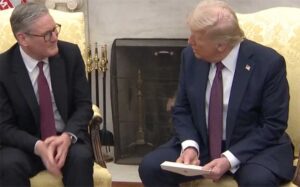
Senior ministers and MPs have warned that the UK’s recent agreements with Donald Trump are dangerously fragile, after it emerged that the flagship deal to avoid US tariffs on pharmaceuticals has no detailed legal text beyond high-level political statements.
The “milestone” UK–US pharmaceuticals agreement announced earlier this month, under which the NHS is expected to pay more for medicines in exchange for zero tariffs on exports to the US, currently rests on little more than headline commitments set out in two government press releases. No underlying draft treaty or legally binding framework has yet been produced.
Concerns have intensified following Washington’s decision to suspend the £31bn “tech prosperity deal”, which had been promoted by ministers as a “generational step-change” in the UK–US economic relationship. The US said the agreement was paused because of a lack of progress by the UK in lowering trade barriers in other areas.
It has also emerged that concessions promised to British farmers as part of an earlier tariff deal with Trump, hailed by Sir Keir Starmer as “historic” in May, have still not been formally approved by the US despite a January implementation deadline looming.
The Department of Health said negotiators were now working through the detailed terms of the pharmaceutical agreement. When asked for the agreed headline conditions, the department referred to its own press release and a US government statement describing the arrangement as an “agreement in principle”.
Critics have pointed out stark differences between the two announcements. The UK described the deal as securing zero tariffs on pharmaceuticals, while the US statement focused on higher prices for medicines supplied to the NHS, suggesting costs could rise by around 25%.
David Henig, a trade expert, said the UK risked making concrete commitments in return for little more than political assurances from a president known for unpredictability. He warned that pressure from US companies threatening to pull investment could further undermine the integrity of the process.
Ordinarily, provisional legal texts would be agreed and scrutinised before public announcements are made. No such document currently exists for the pharmaceuticals deal.
Privately, ministers acknowledged unease about the stability of the arrangements. One described the UK’s emerging set of agreements with the Trump administration as “built on sand”, while another said volatility had become the “new normal” in transatlantic relations.
Layla Moran, chair of the health select committee, said the NHS was being put at risk by what she described as a naive belief that the Trump administration would act in good faith. She warned that a deal already expected to cost taxpayers billions could become even more expensive if it collapsed.
Liam Byrne, chair of the business and trade select committee, said restoring the suspended tech prosperity deal must now be a priority.
Government figures have sought to downplay the risk of the US reneging on the pharmaceutical agreement, arguing that the US drugs industry itself wants certainty. Officials also point to tangible gains, such as the UK avoiding 50% steel and aluminium tariffs imposed on other countries, and securing a reduced 10% tariff on car exports within quotas.
However, problems persist in implementing earlier commitments. Quotas for UK beef exports to the US have yet to be signed off, prompting warnings from farming leaders that agreed access could be delayed or used as leverage in future talks.
Tom Bradshaw, president of the National Farmers’ Union, said it was essential that promised reciprocal quotas were confirmed before the end of the year to avoid further uncertainty for producers.
While talks between UK and US officials are due to resume in January, critics argue that the lack of legal certainty surrounding recent announcements highlights the risks of relying on informal agreements with an administration known for abrupt policy shifts.
Read more:
MPs warn UK agreements with Donald Trump are ‘built on sand’
Christmas dinner and festive treats up to 70% more expensive, Which? w …

Shoppers are paying significantly more for Christmas food this year, with festive chocolate treats costing up to 70 per cent more than last Christmas and the price of a turkey rising by as much as £15, according to new research from consumer champion Which?.
The organisation analysed the cost of key ingredients for a traditional Christmas dinner alongside popular seasonal treats such as mince pies, sparkling wine and chocolates. It found that while overall grocery inflation figures appear to have eased, sharp price rises on individual festive items are hitting shoppers hard.
Chocolate products recorded the steepest increases. A Lindt Lindor milk chocolate truffles box at Asda has risen by 72 per cent, from £1.15 last year to £1.98, while Morrisons’ Lindt milk chocolate teddy tree decorations have jumped 71 per cent, from £3.50 in 2024 to £6 this year. Lindt products dominated the list of the biggest proportionate increases, followed by items such as Terry’s dark chocolate orange, Galaxy sharing blocks and Kinder multipacks.
Across the chocolate category as a whole, Which? found prices were up by an average of 14 per cent year on year. Reena Sewraz, retail editor at Which?, said headline inflation figures masked the reality facing shoppers. “Some individual items have shot up by more than 70 per cent compared with last year, which will come as a shock to many households planning their Christmas shop,” she said.
Rising cocoa prices have been a major driver of higher chocolate costs, with poor harvests in key growing regions blamed on extreme weather, including high temperatures and heavy rainfall.
While chocolate has seen the largest percentage increases, turkeys have delivered the biggest cash impact. A Tesco Finest free-range medium bronze turkey crown has increased by £14.95 to £68.77, a rise of nearly 28 per cent. Across all turkey products — including whole birds, crowns and smaller cuts — prices were up by an average of 4.7 per cent year on year.
Which? said turkey prices had been pushed up by a combination of bird flu outbreaks and rising costs faced by farmers. The traditional centrepiece of the Christmas dinner has also been losing popularity, with more shoppers opting for alternatives. This year, Waitrose confirmed it would no longer sell whole frozen turkeys, following a similar move by Marks & Spencer last Christmas.
Looking across the major supermarket chains, Which? found that Waitrose recorded the highest overall price increases in the run-up to Christmas, with prices up 6.2 per cent compared with last year. Asda was found to have kept increases lowest, at around 3 per cent.
Waitrose said some products discounted last Christmas had not been reduced this year, while Sainsbury’s said it was continuing festive promotions, including price-matched mince pies from £1.25 and discounted vegetable trimmings available through Nectar prices in the final days before Christmas.
Which? warned that while shoppers may be reassured by easing inflation headlines, many families will still feel the pinch at the checkout as they prepare for the festive season.
Read more:
Christmas dinner and festive treats up to 70% more expensive, Which? warns

