

More businesses are shutting down than starting up for the first time in 12 years, official data shows.
The number of businesses closing down jumped by 5 per cent year-on-year to hit 345,000 last year, pushing the so-called “business death rate” to a 12-year high.
11.8 per cent of all active businesses closed down in 2022, according to the Office for National Statistics (ONS). The rate was up from 11.2pc in 2021 and the highest since 2009, when businesses were hammered by the global financial crisis. Then, the death rate was also 11.8 per cent.
Transport and storage businesses were the worst hit, with nearly a quarter of all companies in the sector closing down. 13.6 per cent of tech businesses shut down as rising interest rates made it harder for many start-ups to raise money.
The number of new businesses created fell by 7 per cent to 337,000 last year, meaning more businesses were shut down than were created. It marked the first time this has happened since 2010.
The business birth rate across 2022 equaled the low seen in 2020, when the country was grappling with the worst of the pandemic and its successive lockdowns. Before 2020, the last time the birth rate was so low was in 2012 during the eurozone debt crisis and the aftermath of the global financial crisis.
Soaring energy prices last year meant businesses were hammered by high power bills last year, just as high inflation hit consumer spending and prompted slower sales for many companies.
At the same time, many businesses were forced to put up their wages to attract workers in a tight labour market.
The combined increase in costs at a time of squeezed demand proved too much for many businesses.
Challenges have remained this year. While energy costs have eased, the Bank of England has increased interest rates to 5.25 per cent, meaning the cost of servicing debt has soared.
In some sectors, high interest rates have also impacted customer demand. Housebuilders, for example, have been hammered by plunging demand for new homes following massive jumps in mortgage rates.
In April this year, the government also raised the headline corporation tax rate from 19 per cent to 2 per cent.
Read more:
More businesses closing than starting for the first time in 12 years
Category: Uncategorized
Getting To Know You: Susannah Davda, Founder, The Shoe Consultant

We got to sit down with Susannah Davda, Founder of The Shoe Consultant about why she is so passionate about the shoe sector.
What do you do at The Shoe Consultant?
I help people to start successful shoe brands. I launched The Shoe Consultant in 2015, offering one-to-one consultancy. I then created my How to Start a Shoe Brand online course, and added The Shoe Community: a membership group for people starting shoe brands.
This year I released a new course How to Photograph Shoes to Sell which is for anyone who wants to take better photos of shoes or sneakers. Whether they are listing them on eBay or other marketplaces, they’re an influencer photographing shoes for social media, or they are starting a shoe brand. Shoes are difficult to photograph well, and good photography can make your footwear stand out from your competitors’.
I am passionate about making the shoe business more accessible to people who want to make a change in the industry.
What was the inspiration behind your business?
I had worked in the shoe industry since the late 90s, and after many years of working for brands and retailers, I wanted to start my own business. When I resigned my role as Global Product Manager for a large shoe brand, I created a website listing several services I knew I could do well.
The only service with strong uptake was consultancy for start-up shoe brands. I had no idea up until that point how many people around the world dream of starting a shoe brand but don’t know where to start. The entrepreneurs I work with inspire me every day with their drive, passion and determination.
Who do you admire?
I admire anyone who has started a truly unique business. It takes such bravery! I include my clients and members of The Shoe Community in this group, as well as anyone creating a product or service that is outside the norm. Weird is good when it comes to business, as long as you can gather an audience of fellow weirdos eager to purchase.
Looking back is there anything you would have done differently?
I would have skipped the stage where I charged clients an hourly rate for my consultancy services. I recognise now that I was drastically undercharging for my experience and expertise at that point.
In hindsight I could say that I should have initially focused on just helping startups rather than offering an array of other services for different customer groups. Only when I niched down was I able to focus my marketing efforts on one customer group and scale The Shoe Consultant.
What defines your way of doing business?
I have enjoyed building my company culture to reflect my personal values and ethics. These are: honesty, humanity and practicality. I help my clients create shoe brands which reflect their own values, and develop a meaningful human connection with their potential customers.
What advice would you give to someone starting out?
You need to have a concept and vision to start a business, but you also need to be open to the market telling you what it wants. I don’t necessarily mean collecting customer feedback – although that is also beneficial – but watching the sales and being prepared to discontinue unpopular products or services even if they’re your personal favourites.
Read more:
Getting To Know You: Susannah Davda, Founder, The Shoe Consultant
TPP is set to revolutionise investment landscape

In the wake of recent concerns about the lack of investment in domestic companies by UK investors, Lane Clark sheds light on the challenges facing the UK market.
TPP, a leading provider of access to elite market-beating strategies, is making serious waves in the investment world.
Lane Clark, co-founder of TPP, is taking to the stage at Rise by Barclays, the home of Fintech at Old Street, on Wednesday, November 22, 2023, from 6:00 pm.
The British media recently highlighted the untapped potential of amateur investors in the UK, citing New Financial’s report that revealed a sharp decline in direct stock ownership by households. The UK’s market for small and medium-sized stocks is under threat, with more companies leaving than joining, posing risks to London’s status as an international financial centre.
Amidst this challenging environment, TPP has experienced a noteworthy trading period, showcasing its dynamic strategies. In response to market conditions, TPP’s traders have demonstrated agility by adopting a ‘buy the dip’ tactic and, more recently, shifting to the sell side.
Regardless of market direction, TPP aims to capitalise on opportunities and deliver performance for retail investors.
Lane Clark says the time has come for change. TPP has been built for frustrated investors globally. Lane asks why merely track a market when opportunities can be taken advantage of in the short and mid-term?
He says:”Investors are seeking more than the traditional 4-6% per annum without excessive risk and frustration with poor performance and high fees. TPP is here to disrupt the market and offer investors the solution they’ve been craving.”
TPP’s commitment to empowering investors globally is reflected in its diverse range of strategies and trading techniques, all designed to outperform market benchmarks. The company’s track records demonstrate a consistent ability to achieve this goal. With a focus on challenging the status quo, TPP aims to provide investors with a future-proof solution that goes beyond traditional wealth management models.
For those seeking a change in their investment approach, TPP invites you to consider the future of investing.
Read more:
TPP is set to revolutionise investment landscape
Chancellor’s statement on tax collection has no substance
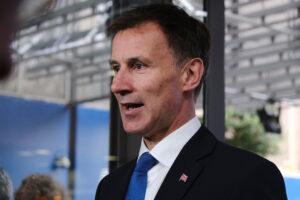
Whilst the determination of the Chancellor for HMRC to collect more taxes that people owe is admirable, the statement does not have any substance, say leading tax and advisory firm Blick Rothenberg.
Fiona Fernie, Partner at the firm, said: “The tax gap remains at a level of over £30billion – a figure which has not been impacted significantly over the last few years despite HMRC’s alleged focus on reducing it. A further reduction in the tax gap of £5bn is of course, welcome but is still less than 20% of the current problem.
“The statement also begs the question of how this additional collection is going to be achieved. At the moment, HMRC is under-resourced, and pockets of the organisation also need better training. There is too much onus on the taxpayer to come forward using various ‘disclosure campaigns’, and even when individuals do make a disclosure, there is often huge inefficiency in dealing with them, with HMRC seemingly using standard responses and a ‘one-size-fits-all’ approach in order to relieve the pressure on their in-trays.”
She added: “If the Chancellor really wants to cut the tax gap significantly, HMRC need the resources to mount investigations into those taxpayers where there is a suspicion of serious non-compliance and large underpayments. They also need properly technically trained staff manning the helplines for the ordinary taxpayer to use to try and ensure they are compliant by getting appropriate advice.”
Read more:
Chancellor’s statement on tax collection has no substance
UK supreme court rules against collective bargaining rights in blow to …

Deliveroo riders do not have the right to collective negotiations on pay and conditions, the UK’s top court has ruled, in a blow to gig economy campaigners and the unions that represent them.
The Independent Workers’ Union of Great Britain (IWGB) has been fighting through the courts since 2017 to have Deliveroo riders classified as “workers”, with the right to unionise and bargain collectively for better terms and conditions.
On Tuesday, the supreme court upheld previous judgments that the thousands of UK riders were independent self-employed contractors, and could not be classed as workers because they had the right to arrange a substitute to perform their duties if they did not want to or were unable to.
The union said it was considering its options to challenge the ruling under international law – having reached the UK’s highest court. Any challenge would be likely to involve taking the case to the European court of human rights, with a challenge brought against the UK government rather than Deliveroo, lawyers said.
“The supreme court’s ruling comes as a disappointment after years spent fighting a legal battle to secure riders’ bare minimum employment rights. As a union we cannot accept that thousands of riders should be working without key protections like the right to collective bargaining, and we will continue to make that case using all avenues available to us,” the IWGB said in a statement, adding that it was continuing to sign up more gig economy couriers in an attempt to hold companies to account.
“Flexibility, including the option for account substitution, is no reason to strip workers of basic entitlements like fair pay and collective bargaining rights. This dangerous false dichotomy between rights and flexibility is one that Deliveroo and other gig economy giants rely heavily upon in efforts to legitimise their exploitative business models,” the IWGB added.
Deliveroo said the outcome was “a positive judgment for Deliveroo riders, who value the flexibility that self-employed work offers”, and that thousands of people continued to apply to work with the company every week.
It pointed to a deal with the GMB union under which riders receive free insurance, sickness cover and union recognition without being recognised as workers or employees. The ruling leaves the employer free to choose which union it might wish to recognise, without the risk of a challenge that it has not chosen its workers’ preferred organisation.
Deliveroo said: “UK courts repeatedly and at every level have confirmed that Deliveroo riders are self-employed, and this now includes the supreme court, the highest court in the country.”
Yvonne Gallagher, a partner at the law firm Harbottle & Lewis, said the case was “a fundamentally important ruling for the gig economy, not just for Deliveroo.
“In establishing that the substitution clause works as a proof that riders cannot be considered workers, the supreme court ruling may give rise to other gig economy companies following the Deliveroo employment approach – where it fits their commercial model.”
She said that in the UK “in many cases, the use of substitution clauses means that gig workers will not attract [basic employment rights such as the minimum wage and holiday pay]”.
Gallagher added that if the IWGB wanted to challenge the supreme court ruling in international courts it would have to make a claim in the European court of human rights to argue that the UK has failed to implement its treaty obligations properly – so it would be “a claim brought against the government”.
“Such claims can succeed in forcing governments to change the law, but insisting on widening the definition of those who qualify for employment rights does look quite a stretch,” she said.
Read more:
UK supreme court rules against collective bargaining rights in blow to gig economy workers
Keep This Cracker gears up for Christmas with support from Business Gr …

A Salford-based company that creates reusable crackers is enjoying the benefits of support from GM Business Growth Hub ahead of its busiest time of year.
Keep This Cracker was founded by Bea Thackeray in 2013 with the ambition of creating Christmas crackers that could be kept and reused to minimise waste.
With an estimated 100 million crackers pulled in the UK every year, that is enough to reach the North Pole eight times if laid end-to-end.
“My thinking was on how to create that product and to make it something people will want to use and keep,” said Bea. “I decided to do some product trials and tests to see whether it was something I could get manufactured at a larger scale here in the UK. That’s really where the idea came from.
“And then at one point I thought, now I need to go full time and give this a go. I’m tackling this from so many different angles. They come flat packed, which means that the packaging is minimal. The packaging is alsocompostable and reusable, you can store them away after you’ve used them back into the packaging. And one of the main advantages is you can put your own gifts inside. I’ve got customers that are telling me they’re still using them five years on.”
During the pandemic, Bea started to access support through webinars, before signing up for the EnterprisingYou programme through the Hub, and benefitting from support from experienced eco-innovation specialists.
She said: “It really helped having the initial assessment of where are my strengths are, and where are my weaknesses are. We identified a lot of inefficiencies in my business and I needed to streamline a lot of the operations.
“My business adviser on EnterprisingYou was great. He put me in touch with the departments I needed to speak to within the Business Growth Hub, such as the Eco Innovations team, which is how I ended up on Eco-FORCE workshops.
“From there I completed the Journey to Net Zero programme as well, which was fantastic because I’ve learnt how to write an environmental policy statement and put a plan in place. it’s been great learning curve.
“I’ve had a lot of advice from the Digital Innovation team. My brand new website went live in August. The team have helped with fine tuning and I have now added a trade shop where B2B customers can order direct. It’s been great to have that level of support.”
Bea’s plans for the future include expansion in 2024, supplying the hospitality industry and developing the corporate gifting side of the business which will give the product more exposure – as well as taking on additional staff or using third party resources to help with her production.
Yvonne Sampson, Head of Enterprise at GM Business Growth Hub, said: “Small businesses like Keep This Cracker have such an important role to play in our journey to net zero.
“They have the innovative ideas and drive to create products that will help us all reduce our own carbon footprints, so we are thrilled to help Bea continue to grow her business and get her crackers on more and more tables for many Christmases to come.”
Read more:
Keep This Cracker gears up for Christmas with support from Business Growth Hub
AI is not a nice-to-have – it’s essential to the future of SMBs

AI has rapidly revolutionised how marketing teams work, with 63% of UK marketers reporting that they had experimented with ChatGPT or generative AI as a part of their marketing and customer experience efforts.
This figure will only increase over the coming year, and it is vital that businesses start to plan how they’ll use AI in the long-term to keep up with an increasingly competitive market.
As Emmanuelle Benoliel, Chief Marketing Officer at Aircall explains, This is especially true for small to medium-sized businesses (SMBs) who, owing to less revenue and leaner teams – but the same expectations – see their investments placed increasingly under the microscope. The immediacy of AI technology makes it a very tempting prospect for content and idea creation, but the long-term benefits it will deliver remain unclear and SMBs need to better define the ongoing role they want it to play.
This byline will explore how generative AI can revolutionise marketing through enhanced customer experience and boosting human creativity. It will discuss how SMBs, in particular, can implement AI technologies without downgrading the input of their marketers or making ethically unsound decisions, and will look ahead to what the future of marketing for SMBs might look like, with AI and humans working together in high-performing harmony.
AI can revolutionise customer experiences for SMBs – so what’s holding them back?
In a challenging business environment, delivering impactful customer experiences is central to the success of businesses worldwide, but, on average, customer-facing teams spend just four hours of the working week on meaningful interactions with customers. It’s no secret that during a downturn such as we’re seeing now, customers are more likely to leave quicker – at a time when you need them to stick around. Simply put, these four hours aren’t enough, especially for SMBs.
The better experiences and improved retention SMBs need calls for investment, time and attention – factors that aren’t always possible for leaner organisations. When we consider how, according to the B2B Institute, 80% of business clients are not in the market for the product businesses are selling at any one moment, it becomes clear that this isn’t about turning the tap on and off again, but about weaving AI into customer engagement that can bring benefits in both the short and the long term.
Through its time-saving capabilities, generative AI is helping SMB marketers connect to their customers in a more personalised and dynamic way. Customers want to be understood and feel like they are heard, but this isn’t about asking ChatGPTto do that for you; it’s about leaning into generative AI’s capabilities to automate the time drags that marketing teams face as part of their customer engagement strategy. For instance, predicting future customer behaviour, audience segmentation, programmatic advertising, SEO, suggesting and then generating more personalised content – the list goes on! Implemented effectively, AI’s enablement (not replacement) of human performance unlocks the competitive advantage for SMBs in a crowded marketplace and helps to keep teams’ heads above water.
Without collaboration between humans and AI – there’ll be no future
Our AI Index report found that 64% of employees are optimistic about AI in general – rising to 68% of those aged 25 to 34. But despite this, more work is needed to get the most value out of AI. Greater education is required around the uses of it to support the daily work of teams, with 63% stating that there is a lack of understanding of what AI can do.
AI has enormous potential to help marketers to work more effectively and efficiently, but efforts must be directed towards establishing the right partnerships between people and AI. Crucially for SMBs, using AI doesn’t endanger their creativity, but it can make marketers’ lives easier. One option is bouncing ideas off generative AI in the same way you would a colleague. For example, when planning an advertising campaign concept, you could expect ChatGPT, Google Bard and co to provide the most common or entry-level answers and ideas; the ones that cover the main bases. This gives us a unique benchmark to build our human creativity up from – honing in on our human difference and providing something altogether more special and born from experience.
While I’m keen to avoid the melodrama of the movies we’ve all watched about the rise of AI, it’s true that if SMBs fail to work together with the technology, then there might not be a future for them. Not through the fault of AI – but their own inability to innovate and keep pace with a changing world. The tightrope SMBs are asked to walk gets higher and higher the more the economy tightens, and right now there’s an unmissable window for them to lay the foundation for a partnership that holds to the key to business survival and success.
Taking businesses to the next level
Navigating the AI revolution requires careful consideration in how we integrate new technologies, with a focus on human-centricity. After all, AI is only as good as the people who use it. It is encouraging, therefore, to see that almost half (48%) of employees want more guidance from their employers on how to use AI – and 39% say that a lack of AI training impacts their decisions to join a company.
At Aircall, we’re meeting SMBs halfway by creating AI-supported tools that might have traditionally been out of their reach. That’s because AI is the future and it cannot just be for big businesses. By democratising this technology, in both an easy-to-use and affordable way, we are empowering them to gather customer insights and make data-driven decisions to perform at their peak.
AI has evolved at a rapid pace and it shows no signs of slowing down. But with question marks remaining over its safety and ethics, it is important that we pause and take stock of the progress made so far, before deciding where to turn next in its implementation. Indeed, half of employees are concerned about moving too fast with AI, but we must educate and train to put these concerns aside. Because with the right partner and tools, we can get our processes right and seize the potential to bring humans and AI together for a brighter future of marketing and SMBs.
Read more:
AI is not a nice-to-have – it’s essential to the future of SMBs
SMEs growth opportunities at risk without government attention

With interest rates likely high for the foreseeable future, SMEs are reassessing their outlook and trying to set a clear course for the future.
But according to research from Simply Asset Finance, the specialist business lending provider, significant gaps remain around the support on offer.
Around two-thirds of UK SMEs want more resources and support to be made available to support them and their businesses. What is particularly worrying is the existence of such a clear awareness gap – almost half of SMEs admit that they don’t know where to look to find support for their business.
It is clear that the support currently on offer needs an overhaul. With the Autumn Statement round the corner, attention is shifting to what SMEs in all regions of the UK need to help their business not just survive but thrive.
Taking the time to listen to the UK’s businesses, their priorities are clear. The top policy that would have the most meaningful impact on businesses is more support for rising energy bills and other utility costs. But additional financial support, specifically, better accessibility to government grants or loans as well as a reduction in corporation tax/corporate tax relief complete the top three.
Then, when asked what government can do to specifically support growth itself, it’s local investment – more investment to support regional project work. But tax incentives are deemed crucial too, whether it’s on regional project work, on regional hiring work (28%), or on regional R&D work.
Mike Randall, CEO at Simply Asset Finance, said: “SMEs up and down the country are ready to seize on growth opportunities and be the engine of the UK’s economic recovery. But significant action is required to keep UK business on the right track and ensure they’re in a position to seize them. The Autumn Statement offers a valuable chance for the government to properly and substantively demonstrate their support for UK business.
“A significant and cost-effective step would be to simply make it easier for SMEs to invest in asset purchases. Just being able to expense it could have a transformative impact on businesses across the country. But with the scale of the challenge ahead, an extension of the Recovery Loan Scheme or a replacement with similar underlying aims would provide SMEs with real certainty, as well as the confidence to invest in their future.
“But the role of an experienced financial partner is critical too. Lenders need to step up service and work much harder to find and share ways to support SMEs, including by providing much needed clarity on the range of funding options available to fuel growth, such as asset finance. The scale of the growth opportunity is significant but turning potential into reality will require industry and government to pull in the same direction.”
Read more:
SMEs growth opportunities at risk without government attention
Tax cuts top SMEs’ wish list ahead of Autumn Statement

As the Chancellor prepares to deliver a package of economic measures in the upcoming Autumn Statement, new data reveals that tax cuts are the top priority for SMEs.
When asked what support they would like the Chancellor to announce in the Autumn Statement, nearly half of SME owners surveyed said they want to see tax cuts targeted at small businesses.
With a dip in energy prices reported in October, the call for tax cuts comes out ahead of an energy price cap for businesses. A third of SMEs also called for an extension of the small business rate relief scheme.
SME growth remains stagnant
Calls for tax cuts come as SME growth has remained stagnant over the past year, with just a third (34%) of businesses reporting growth in 2023, and more than a quarter shrinking.
Of those who saw revenue fall, nearly half reported that this was due to lower consumer demand for their products. Two fifths of SMEs blamed rising business costs for their falling revenue, after a year of high inflation.
Impact of Government support
Against the backdrop of economic disruption in the last year, SMEs have not felt the benefit of government support. While one in four of SMEs say the Government has supported SMEs in the last year, fewer than one in five said that government support was sufficient for their business in 2023.
Overall, two fifths of SMEs say government support in the last year has been insufficient for their business.
Christoph Rieche, iwoca CEO, who commissioned the research, said: “SMEs have shown incredible resilience amid a cost of living crisis which has affected consumer spending habits.
“The message from SMEs to the Chancellor is clear – cut tax and protect us against potential spikes in energy costs to help us trade through this uncertain economic environment.”
Alex Rocha, owner and Managing Director at technology business The IT Partnership, said: “There are 5.5m SMEs across the country, and we are the ones driving jobs and economic growth and the resultant societal benefits. I’ve experienced the impact of Government decisions on my own business and within the SME business groups I work with. A mixture of targeted tax cuts and incentives must be included in next week’s Autumn Statement to both support but also stimulate ambitious SMEs to scale their growth and innovation.
For tech companies like ours, the Chancellor needs to look at research and development incentives, as well as targeted skills funding. Equally, for the companies we work with, particularly those who depend on a presence on the high street, cuts to business rates are vital.”
Read more:
Tax cuts top SMEs’ wish list ahead of Autumn Statement

