
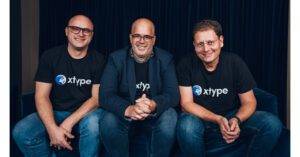
xtype, the agile software delivery company, today announced that it has secured additional funding following a stellar year of growth in the business, having achieved 4x revenue growth over the last 14 months and a significantly increased market presence.
This round was led by Columbia Capital and Innerloop Capital, and saw participation from SaaS Ventures and other investors. Specializing in enterprise clients using ServiceNow, xtype will use the new funding to meet increased demand and expand product development.
With xtype, enterprises can supercharge its ServiceNow Center of Excellence and Innovation (CoEI), redefining the parameters for enterprises to accelerate their rate of innovation on the ServiceNow platform, and finally be able to meet and exceed enterprise demand for new digital transformation workflows and applications.
The funding comes at a time when large enterprises, who rely heavily on ServiceNow to drive digital transformation and business workflows, are turning to xtype to augment the built in capabilities of the platform with platform engineering capabilities to realize the full potential of the platform. Zurich Insurance and Heineken are two such organizations currently working with xtype to further develop their IT processes and applications in real time. While investors are continuing to tread cautiously in the current market, xtype’s fundraise highlights investor confidence in its product market fit and exceptional ability to achieve exactly what it sets out to do – solve the clear problem of its customers in unleashing the enormous capabilities of ServiceNow.
xtype’s latest funding round will provide fuel for the next stage of growth, enabling wider adoption of its technology in enterprise accounts, expanded technical support capabilities, and investment in additional product capabilities. With proven fit and momentum in the ServiceNow ecosystem, xtype is poised to further scale its business and team. The new capital will expand the startup’s ability to drive innovation and meet the needs of large global enterprises relying on ServiceNow. This also includes enhancing its core product and solving more of the unique pains of customers, such as growing backlogs of undeployed updates, off-hour work to meet deadlines, and an inability to innovate at the pace demanded by the business.
Ron Gidron, co-founder and CEO of xtype said: “We are thrilled to announce that xtype has secured additional funding, a resounding endorsement of our game-changing solutions in the ServiceNow ecosystem. This investment not only reaffirms our market leadership but also underlines the immense confidence our investor community places in us. As we continue to revolutionize enterprise software solutions, this financial backing empowers us to accelerate our innovation, scale our reach, and continue delivering unparalleled value to our clients.”
Justin Label, Managing Director of Innerloop Capital agreed, saying: “xtype has seen tremendous growth over the past year, and the expansion of its enterprise customer base to include industry leaders made us extremely confident in the trajectory they are taking. With this, we are eager to support the next stage of growth for the company and invest further into its unique product offering.”
Collin Gutman, Managing Partner of SaaS Ventures, said: “We saw that ServiceNow’s customers all have a large need, which xtype fills perfectly. The scope of the problem xtype solves is matched only by the quality of its team.”
The latest fundraising round will bring the total to $10.8 million. xtype is looking to take advantage of the significant potential for growth as the ServiceNow ecosystem has over 7,000 leading enterprises relying on the platform for their software deployments.
Read more:
xtype hits $10.8 million In Funding, Amplifying Its Impact In The ServiceNow Market Amidst Soaring Demand
Category: Uncategorized
Net zero projects in York and North Yorkshire have been approved for a …

A total of 23 schemes will receive a share of the York and North Yorkshire Net Zero Fund, investment which has been unlocked by the region’s proposed devolution deal and will be allocated by the Department of Levelling Up and Communities, subject to devolution progressing for York and North Yorkshire.
Parliamentary debates on devolution for the region are anticipated this autumn, with mayoral elections timetabled for May 2024.
The fund will invest in schemes that can deliver significant carbon reductions and contribute to York and North Yorkshire’s ambition to be net zero by 2034. Alongside carbon reduction, investment aims to create a pipeline of net zero projects that will drive economic growth, create jobs, reduce energy costs for businesses and leverage further investment for the region.
The approved projects cover a broad range of issues relating to net zero, such as decarbonisation of community buildings and transport, with schemes across York and North Yorkshire. Street and building LED lighting schemes in York are also approved, as well as innovations in energy generation, including The Electric Cow Project at Askham Bryan College in the city.
The farming focussed scheme will fund slurry-fuelled conversion equipment that can be introduced to dairy farms across the region to generate electricity from cow manure. Other projects approved aim to tackle a decline of biodiversity, such as the project at the Denton Park Estate, on the edge of the Yorkshire Dales, where funds will support moorland restoration.
Alongside £6 million to fund 12 capital projects, £1 million of the fund will be allocated to develop new net zero projects from “idea to investor ready”. There are 11 of these, including the development of full business cases for renewable energy schemes using Solar PV and onshore wind and the Harewood Whin Green Energy Park in York. A feasibility and business case development for shore-side power at Scarborough and Whitby harbours included on the shortlist could become an “exemplar study” for medium-to-small ports nationally.
Approvals for the broad range of projects was made by the York and North Yorkshire Joint Devolution Committee at a meeting in Northallerton on Monday 23rd October. The fund is part of the proposed York and North Yorkshire devolution deal, which would see the formation of a combined authority, election of a mayor and a transfer of powers and funding from national to local government.
North Yorkshire Council’s leader, Cllr Carl Les, said: “This is a significant step forward for projects which will be extremely important to help to achieve our aims of tackling the threat of climate change, while driving forward innovation and expertise in the green technology sector.
“This is a clear indication of the benefits that are already being realised ahead of the proposed devolution deal for York and North Yorkshire being introduced.
“These projects will provide more jobs and greater career opportunities, while developing what is such an important sector that will be recognised nationally and bring in more investment to York and North Yorkshire.”
City of York Council’s leader, Cllr Claire Douglas, said: “Our new council Plan – ‘One City, for all’ – has, in its four key commitments to improving Equality, Affordability, Climate and Heath, a clear ambition for York’s environment and net zero, including through work with our partners. This announcement represents a significant investment in the city and a significant step in delivering on the commitments we have made.
“This is the first win of what we hope will be many for the new combined authority, and it is good news for our economy, our Net Zero aspirations and for York’s communities.”
Projects approved will support the implementation of York and North Yorkshire’s Routemap to Carbon Negative, the North Yorkshire Council Climate Change Strategy and City of York’s Climate Change Strategy. Collectively, the 12 capital schemes alone are expected to result in more than 70,000 tonnes of carbon emissions saved between 2025 and 2029.
The full list of projects where funding was approved
The 12 capital projects, receiving a share of £6 million are:
Moorland Restoration Project, Denton Park Estate
REstore, North York Moors National Park Authority
Net Zero for Yorkshire North & East Methodist District
The Electric Cow Project, Askham Bryan College
Solar PV & Battery Storage installation on Council Commercial Assets, North Yorkshire Council
Kildwick to Silsden Active Travel Link, North Yorkshire Council
Community Transport Decarbonisation, North Yorkshire Council
Decarbonising Community Buildings, North Yorkshire Council
Renewable Heating Upgrade – Alex Lyon House, City of York Council
Honeysuckle House heat pump communal heating upgrade, City of York Council
Street Lighting LED Conversion, City of York Council
Commercial Buildings LED Lighting Renewal Project, City of York Council
The 11 revenue projects, receiving a share of £1 million are:
Shore Power at Scarborough and Whitby Harbours, North Yorkshire Council
Establishing a Baseline for Evidence and an Action Plan for Regenerative Farming in York & North Yorkshire, Yorkshire Dales National Park Authority
Lastingham Case Study, North York Moors National Park Authority
The Great Yorkshire Kelp Forest, East Riding of Yorkshire Council (Yorkshire Marine Nature Partnership)
Whitby and Scarborough Park and Ride EV Hyperhub Business Case Development, North Yorkshire Council
Electric Vehicle Public Charging Infrastructure Rollout Strategy Next Steps, North Yorkshire Council
District Heat Network – Potto, North Yorkshire Council
Elvington Lane Solar PV, City of York Council
Harewood Whin Green Energy Park, City of York Council
North Wigginton Onshore Wind – Project Development, City of York Council
Green Energy Park at Seamer Carr and Decarbonising Allerton Waste Recovery Park, North Yorkshire Council.
Read more:
Net zero projects in York and North Yorkshire have been approved for allocations from a £7M net zero fund
Billionaires should face a minimum tax rate, report says

Billionaires should face a minimum tax rate, according to a report which found some of the world’s mega-wealthy are paying little to no tax.
The EU Tax Observatory said most people pay a higher rate than the super-rich, who, it said, are able to use complex business structures for avoidance.
It suggested a minimum 2% tax rate on billionaires’ global wealth would raise $250bn (£205bn) a year.
There are around 2,500 billionaires with a combined wealth of $13 trillion.
The report by EU Tax Observatory, part of the Paris School of Economics, examined how successful efforts to ensure individuals and companies pay their fair share have been over the past 10 years.
It said that the automatic sharing of the wealthy’s account information across more than 100 countries had significantly reduced offshore tax evasion.
However, billionaires are able to get away with paying tax rates equal to 0% or 0.5% of their wealth “due to the frequent use of shell companies to avoid income taxation”, it said.
Quentin Parrinello, a senior policy adviser at the EU Tax Observatory, said that global billionaires “structure their wealth so it does not generate a lot of taxable income”.
He acknowledged that countries implementing a 2% tax on billionaires may sound “utopian”, but “so was the idea of asking Swiss banks to exchange tax information with tax authorities 10 years ago and now this is a central provision of the fight against tax evasion”.
While the report commended an agreement in 2021 between 140 different countries to make sure companies pay at least 15% in corporation tax, it said that the plan had been “dramatically weakened” since then by a “growing list of loopholes”.
Joseph Stiglitz, the Nobel Prize-winning American economist, suggested in an introduction to the report that unfairness in taxation poses a risk to democracy.
“If citizens don’t believe that everyone is paying their fair share of taxes – and especially if they see the rich and rich corporations not paying their fair share – then they will begin to reject taxation.
“Why should they hand over their hard-earned money when the wealthy don’t? This glaring tax disparity undermines the proper functioning of our democracy; it deepens inequality, weakens trust in our institutions, and erodes the social contract.”
Mr Parrinello suggested that countries could use the next G20 summit, which takes place nearly a year from now in Brazil, to discuss a tax for the mega-wealthy.
He said that while international agreements are preferable, “we also need to be realistic” and said there are proposals outlined in the EU Tax Observatory report that countries can pursue unilaterally.
Some of the world’s richest people have pledged to give the majority of their wealth away. Microsoft co-founder Bill Gates, philanthropist Melinda French Gates and billionaire investor Warren Buffett set up the “Giving Pledge” in 2010 to “set a new standard of generosity among the ultra-wealthy”.
Following a series of tax changes in 2013, Mr Buffett conceded that even though his tax rate had risen he was still paying a lower percentage than his secretary.
“I’ll probably be the lowest paying taxpayer in the office,” he said at the time.
Mr Stiglitz said that addressing tax fairness and collecting revenues was “critical” for society, “as countries around the world face the challenges of climate change, pandemics and inequality, and as governments have to make essential investments in education, health, infrastructure and technology”.
One of the relatively recent signees to the Giving Pledge is MacKenzie Scott, an author and former wife of Amazon founder, Jeff Bezos.
As part of their divorce four years ago, she was handed a 4% stake in the online retailing giant. Ms Scott has since given away around $14bn and, according to Forbes magazine, is currently worth around $33.6bn.
Her former husband of 25 years, Mr Bezos is the world’s third richest man with a fortune of $148bn. Last year, he told CNN he wanted to give away the majority of his wealth.
Elon Musk, owner of X, formerly Twitter and co-founder and leader of Tesla and SpaceX, is currently the world’s richest man, according to Forbes, with a fortune of $225bn.
Read more:
Billionaires should face a minimum tax rate, report says
Government borrows less than expected in September
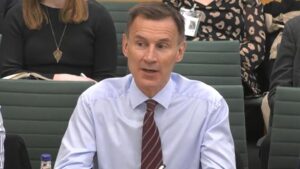
Government borrowing in September was lower than most economists had expected but remains high, figures show.
Borrowing – the difference between spending and tax income – was £14.3bn last month.
This was £1.6bn less than a year earlier, but the sixth highest in September since records began in 1993.
The statistics come ahead of the Autumn Statement in November, but so far the chancellor has downplayed the possibility of any tax cuts.
Economists had predicted government borrowing to be £18.3bn last month, while the Office for Budget Responsibility had forecast the level to be £20.5bn.
The better-than-expected numbers from the Office for National Statistics (ONS) have prompted some, such as the right-leaning Institute of Economic Affairs think tank, to suggest there is now room for “some well-targeted tax cuts” in the Autumn Statement.
Chancellor Jeremy Hunt is also under pressure from some Conservative MPs to announce plans to lower taxes before the next general election, calls which have increased following the party’s double by-election defeat on Friday.
Craig Tracey, MP for North Warwickshire, said cutting income tax or national insurance would be the best way to make voters feel better now. “The thing [voters] need to see is an immediate impact on their bottom line,” he said.
And former Tory minister John Redwood called for taxes on self-employed people to return to pre-2017 levels and for the VAT threshold to be raised for small businesses.
The Resolution Foundation, which campaigns on improving living standards for those on low to middle incomes, said high inflation had pushed up the nominal value of the government’s tax income, which had given a “short-term” boost for the chancellor ahead of his budget update.
But Cara Pacitti, senior economist at the think tank, said the short-term gain was “likely to be more than offset by longer-term pain” caused by higher interest rates.
“Together, this is likely to reduce the chancellor’s already limited room for manoeuvre,” she added.
Mr Hunt appears to have all but ruled out near-term tax cuts to date, saying they are “virtually impossible” and that the government needs to prioritise bringing down inflation.
Responding to the latest borrowing figures, Mr Hunt said the government’s spending on debt interest was twice the level it was last year and was “clearly not sustainable”.
But he said the government “had to borrow during the pandemic to protect lives and livelihoods” and blamed Russia’s invasion of Ukraine for having “pushed up inflation and interest rates”.
Read more:
Government borrows less than expected in September
Tories plan stamp duty cut to win over voters
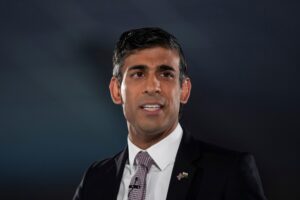
Senior Tories are considering an “aspirational” pledge to slash stamp duty in an attempt to turn around the Conservative Party’s political fortunes.
Sir Keir Starmer positioned himself as the heir to Tony Blair after Labour won the previously safe Tory seats of Mid Bedfordshire and Tamworth with swings of more than 20 percentage points in what the party hailed as a “political earthquake”. Repeating the swing in a general election would lead to a 1997-style landslide for Starmer.
While Rishi Sunak and his chancellor, Jeremy Hunt, are resisting calls to cut taxes in the autumn statement, senior Tories are weighing up a major offer on tax for the general election manifesto next year, providing the economy has recovered sufficiently.
It is understood that the Tories are discussing whether to go ahead with one of two major pledges for the manifesto next year: cutting stamp duty or abolishing inheritance tax.
One senior Tory said reducing stamp duty would be “aspirational” and boost the economy by making it cheaper to move, while appealing to middle-aged voters who had deserted the party.
Polling from YouGov for The Times showed that although the Tories are supported by 45 per cent of voters over the age of 65 this drops to 30 per cent of those between 50 and 64. Only 12 per cent of 25 to 49-year-olds say they will vote Conservative at the next election.
Figures released by the government in January revealed that residential stamp duty payments raised about £10.1 billion for the Treasury in 2021-22. However, this is understood to have fallen significantly in recent months, whereas revenues from inheritance tax have increased to about £6 billion.
One Tory source said: “Cutting stamp duty would cost a lot of money but it is not a good tax because it disincentives people from moving, which is not good for the economy.”
Others have cautioned that any cut could be negated by sellers putting up prices.
Stamp duty discussions are focused on increasing thresholds. At present people begin paying stamp duty at 5 per cent of the value of a property over £250,000, with the rate increasing to 10 per cent beyond £925,000 and as much as 12 per cent for houses valued at more than £1.5 million. Help for first-time buyers is also being considered.
Sunak is under mounting pressure from Tory MPs to act following yesterday’s by-election defeats.
In Mid Bedfordshire, Alistair Strathern overturned a bigger majority than any other Labour candidate since 1945. He won by just over 1,000 votes after a three-way race between Labour, the Liberal Democrats and the Tories.
In Tamworth, Sarah Edwards overturned a 19,000 majority. Labour will hope the result is an echo of history — the party won the constituency from the Tories in a by-election in 1996, before sweeping to power at the general election the following year.
Sunak said yesterday that “mid-term elections are always difficult for incumbent governments”.
He added that he had set out “long-term decisions that will change our country for the better”, citing his scrapping of the northern leg of HS2, a phased smoking ban and reform of A-levels. “That is the change that we’re going to bring,” he said.
Starmer said: “Winning in these Tory strongholds shows that people overwhelmingly want change and they’re ready to put their faith in our changed Labour Party to deliver it.”
Read more:
Tories plan stamp duty cut to win over voters
Secrets of Success: Cyril Samovskiy, CEO of Mobilunity

Providing dedicated tech talent and instant solutions to businesses
As a global provider of remote, dedicated development teams and R&D centres to clients across various industries, Mobilunity bridges the gap between ideas and making concepts happen.
CEO, Cyril Samovskiy shares his Secrets of Success with Business Matters.
What service does Mobilunity provide and how does it work?
We offer a nearshoring service that provides dedicated development teams to clients across various industries and technology stacks, including Insurtech, Fintech, IoT, Embedded software, and more. With access to a talent pool of over 200,000 Ukrainian software engineers – not counting our capacities in other Eastern European countries – each team member we provide is exclusively dedicated to our clients’ projects and has no other commitments to other projects, ensuring full focus. Our clients benefit from outstanding development capabilities, team size and structure flexibility, lower costs, and complete control over their development teams.
What problems does your company solve?
We address a critical challenge that businesses face regarding their tech talent needs, both in the long-term and short-term, whether in a specific technological stack or a specialised business domain. The core problem we solve for our clients revolves around their inability, and at times, their intentional choice not to solve these challenges internally.
The root of this challenge often stems from limitations within the local labour market. These constraints could manifest as extended recruitment agency timelines to find and place the right candidate or the necessity of engaging particular talents for a very brief duration.
To tackle this, our solutions are designed to be adaptable. We provide options for establishing technology teams in nearshore locations or within the UK, working collaboratively as part of a client’s in-house team, or maintaining an outsourced relationship with us as the vendor. This flexibility ensures that our clients can tailor our services precisely to their unique needs, whether they require long-term support or short-term specialised expertise.
What type of businesses do you work with?
Fortunately, we have a very diverse list of clients – from early stage startups that have just a few co-founders on board, to well-established corporations operating globally, with a 10,000+ headcount. However, we find it is the startups that have some form of advanced technology supporting their business concept that align most closely with our own mindset. Typically such clients are fast decision makers, they aim to leverage the most contemporary technology, and they have a big idea behind their plans. Our capacity to empower such businesses and show an immediate impact stands slightly above other types of client organisations.
What is your USP?
We work in a very competitive industry, so standing out requires clear differentiation. With our primary focus being on remote technology team services, we like referring to the ‘3Rs’ of successful remote team setup: Recruiting, Retention and Relationships. These three priorities, or USPs, guide our operations and streamline our proposals, ensuring our proposal is short, sharp, clear and well differentiated.
What are your company values? Have you ever had them challenged and if so, how have you dealt with it?
As we have grown and developed, our values have evolved. We tend not to focus on our past achievements because both the business environment and our clients are evolving rapidly. Therefore, we must also evolve to meet these changing demands.
After Covid, we continued growing fast, introducing new and more diverse business models into our offering. Right now we work to the following company values. These define what we are, what you may expect from us, and what we will be once and if you work with us:
Transparency. Having 40+ clients from 10+ countries, we basically operate with a set of 40+ processes. We pride ourselves in the ability to effectively manage that, and without transparency being a first requirement to how we operate (with the client, with our tech teams, with our employees and partners) we would not be capable of being where we are now. As such, transparency lies in every significant process we have in place.
Growth. Related to both our clients, and to our own staff, we basically exist to make everything that we touch grow. This defines the types of clients that mostly come to us – the main driving factor they have in mind is their intent to grow (whether that’s to grow fast, grow stable, or grow to where the company would not have been without us).
Flexibility. While this was always a focus for us, recent years in business have highlighted the importance of flexibility. Financial crises, growth and drop in demand, new regulations in the digital world, pandemia with its “all remote” setups, and war in Ukraine – these all prove this value is a fundamental essence for our business and our models to be sustainable and have a future.
How do you ensure that you recruit a team that reflects your company values?
Given that recruiting is one of our core offerings, we naturally place a special emphasis on how we recruit for our own company. Our 13 years of experience have taught us valuable lessons, and we’ve identified rules and practices that have proven effective during this time. They are:
A big chunk of our best people grew up in our company, from the very entry level roles to the highest existent positions where they are now.
A mix of “self-grown” and “external” key people ensures our Company grows in a way we expect.
In the long run, soft skills take precedence over hard skills. While hard skills alone may suffice for short-term engagements, it’s the soft skills that enable individuals to manage and leverage those hard skills effectively over time.
While you may not see our values in these three basic tips, if we overlay our business values onto these guidelines, they align more harmoniously. As we continue to grow, we must balance our immediate need for top-notch professionals and our strategic goal of cultivating a talent pool for the future. Our company-wide recruiting strategy essentially outlines how we intend to achieve this alignment and ensure the successful ‘3+3’ match between skills and values.
Are you happy to offer a hybrid working model of home / office post covid?
A big part of our service offering is tech talent from all over the world remotely. Thus, we would not be honest with ourselves and our clients if we were not big fans of this model. Only 10% of our own staff show up to the office on a periodical basis. We do not demand it, for most roles, and we do not expect it, anymore. Instead, we learned how to remain effective; we traded some of the meetings to asynchronous channels of communication; and we invested heavily into the skill of proper goal setting, performance management and professional development. Why on Earth would we confine ourselves to the traditional office-only model when we’ve gained a competitive edge in the labour market? We possess skills that are in high demand, and we offer these skills as a service to our many clients who are eager to gain a similar advantage.
Any finance or cash-flow tips for new businesses starting out?
I won’t be too unique in these – a successful business starts with sufficient funding, a plan to generate revenue and hope that things will go more or less as they were planned. I myself dislike the idea of bringing in someone else’s money into something you yourself can build and/or fund, though I know many businesses (our clients inclusive) who were capable of building something great and huge purely because they were smart enough to attract the right external investment. I’ve also witnessed instances where entrepreneurs, in their pursuit of rapid growth and the necessary funding to achieve it, ended up losing sight of their original dream company and their personal motivation to work within it.
That said, my advice would be to carefully weigh up the necessity of external investments when starting your business. While external funding can make some aspects easier, it often comes with its own set of challenges that you might not have encountered if you were self-funding your startup.
If you could ask one thing of the government to change for businesses, what would it be?
If I could request one change from the government to benefit businesses, it would be to facilitate the seamless integration of global talent into local businesses. I understand that not every business needs this, but I’m specifically referring to those enterprises designed to grow on a global scale and compete with international players. The current limitations on working with a global talent pool put local businesses, especially startups, at a significant disadvantage. As long as a candidate’s location remains a major factor in shaping HR strategies for businesses, this constraint will continue to hinder the potential for innovation, efficiency, and the globalisation of these companies.
It’s important to note though that there are other aspects to these constraints, and while I acknowledge one here, I recognise that there may be additional dimensions to consider.
What’s your attitude towards your competitors?
We respect and learn from each other, I know for a fact they look at us and do the same. I am good friends with slightly smaller and slightly bigger companies in our domain, and we meet 2-3 times a year to exchange news and observations, while understanding the information we share might empower our counterpart.
There are 3-5 quite big players and there are 2-3 very dynamically growing companies that permanently stay on our radar. I would not be able to name any that I think beats us in our niche markets, but of course every company has their own strengths and weaknesses, and knowing them helps us become a better vendor to our clients, and win the battles for the client on the presale stage.
Do you have any tips for managing suppliers or customers effectively?
As a service provider, we could write a book on what to do and what not to do with suppliers. In our industry specifically, we recommend following a few principles that make the supplier choice easier and more streamlined:
Size does matter. Your vendor’s size should be a match to your project size or else too many risks arise.
Transparency ensures delivery. The more your supplier and vendor knows in terms of what you expect, how you need it, and why – the higher the chances of you getting what you’re seeking. You do not want your vendor to be guessing what’s on your mind.
While building relationships requires resources, if you aim to establish enduring partnerships with your vendors, there’s no alternative but to invest in building and nurturing these relationships.
In terms of our customers, things are simpler, as our business grows when they grow. Not a tip, rather a fact. Meaning that we are so lucky to be in a business whereby we do not need to choose whose side to play.
Any thoughts on the future of your company and your dreams?
During our 13 year business journey, we’ve encountered various shifts in direction and have contemplated where our path may lead in the future. This experience reinforces our belief in maintaining our core competencies- HR and technology – as the foundation for our future endeavours as a company.
I am confident we will be able to open the world of remote talent to more and more global and local businesses, offering wider and deeper expertise within the fields of tech teams foundation, management and performance.
My dreams for the business’ future are closely linked to global economic growth and prosperity. I firmly believe that as technology takes on more fundamental tasks trusted by humanity, the role of technology should be to assist humans rather than exert undue control. This shift will create a growing demand for the services we provide to our clients, as we genuinely believe our offerings contribute to making the world a better place.
Read more:
Secrets of Success: Cyril Samovskiy, CEO of Mobilunity
House of Lords criticise Government response to digital exclusion repo …

The House of Lords Communications and Digital Committees has criticised the government’s response to their digital exclusion report as the government highlighted they would not be creating a new strategy to address digital exclusion within the UK.
The response to the Committees recommendations has been described as lacking ambition and failing to engage with the concerns raised by the Committee’s inquiry and subsequent report. A UK Government digital inclusion strategy was last created in 2014, but the Department for Science, Innovation and Technology has indicated limited appetite for a new strategy.
Broadly, the government has expressed that the principles from the latest strategy are still correct, that they are not keen on setting up a dedicated digital inclusion unit within Government and are not supportive of VAT removal on social tariffs or the removal of VAT on wholesale broadband.
Additionally, the government indicated that it did not plan to give Ofcom powers to ensure social tariffs are appropriately promoted, embedding digital skills targets across education life stages and expanding internet voucher schemes to more people in need.
There has been a commitment to setting up a cross-ministerial committee, involving all the major government departments that are looking at digital inclusion while a review into what government departments, particularly DSIT, can do in terms of device donations has been agreed.
Elizabeth Anderson, Interim CEO of Digital Poverty Alliance, said: “When we look at statistics that highlight 13 – 19 million people over the age of 16 are experiencing some form of digital poverty, while it is estimated that 20 per cent of children are in digital poverty, it is disappointing to see that there will be no new strategy to address this growingly urgent issue as more essential services – from homework to welfare services – move online only.
“It is positive to see the creation of a cross-ministerial committee and we will be very keen to engage with them to address digital inclusion, and we support activity to review what more government departments can do in terms of device donation.”
“However, we believe more must be done to demonstrate that digital inclusion is a government priority. Millions of people are still experiencing digital poverty, and the consequences of not being online are becoming more pronounced. Government needs to adopt a long term and strategic approach to ensure that the millions of people offline do not get left behind – with new ideas and innovation. We particularly welcome the cross-departmental group to address the issue and will be keen too engage with government going forward. It is essential that government, businesses and the third sector work together to ensure we can meet our goal of eradicating digital poverty by 2030.”
Baroness Stowell, Chair of the Communications and Digital Committee said: “Digital exclusion is not a problem that will solve itself. It is an ongoing challenge and we need clear direction from the Government about how they will prioritise making sure people are not excluded or left behind when it comes to enjoying the benefits of being online.
“Our report set out a series of key areas where the government could take the lead in tackling the digital divide, including in developing digital skills and confidence among those with the lowest level of digital capability.
“In their response the government have reasserted that digital exclusion is a priority, but their actions do not live up to the words. It is simply not credible to claim it is a priority when the key strategy for helping people keep pace in such a fast-moving area is over a decade old. It is disappointing that the Government’s response has not taken up the Committee’s positive challenge and signalled the ambition needed to close the digital divide for the UK to thrive as a tech superpower.”
Read more:
House of Lords criticise Government response to digital exclusion report
Taxpayers could lose £100m as HS2 land no longer needed is sold off

A “fire sale” of land bought for HS2 north of Birmingham is set to cost the taxpayer more than £100 million, analysis has revealed.
The government is poised to sell off land within weeks to prevent future administrations from reversing the decision to cancel swathes of the scheme.
HS2 Ltd, the government-owned company set up to build the project, had bought 2,900 acres of land between Birmingham and Crewe at a cost of £205 million.
Most is agricultural and was bought at a premium under compulsory purchase. It will be sold at market rate or even discounted.
According to Savills’ rural land values index, the average agricultural land value in the West Midlands is £9,000 per acre, meaning the land is expected to sell for only £26 million. HS2 has also bought 184 buildings on phase 2a, between Birmingham and Crewe, which will probably be sold. However, analysis by the High-Speed Rail Group (HSRG), the trade body, found that, optimistically, this would realise only a further £75 million, taking the expected income from land and property sales to about £100 million.
It represents a £100 million loss, which will be absorbed by the taxpayer if the government presses ahead with plans to sell the land, as set out in the “Network North” proposals announced at the Tory party conference this month.
HSRG and other campaigners are urging ministers to pause any sale of land until after consultation.
A spokesman for the group said: “At a time of extremely difficult public finances, the country surely cannot contemplate accepting a £100 million loss of taxpayers’ money like this. Land sales simply should not proceed until there has been a full analysis and a full consultation with stakeholders.
“Smart countries keep their options open for the future. Whilst the government say they cannot fund HS2 north of Birmingham today, we need to protect the option to build it in future when public finances allow.”
A critical report by the National Infrastructure Commission, published on Wednesday, said it was a “mistake” to sell off what had already been bought and that the government should keep its options open. Sir John Armitt, its chairman, called for caution to avoid a “kneejerk, snap reaction”.
“I think that the land should be kept for at least two or three years to give the opportunity for people to revisit that and look at what can be done within that space and find a more cost-effective solution, not write it off today,” he said.
Louise Haigh, the shadow transport secretary, said: “As chancellor, Rishi Sunak personally oversaw the soaring costs of HS2, and did nothing. Then he wasted billions of pounds of taxpayers’ money on a line he has now scrapped.
“Now millions more will be wasted in this fire sale of the land which so many people had to give up their homes and businesses for. This is a government with no direction, no plan and no regard for taxpayers’ money.”
Read more:
Taxpayers could lose £100m as HS2 land no longer needed is sold off
Shoppers are cutting back on spending as cost of living bites

Shoppers cut back on spending on clothes and other non-essential items last month as cost of living pressures and high energy prices began to bite on households.
Retail sales volumes fell by 0.9 per cent last month, exceeding economist expectations of a fall of 0.3 per cent, and wiping out the 0.4 per cent rise recorded in August.
The Office for National Statistics said the decline was the result of “continuing cost of living pressures, alongside the unseasonably warm weather reducing sales of autumn-wear clothing”.
Retail spending has held up well in recent months as the warm weather has encouraged greater spending and brought customers on to the high street but a key measure of household confidence unexpectedly fell this month, according to a survey by GfK, which reported an eight-point drop in sentiment in October to its weakest level since July.
Households have also said they will cut back on spending on food and gifts this Christmas as they battle with rising costs such as higher taxes, energy prices and mortgage costs.
Monthly spending in non-food shops declined by 1.7 per cent last month and online shopping by 2.2 per cent. Food sales was the only big spending category where spending volumes increased, by 0.2 per cent.
The September figures mean that overall retail sales contracted by 0.8 per cent in the third quarter of the year, compared with the same period last year. The data sends a worrying signal about the health of the economy, where growth has been kept in barely positive territory over the past three months. Latest figures for August showed that the economy expanded marginally by 0.2 per cent after a 0.4 per cent contraction in July.
Alex Kerr, at Capital Economics, said the figures suggested that the retail sector may have slipped back into recession after a brief recovery earlier this year. “The broad-based nature of these falls suggests that the lingering cost of living issues and the intensifying drag on activity from higher interest rates are at play,” Kerr said. “This doesn’t bode well for retail sales growth in the run-up to Christmas.”
Aled Patchett, head of retail and consumer goods at Lloyds Bank, said retailers would hope that continuing declines in inflation and sales during the festive period will entice consumers back to the shops by the end of the year.
Read more:
Shoppers are cutting back on spending as cost of living bites

