

The House of Lords Communications and Digital Committees has criticised the government’s response to their digital exclusion report as the government highlighted they would not be creating a new strategy to address digital exclusion within the UK.
The response to the Committees recommendations has been described as lacking ambition and failing to engage with the concerns raised by the Committee’s inquiry and subsequent report. A UK Government digital inclusion strategy was last created in 2014, but the Department for Science, Innovation and Technology has indicated limited appetite for a new strategy.
Broadly, the government has expressed that the principles from the latest strategy are still correct, that they are not keen on setting up a dedicated digital inclusion unit within Government and are not supportive of VAT removal on social tariffs or the removal of VAT on wholesale broadband.
Additionally, the government indicated that it did not plan to give Ofcom powers to ensure social tariffs are appropriately promoted, embedding digital skills targets across education life stages and expanding internet voucher schemes to more people in need.
There has been a commitment to setting up a cross-ministerial committee, involving all the major government departments that are looking at digital inclusion while a review into what government departments, particularly DSIT, can do in terms of device donations has been agreed.
Elizabeth Anderson, Interim CEO of Digital Poverty Alliance, said: “When we look at statistics that highlight 13 – 19 million people over the age of 16 are experiencing some form of digital poverty, while it is estimated that 20 per cent of children are in digital poverty, it is disappointing to see that there will be no new strategy to address this growingly urgent issue as more essential services – from homework to welfare services – move online only.
“It is positive to see the creation of a cross-ministerial committee and we will be very keen to engage with them to address digital inclusion, and we support activity to review what more government departments can do in terms of device donation.”
“However, we believe more must be done to demonstrate that digital inclusion is a government priority. Millions of people are still experiencing digital poverty, and the consequences of not being online are becoming more pronounced. Government needs to adopt a long term and strategic approach to ensure that the millions of people offline do not get left behind – with new ideas and innovation. We particularly welcome the cross-departmental group to address the issue and will be keen too engage with government going forward. It is essential that government, businesses and the third sector work together to ensure we can meet our goal of eradicating digital poverty by 2030.”
Baroness Stowell, Chair of the Communications and Digital Committee said: “Digital exclusion is not a problem that will solve itself. It is an ongoing challenge and we need clear direction from the Government about how they will prioritise making sure people are not excluded or left behind when it comes to enjoying the benefits of being online.
“Our report set out a series of key areas where the government could take the lead in tackling the digital divide, including in developing digital skills and confidence among those with the lowest level of digital capability.
“In their response the government have reasserted that digital exclusion is a priority, but their actions do not live up to the words. It is simply not credible to claim it is a priority when the key strategy for helping people keep pace in such a fast-moving area is over a decade old. It is disappointing that the Government’s response has not taken up the Committee’s positive challenge and signalled the ambition needed to close the digital divide for the UK to thrive as a tech superpower.”
Read more:
House of Lords criticise Government response to digital exclusion report
Category: Uncategorized
Taxpayers could lose £100m as HS2 land no longer needed is sold off

A “fire sale” of land bought for HS2 north of Birmingham is set to cost the taxpayer more than £100 million, analysis has revealed.
The government is poised to sell off land within weeks to prevent future administrations from reversing the decision to cancel swathes of the scheme.
HS2 Ltd, the government-owned company set up to build the project, had bought 2,900 acres of land between Birmingham and Crewe at a cost of £205 million.
Most is agricultural and was bought at a premium under compulsory purchase. It will be sold at market rate or even discounted.
According to Savills’ rural land values index, the average agricultural land value in the West Midlands is £9,000 per acre, meaning the land is expected to sell for only £26 million. HS2 has also bought 184 buildings on phase 2a, between Birmingham and Crewe, which will probably be sold. However, analysis by the High-Speed Rail Group (HSRG), the trade body, found that, optimistically, this would realise only a further £75 million, taking the expected income from land and property sales to about £100 million.
It represents a £100 million loss, which will be absorbed by the taxpayer if the government presses ahead with plans to sell the land, as set out in the “Network North” proposals announced at the Tory party conference this month.
HSRG and other campaigners are urging ministers to pause any sale of land until after consultation.
A spokesman for the group said: “At a time of extremely difficult public finances, the country surely cannot contemplate accepting a £100 million loss of taxpayers’ money like this. Land sales simply should not proceed until there has been a full analysis and a full consultation with stakeholders.
“Smart countries keep their options open for the future. Whilst the government say they cannot fund HS2 north of Birmingham today, we need to protect the option to build it in future when public finances allow.”
A critical report by the National Infrastructure Commission, published on Wednesday, said it was a “mistake” to sell off what had already been bought and that the government should keep its options open. Sir John Armitt, its chairman, called for caution to avoid a “kneejerk, snap reaction”.
“I think that the land should be kept for at least two or three years to give the opportunity for people to revisit that and look at what can be done within that space and find a more cost-effective solution, not write it off today,” he said.
Louise Haigh, the shadow transport secretary, said: “As chancellor, Rishi Sunak personally oversaw the soaring costs of HS2, and did nothing. Then he wasted billions of pounds of taxpayers’ money on a line he has now scrapped.
“Now millions more will be wasted in this fire sale of the land which so many people had to give up their homes and businesses for. This is a government with no direction, no plan and no regard for taxpayers’ money.”
Read more:
Taxpayers could lose £100m as HS2 land no longer needed is sold off
Shoppers are cutting back on spending as cost of living bites

Shoppers cut back on spending on clothes and other non-essential items last month as cost of living pressures and high energy prices began to bite on households.
Retail sales volumes fell by 0.9 per cent last month, exceeding economist expectations of a fall of 0.3 per cent, and wiping out the 0.4 per cent rise recorded in August.
The Office for National Statistics said the decline was the result of “continuing cost of living pressures, alongside the unseasonably warm weather reducing sales of autumn-wear clothing”.
Retail spending has held up well in recent months as the warm weather has encouraged greater spending and brought customers on to the high street but a key measure of household confidence unexpectedly fell this month, according to a survey by GfK, which reported an eight-point drop in sentiment in October to its weakest level since July.
Households have also said they will cut back on spending on food and gifts this Christmas as they battle with rising costs such as higher taxes, energy prices and mortgage costs.
Monthly spending in non-food shops declined by 1.7 per cent last month and online shopping by 2.2 per cent. Food sales was the only big spending category where spending volumes increased, by 0.2 per cent.
The September figures mean that overall retail sales contracted by 0.8 per cent in the third quarter of the year, compared with the same period last year. The data sends a worrying signal about the health of the economy, where growth has been kept in barely positive territory over the past three months. Latest figures for August showed that the economy expanded marginally by 0.2 per cent after a 0.4 per cent contraction in July.
Alex Kerr, at Capital Economics, said the figures suggested that the retail sector may have slipped back into recession after a brief recovery earlier this year. “The broad-based nature of these falls suggests that the lingering cost of living issues and the intensifying drag on activity from higher interest rates are at play,” Kerr said. “This doesn’t bode well for retail sales growth in the run-up to Christmas.”
Aled Patchett, head of retail and consumer goods at Lloyds Bank, said retailers would hope that continuing declines in inflation and sales during the festive period will entice consumers back to the shops by the end of the year.
Read more:
Shoppers are cutting back on spending as cost of living bites
Musk confirms X is set to have two new premium tiers

Elon Musk has said his social media platform X, formerly known as Twitter, will launch two new tiers of premium subscriptions.
“One is lower cost with all features, but no reduction in ads, and the other is more expensive, but has no ads,” the billionaire said in a post on X.
It comes as the firm started charging new users $1 in New Zealand and the Philippines for accessing the platform.
Mr Musk did not provide more details on the plans.
New users who opt out of subscribing will only be able to take “read only” actions, such as reading posts, watching videos, and following accounts, the company said in its website.
It is not clear if there will be any free options.
Mr Musk has long said that his solution for getting rid of bots and fake accounts on the social media platform is charging for the service.
Since taking over the firm in October last year he has looked to incentivise users to pay for an enhanced service, which is now called X Premium. Some users now opt to pay $8 per month for the blue check subscription service.
Its “Not A Bot” subscription method aims to reduce spam, manipulation of the platform and bot activity.
He has also tried to woo advertisers back to X with offers of discounts.
Mr Musk’s rapid changes, including mass layoffs and disbanding content moderation teams, has led to advertisers halting ads on the service.
He acknowledged that the platform has taken a hit on revenue and blamed activists for pressuring advertisers.
Wider issue
Other big tech companies have also experimented with a mix of ad-supported and subscription plans.
While Alphabet’s YouTube has both paid and free, ad-supported ones, Netflix’s ad-supported plans are also chargeable, though at a lower price.
YouTube, which like X is populated by content from users, shares a part of its subscription revenue with creators.
X, which also shares some of its ad revenue with content creators, did not disclose if content creators will be paid in ad-free subscription models.
Despite Mr Musk’s attempts to generate revenue on X, as the company faced criticism over lax content moderation, advertisers have not come flooding back over concerns their ads might appear next to inappropriate content.
Last week, the European Commission launched an investigation into X to see whether it complies with new tech rules on illegal and harmful content following the spread of disinformation on its platform after Hamas’s attack on Israel.
Read more:
Musk confirms X is set to have two new premium tiers
English winemakers set to record record crop after ‘exceptional’ c …

Many English winemakers say they are expecting to harvest their biggest ever crop over the next few weeks as a combination of favourable weather conditions and expansion boosts production.
Gusbourne, the Kent-based producer and one of the first major wineries to complete its harvest, said it had gathered its largest ever crop, up 25% on last year as the warm growing season last year meant vines emerged from winter in a healthy condition and then enjoyed favourable weather during the flowering period between April and June this year, producing “an abundance of fruit”.
The big brands Nyetimber, Chapel Down and Ridgeview have all said they are expecting their largest ever crop as a result of the weather and investing in additional acreage.
Most production goes to sparkling wines, which will not be available for at least two years, but still wines made this year could be on shelves in the spring.
Ned Awty, the interim chief executive of the trade body WineGB, the national association for the wine industry in England and Wales, said: “This year is shaping up to be a high volume and high-quality harvest. We’ve had reports about impressive bunch size and weight and ripe fruit from all across the country.”
Andrew Carter, the chief executive of Chapel Down, which is two-thirds of the way through its harvest, said he was expecting its output to be “materially larger” than last year’s, and the brand’s previous record, set in 2018.
The group, based near Tenterden in Kent, has added 200 additional acres to take it to 750 under production. Carter said the weather had also been a factor in producing high-quality grapes.
“The weather this year has been truly exceptional,” he said. Carter said the wet July and August had helped vines stay healthy and had not led to problems with disease because the weather had remained cool, and then the warm, sunny September had helped to ripen grapes. “The balance of sugars and concentration of flavours in the grapes is a joy to behold,” he said.
Britain’s winemaking industry is concentrated in Kent, but vineyards in Essex, Hampshire and Sussex also supply independent retailers and UK supermarkets. British wine is sold overseas and the industry has estimated that exports could be worth as much as £350m by 2040.
Winemakers have been expanding – more than doubling in the past decade – as financial investors bet on a market that has been helped by the changing climate and production becoming more professional.
There are now 943 vineyards across Great Britain, according to WineGB. The industry produced 12.2m bottles in 2022, a big step up on the 5.3m bottles in 2017 as investors have piled into the growing market.
Production is expected to reach 25m bottles by 2032, with 7,600 hectares (18,800 acres) of vines planted – almost double the 4,000 hectares (9,900 acres) under production at present.
Read more:
English winemakers set to record record crop after ‘exceptional’ conditions
Amazon, Glassdoor and Trustpilot unite to fight fake reviews

Major online firms including Amazon, Booking.com, Expedia and Tripadvisor have united to fight fake reviews.
The group, which also includes workplace review site Glassdoor and review platform Trustpilot, will share information on deterring fraudsters.
It follows concern that chatbot-like AI systems are being used to write bogus online reviews for profit.
Fake reviews can damage a company’s reputation and lead consumers to buy poor-value products and services.
A recent government report found that bogus reviews of products alone could cost UK consumers around £312m each year.
Up to 15% of all reviews on e-commerce platforms in three common product categories – including consumer electronics, home and kitchen, and sports and outdoors – were probably fake, it said.
The government plans to use the new Digital Markets, Competition and Consumer Bill currently going through parliament to combat buying, selling or hosting fake reviews.
In the US the Federal Trade Commission is proposing similar action.
It comes as the increasing power of AI raises the prospect of an arms race between the fake review fraudsters and retailers.
Some members of the new group, which calls itself the Coalition for Trusted Reviews, are already using AI to help detect fake reviews, but AI could also make it cheaper, and quicker to write large numbers of convincing bogus reviews.
The cross-sector group will fight the fraudsters by:
agreeing industry-wide standards on what constitutes a fake review
sharing best practice on hosting and moderating online reviews
sharing intelligence on companies selling fake reviews and businesses trying to use them to improve their reputations.
Announcing the new group, Amazon vice president Dharmesh Mehta said the fraudsters were a global problem affecting many industries.
“Through greater collaboration and sharing across industries, including information on fraudsters’ tactics and how they operate, we can more effectively shut down fraudulent review activity, deter other bad actors from attempting to game our systems, and protect more consumers,” he said.
Travel booking site Tripadvisor identified 1.3 million fake reviews on its platform in 2022.
Becky Foley, a vice president for the platform, said fake review writers “often operate outside of jurisdictions with a legal framework to shut down fraudulent activity, making robust cooperation even more important”.
Read more:
Amazon, Glassdoor and Trustpilot unite to fight fake reviews
Amazon to launch humanoid robots to ‘free up’ staff

Amazon is trialling humanoid robots in its US warehouses, in the latest sign of the tech giant automating more of its operations.
Amazon said the move was about “freeing employees up to better deliver for our customers”.
It said it was testing a new robot called Digit, which has arms and legs and can move, grasp and handle items in a similar fashion to a human.
A union said Amazon had “been treating their workers like robots for years”.
“Amazon’s automation is [a] head-first race to job losses. We’ve already seen hundreds of jobs disappear to it in fulfilment centres,” said Stuart Richards, an organiser at UK trade union GMB.
As the announcement was made, Amazon said its robotics systems had in fact helped create “hundred of thousands of new jobs” within its operations.
“This includes 700 categories of new job types, in skilled roles, which didn’t exist within the company beforehand,” the firm said.
According to the tech giant, it now has more than 750,000 robots working “collaboratively” with its human staff, often being used to take on “highly repetitive tasks”.
Amazon Robotics’ chief technologist, Tye Brady, told reporters at a media briefing in Seattle that people were “irreplaceable”, and disputed the suggestion that the company could have fully-automated warehouses in the future.
“There’s not any part of me that thinks that would ever be a reality,” he said.
“People are so central to the fulfilment process; the ability to think at a higher level, the ability to diagnose problems.”
Legs not wheels
Rather than using wheels to move, Digit walks on two legs. It also has arms that can pick up and move packages, containers, customer orders and objects.
Scott Dresser of Amazon Robotics told media this allowed it to “deal with steps and stairs or places in our facility where we need to move up and down”.
But he said the robot was a prototype and the trial was about seeing whether it could work safely with human employees.
“It’s an experiment that we’re running to learn a little bit more about how we can use mobile robots and manipulators in our environment here at Amazon,” he said.
Mr Dresser suggested that the fears over human jobs being replaced didn’t match what had happened at Amazon.
“Our experience has been these new technologies actually create jobs, they allow us to grow and expand. And we’ve seen multiple examples of this through the robots that we have today.
“They don’t always run unfortunately and we need people to repair them,” he said.
Amazon has ramped up its use of robots in recent years, as pressure has grown to cut costs.
Last year it announced it was trialling a giant robotic arm that can pick up items. It already uses wheeled robots to move goods around its warehouses, and it has started using drones for delivery in two US states.
Read more:
Amazon to launch humanoid robots to ‘free up’ staff
London house prices fell by 1.4 per cent in August
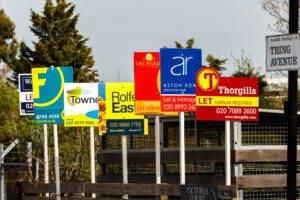
House prices in the capital fell further in August, according to the government’s latest house price index, as higher interest rates continued to weigh on the market.
Data released by the Office for National Statistics on Wednesday showed the region’s house prices fell by 1.4 per cent in August year-on-year.
London’s average house prices remained the most expensive of any region in the UK, with a figure of £536,000, down from £553,000 last August.
Meanwhile, nationwide house prices rose by 0.2 per cent in the 12 months to August, down from 0.7 per cent in July.
The average price increased to £291,000, which is little changed from last August but £9,000 more than the recent low point in March.
Prices in London have fallen 4.8 per cent over the last year, the biggest decrease of any region in cash terms at an average of £26,514, according to the Halifax House Price Index.
“These numbers reflect what was happening in August, and while we would expect a lull in the summer months with low activity, we’ve found that the housing market is not as exciting this autumn as it was in the spring,” said Alex Lyle, director of Richmond estate agency Antony Roberts.
“Buyers are waiting to see what happens with mortgages and if interest rates are held again next month, it will be viewed as a little pigeon step in the right direction.”
Mark Harris, chief executive of mortgage broker SPF Private Clients, added: “Swap rates, which underpin the pricing of fixed-rate mortgages, have risen on the back of the latest inflation data, with five-year Swaps rising to 4.68 per cent this morning from 4.57 per cent yesterday.
“While another base rate rise could still be on the cards, it is looking as though it is close to its peak, which will be welcomed for hard-pressed borrowers, with lenders continuing to reduce their fixed-rate mortgage pricing.
“There is a strong argument for the Bank of England to hold rates again next month in order to let the dust settle and the full effect of so many increases to filter through.”
The National Association Of Property Buyers warned today that house prices could keep falling for at least the next six months, with spokesman Jonathan Rolande expecting to see around 0.5% come off prices each month.
Read more:
London house prices fell by 1.4 per cent in August
X begins charging new users $1 a year

Elon Musk’s X, formerly known as Twitter, has started charging new users in New Zealand and the Philippines $1 (£0.82) a year to access key features, as part of a new trial.
They include the ability to tweet, retweet, like posts and reply to posts.
Those who opt out of the subscription fee will only be able to read posts, watch videos and follow accounts.
The social media platform said that the aim is to “reduce spam, manipulation of our platform and bot activity”.
New accounts will also be required to verify their phone number, though Mr Musk has said that it will still be free to create “read only” accounts, which do not have key features. .
Last month, the boss of X, Tesla and SpaceX suggested that all X users may have to pay for access.
Since Mr Musk bought Twitter for $44bn last year, it has seen a continuous revenue decline.
While there is a clear financial interest for the company to charge users, the controversial billionaire has said that getting people to pay for the service is aimed at tackling bots.
He has previously said that a bot costs “a fraction of a penny” to make. “But if somebody even has to pay a few dollars or something, some minor amount, the effective cost to bots is very high”.
Paid subscribers of an enhanced service, called X Premium, now pay for more features like longer posts and increased visibility on the platform.
X Premium currently costs £6.99 a month in the UK. The price differs depending on which country a subscriber resides in, while other users can still use X for free.
One risk of putting X behind a paywall is that the platform may lose a large chunk of its users. That in turn, could drive down advertising revenue, which currently accounts for the vast majority of the company’s income.
In recent weeks, the company has been investigated by the European Unionfor the possible spread of terrorist and violent content and hate speech, after Hamas’s attack on Israel.
It has also been fined by Australia’s internet safety watchdog for failing to cooperate with a probe into anti-child abuse practices.
Read more:
X begins charging new users $1 a year

