

September spelled further pain for restaurants and takeaway businesses, as spending on eating out slowed due to Brits cutting back on eating out before the Christmas period.
According to Barclay’s latest spending report, some 44 per cent of respondents are trimming their discretionary spending in the run up to the festivities, with dining out the most frequently cited cutback at 60 per cent.
Spending in restaurants dropped 10.8 per cent in September, while takeaway spending slowed 6.5 per cent, according to the survey.
The pullback in spending came despite an unusually sunny September, which, along with major sporting events, provided a welcome boost to the wider hospitality sector.
At pubs, bars and clubs, spending was up 6.1 per cent as the kick off of the Rugby World Cup drove punters back to the boozer to watch.
Jack Meaning, chief UK economist at Barclays, said: “Over the last few months, a picture has been building of consumers beginning to pull back on discretionary spending as the cost of living and monetary tightening from the Bank of England increasingly bite.
“We’ve seen the warning signs from surveys, and now we see it in the more concrete spending data.”
He added: “This suggests the outlook for consumers, and the businesses that rely on them, is weak, even as they finally see their disposable incomes rise faster than inflation. It makes it hard to see anything but a relatively stagnant economy on the horizon.”
As customers remain cautious about spending, nearly half told Barclays they had seen more examples of “surge pricing”, where companies raise the prices of products and services during peak times.
Respondents said that while some pubs and bars may be charging more when trade is busier, only one in 12 consumers say they are willing to pay more to eat and drink out at popular times.
It comes as Slug & Lettuce owner Stonegate Group said last month it would raise the price of its pint by 20p during its busiest trading hours due to rising costs.
A number of other companies, most notably ride-hailing apps like Uber, implement surge charge fees meaning the cost of their services goes up during peak hours.
Read more:
Spending on restaurants and takeaways drops as Brits plan ahead for Christmas
Category: Uncategorized
Small businesses being offered support to go green

Small business owners are being offered support to go green as research shows 61% of consumers say the sustainability credentials of businesses are an important factor behind their spending decisions.
Oxford Brookes Business School, in partnership with Small Business Britain will unveil a free six-week ‘Green Skills for Small Business’ programme starting in November, offering entrepreneurs across the UK support, insight and encouragement to become more sustainable.
This follows additional earlier joint research from the organisations that found 71% of entrepreneurs want to make changes to reduce their carbon emissions over the next two years.
The new course, funded by a grant from the American Express Foundation, will equip entrepreneurs with the skills they need to make a positive impact on the planet and their business.
Taught fully online, the Green Skills programme will help small firms make positive environmental changes and will be taught by leading industry experts and academics from Oxford Brookes Business School. It will cover vital topics such as Financing Sustainability, Measuring Progress, Sustainable Marketing and Accreditations.
Michelle Ovens CBE, Founder of Small Business Britain, said: “Prioritising sustainability in the current climate is a no-brainer for small businesses.
“There’s a common misconception that going green will incur higher costs for small firms, when actually the first step is often cutting unnecessary materials, waste and making processes more efficient. This programme will help businesses understand the wonderful and exciting opportunities that sustainability can bring.”
Sira Dheshan Naidu and Juan José Jiminez Anca founded beauty brand Disruptor London, which has sustainability at its core.
“After seeing first-hand the damaging effects of polluting packaging, dishonest messaging and the danger of putting profit before people, we were determined to prioritise sustainability when starting our business.
“As mission-led entrepreneurs we are dedicated to continuous learning and improvement, so training programmes for small businesses offer great practical frameworks for integrating sustainable practises into our business, ensuring that we remain committed to a greener, more responsible future.”
Dr Lauren Tuckerman, Senior Lecturer at Oxford Brookes Business School, said: “Sustainability is only becoming more important for small businesses, and it’s vital they receive tailored support to achieve their green ambitions.
“Taking the next step doesn’t have to be scary, it can be exciting. The world of sustainability is full of opportunity and with proper training, small businesses can make real impact by tackling the climate crisis head on at the same time as continuing to build their business.”
Read more:
Small businesses being offered support to go green
Lawrence Stroll increases Aston Martin shareholding after ‘incredibl …

Aston Martin’s executive chair Lawrence Stroll has said that demand for the marque’s new generation of sports cars has been “incredible,” after the Canadian billionaire ramped up his stake.
“I have already invested very, very heavily. I own a Formula 1 team and am the largest shareholder and executive chairman of AML so I don’t think I could be any more heavily invested than I am. But nothing good is cheap,” Stroll told media as the company announced a return to Le Mans.
Stroll’s Yew Tree Consortium, which has built a majority holding in the company, upped its stake to over 25 per cent in early September.
The luxury sportscar maker has enjoyed a share price rally this year to top the FTSE 250’s biggest risers, after years struggling under significant debts following a 2018 IPO.
“This company will be a huge success,” Stroll insisted. “We already had our DBX7 take 20 per cent of the luxury SUV market in the first two years of production, that’s quite a statement to make.”
Aston Martin’s share price resurgence has come off the back of a series of major announcements, with key players Yew Tree and Chinese carmaker Geely ramping up their investments in the firm.
It has launched a range of new front engine sports vehicles, whilst revving up its push into the high-performance electric market through a £182m deal with the US-based startup Lucid in June.
“With the launch of our new generation front-engined sports cars we see the sales and the demand is incredible so I am firmly committed and believe in this business.”
Speaking as the company announced a return to Le Mans 2025, Stroll declared that “the DNA of Aston Martin is racing in the blood, [so it is about] bringing that from the track and into our road cars”.
“I am restoring the luxury to the brand but equally injecting performance. Every car we’re going to come up with will have that same level of dynamics.”
Experts still have questions over the revival though. Philippe Houchois, Aston Martin’s first stock analyst, told media and investors on a call that the marque continued to have issues with its debt pile.
“There’s still an issue, I think what we expect is that the last round of capital raising that we saw is putting Aston Martin in a position where they can start renegotiating to restructure the debt… And then we’ll have to see how cashflow progresses in 2024.”
Houchois noted the impact of rising interest rates as the company looks to whittle down its bills. “Keeping in mind of course, the risk is that rates have gone up… I think there will be probably even more pressure on Aston Martin to generate free cash to make sure they can renegotiate debt on better terms.”
That said, Houchois currently has a buy rating on the stock and expects the strong performance to continue.
Read more:
Lawrence Stroll increases Aston Martin shareholding after ‘incredible’ sales demand
Three-quarters of UK businesses struggling to source staff, according …

The post-pandemic hiring boom is in decline as three-quarters of UK businesses admit to struggles with staff recruitment, according to new research from the British Chambers of Commerce (BCC).
Hiring intentions were also shown to be continuing to fall last month.
The BCC surveyed almost 5,000 companies, and found that 73 per cent had faced hiring difficulties in the July to September quarter – a nine percentage point drop from the record high of 82 per cent in the final three months of last year.
This comes as BDO’s monthly employment index also recorded its weakest reading in nine years, with businesses struggling to retain staff costs amid higher borrowing rates, elevated wage growth and weaker customer demand.
In consequence, business confidence and output were also down.
The latest official unemployment figures showed a 0.5 percentage point increase in the jobless rate to 4.3 per cent, and many companies now appear to be moving toward scaling back their hiring plans after repeated interest rate rises from the Bank of England and growing concerns over the risk of recession.
Derek Mackenzie, CEO at Investigo, a global skills provider, said: “Getting access to highly skilled, qualified candidates remains a major challenge for many businesses following the post-pandemic boom. The delay in bringing in the right people damages productivity and wider economic growth, so it’s critical that companies get the right systems in place to swiftly source a pipeline of talent. Building a strong recruitment process with specialist partners saves both time and money, as well as protecting companies from understaffing and skills shortfalls.”
Reed saw a 20 per cent fall in the number of jobs advertised over the last three months compared with last year, whereas applications have risen by 20 per cent.
The company’s chairperson, James Reed, said previously healthy sectors including IT, construction, property, and telecoms have all “dropped off”.
He said: “The market is fairly tough at the moment – there are more people applying than there are jobs out there. We are still to see the full effect of interest rate rises … certain sectors are slowing down.
“There has been a big culling in the tech sector. It feels like the party is over. [But] there are still huge shortages in IT and people with skills in handling AI will be in demand.”
Robert Walters, Pagegroup and Hays, three big London-listed recruitment companies, will this week update investors on their trading over the last quarter – and City analysts believe they are all on track to post a fall in pre-tax profits by the end of their financial years.
The firms have all noted signs of weakness across the UK, US and Chinese hiring markets in recent months, and a swing towards hiring temporary rather than permanent staff
Tomorrow, Robert Walters will inform investors on its trading over the past three months and analysts at AJ Bell have projected its annual profits to slump by nearly half to £29m, despite a 6 per cent rise in sales to just over £1bn.
Pagegroup will report on their third-quarter trading on Wednesday, with expectations to post a 30 per cent fall in annual profits to £136m, due to flat sales of nearly £2bn for this year.
Dirk Hahn, Hays chief executive, will present his first shareholder update the next day with figures for the first quarter of its financial year. Their annual profits are also forecast to fall 15 per cent to £166m.
Read more:
Three-quarters of UK businesses struggling to source staff, according to British Chamber
House price falls expected into new year, Halifax says

Falls in house prices will continue into next year, the UK’s biggest mortgage lender has said, although the rate of reduction has slowed.
The Halifax, part of Lloyds Banking Group, said that property prices were 4.7% lower in September than a year earlier.
Prices were down 0.4% on the previous month, but that was a much shallower drop than previously.
The lender said high interest and mortgage rates would affect the market.
“Homeowners inevitably become more realistic about their target selling price, reflecting what has increasingly become a buyer’s market,” said Kim Kinnaird, director of Halifax Mortgages.
But the fact that interest rates would stay higher for longer than many had expected would constrain demand and put “downward pressure on house prices into next year”, she said.
Earlier in the week, rival lender Nationwide said buyers who were facing high mortgage rates were choosing smaller, more affordable properties.
Both Halifax and Nationwide surveys use data based on their own mortgage lending, so do not include those who purchase homes with cash or buy-to-let deals. According to the latest available official data, cash buyers currently account for over a third of housing sales.
The drop in prices during September was the sixth consecutive monthly fall, the Halifax said, and meant the cost of a typical UK home was now £278,601. However, this is still £39,400 higher than in March 2020 when prices started to shoot up during the pandemic.
Nicky Stevenson, managing director at estate agent group Fine and Country, said: “The property market is offering a much stronger supply of homes than it did during 2021, when we saw frantic buying activity, and this is giving buyers much more choice and headroom to haggle – though it is also playing a part in pushing down prices during negotiations with sellers.”
While property prices were now about £14,000 below the August 2022 peak, they remained 1% higher than in December 2021, when the Bank of England started its run of base rate rises, the Halifax said.
Alice Haine, personal finance analyst from investment platform Bestinvest, said: “The housing market is expected to remain subdued into the next year as the drag effect from the Bank of England’s 14 interest rate hikes delivers a heavy blow to affordability levels.
“While some buyers have been forced to reduce the size and value of the home they purchase to afford mortgage repayments, others are abandoning moving plans altogether.”
She said some first-time buyers would be happy to see prices fall, and could choose longer-term mortgages to spread out the cost, although that means paying more in the long-run.
Read more:
House price falls expected into new year, Halifax says
Labour to strengthen workers’ rights ‘within first 100 days’, Ra …
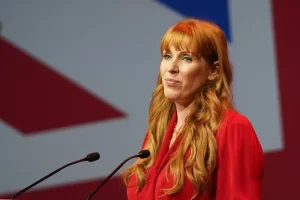
Labour will implement plans to bolster workers’ rights within 100 days of taking office, Angela Rayner has told the Labour party conference.
The deputy party leader told Labour’s conference that plans to boost protections for gig workers and enshrine basic employment rights from the first day of a job had not been watered down.
Media reports following Labour’s national policy forum this year had suggested the plans had been weakened.
But as Rayner took to the stage in Liverpool fresh from Labour’s victory in the Rutherglen and Hamilton West by-election, she insisted the “rumours” were false.
“Be in no doubt – not with Keir and I at the helm,” she said. “We’ll ban zero-hour contracts, fire-and-rehire, and give workers basic rights from day one.
“We’ll go further and faster in closing the gender pay gap, make work more family-friendly, and tackle sexual harassment.
“And we won’t stop there. We’ll ensure that unions can stand up for their members. We will boost collective bargaining, to improve workers’ pay, terms and conditions.”
She later added: “But it can only be completed with Labour in power – and as deputy prime minister – I will personally table the legislation implementing our New Deal For Working People, within 100 days of taking office.”
Rayner also pledged that a Labour government would “deliver the biggest boost in affordable and social housing for a generation”, including new council housing.
She said her party would reform the planning system to speed up building new social and affordable homes, as well as seeking to strengthen renters’ rights, and abolishing leasehold.
Trades Union Congress general secretary Paul Nowak said Labour’s workers rights plan was the “biggest upgrade in workers’ rights in a generation”.
He added: “We need employment standards fit for the 21st century so that everyone knows they’ll be treated fairly at work with decent pay and conditions.
“Good employers should welcome these plans. The New Deal will help create more productive workplaces and stop rogue bosses from undercutting the best.”
Commenting on Reynar’s speech, Dave Chaplin, CEO of contracting authority ContractorCalculator said: “Banning zero-hours contracts glosses over the nuanced realities of the modern employment landscape. Angela Rayner fails to grasp the complexities of atypical work arrangements preferred by some workers and whilst an outright call for a ban makes for an easy headline, it is poor policy and the reality is far more complicated. Whilst such contracts are open to potential abuse which must of course be tackled, when used properly, zero-hours can provide flexibility for both businesses and many workers.
“And, let’s not forget that zero-hours workers are just part of the picture and one part of a wider group of flexible workers. The self-employed workforce, contractors and freelancers, who have chosen to be their own bosses, do not want benefits and do not want rights. These are a group of professionals and entrepreneurs who should be supported and not punished by red tape and administrative burdens, such as the punitive IR35 legislation, so that they and the businesses who rely on them can thrive.
“Keir Starmer wants to promote growth. The UK’s flexible workforce can be relied upon to help with that growth. Rayner does not appear to have got the memo.
“Shackling the flexible workforce with more legislation impedes growth. Labour needs to support people who want to be their own boss, and not put more friction in the way.”
Read more:
Labour to strengthen workers’ rights ‘within first 100 days’, Rayner says
BBC blocks ChatGPT from accessing and using its content

The BBC has blocked the artificial intelligence software behind ChatGPT from accessing or using its content amid copyright and privacy concerns, after concluding that it was “not in the public interest”.
The move brings the BBC in line with other content providers, including Reuters and Getty Images, which are trying to prevent AI from misusing intellectual property.
Generative AI can, when prompted, create new text, images, audio and more from scraping other content providers’ data. It underpins the chatbot ChatGPT developed by OpenAI, the American artificial intelligence research and deployment company.
Rhodri Talfan Davies, director of nations at the BBC, outlined the corporation’s response to AI tools that he said represented a “significant opportunity”, as well as a risk to broadcasters. Davies said the BBC was “taking steps to safeguard the interests of licence fee payers as this new technology evolves.
“We do not believe the current ‘scraping’ of BBC data without our permission . . . to train ‘gen AI’ models is in the public interest and we want to agree a more structured and sustainable approach with technology companies.”
There are several copyright infringement lawsuits against OpenAI from authors who say permission was not sought to use their works to train the AI models.
In April the Information Commissioner’s Office, the data watchdog, warned technology companies about using personal data to develop chatbots. Stephen Almond, executive director at the watchdog, said: “There can be no excuse for getting the privacy implications of generative AI wrong.”
Media organisations worldwide are trying to work out a strategy that allows them to monetise their content being used to power AI. Peter Church, at Linklaters, the law firm, said: “There are real risks in not taking appropriate compliance measures.”
Read more:
BBC blocks ChatGPT from accessing and using its content
BA pilots on brink of three-year pay deal to avert threat of strike

British Airways is on the brink of a long-term pay deal with its pilots, aimed at removing the renewed threat of strike action until at least 2027.
It is understood that BA, a subsidiary of the FTSE 100 company International Airlines Group, was applying the finishing touches to an agreement with BALPA, the airline pilots’ union, on Thursday morning.
The three-and-a-half-year deal, which has been the subject of months of negotiation, expected to secure the agreement of BALPA, which would then ballot its members on the proposal.
One source said they expected the deal to be communicated within the coming days.
Under the agreement, BA pilots will receive a 4% pay rise this year, backdated to June, followed by further uplifts of 1.5% in December, 2.5% next June, and a further 2% six months later.
That will then be followed by a 0.5% rise in March 2025, 2.5% in June of that year and another 2.5% in June 2026.
Pilots will also receive a one-off payment of £1,000 this November, according to a source close to the talks.
They will also participate in a new reward scheme based on BA’s operating profit performance, which could trigger bonuses worth thousands of pounds.
The next pilot pay review will take place in January 2027.
The BALPA agreement comes weeks after unions representing about 24,000 other BA staff secured a 13% pay increase spread over 18 months.
A BA spokesperson said: “We are pleased that we have now reached an agreement in principle for the pilot pay award 2023-27.
“BALPA will now ballot its members on the agreement in principle.
“The pay offer builds on a number of pay and reward changes made in 2022 to support colleagues throughout the business at a time of ongoing cost of living pressures.”
Read more:
BA pilots on brink of three-year pay deal to avert threat of strike
Wetherspoons toasts first annual profits since pandemic
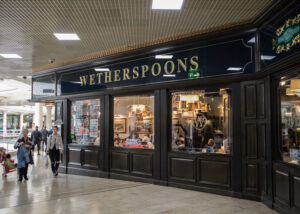
JD Wetherspoon has credited a surge in sales and reduction in costs for its first annual profit since the COVID pandemic.
The value pub and hotel chain, which trades from 826 sites across the UK and Ireland, reported profit before tax for the year to the end of July of £42.6m.
That compared to a loss of just over £30m during the previous 12 months.
Like-for-like sales rose by 12.7% and total sales by 10.6% to £1.92bn. Food sales were a major factor behind the revenue rise while bar sales were up 9%.
Wetherspoons said that momentum had continued since the end of the financial year with sales, on a comparable basis, up by just shy of 10% over the nine weeks to 1 October.
Its value offering has proved attractive as budgets continue to be squeezed by the effects of the cost of living crisis.
The pub, and wider hospitality sector, has had a particularly tough time since March 2020 when COVID restrictions forced sites into temporary hibernation for weeks at a time on several occasions.
Surging ingredient and energy costs, enforced wage increases and staff shortages have been among the challenges facing the industry since – with the effects of higher prices forcing pubs in England and Wales out of business.
A total of 13,000 were lost during 2020 and 2021, with a further 450 going last year according to British Beer and Pub Association (BBPA) data.
Recent figures from commercial real estate specialists Altus Group showed closures in England and Wales were running at a rate of two per day.
The BBPA has called for an extension of business rates relief, beyond the current financial year, to prevent further permanent closures.
The Wetherspoons model has provided it with protection but it told investors there would be no final dividend payment.
Shares rose by almost 2%.
Charlie Huggins, portfolio manager at Wealth Club, said of the performance: “Wetherspoons seems to be moving in the right direction, following a very difficult few years.
“The rise in energy and food costs over the last 18 months has posed major headaches for Wetherspoons and put pressure on margins. However, inflation now appears to be moderating which should bode well for profits in 2024.
“Despite these rising costs, Wetherspoons has been committed to maintaining low prices. This is helping to keep customers loyal, as shown by the robust like-for-like sales growth.
“These value credentials are critical, and should mean the group is better placed than many of its peers to weather any downturn in consumer spending.”
Read more:
Wetherspoons toasts first annual profits since pandemic

