

Nissan has pledged to go fully electric in Europe by 2030, outpacing the watered-down ambitions announced by Rishi Sunak of the British government.
“There is no turning back now,” Makoto Uchida, chief executive of the Japanese car-maker said. “Nissan will make the switch to full electric by 2030 in Europe — we believe it is the right thing to do for our business, our customers and for the planet.”
The commitment to the 2030 deadline comes less than a week after Rishi Sunak delayed a proposed ban on the sale of new petrol and diesel cars by five years to 2035. The U-turn sparked an industry backlash and warnings that uncertainty over policy was putting future investment at risk.
Earlier this year Nissan raised its targets for EV models. It is playing catch-up in a segment dominated by newcomers such as Tesla and has said it will launch 19 new EV models in Europe by 2030. Uchida said today that one of two new electric models Nissan has already confirmed for Europe will be manufactured at its Sunderland plant.
Nissan also previously said that by mid-2027 98 per cent of its sales in Europe would be either fully electric cars or hybrids.
The new goal of going fully electric by 2030 — announced at the launch of futuristic Concept 20-23 design in Paddington, London — brings it into line with its alliance partner Renault, which plans to make the Renault brand all electric by then.
The group, which has 7,000 UK employees, is investing £1 billion alongside Chinese-owned battery maker AESC to produce more electric vehicles in the UK.
Ford and Stellantis also plan to be fully electric in Europe by 2030. Volvo plans to sell only EVs globally by 2030.
Sunak announced the reversal of the 2030 ban in a speech last week alongside a series of other measures to row back on the government’s climate change commitments as he claimed that politicians had not been “honest with the public” about the cost of reaching net zero.
Ford said it showed a lack of commitment and ambition, pointing to the millions of pounds they had already pumped into their UK operation. Investments have also been made in Tata’s battery gigafactory in Somerset and the BMW plant at Cowley.
Lisa Brankin, chairwoman of Ford, said: “Our business needs three things from the UK government: ambition, commitment and consistency. A relaxation of 2030 would undermine all three.”
JLR, the UK’s second largest carmaker, welcomed the prime minister delay, however. It said it was pragmatic and brought the UK in line with other nations.
Read more:
Nissan pledges to go fully electric in Europe by 2030
Category: Uncategorized
Rishi Sunak to disband Energy Efficiency Taskforce

In a move that has sent ripples across the business and environmental sector, UK Prime Minister Rishi Sunak has made the controversial decision to disband the energy efficient Taskforce just months after it was created.
This decision is viewed as a significant shift in the government’s approach towards energy efficiency initiatives, sparking a wave of debate on its potential implications.
The Energy Efficiency Taskforce, established in March, was primarily tasked with helping the UK attain its ambitious goal of net-zero emissions by 2050. The Taskforce was instrumental in devising and implementing strategies that encouraged businesses to adopt energy-saving measures. However, the government has now decided to discontinue it, citing the need for a more ‘flexible and adaptive approach’ towards energy efficiency.
Sunak’s decision to disband the Taskforce comes amid growing concerns about the rising energy prices and their impact on businesses. While the Taskforce’s mandate was to promote energy efficiency, critics argue that it was not adequately addressing the immediate concerns of businesses struggling with high energy costs. However, advocates of energy efficiency argue that this move could potentially derail the progress made towards achieving the net-zero emissions target.
Energy experts have expressed mixed reactions to this decision. Some believe this could lead to a more market-driven approach to energy efficiency. On the contrary, environmental policy experts warn that this move could cause a policy vacuum, slowing down the momentum of energy efficiency initiatives.
Dr. Amelia Fletcher, an environmental economist at the University of East Anglia, said, “This decision seems short-sighted. The Taskforce was crucial in aligning business strategies with national energy efficiency goals. Its absence could disrupt the coordinated effort needed to tackle climate change.”
The impact of this decision on businesses could be twofold. On one hand, businesses may benefit from a potentially more flexible approach towards energy efficiency, allowing them to adapt to market conditions. However, the absence of a focused body like the Taskforce could also mean a lack of clear direction for businesses aiming to become more energy-efficient.
From an environmental perspective, this decision could slow down the progress towards the UK’s net-zero emissions target. It could potentially stall energy-saving measures, leading to higher carbon emissions. This decision underscores the delicate balance that governments must maintain between supporting businesses and protecting the environment.
In conclusion, while the disbanding of the Taskforce might offer more flexibility to businesses, it also raises pertinent questions about the UK’s commitment to its energy efficiency and net-zero emission targets. The impact of this decision will unfold in the forthcoming days, shaping the future of the UK’s energy landscape.
Read more:
Rishi Sunak to disband Energy Efficiency Taskforce
Jeremy Hunt calls for London to be the place tech companies choose to …

Jeremy Hunt has said that London’s stock exchange should be like the Nasdaq exchange in the US and become “Europe’s place of choice” for technology companies that want to raise capital.
Speaking from the west coast of America, where he is meeting tech businesses to bang the drum for investment in the UK, the chancellor said “there is work to do to make sure that the London Stock Exchange is the place of choice for up-and-coming British technology businesses to list”.
He added that the LSE was making changes because “the future for the London stock market is to perform the role that Nasdaq does in the US”. The tech-heavy exchange is proving a magnet for companies who are looking to tap the deep pools of capital and expertise for the sector in New York.
There has been much soul searching over the UK’s future as a centre for listed technology businesses, particularly after Arm, the Cambridge-headquartered semiconductor giant, chose Nasdaq for its recent listing and other UK businesses have threatened to follow suit.
The chancellor said he had not had discussions with Arm over whether it would bring a secondary listing to London but that he would be “delighted” if it did, as Rene Haas, the chief executive, has hinted.
The comments came after David Schwimmer, head of the LSE Group, said the idea that London was losing its draw as a financial centre was “clickbait” and that this narrative had been “overplayed”.
Hunt has proposed reforms to enable institutional investors to allocate more funds to back the growth of UK private companies. The reforms could unlock £75 billion in additional investment, which would be “a stepping stone to IPOs”. He said he wanted to “make sure that the next DeepMind doesn’t have to automatically look at going to a partnership with one of the tech giants. It could actually grow under its own steam in the UK with capital raised on the UK markets.”
During Hunt’s visit, part of a government push to turn the UK into what it calls a “science and technology superpower”, he met a suite of heavyweight players from the industry to discuss increasing investment in the UK.
They included representatives of Andreessen Horowitz, the venture capital firm, Universal Music and Warner Studios, as well as Satya Nadella, chief executive of Microsoft, Ruth Porat, chief financial officer at Alphabet, and Andy Jassy, chief executive of Amazon.
Hunt said: “When I was responsible for technology ten years ago we had real problems. If I started saying ‘we want the next Google to be British’, people would laugh you out of court. Now we have 160 unicorns [privately held start-up companies valued at more than a billion dollars]. Quite serious stuff is starting to happen and that’s what makes a trip like this exciting.”
He said that the “tide is turning” when it comes to the UK’s tech industry, compared with when he was in charge of the sector as culture secretary.
On Thursday, Warner Brothers Discovery announced it was expanding its UK studios with the addition of ten new sound stages and an extra 400,000 square feet of production space in Hertfordshire.
“The entertainment industry has become a technology business over the last decade,” the chancellor said. “Everyone in Hollywood thinks they’re in the technology business. That’s why yesterday’s announcement of the increase of 50 per cent of the Warner Bros studio space in Leavesden is so significant. Our studio space in the UK has gone up by two thirds in just three years. Netflix spent $6 billion alone [on content over four years].
“There’s something quite exciting happening, which is why there’s been a lot of interest from investors and from venture capitalists, from all the big names in the tech industry.”
Read more:
Jeremy Hunt calls for London to be the place tech companies choose to raise capital
Business tycoon, John Caudwell, threatens to withdraw support for Suna …

UK business magnate John Caudwell, founder of Phones 4u, has announced he may withdraw his support from Prime Minister Rishi Sunak and the Conservative Party due to their views on the net zero initiative.
Caudwell, one of Britain’s wealthiest businessmen, has expressed deep-seated concerns about what he terms the “net zero madness”. This shock withdrawal of support from a prominent figure in the business community could have far-reaching implications on the political landscape and within business circles.
Caudwell, the self-made billionaire, views the net zero initiative as a misguided attempt that could potentially cripple the UK’s economy. He believes the aggressive measures being taken to achieve net zero greenhouse gas emissions by 2050 are more harmful than beneficial.
In the comment piece to published in The Sunday Times, he wrote: “This newfound delay in our net zero target is nothing short of self-sabotage, both environmentally and economically.”
Caudwell’s threat to withdraw his support from the Conservative Party could send shockwaves through the political sphere. As a significant financial contributor to the party, his withdrawal could potentially disrupt the party’s funding.
The decision may also affect the party’s popularity among the business community. Many business leaders often look up to figures like Caudwell and his vocal withdrawal could potentially sway their support away from the Conservative Party.
Caudwell’s decision could stir up considerable discussion within the business community. If the net zero initiative is seen as a potential threat to the economy and business growth, other business leaders might also voice their concerns.
Caudwell’s stance may serve as a wake-up call, prompting businesses to take a closer look at the potential impact of the net zero initiative on their operations and profitability. This could lead to a greater push for a more balanced, less disruptive approach to achieving environmental goals.
Caudwell, worth an estimated $2.7 billion, is a towering figure in the UK business world. As the founder of Phones 4u, a company he sold for £1.5 billion in 2006, Caudwell has proven his astuteness in business. His philanthropic efforts, particularly through the Caudwell Children charity, have made him a respected figure.
Caudwell’s views carry significant weight in the business community, with any decision to withdraw support from PM Sunak and the Conservative Party over their net zero policy a development that cannot be overlooked.
Read more:
Business tycoon, John Caudwell, threatens to withdraw support for Sunak over ‘net zero madness’
Bumper tax revenues resulted in UK public borrowing lower than expecte …
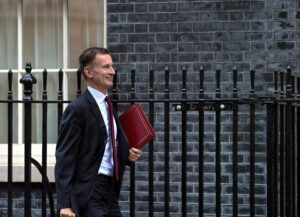
The government’s borrowing bill was lower than expected last month as falling inflation and bumper tax revenues helped improve public finances.
Figures from the Office for National Statistics showed that monthly public sector borrowing in August was £11.6 billion, below the £13 billion forecast by the government’s fiscal watchdog and just above the £11.1 billion expected by polled economists.
The figures are the latest undershoot in borrowing for the government. It has benefited from a rising tax take and falling inflation, which has reduced the Treasury’s bill for servicing debt.
Total borrowing is now £69.6 billion for the financial year that started in April, £11.4 billion lower than the Office for Budget Responsibility forecast in March.
The statistics office said the government was collecting more VAT and income tax, helping increase monthly tax receipts to £57.6 billion, up nearly £3 billion on August last year. High inflation has boosted public finances by dragging workers into higher tax brackets.
Recent falls in monthly inflation, as measured by the retail prices index, have helped cut the government’s debt interest bill on inflation-linked gilts by £3.1 billion, compared with August last year. Total debt servicing costs last month were £5.6 billion, undershooting the £7.9 billion projected by the OBR.
The figures are a boost for Jeremy Hunt, the chancellor, before his autumn statement in November. Treasury officials hope that an improvement in public finances will give the government room to announce a tax cut in the spring budget, before the general election next year.
The chancellor said: “These numbers show why, after helping families in the pandemic, we now need to balance the books. That becomes much easier when inflation is under control.”
The statistics office said the debt ratio, which measures government debt as a proportion of the economy, rose slightly to 98.8 per cent and is at its highest level since the 1960s.
Martin Beck, chief economic adviser to the EY Item Club forecaster, said that despite having extra billions in fiscal headroom, the chancellor was unlikely to spend his windfalls this autumn. “The fiscal rules around government borrowing and debt relate to a period five years out, so short-term developments in the fiscal numbers aren’t of much relevance,” Beck said.
Cara Pacitti, senior economist at the Resolution Foundation, said that despite the boost to tax revenues, high inflation also meant public spending was being squeezed in real terms, as the government’s departmental budgets were set before the inflationary surge.
“The chancellor may choose to bank the good borrowing news from higher inflation and ignore the public services pain it is causing in his upcoming autumn statement, but that challenge will need to be confronted by whoever wins the next election,” Pacitti said.
Read more:
Bumper tax revenues resulted in UK public borrowing lower than expected in August
Set aside 5 minutes to check these 5 cybersecurity mistakes and secure …

Top 5 cybersecurity mistakes endangering your startup and how to resolve them
Simon Hughes – VP and General Manager for the UK arm of Cowbell, a leading cyber insurance provider for SMEs – runs through the most common cybersecurity mistakes startups make, revealing how to fix them before hackers catch on.
One of the most common misconceptions among small and medium-sized enterprises (SMEs) is that they are less vulnerable to cyberattacks than their larger counterparts. It’s a belief that most likely stems from the perception that cybercriminals primarily target high-profile organisations for larger financial gains or notoriety. However, this is not entirely true.
Granted, the likes of Microsoft, Google and other major tech companies have fallen victim to cyberattacks on multiple occasions. Google’s 2009 “Operation Aurora” cyberattacks and Microsoft’s 2017 “WannaCry” ransomware attack both come to mind. The reason they come to mind however, is not because the effects these attacks caused were any more damaging than those SMEs experience, but because of the extensive media coverage they received.
When an SME is targeted, it’s unlikely to make the news, but that doesn’t make the effects any less damaging. In fact, it’s often quite the reverse; the same events impacting an SME business – financial loss as a result of a cyber event, reputational damage, legal costs, business interruption – are all likely to be felt much more acutely by a small or medium-sized business compared to a larger and more established organisation.
Coupled with this is the likelihood that an SME organisation is spending considerably less on their IT security than a much larger organisation and therefore more likely to fall victim to a malicious cyber event in the first place. Criminal organisations are well aware of these facts too. Therefore, the key for SME businesses is to think not only about their own cyber exposure, but how they can lower the likelihood of an event happening in the first place. If an incident then does happen, it’s about ensuring effective risk transfer and access to the necessary incident response capability.
A recent case study shows that businesses whose risk factors, based on Cowbell’s proprietary risk model, were 8 points higher than the industry average have a 1% chance of suffering a cyber attack or event, while businesses whose risk factors were 7 points lower than the industry aggregate have close to a 16% chance of suffering an event. That means implementing good cyber hygiene can indeed lower the likelihood of cyber events from happening.
So just what are the most common cybersecurity mistakes SMEs make and what can they do to fix them?
Failing to implement Multifactor Authentication (MFA)
One of the biggest mistakes SMEs can make when it comes to cybersecurity is failing to implement Multifactor Authentication (MFA), also called 2-Factor Authentication (2FA).
MFA is an electronic authentication method that only grants users access to websites or software if they present two or more pieces of evidence to an authentication mechanism. This usually involves a password, push notification, and/or authentication code using an authenticator app like Google Authenticator, Okta, or similar. According to Microsoft, implementing MFA can block up to 99.9% of account compromise attacks.
The great news is that implementing MFA is easy and usually free for most commonly used software and Cloud applications (Google Drive, Zoom, payroll software, etc.), and it can usually be enforced company-wide by the software administrator. For payroll software such as QuickBooks or ADP, for example, you’d simply follow these steps:
Step 1: Log in to your payroll software account.
Step 2: Look for an option in your account settings or security settings related to two-factor authentication or multi-factor authentication.
Step 3: Follow the instructions to enable MFA. This typically involves setting up a second verification method, such as receiving a code via text message or email.
Data backup complacency
Once a bad actor (an individual, group, or organisation that engages in malicious or unauthorised activities in the digital realm) gains access to a system, frequent data backups can prevent a lengthy business shutdown or costly ransomware payment; yet, many small companies still don’t back up their data regularly and properly.
To ensure an efficient backup strategy, companies should follow the 3-2-1 rule:
Ensure that you have three copies of your data (your production data and two backup copies),
on two different media (disk and tape)
with one copy off-site and entirely segregated from the rest (meaning offline, using a hard drive or in the cloud) for disaster recovery.
Allowing employees to use public wifi without a virtual private network
Many companies allow at least partial remote work for their employees, which can present an increased risk of exposure if virtual private networks (VPNs) aren’t put into place. A VPN creates a secure connection between a computing device and a network, or two networks, and is necessary when using public Wifi. Without a VPN, bad actors can gain access to your device or network through the shared Wifi.
Public Wifi is any Wifi that a large group of people has access to, for example, in cafes, airports, or hotels. Non-password-protected Wifi is the most dangerous, but even password-protected Wifi should only be accessed using a VPN, if the password is easy to obtain.
Luckily, there are many VPN providers available, and implementation can be done company-wide by an administrator. A couple of examples include:
ExpressVPN, which offers a high level of security with strong encryption, a strict no-logs policy, and a wide range of server locations. It has user-friendly apps for various platforms, making it easy for employees to install and use, and works on Windows, macOS, iOS, Android, Linux, and even routers. ExpressVPN allows businesses to set up VPN protection for their entire workforce through a business-specific plan.
NordVPN is another great example. Its advanced security features include Double VPN, Onion Over VPN, and CyberSec, which blocks malicious websites. It boasts a large server network spanning multiple countries, ensuring good connection speeds and like ExpressVPN, offers user-friendly apps for various devices, making it accessible for all employees.
No incident response plan
Due to the misconception that smaller businesses don’t get targeted by bad actors, many do not have a plan in place on how to behave if their company does fall victim to an incident. An Incident Response Plan (IRP) is a detailed plan that goes over all the actions to take when companies experience an incident, and it should be put in place before ever falling victim, as well as revisited and updated at least yearly.
The goal of an IRP is to give businesses peace of mind that they are prepared for an incident. They will know exactly what they need to do if such an event occurs, which will ultimately help to reduce the time and money it takes to get business back up and running. It’s worth noting that a good quality cyber insurance provider will offer assistance in creating an IRP, tailored to your business, along with various other risk management tools and services that can help bolster security and awareness.
Standalone cyber insurance policy
Many small businesses are still under the dangerous assumption that standalone cyber insurance policies (specialised insurance products designed to provide comprehensive coverage for a business against various cyber-related risks and liabilities) are only necessary for large enterprises. However, more than half (54%) of SMEs in the UK have experienced some form of cyberattack in 2022, up from 39% in 2020, according to a recent Vodafone study.
For those businesses that attempt to bundle cyber coverage into their general business insurance policies instead, several challenges can arise from what is often a one-size-fits-all policy that fails to consider the unique cyber risks faced by individual SMEs. If you fall victim, these may include insufficient financial protection and risk transfer, delayed claims processing, and an inability to provide you with the necessary technical assistance and incident response capability that your business needs during a cyber event.
Additionally, many good quality cyber insurance providers offer risk management services without any extra charge as part of your policy. This can include cyber risk assessment services, educational material, and templates for things like Incident Response Plans and Disaster Recovery Plans, just to name a few.
Right now, not only are many SMEs unprepared for the effects of a cyber incident – 90% of SMEs that experienced a serious incident say the cyberattack costs them more than they thought it would – but cybercriminals are increasingly targeting SMEs over larger firms for a number of reasons. They typically have less robust cybersecurity measures in place, it’s a target-rich environment (there are 5.5 million SMEs in the UK) and their resources are limited – all of which make them easier targets.
With the cyber landscape evolving on a daily basis, there is no better time than now for SMEs to take the opportunity to improve their cyber security posture and prioritise their cyber resilience. With the right planning, preparedness and cyber risk transfer in place, the severity of cyber incidents can be dramatically decreased; an approach that is undoubtedly far more cost-effective than dealing with the aftermath of a cyber incident without help.
Read more:
Set aside 5 minutes to check these 5 cybersecurity mistakes and secure your business
Warner Bros confirms huge expansion of Watford studios

Watford is to become the unlikely new home for Batman and Superman after Warner Bros confirmed that it is to go ahead with a huge expansion of its Leavesden film studios.
The addition of ten new sound stages and 400,000 sq ft of production and support space will increase the filming capacity of the studios, where the Harry Potter films were shot, by 50 per cent.
Warners expects its investment to create 4,000 jobs directly and indirectly and contribute an extra £200 million each year to the UK economy. Building work is due to begin next spring and complete in 2027, after which Leavesden will become the main production hub for DC Studios, the Warners arm responsible for making the Superman, Batman and Wonder Woman films.
Jeremy Hunt, the chancellor, said: “Warner Bros Discovery’s ambitious plan to grow its Leavesden studio . . . means that British-made entertainment will continue to delight and entertain global audiences.” Hunt was in Los Angeles yesterday, meeting David Zaslav, chief executive of Warner Bros.
The expansion, planning permission for which was granted by Three Rivers district council and Watford borough council earlier this year, will cap the dramatic transformation of a site that in the mid-1990s was a disused airfield. The aircraft hangars and factories were first turned into filming space for the Bond film GoldenEye. Since then, a host of shows and movies have been filmed at Leavesden, including House of the Dragon, the Game of Thrones spin-off series, and, most recently, Barbie.
The UK has established itself as a filming hub for big production houses by offering generous tax breaks. Disney is reported to have earned upwards of £300 million in rebates for filming its Star Wars sequels in Britain.
Property investors more used to financing offices, flats and warehouses have been looking to add film studios to their portfolios to take advantage of the production boom.
Read more:
Warner Bros confirms huge expansion of Watford studios
Rupert Murdoch: A Titan of UK Media and Politics Bows Out

Rupert Murdoch, the Australian-born media mogul known for his towering influence over British media and politics, has announced his retirement, marking an end to a career that has shaped the UK’s media landscape for more than half a century.
Murdoch first ventured onto UK shores in 1969, acquiring the struggling tabloid News of the World. His purchase of The Sun the following year set a precedent for his business strategy—buy a struggling outlet, cut costs, and turn it into a profitable enterprise. With a keen instinct for the public’s desires, he transformed The Sun into the most widely read daily newspaper in the UK.
Taking on the Unions: The Wapping Dispute
One of Murdoch’s most significant achievements came in 1986 during the Wapping dispute. At the time, the print unions held a stranglehold on Fleet Street, demanding high wages and impeding technological advances. Murdoch’s decision to relocate his newspapers to a new, high-tech plant in Wapping, east London, triggered a bitter year-long confrontation with the unions. The outcome was a victory for Murdoch. His decisive action broke the power of the print unions, paving the way for a more technologically advanced and cost-effective UK newspaper industry.
A Player in Politics
His influence wasn’t just confined to the media. Murdoch’s relationships with successive UK Prime Ministers, from Margaret Thatcher to David Cameron, have been scrutinised and debated. His support for them via his newspapers, particularly The Sun, is often credited with swaying public opinion and election outcomes.
Murdoch’s close relationship with Thatcher was mutually beneficial. His newspapers supported her through her election campaigns, while she reportedly helped him expand his media empire, notably by not referring his bid for The Times and The Sunday Times to the Monopolies Commission.
Shaping the Media Landscape
Murdoch’s influence on the UK’s media industry extended beyond print media. In 1989, he launched Sky Television, an ambitious project that initially struggled but eventually revolutionised the UK’s television industry. By offering a broader range of channels and introducing pay-per-view services, Sky became a dominant player in the UK broadcasting sector.
Controversies and Legacy
Murdoch’s career has not been without controversy. The phone-hacking scandal at News of the World in 2011 led to the closure of the newspaper and a parliamentary inquiry into media ethics.
However, despite these controversies, Murdoch’s impact on the UK’s media landscape is undeniable. His bold business decisions, his technological innovations, and his political influence have indelibly shaped the industry. As he steps down, he leaves behind a media empire that has transformed the way Britons consume news, and a political legacy that has influenced the course of UK politics.
Rupert Murdoch’s retirement marks the end of an era. His influence, both lauded and criticised, has left an indelible mark on UK business and politics. As we turn the page, we can only wonder what the next chapter of UK media and politics will look like without him.
Read more:
Rupert Murdoch: A Titan of UK Media and Politics Bows Out
HS2 Phase Two: Birmingham to Manchester expected to be cancelled withi …
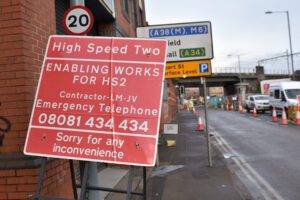
Insiders have revealed that the HS2 Phase Two project, the high-speed rail line from Birmingham to Manchester, is expected to be cancelled.
The announcement could be made as early as next week, marking a significant shift in the UK’s infrastructure plans.
The HS2 project, initially intended to link London, the Midlands, and the North of England, has been plagued by delays and escalating costs. The budget for the entire HS2 project was set at £55.7bn in 2015. However, the target cost, excluding the eastern leg of Phase 2b from the West Midlands to the East Midlands, has skyrocketed to between £53bn and £71bn in 2019 prices.
Despite £2.3bn already invested into the second stage of the national line, a leaked photograph obtained by The Independent suggests that ministers are considering scrapping the northern leg to save an estimated £35bn. This follows the controversial decision in 2021 to scrap the Leeds terminus and downgrade Northern Powerhouse Rail.
Senior Government sources have stated they were not aware of any final decision, with the ultimate call likely to rest with Prime Minister Rishi Sunak alongside Chancellor Jeremy Hunt. Mr Sunak has previously expressed the need to find a way of delivering infrastructure projects that don’t cost taxpayers billions of pounds.
The potential cancellation of the HS2 Phase Two project follows a series of setbacks. The eastern leg to Leeds was cancelled two years ago, and it was confirmed in March that construction between Birmingham and Crewe would be delayed by two years. Furthermore, services may not enter central London until the 2040s.
Transport Secretary Mark Harper announced a two-year pause on work at Euston due to costs forecasted to reach £4.8bn, nearly double the initial budget of £2.6bn. This means that Old Oak Common, in the capital’s western suburbs, will be the railway’s only London station when services to and from Birmingham Curzon Street begin between 2029 and 2033.
The cancellation of the HS2 Phase Two project could have significant implications for the UK’s infrastructure and economic development, particularly in the North of England. As the situation unfolds, all eyes will be on the government’s next steps in managing the country’s ambitious but troubled high-speed rail project.
Read more:
HS2 Phase Two: Birmingham to Manchester expected to be cancelled within days

