Uncategorized – Page 239 – AbellMoney

Bank of England maintains interest rate at 5.25%

The Bank of England has left its interest rate unchanged at 5.25%, a day after inflation unexpectedly fell by more than expected.
The Bank’s monetary policy committee (MPC) voted 5-4 – the narrowest possible margin – to leave the cost of borrowing unchanged.
Up until the inflation data was released on Wednesday morning, markets had put an 80% probability on them raising the rate by a further quarter percentage point.
By this morning, that probability had sunk to just below 50%.
The decision brings to an end the longest successive period of “tightening” (a lift in the cost of borrowing) in recent Bank of England history – as the MPC raised rates in 14 successive meetings.
The last time the MPC voted to leave interest rates unchanged was in November 2021.
However, the fact that four members – Jon Cunliffe, Megan Greene, Jonathan Haskel and Catherine Mann – voted to raise the cost of borrowing might be seen as a signal that in the coming months the Bank may lift rates again.
The Bank also voted to continue its programme of reversing quantitative easing – the scheme whereby it creates money to buy government bonds and pump cash into the economy.
It said over the next year it will sell off a further £100bn of bonds, cutting its total asset pile down to £658bn.
The Bank of England governor, Andrew Bailey, said: “Inflation has fallen a lot in recent months, and we think it will continue to do so.
“That’s welcome news. But there is no room for complacency. We need to be sure inflation returns to normal and we will continue to take the decisions necessary to do just that.”
Ahead of the meeting, economists had been torn on whether the promise of falling inflation would outweigh the Bank’s concerns about rising wage inflation.
It has previously cited both of these statistics as key things to watch.
In the event, the five members who voted to leave rates unchanged judged that “the latest developments meant that the judgement to keep Bank Rate unchanged at this meeting rather than increase it was finely balanced.
“Conditions were likely to warrant a restrictive policy stance being maintained until material progress had been made in returning inflation to the 2 per cent target.”
That signals that there is still a significant chance that Bank rate rises again, and that even if they don’t, they are unlikely to come down very quickly.
Speaking about the announcement, Kevin Pratt, business expert at Forbes Advisor, said: “Businesses will be mightily relieved the Bank of England has decided that 14 Bank Rate increases on the bounce is enough – for now, at least. Another hike in the cost of borrowing would have been extremely damaging for firms battling high input costs – look at rising fuel prices, for example – and weak customer demand. Inflation edging down yesterday suggests the Bank’s sustained campaign against rapidly rising prices is already working.

“The question now is whether the 15th rise will happen in November, pushing the Bank Rate to 5.5%. But even if we’re already at the peak of the cycle, businesses need support to help them remain viable and secure a soft landing for the economy. The Chancellor is no doubt sketching out plans for his Autumn Statement on 22nd November, and it is to be hoped he is considering measures such as further subsidising business energy costs, particularly for intensive usage industries, targeting VAT relief for hard-pressed sectors, and overhauling the business rates system.
Read more:
Bank of England maintains interest rate at 5.25%

A dark day for British business: Unraveling the implications of UK’s …

As I watched Chancellor Rishi Sunak unveil the government’s new Net Zero targets, I couldn’t help but feel a pang of disappointment. It’s a day that will go down in history as a black mark against British business, and one we will rue for years to come.
Sunak’s announcement marks a disconcerting shift in priorities that could have catastrophic implications for British businesses. It’s a stark departure from the UK’s previous commitment to sustainability and the long-term benefits it brings, both economically and environmentally.
For many businesses, this new policy feels like a sudden pulling of the rug from under our feet. We’ve been striving hard to align our strategies with the initial Net Zero targets, investing significantly in greener and more sustainable practices. Now, the goalpost has been moved, and the consequences for businesses are grave.
With this change, businesses will face mounting challenges. The financial burden of adopting new practices to meet these new targets, combined with the uncertainty surrounding the specifics of the policy, will place enormous strain on SMEs. This could result in job losses, reduced competitiveness, and potential business closures.
The impact extends beyond the immediate business sphere. Consumers are increasingly demanding sustainable and ethical businesses. A shift away from our previous environmental commitments could potentially damage our reputation in the eyes of consumers, both domestically and internationally.
The Importance of Sustainability
What Sunak’s announcement overlooks is the long-term benefits of sustainability. Prioritising sustainability isn’t just about protecting the environment; it’s also about creating a resilient and future-proof economy.
Green practices stimulate innovation, create jobs, and open up new markets. They make us more competitive on a global scale. By turning our backs on these benefits, we are effectively sabotaging our own future.
A Call to Reconsider
This policy change is more than a mere adjustment of targets. It’s a clear message about where our government’s priorities lie. It’s a decision that underestimates the resilience and adaptability of British businesses, and one that sidelines the importance of sustainability.
As businesses, we must not let this announcement deter us from our commitment to sustainability. We must continue to innovate and find ways to reduce our carbon footprints. We need to keep reminding the government and the public why sustainability should be at the forefront of any economic strategy.
It’s a dark day for British business, but it’s also an opportunity. An opportunity to stand up for what we believe in and to show that we won’t be swayed by short-term political decisions.
Let’s use this as a catalyst to engage in deeper discussions about the kind of future we want for our businesses, our economy, and our planet. Today, more than ever, we must reaffirm our commitment to sustainability and the long-term benefits it brings. Only then can we hope to navigate the challenges that lie ahead and emerge stronger on the other side.
Read more:
A dark day for British business: Unraveling the implications of UK’s new Net Zero Targets

Secrets of Success: Marcus Brew, MD at UNTHA UK

Waste is a hot topic right now as companies battle to reach their ESG commitment
Enter UNTHA UK; working to supply innovative solutions to help the country’s waste operators effectively deal with some of the most complex material streams – spanning metals, plastics, and waste wood, to waste electrical and electronic equipment (WEEE), mattresses, tyres, municipal solid waste (MSW), and more. Once shredded, the resulting material can usually be reused, remanufactured, recycled, or sent for energy recovery.
Their aim is to promote a circular economy and encourage the ‘reduce, reuse, recycle’ mantra within the UK, but to also equip the country’s waste operators with the machinery and expertise to help make this a reality.
With a 25-year career working with technically complex capital equipment and being been involved in multi-million-pound blue-chip engineering projects around the world, Marcus Brew, MD at UNTHA UK for over ten years, shares some of his Secrets of Success with Business Matters.
What products or services do you provide?
UNTHA UK – part of Austrian-headquartered UNTHA Shredding Technology – is a globally renowned industrial waste shredder specialist.
We’re committed to getting to the heart of the UK’s waste agenda – delivering technology and advice that sees the UK satisfy stringent environmental targets. We help to facilitate a more circular economy for the country’s waste – maximising its resource potential – and ensure our clients achieve the greatest return on investment from their waste shredders.
What type of businesses do you work with?
We work with waste operators, recyclers, original equipment manufacturers (OEMs), production facilities and other environmental innovators across many sectors.
These organisations typically produce and/or handle ‘waste’ materials including – but not limited to – such as WEEE (redundant electrical equipment), MSW (aka general waste), bulky (everything from carpets, tyres, and mattresses to large domestic appliances), plastics, metals, hazardous (batteries and hospital waste), organic, confidential, waste wood, and many more!
What is your USP?
We are known throughout the world as ‘the reliable brand’. We’ve been around for over 50 years – and we’re proud to hold one of the most prestigious shredding heritages in the waste and recycling industry.
Also, for us, it’s never solely about the initial machine sale – we also truly care about our customers’ ongoing profitability. In the machinery industry, suppliers’ focus is often on the order and little else, but we’re as much an aftercare and aftersales brand as we are the manufacturer of the machines.
What are your company values? Have you ever had them challenged and if so how have you dealt with it?
Of course, there are many, but for us, innovation – in the truest sense – is a core part of our company values. It’s a word that’s often overused, but when it comes to life at UNTHA UK, we’re so close to customers and industry that we’re constantly working to understand which challenges the sector needs our help to solve – and how engineering by design can help. Our commitment to innovation means that materials which have previously been considered uneconomical to shred, can now be handled with ease and without costing the earth.
Also, we genuinely care about and are respectful of one another and our customers. This is a key principle of teamwork, which should be a given, but in many companies isn’t. This sees our colleagues committed to our customers for the long-term, being that true partner long after the initial sale.
How do you ensure that you recruit a team that reflects your company values?
From experienced engineers and shredding experts to those just starting out in their careers, we’re always keen to hear from people who are passionate about environmental projects, and this shines through in our recruitment process.
It’s not always about recruiting people from industry, however, it’s also important to find colleagues with the right core skills, values, mindset, and approach – who have the integrity and passion to uphold what UNTHA stands for. This means that we are willing to take a chance on employees, even if they don’t have the sector experience, as a lot of this can be taught – honesty and a strong moral compass can’t.
Are you happy to offer a hybrid working model of home/office post-covid?
Absolutely. The nature of UNTHA’s customer-facing business model means we’ve always adopted hybrid working – long before the pandemic.
We have clients in all corners of the UK and overseas, so it’s not a typical 9-5 job. Our sales colleagues are regularly out in the field, engineers are on the road daily, and our aftersales team works collaboratively with customers to deliver everything from operator training to ongoing shredder optimisation packages on client sites. Colleagues do also work from home, but hybridity is considered ‘business as usual’ for our team.
Earlier in 2022, we were acknowledged in the Digital Enterprise Top 100’s Top 10 performers – awarded ‘Leading Light’ status. We were granted the prestige due to our deeply ingrained technology infrastructure that runs throughout the company – allowing us to work in multiple locations with ease and remain ultra-connected to both staff and customers, regardless of location.
Do you have any tips for managing suppliers and customers effectively?
There are many tips but, ultimately, it comes down to being a decent human being – treating others how you would wish to be treated, having open communications at the earliest opportunity, and sticking to what you say you’re going to do as best you can. It sounds simple, but so many brands fall down in these areas.
Any finance or cash-flow tips for new businesses starting out?
We believe that all organisations – no matter their size – should have access to the most innovative and ROI-driven equipment. In its early stages, a company may struggle to raise the capital needed for such machinery, and our advice is to partner with a manufacturer that both understands this and offers support.
We offer a range of UNTHA Finance options that are tailored to meet the needs and objectives of the individual waste and recycling business – enabling positive outcomes not only for the firm but the UK’s wider waste management agenda too.
If you could ask one thing of the government to change for businesses what would it be?
Omit the unnecessary red tape. While legislation and targets are, of course, important – helping to drive innovation – what is often restrictive is overly laborious paperwork and rules that perhaps aren’t aligned with the wider agenda of making progress.
What is your attitude towards your competitors?
At UNTHA, we have a rich and well-respected heritage. While it’s not uncommon in competitive markets for it to be ‘dog eat dog’, this isn’t an approach we get involved in. We don’t partake in price wars, treat competitors and the wider industry with respect, and don’t go chasing after other companies’ business – there are enough opportunities out there for everyone, and we know where we can add value and what we’re good at. We try to always keep one step ahead of competitors too, by keeping in touch with customer and market requirements. And even though we have a well-established heritage, we never rest on our laurels or let innovation slip.
We’re constantly looking through a future-focused lens, at not only which new materials we can help customers shred, but how they can shred smarter with reduced energy costs, less maintenance and wear, and higher uptime and throughputs, too.
Any thoughts on the future of your company and your dreams?
We will certainly continue being visionary – pushing the boundaries of innovation and quality to meet clients’ ever-evolving industrial waste shredding requirements. We’ve created many effective processing solutions for materials that have previously been overlooked for their resource potential – due to being deemed too much of a headache to process – and this is something that will forever be in our DNA as a business.
Furthermore, it’s also vital for us to maintain our service levels. These can often slip when a company grows at pace and economic pressures ramp up, but it’s a non-negotiable to keep our eye on the ball.
Our unwavering commitment to upholding our professionalism extends across the entire organisation. We recently passed the rigorous on-site ISO recertification process for three standards – quality, environmental, and occupational health and safety. For us, this isn’t solely a tick-box exercise – they truly underpin our management system, which allows us to maintain standards across every department. And this will continue to be important as we grow.
Read more:
Secrets of Success: Marcus Brew, MD at UNTHA UK


Rishi Sunak announces controversial delays to UK’s net zero policies

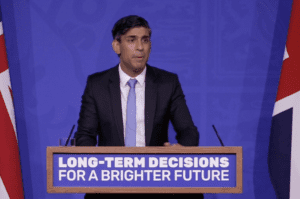
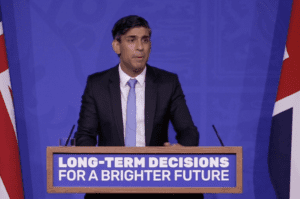
Rishi Sunak has outlined a series of measures to water down the government’s climate change commitments claiming that politicians had not been “honest with the public” about the cost of net zero.
In a press conference in Downing Street he said that the present approach would “impose unacceptable costs on hard-pressed British families” and risked a public backlash against net zero.
He announced that the ban on the sale of new petrol and diesel cars by 2030 would be pushed back to 2035.
He also announced changes to the government’s plan to phase out new boilers, suggesting that poorer households would never have to pay to install a new heat pump.
For those households that do make the switch Sunak said that government grants would increase from £5,000 to £7,500. He promised to speed up the building of clean energy infrastructure.
He said that the moves — which included a pledge not to increase taxes on flying or limiting what people could eat — would not affect Britain’s overall 2050 net zero pledge, which he insisted was still achievable.
Sunak said that both Conservative and Labour governments had hidden the costs of net zero from voters. “It cannot be right for Westminster to impose such significant costs on working people . . . without a properly informed national debate,” Sunak said.
He warned that unless this approach was changed politicians risked alienating the public and undermining the aim of net zero itself.
“There’s nothing ambitious about simply asserting a goal for a short-term headline without being honest with the public about the tough choices and sacrifices involved,” he said. “If we continue down this path, we risk losing the consent of the British people and the resulting backlash would not just be against specific policies, but against the wider mission itself.”
He added: “No one in Westminster politics has yet had the courage to look people in the eye and explain what’s really involved. That’s wrong. And it changes now.”
Commenting on the announcement, Andy Mayer, Energy Analyst at the free market think tank, the Institute of Economic Affairs, said: “Sunak’s Net Zero rebalance is a welcome step. Government policies like petrol and diesel car and gas boiler bans, have gone too far in hurting families and businesses for minimal environmental gain. Delaying these measures, ruling out costly new policies like a ‘meat tax,’ and speeding up planning for nationally significant projects are entirely sensible steps.
“Now Sunak must go further by abandoning the legally binding Net Zero target and ending costly subsidies for unproven ‘green’ technology. The solution to climate change is innovation and investment. This can be achieved by introducing carbon pricing, limiting regulatory interference and further removing planning barriers to deploying green technologies.”
Stephen Phipson, Chief Executive of Make UK, took the totally different side, saying: “The announcement that the Government will be watering down its net zero policies is a huge setback for manufacturers who require stability and confidence in order to invest. Many companies will have spent time and money planning on the basis of firm targets and we now run the risk of falling behind our international counterparts as a home for green technologies if we persist in frequently altering policies that impact businesses directly. This will hit SME businesses in the automotive supply chain particularly hard.
“This is a timely reminder that the UK also needs a long-term industrial strategy which encourages innovation in advanced, high value technologies such as net zero and AI to stimulate growth and skilled employment. This announcement sends entirely the wrong signal and suggests if we aren’t looking forward, we are simply going backwards.”
Steve Malkin, CEO and Founder of Planet Mark, added his comment, saying : “The Prime Minister’s net zero announcements are a disappointing setback for businesses that need certainty to unlock long-term productivity. Businesses across the UK, including our over 700 members, have been actively investing in low carbon solutions such as transitioning their fleets in line with the Government’s previous commitments. They have also been taking action to remain competitive within the global market as they respond to international supply chain demands to measure and reduce their emissions.
While this sharp u-turn erodes trust in the stability and reliability of government policy, and risks harming the UK’s competitiveness, Planet Mark will double down on continuing our trajectory of helping businesses transition to net zero in line with science. We are committed to maintaining the UK’s global climate leadership and to achieving a net zero economy and are excited to be working with like-minded organisations to drive impact, even in the face of government indecision.”
Read more:
Rishi Sunak announces controversial delays to UK’s net zero policies

Digital health platform Awell secures $5m investment to automate and s …

Awell, a digital health platform to build, operate and continuously improve clinical workflows, has secured $5m in seed funding.
The round was led by Octopus Ventures, with additional participation from S16, and angel investors including healthcare veteran Lord David Prior, former chair of the UK’s National Health Service (NHS).
Awell is used by clinicians to reduce the manual burden of traditional paper-based workflows, and to manage different technologies used in patient care on one platform. It also enables users to swiftly design and continuously update clinical workflows.
Inefficiencies in traditional workflows used to manage care can compromise patient wellbeing and increase strain on care teams. Research from SAGE has shown that paperwork is the single biggest perceived time waster by doctors and nurses.
Meanwhile, a rapid increase in the amount of published medical research has led to a gap between scientific research and clinical practice. A recent study showed that clinicians would need over 26 hours per day to follow national care guidelines for an average number of patients.
Awell tackles this problem by equipping medical teams to automate clinical workflows such as triage, patient onboarding, and care plans, while synchronizing data between different systems.
A study by AZ Delta found that a single lung cancer care process implemented by Awell increased overall patient survival by 55%. The company’s users include healthcare providers in the US such as Patina Health and Parsley Health.
Founded by Belgian entrepreneur Thomas Vande Casteele, Awell has seen monthly active patient numbers grow by 522% in the first six months of 2023. Since launching in July 2022, Awell has also led the development of a ‘CareOps’ community, which includes more than 3000 healthcare operators committed to continuously improving care flows and increasing the quality of patient care.
Commenting on the announcement, CEO & Founder of Awell Thomas Vande Casteele, said: “When you or a loved one gets hospitalised, it becomes painfully obvious how broken current clinical workflows are. Overwhelmed doctors wade through endless admin, patients juggle a different point solution for each medical condition, and care teams are forced to stay up-to-date with more medical research than they can handle.
“Our journey is inspired by these challenges faced by care teams across the world. We are on a mission to drive real change in the sector, supporting those on the frontline of healthcare by making care flows work harder than care teams. We’re delighted by recent customer growth in the US and across Europe, and nothing epitomizes the need for a solution to continuously improve care flows more than the rapid growth of the CareOps community in such a short space of time.”
Awell will use the funding to further increase product innovation and grow its team. It will target expansion in the US, particularly in growing relationships with traditional care organizations. The company also plans to make targeted investments in R&D to enable customers to tackle increasingly complex clinical workflows.
Prior to founding Awell, Vande Casteele set up an ecommerce and digital marketing business whose clients included Samsung, Audi and Nestlé.
Matthieu Vallin at Octopus Ventures stated: “Clinical workflows and patient pathways are broken in much of today’s healthcare environment. Thomas and his team have built an exceptional platform for providers and digital health companies to build, test, and deploy clinical workflows efficiently, while integrating seamlessly into their existing stacks.
“Awell has the potential to drastically improve care delivery while enabling healthcare organizations to improve operationally. Octopus is thrilled to play a part in supporting Awell as the company transforms how digital health is built and delivered to patients.”
Read more:
Digital health platform Awell secures $5m investment to automate and streamline care workflows

Passionate firms make more progress, research finds

Passionate teams are higher in team progress, regardless of whether that passion is focused on one or multiple team activities, finds new research.
According to Associate Professor Ewald Kibler, Head of the Entrepreneurship Unit at Aalto, and postdoctoral researcher Bernadetta A. Ginting-Szczesny, team entrepreneurial passion (TEP) plays an important role in business ventures as it can positively impact team outcomes and venture performance.
Analysing survey data on 326 individuals from 107 teams at Finnish SMEs, they suggest having a shared passion helps teams work together toward a common goal while maintaining focus and motivation.
Nevertheless, they find some additional advantages to directing this passion at multiple activities.
For instance, teams with multiple focuses for their TEP are higher in team potency and team identification compared to teams with single-focus TEP. The researchers suggest this shows teams that are passionate toward multiple key activities are more confident in their abilities as a team.
“When a team has high diversity in individual passions without a shared TEP, team performance could suffer. Yet, when a team has shared TEP that incorporates multiple focuses, the impact of that TEP on the team outcomes is positive,” explains Prof. Ewald Kibler.
The study finds that teams in which people display high levels of compassion, towards others and themselves, tend to experience more polyfocal TEP.
“Managers should devote attention to creating cultures that help team members openly communicate their individual passions, allowing them to contribute positively to their teams while minimising conflicts. These emotional aspects of the team are critical for team dynamics and performance, and should receive attention both in the initial team formation stage and throughout ongoing team operations,” says Bernadetta A. Ginting-Szczesny.
Read more:
Passionate firms make more progress, research finds

Staff want financial education from employers, but few have access

The vast majority of employees believe they would benefit from financial education and guidance from their employers, but only a third have access to it, according to new data.
The data, sourced by the global employee pay company CloudPay, revealed that 91% of employees believe that they or their colleagues would benefit from employer-led financial education, support and advice, however, only 34% currently have access to it.
CloudPay’s data also showed that the number of people using Earned Wage Access (EWA) to pay for household bills grew between January and July 2023, highlighting the ongoing challenges that many are facing due to the cost-of-living crisis and other inflationary pressures. Employers are being encouraged to modernise pay and payroll processes in order to better support their staff in light of the challenges many are facing in the current economic climate.
Judith Lamb, Vice President of Global HR at CloudPay, said. “It’s no secret that many people are facing significant difficulties managing their finances in the challenging conditions that we’re currently experiencing. However, it’s also clear that staff are looking for additional financial education from their employers to help them navigate this tough period. There’s very little resource for education around money management in the UK school system and the onus is falling on employers to provide information that can help professionals to tackle conditions that they have never faced before.”
“Providing this sort of education isn’t only just the right thing to do, it can also prevent staff attrition levels rising as employees move to source better pay. Few organisations can afford to continue offering higher salaries at the moment, but providing education around how employees can better manage their available resources can help salaries to go further. The onus is on employers to lead this charge as there’s currently a major gap in the market for this sort of expertise. Being able to access earned wages as and when they are needed can obviously provide a huge helping hand, however, there’s clearly a demand for greater degrees of financial education on top of this.”
Read more:
Staff want financial education from employers, but few have access

Mike Ashley’s Frasers Group in talks with Shein to buy Missguided

Mike Ashley’s Frasers Group is in talks to sell its Missguided clothing brand to online fashion giant Shein.
Talks about a deal, which were first reported by Sky News, come only a year after Frasers took over the brand.
Frasers Group bought Missguided for £20m last year after the online fashion retailer collapsed into administration.
Shein, which was founded in China in 2008, is a global giant in the world of fast fashion.
According to Sky, a deal is likely to see Shein buy Missguided’s brand and other intellectual property, while the head office is retained by Frasers.
Manchester-based Missguided was founded by Nitin Passi in 2009 and grew to become one of the UK’s biggest online fashion players.
But after suffering from supply chain problems, rising freight costs and increasing competition from rivals, it fell into administration in May 2022, before being picked up by Frasers Group.
Frasers – which owns the Mike Ashley-founded Sports Direct chain – has expanded rapidly by buying brands that have fallen into trouble. including Game, Evans Cycles, Jack Wills and Sofa.com.
While Mike Ashley is no longer Frasers’ chief executive, with son-in-law Michael Murray taking over the role, he owns a majority stake in the firm.
Shein – which now has its headquarters in Singapore – saw sales surge during the Covid pandemic when lockdowns led to a jump in online shopping.
It was valued at about $66bn earlier this year, although that was lower than a previous valuation of around $100bn.
There has been speculation that Shein will seek to list its shares in the US.
However, in May a group of US lawmakers called for Shein to be investigated over claims that people from China’s mostly Muslim Uyghur population were use as forced labour to make some of the clothes it sells.
Human rights groups and Western governments, including the US and UK, have accused China of committing crimes against humanity against the Uyghurs.
In response, a spokeswoman for Shein said : “We have zero tolerance for forced labour.
“Our suppliers must adhere to a strict code of conduct that is aligned to the International Labour Organization’s core conventions.”
Read more:
Mike Ashley’s Frasers Group in talks with Shein to buy Missguided

The rise of in-play betting on football matches

A lot has been happening in the world of sports betting – but one of the most impactful developments in recent years is that of in-play betting – live betting, particularly on football matches.
This more dynamic way of betting has completely transformed the way we bet on the sport, giving us even more real-time excitement and, even better, the chance to win money on the match as it plays out.
So, without further ado, let’s tackle the evolution, appeal and impact of in-play betting on football.
The Evolution of In-Play Betting
In-play betting – often referred to as live betting, is simply the act of placing bets on a match whilst it is in play. Although in-play betting has been around for decades, with the introduction of the internet for betting – and mobile technology meaning you can place bets on your phone, it has reached new heights. At the very beginning, in-play betting was only possible when making telephone bets – and you only had access to a few betting markets. Today, it’s a global phenomenon that is accessible to millions of football fans from all over the world.
The Appeal of In-Play Betting
So why is it so popular?
Real-Time Action
Well, the main attraction of in-play betting is the fact that it gives you the chance to react to events in the game as they happen. Unlike pre-match bets, where you place your bets before the game begins, in-play betting allows you to assess the action as it is unfolding – and the online football betting odds are updated all the time to reflect everything that is happening.
A Wide Range of Betting Markets
These days, in-play betting also offers a wide range of betting markets, so you can bet on different aspects of the game, such as the next goal scorer, corners, or even the total number of cards issued. This means that there’s always something to keep the excitement alive throughout the match, even if the winner is a given.
Cashing Out Options
Pretty much all decent bookmakers offer a cash-out feature for in-play bets. This means that you can settle your bet before the match is finished – either to secure yourself a profit or to mitigate any potential losses. This will give you even more control over the betting outcome and it is excellent if the match you are betting on is too close for comfort.
Impact on Football Viewing
This doesn’t simply change the way we bet on football matches, but it even changes the way we watch them – taking that experience to the next level.

More engaging: In-play betting makes football matches even more exciting than ever – and even more predictable matches are exciting if you bet on factors such as cards, next to score etc.
Tactical Insights: In-play betting also encourages you to watch the games even more closely… as you may spot changes in tactics and changes in performances that you might not have noticed otherwise.

The Challenges it Brings
Whilst there are plenty of advantages that come with in-play betting – there are some challenges that it brings as well.
Firstly, because this is all about reactions and impulses, it can lead to impulsive decisions… meaning you place bets without making a thorough analysis first. Moreover, because it is so exciting, the adrenaline of in-play betting can be addictive, so you’d certainly need to be cautious and exercise control.
It has also raised some concerns about match-fixing. After all, it’s easier to fix an in-play event, like the timing of a corner for example, than fix the entire match.
However, these challenges really are few and far between – and when considering the positive impact it has had on the game, they have very little impact in the scheme of things. Most people simply like matching the match with their phones at the ready – and see if they can get a quick win… even if their team can’t!
Conclusion
The evolution of in-play betting on football matches really has completely changed the sports betting world, giving you a more interactive and thrilling way to enjoy any game. With all sorts of betting markets, odds updated in real-time – and the chance to cash out while you’re ahead, it has become a firm fan favourite.
However, remember you always need to gamble responsibly – and make sure that you sit back, have fun and hopefully enjoy some wins if you’re lucky.
Read more:
The rise of in-play betting on football matches