

France has ordered Apple to stop selling the iPhone 12 for emitting too much electromagnetic radiation.
On Tuesday, the French watchdog which governs radio frequencies also told the tech giant to fix existing phones.
The ANFR has advised Apple that if it cannot resolve the issue via a software update, it must recall every iPhone 12 ever sold in the country.
But the World Health Organization has previously sought to allay fears about radiation emitted by mobile phones.
It says on its website there is no evidence to conclude that exposure to low level electromagnetic fields is harmful to humans.
The iPhone 12 was first released in September 2020, and it is still sold worldwide.
Apple told the BBC it was contesting the ANFR’s review, and said it had provided the regulator with lab results from the tech giant itself and third parties which show the device is compliant with all the relevant rules.
It said the iPhone 12 was recognised as being compliant with regulations on radiation levels worldwide.France’s digital minister Jean-Noel Barrot told French newspaper Le Parisien the decision was due to radiation levels above the acceptable threshold, according to Reuters
He said the ANFR found the iPhone 12’s Specific Absorption Rate (SAR) was above what is legally allowed.
“Apple is expected to respond within two weeks,” he said.
“If they fail to do so, I am prepared to order a recall of all iPhones 12 in circulation. The rule is the same for everyone, including the digital giants.”
France will share its findings with other regulators across the trading bloc – which Barrot said could result in “a snowball effect”.
The ANFR requires the SAR of devices to be checked against two different ways a phone is used.
First there is a “membre” – or limb – check, for when a phone is in close contact with a person’s body, such as when it is held or placed in a trouser pocket. The SAR limit for this is four watts per kilogram.
The regulator said the device’s “membre” SAR was 5.74 watts per kilogram – higher than the limit.
There is also a check for when a phone is slightly further away, such as when it is in a bag or jacket pocket, but the iPhone 12’s SAR measure came in under this threshold.
The news first broke on Tuesday in France – the same day that Apple unveiled its new iPhone 15.
The new phone is the first since 2012 to feature an alternative charging port, and Apple says it will sell an adapter so people can use their existing cables.
It comes as the Chinese foreign ministry issued a rebuttal against media reports which claimed government agencies had told staff to stop using iPhones.
It said China has not issued any laws, regulations or policies blocking the use of Apple’s products.
Read more:
France tells Apple to halt iPhone 12 sales over radiation levels
Category: Uncategorized
Triple lock means state pension set to rise by 8.5% in April

The state pension is likely to rise by 8.5% in April after data crucial to the so-called triple lock was published.
The policy means the increase in the state pension is the highest of average earnings, inflation or 2.5%.
Those earnings – which are total pay, including bonuses – were recorded at 8.5%, and the inflation figure is unlikely to be higher.
That means the state pension is likely to rise by 8.5%, which would be a weekly increase of £13.30.
It means there is set to be an annual increase of £691.60 on the basic state pension – taking the total for the year to £8,814.
For those receiving the new flat-rate state pension, going to those who reached state pension age after April 2016, the rise is set to be £17.35 a week, or £902.20 a year – taking the total for the year to £11,502.
This is set to be the second significant increase in the state pension in two years, after a 10.1% increase in April of this year.
However, it is understood that the earnings figure which is normally used, which is total pay including bonuses, could be substituted for one slightly lower than 8.5%.
The latest earnings figures have been affected by one-off public sector bonus payments.
Downing Street said it remained “committed to the triple lock”. When asked if that meant it was guaranteeing an 8.5% state pension rise, the prime minister’s official spokesman said they could not get ahead of the “formal process”. Work and Pensions Secretary Mel Stride gave the same answer to media when questioned.
Heightened debate
The triple lock is designed to ensure pensioners, especially if they rely solely on the state pension, are able to afford rising prices, or keep pace with the increases in the working population’s wages.
Older people’s charity Independent Age said 20% of single pensioners and 13% of all pensioners relied solely on the state pension and benefits.
“For the millions of older people living in financial hardship, [the triple lock] is vital in protecting the value of their often dangerously low income, helping them cope with the elevated cost of living and getting them through another scary winter,” said John Palmer, from the charity.
However, there have been questions over whether the cost of funding the policy is too high, and whether the government could better spend the money elsewhere. Mr Stride said it was “not sustainable” in the “very long term”.
When it was first created in the June 2010 Budget, the triple lock was costed at £450m a year. Now it costs the government several billion a year and, according to the Office for Budget Responsibility, it could cost hundreds of billions a year in the future.
The debate over fairness in the shorter term may be heightened as benefits are not likely to rise quite as much, as these are generally pegged to the rate of inflation which is expected to be slightly lower.
Neither the Conservatives nor Labour have committed to maintaining the triple lock in their next manifesto.
Shadow deputy prime minister Angela Rayner repeatedly refused to say whether a Labour government would keep it, when asked on BBC Breakfast.
“We will have to see where we are when we get to a general election and see the finances. We will not make unfunded spending commitments,” she said.
These two significant increases are likely to drag hundreds of thousands more pensioners into paying income tax, the thresholds of which have not risen as fast.
Sir Steve Webb, a former pensions minister and now partner at consultants LCP, estimated that the number of taxpaying pensioners would rise by around 650,000 to 9.15 million. He described that as a stealth tax on many pensioners.
The Institute for Fiscal Studies, an economic think tank, said that the triple lock policy carried a danger that people would overestimate what would be provided under the state pension in the future.
It said the policy created some uncertainty as people might assume the policy will continue indefinitely, and that was impossible to predict.
Meanwhile Becky O’Connor, director of public affairs at pension platform PensionBee, said: “A state pension pay rise for pensioners next year will make the triple lock promise more costly than ever and call into question whether this mechanism of guaranteeing increases can continue.
“Any knee-jerk, poorly considered reaction by the government to deal with the rising state pension bill now risks harming pensioners for decades to come. Without increases in line with earnings or inflation, they would be at risk of real income falls in future.”
Read more:
Triple lock means state pension set to rise by 8.5% in April
Amazon to require self-publishers to declare if content sold on site i …

Amazon has introduced new rules and guidance for Kindle books generated by artificial intelligence tools, including the requirement that authors inform it when content is AI-generated.
The company announced the new rules on its Kindle Direct Publishing (KDP) forum on Wednesday. It said in a statement: “Beginning today, when you publish a new title or make edits to and republish an existing title through KDP, you will be asked whether your content is AI-generated.” KDP allows authors to self-publish their books and put them up for sale on Amazon’s site.
Amazon also added a new section to its content guidelines focused on AI, which now includes definitions of “AI-generated” and “AI-assisted” content and states that sellers are not required to disclose when content is AI-assisted.
AI-generated content is defined by the company as “text, images or translations created by an AI-based tool”, even if substantial edits are made afterwards. AI-assisted content is classified as that created by authors and sellers themselves but where AI tools are used to “edit, refine, error-check, or otherwise improve”.
The guidelines also state that AI-based tools can be used to “brainstorm and generate ideas” without disclosure, as long as the text or images were ultimately created by the human author.
The new rules come weeks after the site removed suspected AI-generated books that imitated the work of real authors. In August, the author Jane Friedman complained that several books, which she believed were created by AI tools, were falsely listed as being written by her. The books were subsequently removed by Amazon.
In Amazon’s forum announcement, the company wrote that it is “actively monitoring the rapid evolution of generative AI and the impact it is having on reading, writing, and publishing” and that it remains “committed to providing the best possible shopping, reading, and publishing experience for our authors and customers”.
It added: “We will continue to keep the interests of our authors, publishers, and readers at the forefront of our thinking and decision-making.”
The new guidelines state that sellers are responsible for reviewing and editing any AI output to “confirm an AI-based tool did not create content based on copyrighted works”.
Amazon did not say what it will do with the information about AI provided by sellers and whether it will disclose to buyers when Kindle books are AI-generated.
Nicola Solomon, the chief executive of the UK’s leading industry body for writers, the Society of Authors, said: “Readers deserve transparency when they purchase a copy of a creative work, so we have regularly highlighted the need for clear labelling of AI-generated content in our discussions with industry.” Solomon said she and her colleagues welcome Amazon’s announcement, as it “will ultimately benefit human authors and their readers”.
However, she added: “While this will apply to new and updated KDP publications, we would like to see Amazon ask the same question of all books published on KDP.” She continued: “The past year alone has seen a huge influx of poor-quality, rapidly generated titles in the KDP store alongside human-created works. We also look forward to understanding how readers will be able to filter out AI-generated content from search results when they browse for books.”
The society is “seeking guarantees from Amazon that, when it acts as a publisher or as a supplier of services to authors – whether via KDP, Amazon Crossing, Thomas & Mercer, or any other venture – it will respect our recommended contractual wording on AI and, ‘not allow access to the work (by the publisher, or by any sublicensee) in any manner which could help the learning or training of artificial intelligence technologies. In addition, it will not without the author’s consent use or allow the use of AI in association with the production of this work, including but not limited to AI for translating, narrating, design of the cover or other artwork.’”
Read more:
Amazon to require self-publishers to declare if content sold on site is AI-generated
UK’s biggest pub group to introduce surge pricing charging 20p more …

A pint of beer during the busiest periods will cost drinkers 20p more under a “dynamic pricing” system introduced by Britain’s largest pub group.
Stonegate Group, which owns chains including the Slug & Lettuce and Yates’s, said it was raising prices at 800 of its venues during peak times, such as weekends, to help cover soaring costs.
It has previously done so during one-off events, such as World Cups, but has now taken the decision to introduce price variance on a more regular basis.
Patrons have been informed of the change with a “polite notice” in Stonegate pubs, informing them of the need to raise prices to cover extra staffing costs, more bouncers at the door, extra cleaning, washing glasses and “complying with licensing requirements”.
Dynamic pricing, often known as surge pricing, is a common feature of other industries, such as aviation, where airlines charge more for tickets during the school holidays.
Uber uses the feature when demand is high, with prices rising automatically when more people are trying to hail a ride.
Dynamic pricing is also a common practice among big sports or gig ticket companies in the US, although it is more rare in the UK.
The practice has proved controversial at times, with some Bruce Springsteen fans reacting with dismay when The Boss applied dynamic pricing to some tickets on his latest tour.
A spokesperson for Stonegate, which has 4,500 venues, said the company “regularly reviews pricing to manage costs but also to ensure we offer great value for money to our guests”.
“Across the managed business our dynamic pricing encompasses the ability to offer guests a range of promotions including happy hours, two-for-one cocktails, and discounts on food and drink products at different times on different days throughout the week,” he told the Daily Telegraph, which first reported the strategy.
“This flexibility may mean that on occasions pricing may marginally increase in selective pubs and bars due to the increased cost demands on the business with additional staffing or licensing requirements such as additional door team members.”
The chief executive of another of Britain’s big pub chains, who asked not to be named, said the practice was not unusual and had been “going on for decades”, in the largest venues, during events and busy periods.
“They’re not the only ones doing it,” he said.
“To be honest, good for them that they’re telling people,” he said, adding that the transparency may have backfired amid dismay on social media and negative publicity.
Read more:
UK’s biggest pub group to introduce surge pricing charging 20p more a pint at busy times
Hunt rules out tax cuts before next general election
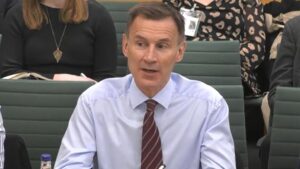
Jeremy Hunt has hinted that tax cuts are unlikely to be on offer before the next general election after warning that inflation had proved “stickier than was forecast”.
The Chancellor told Bloomberg that he did not expect to have more fiscal headroom at the Autumn Statement — compared with the spring Budget — and “debt interest payments are higher”.
Speaking to Bloomberg TV, Hunt said: “I think it’s unlikely because since the spring Budget, when the last numbers were published, we’ve seen inflation stickier than was forecast at the time and that means debt interest payments are higher.
“But we don’t have the numbers yet from the Office for Budget Responsibility [OBR] so this is speculation for you and me both.”
His comments come in the wake of reports that the Treasury is considering squeezing benefits in an attempt to pay for tax cuts in a boon to voters — set to spark a Tory row.
In a suggestion that tax cuts were unlikely, he added: “But our priority is bringing down inflation and when you’re trying to bring down inflation you have to be really careful not to pump extra money into the economy; much as you would like to, not to pump extra money into people’s pockets because that can push up prices and keep inflation higher for longer.
“The one thing I can absolutely say is that our focus at the Autumn Statement will be on bringing down inflation and delivering both the Prime Minister’s goal to halve inflation and the Bank of England’s target to bring it down to two per cent.”
Hunt also praised the Bank for being one of the first central banks globally to raise interest rates, saying: “In fairness to the bank, lots of central banks around the world underestimated the persistence of inflation.
“We brought inflation down from over 11 per cent to 6.8 per cent so we are making progress… but the long-term future of the economy depends on getting inflation down.”
Commenting on the prospects of a UK-India trade deal, the Chancellor said both sides were keen to “unlock more ability” for investment and cited a “real political momentum”. A deal could be done by the end of 2023, he said, but the next few weeks were critical.
He told Bloomberg that existing “significant” investment flows could be increased, and that pension funds and insurance asset managers in the Square Mile wanted to invest “trillions” in high-growth sectors domestically or overseas.
India’s plans for GIFT City (Gujarat International Finance Tec-City) and “India’s Silicon Valley” in Bangalore were key collaboration opportunities for the UK, Hunt added.
Read more:
Hunt rules out tax cuts before next general election
Yodel creates more than 2,000 roles as it ramps up activity ahead of t …

UK independent parcel carrier Yodel has announced that it is creating over 2,000 seasonal roles in a mix of functions in the business as it prepares for what is expected to be a busy peak season for the industry.
Roles are available across Yodel’s 50 locations nationwide.
The growth in e-commerce has continued across 2023 with demand for parcel delivery services following suit. The last year has seen a spike in people using online marketplaces such as eBay and Vinted for additional sources of income and to shop for secondhand bargains. As a result, Yodel’s consumer-to-consumer (C2C) operations have boomed with parcel volumes growing by 162% in just 12 months.
This latest recruitment drive also follows a series of infrastructure and fleet investments, including the opening of a new site in Coventry and a £14.5m spend on new tractor units and double decker trailers, boosting capacity to support the business as it scales up operations for the busy pre-Christmas period.
Mike Hancox, CEO of Yodel, commented: “Each year the industry looks to increase capacity in preparation for higher volumes over the Christmas peak, and with the continuing growth in the market we anticipate this festive season to be our busiest yet. Many of the roles available represent an opportunity to grow into long-term careers with progression into more senior positions. Working at Yodel gives you the flexibility to rk either full or part-time to suit your lifestyle and is an opportunity to join a nationwide network of dedicated and committed colleagues.”
Yodel has also launched a brand-new recruitment website to make discovering and securing new driver roles even easier for applicants.
Read more:
Yodel creates more than 2,000 roles as it ramps up activity ahead of the festive peak
The TUC reports UK government to UN over new strike law

The Trades Union Congress (TUC) says it is reporting the UK government to the United Nations watchdog on workers’ rights over a new strikes law.
New rules on strikes will require some employees to work during industrial action – or face being sacked.
The TUC said the legislation fell short of international legal standards.
The government said the new rules “protect the lives and livelihoods of the general public” as well as access to public services.
Once implemented, the Strikes (Minimum Service Levels) Act will apply to a wide range of workers, including those in the rail industry and emergency services.
The TUC labelled them “anti-strike laws” and, as representatives from 48 unions gathered on Sunday, its general secretary, Paul Nowak said they’re “unworkable” – and may be illegal.
Speaking on the opening day of the TUC Congress in Liverpool, Mr Nowak said the union body will be lodging the case at the International Labour Organisation (ILO) because the new law “falls far short” of international legal standards.
The government took forward the legislation following a year of unprecedented industrial action by hundreds of thousands of workers, including nurses, teachers, civil servants and railway staff.
A spokeswoman for the government said: “The purpose of this legislation is to protect the lives and livelihoods of the general public and ensure they can continue to access vital public services during strikes.”
She added: “The legislation does not remove the ability to strike, but people expect the government to act in circumstances where their rights and freedoms are being disproportionately impacted, and that’s what we are doing with this Bill.”
The government pointed to research which suggested 600,000 medical appointments have been rescheduled over the past year, and £1.2bn in output has been lost, due to strikes.
A public consultation is under way into how the laws, which received Royal Assent in July, will be implemented by employers, but trade unions may well challenge them in the courts.
Under the new law, which will apply to England, Scotland and Wales, the government would set minimum service levels after a consultation.
Employers will then be able to issue a “work notice” to unions, setting out who is required to work during a strike.
Under the legislation, there would be no automatic protection from unfair dismissal for an employee who is told to work through a notice but chooses to strike.
If a strike is not conducted in accordance with the new rules, employers would be also be able to sue unions for losses.
Read more:
The TUC reports UK government to UN over new strike law
UK ‘flying blind’ on soaring levels of fraud which has quadrupled …
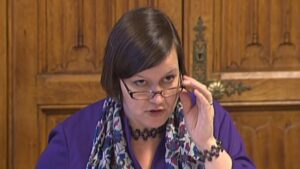
The government is “flying blind” on its exposure to fraud, which has quadrupled since the start of the Covid-19 pandemic, MPs have said.
The cross-party Public Accounts Committee (PAC) also said that while most of the £21bn of taxpayers’ money lost to fraud during the pandemic is unlikely to be recovered, the government should be doing more to recoup what it can.
In a report, the panel criticised the current system of fraud assessment for failing to reveal where the problems lie or which public bodies are most affected.
On top of around £16.4bn lost to tax and benefit fraud in the past year, the government could have lost up to £28.5bn to fraud and error – without knowing exactly where or how, the PAC said, citing estimates from the Public Sector Fraud Authority.
It also said the fourfold increase of public money paid out to fraudsters in the two years of the pandemic damaged public confidence in the integrity of government.
The UK slipped to 18th – from eighth – out of 180 countries in 2022 for perceived corruption levels, according to Transparency International.
To rebuild public trust, Whitehall officials must show they are serious about tackling the issue and embed counter-fraud measures into services, the MPs said.
They expressed concern that only six per cent of the UK’s public bodies can demonstrate that they are achieving the expected value for money from their counter-fraud work, and 27 per cent are not investing enough in it.
Chairwoman Dame Meg Hillier said: “The government is flying blind on the levels of fraud and corruption perpetrated against it, despite widespread awareness of the toxic threat posed by these despicable crimes.
“The Cabinet Office has blamed worsening public perceptions of the UK’s fraud and corruption on ‘noisy reporting’ from the media.
“It is time for some noisy reporting back from the most senior government officials on how seriously it is tackling this worsening problem, with examples of fraud not being allowed to go unpunished.
“If senior officials and politicians simply shrug their shoulders and look away in the face of these outrages, then malign actors will continue to pick away not just at the public purse, but at the bonds of trust that knit us together as a society.”
A government spokesman said: “We are overhauling the way we tackle public sector fraud to ensure we prevent more fraud and chase down public money stolen from taxpayers.
“Since 2021, we have invested more than £900 million in taking action on fraud, and have established the Public Sector Fraud Authority to bolster fraud defences across departments.
“In the last two years, the Government has recovered more than £3.1 billion of fraud losses, including within Covid-19 schemes, but we know there is more we can do.
“That is why we are expanding the Government’s counter-fraud profession, developing new technologies and boosting skills and training to further protect the public purse.”
Read more:
UK ‘flying blind’ on soaring levels of fraud which has quadrupled since pandemic
No bids for offshore wind in government auction dealing critical blow …
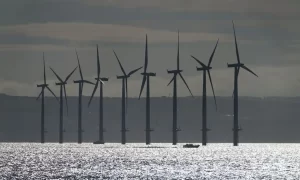
No new offshore wind project contracts have been bought by developers at a key government auction, dealing a blow to the UK’s renewable power strategy.
Results showed no bids for new offshore wind farms, but there were deals for solar, tidal and onshore wind projects.
Firms have argued the price set for electricity generated was too low to make offshore wind projects viable.
The government said a “global rise” in inflation impacting supply chains had “presented challenges for projects”.
It said while offshore and floating offshore wind projects did not feature on the agreed deals list, the outcome was “in line with similar results in countries including Germany and Spain”.
The Department for Energy Security and Net Zero said “significant numbers” of solar power, onshore wind, tidal energy schemes, and for the first time, geothermal projects, which use heat from the ground to generate power, had been awarded funding.
But the lack of offshore wind will be a blow to the pledge to deliver 50 gigawatts (GW) of offshore wind by 2030 compared with 14GW today.
Renewable energy groups have said that alternative renewable projects, such as solar, cannot do the heavy lifting in generating the power that offshore wind does.
The technology has been described as the “jewel in the UK’s renewable energy crown”, but firms have been hit by higher costs for building offshore farms, with materials such as steel and labour being more expensive.
The UK is a world leader in offshore wind and is home to the world’s four largest farms, supporting tens of thousands of jobs, which provided 13.8% of the UK’s electricity generation last year, according to government statistics.
The government’s annual auction invites companies to bid to develop renewable energy projects and contracts to supply the UK grid with electricity. The scheme ensures projects receive a guaranteed price from the government for the electricity they will generate, which it is hoped will enable companies to have the confidence to invest.
The deal, called a Contract for Difference (CFD), means if electricity prices are above the price set, the companies pay the excess back to energy suppliers, which should help to cut bills. If prices fall below the guaranteed price the energy suppliers – and customers – pay the company the difference.
It was hoped offshore wind in the latest round could have helped generate five gigawatts of power, enough to run five million homes, but wind farm builders had warned for months that the government was not taking into account how much the costs of developing them had soared.
Industry insiders have said that the £44 per megawatt hour price floor set for the latest auction failed to take account of higher costs.
‘Lost opportunity’
Keith Anderson, chief executive of Scottish Power, said the outcome of the auction was a “multi-billion pound lost opportunity to deliver low-cost energy for consumers and a wake-up call for government”.
He said the contracts had been “recognised globally as a lynchpin of the UK’s offshore success”, but said “the economics simply did not stand up this time around”.
“We need to get back on track and consider how we unlock the billions of investment in what is still one of the cheapest ways to generate power and meet the UK’s long-term offshore wind ambitions for the future,” he added.
Alistair Phillips-Davies, chief executive of SSE, which is currently building the world’s largest offshore wind farm, said offshore wind power was a much cheaper energy source and about half the price compared with other sources including fossil fuels.
But he told the BBC’s Today programme that while the UK needed to build more wind farms, “for this particular auction unfortunately the prices were just set too low” for electricity generated to make investment viable.
On Friday, wholesale gas prices in the UK rose by about 10% after strike action kicked off at two major liquefied natural gas (LNG) facilities in Australia.
Ed Miliband, Labour’s shadow energy security and net zero secretary, said the result of the auction was an “absolute disaster for Britain”, but should have been avoidable. He argued the government had been warned by the industry that “unless they adjusted the auction price this would happen”.
“They [the government] should be hanging their heads in shame,” he told the BBC’s Today programme.
While there were no bids for offshore contracts, the government said a total of 95 clean energy projects had secured funding of £227m, up from 93 in the previous auction, securing “enough to power the equivalent of two million homes”.
Energy and Climate Change Minister Graham Stuart said the government was “delighted” that the auction had “seen a record number of successful projects across solar, onshore wind, tidal power and, for the first time, geo-thermal”.
He added that offshore wind was “central to our ambitions to decarbonise our electricity supply”, and said the government would “work with industry to make sure we retain our global leadership in this vital technology”.
Read more:
No bids for offshore wind in government auction dealing critical blow to UK strategy

