

UK publishers have urged the prime minister to protect authors’ and other content makers’ intellectual property rights as part of a summit on artificial intelligence.
The intervention came as OpenAI, the company behind the ChatGPT chatbot, argued in a legal filing that authors suing the business over its use of their work to train powerful AI systems “misconceived the scope” of US copyright law.
The letter from the Publishers Association, which represents publishers of digital and print books as well as research journals and educational content, asks Rishi Sunak to make clear at the November summit that intellectual property law must be respected when AI systems absorb content produced by the UK’s creative industries.
Generative AI tools such as ChatGPT – the term for technology that produces convincing text, image and audio content from simple prompts – are trained on vast amounts of data taken from the internet, including work by published authors.
In its letter, the Publishers Association said: “On behalf of our industry and the wider content industries, we ask that your government makes a strong statement either as part of, or in parallel with, your summit to make clear that UK intellectual property law should be respected when any content is ingested by AI systems and a licence obtained in advance.”
Authors have been at the forefront of protests at what they say is unlicensed use of their work to train chatbots. Sarah Silverman, Mona Awad and Paul Tremblay are among those who are suing OpenAI over claims that the company has breached copyright law by training its chatbot on novels without the permission of authors. This week OpenAI filed a response to the lawsuits, claiming that “the use of copyrighted materials by innovators in transformative ways does not violate copyright”.
In the UK, the government has backtracked on an initial proposal to allow AI developers free use of copyrighted books and music for training AI models. The exemption was raised by the Intellectual Property Office in June 2022 but ministers have since rowed back on it. In a report published on Wednesday, MPs said the handling of the exemption proposal showed a “clear lack of understanding of the needs of the UK’s creative industries”.
The letter from the publishers’ trade body said the UK’s “world-leading” creative industries should be supported in parallel with AI development. It pointed to research that estimated the publishing industry to be worth £7bn to the UK economy, while employing 70,000 people and supporting hundreds of thousands of authors.
“This government has rightly recognised the huge growth potential of the creative and tech sectors and that is best achieved as equal partners. We hope you will consider our request and support your relevant government departments in taking action that will put in place the right business conditions for AI development in the UK,” wrote Dan Conway, chief executive of the Publishers Association.
A government spokesperson said ministers were committed to a “balanced and pragmatic” approach to the use of AI in the creative industries.
“To support this, the Intellectual Property Office is working with AI firms and rights holders to produce an agreement and guidance on copyright. This supports our ambition to make the UK a world leader in AI research and development, while making sure our copyright framework continues to promote and reward innovation and investment in the UK’s creative industries.”
Read more:
UK publishers urge Sunak to protect IP from AI systems
Category: Uncategorized
Bank of England’s top economist offers two routes to beating inflati …

Tourist attraction, backdrop to millions of selfies and one of the world’s most easily identifiable landmarks. Cape Town’s Table Mountain is all of these things, but now it has found a new role: as a guide to what will happen to UK interest rates.
For Huw Pill the opportunity was too good to pass up. Invited by South Africa’s central bank to speak at a high-level conference, the Bank of England’s chief economist said there were two ways for Threadneedle Street to bring UK inflation back to the government’s 2% target.
One was the Matterhorn model, named after the jagged 4,478-metre high peak in the Alps, under which interest rates would go up sharply and come down sharply.
Alternatively, the Bank could go down the Table Mountain route. This approach would involve a lower peak (the mountain rises to 1,085 metres) but then stay at a high altitude for a considerable period. The flat plateau above Cape Town is approximately 1.9 miles (3km) from side to side.
Pill said his preference was for Table Mountain over the Matterhorn. The Bank’s prime task, he explained, was to “see the job through” on inflation. But its nine-strong monetary policy committee (MPC) was mindful of the fact that 14 interest rate rises since December 2021 were starting to hurt and it was aware of the risk of causing needless pain.
“There may be multiple paths that get you to where you want to be,” Pill said in his speech. “Some of them have rates rising rapidly and falling rapidly in what is sometimes known as the Matterhorn profile.
“The alternative would be to hold restriction for longer in a more steady and resolute way with a profile for interest rates that looks more like the Table Mountain. I would tend to favour the latter.”
Pill’s comments suggest he will be voting for official borrowing costs to be raised again – from 5.25 to 5.5% – when the MPC meets later in September but then may well opt for them to stay on a plateau for some time to come.
While the headline inflation rate has fallen from a peak of 11.1% in October 2022 to 6.8% in July, Pill said core inflation – a measure of the cost of living that excludes items such as food and energy – remained stubbornly high and was yet to show an obvious downward trend.
“The key element is that we on the MPC need to see the job through and ensure a lasting and sustainable return of inflation to the 2% target,” he said.
“At present, the emphasis is still on ensuring that we are – in the words of the MPC’s last statement – sufficiently restrictive for sufficiently long to ensure that we have that lasting return to target.”
Meanwhile, the latest data from the eurozone showed inflation was higher than expected in August at 5.3%, unchanged from July. Economists polled by Reuters had expected it to fall to 5.1%.
Pill acknowledged the risk of pushing UK rates too high. “Now that policy is in restrictive territory, there is the possibility of doing too much and inflicting unnecessary damage on employment and growth,” he said.
But he said there was no room for complacency and that the Bank needed to see a “lasting and sustainable” reduction in inflation to the government’s 2% target.
Read more:
Bank of England’s top economist offers two routes to beating inflation
Higher interest rates push down UK mortgage approval rates as buyers d …

High interest rates are continuing to hit demand in the property market as potential buyers pull back from purchases because of increased mortgage costs.
The number of mortgage approvals fell last month to a five-month low of 49,400, below City expectations and down from 54,600 in June, according to figures from the Bank of England.
Housing affordability has been squeezed by real wages stagnating over the past 18 months and property prices remaining very high.
The Bank’s efforts to tame inflation with 14 successive rate rises has added to would-be homebuyers’ woes, with the base rate now at 5.25 per cent, up from 0.1 per cent in December 2021, sending mortgage rates up sharply.
Effective interest rates on new home loans rose to 4.66 per cent in July from 1.58 per cent in December 2021, the Bank’s monthly money and credit survey showed.
Moneyfacts’ data showed mortgage rates had hit a 15-year high of 6.7 per cent, indicating that the effects of the central bank’s rate rises were still to feed through fully.
The economy is showing signs of slowing under the pressure of tighter finance conditions. Purchasing managers’ indices last week showed that the private sector was operating at its weakest level in 31 months, caused by the powerful services sector contracting for only the second time over the same period.
Recession risks had emerged again owing to “the drag from higher interest rates . . . starting [to] weigh more heavily on activity”, Ashley Webb, of Capital Economics, the consultancy, said.
Latest figures from the Office for National Statistics show unemployment rose to 4.2 per cent in the three months to June, above forecasts from the City and the Bank. Britain’s housing market is responsive to the strength of the nation’s labour force, meaning that further rises in unemployment could accelerate the fall in property prices.
Zoopla, the property search site, said sales could slow this year to their lowest level since 2012. According to Nationwide, the building society and a leading mortgage lender, property prices have fallen by 3.8 per cent over the past year, the steepest decline since 2009. It releases its latest market snapshot on Friday, with prices expected to have fallen by 3.9 per cent over the year to August.
Business Briefing Morning and midday updates on financial and economic news from our award-winning business team. Sign up with one click
Analysts said the pace of property price falls was set to accelerate because a wave of homeowners would be rolling on to new mortgages with steeper rates as the year progressed.
Thomas Pugh, an economist at RSM UK, said: “Admittedly, interest rates on new mortgages have now stabilised, but they remain at the highest level since the [2007-08] financial crisis. We still expect a peak-to-trough fall in house prices of about 10 per cent.”
Martin Beck, chief economic adviser to the EY Item Club, the forecasting body, said: “The fact that market interest rates have started to retreat following signs that the economy is weakening should take some of the pressure off weak mortgage demand. But while swap rates are lower than their early July peaks, they are still well above the levels seen in early summer.”
Credit card spending has been broadly stable over the past few months, increasing by £600 million in July despite the effective interest rate on cards hitting a record high of nearly 21 per cent. Households added an extra £400 million to their savings accounts in July, a step down from the £3.8 billion increase in June.
A measure of how much money can circulate around the economy, known as “M4 money”, stagnated last month for the first time in more than a decade, sparking warnings from monetarist economists that the country was on course for a recession. Monetarists argue that the Bank has delivered enough damage to the economy via rate increases and should take its foot off the brake.
Read more:
Higher interest rates push down UK mortgage approval rates as buyers delay moves
UK Carmakers put foot down with over 526,000 new cars produced so far …

Car production increased by almost a third last month compared with a year ago taking factory output in the first seven months of the year to 526,000, up 14 per cent year-on-year.
The Society of Motor Manufacturers and Traders, the industry body, said that should put the sector on course to producing 860,000 vehicles in 2023 as a whole. That would be an increase of about 10 per cent on the 66-year nadir of 2022, when Britain’s factories produced only 775,000 cars, the worst performance since 1956, predating the launch of the Mini, the Jaguar E-Type and the Aston Martin DB5.
However, the society believes that the present rate of recovery in British car production will slow and that there is only a “possibility” that output will get back through the one million mark by 2028.
UK volumes fell below that level in 2020, the first year of the pandemic, when production declined by 30 per cent in the year to 920,000.
Before the 2016 decision to leave the European Union, British factories were producing 1.6 million cars a year, with forecasts that they could break through the two million mark. Since then, the Honda factory in Swindon, Wiltshire, has closed; the Ellesmere Port plant on Merseyside has stopped making Vauxhall Astras and has been adapted to produce lower-volume small electric vans; and production has halted at the Jaguar assembly line at Castle Bromwich in the Midlands.
In recent years, the British motor industry has been dominated by three manufacturers: Nissan, which has cut production by about a third at its Sunderland plant; JLR, the Jaguar and Range Rover combination that shifted production of its bestselling Land Rover Defender to Europe; and Mini at Cowley in Oxford, where production of the next generation of electric Minis has been switched by BMW, its parent company, to China.
The production data is a boost for the balance of payments, showing that four in five vehicles are bound for export, with the top destination markets being the EU, US, China, Japan and Australia, accounting for almost 85 per cent of all UK car exports last month.
The statistics also show how much greener British car assembly is becoming. Nearly two in every five cars produced is in some way electrified, such as Toyota’s hybrids made at Burnaston in Derbyshire and pure electrics like those produced by Nissan and Mini.
“Six months of growth shows that British car production is recovering and, with electrified models increasingly driving volumes, the future is more positive,” Mike Hawes, chief executive of the society, said.
Referring to the news that Tata, JLR’s Indian parent, is to build a “gigafactory” in Somerset making batteries for electric cars, Hawes said: “Recent investment announcements have undoubtedly bolstered the sector, but global competition remains tough.
“If we are to attract further investment and produce the next generation of zero-emission models and technologies, we need a coherent strategy that builds on our strengths and supports all aspects of advanced automotive manufacturing.”
The motor industry stands at a crossroads. From January 1, it will face a new zero-emission vehicle mandate that envisages fining manufacturers not selling 22 per cent of their inventory as battery-electric vehicles; and rules-of-origin regulations that entail cross-border tariffs if less than half a car’s components are not produced locally.
In addition, there has been speculation over whether the government is fully committed to its ban on the sale of internal combustion engine vehicles from 2030, talk that Hawes warned was “unhelpful” in attracting long-term investment.
Read more:
UK Carmakers put foot down with over 526,000 new cars produced so far in 2023
Export dreams come true as government support secures £2.5m funding f …

The UK government has secured a £2.5m funding package alongside Santander UK to help Dewsbury furniture manufacturer Jay-Be fuel its export growth.
UK Export Finance (UKEF), a government department which exists to help UK firms win, deliver and get paid for export contracts, provided support for the bed and mattress specialist by issuing a General Export Facility (GEF) loan guarantee. This allows Jay-Be to access a £2.5m funding package from Santander UK.
The GEF is a game-changing product for existing or prospective UK exporters, allowing smaller firms to access up to £25m in trade finance without a specific export contract.
Already a supplier to high street names like John Lewis, Bensons for Beds and Next, Jay-Be began exporting in 2012 and now serves customers in more than 15 countries. With this foothold, it will now be able to use UKEF support to ramp up its international sales and bring a Yorkshire export to more people than ever.
Based in Ravensthorpe, Dewsbury, Jay-Be designs and makes all of its products in the UK. Further expansion overseas will help to support jobs within the UK manufacturing sector.
The newly announced UK government guarantee means that Jay-Be can continue its export growth by extending its next-day delivery service to overseas regions where it operates. The extra £2.5m will allow it to invest in overseas facilities where it can keep local stocks, making it possible for the Dewsbury firm to deliver to customers all over the world within a single day.
This is the latest instance of UKEF helping small and medium-sized enterprises across the country access trade funding from the private sector. Four in every five companies which the export credit agency supported in the last year were small-to-medium-sized companies and based outside London.
This deal is also a step forwards for sustainable UK manufacturing, which will help this country’s innovative exports reach a wider international audience than ever. Jay-Be uses materials like sustainably sourced wood and recycled plastic. In 2023, it won the British Furniture Manufacturers ‘Future of Furniture Excellence in Sustainability Award’.
Tim Reid, CEO of UK Export Finance, said: “Our General Export Facility means that UK businesses can access up to £25 million in trade finance without tying it to one specific contract; this deal with award-winning Yorkshire manufacturer Jay-Be shows the difference which this can make for existing exporters who dream of accessing more global markets. I wish Jay-Be the very best success in its growth plans.”
Alissia Deane, UKEF Export Finance Manager for West Yorkshire, added: “UKEF exists to help businesses nationwide win and deliver export contracts, offering free, impartial advice through its regional Export Finance Managers as a starting point. This announcement of our support for Jay-Be shows the value which we, working alongside financial institutions like Santander UK, can bring to innovative companies looking to grow their global presence.”
Read more:
Export dreams come true as government support secures £2.5m funding from Santander UK for Dewsbury bed manufacturer
HMRC tax enquiries jumped by over 20 per cent last year in the space o …

The UK’s 4.3m self-employed workers have been advised to prioritise their tax compliance after official HMRC data shows that the tax authority opened 299,000 tax enquiries last year – a 52,000 jump equivalent to 21% compared to two years before.
The statistics, gathered from HMRC’s quarterly performance updates, show that the number of tax enquiries (referred to as ‘civil compliance checks’) opened by HMRC rose from 247,000 in the 2020/21 financial year, to 265,000 in 2021/22 and 299,000 in 2022/23. In total, this marks a 21.05% increase across these years.
The significant increase in compliance activity saw the tax office net £814bn in tax revenue in 2022/23 – an 11.3% jump compared to the previous year.
In the first quarter of the 2023/24 financial year (April to June 2023), the tax office has already opened 77,000 enquiries, meaning HMRC is on course to increase this for the third year running (308,000).
As a result, tax insurance provider, Qdos, has urged millions of self-employed workers and the growing number of people with side hustles to take note of HMRC ramping up its compliance activity.
Qdos CEO, Seb Maley, commented: “HMRC is clearly on a mission to increase tax receipts and we’re seeing first-hand experience of this. The number of self-employed workers being investigated by the tax office is noticeably on the rise.
“A far more active HMRC means that anyone working for themselves – whether a full-time freelancer or someone with a side hustle – should make sure they file their tax returns and pay their bills on time, as the bare minimum.
“But this is just a starting point. What’s often overlooked is that HMRC can investigate anyone at any time. You can never rule out a tax enquiry and all too often, people who have done nothing wrong are investigated. Without representation and protection, this can be a really stressful and expensive process.”
Read more:
HMRC tax enquiries jumped by over 20 per cent last year in the space of just two years with 2999,000 enquiries last year
How a good person becomes a toxic leader

There are so many reasons in this world to be miserable. War, famine, poverty, pandemics, mental health crises, the list goes on. As leaders, we have the opportunity – nay, responsibility – to prevent the workplace being such a reason.
Depending which article you read, the stats say we spend anywhere between 25% and 40% of our lives at work. When I ask people that question directly, they answer between 50% and 60%. Whichever you believe, it is a huge chunk of our lives.
As Andy Nisevic from One Degree Training & Coaching, explains: If we are miserable at work, that is an awful lot of time to spend being unhappy. We go home in low mood and wake up in low mood. Other factors, which we have no control over, then have a compound effect. According to Gallup’s 2022 state of the workplace study the UK ranked in the bottom third of European countries for employee engagement. It found that only 9% of the UK workforce feel fulfilled at work. With the amount of time we spend feeling like that, it’s no wonder so many people are experiencing depression in the modern world.
The good news is that, with the right training, and on-going support, leaders can implement some very simple measures to enable a more positive environment. This will help prevent their workforce being part of the alarmingly low Gallup statistic.
The first step is to recognise that leadership training, on its own, is not enough to produce effective leaders. People tend to be promoted because they are good at their job, which is great. If they’re lucky, they may well be sent off to a local college or leadership training provider to sit in a classroom to learn about the various leadership & communication models etc. They’ll sit exams, write essays, and at the end of the course be presented with a certificate and a national qualification that looks great on a CV.
“What’s the problem with that?”, I hear you ask. Firstly, as the training is aligned to national qualifications, it encourages a one-size-fits-all approach to leadership development, which simply doesn’t exist. Also, when we look at leadership from a neuroscientific perspective, we begin to recognise why so many managers, with very high leadership qualifications, are such toxic leaders.
Logic vs Emotion
Conversations in the classroom engage the logical centre of the brain – the pre-frontal cortex. This is where logic, learning, language, intelligence, and rational thought exist. When we’re in the workplace, and faced with a leadership challenge, the part of the brain we’re using is the emotional part – the limbic system. This part, depending on which book you read, is 5 – 15 times stronger than the pre-frontal cortex, it’s the part of the brain that’s always first to act, it has none of the benefits of the logical centre, and contains what Prof. Steve Peters refers to as the Chimp.
The Chimp is there to detect threats and keep you alive. Unfortunately, the lack of logic and learning means that it’s unable to differentiate between a mad man running towards you with a machete, or a situation that makes you just a little uneasy. So even a very minor leadership challenge can make the chimp want to get you out of that situation very quickly.
Why leadership training alone is not enough
Often, people will be promoted, and given no ongoing training or support. They are then expected to deliver from day one.
The emotional & logical parts of the brain don’t talk to each other. Success from the chimp’s perspective is just to get you out of the situation. You’re flooded with adrenaline and cortisol, and your fight or flight responses are activated. These chemicals and responses don’t result in calm, logical, thinking. All the learning gained from leadership training, doesn’t even feature in your thought process until at least 5 minutes after the situation first arose – often up to as long as 15 minutes. You know what they say about first impressions! If 60 seconds is all it takes to give someone an impression of your leadership skills, imagine the damage that can occur in 15-minutes! A further problem with this is, if the chimp’s measure of success is purely to get you out of the situation, but it was handled poorly, the chimp doesn’t know this. All it knows is that it did its job and got you out of there. This creates a neural pathway that tells the chimp this is the right thing to do in the future.
Unfortunately, not everyone is so lucky as to even be provided with the training in the first place. Often, people will be promoted, and given no ongoing training or support. They are then expected to deliver from day one.
Why talented individuals become toxic leaders
These two factors are why it’s so easy, and very common, for talented individuals, who are good, honest, decent people, to become toxic leaders. It’s not that they don’t want to be good leaders, it’s that they haven’t been developed properly and are under a lot of pressure – maybe even stress.
Step One
Now, leadership training is important. It’s just not effective on its own. It’s one step of leadership development, but not even the first. The first step to developing a great leader is taken on the first day an employee starts working for you. The culture, attitude, behaviours, and standards that you influence through your leadership will have a lasting impression.
Step Two
The next step is to identify the developmental needs of your staff; not just the hard skills essential for their operational output, but the soft skills too. Active listening, effective communication, personality profiles, etc.; anything that is going to increase their awareness of why people act the way they do.
Step Three
Respond calmly, logically, and confidently. They will be able to handle any situation effectively and keep the workforce fully engaged and productive.
Now, remember what was mentioned about training in isolation, the third step is ongoing coaching and mentoring, either in-house, or through third party support. This will take hypothetical, classroom-based learning, and put it into an individual’s reality. This coaching and/or mentoring will, over time, create the neural pathways that, when the individual is promoted to a position with leadership responsibility, can kickstart the pre-frontal cortex. This means the leader can use the leadership training, and respond calmly, logically, and confidently. They will be able to handle any situation effectively and keep the workforce fully engaged and productive.
Make the world a happier more successful place
Keep your workforce fulfilled, help the UK workforce to be more engaged
Leaders who can do this will keep your workforce in the 9% who feel fulfilled at work, helping to make the UK’s workforce a more engaged one, and bit-by-bit make the world a happier place.
Read more:
How a good person becomes a toxic leader
How can you fine-tune your working environment so everybody can be at …

Do you have an office buzz? Do you thrive in hustle and bustle? Or, does it drive you to distraction?
The office fizz may be a good indication of a flourishing culture, with business booming and teamwork in action, but it might also be causing some of your employees to feel stressed.
Misophonia is a condition where particular sounds can trigger extreme feelings, like panic, rage or anxiety, making it hard to think straight. Everyone is unique, and people can function differently depending on the level of noise they are exposed to.
So, how can we tweak our workspaces to support our staff’s needs and keep everyone working as productively as possible?
Look at the working environment
Start by looking at the workplace and ensure it is reflective of the type of business you want or need to run. Do you want it to be quiet, or would you prefer it to have an energy that will generate noise as a by-product?
You may not have much choice – as some industries will demand a certain ambience: think a funeral parlour vs a call centre. For many, though, you will have some flexibility to cater to different working styles.
Do you want open-plan areas where people can come together to collaborate, problem-solve and bond? Do you need quiet areas or private booths where people can talk freely without bothering others?
Assessing your workplace is an opportunity to make conscious decisions about its mood. Do you want background music playing, and if so, who chooses the tunes? Optimising seating plans, heating and ventilation, will add to staff comfort.
Talk to your employees
Explore with individual employees ways in which they can work comfortably; they know their needs best!
Most people will be able to acclimatise themselves to working in noisy conditions. In other words, acknowledging the hubbub and gently encouraging them to give it a go for a few weeks might be all they need. If they need more support, though, here are some ideas:
Headphones are one device that many office workers need no second invitation to reach for to shut out the outside world. Some may choose noise-cancelling ones, or just earplugs, while others opt for music.
While listening to music is generally proven not be as effective for concentration as silence would be, the very reason we are discussing this is that you do not have silence to begin with – so it could help. The genre of music and the type of task being performed will have a bearing on whether this is a successful tactic!
Noise levels may not be consistently high throughout the day. Could people who prefer the quiet have the opportunity to come in earlier so they can have focus time to concentrate before the office fires up?
It is not just noise that can be distracting – interruptions from emails, phone calls, and messaging apps can easily derail the most conscientious of workers. Consider some training around time management here.
What about noise when working from home?
If you have staff who work from home, the summer holidays may be a time when a once quiet home office becomes overrun with noisy children!
Make it clear when discussing work-from-home arrangements that, when on the clock for you, employees need to have space to concentrate.
To protect your productivity, it is important to make clear that a working-from-home arrangement is not childcaring time. If the work rate is dropping off, take time to explore the barriers to effective home working with them and see if you can help. You could consider asking staff to show they have a strategy for childcare and maintaining a productive and distraction free home environment.
Some outside help
We all need a bit of help. If you are struggling to create the right workplace culture or need help managing staff who are complaining about a noisy workplace, consider contacting Occupational Health providers or HR experts.
Discuss with your business network and friends to see how they approach keeping their staff focused, comfortable and productive.
Read more:
How can you fine-tune your working environment so everybody can be at their best?
Pimlico Plumbers founder Charlie Mullins says he will pay nurses’ UL …
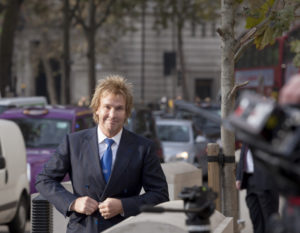
Plumbing tycoon Charlie Mullins says he will pay London nurses’ ULEZ charges and called for the scheme to be “abolished immediately”.
The Pimlico Plumbers founder and multimillionaire has vowed to shell out the cost for all nurses newly affected by the ultra low emissions zone (ULEZ) charge in September.
“This is a tax on working people that will cost patients their lives, and so must be abolished immediately. Rishi Sunak needs to grow a pair and force Khan to back down and rip out the ULEZ cameras across all of London,” Mullins said in a statement today.
The businessman, who sold his plumbing empire for more than £140m in 2021, added: “It ain’t right to force people to pay sixty odd quid a week (£12.50 a day) just to go to work.
“This is people’s livelihoods we’re talking about, and even more scary is that Khan is putting patients’ lives at risk. Mark my words, ULEZ on Tuesday, deaths on Wednesday.”
ULEZ expansion means the charging zone now covers the entire 32 boroughs of the capital, and drivers of vehicles which do not meet emissions standards must pay a £12.50 daily fee, or risk being fined – in a bid by City Hall to clean up the city’s air and reduce pollution.
The Prime Minister has also criticised the rollout today, telling broadcasters: “I think people and families are struggling with the cost of living, that is obvious to everyone.
“And at that time, the Labour Party, mayor Sadiq Khan and Keir Starmer are introducing the ULEZ charge which is going to hit working families.
“I don’t think that’s the right priority, I don’t think that’s the right thing to do and I wish they hadn’t done it.”
Keith Prince, City Hall Conservatives transport spokesperson, said: “The expanded ULEZ will have a nominal impact on air quality, but will hit those least able to pay the hardest; including small businesses and charities that cannot afford to upgrade their vehicles”.
Read more:
Pimlico Plumbers founder Charlie Mullins says he will pay nurses’ ULEZ charges and calls for policy to be binned

