
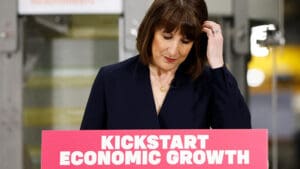
The UK’s long-running “risk premium” in financial markets appears to be unwinding, with economists claiming investors are regaining confidence in Rachel Reeves’ fiscal strategy — and that the shift could save taxpayers billions of pounds over the next five years.
New analysis from the Institute for Public Policy Research (IPPR), a think tank with longstanding ties to Labour, shows gilt yields have fallen faster than those in the US and eurozone since September. The move follows a turbulent year in which UK borrowing costs climbed significantly above other G7 economies, fuelled by persistent inflation, weak growth, and speculation over the new government’s tax plans.
According to the IPPR, yields on UK government bonds have dropped by 0.2 percentage points more than their American and eurozone equivalents over recent months. While modest, the reversal is viewed as a meaningful sign that Reeves’ public embrace of strict fiscal rules, first restated at Labour conference — has reassured money markets jittery since Liz Truss’s mini-Budget in 2022.
Earlier this year, the gap between UK and US 10-year bond yields had blown out to 1.1 percentage points; against eurozone debt, the margin was 0.6 points. On 30-year bonds the divergence was even starker, hitting 1.5 points versus US treasuries. Those differences amounted to a clear “risk premium”, a financial penalty imposed on the UK for political unpredictability and concerns over fiscal credibility.
“The reasons for this premium are not straightforward, especially given that the UK’s fundamentals are stronger than many countries with lower borrowing costs,” the IPPR noted, highlighting Britain’s debt-to-GDP ratio of around 100%, lower than that of the US, Italy or Japan.
Senior Bank of England officials echoed the assessment. Deputy governor Sir Dave Ramsden told MPs on the Treasury committee that gilt market volatility ahead of Reeves’ Budget was noticeably lower than in comparable pre-Budget periods under the previous Conservative government.
“There were no concerns about financial stability,” he said, a marked contrast to the gilt market crisis triggered by Truss’s unfunded tax cuts.
The Bank now expects the Budget to shave up to 0.5 percentage points off inflation next year, thanks largely to Reeves’ decision to remove taxes from household energy bills. Inflation currently sits at 3.6%.
Despite the recent improvement, UK borrowing costs remain elevated by historical standards and are still higher than those faced by the US or eurozone members. The Office for Budget Responsibility forecasts that debt interest payments will exceed £100 billion in every year of this parliament.
However, if the remaining risk premium disappears, the IPPR calculates that taxpayers could save up to £7 billion a year by 2029–30, money that could otherwise be directed to public services or debt reduction.
Carsten Jung, associate director for economic policy at the IPPR, said a “clear, credible” fiscal path could make the UK “a star performer in the G7”, but warned that the Bank of England could undermine progress if it continues its aggressive quantitative tightening programme.
The Bank estimates its bond disposals have pushed up gilt yields by as much as 0.25 percentage points. Jung said the Bank should “pull its weight” and pause sales to avoid unnecessarily driving up borrowing costs at a time when the government is trying to restore stability.
Bond yields have also been kept higher by falling demand from final-salary pension schemes, once major institutional buyers of long-dated gilts.
For now, though, the message from the markets appears clearer than it has been for years: after a volatile 18 months, investors may finally believe that the UK has rediscovered its fiscal discipline.
Read more:
Falling gilt yields suggest Rachel Reeves has ‘won back market confidence’
Category: Uncategorized
Goldman Sachs warns UK policy uncertainty is creating a ‘confidence …

Policy uncertainty in Westminster is weighing heavily on Britain’s small business sector, according to one of the City’s most influential bankers.
Kunal Shah, co-head of Goldman Sachs International, warned that a lack of clarity over taxation and employment laws is creating an “overhang” that is discouraging entrepreneurs from investing and hiring.
Speaking ahead of a House of Commons reception marking 15 years of Goldman’s 10,000 Small Businesses programme, Shah said founders were increasingly nervous about the government’s shifting regulatory agenda. “One of the things that comes back often from these companies is the tax burden in the UK,” he said. “The Budget last month was a focal point for everyone to see again how tough the fiscal maths is now. It introduces challenges for any entrepreneurs and the business environment here.”
Although small businesses remain upbeat about their own performance, Shah suggested that Labour’s manifesto commitments — particularly around expanded employment rights — had left many founders uneasy about future costs. “These entrepreneurs are largely optimistic around their own businesses, around things they can control,” he said. “But it is all the uncertainty over the manifesto pledges that can hamper investment confidence. That continues to be an overhang.”
Labour last month abandoned its pledge for “day-one” unfair dismissal rights, striking a compromise with unions to reduce the qualifying period to six months rather than two years. The government insisted the move would still drive a major shift in worker protections, but business groups warned the proposals would require significant adjustments to hiring strategies.
Shah, who joined Goldman in 2004 and became a partner a decade later, said UK firms now had clarity on taxation for the next year but warned that broader economic pressures continued to erode SME confidence. “There is a longer-running productivity problem,” he said, adding that “sticky inflation” and interest rates “at the restrictive end” were feeding into company finances.
Despite these headwinds, Shah pointed to genuine opportunities for growth, including improved trade ties with the US and India. He also praised the Chancellor’s stamp duty holiday for newly listed shares as a pragmatic move to revive the UK’s capital markets. “It shows clear intent,” he said. “These are signs of how they want to support the broader growth agenda.”
More than 2,500 companies have been through Goldman’s free training scheme for founders of small firms, targeted at businesses with revenues above £250,000 and staff numbers between 5 and 50. Research by Professor Mark Hart of the Enterprise Research Centre shows participants increased revenues by 43% within three years, adding an average £665,000 to their top line.
After ten years, these businesses were 14% more productive than comparable firms that did not take part.
The UK government’s own equivalent — the Help to Grow scheme — has enrolled 10,000 leaders since 2021, with funding secured until 2029.
Despite wider market uncertainty, Shah said Goldman expected another strong year for fees from mergers and acquisitions. The bank has already been involved in $1.5 trillion worth of deals in 2025 and is advising on several high-profile transactions across Europe. “The backlog is healthy,” he said. “We see that momentum continuing into next year.”
Goldman recently advised Shawbrook on its £1.9 billion flotation in London — the largest in several years — and is closely watching the dramatic takeover battle for Warner Bros, though it is not advising any of the bidders.
Government engagement improving — but uncertainty remains the drag
Shah welcomed the government’s willingness to engage with the banking sector, following meetings with Rachel Reeves, Anthony Gutman and Goldman Sachs CEO David Solomon earlier this year. But he was unequivocal in his assessment that uncertainty is the biggest factor undermining SME confidence.
As he put it: “Entrepreneurs are optimistic — but optimism only gets you so far when you can’t plan ahead.”
Reeves responded, by saying: “This report shows the huge contribution small businesses make in creating jobs, driving innovation and powering growth across the UK. They aren’t just businesses – they’re the innovators, creators and entrepreneurs that keep our economy thriving. The 10,000 Small Businesses programme shows how larger firms can back the next generation of entrepreneurs, and I congratulate them on this 15-year milestone. In the Budget, we acted to make life easier for businesses by permanently lowering business rates for hundreds of thousands of retail, leisure and hospitality businesses, opening up new funding so SMEs can better invest and hire, and backing entrepreneurs with tax reliefs to help them grow.”
Read more:
Goldman Sachs warns UK policy uncertainty is creating a ‘confidence overhang’ for small businesses
Invest in Women Taskforce hits £635m as Nationwide and British Busine …

The Invest in Women Taskforce has surpassed its fundraising ambitions in a major boost for female entrepreneurship, announcing that it has now convened £635 million in commitments, more than double its original £250 million target set at launch in 2024.
The milestone includes confirmation that Nationwide and the British Business Bank will join Barclays and M&G as anchor partners in the targeted £130 million first close of the groundbreaking Women backing Women Fund of Funds, subject to final terms and approvals.
The fund, managed by Bootstrap4F and believed to be the largest female-led fund of funds in the world, represents the first initiative of its kind in the UK dedicated to deploying capital directly into female-founded companies and gender-balanced VC teams.
The Taskforce’s first Annual Report, published today, reveals that more than £70 million was deployed in 2025 across 15 founders and funds, with a strong pipeline now emerging as momentum accelerates. The funding pool has become the largest coordinated effort globally to reshape the investment landscape for female entrepreneurs.
A sector still facing a deep investment gap
Despite the rapid progress, female founders continue to face stark funding disparities. Research by Beauhurst and the Taskforce shows that fully female-founded businesses receive just 2% of UK equity investment. At the current rate of change, the Taskforce estimates it will take at least a decade to reach funding parity between all-male teams and female or mixed teams.
The House of Commons Women and Equalities Committee recently echoed this call for urgent action, urging the government and industry to invest more decisively in female entrepreneurship.
Government backing and economic case
Speaking ahead of a Downing Street reception to mark the launch of the Annual Report, Chancellor Rachel Reeves said supporting female entrepreneurs was central to the government’s economic agenda.
“Growth is this Government’s number one mission, and I am backing female-powered business not only because it’s critical for our economy but because it is the right thing to do,” she said.
“As the first female Chancellor, I am committed to improving economic outcomes for women, from lifting the two-child cap to breaking down barriers that stop women from starting, scaling and investing in British businesses.”
‘A commercial imperative, not just a moral one’
Hannah Bernard, Barclays executive and Taskforce co-chair, emphasised the economic potential of backing women-led businesses.
“Female-led businesses deliver 35% higher returns than male-led businesses,” she said. “This is not only the right thing to do, it is a commercial imperative. We must urgently rebalance investment committees and capital deployment.”
Debbie Wosskow OBE, entrepreneur and co-chair of the Taskforce, said the fund’s progress should serve as a wake-up call to the wider VC industry.
“Reaching first close will be a huge milestone. We’ve worked tirelessly to build the world’s largest funding pool for women, but about 80% of UK venture capital still goes to all-male teams,” she said. “The evidence is clear: diverse teams deliver stronger returns. So what are we waiting for?”
The Taskforce continues to call on institutional investors, pension funds and corporates to join the initiative and help close the UK’s persistent gender funding gap.
Read more:
Invest in Women Taskforce hits £635m as Nationwide and British Business Bank join first close of landmark ‘Women backing Women’ fund
Frasers Group snaps up Swindon Designer Outlet in latest retail proper …

Mike Ashley’s Frasers Group has acquired Swindon’s Designer Outlet, one of the UK’s busiest retail destinations, marking the latest move in the company’s fast-growing property portfolio.
The popular shopping centre — housed within the Grade II-listed former Great Western Railway Works — attracts more than three million visitors a year and has been sold by LaSalle Investment Management, which only purchased the site in 2022.
Michael Murray, CEO of Frasers Group, said the deal underscores the company’s commitment to investing in physical retail as a core part of its “elevation strategy”.
“Physical retail is central to our elevation strategy and investing in Swindon — one of the UK’s top five outlets by footfall — strengthens our position as both retailer and landlord,” Murray said. “This acquisition reinforces our property strategy and unlocks new opportunities for our brands and our partners.”
The outlet, which opened in 1997, was previously operated by McArthurGlen before changing hands to LaSalle. Its acquisition marks another major shopping centre addition for Frasers Group, following last month’s purchase of the Braehead Shopping Centre in Scotland.
The FTSE-listed business, controlled by founder and majority shareholder Mike Ashley, now owns a growing portfolio of retail centres across the UK alongside its chain of Frasers department stores and brands including Sports Direct, Game, Jack Wills and Evans Cycles.
Industry analysts said the move highlights Frasers Group’s continued strategy of combining retail ownership with property investment — a model that gives it significant influence over rents, tenants and prime retail locations during a turbulent period for the high street.
Read more:
Frasers Group snaps up Swindon Designer Outlet in latest retail property expansion
Government unveils £725m package to create 50,000 apprenticeships and …

The government has announced a £725 million overhaul of the apprenticeship system, setting out plans to create 50,000 new placements over the next three years in an effort to address rising youth unemployment and strengthen the UK’s long-term economic prospects.
The reforms include a £140 million mayoral pilot programme giving regional leaders new powers to connect young people — particularly those not in education, employment or training (NEET) — with apprenticeship opportunities at local employers. Ministers say the changes will open thousands of new routes into skilled work across the country, with a sharper focus on aligning training with local labour market demand.
A central pillar of the reforms is a commitment to cover the full cost of apprenticeships for eligible under-25s at small and medium-sized businesses — a move aimed at removing the financial barriers that have discouraged thousands of SMEs from hiring apprentices.
The government will also launch new foundation apprenticeships in industries such as hospitality and retail, intended to help young people enter the workforce more quickly. Expansion plans for growth sectors — including digital, engineering, health and advanced manufacturing — are expected to create clearer pathways into roles experiencing chronic skills shortages.
Sheila Flavell CBE, COO of FDM Group, called the investment a “crucial step” in preparing young people for a job market undergoing rapid transformation.
“As AI adoption accelerates across every sector, the demand for digital and technical skills is rising sharply,” she said. “Our research shows that more than half of organisations now expect AI capabilities in all early-career roles, yet only 6% feel their teams are equipped with these skills.”
Flavell said embedding practical AI and digital literacy into early-career training was essential to ensuring the UK workforce remained competitive.
Sachin Agrawal, Managing Director for Zoho UK, said the reforms were a “significant step towards modernising the UK’s skills infrastructure,” particularly in regions historically underserved by training and investment.
“By building a more evenly distributed skills base, the UK can attract greater investment from the tech industry into hiring and upskilling local talent,” he said. “Flexible short courses, foundation apprenticeships and new pathways in AI and digital engineering mark an important shift toward modular, competency-based training.”
From April 2026, the reforms will introduce a suite of short, flexible training courses in critical skills areas as well as a new Level 4 apprenticeship in artificial intelligence, designed to meet employer demand for future-focused capabilities.
The package represents the most significant restructuring of the apprenticeship system in a decade and is aimed at reversing a sharp decline in participation — apprenticeship starts among young people have fallen by almost 40% since 2015/16.
Ministers say the new measures will simplify pathways, expand access and ensure training reflects the needs of modern industries and regional economies.
Read more:
Government unveils £725m package to create 50,000 apprenticeships and tackle rising youth unemployment
What will Making Tax Digital for Income Tax mean for small businesses …

In just four months, millions of small businesses, sole traders and landlords will need to change how they track and report their finances to HMRC.
Making Tax Digital for Income Tax (MTD for IT) will come into effect and means moving away from annual, paper-based tax returns to more frequent, digital reporting.
Under the new rules, you’ll need to use HMRC recognised software to keep digital financial records, send quarterly updates on income and expenses and complete an annual declaration that confirms your final tax position for the year by the usual 31 January deadline. It’s a big change and the biggest shift in personal tax since self assessment was introduced more than 30 years ago.
MTD for IT will be rolled out in stages. If you’re a small business, sole trader or landlord that has an annual income of more than £50,000 then you’ll be included from April 2026. It will then be extended to include those earning over £30,000 by April 2027, and anyone turning over more than £20,000 from April 2028.
With such a big shift ahead, the coming months will be very important. Taking steps to get ready for the changes will help you move through the transition with confidence and build new habits that you’ll rely on for years to come.
Why MTD for IT is happening
The introduction of MTD for IT is part of the UK government’s wider push to modernise the tax system and bring it in line with the digital tools that already power much of the economy. For years, policymakers have emphasised the need to invest in technology and reduce the administrative burden created by outdated, paper-based processes. MTD for IT is one of the key steps in this ambition to build a more modern and future-ready tax system.
A fully digital approach to tax is intended to make financial admin feel easier and simpler. However, for those that still rely on paper notes or spreadsheets, the shift might feel overwhelming. More than two-fifths (42%) of the smallest businesses are not using any finance or accounting tools, and only 27% believe they get their tech and software choices right according to our survey. For many of you, MTD for IT will mean using digital accounting tools for the first time and getting comfortable with a whole new way of working.
Choosing the right tools to help
Getting ready for a new digital way of doing tax, starts with picking the right software for bookkeeping. Look for HMRC recognised options that are simple to use. Ideally, digital tools should bring your financial admin together so you have one place where you can log your expenses, manage tax and keep on top of your finances.
It also helps to choose tools that make your everyday jobs feel easier and quicker. Features like being able to snap a picture of a receipt on the go using a mobile app will mean that you can log expenses instantly and automatically update your accounts. It’s a small change but one that can save you time and cuts down the chance of making mistakes that often creep in with more manual ways of working.
What to consider next
Once software is in place, use the remaining time to become more comfortable with digital record-keeping and quarterly reporting. With the right set-up, your income and expenses should flow straight into your software and quarterly updates, giving you a good idea of how your business is doing and what your tax bill is looking like after each quarterly update. This should mean fewer end-of-year tax surprises.
Up-to-date digital records will also make it easier to understand what’s coming in and going out. Our research shows nearly two in five small business owners (38%) are unaware if they were in profit the month before, and over half (55%) struggle with cash flow management. With everything captured in one place, you will be able to get a clearer view of your numbers so you can spot early warning signs or issues – from unpaid invoices to unexpected costs, and changing profit margins.
Get ready now
If you want extra assurance that everything is set-up right, an accountant or bookkeeper can also be a huge help. They can translate HMRC’s guidance into practical steps, help you select the right digital tools and guide you on how to manage the new reporting requirements. This kind of support will make the changes feel more manageable.
The move to MTD for IT might take some time to get used to, but taking action now will make the transition much easier. By taking steps to get ready for the changes, you can ease the pressure of the looming deadline and put yourself on a stronger financial footing for the future.
Get ready for MTD for IT – sign-up for one of our webinars that will break-down everything you need to do to prepare for the changes and view our range of MTD ready plans here with new customers getting 95% off for six months.
By Stuart Miller, Director, Public Policy & Tech Research, Xero
Read more:
What will Making Tax Digital for Income Tax mean for small businesses in 2026 and beyond?
Keir Starmer to make Iceland boss Richard Walker a Labour peer

Keir Starmer is set to appoint Richard Walker, the executive chair of Iceland Foods and a former Conservative donor, to the House of Lords — marking one of the most striking political shifts in recent years for a senior UK business figure.
The Guardian understands that Walker will join a cohort of around 25 new Labour peers expected to be announced later this month, giving the supermarket executive a direct platform in parliament to champion policies that have become central to his public campaigning, including closer ties with the EU and a more optimistic economic narrative.
Walker’s elevation to the Lords completes a rapid political realignment. A little over three years ago, he was being lined up as a potential Conservative MP candidate and had donated nearly £10,000 to the party in the summer of 2020, during Boris Johnson’s premiership. He was added to the approved Conservative candidates’ list in 2022.
But by 2023, Walker publicly severed ties with the party, accusing the Conservatives of having “drifted badly out of touch with business and the economy, and with the everyday needs of the British people”. He criticised the government’s management of key issues such as retail crime, inflation and the post-Brexit trading environment.
In early 2024, he endorsed Starmer after what he described as “a lot of soul-searching”, arguing that the Labour leader “has exactly what it takes to be a great leader”. Even then, he stopped short of framing himself as a future Labour politician. Yet his peerage will now make him one of the most prominent pro-Labour voices within British business.
Walker took over as executive chair of the frozen-food retailer in 2023, succeeding his father Malcolm, who founded Iceland in 1973. Both father and son have previously supported the Conservative Party and been regarded as part of the party’s natural business constituency.
His appointment to the Lords also comes at a politically sensitive moment for Starmer’s government. While several large retailers privately welcomed the fact that business rates reforms at the autumn budget were less punitive than expected, other business groups remain irritated by broader tax rises — including Labour’s decision to increase national insurance contributions.
The move also gives Labour a counterweight to the Conservatives’ established roster of retail peers, including Simon Wolfson, the chief executive of Next.
Labour declined to comment on the appointment. Walker has also been approached for comment.
Read more:
Keir Starmer to make Iceland boss Richard Walker a Labour peer
Airbus steps in to rescue 3,000 UK jobs as Boeing strikes deal on Spir …

Airbus is set to secure the long-term future of almost 3,000 UK aerospace jobs after striking a long-awaited carve-out deal from Boeing’s takeover of Spirit AeroSystems, a move that ends months of uncertainty for workers in Belfast and Prestwick.
Sources say the world’s largest aircraft manufacturer will announce as early as Monday that it is taking on 1,550 staff at Spirit’s Belfast operations and a further 1,200 at the company’s plant in Prestwick, Scotland. It marks a major breakthrough in negotiations that have rumbled on since Boeing agreed a $4.7bn acquisition of Spirit last year.
The UK facilities — which produce wings, fuselage sections and critical aerostructure components for both Airbus and Boeing, have been operating under short-term agreements while the companies worked to untangle a deal that preserved the cross-supplier production lines.
For months, the fate of thousands of workers had appeared to hinge on whether Airbus and Boeing could agree terms. The Belfast site, formerly Short Brothers — and one of the crown jewels of the UK’s aerospace heritage, recorded a $670m loss in 2024, prompting concern for its future viability.
Under the emerging agreement, Boeing will pay Airbus a substantial dowry, expected to be in the hundreds of millions, to offset ongoing losses at the Belfast operation. Boeing is also expected to retain about 2,000 Spirit staff not transferring to Airbus.
Airbus plans to take full ownership of the Belfast wing facility, while co-locating with Boeing in another building producing A220 fuselages. Planning activity is already under way for what insiders expect will be an expansion of the wing plant, reinforcing the UK’s global reputation as a centre of excellence for wing design and manufacturing.
Prestwick will also shift under Airbus control, continuing production of leading and trailing wing edges for the A320 and A350 programmes.
Boeing moved to re-acquire Spirit after a series of high-profile safety failures, including the January 2024 mid-air blowout of a door plug on an Alaska Airlines 737 Max and the earlier fatal crashes of the Max programme in 2018 and 2019. Spirit, once part of Boeing before being spun out in 2005, has been embroiled in the fallout from the supply-chain and quality issues affecting the Max line.
Airbus, meanwhile, has capitalised on Boeing’s troubles to reclaim its crown as the world’s largest commercial aircraft manufacturer, though it, too, has faced pressures, including a software glitch last month that forced urgent updates across airline fleets.
Once the Spirit workforce transfers, Airbus’s total UK headcount, across civil aerospace and defence, will rise to about 14,000. The UK remains integral to Airbus’s global manufacturing footprint, with major wing programmes centred in north Wales and advanced design teams in Bristol.
The announcement also represents a rare win for the UK industrial base at a time when manufacturers are battling higher energy costs, rising payroll taxes and global competition for investment.
Boeing confirmed this week that it expects to complete its Spirit acquisition by year-end, after receiving approval from the US Federal Trade Commission. Airbus described the FTC ruling as “a significant milestone” towards securing Spirit’s capabilities “essential to our commercial aircraft programmes”.
A formal announcement from Airbus is expected early next week.
Read more:
Airbus steps in to rescue 3,000 UK jobs as Boeing strikes deal on Spirit AeroSystems carve-out
Lando Norris crowned Formula One world champion after nail-biting Abu …

Lando Norris has become Britain’s newest Formula One world champion after holding his nerve through a tense title decider in Abu Dhabi, securing his first championship and ending the country’s five-year wait for another motorsport hero.
The 26-year-old McLaren driver, who grew up in Bristol and has long spoken of idolising Lewis Hamilton, finished third in the season finale, enough to clinch the title by just two points after a fiercely fought contest with Max Verstappen and team-mate Oscar Piastri. He becomes the 11th British world champion, and the first since Hamilton sealed his seventh crown in 2020.
Norris cut an emotional figure as he crossed the line, breaking down on the team radio before being congratulated by McLaren CEO Zak Brown.
“Thank you guys. You made a kid’s dream true,” he told the team through tears. “I love you mum, I love you dad. Thanks for everything.”
Norris entered the final race with his title hopes shaken after he and Piastri were disqualified from the previous grand prix for a technical infringement, an episode that dramatically reopened the championship battle and ignited questions about whether he could hold his nerve.
Starting second behind Verstappen, Norris was passed by Piastri on the opening lap, briefly putting his title hopes under strain. But the McLaren driver steadied himself, managed his pace and executed a calculated, mistake-free drive to bank the points he needed.
Verstappen, seeking a fifth consecutive title, and Piastri, chasing his maiden crown, pushed relentlessly across 90 minutes of strategic tension — but neither could overhaul the Briton’s points advantage.
As soon as Norris stepped out of the Papaya-orange McLaren, helmet off and eyes red, cheers erupted around Yas Marina. His mother, Cisca Norris, was the first to embrace him, followed by Piastri and senior team members.
“I haven’t cried in a while,” Norris admitted in parc fermé. “I didn’t think I would cry, but I did. It’s been such a long journey. Not many people get to experience this in Formula One. I’m very proud of myself , but I’m even more proud of everyone in the team.”
Norris’s path to the summit has been shaped by years of graft, global travel and family support. The son of business founder Adam Norris, who built e-mobility company Pure, Lando started karting at six, left school early to pursue motorsport full-time, and quickly rose through Europe’s junior categories before joining McLaren’s F1 programme.
His father, speaking moments after the chequered flag, said: “It’s been a really long, hard journey. Longer than you’d think. There’s been a lot of travelling to weird and wonderful places. He has always been fast and loved it more than everyone else.”
Celebrities including Emily Ratajkowski, Gordon Ramsay and Thierry Henry watched the drama unfold from the Abu Dhabi paddock.
Norris’s partner, model and actress Magui Corceiro, was in the McLaren garage throughout, and was visibly emotional as he became world champion. The couple, who have been together on and off for two years, embraced trackside as the celebrations began.
The championship marks a watershed moment for McLaren, who only a few seasons ago were battling near the back of the grid. Under Zak Brown and team principal Andrea Stella, the team has undergone a sweeping transformation, culminating in one of the most impressive competitive resurgences in recent F1 history.
Norris, who has spent his entire Formula One career at McLaren, paid tribute to the team’s revival.
“We’ve been through very difficult times and some great times. This year, we fought to the very last laps,” he said. “Max and Oscar didn’t make it easy, but that’s what makes this feel so special.”
Norris now joins a lineage that includes Sir Jackie Stewart, James Hunt, Damon Hill, Jenson Button and Hamilton, but his arrival as champion feels distinctly modern. A driver shaped by both digital-era fandom and classic racing discipline, he has become one of Formula One’s most popular figures far beyond the British Isles.
And now, officially, a world champion.
Read more:
Lando Norris crowned Formula One world champion after nail-biting Abu Dhabi finale

