

Zoom, the online meetings platform that became synonymous with home working during the pandemic, has told staff to come into the office more often.
Workers who live within a “commutable distance” of the company’s offices, including in the UK, will be expected to make the journey on designated team days.
The California-based firm had been slower than many companies to enforce such a mandate, perhaps aware of its public perception as a key enabler of working from home.
It became a hugely popular tool during 2020’s COVID lockdowns, growing from roughly 10 million daily users in December 2019 to more than 300 million the following April.
But its growth slowed as the pandemic subsided and amid greater competition from rival platforms like Microsoft’s Teams and Salesforce’s Slack.
Falling net profits saw Zoom join other tech firms like Meta and Amazon in cutting jobs, laying off some 1,300 employees earlier this year.
Zoom’s office working mandate was first reported by Business Insider, and a company spokesperson confirmed it would apply to the UK.
“We believe that a structured hybrid approach – meaning a set number of days employees that live near an office need to be on site – is most effective for Zoom,” they said.
“As a company, we are in a better position to use our own technologies, continue to innovate, and support our global customers.
“We’ll continue to leverage the entire Zoom platform to keep our employees and dispersed teams connected and working efficiently.”
Read more:
Zoom demand staff get out from behind their screens at home and return to the office
Category: Uncategorized
Just Stop Oil’s demands are ‘contemptible’, says Starmer

Just Stop Oil’s demands to “turn off the taps in the North Sea” are “contemptible” and would lead to working people paying the price for the energy transition, said Labour leader Sir Keir Starmer.
Outlining his vision of a greener future, he argued Just Stop Oil risk “creating the same chaos” in the North Sea as they have already achieved on roads across the country with slow-marches and sit downs in front of motorists.
The protest group is calling for no new oil and gas licences in the North Sea, which is not dissimilar to Labour’s position aside from the opposition’s recent pledge not to retroactively cancel agreed licences.
Energy security secretary Grant Shapps has made persistent attempts to link Labour to the protest group after the opposition accepted £1.5m in donations from the campaign group’s backer Dale Vince.
Writing in yesterday’s Sunday Times, Starmer confirmed he would only ban the granting of new licences to explore oil and gas fields in the North Sea as he seeks to give businesses certainty.
“We won’t revoke any licences issued by this government because, unlike them, we take investor certainty and legal obligations seriously. But nor will we issue new licences to explore new fields — because they are not necessary for a managed transition to a future in which we have lower bills, more energy security and long-term secure jobs for those working in the North Sea,” he said.
He also criticised the government’s decision to grant new oil and gas licences last week, alongside Shapps’ pledge to “max out” supplies from the North Sea.
“We know that new licences won’t boost energy security because the yield will be sold on the international markets. And we know ‘maxing out’ every last drop from the North Sea, the government’s new position, will accelerate the climate crisis. The Prime Minister’s argument is bogus and he knows it,” he said.
Instead, Starmer announced Labour will seek to work with the oil and gas sector to secure a managed transition to net zero, and that it would also “crowd in investment in future energy production in the North Sea alongside newer technologies like carbon capture and storage and hydrogen.”
In his view, the transition to net zero did not need to be an “ideological identity issue” as showcased in Just Stop Oil protests, and that instead, his approach could was “pragmatic” and “hard-headed.”
“We will treat the transition as a national mission with a relentless focus on cutting energy bills, revitalising Britain’s industrial heartlands and boosting our energy security,” he said,
Starmer criticised the Conservatives for effectively banning new onshore wind developments, with industry calculations further generation could have saved £180 per year off bills, alongside its decision not to financially support the Rough storage facility and to decrease investment in energy efficiency measures.
“Last year President Putin put his boot on the world’s neck by using energy as a weapon of war. But it is Conservative failure over many years that left Britain paying a heavy price,” he said.
“Every turbine we fail to build is a gift to Putin, who has strangled the international gas market we are hooked to.”
Read more:
Just Stop Oil’s demands are ‘contemptible’, says Starmer
Khan expands £2,000 Ulez grant to all Londoners with non-compliant ve …
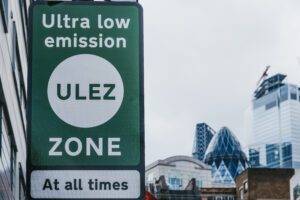
Sadiq Khan has expanded the grant scheme for London’s ultra-low emission zone (Ulez) to cover any household with a heavily polluting car or motorbike, spending an extra £50m after intense pressure over the political fallout of the plan.
The revised proposals, announced on Thursday, also notably increase the scrappage payments available for non-compliant vans owned by sole traders and small firms, as well as for minibuses and wheelchair-accessible vehicles.
His announcement follows the Conservatives’ unexpected narrow win in last month’s Uxbridge byelection, which many observers – including Keir Starmer and his shadow team – blamed on Khan’s plan to expand Ulez to outer London boroughs.
The Ulez scheme, which charges owners of older, more polluting vehicles £12.50 a day to drive them within the zone, began in central London in 2019 and was expanded with minimum controversy to most inner boroughs two years later.
The proposed extension to all 32 London boroughs on 29 August, however, has prompted a fierce reaction from opponents, including some of the capital’s Conservative councils, who argue that outer areas are more reliant on cars and have less dense public transport.
Khan has been adamant the plan needs to go ahead given the significant public health consequences of vehicle pollution. But after failing to take Boris Johnson’s old seat of Uxbridge, Starmer and several of his team urged the Labour mayor to think again.
Both camps will hope the new proposals reduce the political pressure including attacks by Rishi Sunak’s government and many Tory MPs who argue the expansion is poorly timed given cost-of-living pressures.
The enhanced scrappage programme, which takes the previous £110m cost to £160m, the extra paid for out of city hall reserves, keeps the basic grant for a car or van at £2,000 but makes everyone in the city with a non-compliant vehicle eligible.
The £2,000 payments were previously only available to people who receive one of a series of benefits, including child benefit and universal credit.
Khan’s officials argue that £2,000 is a sufficient sum. They say one vehicle sales website showed almost 5,000 Ulez-compliant cars for sale for less within 200 miles of central London.
Sole traders and businesses with fewer than 50 staff can now claim up to £7,000 for each van they replace, up from £5,000, with up to three vans eligible. The previous sum of up to £7,000 for replacing a minibus rises to £9,000, again to a maximum of three. The grant to retrofit a van or minibus has risen from £5,000 to £6,000.
There are also increases in grants to replace non-compliant vans or minibuses with electric equivalents, which were greater to start with. The grant to replace a wheelchair-accessible vehicle has been doubled from £5,000 to £10,000.
Khan and his officials will hope that the extra money will blunt attacks so political and media focus on the expansion later this month dies down relatively quickly. The mayor’s office points out that about 90% of cars used in outer London are already compliant.
The scheme only affects fairly old petrol cars – most built less than 16 years ago are compliant – but the equivalent figure for diesel vehicles is just six years.
Khan is directly elected, meaning that Starmer’s office is unable to dictate, but he has faced significant pressure to change course after the Uxbridge byelection. The Labour leader said the mayor needed to reflect on the impact of expanding Ulez, while Angela Rayner, Starmer’s deputy, said her party had lost because it failed to listen to the voters over the plan.
Khan said he had continued to listen to Londoners’ concerns over recent months and had responded with the increases to the scrappage scheme, but insisted he would not delay the implementation of the expanded zone.
“I have always said that expanding the Ulez to the whole of London was a difficult decision and not one I took lightly, but it’s a decision I remain committed to seeing through,” he said.
“I’m not prepared to step back, delay or water down vital green policies like Ulez, which will not only save lives and protect children’s lungs by cleaning up our polluted air, but help us to fight the climate crisis.”
Read more:
Khan expands £2,000 Ulez grant to all Londoners with non-compliant vehicles
Potential Collapse of Wilko: Fighting for Survival in the Retail Indus …
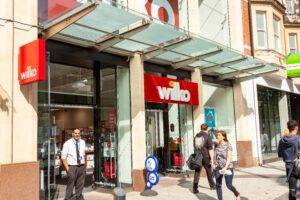
The retail landscape in the UK is facing another blow as budget retailer Wilko teeters on the brink of collapse with over 400 stores and approximately 12,000 jobs at stake.
The company has filed a notice of intention to appoint administrators due to mounting cash pressures and the inability to secure a rescue deal. This article delves into the challenges faced by Wilko, the efforts made to secure its future, and the potential implications for the retail industry as a whole.
The Challenges Faced by Wilko
Rising Costs and Lacklustre Consumer Demand
Wilko, a household and garden products retailer, has been grappling with the impact of rising costs and lacklustre consumer demand. These challenges have been exacerbated by the tough economic climate, making it difficult for the company to navigate its way to profitability. In the face of these obstacles, Wilko had to take drastic measures to stay afloat.
Cash Squeeze and Restructuring Efforts
Last year, Wilko borrowed £40 million from restructuring specialist Hilco as it faced a cash squeeze after reporting a loss. The company had to make tough decisions, including cutting jobs, selling off a distribution centre, and implementing leadership changes. However, these measures were not enough to alleviate the financial strain on the business.
Struggles with Suppliers and Credit Coverage
Wilko’s financial woes were further compounded by its struggles with suppliers. The retailer faced difficulties in paying its suppliers, leading to gaps on shelves as deliveries were paused. The situation worsened when at least one credit insurer withdrew trade cover, causing additional disruptions to the supply chain. These challenges strained Wilko’s ability to maintain a steady flow of inventory and meet customer demands.
Exploring a Sale and Prospective Investors
In a bid to secure its future, Wilko’s owners were reported to be exploring the sale of a controlling stake in the company. The retailer received a significant level of interest, including indicative offers that met its financial criteria for recapitalization. However, despite these promising developments, Wilko struggled to find a buyer that could provide the necessary liquidity within the required timeframe.
Notice of Intention to Appoint Administrators
Faced with mounting cash pressures and the absence of a viable rescue deal, Wilko made the difficult decision to file a notice of intention to appoint administrators. This legal step protects the business from creditors for a limited period, allowing it some time to secure its finances. However, it does not guarantee that administrators will be appointed, leaving a glimmer of hope for potential alternatives.
Discussions with Interested Parties
Wilko remains committed to finding a solution that preserves the business and ensures its long-term viability. The company continues to engage in discussions with interested parties, encouraging them to act swiftly to complete a transaction. The robust turnaround plan, coupled with significant cost savings and the recognition of untapped opportunities, provides hope for a profitable future for Wilko.
Potential Implications for the Retail Industry
The potential collapse of Wilko sends ripples through the retail industry, raising concerns about the overall health and resilience of the sector. With the closure of hundreds of stores and the potential loss of thousands of jobs, the impact on local communities and the wider economy cannot be understated. It serves as a stark reminder of the challenges faced by retailers in an increasingly competitive and evolving marketplace.
Read more:
Potential Collapse of Wilko: Fighting for Survival in the Retail Industry with 12,000 jobs at risk
The Rise and Fall of Ethical ESG Funds: Understanding the Backlash

Ethical investing has gained significant traction in recent years as investors increasingly seek to align their financial goals with their personal values.
However, a recent snapshot of fund-buying behavior reveals a concerning trend – British investors are pulling money from funds badged as sustainable or ethical at an unprecedented rate as ESG (Environmental, Social, and Governance) funds and also face accusations of “greenwashing” that have plagued the industry.
The Growth of Ethical Investing
Ethical investing, also known as socially responsible investing (SRI) or sustainable investing, has gained substantial popularity in recent times. Investors are increasingly looking to support companies that prioritize environmental sustainability, social responsibility, and strong corporate governance practices. ESG funds, which focus on companies that demonstrate these credentials, have emerged as a popular investment choice for individuals and institutions alike.
The Backlash Begins
Despite the growing interest in ethical investing, a snapshot of fund-buying behavior reveals a concerning trend. Cumulative outflows from ESG equity funds in the three months leading up to July exceeded £1 billion, with July seeing the largest outflow on record – £376 million. This marks the third consecutive month of outflows for ESG funds, indicating a significant shift in investor sentiment.
The Role of Greenwashing
One of the key factors contributing to the backlash against ESG funds is the increasing skepticism surrounding their authenticity. Greenwashing, the practice of misleading consumers about the environmental benefits of a company or product, has become a prevalent concern in the industry. As ethical investing gains momentum, companies are increasingly leveraging the ESG label without genuinely committing to sustainable practices. This undermines the credibility of ESG funds and erodes investor trust.
Challenges Faced by ESG Funds
While greenwashing plays a significant role in the backlash against ESG funds, there are other challenges that have contributed to the outflows. These challenges include:
Lack of Standardisation
The lack of standardization in ESG reporting and metrics poses a significant challenge for investors. Without consistent and comparable data, it becomes challenging to assess the true environmental and social impact of companies. This lack of transparency can lead to skepticism among investors and hinder the growth of the ESG fund industry.
Performance Concerns
Another factor contributing to the retreat from ESG funds is the performance concerns raised by some investors. Critics argue that ESG funds may prioritize ethical considerations at the expense of financial returns. While there is evidence to support the idea that sustainable investing can generate comparable or even superior returns, the perception of lower financial performance remains a concern for some investors.
Limited Investment Universe
ESG funds often have a more limited investment universe compared to traditional funds. They exclude companies involved in controversial industries such as tobacco, firearms, or fossil fuels. This limited universe can restrict diversification opportunities and potentially impact the overall performance of the funds.
Regulators can play a crucial role in addressing the challenges faced by ESG funds. By implementing clearer guidelines and enforcing stricter regulations, they can ensure that companies and funds adhere to genuine sustainability practices. Standardisation of ESG reporting and metrics can also enhance transparency and facilitate informed decision-making for investors.
Educating investors about the true nature of ESG funds and the potential impact of sustainable investing is vital. By providing clear information about the investment strategies, performance expectations, and the limitations of ESG funds, investors can make more informed decisions. This education can help dispel misconceptions and address performance concerns.
Collaboration and Industry Initiatives
Collaboration among industry stakeholders is essential to address the challenges faced by ESG funds. Initiatives that promote transparency, share best practices, and drive innovation can enhance the credibility and effectiveness of ESG investing. By working together, companies, fund managers, and investors can build a stronger, more sustainable investment ecosystem.
Read more:
The Rise and Fall of Ethical ESG Funds: Understanding the Backlash
‘Co-founder prenups’ skyrocket as economic instability takes its t …

New data from equity management platform shows the number of co-founders establishing ‘prenups’ has increased by 500% over the last year.
Vestd introduced ‘co-founder prenups’, the business version of the better-known marital agreements, through its ‘agile partnerships’ solution in 2021.
Explaining the surge in demand, Ifty Nasir, founder and CEO of Vestd, said: “Too many people jump into business with a co-founder and don’t tie future rewards to performance, delivery or milestones, like the length of time with a company. This initial optimism can cause intense problems down the line, especially as the business develops monetary value. A handshake really isn’t enough.”
“Co-founder prenups are formal agreements that govern the release of equity in a proportionate and fair manner, when certain goals and milestones are reached. We’ve had consistent and steady interest in the co-founder prenup plans since we launched them, but in October of last year, we saw a huge spike in numbers.
“I certainly think the turmoil we have seen over the last year and ongoing uncertainty is driving the uptick. People are becoming more aware of getting their ducks in a row, and any time of crisis or negativity will see an increase in people getting everything in order.”
‘I handed over my life-savings’
Over recent months, Vestd has seen a number of founders approach its team with horror stories about how their relationships with co-founders deteriorated over time.
One co-founder, who cannot be named for legal reasons, felt that starting a business with a good friend was a “no-brainer” but they didn’t have any formal agreements in place. They said:
“We set things up with the best of intentions but there weren’t founder or shareholder agreements. Business was great for many years, it was super successful and we had some great wins.
“Over time people’s motivations change. My business partner decided he only wanted to work part time, but actually he wanted to withdraw the same amount. I just found it very demotivating and it pushed me too far, which then saw me want to move off.
“I left the business in a good shape, handing over the keys to my co-founder. He put the business into insolvency. He didn’t inform me, but I was informed by an employee. I had to hand over my life savings to get out of the loan that was attributed to the business. There is no relationship now.”
Nearly two-thirds of startups fail due to co-founder fallouts
Noam Wasserman, author of The Founder’s Dilemma, states that 65% of startups fail due to co-founder conflict. Similarly, an estimated 20% of startups fail in the first 9-12 months of entering the Y Combinator accelerator programme because of founder issues.
Even those who are successful see ‘business divorces’ occur with alarming frequency. Venture Capital firm Icehouse recently reported for example, that 35% of the startups they’ve funded have seen a founder depart.
Additionally, a recent study by the University of Pennsylvania showed that a two person team is nearly twice as likely to dissolve their business as a solo entrepreneur.
“When the stakes are high, people can fall out,” said Nasir. “So it has always made perfect sense to us, given this business truism, that founders should protect their futures with fair agreements from the start.
“And in any case, by linking future rewards to performance – for example ‘you’ll get 40% of future profits if you grow our international sales by X%’ – you’ll be motivating your co-founder to smash their end of the bargain.”
Giancarlo Erra, founder of Words.tel built his team of eight co-founders using conditional equity in this way. He said the arrangement “motivated everybody to work.You’re all in it together and if things go well, they go well for everyone.”
Ben Bennett, co-founder of Second Voice Pro agrees:“If you’re incentivised and everyone’s going in that same direction, it makes a huge difference to behaviours, motivations, and ultimately the outcomes. From a selfish perspective, the business is succeeding because everybody gets to win.”
Read more:
‘Co-founder prenups’ skyrocket as economic instability takes its toll
Etsy sellers call for boycott after money held

Online marketplace Etsy is facing growing calls for sellers to boycott the site for withholding their money.
A reserve system meant some sellers had 75% of their takings frozen for 45 days, leaving them struggling to trade.
Furniture seller Stephen James is one of the hundreds who have joined social media groups calling for other sellers to come off the platform in protest.
It is not clear how many would join in any boycott. Etsy said it would continue to review its reserve system.
It added that it took seller feedback seriously and that payment reserves were used to “keep the marketplace safe” and cover any potential refunds.
Small Business Commissioner Liz Barclay told the BBC her team were receiving a rising number of complaints about Etsy.
They had also noticed a growing number of people joining social media groups to discuss a strike or boycott.
On Facebook, the Etsy Reserve Strike group has more than 800 members and many are sharing tips on moving to other online platforms to sell their goods.
On Reddit, a thread known as a sub-Reddit, has been set up called r/EtsyStrike. The online group Not on Amazon has also become a place where Etsy sellers are airing their complaints.
A strike or boycott of Etsy would mean a seller would put their store on holiday mode, effectively stopping people from buying from them.
It is not clear how many people in these social media groups are sellers and how many of them would join a strike.
But with just under a million users in the UK, a boycott could dent the amount of commission and fees which Etsy received from each sale. Etsy told the BBC it had six million sellers worldwide and that only 2% of those active had reserves on their accounts.
Read more:
Etsy sellers call for boycott after money held
Missed bill payments back to winter levels

Managing household finances has become increasingly challenging for many families, with the number of missed bill payments reaching winter levels, according to consumer group Which?.
Despite a slight easing of price rises, approximately 2.4 million households missed at least one payment in the month leading up to mid-July, estimates Which?. This article delves into the rising trend of missed bill payments, the impact on households, and potential solutions to alleviate the burden.
The Strain on Household Budgets
Household budgets have been under strain for over a year, with the long squeeze taking a toll on people’s ability to make ends meet. The steep rise in energy prices during the winter added further pressure, resulting in a high number of missed payments. However, the situation remains grim even after the winter months, as the number of missed bill payments continues to be a cause for concern.
According to Which?’s consumer insight tracker, a monthly online poll of approximately 2,000 respondents, 8.6% of households missed at least one bill payment in July, compared to 8.2% in January. While the figure had seen a slight decline in May and June, it rose again in July. In total, around 1.5 million missed payments were recorded on essential household bills such as energy, water, phone, or council tax. Shockingly, nearly two-thirds of this group missed more than one payment.
One of the most significant concerns is the number of individuals failing to make mortgage or rent payments. Which? estimates that 770,000 individuals were unable to meet their housing payment obligations, affecting both renters and mortgage holders. Approximately one in twenty renters and one in thirty mortgage holders defaulted on a payment. This alarming trend highlights the financial strain faced by households across the country.
The Human Cost of the Cost-of-Living Crisis
The relentless cost-of-living crisis is taking its toll on individuals and families, with the “human cost” continuing to rise. Rocio Concha, director of policy and advocacy at Which?, emphasizes the need for immediate action. With predicted interest rate rises, the burden on household finances is only expected to increase. Seeking free debt advice and reaching out to bill providers for assistance are strongly encouraged for those struggling to make ends meet.
“With interest rates predicted to rise again, these pressures on household finances are only set to increase. We’d encourage anyone who’s struggling to seek free debt advice and reach out to their bill provider for help.” – Rocio Concha, director of policy and advocacy at Which?
The Role of Essential Service Providers
Which? also calls upon businesses providing essential services like energy, food, and telecoms to step up and support their customers during these challenging times. It is crucial for these providers to recognize the financial strain faced by households and take proactive measures to alleviate the burden. By offering flexible payment plans, assistance programs, and improved customer support, essential service providers can play a pivotal role in helping individuals and families navigate through financial difficulties.
As interest rates are predicted to rise once again, the challenges faced by households are expected to intensify. The cost-of-living crisis shows no signs of abating, placing a significant burden on individuals and families. It is crucial for policymakers, businesses, and communities to come together to find sustainable solutions that address the root causes of missed bill payments and alleviate the financial strain on households.
A Call for Action
The rising trend of missed bill payments requires immediate attention and action from all stakeholders involved. Policymakers must consider measures to address the cost-of-living crisis, including initiatives to increase affordable housing, regulate essential service prices, and provide support for those in financial distress. Essential service providers should prioritize customer support and develop assistance programs tailored to individuals facing financial difficulties.
Read more:
Missed bill payments back to winter levels
Cost of living crisis hits ‘zombie’ companies

Companies are registering increased levels of financial distress as directors grapple with rising costs and a downturn in spending by both consumers and businesses.
The number of companies in significant distress has risen by 8.5 per cent in the second quarter to 438,702, according to research by Begbies Traynor.
The restructuring group’s red flag report said that the highest numbers of companies in difficulty were in the support services, construction and real estate sectors amid a downturn in the housing market and a decline in manufacturing. Businesses reliant on non-essential spending such as leisure providers, travel companies and hospitality venues also showed high levels of distress.
People have been cutting back spending in some areas as they face higher energy and mortgage costs, while factories are reporting a drop in output and orders from businesses.
City AM, the news publication, became a recent casualty of the downturn as it appointed administrators at BDO and was bought through a fast-track insolvency process by THG, Matthew Moulding’s beauty and nutrition business. THG has paid a “small seven-figure sum” for the business after the freesheet’s finances were rocked by a fall in commuter numbers.
Public companies are also issuing an increasing number of profit warnings as they cite concerns with tightening credit conditions, the cost of living and upheaval in the labour market.
UK-listed companies issued 66 profit warnings between April and June this year, according to EY, the accounting firm, with the construction sector making up 10 per cent of the total.
Ric Traynor, executive chairman of Begbies Traynor, said companies that previously had “clung on” were now coming under pressure from higher financing costs. “Many of these will have been the so-called zombie companies which were marginally profitable in the era of low rates,” he said. “The reality is that many of them are likely to fail over the next year.”
Read more:
Cost of living crisis hits ‘zombie’ companies

