

Business confidence remains rocky among start-ups and SMEs ahead of the Bank of England’s projected 14th straight interest rate rise, according to a survey from the Institute of Directors (IoD).
The bout of rising interest rates and higher prices has led to business confidence remaining at minus 30 points, a one-point rise from June’s measure from the IoD.
The expected 14th rate rise in a row by the Bank of England has severely dampened business confidence despite the Chancellor’s announcement during the Spring Budget that the UK had avoided a technical recession.
View from the Industry:
Steven Mooney, CEO of FundMyPitch, commented: “Entrepreneurs and fast-growing start-ups need support from the government, investors and networks to survive and thrive despite rising interest rates and inflation, and it is more important than ever that they receive the funding and support that they need. SMEs account for a significant proportion of the UK economy, bringing innovative products and services and highly skilled jobs across the country, so at times when business confidence is down, outside forces such as the government must step in with support and guidance to ensure that the start-up ecosystem remains robust.”
Laimonas Noreika, CEO and Founder of HeavyFinance, added: “Low business confidence and access to funding not only threatens early-stage businesses but removes vital focuses such as climate action down the list of priorities while they focus on simply surviving. The government and investors have great power during periods when business confidence is low, with the capacity to provide funds and support to encourage environmentally friendly, robust business models. Putting climate and ESG at the forefront of business, through measures such as Article 9 fund investments, is essential to drive urgent climate action and have a positive impact on the environment.”
Sjuul van der Leeuw, CEO of Deployteq, concluded: “At times when there is economic turbulence, SMEs and growing businesses need to weather the storm by hugging their existing customers closely. Loyalty schemes, through measures such as email marketing, act as a great method of customer retention through targeted messages that provide perks and deals to people already familiar with and interested in a certain brand. These messages increase the chances of them becoming returning customers even during economic uncertainty. Data-driven insights can be a vital business tool when business confidence is down, helping to strategize technology and marketing decisions to fuel growth on the other side.”
Kitty Ussher, Chief Economist at the IoD, commented: “With inflation proving more persistent than was previously expected, and more firms starting to experience the negative impact of rising interest rates, there is a greater sense of caution in the air than in the spring.”
Read more:
Business confidence remains low amid rising interest rates
Category: Uncategorized
Brexit Pubs Guarantee announced in Spring Budget comes into effect tod …
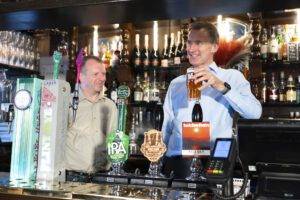
The duty paid on drinks on tap in pubs will be up to 11p lower than at the supermarket. The changes are designed to help pubs compete on a level playing field with supermarkets, so they can continue to thrive at the heart of communities across the UK.
The Brexit Pubs Guarantee announced in the Chancellor’s Spring Budget secures the pledge that pubs will always pay less alcohol duty than supermarkets going forwards.
It comes as other landmark changes to the alcohol duty system also come into effect today, which see drinks taxed by strength for the first time and a new relief – named Small Producer Relief – to help small businesses and start-ups create new drinks, innovate and grow.
Today’s changes have automatically lowered the duty in shops and supermarkets on many of the UK’s favourites including certain bottles of pale ale, pre-mixed gin and tonic, hard seltzer, Irish cream, coffee liquor and English sparkling wine, amongst others.
Prime Minister Rishi Sunak said: “I want to support the drinks and hospitality industries that are helping to grow the economy, and the consumers who enjoy the end result.
“Not only will today’s changes mean that that the price of your pint in the pub is protected, but it will also benefit thousands of businesses across the country.
“We have taken advantage of Brexit to simplify the duty system, to reduce the price of a pint, and to back British pubs.”
Jeremy Hunt, Chancellor of the Exchequer, said: “British pubs are the beating heart of our communities and as they face rising costs, we’re doing all we can to help them out. Through our Brexit Pubs Guarantee, we’re protecting the price of a pint.
“The changes we’re making to the way we tax alcohol catapults us into the 21st century, reflecting the popularity of low alcohol drinks and boosting growth in the sector by supporting small producers financially.”
The three alcohol duty changes that have taken effect today are only possible thanks to the UK’s departure from the EU and the guarantees set out in the Windsor Framework. The previous duty system was complex and unfair but now that the UK is free to set excise policy to suit its needs, the government has brought about common-sense reforms in order to support wider UK tax and public health objectives.
Brexit Pubs Guarantee
Over 38,000 UK pubs will benefit from lower alcohol tax on the drinks they pour from tap from today. This is because the government has expanded Draught Relief, which effectively freezes or cuts the alcohol duty on the vast majority of these drinks. This is to protect pubs, who are often undercut by supermarket competitors.
It means that the duty they pay on each drink poured from draught, such as pints of beer and cider, will be up to 11p cheaper than in supermarkets. The government has pledged that the duty pubs and bars pay on these drinks will always be less than retailers, known as the Brexit Pubs Guarantee.
This tax reduction is part of a wider shake up of the alcohol duty system which also comes into effect from today – the biggest in 140 years.
A simpler, more modern alcohol duty system
The alcohol duty reforms were announced at the Autumn Budget in 2021. The reforms pledged to modernise and simplify a duty system that had not been changed in 140 years, only possible as the UK has left the EU.
The key changes are:
all products taxed in line with alcohol by volume (ABV) strength, rather than different duty structures for different drinks
fewer main duty rates, from 15 to 6, to make it easier for businesses to grow and operate
there will be lower taxes on lower alcohol products – those below 3.5% alcohol by volume (ABV) in strength – a huge growth area in the drinks industry
all drinks above 8.5% ABV will pay the same rate regardless of product type
This will mean that many UK favourites will see duty reductions. Irish cream will drop by 3p, cans of 5% ABV ready-to-drink spirit mixers by 6p, Prosecco by 61p and 500ml 3.4% pale ale by 20p a bottle.
New tax relief to encourage small producers to make new drinks
The UK alcoholic drinks market reached just under £50 billion in 2022, up 6% year on year and is expected to continue to grow – sales are forecast to reach £60.9 billion in 2026. The UK government is laser-focused on continuing this burgeoning success.
The government is introducing Small Producer Relief effective from today, which replaces and extends the previous Small Brewers Relief scheme.
This allows small businesses who produce alcoholic products with an ABV of less than 8.5% to be eligible for reduced rates of alcohol duty on qualifying products. The new tax relief scheme promotes innovation in the drinks sector, giving small producers the financial freedom to experiment with new types of drink and grow their business. It also supports the modern drinking trend of lower alcohol beverages.
Barry Watts, Head of Policy and Public Affairs, Society of Independent Brewers, said: “These are the most significant changes to the alcohol duty system for generations which will have far reaching implications for what we order in the pub and what appears on the shop shelves. It is the culmination of five years of consultation on the future of Small Breweries’ Relief – a scheme that has made the huge growth of craft breweries possible over the past twenty years. These changes will finally address the “cliff edge” which was a barrier to small breweries growing and build on the scheme’s success by applying it to other alcoholic products below 8.5%.
“A key part of the new system is the draught duty relief is a gamechanger for the sector and allows for the first time a different duty to be paid for what is sold to our pubs. This will hopefully over time encourage more people to support their pub which is at the heart of our local communities.”
James Hayward, Director and Head Brewer at Iron Pier Brewery, Gravesend, added: “As a small brewery with a focus on cask ale, we welcome the new draught duty relief, alongside the revision of the small producers relief, which has in the past proved a restriction to growth over 5,000hl per annum. The idea that beer sold in pubs can now pay a lower rate of duty than supermarkets is a good one and will hopefully lead to further changes to protect the pub and its role in society. The previous Small Brewers Relief was successful in creating a diverse brewing industry in the UK, and to see that extended to other producers will hopefully have a positive effect on other beverage producers as well.”
Read more:
Brexit Pubs Guarantee announced in Spring Budget comes into effect today meaning drinks in pubs will be up to 11p lower than supermarkets
Wetherspoons closes more pubs with dozens across Britain earmarked for …
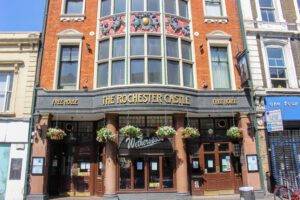
More Wetherspoons pubs are set to pull their final pints this year with 22 at risk of calling their last orders.
Two more locations are now confirmed to have closed, or be shutting soon; The Bankers Draft in Eltham, London is set to shut its doors on August 20, while The Saltoun Inn in Scotland shut up shop on July 30.
The total of Wetherspoon pub closures this year now stands at 29.
The hospitality company – which has 827 pubs throughout the UK – said ‘almost all’ of the pubs facing closure were located nearby another Wetherspoons.
Their recent pre-closure trading update suggests the closures were due to ‘difficult trading circumstances for the hospitality industry in recent years’ and comes on the day that the government’s Brexit Pubs Guarantee, announced in the Chancellor’s Spring Budget securing the pledge that pubs will always pay less alcohol duty than supermarkets going forwards, came into effect.
Boss Tim Martin, said that customers are opting to stay at home and drink cheap supermarket beer instead of going out to their locals.
The pub chain has denied that its series of pub closures was ‘a money raising exercise’.
The 13 Wetherspoon pubs listed as under offer and are at risk of shutting their doors are:
The Alfred Herring – Palmers Green
The Cross Keys – Peebles
General Sir Redvers Buller – Crediton
The Butlers Bell – Stafford
The Percy Shaw – Halifax
Foxley Hatch – Purley
Asparagus – Battersea
Millers Well – East Ham
Hudson Bay – Forest Gate
Capitol – Forest Hill
The Bankers Draft, Eltham – set to shut on August 20
The Widow Frost – Mansfield
Coronet – London
An additional nine pubs are listed as for sale, which means they could close for good, but at the moment they continue to operate as usual:
Wrong ‘Un – Bexleyheath
Jolly Sailor – Hanham
Resolution – Middlesbrough
The Rising Sun – Redditch
Sennockian – Sevenoaks
Lord Arthur Lee – Fareham
Plough & Harrow – Hammersmith
Moon on the Hill – Harrow
The Sir John Arderne – Newark
These 22 potential closures aren’t a first for the chain, as last September the company announced it would put 32 of its pubs up for sale
Among those 29 already closed are The Silkstone Inn in Barnsley, Angel in Islington, and Postal Order in Worcester
The pub chain has opened three new venues this year and the chain is setting their sights ahead to the next financial year.
In a pre-close trading update published in July, Tim Martin, said: ‘The company expects profits in the current financial year to be in line with market expectations
‘As a result of a continued improvement in sales and a slightly reduced expectation for cost increases, for example energy costs, the company anticipates an improved outcome for the next financial year.’
The 29 Wetherspoons that have already closed
The John Masefield – New Ferry
Angel – Islington
The Silkstone Inn – Barnsley
The Billiard Hall – West Bromwich
Admiral Sir Lucius Curtis – Southampton
The Colombia Press – Watford
The Malthouse – Willenhall
The John Masefield – New Ferry
Thomas Leaper – Derby
Cliftonville – Hove
Tollgate – Harringay
Last Post – Loughton
Harvest Moon – Orpington
Alexander Bain – Wick
Chapel an Gansblydhen – Bodmin
Moon on the Square – Basildon
Coal Orchard – Taunton
Running Horse – Airside Doncaster Airport
Wild Rose – Bootle
Edmund Halley – Lee Green
The Willow Grove – Southport
Postal Order – Worcester
North and South Wales Bank – Wrexham
The Sir John Stirling Maxwell – Glasgow
The Knight’s Templar – London
Christopher Creeke – Bournemouth
The Water House – Durham
The Worlds Inn – Romford
The Saltoun Inn – Fraserburgh
Read more:
Wetherspoons closes more pubs with dozens across Britain earmarked for closure.. is your local calling last orders?
Why ‘quiet firing’ is far from the easy way out

By now, you’ve likely heard of ‘quiet quitting’, when employees commit to doing the bare minimum that their job description demands.
The term gained traction in March 2022 after an employment influencer, Brian Creely, used it on social media to describe ‘coasting’ at work – and the phenomenon has only grown in strength thanks to the financial frustrations brought about by the cost-of-living crisis. Whilst this refusal to go the extra mile can prove frustrating for employers – who are unable to find a legitimate reason for dismissal – it’s important for CEOs, directors and mid-managers alike to address these challenges with kindness, rather than responding in kind.
What is quiet firing and why do companies do it?
Michael Doolin, Managing Director, Clover HR explains that ‘Quiet firing’ is the latest backlash response to the workforce checking out. It generally consists of gradually nudging ‘problem’ employees out of the company rather than firing them outright – and it does much more harm than good. What’s more, your company could be engaging in this non-committal trend without even knowing.
As a form of conflict avoidance, it’s only natural that some should see this passive-aggressive push-out tactic as a convenient way of preventing a scene. They see little harm in withholding training, opportunities, recognition and support if it achieves the result that they want – getting certain individuals gone – without the need to take costly, public action that could potentially spook other members of staff. Yet they couldn’t be more wrong.
The dangers of quiet firing
The truth is that quiet firing is a type of gaslighting that can prove dangerously counterproductive for any company engaging in it. A form of neglect, it cultivates a toxic workplace environment across the board – not only prompting the intended ‘targets’ to up and leave but also causing more valued workers to hand in their notice. Other members of staff are not oblivious to the relentless criticism that goes into quiet firing and, once the bullying they have witnessed makes it into the public domain, you’ll find yourself facing an unfavourable reputation that decimates future recruitment prospects.
Of course, excessive critique may also be interpreted as harassment, potentially landing you in trouble with HR. Whilst we should all expect a certain degree of constructive criticism in the workplace – using feedback to fuel personal development within our role – negative comments become considerably less helpful when they form part of a consistent barrage of minor niggles picked up on to distress or embarrass the recipient. The inability to justify such behaviour in terms of the good of the company could therefore lead to personal injury claims and lawsuits – particularly if the victim of the unfair treatment is able to attribute their poor performance or detached behaviour to difficulties experienced as part of a disability. Indeed, the Equality Act states that those protected must be offered reasonable adjustments by their employers before disciplinary action is taken, making it even more difficult for you to disprove that your failure to address concerns directly constituted managerial misconduct.
Naturally, not all quiet firing behaviours are quite so transparent, with practices such as withholding opportunities, raises and promotions often being regarded as more innocent. Once again, however, this soon causes discontent to spread throughout your wider team. As soon as others notice that certain individuals are meeting their targets and mastering the skills required for their roles without reaping rewards for their efforts, it’s goodbye to team morale. People will lose all motivation, feeling that their own performance will fall under the radar as well. Giving staff members menial tasks that fall beneath their abilities and skillset is likely to have a similar effect.
What can employers do to safeguard productivity instead?
Whilst it may seem contradictory, focussing on fostering a more positive culture based around recognition and praise has proven to be one of the most effective ways of preventing quiet quitting. If staff members are thanked and encouraged before there is a problem in the first place, they are more likely to develop additional motivation to continually demonstrate commitment to your team.
One-to-one conversations about personal progress also help to combat employment fatigue. Take the time to sit down with each individual in your department to find out what they want to achieve and how they might feel more comfortable within your company. Fostering a culture of movement and advancement through career development plans will prevent people from losing interest and checking out.
It’s essentially about improved communication. Indeed, it’s regrettable that, in 2022, we find ourselves talking about trends like quiet quitting and quiet firing at all, as both reveal an uncomfortable truth about the state of the modern workplace: both employers and employees are losing the ability to connect with one another. Old-fashioned managerial structures focussed heavily on hierarchy are quite possibly to blame, particularly in an age of employee empowerment when worker experience is more central than ever. By opening up dialogues between workers and bosses, however, both parties will develop mutual respect and learn to work peacefully together, rather than perpetuating silent war.
This bid for increased equality brings us to our final point: remember that it’s not just employees who are guilty of disengaging. Whilst some instances of quiet firing are indeed carried out with malicious intent, the majority of situations come to a head as a result of absentee managers who are not actively engaged in training, recognising and rewarding their supervisees. Rather than allowing such inadvertent quiet-firing behaviours to continue, organisations must therefore invest time and effort into reengaging those at the top, too.
When employees at all levels are given the resources and environment they need to thrive in and enjoy their roles, you will soon start to see the benefits of investing in the futures of those who work for you. Take a stance to support mental health and implement better occupational health measures to improve behaviour and performance across the board. There are plenty of positive actions you can take to address workplace discontent – all of which should limit the need to roll up your sleeves and address dismissals head on in the rare event that your affirmative approach to challenge should fail.
Given that the effects of quiet firing can be so devastating across an organisation – and can come about without managers and employers even realising it – it’s essential that you remain attentive to company culture and call in for HR help to create a more positive workplace environment however you can. If bosses and workers are to move forward in the most productive way possible, both quiet quitting and quiet firing must – loudly and clearly – be consigned to the past.
Read more:
Why ‘quiet firing’ is far from the easy way out
Mid-year slump in business confidence confirmed by July data
New data from the Institute of Directors shows the drop in business confidence that was picked up in June has been sustained into July.
The monthly IoD Directors’ Economic Confidence Index, which is the most-timely indicator of UK business sentiment, fell from -6 in May to -31 in June, suggesting a significant deterioration in the business environment. Today’s data for July gives a similar reading of -30 confirming that the deterioration in June was a substantive change rather than a monthly blip.
Kitty Ussher, Chief Economist at the Institute of Directors, said: “Business leaders are feeling a mid-year slump in confidence compared to earlier in the year: the IoD Directors’ Economic Confidence Index has now come in at the relatively low level of around -30 for the second month in a row.
“With inflation proving more persistent than was previously expected, and more firms starting to experience the negative impact of rising interest rates, there is a greater sense of caution in the air than in the Spring. Although our data still suggests economic growth, investment intentions are lower due to increased awareness of external economic risk.”
The IoD Directors’ Economic Confidence Index measures the net positive answers from members of the Institute of Directors to the question ‘How optimistic are you about the wider UK economy over the next 12 months?’ on a five-point scale from ‘very optimistic’ to ‘very pessimistic’.
New data points will continue to be made available on the first day of each month containing data obtained from a survey of IoD members that is in the field during the previous month.
Read more:
Mid-year slump in business confidence confirmed by July data
New North Sea licences will ensure energy security, says Energy Minist …
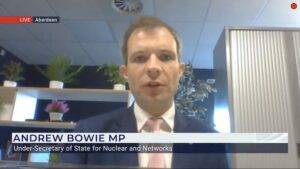
NEW licences for oil and gas exploration in the North Sea will ensure energy security for the UK, according to Energy Minister Andrew Bowie.
He told GB News: “We’re announcing these new licences in the North Sea with more to come, which will ensure our energy security moving forward.
“It means we’ll be less reliant on hostile foreign actors for our energy baseload for the fossil fuels that we’re going to be relying on for some years to come, which will mean that we’re really reducing our CO2 emissions by not importing those fossil fuels.
“But the announcement on future and further carbon capture and storage projects means that we’ll be taking that carbon dioxide out of the atmosphere and storing it under the North Sea, which means that getting to net zero will be more achievable. So it’s a win-win.”
In a discussion during Breakfast with Stephen Dixon and Ellie Costello, he said that nuclear power will also have a crucial role in the future.
Mr Bowie said: “It was only two weeks ago that we launched Great British Nuclear, we launched our small modular reactor competition, we’re pressing forward at pace with Hinkley Point C, with Sizewell C…
“The way to get to a clean, secure and safe energy baseload is to invest at scale in new nuclear projects and that’s why we’re announcing what we did just a few weeks ago.
“We need more of it and that’s what this government is determined to achieve.”
On net zero, he said: “The Prime Minister has been absolutely clear that we will be phasing out new diesel and petrol cars by 2030 but that doesn’t mean that you’re not going to be able to drive existing petrol or diesel cars on the road.
“We think this is an important part of our net zero commitment and we’re sticking to it.”
Read more:
New North Sea licences will ensure energy security, says Energy Minister Andrew Bowie
Rishi Sunak to meet leaders over energy security plans
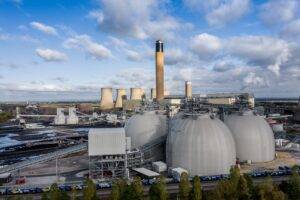
The prime minister will emphasise the need to strengthen Britain’s energy security when he meets industry leaders this week.
Rishi Sunak is to set out details of the government’s plans for the UK’s fossil fuel and green industries.
The Sunday Times says he will announce multimillion-pound funding for a carbon capture project in Scotland.
The Tories are facing internal divisions over their green policies, with some MPs calling for a rethink.
Environmental groups have expressed “deep alarm” at reports the government may water down its green commitments.
Anger over London Mayor Sadiq Khan’s plans to extend the capital’s ultra-low emission zone (Ulez) was widely seen as helping Conservatives seal a narrow victory in the Uxbridge by-election.
Both Mr Sunak and Labour leader Sir Keir Starmer have urged Mr Khan to reflect on the Ulez rollout as people struggle with cost-of-living pressures.
Mr Sunak is now setting out his position as being on the side of drivers.
In an interview with the Sunday Telegraph, he said he has ordered a review of low traffic neighbourhoods (LTNs) because he supports people to “use their cars to do all the things that matter to them”.
With intense heatwaves worldwide this month prompting climate change warnings, the backlash against Ulez has propelled the UK’s net zero target to the top of the political agenda.
The PM and his Energy Security Secretary, Grant Shapps, will meet senior representatives from the oil and gas, renewable and nuclear industries over the week.
The government said it hoped the meetings would ensure the UK was making the most of opportunities to boost its energy infrastructure and help it to press ahead with safeguarding energy security and reducing reliance on “hostile states”.
According to the Sunday Times, Mr Sunak will start the week in Aberdeenshire where he will announce funding for the Acorn carbon capture project, a joint venture between Shell UK and other companies.
The project would see harmful greenhouse gas emissions piped under the North Sea.
This would prevent carbon dioxide being released into the atmosphere, by capturing it at the point where the fossil fuel is being burnt.
The technology is seen by policy makers as a vital tool in reaching net-zero emissions by the middle of the century and could create up to 21,000 jobs, the Sunday Times reported.
Some environmentalists, however, are against it because they consider it a distraction from the urgent need to cut emissions.
The Acorn Project has been under development in various forms for more than a decade.
It had hoped to be one of the first projects of its kind to receive government backing in 2021, but lost out to two projects in the north of England around the Humber and the Mersey.
If given the go ahead this week, it would become Scotland’s first carbon capture and storage facility.
Mr Sunak will vow to “put powering up Britain from Britain first”, making the most of the UK’s resources, reducing reliance on imported fossil fuels and investing in renewables technologies.
The government, despite alarm from climate campaigners, is also committed to new oil and gas licences in the North Sea.
‘Failed energy policy’
In its energy security strategy, published in March, the government said it was committed to further oil and gas exploration to “minimise our reliance on overseas imports”.
Calling energy security “national security”, Mr Shapps said: “Since Putin’s illegal invasion of Ukraine the government has driven Putin from our energy market, paid around half of a typical family’s energy bill and grown our economy by driving forward major energy projects.
“This week we will go even further. Forging ahead with critical measures to power up Britain from Britain, including supporting our invaluable oil and gas industry, making the most of our home-grown energy sources and backing British innovation in renewables.”
Shadow climate secretary Ed Miliband said families and businesses were paying the price, in higher energy bills, of “13 years of failed Tory energy policy”.
“Labour will take no lessons from the party that banned onshore wind, crashed the market for solar, stalled energy efficiency, haven’t got any new nuclear plants started, and left us at the mercy of tyrants across the world.”
Jamie Peters, climate coordinator at Friends of the Earth, said ending the UK’s “reliance” on fossil fuels was the “only sensible and effective way” of increasing energy security.
“The UK is blessed with huge renewable energy resources, offshore and onshore, and we should be making better use of these for long-term security and economic prosperity.”
Read more:
Rishi Sunak to meet leaders over energy security plans
Sales of Covid tests increased by a third in July, says Boots

Sales of Covid tests have increased by a third this month, while official estimates of the number of people with the virus have also risen.
The UK Health Security Agency (UKHSA) said its surveillance showed a slight increase in cases and hospital admissions, including those in intensive care, as of July 20.
Its records show 3.7 per cent of 4,403 respiratory specimens were identified as Covid-19 compared with 3.6 per cent of 4,535 two weeks prior.
Boots also said its sales of tests had increased by 33 per cent between July 16 and 22 compared with the previous three weeks.
The Zoe Health Study, which takes its data from people self-reporting, estimates there were 606,602 people with symptomatic Covid on July 4 and that this has since risen to 789,695 on July 28.
This is still well below the 1,678,854 peak of December 30 and the 2,993,830 peak on July 18 last year.
Dr Jamie Lopez Bernal, consultant epidemiologist for immunisation at the UKHSA, said: “Covid-19 cases and hospital admission rates remain at low levels, though have risen very slightly in the past two weeks. We will continue to monitor these rates closely.
“The NHS will be in contact in autumn 2023 when the seasonal vaccine is available for those who are eligible due to health conditions or age.
“Remember that the virus can cause serious illness, especially for those who are older or immunosuppressed, so we urge everyone who is offered to take up the vaccine when offered.”
Nearly five million people use Zoe’s app to report Covid symptoms and test results, the company says, and of these, it estimates there are 59,357 daily new cases with the greatest proportion in Wales and Cornwall.
Professor Lawrence Young, a virologist at the University of Warwick, told the Times newspaper that the most recent rise may be a result of waning immunity and the cooler, wetter weather pushing more people
Read more:
Sales of Covid tests increased by a third in July, says Boots
Gina Miller voices fear for democracy over closure of political party …

The anti-Brexit campaigner Gina Miller has said “we don’t have a functioning democracy” if new political parties cannot access banking services, after she was told her own party’s account would be closed.
The government and financial services watchdog must step in, she said, to ensure new parties and MPs can access banking to be able to operate.
Miller said it was a “bigger issue” than the closure of Nigel Farage’s bank account, which led to a row resulting in the resignations of the top bosses at NatWest and Coutts.
Miller, who came to prominence bringing legal cases over Brexit, was told earlier this month by Monzo that her True and Fair party’s account would close in September.
She was told in a message on the bank’s app but was given no explanation.
Monzo has since said it does not accept any political parties and that the account was opened erroneously as it was not categorised as such in the application.
Nine banks had turned down the True and Fair party before it got the account with Monzo in November 2021, according to Miller.
She told the PA news agency: “That is the bigger issue, the fact that as a new insurgent political party you have no access to banking services, which is extraordinary in a democracy.”
The party has now found a small institution to bank with but, Miller says: “What if they turn around in future and say: ‘Well, actually, we’ve decided for no reason that because you’re a political party, you can’t have a bank account’?
“I think the government and the FCA [Financial Conduct Authority] have got to step in straight away because if this happened – we lose our account in September for Monzo, and then another bank or our new provider decides that they will use this same rule saying: ‘Oh well, we don’t accept political parties’ – then we in effect won’t exist.
“We wouldn’t be able to operate because we wouldn’t have any access to any banking services.”
Concerns over de-banking have mounted after Farage said his account with Coutts was shut down because it disagreed with his political views.
The prime minister, Rishi Sunak, weighed in to say his government was taking “tough action” to protect the free speech of banking customers.
The NatWest chief executive, Dame Alison Rose, stepped down this week after both Downing Street and the Treasury expressed their “serious concerns” about her conduct after she admitted to being the source of an incorrect BBC report on the former Ukip leader’s finances.
Miller noted that Farage had been offered an alternative account with NatWest and said her case pointed to wider issues.
“What I’m saying is actually even bigger than that, which is: how can we have a proper functioning democracy if we can’t have new parties or new elected people?”
She also raised concerns about newly elected MPs being de-banked due to lenders using rules around politically exposed persons (PEP) in a “dysfunctional way”.
Her True and Fair party is standing nine candidates in the next general election, with Miller running against the Tory former minister Chris Grayling in Epsom and Ewell.
The financial regulator is looking into whether PEP rules, over anyone considered to be higher risk because of their political connections, are applied too rigorously by banks amid concerns many British politicians are denied accounts.
Monzo said: “Like lots of banks, we do not accept any political parties as Monzo Business customers, in the same way that we don’t currently accept trusts, clubs and a range of other organisations.
“In this case, the account wasn’t originally categorised as a political party.
“After this was identified and corrected, the customer was given notice that the account would be closed. We recognise that this experience will have been frustrating for the customer and we’re sorry for that.”
There is no suggestion Monzo factored Miller’s political views into its decision.
Read more:
Gina Miller voices fear for democracy over closure of political party bank account

