

Jeremy Hunt said he has set Britain on a “sustainable path to lower taxes” as senior Conservatives urged the Chancellor to cut the burden in a bid to end Tory turmoil.
Hunt, who was appointed to No11 following Kwasi Kwarteng’s mini-budget last autumn, revealed he will launch a major review on how to make the public sector more productive.
The Chancellor argued the country could save money and travel down a “path to lower taxes” if the state sector was as efficient as the private sector.
Speaking at the right-leaning Centre for Policy Studies on Monday, Hunt announced the new public sector productivity review would report back by the autumn.
He said: “That would mean a boost not just to GDP, but GDP per capita.
“It would mean increasing tax revenues without increasing tax rates.
“And it would put us on a sustainable path to lower taxes.
“It is also the route followed by Margaret Thatcher whose union reforms, privatisations and support for competition delivered lasting growth and productivity.”
A Treasury source also claimed: “The public sector must challenge itself on how we can evolve in better ways and new delivery models, rather than being reliant on ‘just a little bit more’.”
The review will be conducted by Chief Secretary to the Treasury John Glen.
Hunt hopes increasing the efficiency of the state will help improve living standards and drive growth.
Despite the Chancellor’s comments, a pressure group pushing for tax cuts stressed Britons now want action.
Joe Ventre, digital campaign manager at the TaxPayers’ Alliance, told media: “Hard-pressed Brits have had enough of promises of tax cuts and no action.
“It should be incumbent on any Government to find efficiencies and save taxpayers’ money.
“The Chancellor must bear down on excessive spending and pass the dividend on to taxpayers now, not in the distant future.”
UK growth forecasts have been revised to show the nation will escape recession.
Accountancy firm KPMG predicted growth of 0.3 per cent this year, up from its previous estimate of 0.1 per cent.
The accountancy firm has pencilled in 1.1 per cent growth for 2024, with inflation expected to fall back to 2.9 per cent.
The Confederation of British Industry was also forced to revise its dire 0.4 per cent decline estimate to growth of 0.4 per cent.
However, the Eurozone was last week plunged into a technical recession with Germany and Ireland among the 20-member bloc recording two consecutive quarters of negative growth.
Hunt’s comments at the CPS event come after two Tory bigwigs urged Prime Minister Rishi Sunak to cut tax to bring the Conservative Party together.
Ex-Leader of the Opposition Sir Iain Duncan Smith and former Welsh Secretary Sir John Redwood have ramped up pressure on Number 10 to reduce the tax burden on Britons amid the cost-of-living crisis and an ongoing crisis engulfing the Conservative Party.
Allies close to former Prime Ministers Boris Johnson and Liz Truss have been pushing for Sunak to cut tax in a bid to boost the economy.
During his explosive resignation letter released on Friday, Johnson also took aim at his former Chancellor and leadership rival.
He said: “Our party needs urgently to recapture its sense of momentum and its belief in what this country can do.
“We need to show how we are making the most of Brexit and we need in the next months to be setting out a pro-growth and pro-investment agenda.
“We need to cut business and personal taxes – and not just as pre-election gimmicks – rather than endlessly putting them up.
“We must not be afraid to be a properly Conservative Government.”
However, the Prime Minister and his Chancellor have remained steadfast in their pledge to bring down inflation first.
The Consumer Price Index peaked at 11.1 per cent last October, reaching its highest figure since 1981.
Inflation fell to 8.7 per cent last month and Sunak hopes the figure can dip to around five per cent by the end of the year.
Read more:
Jeremy Hunt announces plans to slash taxes
Category: Uncategorized
Why carbon offsetting is crucial for the future of the finance industr …

Offsetting carbon output in the finance sector and why factoring environmentalism into a business plan is more important than ever.
But we need to be clear that while carbon offsetting is not the nirvana we all think it is, it is the best the fintech industry has today. This is according to Jeremy Baber, Chief Executive Officer, Lanistar.
“Concerns regarding the environment are at an all-time high. According to research conducted by The Round Up, 84% of customers would feel alienated from a brand or company with poor environmental practices, and products marketed as sustainable would grow 2.7x faster than those that aren’t,” stated Jeremy Baber.
“Someone has to be the first to make a stand against plastic waste. Our approach completely eliminates factory development, which already offsets our carbon output dramatically, but the virtual card? That reduces our plastic waste to near zero.”
Studies from institutions such as The Central Bank of the Netherlands revealed that, in 2015, the nation’s financial sector’s global warming potential (GWP) was 17 million kg CO2 equivalent (CO2e). The biggest contributing factors to this number were point-of-sale terminals, followed by debit card payment processing centres and plastic card manufacturing.
“Fundamentally, from the journey that we’ve started here, I envision that the rest of the world will want to follow. To move in that direction, of cutting plastic out, is what it’s really about. We have access to the virtual environment, and finance can thrive in that,” added Baber.
“And if you’re adopting a green strategy, it’s really about taking plastic out of the equation altogether and making sure that you can still have the same functionality and capabilities, but in a virtual space.”
It is clear to see that, now more than ever, businesses must consider their carbon output when putting together their business strategies. As awareness of the issue continues to grow and more measures are put in place to try and reverse the effects of climate change, it is likely that businesses will need to adapt or be left behind.
Fintech startup Lanistar has taken this new wave of environmental awareness and brought it to its financial product. A 100% virtual payment card hosted on the Lanistar app, which can be used to pay for goods using technologies like Google Pay for both online and offline transactions.
The Lanistar app is currently available in Brazil, with plans to have the product launched in the UK and further in Europe in 2023. Apple Pay operability is also set to become available to Lanistar app users in Summer 2023, allowing iPhone users to also get the most from their virtual card experience.
Read more:
Why carbon offsetting is crucial for the future of the finance industry
F1 Arcade secures £30M for global expansion

A Formula 1 competitive gaming chain, founded by hospitality heavyweight Adam Breeden, has secured £30m in funding from investors to fuel its expansion globally.
The concept, F1 Arcade, launched last year in St Paul’s, London and merges simulator racing with cocktails and food.
The sport has grown in popularity in recent years, largely made popular by Netflix’s ‘Drive to Survive’ series – with F1 Arcade already securing plans to bring its F1 Arcade to Boston and Birmingham.
However, a fresh funding round led by Liberty Media and Formula 1 will help the business expand across 30 further sites across the US, UK, Australia and the Middle East by 2027.
“Given the success of the first location and its appeal to such a diverse audience, we believe F1 Arcade has the potential to become one of the most sought-after experiential hospitality brands globally,” founder Adam Breeden said.
“For now, we are eagerly anticipating the opening of Birmingham UK in late 2023 and our first US site in Boston in early 2024 as well as announcing further locations imminently.”
Breeden is the co-founder of other popular competitive gaming chains such as Puttshack and Bounce.
Demand for experiential social experiences has surged recently, with Breeden saying that that experiential hospitality venues were “exploding” with popularity post-Covid.
Read more:
F1 Arcade secures £30M for global expansion
Double Dutch mixer brand secures £4M in funding to supercharge growth

Double Dutch, the producers of award-winning premium mixers and tonics, has announced the completion of its latest funding round, securing £4m investment.
The news comes after the female-founded brand grew distribution by 63% in the last year alone.
As the market player with the fastest volume growth in category, the premium drinks brand has completed this latest round of funding to grow the brand in the UK, strengthen its sales team and drive growth in export, with a primary focus on its secondary home market, Benelux, the UAE, and planning entry to the APAC region.
As part of its mission to double the expectations of mixers, Double Dutch has now secured the backing of more than 40 F&B and hospitality industry investors, including the likes of the Heineken – De Carvalho Family.
The new funding is part of plans to ready the drinks brand for its next stage of growth, where Double Dutch will be using a proportion of the £4m funding secured towards strengthening the brand in its UK domestic market to build brand awareness.
Innovation continues to be a key brand focus, with new trending mixer flavours planned over the next two years to meet consumers’ tastes. The brand also plans to expand the drinking occasions for Double Dutch consumers, expanding into new adult soft drink categories, and supported with a social-first strategy and integrated marketing campaigns to ensure the brand remains first-to-market with innovative new product development.
The investment will be used to drive deeper distribution in the on and off-trade, including new markets, with the UAE pinpointed as a key target for its all-year-round no/low opportunity.
The rapid growth has also led the inspiring drinks brand to expand the Double Dutch team across sales and HR, both in the UK and in export markets. The appointment of an HR manager brings with it a new global recruitment strategy.
To cement its position in the UAE region, Double Dutch has appointed Benita Bohsali as Head of International Growth, who has previously supported businesses including MMI, Red Bull and Heineken. In her new role, Bohsali will be responsible for strategic and commercial planning, with a focus on the key cities of Dubai and Abu Dhabi to increase on and off-trade listings and drive overall growth for the brand.
Raissa & Joyce de Haas, co-founders of Double Dutch, commented: “We’re delighted with the continued support from our investor partners and looking forward to them being a part of the next stage of our journey. We’re super proud to now be one of the fastest-growing mixer brands and can’t wait to see our further growth in the UK, Benelux and beyond.”
Ewan Venters, CEO at Hauser & Wirth and Investment Director at Double Dutch, added: “Watching Double Dutch grow into one of the most dynamic businesses in the drinks industry today has been a real pleasure. Their stratospheric rise in the world of mixers has been through incredible hard work, a robust strategy and an unwavering vision to shake up the mixer market. As their Investor Director, it’s been exciting to help shape the next stage of business acceleration with the planned impact of this fundraise on their growth ambitions. This brand is one to watch.”
Double Dutch is now stocked in more than 45 countries around the world, including as the exclusive tonic for Soho House globally.
The drinks take inspiration from the world of natural flavours, with unique, bold and unexpected flavour pairings, made with high quality ingredients and no artificial flavouring, colours or preservatives.
All the products are naturally vegan and gluten free, and as part of the twin founders’ mission to do business the right way, the brand is proudly Carbon Neutral and is pursuing B-corp status.
The full range of Double Dutch flavours are available via the Double Dutch website or Amazon, with a select range of the brand’s mixers available at Waitrose or Ocado and Tesco.
Read more:
Double Dutch mixer brand secures £4M in funding to supercharge growth
Windfall tax to be suspended if energy prices drop

The windfall tax on oil and gas firms will be suspended if prices fall to normal levels for a sustained period, the government has announced.
Halting the windfall tax would cut the overall tax rate on energy firms from 75% to 40%.
A windfall tax is used to target firms which benefit from something they were not responsible for.
It was introduced last year to help fund a scheme to lower energy bills for households and businesses.
Energy firm profits have soared recently, initially due to rising demand after Covid restrictions were lifted, and then because Russia’s invasion of Ukraine raised energy prices.
But oil and gas prices have now come down from their highs.
In a statement, the Treasury said the windfall tax would remain until March 2028 but that the tax rate would fall if the average oil and gas prices fall to, or below, a set level for two consecutive three-month periods.
The level has been set at $71.40 per barrel for oil and £0.54 per therm for gas.
Brent crude oil was trading at $75 per barrel on Friday morning, with gas prices at around £0.62.
Energy firms have been urging ministers to reduce the windfall tax, warning that it was causing companies to pull back investment.
In April, the UK’s largest oil and gas producer Harbour said it would shed 350 UK onshore jobs as a result of the windfall tax. French oil giant TotalEnergies also said it would cut its planned 2023 North Sea investment by a quarter – £100m – because of the extension to the windfall tax.
The Treasury said its decision had reflected those concerns.
It said any fall in investment “puts the long-term future of the UK’s domestic supply at risk, meaning we would be forced to import more from abroad at a time when reliable and affordable energy is a focus for families and businesses”.
Trade body Offshore Energies UK welcomed the announcement, but warned the industry still faced challenges.
Its chief executive David Whitehouse said: “This is a step in the right direction, but many more will need to be taken to restore confidence to our sector.
“We will now work closely with government and lenders to understand the detail of the measure and its effectiveness at unlocking investment.”
However, the possible suspension of the windfall tax was criticised by the Green Party.
“The government seems happy to allow these huge corporations to not only wreck the climate but to profit off the back of the cost-of-living crisis which they themselves have contributed to,” said Green co-leader Adrian Ramsay.
“Instead, the government should be tightening the tax, closing the loopholes and ensuring the money raised helps people through the cost-of-living crisis and funds the sustainable green energy jobs in the renewable sector we urgently need.”
Greenpeace UK’s climate campaigner, Georgia Whitaker, said: “Irrespective of what happens to the price of oil and gas, the tax these companies pay should be higher, permanently.
“This cash should be used to help insulate homes and transition the UK to cheap, clean energy, not fill the bank balances of already wealthy shareholders.”
Read more:
Windfall tax to be suspended if energy prices drop
Keeping UK energy bills down over winter cost almost £40bn
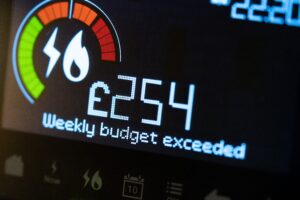
The UK’s cost of keeping energy bills down for homes and businesses over the winter months added up to almost £40bn, the first official government total shows.
The Treasury pegged the final cost of keeping a lid on the UK’s energy bills at £39.3bn between October 2022 and March 2023 after Russia’s invasion of Ukraine propelled energy market prices to record levels.
The unprecedented jump in wholesale energy costs forced the government to make its biggest ever intervention on energy bills at a cost to the exchequer of about £2,500 every second since October, it said.
Home energy bills had been on course to more than triple in the space of a year to reach an annual average of £4,300 in the first quarter. In response, the government spent £21bn to cap the average dual fuel bill at £2,500 through its energy price guarantee. It spent a further £12bn to give every household a £400 rebate in order to reduce costs further.
The National Audit Office (NAO) criticised the schemes for offering support to millions of households that were still able to afford their energy bills. The NAO had forecast that the government’s support plans would cost £69bn, but falling market prices have reduced the cost of the schemes.
The Treasury also spent £5.5bn over the winter through its energy bill relief scheme, which provided a discount to businesses and public sector organisations such as schools and hospitals between October and March.
The government has sharply curtailed its support as energy market prices have tumbled from their highs last year, but experts have warned that market prices could remain well above pre-pandemic levels until the end of the decade, keeping 6.5m households in fuel poverty.
Household bills are now protected by a price cap set by the energy regulator, Ofgem, equivalent to £2,074 for the typical household’s annual gas and electricity consumption from July, which is still double the rate before energy market prices began to climb.
Ministers have replaced the government’s energy price guarantee, and its one-off £400 grants, with a series of payments targeted at the most vulnerable that include a £900 payment for those on means-tested benefits, £300 for pensioners and an extra £150 for disabled people.
However, about 1.7m households in severe fuel poverty are expected to miss out on the extra help because they are not registered to receive certain benefits, according to researchers at the University of York. These households are estimated to include 688,000 fuel-poor families with children.
The business bills relief scheme has been replaced with a far less generous arrangement that has left thousands of small businesses fearing they may go bust before next winter.
The government’s other energy support schemes, including support for “off grid” households and businesses that use alternative fuels, came to almost £1bn over the last winter, according to the government’s tally.
Read more:
Keeping UK energy bills down over winter cost almost £40bn
HMRC to close self-assessment helpline for three months

HMRC has announced that it will pilot a new ‘seasonal model’ for its self-assessment helpline in an attempt to relieve pressure on its phone lines and prioritise urgent queries.
The initiative, set to run for three months from 12th June 2023, will experiment with directing self-assessment queries from the helpline to HMRC’s digital services, which include its online guidance, digital assistant and webchat.
The vast majority of self-assessment customers use HMRC’s online services, with 97% filing online, the tax authority said.
HMRC has faced significant pressure to improve service levels in recent months, having downsized its customer service workforce from 25,500 to 19,500 in the past five years due to its push towards digitalisation.
But the fresh initiative, according to the revenue body, will free up 350 advisers to answer around 6,600 “urgent” self-assessment calls each day.
“A seasonal helpline will make more of our expert advisers available where they are most needed during the summer months,” said Angela MacDonald, deputy CEO and second permanent secretary at HMRC.
“Our online services, including the HMRC app, are quick and easy to use and have been significantly improved. I urge customers to explore these fully before deciding to wait to speak to us on the phone.”
But according to Seb Maley, CEO at IR35 consultancy firm Qdos, the timing of the new pilot scheme is inappropriate and merely “highlights chaos” at the tax office.
“We’re in a cost of living crisis, the self-employed are being hit with tax rise after tax rise and instead of increasing the support available, HMRC reduces it.
“HMRC can dress it up however its wants, but closing the phone lines for self-employed taxpayers is only going to result in problems.”
Maley also argues that the move runs counter to HMRC pleas earlier this year for self-employed workers to file and pay their tax bills, calling the plans “illogical”.
In similarly critical fashion, Chris Etherington, private client tax partner at RSM UK argues that the Summer pilot scheme could pile undue pressure onto the phone lines when they reopen in September.
According to HMRC, the self-assessment helpline receives far fewer calls over the Summer, with calls around 50% higher between January and April compared with June to August.
But Etherington argues that a summer closure is likely to worsen the already extensive waiting times at the beginning and end of the year and cause some taxpayers to face a “bleak winter”.
“The closure could come as an unwelcome shock to many taxpayers and could be a short-sighted move. HMRC already struggles to deal with the level of phone calls that come through in the winter ahead of the 31 January deadline, and this could make the problem worse.”
Taking a more optimistic stance, Glenn Collins, ACCA UK’s head of technical and strategic engagement, says he is “pleased HMRC is looking at all the options to tackle the current poor performance”, praising the tax authority for being “flexible and adaptable”
However, he goes on to echo Etherington’s views, pointing out the “tension” between HMRC urging taxpayers to file their returns early whilst closing one of the key mechanisms for this.
“It’s all very well picking the lowest demand point to force people onto a platform which many aren’t comfortable with, but not if you’re going to try to increase demand by encouraging early filing at the same time.
“HMRC will not be able to effectively measure the change in behaviour, as the alternative has been removed. What HMRC should be focusing on is the proportion of queries settled in one interaction, this is not currently good enough and the fear is that this may get worse.”
Read more:
HMRC to close self-assessment helpline for three months
Battery spinout About:Energy secures £1.5m seed investment

Spinout About:Energy has successfully closed a seed investment round with funding of £1.5 million.
The rounds had participation from HighSage Ventures, Vireo Ventures, Rishi Khosla, Plug & Play Ventures, and Electric Revolution Ventures.
The funding will enable the battery software company, which started trading in 2022 after spinning out of the University of Birmingham and Imperial College London, to establish an independent laboratory, expand the team, and accelerate industry adoption of its first product – a proprietary software platform called The Voltt, which was launched just two months ago.
The transition to electrification involves meeting the huge engineering challenge of building products with batteries and this requires accurate modelling of how a battery generates heat, fast charges, and ages over its lifetime. To do this, the company’s founders will leverage existing world-leading research from Imperial College London and the University of Birmingham, which includes expertise in both electrochemistry and engineering.
The Voltt is set to transform the battery value chain by offering a comprehensive library of commercially available cells and their attributes alongside advanced modeling capabilities. This will improve and clarify decision-making around battery design by simplifying cell selection, improving performance evaluation, and providing detailed insights into battery behaviour to optimize the use of electric vehicles.
The Voltt is currently being used by cell manufacturers, battery system developers, and automotive OEMs around the world. About:Energy’s ultimate aim is to sell the Voltt to every industry that relies on batteries for energy storage.
About:Energy’s laboratory will be located in London. It will enable the company to understand the lifetime of hundreds of different batteries and their impact on the environment, by collecting data on performance, cost, and carbon intensity and provide industry with a dataset that can optimize battery design holistically. This data is already being leveraged by About:Energy’s customers which include leading automotive companies and battery manufacturers.
Gavin White, Co-Founder and CEO of About:Energy, said, “Our focus for the next 12 months is to establish About:Energy as a leading battery data and software company, and to leverage the power of The Voltt to drive innovation and efficiency in the industry. This investment will enable us to integrate the latest battery research from our partnering institutions, creating a comprehensive solution for battery design and optimization.”
Professor Emma Kendrick, Professor of Energy Materials at Birmingham’s School of Metallurgy & Materials, commented, “This investment will enable further knowledge transfer in characterisation from academic partners and allow A:E to grow their high accuracy testing methods and procedures, providing data for the Voltt, and tailored solutions for sustainable battery design, manufacturing and integration.”
David Coleman, CEO of University of Birmingham Enterprise, said: “One of our primary goals is to see products and services launched that are based on University research. It’s satisfying to see About:Energy launch its first product and achieve investor interest in such a short period of time since the company launched in 2022, particularly as the product will help accelerate the adoption of cleaner and more environmentally friendly options for energy storage.”
Read more:
Battery spinout About:Energy secures £1.5m seed investment
Uber announces new updates to make it easier to go green

For the first time Uber passengers will be able to personally track the emissions they have avoided when choosing zero-carbon rides, as part of a series of new features announced today which will make it easier for riders to go green across the world.
Rider Emissions Savings is one of several new updates to be launched soon by Uber, as the company doubles down on its zero-emissions goals. Rider Emissions Savings, an in-app feature that tracks the amount of CO2 avoided by riders taking trips through Uber Green and Comfort Electric – incentivizing riders across the world to make green choices.
In a new commitment, also announced today, the company is aiming to eliminate emissions on all Uber Eats deliveries globally by 2040, and end all unnecessary restaurant plastic waste by 2030. This will be supported through partnerships including the World Wildlife Fund to support restaurants and couriers, as well as leaders in e-mobility such as Cooltra and Human Forest to increase car-free deliveries.
This builds on an existing commitment to become a zero-emissions mobility platform in London by 2025, in Europe and North America by 2030, and globally by 2040.
Uber operates in more than 10,000 cities with roughly 1 million trips every hour. Enabling the 130 million people who use Uber around the globe to go green faster will have a positive impact on cities around the world.
Dara Khosrowshahi, Uber CEO, said: “Driving down emissions is the defining challenge of our generation, and every day we make dozens of choices that impact the planet, from the food we eat to the transportation we choose. While our personal values guide these decisions, convenience does too, which is why Uber is making it easier for millions to make greener choices, one ride and delivery at a time. The small changes we’re announcing today add up to something big: building sustainability into the core user experience across our global platform to reach our zero-emissions goals together.”
Uber has more than 60,000 EVs active on the platform, the largest number of any platform in North America and Europe. Over 10,000 EVs are on the road in London now driving over 18% of miles, making the city Uber’s capital of electrification.
Uber is building ‘Smart Charging’ features for EV drivers that will use machine learning to recommend when and where drivers should charge, so they can maximize their earnings. Drivers will also be able to filter trip requests based on a driver’s battery level and make the at-charger experience seamless.
In 2020 Uber announced a £5m investment to build 700 new EV charging points in areas close to where drivers live, growing London’s EV Charge Point Network by more than 7%.
Read more:
Uber announces new updates to make it easier to go green

