

Sir Charlie Mayfield says ill-health is driving millions out of work, costing employers and the economy billions — but the problem is “not inevitable.”
Britain is at risk of an “economic inactivity crisis” as the number of sick and disabled people out of work continues to rise, according to a government-commissioned review led by Sir Charlie Mayfield, the former John Lewis chairman.
The report warns that 800,000 more people are now out of work due to health conditions than in 2019, costing employers £85 billion a year in lost productivity, sick pay and staff turnover. Without intervention, a further 600,000 workers could leave the labour market by 2030.
“This is not inevitable,” Sir Charlie said, as he launched a new taskforce aimed at helping people return to work and tackling what he described as a “vicious cycle” of poor health and economic inactivity.
The report, commissioned by the Department for Work and Pensions (DWP) but produced independently, found that one in five working-age people is now out of work and not seeking employment — a major reversal after decades of improving participation.
Sir Charlie said sickness is costing the UK far more than just business losses.
“Work is generally good for health, and health is good for work,” he said. “For employers, sickness and staff turnover bring disruption and lost experience. For the country, it means weaker growth, higher welfare spending and greater pressure on the NHS.”
According to some estimates, illness-related inactivity costs the wider economy £212 billion a year — almost 70% of annual income tax receipts — through lost output, welfare payments and additional healthcare costs.
The Office for Budget Responsibility (OBR) expects spending on health and disability benefits for working-age people alone to reach £72.3 billion by 2029–30.
Mayfield said the surge was being fuelled by a “sharp rise” in mental health conditions among younger workers and chronic musculoskeletal problems — such as back pain and joint issues — among older staff.
His taskforce will also work with GPs, who he said often face pressure from patients to issue sick notes but find it difficult to assess whether someone could work in a modified role.
Business groups broadly welcomed the taskforce but warned that parts of Labour’s Employment Rights Bill risk discouraging firms from hiring people with existing health conditions.
The Bill includes guaranteed hours and restrictions on zero-hours contracts — measures that some retailers fear will make flexible hiring harder.
Helen Dickinson, chief executive of the British Retail Consortium, said retailers were committed to supporting employees with ill-health but that “the government’s goals and policies are at odds with one another.”
“While encouraging employers to invest in workforce health and provide flexibility, they risk making it more difficult,” she said.
In response to the report, the government announced a partnership with over 60 major employers, including Tesco, Google UK, Nando’s and John Lewis, to test new health and wellbeing initiatives aimed at reducing sickness absence and improving return-to-work rates.
Over the next three years, these programmes will form the basis for a voluntary national workplace health standard, expected by 2029.
Work and Pensions Secretary Pat McFadden said the partnership was “a win-win for employees and employers.”
“This is about keeping good, experienced staff in work and supporting people to stay healthy for longer,” he said.
Ruth Curtice, chief executive of the Resolution Foundation, said the review “accurately identified a culture of fear, a dearth of support and structural barriers to work” as key issues behind Britain’s worsening inactivity rate.
The CIPD, representing HR professionals, welcomed the focus on prevention. Its chief executive, Peter Cheese, said the report’s success “will depend on how well its recommendations are understood by business and backed by national and regional policymakers.”
Dr Roman Raczka, president of the British Psychological Society, said the shift toward “rehumanising the workplace” was overdue, but warned that not everyone could or should return to work.
“The workplace itself can be a root cause of poor mental health,” he said. “Those signed off sick deserve timely access to safe, compassionate care.”
Read more:
Ex-John Lewis boss warns UK faces £85bn sickness bill and economic crisis
Category: Uncategorized
OpenAI strikes $38 billion deal with Amazon to supercharge AI computin …

OpenAI has signed a landmark $38 billion agreement with Amazon Web Services (AWS) to secure the immense computing power required to train and deploy its next generation of artificial intelligence systems — marking one of the biggest technology infrastructure deals ever struck.
The partnership, announced this week, will give the maker of ChatGPT access to vast fleets of graphics processors — including hundreds of thousands of Nvidia chips — hosted within Amazon’s cloud network. OpenAI will begin using AWS infrastructure immediately, with full deployment expected by the end of 2026 and room to expand further beyond 2027.
The move represents a significant shift for OpenAI, which until now has relied heavily on Microsoft’s Azure platform to power its models. The deal also underscores the intensifying race among cloud giants to dominate the lucrative AI infrastructure market. Following the announcement, Amazon shares surged to a record high, briefly valuing the company at more than $2.74 trillion, as investors hailed the agreement as a strong endorsement of AWS’s capabilities.
Sam Altman, OpenAI’s chief executive, said the partnership was critical to scaling what he called “frontier AI”. “Scaling frontier AI requires massive, reliable compute,” he said. “Our partnership with AWS strengthens the broad compute ecosystem that will power this next era and bring advanced AI to everyone.”
For Amazon, the deal serves as a powerful vote of confidence in AWS at a time when some analysts had questioned whether the cloud division was falling behind rivals Microsoft and Google in the AI race. The agreement ensures AWS remains central to the next phase of AI development — an arena now defined by unprecedented hardware and capital demands.
Industry analysts said the scale of the contract highlights how the economics of artificial intelligence have changed. Paolo Pescatore, analyst at PP Foresight, described it as “a hugely significant deal and a clear endorsement of AWS’s compute capabilities”. The deal also reflects how AI development has become a game of access — not just to algorithms and talent, but to computing power on a colossal scale.
OpenAI has been on a global dash to secure that capacity. In addition to the Amazon deal, it has signed agreements with Nvidia, AMD and Oracle to access more powerful processors and cloud data centres. Altman has previously said the company plans to invest around $1.4 trillion in computing resources over the coming years, targeting 30 gigawatts of infrastructure — enough to power roughly 25 million American homes.
The agreement also follows OpenAI’s internal restructuring with its largest backer, Microsoft, which valued the company at $500 billion and paved the way for it to evolve from a non-profit research outfit into a profit-driven business. The reorganisation transferred some control to a new non-profit foundation that holds equity in OpenAI’s commercial arm while removing Microsoft’s right of first refusal to supply its compute services — effectively clearing the path for the new partnership with Amazon.
However, the deal has reignited debate about whether the AI sector is heading into a speculative bubble. Nvidia, whose chips underpin most AI systems, last week became the world’s first $5 trillion company, its market value now roughly half the size of Europe’s entire benchmark equities index. Analysts warn that the rapid rise in valuations, coupled with vast capital outlays by AI developers, may prove difficult to sustain if the promised productivity gains do not materialise.
Despite those concerns, the OpenAI–Amazon deal sends a clear message: AI’s future will be shaped by those with the deepest computing resources. As cloud titans jostle for position, the partnership not only secures OpenAI’s access to power on an unprecedented scale but also cements AWS’s place at the heart of the global AI infrastructure boom.
For now, Altman appears undeterred by warnings of overheating. His stated ambition is to add one gigawatt of compute capacity every week — each unit carrying an estimated capital cost of more than $40 billion. If that pace continues, OpenAI’s collaboration with Amazon may only be the beginning of an even larger technological arms race redefining how artificial intelligence is built, trained and delivered worldwide.
Read more:
OpenAI strikes $38 billion deal with Amazon to supercharge AI computing power
Reeves shifts blame for looming tax rise to Brexit and austerity ahead …

Chancellor Rachel Reeves used a rare Downing Street address to lay the groundwork for her upcoming Budget, signalling that tough tax decisions lie ahead — but sought to pre-empt backlash by insisting the pressure on public finances “wasn’t our fault”.
In the speech, she said the UK economy was struggling not because of Labour’s policies but because of “longer-term factors” such as Brexit, decades of Tory austerity and rising global borrowing costs. “We must deal with the world as it is, not how we wish it could be,” she said.
Ms Reeves presented her forthcoming fiscal package as a choice between “investment and hope, or cuts and division”. She said she would do “what is right rather than what is popular”, placing emphasis on protecting the NHS, reducing national debt and improving the cost of living. But she also acknowledged that the measures required could mean pain for taxpayers — in particular the “wealthy” and property-owners — and carry consequences “for years to come”.
With the public finances projected to be weaker than expected, analysts estimate she may need to raise around £20 billion to £30 billion in additional revenue, despite last year’s historic tax rises.
Ms Reeves stressed that any future tax decisions were not being taken lightly: “Any Chancellor of any party would be standing here facing the choices I face,” she said, placing the blame squarely on previous governments and global shocks rather than her own policies.
She specifically cited a barrage of international headwinds — from US tariffs and conflicts in Europe to supply-chain disruption and jump-in borrowing costs — as having undermined Britain’s growth prospects. “The world has changed,” she said, “and we’re not immune to that change.”
Although she reaffirmed the manifesto promises not to raise VAT or tax working-people’s payslips, she stopped short of committing not to raise income tax, or altering thresholds — leaving open the possibility of a “wealth tax” or a hike in capital taxes.
Opposition parties seized on the remarks, warning that Ms Reeves was setting the stage for a significant tax raid disguised as a responsible Budget. Conservatives argued the Chancellor was laying the blame for her own ask on others.
With the next Budget scheduled for 26 November 2025, markets will be watching closely. Ms Reeves warned that if lenders and investors doubted her commitment to fiscal rules, the UK’s cost of borrowing could rise further — potentially forcing even deeper cuts or higher taxes.
In sum, the Chancellor has raised expectations of tough decisions while making it clear she will not be the one held solely responsible — outsourcing the blame to Brexit, austerity and global chaos. Whether the public accepts that framing — and whether her fiscal package delivers growth alongside the pain — remains the key question.
Read more:
Reeves shifts blame for looming tax rise to Brexit and austerity ahead of budgeting storm
Bagels, burgers and seamoss top Deliveroo’s 2025 cravings list

Britain has taken the global food crown in Deliveroo’s much-anticipated 2025 “Deliveroo 100 Report”, which charts the most popular and fastest-rising delivery trends across nine countries.
London’s Papo’s Bagels topped the global list with its “Classic” smoked salmon and cream cheese bagel — the world’s number one order on Deliveroo this year — leading a record 16 UK dishes that made the global rankings.
Deliveroo’s global top ten was dominated by comforting, portable classics — bagels, burgers and sandwiches. The UK was one of just three countries to land two dishes in the top ten, with Papo’s Bagels’ “The Classic” at number one and 7Bone’s “Dirty Meal Deal” from Reading at number eight.
The rest of the top ten spanned continents, with Italy’s La Piadineria in Bologna taking second place, Dubai’s Rascals Deli in third, and Paris’s Pierre Sang claiming fourth with its Korean-inspired Bibimbap Boeuf Bulgogi.
Deliveroo said the global trends pointed to “culinary exploration without borders”, with traditional formats reinvented through innovation — from smashburgers to fusion flatbreads.
“Marking our ninth year, the Deliveroo 100 is more than a list — it’s a snapshot of global cravings and consumer habits,” said Jeff Wemyss, Deliveroo’s Vice President of Regional Growth. “This year’s list shows how communities connect through food, and how independents continue to shine alongside household names.”
The bagel has officially been crowned Britain’s comfort food of the year, with Deliveroo highlighting a “nationwide obsession” that has seen bagel shops and pop-ups thrive across the UK. Papo’s Bagels — an independent, family-run business born in lockdown — beat global restaurant giants to the top spot.
Its success, Deliveroo noted, “proves that local independents can capture the nation’s appetite and turn a humble classic into a cultural phenomenon.”
Deliveroo’s UK list reflects a nation of adventurous yet comfort-seeking diners. Alongside Papo’s bagel and 7Bone’s burger, the top orders included Crunch’s Ultimate Combo (London), Jason’s Sourdough Bread from Morrisons in Manchester, and Wingstop’s Garlic Parmesan Tenders in Birmingham. Health-focused and viral favourites also made the list, such as JENKI’s Matcha Iced Latte and Planet Organic’s Seamoss Gel.
Matcha mania continued to dominate 2025, fuelled by TikTok trends. JENKI’s Matcha Iced Latte reached number seven on the UK list, while Sticks N Sushi’s Matcha Chocolate Cake in Cambridge made number 29.
Sourdough also proved its staying power, with Manchester crowned the UK’s “sourdough capital” thanks to Jason’s loaves. Meanwhile, the rise of wellness products saw Planet Organic’s Myla’s Moss Seamoss Gel Gold break into the top 30 — a nod to consumers’ growing appetite for health-conscious choices.
At the other end of the spectrum, Deliveroo’s data revealed a surge in non-food items, including Wilko fans, Ann Summers’ Power Bullet Set, and skincare essentials like face masks — a reflection of how the app is becoming a one-stop shop for everyday needs.
Deliveroo also unveiled its “Biggest Climbers” of 2025, highlighting how customers are increasingly turning to the platform for lifestyle and retail purchases. Fans, jewellery, candles, cat litter, perfume and paint rollers were among the fastest-growing categories, driven by heatwaves, holidays and home improvement trends.
“We’re seeing an evolution in the way people shop,” said Wemyss. “Non-food orders are growing rapidly across the UK. Whether it’s a hearty smash burger or a perfectly ripe punnet of blueberries, Deliveroo is there for every need.”
This year’s Deliveroo 100 celebrates how technology, social media and local creativity are blending to reshape global tastes. As Papo’s Bagels and other independents rise to global fame, the message is clear: the UK’s appetite for flavour, fun and innovation shows no signs of slowing down.
From sourdough to seamoss, the nation’s taste buds are living their best delivery life.
Read more:
Bagels, burgers and seamoss top Deliveroo’s 2025 cravings list
Stonewall and SPP unite to tackle LGBTQ+ inclusion gaps in business an …

The Society of Pension Professionals (SPP) has joined forces with Stonewall to publish a new paper calling for stronger inclusion of LGBTQ+ individuals across the UK’s financial and business sectors.
The collaboration, part of SPP’s Inclusive Futures series, highlights the persistent inequalities that continue to affect LGBTQ+ people despite decades of social and legal progress.
The report, featuring insights from Simon Blake (pictured), Chief Executive of Stonewall, and Savannah Adeniyan, Solicitor at Travers Smith LLP and SPP member, shines a light on the inequalities that still shape financial security, workplace culture and representation in senior leadership. It calls on pension providers, employers and policymakers to translate diversity pledges into measurable action.
Blake warns that while the UK has made significant strides since the late 20th century, “a clear picture of inequality remains which flows through to financial inequality and a LGBTQ+ pensions gap.” He points to data from ILGA Europe showing that Britain has slipped from first to 22nd place in European equality rankings over the past decade, reflecting a wider pattern of stagnation and regression.
The figures are stark: two-thirds of LGBTQ+ young people have faced discrimination based on their sexuality or gender identity, while hate crime reports have climbed to nearly 28,000 incidents a year. In the workplace, more than half of LGBTQ+ employees report experiencing harassment or bullying, and almost a third say they do not feel able to be open about their identity at work.
Blake argues that the pensions and financial services sectors have a crucial role to play in addressing these systemic gaps. He urges employers to learn from LGBTQ+ history and lived experience, to ensure scheme information and communications reflect diverse family structures, and to make paperwork and policies genuinely inclusive. “This isn’t just about representation,” he writes. “It’s about dignity, fairness and ensuring our futures are built on equal foundations.”
Adeniyan’s contribution, titled Visible, Open, Engaging, offers a personal reflection on her experience as a queer Black woman in the legal industry. While she celebrates the progress that has made workplaces more inclusive, she acknowledges that barriers remain. “My queer identity has been welcomed throughout my career in a way that I know many LGBT+ professionals did not experience at the start of theirs,” she writes, recalling how early in her career she was advised to “go back into the closet” to get a foothold in law.
Although such attitudes are fading, Adeniyan says too many professionals still encounter “glass ceilings” or feel unable to be open about their identity for fear of harming their careers. Yet she remains optimistic, pointing to genuine strides being made across the legal and pensions industries. “The proper measure of diversity and inclusion is in actions, not words,” she concludes.
The paper makes a broader economic and moral case for inclusion, arguing that equality is not just a social goal but a strategic imperative for sustainable business. It calls for greater accountability in how organisations measure progress and challenges leaders to see inclusion as part of good governance and risk management.
Together, Stonewall and the SPP are urging financial and professional services to move beyond statements of intent and make inclusion a lived reality — one where every individual can plan, work and retire with security and pride.
Read more:
Stonewall and SPP unite to tackle LGBTQ+ inclusion gaps in business and pensions
Mulberry chief urges Labour to scrap ‘unfair’ tourist tax as luxur …
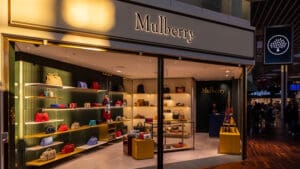
The head of British luxury brand Mulberry has called on the government to reinstate VAT-free shopping for international tourists, warning that the “unfair” tax burden is stifling investment and driving wealthy shoppers away from the UK.
Chief executive Andrea Baldo said the move would help revitalise Britain’s luxury and retail sectors — which have been hit hard by declining visitor spending since the 2021 abolition of the VAT rebate for overseas visitors — while boosting UK manufacturing and tourism revenues.
“Bringing back VAT-free shopping for tourists would be beneficial for the economy,” Baldo said. “You are competing with Paris and Rome — giving them an unfair advantage doesn’t make sense.”
According to data from Global Blue, spending by non-EU visitors in the UK remains at just 75% of pre-pandemic levels, compared with increases of 166% in Spain and 159% in France.
Mulberry estimates it has lost nearly £10 million in UK sales since the VAT-free shopping scheme was scrapped. Baldo said the loss of international footfall had been particularly visible in London:
“We’ve probably lost around a fifth of the traffic from international visitors. Our stores in Dublin and Amsterdam have almost doubled their business from travellers.”
Baldo said reinstating the VAT rebate would directly support UK manufacturing, with Mulberry’s Somerset production sites set to benefit from higher output if the policy were reversed.
The comments come as Chancellor Rachel Reeves faces growing pressure to stimulate growth after the Office for Budget Responsibility warned that weak productivity would cut Britain’s long-term economic potential, creating a £27 billion shortfall in fiscal forecasts.
Baldo acknowledged that reintroducing VAT-free shopping could prove politically contentious but argued that it was a matter of international competition, not privilege: “It’s not about giving tax relief to tourists — it’s about levelling the playing field. Our competitors in Europe already offer it.”
He added that removing the tax could provide an immediate boost to retail, hospitality and tourism — sectors critical to the UK’s economic recovery.
“Our business would invest more in UK production, and hotels, restaurants, and high street stores would benefit from the influx of international shoppers.”
Since joining Mulberry a year ago from Danish brand Ganni, Baldo has sought to stabilise the company following years of turbulence, including shareholder tensions between majority owner Ong Beng Seng’s Challice group and Mike Ashley’s Frasers Group, which holds a 37% stake.
Relations have since improved, with Frasers now backing Mulberry’s strategy and stocking its products in 15 Flannels stores, as well as Selfridges and John Lewis.
Mulberry, which raised £20 million in new funding this year, plans to open up to five new standalone stores across major UK cities including Birmingham and Liverpool, as it focuses on reconnecting with British consumers.
Baldo said the company was rebuilding its reputation as an accessible luxury brand while keeping its British heritage central. Sales at its Regent Street store are up 16% year-to-date, and the relaunch of the iconic Roxanne bag has drawn renewed interest from younger shoppers.
“We’ve got good momentum, although returning to profitability will take a minute,” Baldo said. “If we can leverage the love for the brand, we can grow the business.”
Baldo said Mulberry’s turnaround will succeed regardless of the government’s next fiscal steps, but warned that further tax increases could damage fragile consumer confidence.
He described the return of VAT-free shopping as “the gift under the Christmas tree” that Britain’s luxury, retail and hospitality sectors urgently need.
“We’re not asking for special treatment,” he added. “We’re asking for fairness — and the chance to compete on equal terms with the rest of Europe.”
Read more:
Mulberry chief urges Labour to scrap ‘unfair’ tourist tax as luxury sector reels from spending slump
Asda sells Leon back to founder after ‘junk food’ backlash
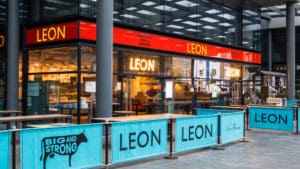
Asda has sold Leon back to its co-founder John Vincent, ending four turbulent years of ownership under the Issa brothers that saw the once health-focused fast-food chain accused of losing its identity.
The deal, which includes 46 company-owned restaurants and 25 franchise sites, comes amid growing criticism that Leon had drifted away from its founding principles of “natural fast food” in favour of higher-calorie, processed items.
Vincent, who launched the chain in 2004 with food campaigner Henry Dimbleby, said he plans to take “a good look under the bonnet” before making major decisions about the company’s direction.
“If you are a Leon guest, I want you to know we are on the case,” Vincent said. “We will now get on with dedicating ourselves to your enjoyment and to your health.”
While financial terms were not disclosed, industry sources suggested Vincent bought the business at a steep discount to the £100 million it fetched when the Issa brothers’ EG Group acquired it in 2021.
The sale completes a full circle for Leon, which the Issas first purchased via EG Group, their petrol forecourt empire, before transferring it to Asda in 2023 to help reduce EG’s multibillion-pound debt load.
The brothers’ control of Leon — and its subsequent integration into Asda’s operations — drew mounting criticism from health campaigners and industry insiders, who said the brand had abandoned its “naturally fast food” ethos.
In early October, co-founder Henry Dimbleby accused Asda of “destroying” the brand, pointing to menu changes such as burgers, nuggets, fries, cookies and cakes that replaced Leon’s former focus on nutritious options.
“I know how easy it is to be sucked down into going for what’s tasty — the sugar, the salt, the cheap,” Dimbleby told The Telegraph. “But in the long term, that’s going to destroy the brand.”
Under Asda, Leon also expanded into supermarket retail with frozen and microwaveable meals, and rolled out hundreds of branded coffee stations across the UK — a strategy designed to scale revenues but one that critics said diluted its premium, health-first image.
Leon’s most recent accounts show revenues fell from £64.9 million in 2023 to £62.5 million in 2024, reflecting weak consumer confidence and a loss of brand loyalty among its core customers.
The slowdown, combined with reputational strain, prompted speculation that Asda was preparing to divest the business. For Vincent, the buyback offers a chance to reclaim Leon’s original purpose — “food that tastes good and does you good.”
“We will take our time, listen to our guests and our teams, and make decisions that stay true to Leon’s mission,” Vincent said after the deal.
An Asda spokesperson thanked Leon employees for their “contribution and hard work” over the past two years, saying: “We wish them all the best as they move forward under new ownership.”
For Asda, the sale simplifies its portfolio as it focuses on debt reduction and supermarket integration following the Issa brothers’ leveraged takeover.
For Leon, it represents a second chance. Once hailed as Britain’s answer to healthy fast food, the brand now faces the challenge of rebuilding consumer trust and reaffirming its place on the high street.
With Vincent back at the helm, industry observers say Leon’s comeback story may depend on whether it can balance its original healthy ethos with commercial reality — and prove that fast food can still be good food.
Read more:
Asda sells Leon back to founder after ‘junk food’ backlash
Building a Strong Business Identity: Why Strategic Branding Matters Mo …

In today’s hyper-competitive marketplace, businesses are no longer judged solely by the quality of their products or services. Instead, they’re evaluated on how they make people feel.
This emotional connection — built through clear, consistent, and compelling branding — can mean the difference between fleeting visibility and lasting impact.
The Shift from Product to Purpose
Modern consumers want more than transactions; they seek meaningful experiences. They’re increasingly drawn to brands that align with their values and offer authenticity over perfection. Whether it’s a local café promoting sustainability or a tech startup championing inclusivity, a clear brand purpose helps businesses build trust and differentiate themselves in crowded markets.
That’s why strategic branding has evolved from being a “nice-to-have” to a business necessity. A strong brand not only communicates what you do but also why you do it — and that’s what resonates with audiences on an emotional level.
Beyond Logos and Taglines: The Essence of Modern Branding
Branding today goes far beyond visual aesthetics. It’s about shaping perception through storytelling, design, and user experience. Every touchpoint — from a website homepage to a social media caption — should reflect your brand’s voice, mission, and values.
This is where expert guidance becomes invaluable. Collaborating with a branding agency London can help translate your business goals into a cohesive brand strategy. These agencies combine market research, creative direction, and digital insight to craft brand identities that not only look good but perform well across platforms.
Such strategic alignment ensures your brand stands out while maintaining a strong emotional appeal — an essential balance for long-term success.
The Power of Content in Brand Storytelling
Your content is your brand’s voice in action. It’s how you educate, engage, and inspire your audience. From blog posts and newsletters to social media campaigns and video storytelling — every piece of content contributes to the overall brand narrative.
However, not all content connects equally. Businesses often face the challenge of creating material that not only informs but also converts. That’s where a content design agency plays a crucial role. By combining creative storytelling with user-centered design, these agencies craft content experiences that are visually appealing, strategically structured, and aligned with your business goals.
This approach turns ordinary information into meaningful engagement — helping brands communicate their message clearly and compellingly.
Brand Consistency: The Secret Ingredient to Recognition
Think about the world’s most recognizable brands — Apple, Nike, or Coca-Cola. What do they all share? Consistency. Every interaction, product, or piece of content aligns with their core identity.
Consistency builds familiarity, and familiarity breeds trust. When your visual and verbal identity is unified across platforms, customers instantly recognize your brand — even without seeing the logo.
For smaller businesses, maintaining this consistency can be challenging, especially as they grow or expand into new markets. That’s where investing in professional brand guidelines, tone-of-voice documents, and a clearly defined design system can make a significant difference.
Adapting Your Brand to a Digital-First World
The digital landscape is constantly evolving, with new platforms, formats, and trends emerging every day. To stay relevant, brands must remain agile — adapting their messaging and visuals without losing their essence.
For instance, short-form videos might dominate one year, while interactive web experiences take the lead the next. The key is not to chase every trend but to adapt them in ways that enhance your brand story.
Collaborating with creative specialists — such as a branding agency London — ensures that your digital presence evolves strategically rather than reactively. These agencies understand how to position your brand effectively in both traditional and digital spaces while maintaining consistency and impact.
Measuring the ROI of Branding
While branding is often seen as a creative pursuit, it’s also a strategic investment. Strong branding directly influences customer loyalty, pricing power, and long-term growth. Businesses with a distinct identity enjoy higher customer retention and more organic referrals — two key drivers of profitability.
Tracking metrics like brand awareness, engagement rates, and conversion ratios can help you measure the tangible outcomes of your branding efforts. Over time, these indicators reveal how well your brand resonates with your audience and where adjustments might be needed.
Final Thoughts
In an age where consumers are overwhelmed by choices, a clear and consistent brand identity is your most valuable competitive advantage. It helps you connect authentically, build loyalty, and stand out in a saturated market.
Because in the end, great branding isn’t just about being seen — it’s about being remembered.
Read more:
Building a Strong Business Identity: Why Strategic Branding Matters More Than Ever
Waiting on Reeves: London entrepreneurs face the gallows

It’s a curious thing, this sense of waiting for a Budget. For most, it’s an exercise in mild anxiety – a check to see whether wine duty is up again or whether you can still afford to fill the tank. But for business owners in London right now, the wait for Rachel Reeves’ first full Budget on 26 November feels less like a nervous twitch and more like a death row countdown.
Charlie Gilkes, who co-founded Inception Group and runs some of London’s most imaginative bars – Mr Fogg’s, Bunga Bunga, the kind of places where post-pandemic optimism briefly came alive again – summed it up with alarming accuracy: “It feels like waiting on death row, waiting until the very last moment to let us know whether she will grant a stay of execution.”
And you can see his point. Reeves’ Budget, which has been rescheduled, delayed, and wrapped in more mystery than a Bond villain’s plot, is arriving under the kind of cloud that usually means someone’s about to pay – and it’ll probably be London.
For weeks now, the rumours have been circulating through Westminster corridors like wasps around a picnic: a wealth tax here, a mansion tax there, a shake-up of partnerships, a business rates “super multiplier”. Each idea lands like another nail being gently tapped into the coffin of the capital’s competitiveness.
The problem is not that the government wants to raise money – everyone knows the country’s finances look like a student overdraft in week one of term. The problem is who they’re going to shake down to do it. Because when politicians say “we all need to contribute,” what they often mean is “London can pay.”
Let’s put this in perspective. London generates £618 billion a year in GDP – roughly 22 per cent of the UK total. Add the South East, and you’re close to half. The capital and its surrounds contribute nearly 30 per cent of all income tax and more than 30 per cent of business rates. It’s the engine room of the UK economy, the bit that keeps the lights on while politicians from every party take turns kicking it in the shins.
And yet, Reeves’ team seem ready to push through reforms that will disproportionately batter the capital’s businesses. The “super multiplier” for properties with rateable values over £500,000 – a neat way of saying “we’ll tax your London office more because it looks expensive” – could mean rates as high as 58p in the pound.
To call that punitive would be an understatement. It’s an electric shock to every business with a W1 postcode. It doesn’t matter that these companies are already shelling out eye-watering sums for rent, staffing and utilities – the Treasury still wants its slice, preferably before the till opens.
David Jones of Avison Young pointed out the obvious but crucial truth: business rates are a direct overhead. They don’t come out of profit; they come out of existence. You pay them whether you’re making money or not. It’s the fiscal equivalent of being asked to chip in for your own executioner’s new axe.
And then there’s the wealth tax carousel. Reeves’ team is said to be looking at removing the capital gains exemption on homes worth more than £1.5 million. That might sound like it targets the super-rich, but in London that’s not a mansion – it’s a family home with a kitchen extension and a decent postcode. Roughly 11 per cent of London properties sit above that threshold, compared to 2 per cent elsewhere.
James Evans of Douglas & Gordon hit the nail on the head: “In many neighbourhoods, £1.5 million is far from a mansion.” Quite. It’s a three-bed terrace in Clapham with peeling paintwork and a leaking skylight. If that’s “wealth,” then Britain’s definition of luxury needs a serious reality check.
Add to that the possible 1 per cent annual levy on homes over £2 million, and you’ve got a policy cocktail that would make even Mr Fogg wince. These aren’t just taxes; they’re deterrents – neon signs flashing “London: Closed for Business” to anyone thinking of investing, relocating, or even staying put.
And let’s not forget the white-collar crowd. Reeves is reportedly eyeing changes to how partnership income is taxed, which could hit the capital’s law firms and consultancies squarely in the solar plexus. Partners who earn seven figures might not be your first sympathy vote, but when they leave – and they will leave, because Dubai, New York and Singapore all smile more kindly on their tax codes – the ripple effect will hit everything from sandwich shops to spin studios.
Charlie Gilkes isn’t just speaking for himself. He’s speaking for a city that’s been through hell these past few years – from lockdowns that gutted hospitality to staffing crises, inflation, rent hikes and endless policy tinkering. What London needs is stability, predictability, a sense that the rules won’t be rewritten every six months. What it’s getting instead is a Treasury that seems to view its success as a problem to be solved.
It’s a funny kind of masochism that defines our politics: punish the productive, milk the metropolitan, and then act surprised when the rest of the country runs dry.
London doesn’t want special treatment. It just wants recognition that when you squeeze the capital, the whole of Britain feels the pressure. The trains built in Derby, the fabrics woven in Huddersfield, the wine poured in Soho – they’re all part of the same chain. Cut off the top, and the bottom collapses.
So yes, as Reeves sharpens her red pen and business owners sit counting the days until the 26th, it does feel like waiting on death row. But perhaps, just perhaps, the Chancellor will look up at the gallows, take a deep breath, and decide that execution isn’t quite the growth strategy Britain needs right now.
Until then, we wait – strapped in, chin up, praying for a last-minute reprieve.
Read more:
Waiting on Reeves: London entrepreneurs face the gallows

