

NatWest has delivered one of its strongest quarterly performances since the financial crisis, posting a 30.4 per cent surge in pre-tax profits to £2.2 billion for the three months to the end of September — far exceeding City expectations.
The FTSE 100 lender said income rose almost 16 per cent to £4.3 billion, driven by widening deposit margins and a modest calendar boost from one extra trading day in the quarter. Its net interest margin – the key measure of profitability between lending and deposits – increased to 2.37 per cent, up from 2.18 per cent a year earlier.
Shares in the group rose 3 per cent to 563p, their highest level since the taxpayer bailout of 2008, as investors welcomed the upgraded outlook.
Chief executive Paul Thwaite said the performance was “underpinned by healthy levels of customer activity,” adding that the group’s balance sheet remained resilient despite a challenging macroeconomic backdrop.
NatWest now expects full-year income, excluding one-off items, to reach around £16.3 billion, up from its previous guidance of “more than £16 billion”. It also raised its target return on tangible equity to above 18 per cent, up from the earlier 16.5 per cent forecast.
The results underscore how higher-for-longer interest rates have bolstered UK lenders’ earnings. The Bank of England base rate, which peaked at 5.25 per cent between 2023 and 2024, has since eased to 4 per cent — but remains well above historic norms, allowing banks to maintain healthy lending margins.
NatWest’s results follow similarly robust performances across the banking sector. Barclays reported £2.1 billion in pre-tax profits this week, announcing a £500 million share buyback, while Lloyds Banking Group posted £1.2 billion despite taking an £800 million provision related to motor finance mis-selling.
Banks have also benefited from “structural hedging” strategies, using derivatives to manage exposure to interest rate volatility — a key driver of earnings stability in the current climate.
However, bumper profits could bring unwanted attention from the Treasury ahead of the Chancellor’s Autumn Budget on 26 November. With Rachel Reeves seeking to plug a multibillion-pound fiscal gap, analysts warn that banks’ strong returns may make them an attractive target for a new tax measure or windfall levy.
Lenders insist they already face a heavier tax burden than global peers, arguing that further increases could damage the competitiveness of Britain’s financial sector at a time when international institutions are reassessing their UK exposure.
Read more:
NatWest profits surge 30% as higher interest rates fuel bank earnings
Category: Uncategorized
Reeves weighs income tax rise to plug £30bn fiscal hole
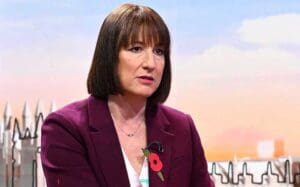
Chancellor Rachel Reeves is considering breaking one of Labour’s key election pledges by raising income tax in next month’s budget to help plug a £30 billion fiscal shortfall, according to senior government sources.
Three figures close to the budget process told The Guardian that discussions between the Treasury and No 10 have intensified in recent weeks, with officials exploring how to deliver a sustainable revenue boost without returning to further tax rises later in the parliament.
While no final decision has been taken, advisers believe that increasing income tax may be the only way to raise enough money to restore the public finances and create “headroom” for potential future tax cuts before the next election.
The fiscal challenge has been deepened by the Office for Budget Responsibility’s (OBR) decision to downgrade the UK’s productivity forecasts, a move expected to cost the Treasury around £20 billion annually.
Reeves must also find funds to reverse the winter fuel allowance cut, scrap planned welfare reductions, and end the two-child benefit cap — all measures previously criticised by Labour backbenchers.
Although falling gilt yields have reduced the government’s debt servicing costs by an estimated £2–3 billion, the reprieve is limited. Smaller measures, such as raising National Insurance for partners in law and accountancy firms, are expected to generate no more than £2 billion.
Sources say the Treasury is debating several configurations of income tax changes:
• A 1p rise in the basic rate, from 20p to 21p, would raise about £8.2 billion annually, but could inflame public anger during a fragile cost-of-living recovery.
• A 1p increase in the higher rate, from 40p to 41p for incomes above £50,271, would generate roughly £2.1 billion.
• An additional rate increase for those earning over £125,000 would raise only £230 million per penny.
Reeves is said to be torn between maintaining her promise to protect working households and ensuring that the public finances meet her strict fiscal rules. One senior Treasury source said:
“There is a live debate about how much headroom we want. If we aim high, we might not have to come back and raise taxes again — but that makes it more likely we’ll have to raise income tax now.”
While the Chancellor and Prime Minister Keir Starmer continue to insist that Labour’s manifesto commitments “stand”, they have stopped short of explicitly ruling out tax increases.
Reeves is acutely aware of the political fallout that would come from abandoning her earlier pledge, particularly after she broke another promise last year by raising National Insurance. Advisers say she wants to ensure that any new revenue plan is framed as “a one-off, responsible measure to safeguard economic stability.”
The Budget Board — co-chaired by Treasury minister Torsten Bell and the Prime Minister’s chief economic adviser Dame Minouche Shafik — is currently weighing the competing options.
One proposal, backed by the Resolution Foundation, would see the basic rate of income tax rise by 2p while employee National Insurance contributions fall by 2p, effectively shifting more of the burden onto pensioners and landlords, who do not pay NI.
Ruth Curtice, director of the think tank, said:
“Of all the major taxes, putting up income tax fits best with the UK’s current economic woes of low growth and sticky inflation. Whether or not rates change, we need broader tax reform to reduce the imbalance between earned and unearned income.”
Next month’s 26 November Budget is shaping up to be one of the most politically charged in years. Reeves faces pressure to prove her fiscal discipline to markets while maintaining the government’s credibility with voters still scarred by years of austerity and rising living costs.
As one Treasury official put it: “The politics are bad either way. What matters is doing the right thing.”
Read more:
Reeves weighs income tax rise to plug £30bn fiscal hole
Brainspark Games founder secures triple investment on Dragons’ Den

Entrepreneur Reedah El-Saie, founder of the educational technology company Brainspark Games, has secured a £30,000 investment on BBC’s Dragons’ Den after an impressive pitch that earned her the rare support of three Dragons.
The London-based founder convinced Sara Davies, Deborah Meaden and Touker Suleyman to each invest £10,000 in her AI-driven learning platform, designed to make education fun, inclusive and accessible for all learners — particularly those who are neurodiverse.
Launched in 2019, Brainspark Games develops immersive, curriculum-aligned mobile games aimed at children aged 7 to 13, covering subjects such as maths, English, science, languages, art and climate awareness.
El-Saie said the games’ AI engine compresses “12 weeks of learning into just a few hours of gameplay”, allowing children to progress rapidly while enjoying an engaging, story-led experience.
The entrepreneur, who has already invested around £400,000 of her own funds into the company, told the Dragons that Brainspark had also secured grants from Innovate UK and backing from several “super angels” in the gaming industry. At the time of filming, the company remained pre-revenue, and she was seeking £10,000 for 1% equity.
While Peter Jones and Steven Bartlett questioned the commercial viability of selling directly to schools — with Jones noting the difficulty of aligning with the National Curriculum — the other Dragons were quick to spot the potential.
Sara Davies and Deborah Meaden both offered to meet El-Saie’s initial valuation, praising the product’s innovation and educational impact. Touker Suleyman, initially demanding 5% equity, eventually made a rare concession to match the 1% deal, joining the trio of investors.
“That’s how to slay three Dragons,” Davies quipped as El-Saie left the Den triumphant.
Speaking after the episode aired, the mother-of-three said: “Before heading into the studio, I watched every previous episode and prepared for every possible question. I was genuinely surprised by how impressed the Dragons were.”
El-Saie highlighted how the investors’ collective expertise would accelerate Brainspark’s next phase: Meaden’s education sector connections — including links with Mumsnet’s founder — would help with outreach; Davies’ parent-focused marketing insight would strengthen the consumer proposition; and Suleyman’s retail acumen would guide a forthcoming merchandise launch.
Brainspark Games specialises in culturally inclusive “neurogames” that combine digital learning with real-world engagement. The company is now developing I/GCSE-level educational games as part of its wider R&D programme.
Read more:
Brainspark Games founder secures triple investment on Dragons’ Den
Tony Blair urges Ed Miliband to scrap green levies amid energy cost ba …

Sir Tony Blair has urged Energy Secretary Ed Miliband to ditch his 2030 clean power target and cut green levies as his think tank warns that current climate policies are driving up costs for homes and businesses.
A new report from the Tony Blair Institute (TBI), personally approved by the former prime minister, claims the government’s commitment to fully decarbonise the electricity grid by 2030 is “destroying industry” and “damaging households.”
The intervention, which has sparked fury within the Department for Energy Security and Net Zero, highlights growing divisions inside Labour over the pace and affordability of the party’s green transition.
The report’s authors, led by Ryan Wain, said Labour’s clean power agenda risks pushing voters “towards populists” such as Reform UK ahead of next year’s regional elections, warning that the government’s energy policies “must be recalibrated around affordability.”
“We’re in a cost of living crisis as well as a climate crisis — you can’t just pick one and pretend the other doesn’t exist,” Wain said.
“Right-wing populists are already exploiting this tension. Unless electricity becomes cheaper, the politics of net zero will become toxic.”
Blair, who has made energy reform a personal focus through his institute, backed the report’s call for “cheap, clean power” rather than the current approach, which he said has made the UK “a low-carbon but high-cost economy.”
The TBI report argues that green levies now make up 20% of the average electricity bill, up from just 8.5% in 2015, and that policy costs now exceed the cost of actual electricity for the average household — £334 versus £324.
It also warns that the cost of connecting Britain’s new offshore wind farms to the grid will exceed the cost of the turbines themselves, with the required pylon and substation infrastructure set to cost £112 billion.
The think tank concluded: “The trend in UK energy over recent decades has been the transformation of our electricity sector from a cheap, high-carbon one to an expensive, low-carbon one.”
Miliband, who is overseeing Labour’s flagship Clean Power 2030 policy, reportedly reacted angrily to the publication, instructing civil servants to issue a statement rejecting the findings.
It is the second high-profile clash between Blair and Miliband this year. In April, the former prime minister warned that current net zero plans were “doomed to fail” due to unrealistic timelines and inadequate investment in grid capacity.
Tone Langengen, TBI’s lead energy adviser, said the Clean Power 2030 plan had been well-intentioned but was now “out of step with economic reality.”
“Launched during the gas crisis, in a low-interest environment, the plan was right for its time. But circumstances have changed. The UK needs to prioritise cheaper clean electricity to lower bills and attract new industries.”
Miliband is already under pressure from energy leaders, who argue that renewable subsidies and network costs are driving up household bills.
Rachel Fletcher, Director of Policy and Regulation at Octopus Energy, warned last week that green levies and grid upgrades could add around £300 to the typical household electricity bill by 2030.
Meanwhile, the government insists its reforms will ultimately lower costs and cut reliance on fossil fuels.
A Department for Energy Security and Net Zero spokesperson said: “Our mission is relentlessly focused on delivering lower bills and tackling the affordability crisis driven by fossil fuel dependence.
That’s why we’ve launched a golden age of new nuclear and approved record levels of clean power investment to drive growth and good jobs.”
Blair’s intervention underscores the political tightrope Labour faces — balancing the need to meet net zero targets while addressing the cost-of-living crisis.
With the Budget due next month and energy costs still among the highest in Europe, advisers warn that Miliband’s clean energy revolution could become a political liability if voters continue to associate green policy with higher bills.
As one senior Labour figure privately told Business Matters: “Tony’s saying what a lot of us are thinking — the politics of net zero are changing fast, and affordability has to come first.”
Read more:
Tony Blair urges Ed Miliband to scrap green levies amid energy cost backlash
London Stock Exchange seals £170m deal with 11 global banks to streng …

The London Stock Exchange Group (LSEG) has secured a £170 million investment from 11 of the world’s largest banks, strengthening its post-trade operations and deepening ties with key industry partners.
The investment, announced alongside the group’s Q3 2025 results, values LSEG’s Post Trade Solutions arm at £850 million and marks another milestone in the company’s strategy to expand its data and risk management technology footprint.
Participating banks include Bank of America, Barclays, BNP Paribas, Citi, Deutsche Bank, HSBC, J.P. Morgan, Morgan Stanley, Nomura, Société Générale, and UBS, who will together take a 20% stake in the Post Trade Solutions business.
The announcement came as LSEG posted another quarter of steady growth. Total income rose to £2.3 billion, up from £2.2 billion a year earlier, while gross profit increased 6.5% to just over £2 billion, as costs grew more slowly than revenues.
Its Data & Analytics division – home to flagship products such as Refinitiv and Workspace – generated £982 million in revenue, up 4.9%, while FTSE Russell climbed 9.3% to £241 million.
The Post Trade Solutions business, which provides technology for the over-the-counter (OTC) derivatives market, brought in £96 million in revenue and £16 million in EBITDA last year.
Under the new structure, LSEG will increase its share of revenue from SwapClear, the central clearing service operated by its subsidiary LCH Group.
Founding banks’ revenue entitlement will fall from 30% to 15% in 2025, and then to 10% in 2026, while LSEG will pay £1.15 billion over two years for the change — with an additional £200 million linked to performance milestones.
Chief executive David Schwimmer said the transaction “strengthens our partnership and strategic alignment with key customers” and “delivers attractive margin and earnings enhancement.”
“We continued our strong momentum in Q3, driving growth across all business lines. With our partnerships in AI and data analytics, and a new phase of buybacks, we’re confident in LSEG’s long-term growth potential.”
The group also reiterated its ambition to position itself as a data and technology powerhouse in global finance. LSEG is expanding its collaborations with Microsoft, Databricks, Rogo and Snowflake, embedding its data into AI-driven analytics and trading platforms.
It has launched an Azure-based trade routing network connecting over 1,600 investment firms, and new AI features on its Workspace platform are expected to go live before year-end.
LSEG has already completed £938 million of its current £1 billion share buyback, and will launch another £1 billion programme by early 2026 — bringing total planned capital deployment to £3.5 billion.
The group’s shares, which had fallen around 20% earlier this year, rose more than 5% to 9,172p following the announcement, giving LSEG a market capitalisation of £44.8 billion.
Schwimmer said the company enters the final quarter of 2025 “with strong momentum, accelerating profitability, and clear strategic direction.”
Daniel Maguire, head of markets and CEO of LCH Group, added: “SwapClear was a pioneer in innovation 25 years ago. This transaction reaffirms that spirit — and our partners’ commitment to advancing the post-trade ecosystem.”
Read more:
London Stock Exchange seals £170m deal with 11 global banks to strengthen post-trade operations
Setting Up a Trading Account – A Step-by-Step Guide by SOHO Internat …

Opening a trading account is the first step toward participating in global financial markets. It allows individuals to access various instruments, from stocks and commodities to currencies and indices.
The process might seem technical at first, but with a structured approach, anyone can set up a secure and functional trading account within minutes.
According to SOHO International experts, the setup process ensures clients have a safe and transparent entry point into the trading environment. Each step, from registration to verification, is designed to confirm identity, secure data, and establish the account type that fits the trader’s goals and risk tolerance.
Step 1: Registering and Creating Your Profile
The initial stage of setting up a trading account involves registering through the company’s official platform. Users are asked to provide a valid email address, create a strong password, and select their preferred account currency. This forms the foundation of the client’s trading profile and helps tailor the experience to their financial preferences.
After submitting these details, clients receive a verification email to confirm ownership of the address provided. This step ensures account access remains restricted to the rightful user. SOHO International emphasizes that using a secure email is essential, as it serves as the main channel for verification codes and important updates.
Once confirmed, clients can log in to their dashboard and proceed with the next steps in setting up and funding their account.
Step 2: Choosing the Right Account Type
Different traders have varying goals and capital levels. To accommodate this, most platforms offer tiered account options. Brokers like SOHO International offer clients the option to choose between several accounts, such as Bronze, Silver, Gold, Platinum, Diamond, and VIP accounts. Each level offers different tools and conditions, such as spreads, leverage, and access to support.
Selecting the right account depends on the amount of capital one plans to deploy and the type of trading activity intended. Beginners often start with the lowest account tiers for essential features and manageable risk. More experienced traders may opt for higher-tier accounts that include additional insights and services.
Experts from SOHO International recommend reviewing the account structures carefully before making a selection, as the right tier can influence a trader’s long-term strategy and flexibility.
Step 3: Completing Verification and Funding the Account
Before trading begins, users must complete verification by submitting identification and proof of address. This ensures compliance with regulatory standards and prevents fraud. Once verified, clients can fund their accounts using secure payment methods supported by the platform. Depositing funds is usually quick, and withdrawals follow a similar process, with strict security to ensure client protection.
Final Thoughts
Setting up a trading account is a simple but crucial process that lays the groundwork for a secure trading journey. By following each step (registration, verification, account selection, and funding), new traders can ensure they’re ready to engage responsibly.
According to specialists, understanding each stage helps clients start trading with clarity and confidence, setting the tone for a disciplined and informed experience in the markets.
Read more:
Setting Up a Trading Account – A Step-by-Step Guide by SOHO International
Two new crossbench peers appointed to House of Lords for expertise in …

The House of Lords Appointments Commission has announced two new non-party-political appointments to the Upper Chamber, recognising leading figures in healthcare and social policy for their national contribution to public life.
Professor Dame Clare Gerada (pictured) and Polly Neate CBE have been recommended as crossbench peers, joining the House of Lords as independent members unaligned with any political party.
Professor Dame Clare Gerada has served as a practising NHS GP since 1983, with a career focused on mental health, addiction treatment, and primary care reform. She is Senior Partner at the Hurley Group, which has grown into a major network of GP and urgent care services across London, particularly in areas of deprivation.
Gerada is widely credited for her leadership roles across UK healthcare. She was Chair (2010–2013) and later President (2021–2023) of the Royal College of General Practitioners, guiding the organisation through a period of reform.
She also founded and led the NHS Practitioner Health Service, offering confidential mental health and addiction support for medical professionals, and later established the National Primary Care Gambling Service.
In addition to her clinical work, Gerada co-chaired the NHS Assembly (2019–2025), advising NHS England on delivery of the NHS Long Term Plan, and chairs the charity Doctors in Distress, which works to prevent suicide among health professionals.
Polly Neate CBE, who stepped down as Chief Executive of Shelter in April 2025 after nearly eight years, is recognised for her advocacy in housing, homelessness and women’s rights.
During her tenure, she redefined Shelter’s long-term strategy, championing greater investment in social housing, strengthening community engagement, and spearheading strategic litigation to challenge housing discrimination.
Previously, Neate was Chief Executive of Women’s Aid (2013–2017), where she delivered a financial turnaround and led the campaign that resulted in the criminalisation of coercive and controlling behaviour.
Her earlier career includes senior roles at Action for Children, overseeing public policy, communications, and fundraising, and she continues to contribute to several non-executive and voluntary boards across civil society.
The House of Lords Appointments Commission, an independent advisory body established in 2000, identifies individuals of distinction to serve as non-party-political peers on the basis of merit and expertise.
Since its creation, the Commission has recommended 78 independent peers from approximately 6,500 nominations. It also vets all life peer nominations, including those from political parties, for propriety.
The current Commission is chaired by Baroness Ruth Deech, with members including Professor Adeeba Malik CBE DL, Wayne Reynolds, Rt Hon Sir Hugh Robertson, and party-nominated representatives from Labour, the Conservatives and the Liberal Democrats.
Baroness Deech said the appointments reflect the breadth of professional experience and civic leadership that strengthen the crossbench contribution to parliamentary scrutiny:
“Both Dame Clare Gerada and Polly Neate have demonstrated exceptional public service and dedication to improving lives in their respective fields. Their insight will greatly enrich the work of the House.”
Read more:
Two new crossbench peers appointed to House of Lords for expertise in health and social policy
Forbes launches first-ever ‘Most Powerful Women in Sports’ list ce …

Forbes has unveiled its first-ever Most Powerful Women in Sports list, spotlighting 25 women who are transforming one of the world’s most influential industries — from athletes and owners to investors, executives and innovators.
Presented in partnership with Ally Financial, the new annual ranking celebrates the female leaders driving growth, innovation and equality across the global sports economy.
Among those recognised are Gayle Benson, owner of the NFL’s New Orleans Saints and NBA’s Pelicans; Caitlin Clark (pictured), the breakout US basketball star; Michele Kang, owner of the Washington Spirit and Lyon Féminin football clubs; and tennis legend Serena Williams, now an active venture investor and brand founder.
The list’s debut reflects a historic shift in women’s sport. Audiences for women’s competitions are rising sharply, sponsorships and media rights are commanding record premiums, and professional team valuations are reaching unprecedented levels.
“Forbes has long chronicled leadership and influence across business and society, and sports has become one of the most compelling arenas where both are being redefined,” said Moira Forbes, Executive Vice President at Forbes.
“The women on this list are not only steering capital and strategy — they are expanding the very possibilities of what this industry can become.”
The 25 honourees represent the full breadth of the sports ecosystem:
• Athletes using their global platforms as entrepreneurs and investors.
• Executives and agents negotiating precedent-setting media and sponsorship deals.
• Owners and investors funnelling capital into women’s leagues and teams.
• Front-office leaders developing talent pipelines and shaping high-performance organisations.
• Industry amplifiers growing audiences and driving storytelling across digital and broadcast media.
Maggie McGrath, Editor of ForbesWomen, said the new list provides “an in-depth look at the power players shaping the business of sport in the United States and beyond.”
“Between the owners, athletes, investors and decision-makers, every leader on this list has helped redefine the face and future of sport,” she said.
To mark the launch, Forbes and Ally Financial will host an exclusive celebration in New York City, bringing together honourees and sports industry leaders.
Andrea Brimmer, Chief Marketing and Public Relations Officer at Ally, said the collaboration aligns with the company’s pledge to invest equally in men’s and women’s sports media.
“When an iconic platform like Forbes commits to spotlighting women who are redefining sport and culture, it sends a powerful signal,” she said.
“At Ally, we’re making intentional investments to fuel this momentum — from partnering directly with players and leagues to supporting women-led innovation in sport.”
The Most Powerful Women in Sports joins Forbes’ portfolio of high-profile leadership rankings, including America’s Most Powerful Women in Business and Forbes 30 Under 30, extending its coverage of influence across industries.
The new initiative, Forbes said, reflects “a cultural and economic turning point” — where women’s participation, leadership and ownership in sport are no longer an exception but a defining feature of the industry’s next growth phase.
Read more:
Forbes launches first-ever ‘Most Powerful Women in Sports’ list celebrating 25 global trailblazers
Evri named UK’s worst delivery firm for third consecutive year as co …

Evri has been named the UK’s worst delivery company for the third year in a row, after new Ofcom figures revealed widespread customer dissatisfaction over delays, damaged parcels and poor communication.
According to the regulator’s annual delivery market review, more than four in ten people (41%) said they were dissatisfied with Evri’s service — the highest level of any major courier. Just 31% of respondents said they were satisfied, marking a further decline from last year’s scores.
It is the third consecutive year that Evri has ranked bottom of the courier performance table, with Ofcom warning that delivery standards across the industry remain inconsistent despite rising parcel volumes.
Evri’s latest ranking comes just months after the company completed a merger with DHL’s UK e-commerce division, a deal approved by the Competition and Markets Authority (CMA) in September. The combined business will deliver more than one billion parcels annually, equivalent to a quarter of all parcels sent in the UK.
However, the boom in online shopping has exposed widening cracks in last-mile delivery operations. Ofcom said a record 4.2 billion parcels were sent across the UK last year — a 7% year-on-year increase — yet two-thirds of consumers reported at least one delivery issue in the past six months.
The most common complaints included:
• Delayed deliveries (27%)
• Parcels left in unsuitable locations (22%)
• Drivers failing to knock loudly or allow enough time to answer (20%)
• Missing or damaged parcels (18%)
Yodel ranked second lowest in Ofcom’s consumer satisfaction index, with one in three customers reporting poor complaint handling.
Royal Mail, which was acquired by Czech billionaire Daniel Křetínský earlier this year in a £3.6bn deal, also fell into the lower half of the rankings, with 24% dissatisfaction despite modest improvements since 2024.
The postal service has been attempting to pivot from letters to parcels, announcing plans to convert thousands of convenience stores into parcel hubs and expand its locker network through partnerships with Sainsbury’s and Co-op.
At the other end of the scale, Amazon topped the rankings with 57% of respondents satisfied and just 16% dissatisfied, followed by FedEx and UPS.
Ofcom has tightened its rules around parcel company complaints handling and transparency, with a renewed push for “sustained improvements” across the delivery market.
A spokesperson for the regulator said: “Customers have a right to expect their parcels to arrive safely and on time. Companies must invest in better systems and processes that reflect the scale of their operations.”
Responding to the findings, an Evri spokesperson said customer satisfaction was a “top priority” and highlighted £57 million of investment in operations and technology over the past year.
“Every parcel matters to us. That’s why we’ve invested heavily to make deliveries smoother, faster and more sustainable,” the company said.
“We’re on track to deliver 900 million parcels this financial year, and following our merger with DHL UK, we’re building towards becoming the UK’s premier parcel delivery company for businesses and consumers alike.”
Despite the investment, analysts say Evri’s reputation problem underscores a broader challenge for Britain’s courier sector — balancing speed, cost and reliability amid record parcel demand and heightened regulatory scrutiny.
Read more:
Evri named UK’s worst delivery firm for third consecutive year as complaints mount

