

Rumours that the Chancellor is preparing to add VAT to all taxi journeys in the autumn Budget have sparked concern across multiple industries, with hospitality leaders warning the move could deepen an already fragile economic environment.
Charlie Gilkes, co-founder of the Inception Group, which operates restaurants and bars across London, said: “Policies like the taxi tax destroy the ecosystem in which the hospitality sector functions.”
The sector is still reeling from last year’s Budget, which raised employer National Insurance contributions. A 1.2 percentage point NIC increase lowered the threshold at which employers must pay contributions from £9,100 to £5,000 a year. That change has already forced nearly 89,000 job losses in hospitality, almost half of the cuts seen across the wider economy, according to trade body UKHospitality.
With pubs, restaurants and bars struggling to absorb higher staffing and energy costs, any additional burden from VAT on taxis could deter customers from travelling and make commuting harder for staff, particularly women relying on taxis after late shifts.
The effects would extend beyond hospitality. Layla Barke-Jones, partner at Aaron and Partners Solicitors, pointed out that many taxi passengers are elderly, disabled or otherwise unable to use public transport: “These are the people who would be disproportionately hit.”
While local authorities would be able to reclaim VAT under their own regime, higher overall fares are expected as operators adjust pricing to cover administration and compliance costs. That would see passengers across the country paying significantly more for essential journeys.
Taxi operators warn that drivers themselves would be among the hardest hit. A spokesperson for Bolt said: “Drivers are self-employed entrepreneurs, and around 70% work outside London. A flat 20% VAT would inevitably raise costs for consumers and reduce demand, leading to a drop in driver earnings.”
Bolt argues VAT should be applied only to operators’ margins, as under the current system, rather than on full fares — a change that risks pushing up passenger costs while cutting into drivers’ take-home pay.
With speculation mounting ahead of November’s Budget, business leaders fear the so-called “taxi tax” would further erode consumer demand, increase costs for vulnerable passengers, and undermine sectors still fighting to recover from previous policy shifts.
As Gilkes and others warn, what may appear a modest change to the Treasury could prove ruinous for the ecosystem of drivers, passengers and businesses that depend on affordable, reliable taxi services.
Read more:
A ‘taxi tax’ would hit vulnerable passengers and struggling businesses hardest
Category: Uncategorized
Mone accuses Rachel Reeves of fuelling ‘government vendetta’ after …
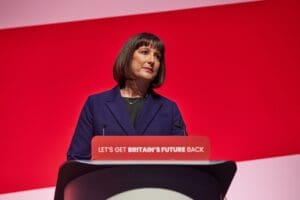
Baroness Michelle Mone has accused Chancellor Rachel Reeves of fuelling a “government vendetta” against her and her husband Doug Barrowman, following remarks reportedly made by Reeves at a Labour Party Conference fringe event this week.
In a strongly worded statement posted on LinkedIn, Mone said Reeves “openly confirmed” that the government is pursuing a personal and political campaign against her, after responding “Too right we do” when asked about allegations of bias towards Mone and PPE Medpro — the company at the centre of the £122 million sterile gowns dispute with the Department of Health and Social Care (DHSC).
“Rachel, thank you for confirming what Doug and I have long believed,” wrote Mone. “Your comment will now be passed to our legal team, who will find it highly useful in establishing the Government’s bias and position against us.”
Political tension spills into legal battle
The public fallout adds further fuel to the already explosive PPE Medpro case, which concluded its High Court hearings in July. The case has seen the government pursue PPE Medpro for alleged breach of contract during the Covid pandemic — claims the company vigorously denies.
As Business Matters exclusively revealed yesterday, the DHSC rejected two substantial no-fault settlement offers from PPE Medpro, including a complete remake of 25 million gowns or a £23 million cash settlement.
Now, Mone argues that Reeves’ reported comment provides clear evidence of political interference in what should be a neutral legal process.
“Such reckless words have consequences,” she added. “Do you really understand the implications of your actions and the hatred they incite? Shame on you.”
Mone also claims that following Reeves’ remarks, her social media has been flooded with threats and abuse, and is calling on both the Prime Minister to issue a formal apology, and Reeves herself to refer the matter to the Parliamentary Commissioner for Standards.
Taking direct aim at Reeves, Mone accused the Chancellor of presiding over “economic failure,” and claimed that Labour’s leadership was misleading the public on its tax plans.
“Your first 15 months in office have been a disgrace… Perhaps keep the IMF’s number on speed dial,” she wrote.
While the Labour Party has not issued a formal response to the accusations, the remarks attributed to Reeves are likely to add political complexity to a legal case that already sits at the intersection of procurement, accountability and high-profile reputations.
Legal observers say that if Reeves did make the remark as reported, it could complicate the government’s narrative that the DHSC’s civil claim against PPE Medpro is purely contractual and not politically motivated.
Mone and Barrowman’s legal team have long argued that the case is an attempt to scapegoat PPE Medpro for the DHSC’s wider PPE procurement failures, and shield senior government officials — past and present — from deeper scrutiny.
Justice Cockerill is expected to hand down her ruling on the DHSC’s claim in the next few weeks. The question now is whether this latest political intervention will cast a shadow over the judgment — or open the door to a fresh round of legal challenges from Mone and her legal team.
Read more:
Mone accuses Rachel Reeves of fuelling ‘government vendetta’ after Labour fringe remark
Growth Lending launches £150m push into UK healthcare

Growth Lending has unveiled a £150 million strategy to support the expansion of healthcare and social care providers across the UK, pledging to deliver flexible capital to a sector grappling with rising demand and tight access to finance.
The specialist lender, best known for backing high-growth B2B businesses, will target ambitious operators in social care, primary care, education, and health-led community services. Funding will be deployed through debt facilities starting from £2 million, with a focus on businesses often overlooked by traditional lenders.
To lead the initiative, Growth Lending has appointed Dan Hewitt as Director of Debt Finance, specialising in healthcare. Hewitt brings more than 20 years’ banking experience, including a decade in health and social care finance. “The funding landscape for care operators has long been restrictive, hampering the sector’s natural entrepreneurial spirit,” he said. “Our approach looks at future cash flows to determine borrowing capacity, rather than just LTVs, enabling us to provide larger, more flexible funding. The sector faces many challenges, but finance shouldn’t be one of them.”
Growth Lending has already deployed over £15 million from the new fund. Arishta Ltd, a healthcare group focused on AI-led care home transformation, secured £10 million to begin its buy-and-build strategy, starting with two South London acquisitions. In the North West, children’s care provider YourCare received £5.5 million to expand from five to nine homes, creating eight new beds and 25 jobs.
The commitment comes against a backdrop of severe pressures across the health and care system, including bed shortages, workforce gaps and limited specialist placements. While the Government invests £6 billion annually in hospital infrastructure, community-level providers often struggle to access the capital they need.
Adam Brinn, Managing Director at Growth Lending, said the new fund aims to plug that gap: “We’re backing the operators that are building the future of care. These are well-run businesses solving real problems, which are often overlooked by mainstream lenders. This initial £150m commitment sets out to provide the capital that gives ambitious care businesses the headroom to grow, hire and deliver better outcomes.”
Growth Lending expects to close several more healthcare transactions before the end of 2025, building a dedicated portfolio focused on sustainable, community-first care. With Hewitt leading the initiative, the lender is positioning itself as a major player in financing the next wave of UK health and social care providers.
Read more:
Growth Lending launches £150m push into UK healthcare
Exclusive: DHSC rejected £23m offer and full gown remake from Mone li …

The Department of Health and Social Care (DHSC) rejected two major settlement offers from PPE Medpro, including a complete remake of 25 million sterile gowns or a £23 million payment, Business Matters can exclusively reveal.
The offers, both made on a no-fault basis, were tabled first in December 2022, then again shortly before the trial began in June 2025 — and even reiterated mid-trial, as the dispute over the £122 million PPE contract played out in the High Court.
Despite the potential to resolve the case without admitting liability, the DHSC declined both options — a decision which, according to PPE Medpro, has cost taxpayers a further £5 million in legal fees and prolongs what the company describes as a political attempt to “scapegoat” its directors and backers .
“We were prepared to remake the full order or pay £23 million. These substantial offers were rejected,” a PPE Medpro spokesperson told Business Matters. “This was never about gowns — it’s about shielding failures in the DHSC and deflecting scrutiny from senior politicians” .
According to documents now seen by Business Matters, PPE Medpro made the following offers to the DHSC:
June 2025: Offered to remake the full 25 million gown order via its Chinese manufacturer, at no cost to the government and without admitting fault .
23 June 2025: Offered a cash settlement of £23 million, with funds made available through its principal backer, in what was described as a “final opportunity” to settle before judgment .
The government rejected both offers without counter-proposal. This is in stark contrast to how it resolved a separate £135 million dispute with Primerdesign Ltd, which was settled quietly on a no-fault basis for just £5 million, weeks before its scheduled trial .
A £122 million claim and £5 million cost to taxpayers
The DHSC’s claim alleges that the gowns supplied by PPE Medpro during the pandemic were not sterile. Medpro has repeatedly denied any breach of contract, arguing instead that any gown contamination occurred after delivery while the gowns were under DHSC’s control.
The company has cited a series of failures in gown handling, storage and inspection — including containers stored in open fields for over a year, and gown testing carried out more than 500 days after delivery .
Medpro argues that the government’s rejection of its offers — particularly in light of its admitted stockpile of 10 years’ worth of surgical gowns, most with only two-year shelf lives — is evidence that the litigation is not financially or operationally motivated, but political.
Barrowman and Mone targeted?
The case has drawn intense media scrutiny due to PPE Medpro’s links to businessman Doug Barrowman and his wife, Baroness Michelle Mone, who has been the subject of both political and public criticism since the contract became public knowledge.
Medpro now claims the firm has been “singled out” by government for political reasons — noting that the DHSC knew the company had limited funds, and yet continued to pursue full recovery through a costly trial.
“This litigation is a clear case of buyer’s remorse, long after the event,” the company said in its final settlement letter. “It has been about scapegoating PPE Medpro and its consortium backer… to protect other very significant Conservative politicians from coming under scrutiny” .
What happens next?
The trial concluded in late July, and Mrs Justice Cockerill is expected to deliver her judgment before October. If the court rules in PPE Medpro’s favour, it will raise serious questions over the DHSC’s decision to reject an offer worth nearly a fifth of the full claim value, and why a similar dispute was quietly settled elsewhere.
As the dust settles, the government could face renewed pressure — not only over its pandemic-era procurement practices, but also over how it chooses which companies to pursue, and at what cost to the public purse.
“We tried, repeatedly, to settle this matter,” a PPE Medpro spokesperson said. “It’s now up to the court — but the consequences of this case go far beyond our company.”
Read more:
Exclusive: DHSC rejected £23m offer and full gown remake from Mone linked PPE Medpro
Reeves targets Farage as Labour pitches stability against ‘easy answ …

Chancellor Rachel Reeves used her keynote address at the Labour Party conference to draw sharp battle lines with Nigel Farage and Reform UK, declaring them the “single greatest threat” to Britain’s way of life and living standards.
In a speech heavy on rhetoric but light on new policies, Reeves sought to contrast Labour’s agenda of economic stability and long-term planning with what she characterised as Reform’s “easy answers”. She accused the party of being “in bed with Vladimir Putin” on foreign policy, citing its stance on Ukraine, and warned that Farage had “cheered on” Liz Truss’s disastrous mini-budget.
“Every time on every issue, it is Labour that is standing up for working people and standing up for our national interest,” Reeves told delegates in Liverpool. “This is a fight that we must win, and it is a fight that we will win.”
Reeves also reignited debate over the role of the Office for Budget Responsibility (OBR). She has suggested that the Treasury should commission just one official forecast a year. But Paul Johnson, the former director of the Institute for Fiscal Studies, described scrapping the traditional second forecast as “very odd”, noting that Britain has had biannual assessments for half a century and that most countries follow a similar model.
Johnson told Times Radio: “We’ve had two forecasts a year for I think 50 years, way predating the OBR, and the large majority of other countries have two forecasts … I certainly think they should do two forecasts a year.”
The Chancellor insisted that Labour was determined to rebuild Britain’s economic foundations after what she described as years of Tory mismanagement. She repeated her central message — “don’t let anyone tell you there is not a difference between a Labour government and a Conservative government” — more than a dozen times, prompting a standing ovation.
Reeves promised investment in manufacturing, transport and schools, and reiterated her government’s “youth guarantee”, which will give any young person unemployed for more than 18 months a guaranteed work placement. “We’ve done it before, and we will do it again,” she said, pledging the “abolition of long-term youth unemployment”.
She also cautioned against “peddling” ideas that Britain could “live beyond its means”, in a swipe at Manchester mayor Andy Burnham and others who have pushed for more radical borrowing. Reeves stressed the need for “hard decisions” to protect prosperity, noting that one in every ten pounds of government spending currently goes on debt repayments.
While she struck a tone of fiscal discipline, Reeves avoided any mention of tax rises that are widely expected to be announced in November’s Budget to plug a £30bn hole in the public finances. The Chancellor instead warned of the consequences of Tory debt and said Labour’s second year in office would focus on “building a renewed economy”.
But observers noted the lack of giveaways. “The state of government finances means she has no money for political announcements,” wrote Oliver Wright, adding that Reeves’ speech was inevitably high on positioning and low on policy.
Business groups gave a cautious welcome. Rain Newton-Smith, chief executive of the CBI, said firms would appreciate Reeves’ focus on fiscal stability, youth employment and investment. But she warned that the “real test” would be whether government policy cut costs and complexity for businesses.
“Now is the time to shift decisively from strategy to full-throttle delivery,” she said. “That means addressing the barriers holding firms back – like ensuring the Employment Rights Bill doesn’t suppress hiring decisions.”
Read more:
Reeves targets Farage as Labour pitches stability against ‘easy answers’
£1.5bn taxpayer rescue to keep Jaguar Land Rover alive after cyberatt …

Jaguar Land Rover (JLR) has been thrown a £1.5 billion taxpayer-backed lifeline after a crippling cyberattack left Britain’s biggest carmaker paralysed for almost a month.
The bailout, structured as a government loan guarantee, is designed to tide the company and its vast supply chain over until Christmas as it scrambles to restart production. JLR, owned by India’s Tata Motors, normally produces around 1,000 vehicles a day across its three UK plants. But since hackers breached its IT systems in late August, the company has been unable to build a single car — a standstill that has shaken Britain’s automotive sector to its core.
Business Secretary Peter Kyle confirmed that the Treasury, via UK Export Finance, will guarantee loans worth up to £1.5bn, enabling JLR to draw on private financing more quickly. The scheme is designed to prevent a collapse in the supply chain, which supports 120,000 jobs alongside JLR’s own 34,000 UK employees.
“This cyberattack was not only an assault on an iconic British brand, but on our world-leading automotive sector and the livelihoods that depend on it,” Kyle said. “This guarantee will help keep suppliers afloat and safeguard jobs across the West Midlands, Merseyside and beyond.”
Chancellor Rachel Reeves hailed the move as protecting a “jewel in the crown of our economy”.
JLR’s sprawling network of suppliers — from engine plants to component makers — has been hardest hit by the production freeze. Many small and medium-sized firms rely almost entirely on JLR contracts. Some told ministers this week they would need £1.5bn of support just to survive until Christmas.
While the Wolverhampton engine plant is expected to reopen in early October, insiders warn that a phased reboot will take months, with full production unlikely before the end of the year.
Industry figures are cautious about calling the loan guarantee a “rescue”, pointing out that JLR — not its suppliers — will ultimately be responsible for repayment. Export guarantees are not direct cash injections but rather state-backed assurances that banks will recover 80 per cent of loans if borrowers default.
The scheme was adapted during the Covid pandemic and has been used before to support industry. In July, Ford received a £1bn guarantee for its UK electric vehicle programme. In total, UK Export Finance extended £12.3bn in such guarantees in 2020-21.
Critics argue JLR, backed by the multibillion-dollar Tata Group, could have raised financing without state support. But ministers stress that the speed of delivery is critical in preventing supplier collapse.
Shadow Business Secretary Andrew Griffith welcomed the intervention but accused the government of dragging its heels. He also called for a new “cyber reinsurance scheme” to shield UK firms from increasingly sophisticated attacks.
The attack on JLR is the latest in a wave of high-profile hacks targeting British industry. The Co-op recently revealed an £80m hit from a breach earlier this year, while Marks & Spencer and Harrods have also disclosed incidents.
For JLR, the crisis comes at a delicate moment. The company is already grappling with slumping profits, falling sales, and delays to its electric vehicle rollout. Now, with hackers having exposed the fragility of its systems, Britain’s biggest carmaker finds itself fighting for survival through to Christmas.
Read more:
£1.5bn taxpayer rescue to keep Jaguar Land Rover alive after cyberattack shutdown
Tax burden and capital barriers drive decline in Britain’s female en …

Britain is losing tens of thousands of female entrepreneurs, new government figures reveal, in a trend that threatens both economic growth and diversity.
Despite years of initiatives to encourage women into business ownership, the latest survey shows that female-led small and medium-sized enterprises (SMEs) have fallen to just 14% of the total — down from 19% in 2021.
That equates to tens of thousands fewer women at the helm of companies in the UK. The decline comes against a backdrop of rising taxes, mounting wage costs, and restricted access to finance, which experts say disproportionately affect women trying to break through as business leaders.
The Department for Business and Trade’s annual survey of 8,400 SMEs found that only 14% are now led by women, slipping from 15% in 2023 and 19% just three years ago.
The scale of this decline is significant: based on the DBT’s estimate of 1.42 million small and medium-sized employers, tens of thousands of female-led firms have vanished from the business landscape since 2021.
By contrast, the percentage of entirely male-led firms remains high at 43%, while gender-balanced leadership teams have inched up only marginally from 25% to 26%.
Why Female Entrepreneurs Are Falling Behind
Taxation and Rising Costs
The same survey found that taxation has overtaken energy costs and market competition as the number one barrier to SME growth. Sixty-one percent of firms said taxes were the biggest obstacle, up 16 percentage points from last year. For firms employing between 10 and 49 staff, that figure rose to 75%.
Hospitality and retail — sectors with a higher concentration of female-led businesses — reported even sharper increases in concern. In hospitality, a staggering 89% of businesses said tax pressures were forcing them to rethink their growth plans.
On top of taxation, the rising National Living Wage is hitting sectors that rely on large numbers of part-time and lower-paid staff, many of which are female-led. Thirty-one percent of SMEs cited wage pressures as a barrier, up seven points on 2022.
Access to Capital and Investor Bias
Debbie Wosskow, co-chair of the Invest in Women Taskforce, argues that the funding ecosystem is not set up to support women founders.
“Some of the sectors most likely to have women-led businesses — health, education, food — don’t receive the same investor spotlight or ‘buzz’ as tech or fintech,” she said. “This isn’t just about diversity; female-led businesses deliver higher returns. Investors are leaving money on the table.”
Research consistently shows that women receive a fraction of venture capital funding compared with men. A 2023 British Business Bank study revealed that less than 2% of VC investment went to all-female founding teams.
This funding gap forces many female entrepreneurs to rely on personal savings, family backing, or debt — options that are limited, particularly in an era of high interest rates.
The Confidence and Perception Gap
Surveys also highlight a confidence gap among female founders. Many report a lack of visible role models, persistent stereotypes about women in leadership, and structural barriers in networking and mentorship.
The perception that entrepreneurship is risky — especially amid economic turbulence — can also discourage women, who are more likely to bear primary family and caregiving responsibilities, from starting or scaling businesses.
Why This Matters for the Economy
The fall in female-led firms is not just an issue of equality; it is an economic problem. The government-backed Invest in Women Taskforce has estimated that if women started and grew businesses at the same rate as men, the UK economy could gain an additional £250 billion.
Yet rather than narrowing the gap, the latest figures suggest Britain is moving backwards. With female-led SMEs shrinking as a proportion of the business base, opportunities for innovation, job creation, and regional regeneration are being lost.
Rachel Reeves, the Chancellor, has repeatedly stressed her ambition to make Britain “the best place in the world to be a female entrepreneur”. But for many founders, rising taxes and squeezed consumer demand are delivering the opposite reality.
Britain’s decline in women-led firms contrasts sharply with trends in other advanced economies. In the US, women-owned businesses are one of the fastest-growing demographics, with numbers rising by more than 20% over the past decade.
France has introduced dedicated financing schemes for female entrepreneurs, while Scandinavian countries — with higher female employment rates overall — report stronger growth in women-led SMEs.
Experts point to structural support, including affordable childcare, investment incentives, and targeted mentoring schemes, as factors behind these successes.
What Needs to Change
Targeted Investment Reform
The biggest lever is capital. Wosskow and others argue for new funding vehicles designed specifically to back women-led businesses. These could include government-backed venture funds, tax incentives for investors who support female founders, and mandatory reporting of diversity data by VC firms.
Tax and Wage Policy Relief
While Reeves has little room for manoeuvre in her November Budget, targeted tax relief for SMEs — particularly in sectors with high female representation — could help stem the decline. Business groups also want a re-examination of wage thresholds for smaller employers.
Infrastructure and Support
Affordable childcare and flexible working remain critical enablers for women balancing entrepreneurship with family responsibilities. Expanding state-backed childcare provision would likely do more for female entrepreneurship than many business-specific policies.
A Cultural Shift
As Wosskow noted, female-led businesses should not be pigeonholed as a diversity initiative. They are commercial opportunities with high growth potential. Shifting the narrative from equality to economic benefit may be key in winning investor support.
The Road Ahead
The decline in women-led SMEs underscores the gap between government rhetoric and business reality. Despite initiatives like the Invest in Women Taskforce, the structural barriers of taxation, capital access, and cultural bias remain firmly in place.
Tina McKenzie, policy chair of the Federation of Small Businesses, has urged the government to set a bold target: ensuring half of self-employed individuals are women by 2035. That would mark a radical step-change from today’s figures.
But unless Reeves uses her November Budget to address the financial pressures squeezing SMEs — from tax hikes to wage costs — female entrepreneurs may continue to vanish from the business landscape, dragging Britain’s growth prospects down with them.
Read more:
Tax burden and capital barriers drive decline in Britain’s female entrepreneurs
Britain ‘throwing away £2bn a year’ after scrapping VAT break for …
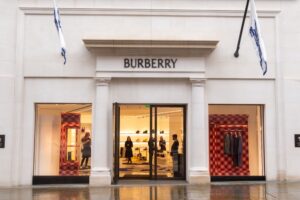
Rachel Reeves is under pressure to restore tax-free shopping for international visitors after new figures revealed Britain is losing billions of pounds each year to rival destinations.
Research by the Association of International Retail (AIR) and Global Blue shows that spending by non-EU visitors to the UK is stuck at just 75 per cent of pre-pandemic levels since the Conservatives axed the VAT exemption in 2021.
By contrast, continental Europe has seen record surges in tourist spending. Visitors’ outlays are up 166 per cent in Spain, 159 per cent in France and 137 per cent in Italy compared with pre-Covid levels.
The report estimates that Britain missed out on around £2bn of spending last year alone, with the steepest falls among high-spending visitors from the Gulf. Shoppers from Saudi Arabia and Kuwait spent 27 per cent less than before the pandemic, while the UK has increasingly had to rely on American tourists, where growth has lagged far behind rival European markets.
Critics warn the tax change is pushing luxury shopping and related economic benefits overseas. “The UK is shooting itself in the foot. This is economic madness,” one retail trade body said.
The figures come as some local councils are also piling pressure on visitors with proposals for their own “tourist taxes” – nightly charges on hotel and B&B stays. Cities including Oxford, Liverpool and Bournemouth are weighing up such schemes, while Aberdeen last year became the most expensive place in Europe for visitor levies after Scotland introduced new powers.
Several Scottish councils have since paused their plans after a backlash, with critics arguing the measures risk deterring the very visitors the UK economy needs.
The retail industry is now intensifying calls for Reeves to revive the VAT exemption ahead of her November Budget, arguing that restoring the perk could boost competitiveness, revive visitor spending and generate billions for the Treasury.
Read more:
Britain ‘throwing away £2bn a year’ after scrapping VAT break for tourists, Reeves told
Barclays boss warns Reeves: don’t tax growth ‘out of existence’
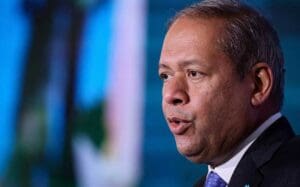
Barclays chief executive CS Venkatakrishnan has issued a stark warning to Chancellor Rachel Reeves, urging her not to introduce new levies that would “stifle competition and growth” in Britain’s financial sector.
Speaking in an interview with CNBC, Venkatakrishnan said taxing banks and investors more heavily risked “taxing growth out of existence,” just weeks before Reeves unveils her first Budget.
His remarks come amid speculation that the Chancellor could raise as much as £50 billion in extra taxes to plug a hole in the public finances. Think tanks close to Labour, including the Institute for Public Policy Research (IPPR), have floated the idea of a windfall levy on banks, claiming lenders have enjoyed outsized benefits from the Bank of England’s money-printing programme during the financial crisis and Covid.
Venkatakrishnan pushed back, warning that a banking tax raid would ultimately mean fewer jobs and less lending to British businesses. “You need to encourage [growth] to expand, not tax it out of existence,” he said.
Shares in major lenders including Lloyds, HSBC and NatWest fell earlier this year after news of the IPPR’s proposal, wiping billions from the sector’s market value. The think tank claimed the Treasury was losing £22 billion annually as the Bank of England offloaded bonds at a loss and paid higher interest on reserves.
The Barclays boss is not alone in sounding the alarm. Lloyds chief executive Charlie Nunn has also told Reeves that targeting banks with fresh levies would undercut Britain’s competitiveness at a time when the Government is trying to attract global investment.
Venkatakrishnan has previously described the logic behind a windfall tax as “facile and fallacious,” warning it would choke off credit to households and companies alike.
A Treasury spokesman insisted on Friday that Reeves’ government remains “pro-business” and highlighted its Leeds Reforms designed to cut red tape in financial services. “We want Britain to be the number one destination for financial services firms by 2035,” the spokesman said.
With Reeves under pressure to raise tens of billions in November, the battle lines are now being drawn between the City and the Treasury.
Read more:
Barclays boss warns Reeves: don’t tax growth ‘out of existence’

