

Labour ministers are weighing reforms to the European Convention on Human Rights (ECHR) as part of a rightward shift on migration aimed at halting Reform UK’s advance, with polls showing Nigel Farage’s party opening up a double-digit lead.
According to The Sunday Times, new home secretary Shabana Mahmood is exploring options that could include changes to Britain’s relationship with the ECHR, with one source saying she would “start with the unthinkable and work backwards.” The ECHR underpins the Good Friday Agreement, but Farage has pledged to withdraw from the treaty and replace it with a British Bill of Rights that applies only to citizens and those with legal residence.
Kemi Badenoch, the Conservative leader, has also said she would examine the case for leaving the convention.
Mahmood, a former justice secretary, is under pressure to speed up asylum processing and reduce the reliance on hotels to house migrants. She is expected to announce that asylum seekers will be moved into barracks on former military bases, according to the Telegraph.
The government is also close to striking a new “one in, one out” returns deal with Germany, building on an agreement reached with France over the summer. Under the French deal, the UK can return one irregular migrant in exchange for accepting one claimant from France judged to have a higher chance of success.
Ministers have hailed the French deal as “game-changing”, though it will initially apply to only a small number of asylum seekers. A similar arrangement with Friedrich Merz’s German government would likely focus on migrants who transit through Germany en route to France before attempting to cross the Channel.
Farage has pledged to fight the next general election, expected in 2027, on a promise to “stop the boats” within two weeks of taking office. His party’s surge in the polls has been attributed to the vacuum left by government during the summer recess, with Reform capitalising on voter frustrations over asylum and migration policy.
Defence secretary insiders said Sir Keir Starmer was “going up a gear” as Labour seeks to reassert control of the migration debate and shore up its electoral position against Reform.
Read more:
Labour weighs human rights reform as Mahmood shifts right on migration to counter Reform UK
Category: Uncategorized
Peter Kyle sets sights on UK’s first $1trn company in ‘ambitious†…
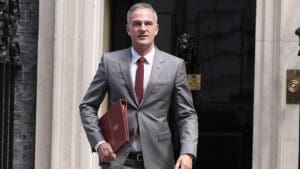
Newly appointed business and trade secretary Peter Kyle has pledged to pursue an “ambitious” growth agenda, telling senior executives that the government should play an active role in creating the UK’s first trillion-dollar company.
Business Matters understands Kyle held a hastily arranged call with corporate leaders on Saturday afternoon after succeeding Jonathan Reynolds in the role. Attendees included executives from BAE Systems, Heathrow Airport, Microsoft UK, NatWest Group and Octopus Energy, alongside representatives from the CBI, FSB and Make UK.
Kyle told bosses that his experience at the Department for Science, Innovation and Technology (DSIT) would be an asset in his new position, with plans to deploy the resources of the British Business Bank to drive growth. He said his goal was to make Britain the best place in the world for start-ups and scale-ups, and stressed the importance of long-term stability to boost business confidence.
Among his ambitions, he said, was for the UK to nurture its first $1trn company — a milestone achieved only by a handful of US tech giants such as Amazon, Apple and Nvidia.
Kyle also confirmed he would travel to Washington on Sunday to help prepare for President Donald Trump’s forthcoming state visit, before heading to China for talks with officials. He said Prime Minister Sir Keir Starmer had given him licence to pursue growth opportunities in partnership with DSIT, the Treasury and the Department for Work and Pensions.
Echoing the Chancellor’s recent rhetoric, Kyle said he wanted government policy to encourage greater risk-taking in business.
In a statement issued through the government, he said: “I want government to be seen as an active partner that delivers success, supports new business and backs wealth creation. This government’s number one mission is economic growth. We need to crack on and do it. We must double down, while being creative and unrelenting in pursuit of our goal. I want this to be the greatest place to start a business or scale up. We haven’t maximised the potential in this country, and I’m ambitious in wanting to see the first trillion-dollar company emerge from the UK.”
Kyle’s remarks set the tone for what is expected to be a more interventionist business department, seeking to blend innovation policy with industrial strategy in the pursuit of growth.
Read more:
Peter Kyle sets sights on UK’s first $1trn company in ‘ambitious’ growth pledge as he replaces Jonathan Reynolds as business minister
UK e-motorbike maker Maeving secures £8m to fuel growth and overseas …

Coventry-based Maeving, the British electric motorbike manufacturer, has raised £8 million in new funding to expand production, accelerate overseas sales and develop new models aimed at commuters and women riders.
The company, founded in 2018 by university friends Seb Inglis-Jones and Will Stirrup, attracted backing from venture capital firms including Venrex, Future Planet Capital and Elbow Beach Capital, alongside angel investors such as John Ayton, co-founder of Links of London, and Simon Hill-Norton, founder of Sweaty Betty. It has also secured a £3 million working capital facility from HSBC UK.
Maeving exports around half of its bikes to markets such as France and Germany, with the US now its largest international market outside the UK. Sales to America have risen fivefold so far this year compared with 2024, despite disruption from President Donald Trump’s tariff-driven trade war.
“The biggest challenge for all manufacturers exporting to the US has been the uncertainty for consumers,” said Inglis-Jones. “If people are uncertain about their finances, they’re less likely to spend money on a discretionary product.”
Inspired by the popularity of simple e-bikes in China with removable batteries, the Maeving founders set out to combine practicality with British engineering and design at a higher-end price point. While Chinese models can cost just a few hundred pounds, Maeving bikes start at £4,995.
The company’s RM1 and RM1S models can travel up to 80 miles on a full charge, with batteries that recharge in under four hours for about 73p. Maeving estimates that powering an average UK commute of 11.4 miles a day costs just £4.20 a month in electricity.
Rather than chasing traditional motorbike enthusiasts, the brand is targeting new riders, particularly commuters and city dwellers seeking an alternative to congested public transport. At 140kg, Maeving bikes are lighter than most motorcycles, making them more accessible — particularly to women.
“Our customers are often people who’ve not ridden loads of bikes before and have no affiliation with petrol engines,” said Inglis-Jones. “They’re not expecting vibration or noise. They want something clean, simple and easy to use.”
Maeving employs 67 staff, including 50 in production at its Coventry site, which has the capacity to produce up to 11,000 bikes annually. The UK is no longer known for large-scale hardware manufacturing, Inglis-Jones said, “but motorcycle design is one of the things we are still revered for worldwide.”
The company’s head of product, Graeme Gilbert, previously worked on new product design at Triumph, another British motorcycle brand.
With its new funding, Maeving plans to double down on R&D, ramp up marketing spend — particularly in overseas markets — and cement its position as a new force in the electric mobility sector.
Read more:
UK e-motorbike maker Maeving secures £8m to fuel growth and overseas expansion
Tesla proposes $1 trillion pay package for Elon Musk, the largest in c …
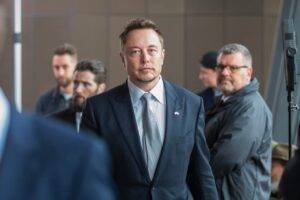
Tesla has proposed a new $1 trillion pay package for chief executive Elon Musk, in what would be the largest compensation deal ever awarded to a corporate leader.
Under the plan, Musk would receive 12 tranches of shares over the next decade if Tesla hits a series of financial, production and technological milestones. If achieved in full, the deal would lift Tesla’s valuation from about $1 trillion today to $8.5 trillion, making it the most valuable company in the world and adding nearly $7.5 trillion in shareholder value.
The plan also stipulates that Musk’s activities in the political sphere “wind down in a timely manner”, reflecting investor concern over his public clashes and a messy split with US President Donald Trump.
To unlock the first tranche, Musk would need to nearly double Tesla’s market capitalisation to $2 trillion while achieving a cumulative 20 million vehicle deliveries from the date of Tesla’s first production car.
Further milestones include rolling out one million Robotaxis, delivering one million AI-powered humanoid bots, and hitting aggressive earnings and product targets. Meeting them all would increase Musk’s stake in Tesla to at least 25% and grant him greater voting power over the company’s future.
Tesla chairwoman Robyn Denholm and board member Kathleen Wilson-Thompson told shareholders the award was critical to keeping Musk focused on Tesla at a pivotal point in its history.
“Simply put, retaining and incentivising Elon is fundamental to Tesla achieving these goals and becoming the most valuable company in history,” they wrote.
Denholm told CNBC the deal was structured to reward delivery, not promises: “If he performs, if he hits the super ambitious milestones that are in the plan, then he gets equity. It’s 1 per cent for each half a trillion dollars of market cap, plus operational milestones.”
The $1 trillion package dwarfs Musk’s previous pay arrangements. Earlier this year, Tesla approved an interim stock award valued at $29 billion to secure his leadership through 2030.
The Delaware Court of Chancery struck down Musk’s 2018 pay plan, then worth up to $56 billion, ruling it excessive and improperly granted. Musk is appealing, claiming the court erred in rescinding a deal that shareholders had approved twice. That package spurred Tesla’s extraordinary growth over the past five years but became a flashpoint for corporate governance concerns.
Now Tesla’s board is betting that an even larger, more ambitious award will ensure Musk devotes his energy to transforming the company from an electric vehicle maker into an AI-first technology giant. Shareholders will vote on the new plan in the coming months.
Read more:
Tesla proposes $1 trillion pay package for Elon Musk, the largest in corporate history
Companies cut jobs at fastest pace in four years after Reeves’s £25 …
British companies are cutting jobs at the fastest pace in four years following Chancellor Rachel Reeves’s £25 billion payroll tax raid, according to new data from the Bank of England.
The central bank’s latest decision-makers panel, which surveys around 2,000 chief financial officers, found that employment fell by 0.5% in the three months to August — the steepest decline since 2021. The survey also revealed that companies plan to cut jobs over the next year at the quickest rate since October 2020, when the UK was emerging from pandemic restrictions.
HM Revenue & Customs data shows payrolled employment has contracted by more than 160,000 since last October’s budget, when Reeves announced a £25bn rise in employer National Insurance contributions. Losses have been concentrated in retail and hospitality, two of the UK’s biggest employers.
UKHospitality described the scale of job losses as “staggering”, while the British Retail Consortium warned that any further tax rises would force businesses into “difficult choices about the future of shops and jobs.” More than half of all jobs shed since the budget have been in the low-wage hospitality and retail sectors.
The British Chambers of Commerce has also cautioned that firms are preparing for a hiring freeze as higher employment costs take their toll.
Retailers reported in July that sales growth was “barely touching the sides” of the £7bn in extra costs imposed at the last budget. Business groups have consistently warned Reeves that further tax rises in her 26 November budget would choke off growth and undermine fragile momentum in the labour market.
Former Bank of England governor Lord King of Lothbury said Labour’s election pledge not to raise income tax, VAT or employee NICs had left the Chancellor with few options. Speaking to Times Radio, he said: “By ruling out those rises, the government boxed themselves in. Their only freedom is to cut spending, and when they tried, their MPs rebelled. They face a serious challenge ahead.”
The Bank of England has been placing greater weight on its own surveys after a fall in responses to the Office for National Statistics’ labour market data. Its latest poll also showed inflation expectations rising to 3.4% for next year, up from 3.2% in July and well above the Bank’s 2% target.
Official figures show inflation hit 3.8% in July and is forecast to peak at 4% in September, a figure that will be used to uprate pensions and benefits next April.
Despite concerns over jobs and inflation, investors expect the Bank to keep interest rates at 4% for the rest of the year, after five cuts in the past 12 months.
Long-term government borrowing costs climbed to their highest level in nearly three decades this week before easing on Thursday.
The Treasury defended the government’s record, insisting it remained “pro-business”. A spokesperson said: “Services sector activity is at a 16-month high and business activity is at a 12-month high. We are a pro-business government that has created 380,000 jobs, helped interest rates to fall five times, struck three major trade deals with the EU, US and India, reformed business rates, and capped corporation tax at 25%.”
Read more:
Companies cut jobs at fastest pace in four years after Reeves’s £25bn payroll tax raid
Hamburger to depart McDonald’s UK after 18 months to lead Netherland …

McDonald’s UK has lost one of its most aptly named executives, with Zoe Hamburger stepping down after just 18 months as senior vice president and chief restaurant officer.
Hamburger, who joined the UK leadership team in 2024, was responsible for overseeing franchising and delivery operations across Britain. She has now been promoted to managing director of McDonald’s Netherlands.
Her name frequently drew attention during her tenure — she once joked that “some things are meant to be,” acknowledging the nominative determinism of running restaurants at a company famous for flipping burgers. “Hamburger has been my name my entire life too, so as you can imagine, it has always made people do a bit of a double take,” she told The Times.
Hamburger has worked in and around McDonald’s for more than a decade, beginning her career in advertising and PR before taking on senior roles within the US business. She previously led the Bethesda Field Office, which covered six states and more than 1,200 restaurants.
Her McDonald’s biography described her as a “passionate leader” who embraced collaboration “across all three legs of the stool” — a reference to the brand’s franchisees, suppliers and employees. Despite her surname, she admitted her favourite McDonald’s menu item was the Double Cheeseburger.
Her departure is the latest senior leadership shake-up at McDonald’s UK. Chief executive for the UK and Ireland Alistair Macrow announced last week he was stepping down after more than 18 years with the business, saying it was the “right moment” for new leadership to take over.
Despite the turnover at the top, McDonald’s UK remains in strong financial health. Profits nearly doubled in 2024 to £120 million, up from £66.3 million the previous year, even as the chain cut more than 2,000 jobs. The figure remains slightly below the £120 million posted in 2022.
Hamburger has been succeeded as UK chief restaurant officer by Patrick Gerber, who takes over responsibility for restaurant operations across the country. It is good that Gerber has no responsibility for the operations in France as his surname in French means to vomit or to puke in a slang context.
Read more:
Hamburger to depart McDonald’s UK after 18 months to lead Netherlands business
Daniel Levy steps down as Tottenham chairman after nearly 25 years in …
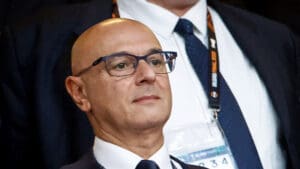
Daniel Levy has stepped down as executive chairman of Tottenham Hotspur after nearly 25 years in charge, bringing to an end one of the longest tenures in Premier League history.
The 63-year-old, who became Spurs chairman in 2001, leaves the club having overseen its transformation from a mid-table side valued at £80 million into a global football and business powerhouse now worth close to £3 billion. Off the pitch, he spearheaded the move into the state-of-the-art Tottenham Hotspur Stadium in 2019 and the development of the club’s training ground at Hotspur Way.
On the pitch, however, Levy’s record has been more divisive. Spurs lifted the Europa League trophy in May — their first European silverware in decades — but supporters have long accused him of failing to capitalise on the club’s rise. Tottenham reached the Champions League final in 2019 under Mauricio Pochettino but were criticised for their net transfer spend of just -£4m that summer, with many fans frustrated at what they viewed as a lack of ambition in the transfer market.
The club confirmed that Peter Charrington will become non-executive chairman as part of its succession planning. Over the summer, Spurs hired former Arsenal director Vinai Venkatesham as chief executive, while other senior changes included the departures of Donna-Maria Cullen, a close Levy adviser, and Scott Munn, the club’s chief football officer.
In a farewell statement, Levy said: “I am incredibly proud of the work I have done together with the executive team and all our employees. We have built this club into a global heavyweight competing at the highest level. More than that, we have built a community. I will continue to support this club passionately.”
Charrington acknowledged Levy’s contribution but said the club was entering “a new era of leadership” focused on stability and empowering Venkatesham’s executive team.
Tottenham’s financial and sporting position has been underlined this week by the report on the most valuable football squads in Europe, which listed Spurs with a value of €891.1 million. The rise followed their Europa League success under Ange Postecoglou — later dismissed and replaced by Thomas Frank — marking a decisive step back toward Europe’s elite.
Yet for many Spurs fans, patience with Levy had run out. Banners calling for his resignation were displayed at the Tottenham Hotspur Stadium last season, with one reading: “24 years, 16 managers, 1 trophy. Time for Change.”
Under Levy’s reign, Spurs appointed five permanent managers in the last six years. Their league finishes since the 2019 Champions League final — sixth, seventh, fourth, eighth, fifth and 17th — have fuelled criticism that the club’s growing revenues have not been matched by consistent investment in the playing squad. Deloitte’s Football Money League data for 2023/24 also showed Tottenham had the lowest wages-to-revenue ratio among Europe’s top 20 clubs, at just 42%.
Levy’s exit therefore marks the end of an era. For a generation of Tottenham supporters, his leadership reshaped the club’s infrastructure, financial standing and global reach — but also left lingering questions about whether his caution in the transfer market cost Spurs the chance to consistently compete with Europe’s best.
Read more:
Daniel Levy steps down as Tottenham chairman after nearly 25 years in charge
Giorgio Armani, Italian fashion icon, dies aged 91
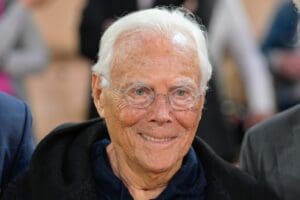
Giorgio Armani, the Italian designer who built one of the world’s most recognisable fashion empires, has died at the age of 91.
The Armani Group confirmed his death in a statement on Sunday, saying: “With infinite sorrow, the Armani Group announces the passing of its creator, founder, and tireless driving force: Giorgio Armani.”
Armani died at home, the company said. His passing comes just months after he was forced to miss his shows at Milan Fashion Week due to ill health — an absence that prompted widespread concern across the industry.
Founded in 1975, the Armani brand became synonymous with sleek, modern Italian style, revolutionising tailoring with softer silhouettes and understated elegance. The company grew into a global powerhouse, with annual revenues exceeding £2 billion across its fashion, fragrance, cosmetics and homeware divisions.
Armani himself was regarded as one of the most influential designers of the late 20th century, credited with reshaping the look of men’s suits and dressing generations of Hollywood stars and business leaders. His work became a byword for understated luxury and “quiet power dressing.”
In a recent interview with the Financial Times, Armani said he had been preparing for succession with a “gradual transition” of responsibilities to his closest collaborators, including long-time colleague Leo Dell’Orco, members of his family, and his executive team.
“My plans for succession consist of a gradual transition of the responsibilities that I have always handled to those closest to me,” he said. “I want it to be organic and not a moment of rupture.”
Armani had reassured fans after missing the Milan shows earlier this year, thanking the public and promising: “See you in September.”
Born in Piacenza in 1934, Armani began his career as a window dresser before moving into fashion design, where he quickly rose to prominence. Over nearly five decades, he turned his name into a global symbol of Italian style and craftsmanship.
His death marks the end of an era for the fashion industry, though the brand he built is expected to continue under the stewardship of the inner circle he trusted to carry forward his vision.
Read more:
Giorgio Armani, Italian fashion icon, dies aged 91
Lush closes all UK stores and website in one-day protest over Gaza cri …

High street cosmetics chain Lush has closed all of its UK shops, factories and its website in a one-day protest over the humanitarian crisis in Gaza.
The Dorset-based company said the gesture, carried out on Wednesday 3 September 2025, was intended as an act of solidarity, with shop windows across the UK displaying the message: “Stop starving Gaza – we are closed in solidarity.”
In a statement, Lush said: “Across the Lush business we share the anguish that millions of people feel seeing the images of starving people in Gaza. One thing Lush can currently send into Gaza is our love and a strong message that we stand in solidarity.”
The company apologised to customers inconvenienced by the closure but said many of them shared its concern about the situation in Gaza.
Lush has previously faced criticism for its political positions. In 2023, one of its Dublin shops displayed a “Boycott Israel” poster, which the firm later described as an isolated incident. At the time, Lush stressed it was a diverse company and that its official position was to “deplore all violence and all injustice” and support human rights for both Israelis and Palestinians.
Founded in 1995 in Poole, Dorset, Lush has grown to operate 951 stores in 52 countries. Known for its ethical and activist stances, the company has previously closed some of its social media channels, saying it wanted to create a safer environment for users.
As part of its latest campaign, Lush announced the relaunch of its Watermelon Slice soap, with proceeds now directed to medical services in Palestine, including charities preparing to provide prosthetic limbs for adults and children injured in the conflict.
The company noted that closing for a day meant losing not only its own takings but also tax contributions to the UK government. “We hope they too hear the message our closure sends, with more Government action needed to bring an immediate stop to the death and destruction, including an end to arms sales from the UK,” the statement said.
Lush added that while the closure began in Britain, where the business was founded, similar actions could follow in other countries where the brand trades.
The statement was signed off: “Peace and Solidarity.”
Read more:
Lush closes all UK stores and website in one-day protest over Gaza crisis

