
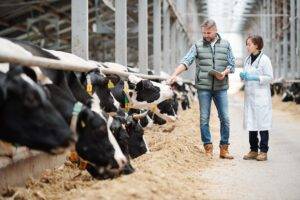
The UK’s dairy industry has warned that chronic worker shortages – worsened by Brexit and the pandemic – are threatening the country’s food security and driving up the risk of reduced production and higher prices.
A survey by Arla, the UK’s largest dairy co-operative and owner of the Lurpak and Cravendale brands, found that five in six farmers looking to recruit had received very few or no applications from qualified candidates. The finding reflects a growing struggle to find staff with the right skills, with 84% of farmers now citing hiring difficulties, up from 79% in 2021.
Producers said the end of free movement for EU workers, coupled with the economic fallout from Covid, has compounded long-standing challenges in recruitment across agriculture. Nearly half (48.6%) of respondents said retaining staff had become harder since Brexit and the pandemic, while only 5% reported any improvement.
The shortages are already having tangible effects: 13% of those surveyed said they would leave farming altogether in the next year if the situation does not improve, and 6% said they had been forced to cut milk production.
Although Arla’s total milk output has remained stable, its membership has fallen by about 300 over the past three years – from 2,100 to 1,900 – as farmers retire or consolidate herds. Members now account for almost a third of all UK dairy farmers.
Industry data from the Agriculture and Horticulture Development Board (AHDB) shows that nearly 200 British dairy farmers quit in the 12 months to April 2025, bringing the total number of producers down to 7,040. The sector has repeatedly warned that continued losses could undermine the UK’s self-sufficiency in liquid milk.
“What we’re seeing is the real impact of these workforce shortages on our farming industry, whether that’s in higher costs or lower milk production,” said Bas Padberg, managing director of Arla Foods UK. “The effect of this is ultimately going to be seen in the price and availability of products on the supermarket shelves, affecting the millions of people that rely on dairy as a source of nutrition.”
Arla runs its own apprenticeship and industrial placement schemes and has welcomed government recognition of the problem in the upcoming food strategy. But Padberg said “practical steps” from industry, educators and government were needed to attract new entrants – particularly younger workers – into the sector.
Like much of agriculture, dairy farming has an ageing workforce, with nearly half (47%) of farmers aged 55 or over. Most young people entering the industry do so through family connections: two-thirds of respondents said their farms had been in the family for at least four generations, while only 3% were first-generation farmers.
Read more:
Dairy farmers warn worker shortages are putting UK food security at risk
Category: Uncategorized
Virgin Media O2 launches £1m apprenticeship talent fund to boost dive …

Virgin Media O2 has launched a £1 million talent fund to help charities, local authorities, small businesses and social enterprises train apprentices in science, technology, engineering and maths (STEM), aiming to break down the financial and structural barriers that prevent smaller organisations from investing in early careers talent.
The scheme will allow eligible organisations to draw on Virgin Media O2’s unspent apprenticeship levy funds to cover the full cost of apprenticeship training. It is specifically designed to support women and people from global majority backgrounds seeking to progress in STEM-based roles, building a more diverse pipeline of future leaders.
The initiative follows research showing more than 3 million SMEs say hiring apprentices is not financially viable in the current climate. Cost pressures were cited by 35% of respondents, the complexity of training programmes by 30%, and insufficient levy funds by 15%. Almost four in five employers (79%) said they would be more likely to take on apprentices if additional financial support were available.
Three-star Michelin chef Clare Smyth, who began her career as an apprentice, is backing the programme. “Doing an apprenticeship changed the course of my life and accelerated my career,” Smyth said. “I’m proud to support a programme that’s breaking down barriers and creating opportunities for everyone by showing that success isn’t dependent on where you come from — it’s defined by where you can go.”
Under apprenticeship levy rules, large employers can share up to 50% of their funds with other organisations. Virgin Media O2 is using this flexibility to help organisations struggling with the upfront cost or complexity of the process to recruit apprentices in digital, engineering, and data analysis roles.
Philipp Wohland, Chief People Officer at Virgin Media O2, said: “We’re committed to backing the next generation of talent and creating opportunities for people to access the value of apprenticeships. By creating a £1 million fund, we’re investing in people as they build their skills and helping create a more inclusive, skilled workforce.”
Organisations can apply now for funding, with opportunities prioritising social impact, inclusion, and skills for the future.
Read more:
Virgin Media O2 launches £1m apprenticeship talent fund to boost diversity in stem
Six by Nico launches ‘Six by You’ crowdfund, raising £1.75m in ea …
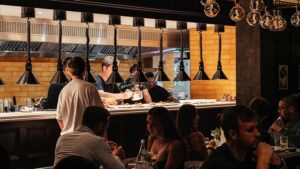
Immersive dining brand Six by Nico has launched ‘Six by You’, a new community-first crowdfunding initiative giving loyal customers the chance to become co-owners of the business.
The scheme, now live on Crowdcube, follows an early access phase in which more than 3,800 community members invested over £1.75 million in just five days. From today, the offer is open to the public for the first time.
Billed as “loyalty meets ownership,” the initiative invites diners to invest from £360 and receive both equity in Six by Nico and an exclusive Season Pass for Two – four curated dining experiences over 12 months, valid at any location.
Investor benefits
Every investor will receive:
£360 in equity – shareholder status in Six by Nico
£360 Season Pass – four immersive dining experiences for two
Investor Black Card – access via the upcoming Six by Nico app
Exclusive Investor Platform – member-only updates, rewards, and direct access to leadership
Voting rights – to help shape menus, concepts, locations and events
Founder-only invites – priority access to new openings and concepts
The package delivers over £720 in value for a £360 investment, alongside a stake in the company’s future growth.
Building a community of co-owners
Founder Nico Simeone said the aim was to deepen the connection between the brand and its most loyal diners: “In our first five days, more than 3,800 members of our community invested in Six by Nico. I’m incredibly grateful and excited about building the next phase of Six by Nico alongside every single one of them. We wanted to really reward every investor, so all will receive £360 back in the form of a Season Pass for Two.”
The crowdfund is capped and available on a first-come, first-served basis, with Six by Nico targeting its most engaged customers – diners who want to move from loyal guests to active partners in the brand’s journey.
The company has built a reputation for its rotating six-course tasting menus inspired by cities, memories and concepts, with multiple UK and Ireland locations.
Read more:
Six by Nico launches ‘Six by You’ crowdfund, raising £1.75m in early access
CIPD urges apprenticeship guarantee for young people as UK labour mark …

The government should introduce an apprenticeship guarantee for all 16 to 24-year-olds to help young people into work as the UK labour market continues to cool, according to the Chartered Institute of Personnel and Development (CIPD).
Responding to the latest Office for National Statistics (ONS) labour market data, James Cockett, senior labour market economist at the CIPD, warned that rising employment costs — driven by higher National Insurance contributions and minimum wage increases — risk discouraging employers from hiring young workers.
Vacancies have fallen to their lowest level since early 2015, with notable declines in hospitality and retail over the past year. These sectors, Cockett said, are vital entry points for young people starting their careers.
“The government needs to go further than the youth guarantee and introduce an apprenticeship guarantee for all 16 to 24-year-olds, to provide valuable opportunities to both learn and earn,” Cockett said.
“Better training and employment opportunities will ensure young people start their working lives on the right foot while helping employers build future talent pipelines.”
The ONS data also shows that pay growth remains high, particularly in hospitality and retail — the same sectors most affected by rising employment costs. However, real wage growth has now fallen to its lowest level in two years, with inflation eroding much of the headline pay increases.
Cockett said an apprenticeship guarantee could support both sides of the labour market by offering young people stable employment and training, while giving employers access to a pipeline of skilled staff at a time when vacancies are shrinking.
Read more:
CIPD urges apprenticeship guarantee for young people as UK labour market cools
Pasta Evangelists to open 100 UK restaurants creating up to 1,500 jobs

Pasta Evangelists has unveiled ambitious plans to open 100 restaurants across the UK over the next five years, in a £30 million expansion drive that is expected to create up to 1,500 jobs.
The London-based fresh pasta brand, which began as a recipe kit delivery service before branching into dining, is seeking new sites and franchise partners across the South of England, the Midlands and Scotland. The company says it is also exploring a ‘Pasta Apprenticeship’ scheme to attract new talent and help current staff develop long-term careers in hospitality.
Chancellor of the Exchequer Rachel Reeves hailed the announcement as “great news and another vote of confidence in the UK,” adding that it demonstrated “the dynamism and resilience of British businesses” as the government focuses on economic growth.
Co-founder and CEO Alessandro Savelli said the company’s goal is to become “the UK’s fastest-growing casual dining hotspot” for pasta lovers.
“The demand for our fresh, beautifully cooked artisan pasta is growing. We expect our plans to create up to 1,500 new jobs. We already employ 350 people and as part of our recruitment drive, we’re looking into options for a ‘Pasta Apprenticeship’ scheme to encourage young people into the workplace.”
Savelli said sustainable growth is key to the company’s strategy, noting that while the hospitality sector is under pressure, Pasta Evangelists has “bucked the trend” with five confirmed new openings in just three months.
The group recently opened its first restaurant outside London in Guildford and a new site in Farringdon. Three more London restaurants – in Fulham, Queensway and New Oxford Street – are due to launch in the coming weeks, bringing the total to 11.
Co-founder and Chief Marketing Officer Finn Lagun credited the brand’s success to offering more than just dining: “A big part of our success is the experiential element, with our famous fresh pasta-making courses. Over 100,000 people have already learnt the art of pasta-making at our Pasta Academy, and with our growth plans, we could see over a million Britons learning from our chefs.”
The expansion marks the latest phase in the company’s evolution from an online food start-up into a multi-channel hospitality brand combining restaurants, experiential events, and its original pasta delivery business.
Read more:
Pasta Evangelists to open 100 UK restaurants creating up to 1,500 jobs
Tata steel UK CEO Rajesh Nair appointed chair of UK Steel

Rajesh Nair, chief executive of Tata Steel UK, has been appointed as the new Chair of UK Steel, the trade association representing Britain’s steel sector. He will take on the position alongside his current role leading Tata Steel’s UK operations.
Nair brings more than 36 years of experience across the Tata Steel Group to the role. Since joining Tata Steel UK as chief operating officer in 2021 and becoming CEO in 2023, he has played a central part in reshaping the business, driving its transition to low-CO₂ steelmaking, and securing the future of domestic steel production in South Wales and beyond.
A graduate in electrical engineering from the Indian Institute of Technology (Banaras Hindu University), Nair has held senior operational and commercial posts across Tata Steel’s global operations, from managing the Cold Rolling Mill complex at Jamshedpur to helping integrate Corus Group into Tata Steel in 2007.
Commenting on his appointment, Nair said: “It is an honour to be appointed Chair of UK Steel at such a pivotal moment for the industry. This is a period of profound change – with significant challenges, but also real opportunities to strengthen the sector for the long term. I look forward to working with UK Steel members and stakeholders to help secure that future – working closely with Government on its Steel Strategy and addressing structural issues like uncompetitive energy costs and the growing threat of high-emission imports.”
UK Steel director-general Gareth Stace welcomed the appointment: “Rajesh will bring a wealth of experience across both the global and UK steel industry to this role. His appointment could not have come at a better time as our industry looks to modernise and grow as Government prepares to publish its Steel Strategy this autumn.”
In addition to his UK Steel role, Nair is a board member of Tata Steel UK and chairs Surahammars Bruks in Sweden. A Fulbright Scholar with advanced management training from Carnegie Mellon University and CEDEP-INSEAD, he is a recognised technical innovator with published research and patents in galvanised steel products. He has also served on industry committees and been an active member of the Indian Institute of Metals.
Read more:
Tata steel UK CEO Rajesh Nair appointed chair of UK Steel
Poundland to close 49 more UK stores as new owners push ahead with res …

Poundland is closing 49 stores across the UK over the next five weeks, with 10 branches shutting their doors for good today, as part of a major restructuring under its new owners.
US investment firm Gordon Brothers, which bought the discount retailer from Polish parent Pepco Group in June for a nominal £1, is cutting almost 70 stores from Poundland’s 800-strong network by mid-October. Three locations have already closed, leaving 16 more to be confirmed later this year.
The closures begin today with stores in Ammanford, Birmingham Fort, Cardiff Valegate, Cramlington, Leicester, Long Eaton, Port Glasgow, Seaham, Shrewsbury and Tunbridge Wells. Fifteen more will shut on 17 August, followed by 12 on 24 August, and 11 on 31 August. The final of this wave – in Irvine, North Ayrshire – will close on 14 September.
Poundland retail director Darren MacDonald said the aim was to maintain a “sizeable” network of 650–700 stores, but acknowledged the closures would be “sincerely regrettable” for customers. Staff in affected stores are in consultation, with redeployment options being explored.
The restructuring plan includes rent negotiations at some locations, closure of the frozen and digital distribution centre in Darton, South Yorkshire, later this year, and the closure of the Bilston, West Midlands distribution hub by early 2026. Frozen products will be dropped entirely and chilled food ranges reduced.
Online sales will also end, while the retailer plans to expand its womenswear and seasonal product ranges. These changes still require High Court approval later this month.
Poundland has struggled with falling sales, posting a 6.5% drop in revenue to £830m in the six months to March. Pepco blamed “highly challenging trading conditions” across all categories.
Stores closing 17 August
Bedford, Bidston Moss, Broxburn, Craigavon, Dartmouth, East Dulwich, Falmouth, Hull St Andrews, Newtonabbey, Perth, Poole, Sunderland, Stafford, Thornaby and Worcester.
Stores closing 24 August
Brigg, Canterbury, Coventry, Newcastle, Kings Heath, Peterborough, Peterlee, Rainham, Salford, Sheldon, Wells and Whitechapel.
Stores closing 31 August
Blackburn, Cookstown, Erdington, Kimberley, Horsham, Hull Holderness, Kettering, Omagh, Shepherds Bush, Southport and Taunton.
Read more:
Poundland to close 49 more UK stores as new owners push ahead with restructuring
From Altadena to Westminster: climate denial is a luxury we can’t af …

I’ve been to Los Angeles many times over the years — for work, for pleasure, and occasionally for that curious hybrid of both that journalists tell their accountants is “business travel”. I’ve always loved the place: the optimism in the air, the palm-lined streets, the sun-washed hills rolling down to the Pacific.
But this time was different. The hills were scorched. The air was acrid. Driving into Altadena, I was met not by the familiar suburban hum but by the sight — and smell — of destruction. Houses gutted. Trees reduced to brittle, blackened bones. A haze that clung to the lungs.
The Altadena fires had not just burned through land. They’d burned through lives. People who had built homes, memories, and futures there now stood in the ash, holding nothing but what they’d managed to carry out in the scramble to safety.
And it wasn’t just the physical damage. It was the mood. Conversations were quieter, eyes heavier. You could feel the shared trauma — the knowledge that the place they loved could, at any moment, be taken again.
I was so moved by what I saw that I did something I rarely do on the road: I stopped, set up my phone, and recorded a short video for the EV Powered YouTube channel. Standing there in the still-smouldering aftermath, I spoke about the urgency of action on climate change. You can watch it here: EV Powered – LA Fires.
And yet, despite the unarguable evidence — the rising temperatures, the worsening storms, the lengthening wildfire seasons — there are still those who stand before cameras and insist that climate change is some elaborate hoax. In the US, Donald Trump has made a sport of it. His casual dismissal of climate science has been a defining theme of his politics, playing to the crowd but abandoning the planet.
It’s a dangerous luxury, this denial. It allows leaders to dodge difficult policy decisions, to swerve the costs of action, to keep the machine humming exactly as it always has. But it comes at the expense of people like those in Altadena, and the farmers in Oxfordshire, and communities everywhere that are already paying the price in floods, droughts, fires, and food shortages.
And climate denial is not confined to the MAGA circuit. In Britain, we too have our own chorus of sceptics — some in the press, some in the pub, and some, regrettably, in positions of real influence, and then there is Reform UK’s very strong opinion on the topic. They cloak themselves in the language of “common sense”, as though ignoring a problem is somehow more practical than solving it.
This is where my LA trip connected in my mind to my previous column on Jeremy Clarkson. Clarkson is no Trump — he’s not campaigning to roll back environmental protections, and he’s done more to educate the public on the realities of farming than any politician I can name. But when he waves away the link between extreme weather and climate change, it feeds the same complacency that lets fires burn hotter, seas rise faster, and communities like Altadena bear the brunt.
Here’s the hard truth: the cost of action is high, but the cost of inaction is ruinous. Businesses know this — supply chains are disrupted by floods, crop yields are hit by droughts, insurance costs soar with every “once-in-a-century” disaster that now happens every other year. Whether you’re running a farm in Chipping Norton or a logistics hub in California, climate change is a line on your P&L whether you acknowledge it or not.
The lesson from Altadena is not simply that wildfires happen. It’s that they are happening more often, more intensely, and in places that didn’t used to burn. And unless we accept the link to our changing climate — and act accordingly — they will keep happening.
Flying home, I thought about the people I’d met there. Not activists, not lobbyists, not political operatives — just residents, trying to rebuild. They don’t have the luxury of debating whether the climate is changing. They are living in the aftermath of the answer.
If there’s one thing the business community can take from this, it’s that leadership means facing reality, even when it’s inconvenient. We can’t keep treating climate change as someone else’s problem, or tomorrow’s problem, or — worst of all — not a problem at all. Because by the time the flames are at your door, it’s too late to deny they’re real.
Read more:
From Altadena to Westminster: climate denial is a luxury we can’t afford
Trump Media to stream GB News on Truth+ in global expansion deal

Trump Media and Technology Group (TMTG) has struck a deal to broadcast GB News on its US-based streaming platform, Truth+, in a move that will make the UK right-leaning channel accessible to audiences worldwide.
TMTG – which operates Truth Social, Truth+, and the financial services brand Truth.Fi – confirmed the agreement on Friday, saying GB News will be available with the free basic Truth+ package on multiple devices and platforms, including iOS, Android, Web, Apple TV, Android TV and Amazon Fire.
The deal will significantly expand GB News’s footprint, particularly in the US, where it will now sit alongside a roster of other content on the streaming service. The British network, known for hosting figures such as Nigel Farage, positions itself as a champion of free speech and an alternative to what it calls “mainstream” news.
The move comes as Donald Trump continues his sustained criticism of US mainstream media, labelling outlets “radical-left monsters” and accusing them of “illegal” reporting. The White House’s communications director, Steven Cheung, recently accused “liberal media” of spreading “fake news” following reports linking Trump’s name to US Justice Department files on Jeffrey Epstein – a claim Trump has denied.
Speaking about the deal, TMTG chief executive and chair Devin Nunes said: “GB News is a terrific source for news, facts and commentary. By expanding its global reach, we aim to connect an enormous new, international audience to the network’s unique reporting and opinion, while putting another dent in the global woke news monopoly.”
GB News chief executive Angelos Frangopoulos described the partnership as a strategic step: “As the fearless champion of freedom of speech in Britain, it is important that we launch across the United States of America and globally on the Truth+ streaming platform.”
The rollout reinforces GB News’s ambition to grow its international audience and aligns with Trump Media’s push to expand its streaming offering beyond the US.
Read more:
Trump Media to stream GB News on Truth+ in global expansion deal

