

Lamborghini has abandoned plans to launch a fully electric model, shelving its much-anticipated Lanzador in favour of expanding its plug-in hybrid line-up.
Chief executive Stephan Winkelmann said demand for battery-powered supercars among the brand’s wealthy clientele was “close to zero”, warning that continued investment in EV development risked becoming “an expensive hobby”.
The Lanzador, unveiled as an all-electric concept in 2023, was expected to form Lamborghini’s fourth EV project. Instead, it will now be replaced by a plug-in hybrid electric vehicle (PHEV), meaning the company’s entire range will be hybrid by 2030.
Winkelmann said Lamborghini would continue producing internal combustion engines “for as long as possible”, arguing that customers value the “emotional experience” of the brand’s cars — from design and performance to the distinctive engine sound.
“EVs, in their current form, struggle to deliver this emotional connection,” he said.
Lamborghini, owned by Audi and part of the Volkswagen Group, delivered a record 10,747 vehicles in 2025, marking its second consecutive year above 10,000 units.
Its current range, including the Urus SUV, Temerario sports car and Revuelto supercar, is already fully PHEV. The Urus, accounting for around 60 per cent of total sales, remains the backbone of the business.
While Europe and the Middle East remain strong markets, deliveries in the Americas declined nearly 10 per cent last year.
Winkelmann said the decision to cancel the Lanzador followed more than a year of discussions with dealers and customers. “Investing heavily in full EV development when the market and customer base are not ready would be financially irresponsible,” he said.
Lamborghini’s move reflects broader challenges facing carmakers in the transition to electric vehicles. Lower-than-expected consumer demand and rising development costs have led several manufacturers to scale back EV ambitions.
Stellantis recently announced significant write-downs linked to electric programmes, while Ford Motor Company and General Motors have also disclosed multibillion-dollar charges.
However, not all luxury brands are retreating. Rolls-Royce’s Spectre EV has emerged as one of its most popular models, suggesting electric adoption varies significantly by segment.
In the UK, petrol and diesel car sales are due to end by 2030, while the EU plans a 2035 phase-out of most new combustion engine vehicles. As a low-volume manufacturer, Lamborghini currently benefits from exemptions under emissions rules and intends to seek extensions beyond 2035.
Winkelmann noted that Lamborghini vehicles typically cover relatively low annual mileage, less than 2,000 miles for supercars, limiting their environmental footprint.
“Never say never,” he said of a future EV. “But only when the time is right.”
For now, the Italian marque is betting that hybrid technology offers the best balance between regulatory compliance and preserving the visceral appeal that underpins its brand.
Read more:
Lamborghini scraps electric supercar plans and doubles down on hybrids
Category: Uncategorized
Brompton shifts focus to China as US tariff turmoil dents confidence

Brompton Bicycle has scaled back its US expansion and accelerated investment in China, as uncertainty over trade policy under Donald Trump reshapes its international strategy.
The London-founded folding bike specialist closed its branded stores in New York and Washington last year when their leases expired. In contrast, it opened a new outlet in Shenzhen and doubled the size of its flagship Shanghai store following a major refurbishment.
Will Butler-Adams, Brompton’s managing director, said the decision reflected concerns about policy unpredictability in the US. “We decided the leadership was so unpredictable, anything could happen,” he said, adding that tariff volatility made long-term commitments difficult.
“If the tariff goes up to 25 per cent and we become uncompetitive, the whole store proposition is at risk,” he said. “I’m not going to sign a five-year lease in this environment.”
His comments follow a US Supreme Court ruling that many of the tariffs introduced since 2024 were unlawful. However, the administration subsequently confirmed a temporary 10 per cent global tariff, later raised to 15 per cent, adding to market uncertainty.
Brompton, founded in 1976, operates a factory in west London producing tens of thousands of bicycles annually and is the UK’s largest bike manufacturer. Its compact folding bikes are popular among urban commuters worldwide.
While Butler-Adams stressed that the company would continue investing in the US, he said its approach would be more cautious and flexible.
China, by contrast, offers greater stability from Brompton’s perspective. The company has operated in the country for 17 years and now runs three owned stores alongside 14 franchise outlets. It also distributes through third-party retailers.
“It’s our largest market and we know where we stand,” Butler-Adams said, suggesting that warmer diplomatic ties between the UK and China could further enhance demand for British brands.
The shift underscores how global manufacturers are recalibrating supply chains and retail strategies in response to trade tensions, seeking predictability as much as growth in an increasingly volatile geopolitical landscape.
Read more:
Brompton shifts focus to China as US tariff turmoil dents confidence
Aston Martin issues fresh profit warning and sells F1 naming rights fo …

Aston Martin has issued another profit warning and agreed to sell the permanent naming rights to its Formula One team for £50m, as the British marque grapples with falling deliveries, mounting debt and the impact of US tariffs.
The carmaker, majority-owned by Canadian billionaire Lawrence Stroll, said earnings for 2025 would be worse than City forecasts, marking its fifth profit warning since September 2024.
Analysts had expected the company to report a loss of around £184m when it publishes full-year results next week.
Aston Martin delivered 5,448 vehicles last year, nearly 10 per cent fewer than in 2024, as sales in the US were hit by a 25 per cent tariff on imported cars imposed by former US president Donald Trump. The group also missed targets for high-margin special edition models.
Shares fell as much as 4 per cent in early trading before trimming losses.
Cash reserves stand at around £250m, broadly stable over the past six months but down from £360m at the start of 2025. The company’s debt pile has risen by about 70 per cent since early 2024.
To bolster liquidity, Aston Martin has agreed to sell the permanent right to use its name in Formula One to its F1 team for £50m. The team is operated by AMR GP Holdings, a separate entity also controlled by Stroll, meaning the deal effectively represents additional funding from its owner.
Because Stroll sits on both sides of the transaction and holds a 32 per cent stake in Aston Martin, the deal requires shareholder approval. Investors representing more than half the company, including Stroll’s vehicle, Geely and Mercedes-Benz, have already indicated they will vote in favour.
A similar naming rights arrangement was struck in 2024, granting the F1 team rights until 2055.
Since taking control in 2020, Stroll has sought to reposition the brand through new model launches and repeated capital raisings. However, the turnaround has been marked by persistent losses, production setbacks and inventory challenges.
The US tariff regime added significant cost pressure in one of Aston Martin’s most important markets. A subsequent UK-US trade agreement reduced tariffs to 10 per cent on up to 100,000 British-made cars from mid-2025, offering partial relief.
In October, the company cut £300m from its investment plans and scaled back development spending on new models, citing tariffs and subdued demand in China.
Despite the headwinds, Aston Martin pointed to upcoming deliveries of its £850,000 Valhalla hypercar as a positive sign. Around 500 units are due for delivery in 2026, with more than half of the limited 999-production run already sold.
Nevertheless, with its share price down roughly 50 per cent over the past year, Aston Martin’s efforts to restore profitability remain under intense scrutiny as it navigates a volatile global automotive market.
Read more:
Aston Martin issues fresh profit warning and sells F1 naming rights for £50m
Record January surplus boosts public finances as tax receipts surge
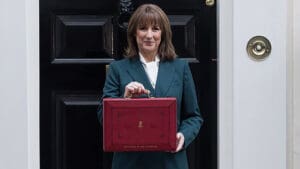
Britain recorded its largest monthly budget surplus on record in January as rising tax receipts and a sharp fall in debt interest costs boosted the public finances.
Figures from the Office for National Statistics show government revenues exceeded spending by £30.4bn in January, the highest surplus since monthly records began in 1993 and well above City forecasts of £23.8bn.
January is typically a strong month for receipts because of self-assessment tax payments, but this year’s figure far surpassed the £14.5bn surplus recorded in January 2025.
The improvement was driven partly by a steep drop in debt interest payments, which fell to £1.5bn from £9.1bn in December. Lower borrowing costs have eased pressure on the Treasury’s balance sheet after last year’s market volatility.
Total government revenues rose nearly 14 per cent year-on-year to £133.3bn. Income tax receipts increased by £12bn, while national insurance contributions rose by £2.9bn following higher payroll levies introduced last spring.
Grant Fitzner, chief economist at the ONS, said January had delivered the strongest surplus since records began, with revenue gains offsetting higher spending on public services and benefits.
Across the first ten months of the financial year, borrowing totalled £112.1bn — 11.5 per cent lower than the same period a year earlier and below the £120.4bn forecast by the Office for Budget Responsibility at the November budget.
The improved position strengthens the Treasury’s hand ahead of the spring statement on 3 March, although analysts caution that fiscal headroom remains fragile.
Dennis Tatarkov, senior economist at KPMG UK, said weaker-than-expected growth in late 2025 may have eroded part of the government’s £22bn fiscal buffer, though falling interest rates have provided some offset.
The chancellor, Rachel Reeves, is not expected to announce fresh tax rises or spending cuts at the spring statement. Government U-turns on business rates for pubs and inheritance tax changes have narrowed some of the available headroom.
James Murray, chief secretary to the Treasury, said the government was ensuring taxpayers’ money was spent wisely and that borrowing this year was on track to be the lowest since before the pandemic.
While January’s surplus reflects seasonal factors, the combination of robust tax receipts and easing debt costs provides a temporary lift to the public finances at a critical point in the fiscal year.
Read more:
Record January surplus boosts public finances as tax receipts surge
Depop sold to eBay at 25% discount to 2021 valuation

Depop has been sold to eBay for $1.2bn, marking a 25 per cent discount to the price paid five years ago by Etsy.
Etsy acquired the London-founded second-hand fashion platform for $1.6bn in 2021 at the height of pandemic-era ecommerce growth. The resale comes as Etsy refocuses on its core handmade and vintage marketplace.
Founded in 2011 by English-Italian entrepreneur Simon Beckerman, Depop built a strong following among younger consumers seeking sustainable and affordable fashion. The platform counted roughly seven million active buyers at the end of last year, nearly 90 per cent of whom were under 34.
For eBay, the deal represents an attempt to deepen its appeal with Gen Z shoppers and strengthen its position in the fast-growing resale segment. Fashion accounts for more than $10bn of eBay’s annual gross merchandise volumes, with second-hand clothing a key driver of growth.
Jamie Iannone, chief executive of eBay, said Depop would benefit from the group’s scale and operational capabilities. “We are confident that as part of eBay, Depop will be well positioned for long-term growth,” he said.
However, analysts suggest the acquisition is partly defensive. Aliyah Siddika of GlobalData described the transaction as “as much about defence as growth”, noting Depop faces intense competition from rivals such as Vinted.
Etsy shares rose nearly 10 per cent after the announcement, reflecting investor support for the decision to exit a business that has delivered lower profitability than its core operations. Major shareholders in Etsy include BlackRock, Goldman Sachs and activist investor Elliott.
Depop is expected to retain its brand and operate with a degree of autonomy under eBay’s ownership, subject to regulatory approval. The all-cash transaction is scheduled to close in the second quarter of 2026.
Peter Semple, Depop’s chief executive, said the deal marked a new chapter. “This transaction is a testament to the growth we have delivered and the strength of our brand and community,” he said.
The sale underscores the shifting valuations within ecommerce, as pandemic-era premiums give way to a more measured approach to growth and profitability.
Read more:
Depop sold to eBay at 25% discount to 2021 valuation
Youth unemployment hits 11-year high as rate cut expectations build

Youth unemployment has surged to its highest level in more than a decade, raising fears of a “lost generation” and intensifying expectations that the Bank of England will cut interest rates next month.
Figures from the Office for National Statistics show that in the three months to December 2025, the unemployment rate among 16 to 24-year-olds climbed to 16.1 per cent. That equates to nearly 740,000 young people out of work, an increase of around 120,000 in under a year.
In the first quarter of 2024, before the implementation of higher employer national insurance contributions and minimum wage rises, the youth unemployment rate stood at 14.2 per cent, or roughly 620,000 people.
The rise means young people account for nearly half of the total increase in unemployment across the economy over the same period, despite representing just 13 per cent of the working-age population.
Economists warn that while spikes in youth joblessness were seen during the 2008 financial crisis and the Covid-19 pandemic, the current rise is unusual because it has occurred without a comparable surge in unemployment among older age groups.
Peter Dixon, senior economist at the National Institute of Economic and Social Research, said younger workers were being “priced out of the market”. Louise Murphy of the Resolution Foundation noted that almost one in six young people who want to work cannot find a job.
Some analysts argue that recent fiscal policy changes have disproportionately affected entry-level employment. Increases in employer national insurance contributions and the compression of minimum wage differentials between age bands have raised labour costs for sectors such as hospitality, retail and leisure, industries that traditionally provide first jobs for school leavers and students.
Further pressure is expected in April when additional provisions of the government’s Employment Rights Act, including expanded sick pay entitlements, come into force.
Despite the deteriorating employment figures, there is a positive element within the data: economic inactivity among young people has returned close to pre-pandemic levels, suggesting more are seeking work. However, many are struggling to secure positions.
The softening labour market has reinforced expectations that policymakers will move to support growth. Financial markets are increasingly confident that the Bank of England will cut its base rate from 3.75 per cent to 3.5 per cent when its monetary policy committee meets on 19 March.
Analysts at Bank of America said the rise in unemployment and easing wage growth “keeps us comfortable with our base case of a March cut”, while ING economist James Smith described the latest jobs report as keeping the central bank “firmly on track” for a reduction.
In its most recent forecasts, the Bank of England acknowledged that downturns in employment often emerge first among younger cohorts, warning that current trends may signal broader weakness in labour demand.
With inflation easing and growth subdued, attention now turns to whether rate cuts can help prevent the recent spike in youth unemployment from becoming entrenched.
Read more:
Youth unemployment hits 11-year high as rate cut expectations build
Getting To Know You: James Doyle, Managing Director of Endeavour Group

We sit down with James Doyle, Managing Director of Endeavour Group, a building safety consultancy and training provider supporting duty holders responsible for some of the UK’s most complex and high-risk buildings.
Based in the North West and operating nationally, Endeavour Group brings an evidence-led, engineering discipline to the built environment as regulatory scrutiny continues to increase.
With more than two decades of experience spanning offshore oil and gas, process safety and fire engineering, Doyle applies high-hazard industry methodologies to residential and commercial settings, helping organisations work through the requirements of the Building Safety Act with a clearer understanding of their responsibilities.
His team works with clients to strengthen building safety through intrusive assessments, safety case support and accredited training. As an approved ProQual training centre since 2018, the business delivers nationally recognised qualifications across fire safety, passive fire protection and health and safety, and is currently launching three new Fire Risk Assessment qualifications at Levels 3, 4 and 5.
Alongside its UK work, Endeavour has delivered UK-standard training internationally through remote delivery for several years. More recently, this has developed into direct conversations with overseas organisations, including engagement in Dubai, who are seeking to better understand how competence, evidence and decision making translate into live, occupied buildings.
In this interview, Doyle discusses the challenges duty holders face under the Building Safety Act, why evidential rigour matters, and the principles guiding decision making in a sector where the stakes are high.
What is the main problem you solve for your customers?
The single biggest issue our clients face is a lack of reliable information at a time when the expectations placed on duty holders have never been higher.
The Building Safety Act has transformed the regulatory landscape, yet many assessments across the UK are still carried out through visual surveys or templated reports that do not meet the level of evidence the legislation requires. That gap creates legal, financial and operational risk.
At Endeavour Group, our role is to give clients a clear picture. We carry out intrusive compartmentation surveys, fire risk assessments, building risk reviews, safety case reports, resident engagement support, remedial action planning and ongoing compliance management, all underpinned by photographic evidence, technical justification and structured reasoning. Every finding is linked back to fire strategy intent and the statutory definition of a relevant defect so there is no ambiguity about what the issue is or why it matters.
Through our partnership with Riskflag, we also support clients with a digital golden thread that organises their evidence, actions and decision making in an auditable way. When people work with us, they gain confidence and a route to compliance.
What made you start your business?
Endeavour Group began in 2018 after I moved from more than two decades working in offshore oil and gas, process safety and fire engineering. In high-hazard environments, assessment quality, intrusiveness and evidential strength are not optional. You learn very quickly that reassurance means nothing if it is not supported by facts.
When I stepped further into the built environment, I could see an increasing gap between what the legislation would ultimately demand and what was being delivered on the ground. Many reports were non-intrusive. Many conclusions were based on assumptions rather than evidence. Organisations responsible for buildings were making important decisions without the technical understanding to identify risk properly.
I created Endeavour because the sector needed a consultancy that applied engineering discipline, communicated clearly and delivered assessments that could stand up to legal and regulatory challenge. What began as a specialist consultancy has grown into a national capability supporting high-rise residential, supported living, student accommodation, retail, commercial, education and transport.
What are your brand values?
For us, competence, clarity and integrity are not marketing terms. They are the foundations of how we work.
Competence means having the technical depth to interpret fire strategy, identify relevant defects, challenge assumptions and build evidence that supports decisive action. Clarity means presenting findings in a way that duty holders, residents and regulators can understand without ambiguity. Integrity means reporting what the evidence shows rather than what people hope to hear.
These values guide how we approach every survey, every safety case and every piece of advice we give.
Do your values define your decision making process?
Yes, completely. We always ask ourselves: would this stand up to regulatory, legal or third-party scrutiny? If the answer is no, we refine it.
Through years of working with the regulator we understand their role in asking the ‘what if’ question, and we ensure that our reports comprehensively satisfy this requirement with appropriate mitigation. We test our findings and their failure modes adapted from offshore safety case methodology, which ensures every conclusion is traced back to justification.
The same standard applies to our training centre, where evidential discipline underpins everything we deliver.
Is team culture integral to your business?
It is essential. Our team is our strength.
The work we do spans high-rise residential, student living, supported living, care environments, commercial and educational settings. Each brings its own challenges, and our ability to deliver depends on a culture built on openness, technical curiosity and shared accountability.
That collaborative approach also supports our international conversations, where the emphasis is on sharing experience and understanding how similar challenges are managed in different operating environments.
In terms of your messaging, do you communicate clearly with your audience?
Clarity is central to everything we do. Building safety is technical, but communication should not be.
Our reports explain the issue, the evidence, the risk and the action required in straightforward language. We avoid jargon and prioritise giving duty holders information they can use immediately. The same approach shapes our training, where real-world examples help learners understand how legislation applies in practice.
What is your attitude to competitors?
There are organisations in the sector that deliver excellent work, but there is still significant variation in standards.
We regularly see surveys that lack intrusive inspection or fail to link findings back to the definition of a relevant defect. These reports may reassure people in the moment, but they do not provide the level of evidence required under the Act.
What we do is driven by quality, not comparison. We know our methodology is robust because our evidence has already changed outcomes, including cases where developers have accepted responsibility for defects once they reviewed our findings. Strong evidence drives accountability.
What advice would you give to anyone starting a business?
Focus on building deep expertise and do not compromise your standards. Consistency, honesty and high-quality work are far more valuable than volume.
Surround yourself with people who share your approach and invest in their development. If you concentrate on doing things properly, reputation and growth will follow naturally.
What three things do you hope to have in place within the next twelve months?
First, the full launch of our Building Safety Masterclass to help duty holders understand relevant defects, liability pathways and evidential requirements under the Act.
Secondly, increasing the portfolio of higher-risk buildings being managed and achieving successful Building Assessment Certificate approvals.
And third, continuing to explore international conversations, including recent engagement in Dubai, where organisations operating complex, occupied buildings are asking similar questions around competence, accountability and how UK-standard training and assessment translate into real-world decision making.
Read more:
Getting To Know You: James Doyle, Managing Director of Endeavour Group
Nine in 10 high-risk pension funds fail to beat FTSE 100 over five yea …

Nearly nine in 10 higher-risk pension funds have failed to match the performance of the FTSE 100 over the past five years, according to new analysis that raises fresh concerns about retirement outcomes for millions of savers.
Research by Investing Insiders examined almost 13,000 personal and workplace pension funds holding more than £1tn in assets between December 31, 2020 and December 31, 2025. Funds in the medium-high and high-risk categories were benchmarked against the FTSE 100 over the same period.
The FTSE 100 delivered cumulative returns of 84.67 per cent over five years, turning £20,000 into £36,934 and £50,000 into £92,335.
By contrast, 89 per cent of pension funds in the higher-risk categories underperformed that benchmark. Of 7,370 funds analysed at these risk levels, 6,540 failed to keep pace with the index.
The worst-performing fund in the study, Zurich Assurance’s Zurich JPM Emerging Europe Equity Pn ZP GTR in GB, lost 98.59 per cent of its value over five years. A £50,000 investment in that fund would now be worth just £705 — more than £91,000 less than if the same sum had tracked the FTSE 100.
Other underperformers included funds linked to the collapsed Woodford Equity Income strategy and several UK property-focused vehicles, many of which suffered heavy losses during periods of market stress.
All of the 10 worst-performing funds were categorised as high risk, and 87.6 per cent of the 1,418 funds in that bracket failed to beat the benchmark.
In contrast, the best-performing fund in the study — Aviva Life & Pensions UK’s Aviva Pen Ninety One Global Gold Pn S6 GTR in GB — delivered returns of 180.28 per cent over five years, growing £50,000 to £140,140.
Investing Insiders estimates that the gap between the best and worst performers could equate to a difference of £139,000 on a £50,000 contribution over the same period.
Antonia Medlicott, founder of Investing Insiders, described the findings as alarming. “Some funds in the same risk category are almost tripling investments, while others are wiping out value,” she said. “Savers often assume their pensions are steadily progressing, but performance can vary dramatically.”
She argued that greater transparency is needed from providers, particularly when funds underperform benchmarks for sustained periods. She also urged individuals to take a more active role in reviewing their pension allocations.
While the FTSE 100 is a widely recognised benchmark, pension portfolios are typically diversified across global equities, bonds and alternative assets. As such, some fund managers argue that direct comparison with a single UK index may not fully reflect investment strategy.
Nevertheless, the scale of underperformance highlighted in the report underscores the impact of asset allocation, fund selection and risk profile on long-term retirement savings.
With retirement outcomes increasingly dependent on defined-contribution schemes, the findings add weight to calls for better default fund design and clearer communication to help savers avoid significant shortfalls in later life.
Read more:
Nine in 10 high-risk pension funds fail to beat FTSE 100 over five years
Small businesses warn of April ‘perfect storm’ as costs surge

Small businesses are bracing for what they describe as an “unprecedented cost crunch” in April, with more than a third warning they may shut down or scale back operations as a raft of higher expenses take effect.
The Federation of Small Businesses (FSB) has written to Rachel Reeves warning that the cumulative impact of rising energy bills, business rates, higher employment costs and changes to statutory sick pay risks undermining economic growth.
A survey by the FSB found that 35 per cent of small firms plan either to close or reduce output over the coming year in response to increased energy standing charges, a rise in the national living wage and higher dividend tax rates.
Tina McKenzie, the FSB’s policy and advocacy chair, said the burden of new costs would directly affect firms’ ability to invest. “Running a small business is about to get a lot more expensive,” she wrote. “If profits are squeezed by government policy, businesses cannot grow.”
The FSB estimates that an employer with nine staff paid at the national living wage will see annual employment costs increase by £25,850 between January and April 2026, a 12.9 per cent jump.
It also calculates that a typical small shop or restaurant will see business rates rise from £4,790 to £5,590 this year, while changes to dividend tax, a common way for owner-managers to draw income, will cost an additional £578 annually on earnings of £50,000.
The removal of the lower earnings limit for statutory sick pay is expected to add further pressure. The FSB estimates the change will cost a nine-employee firm around £990 a year.
Jane Wiest, who runs Initially London, a retailer specialising in monogrammed products, said improving sales had been overshadowed by higher taxes and operating costs.
“We had a strong January, but then these taxes started to hit,” she said. “You’re trying to work out how the money coming in will cover the expenses going out. It makes it hard to hire or invest because you’re carrying this constant burden.”
Sarah Curtis, who operates a historic boatyard in Ipswich, said rising wages and utility bills were making recruitment increasingly difficult.
“There are so many small increases, utilities, wages, rates, and they all add up,” she said. “Small businesses are very reluctant to take on anyone new.”
The FSB argues that the combined effect of cost increases risks deterring hiring and curtailing expansion plans at a time when policymakers are seeking to boost economic growth.
While ministers have defended the measures as necessary to improve worker protections and fund public services, business leaders warn that smaller firms, often operating on tighter margins and with limited access to affordable finance, are particularly exposed.
With April approaching, small employers say they face a stark choice: absorb higher costs, raise prices or pull back on activity, each with potential consequences for jobs and local economies.
Read more:
Small businesses warn of April ‘perfect storm’ as costs surge

